Terry Mattingly

Think piece that's tissue worthy: The Pillar goes inside one family's clergy sex-abuse hell

Think piece that's tissue worthy: The Pillar goes inside one family's clergy sex-abuse hell

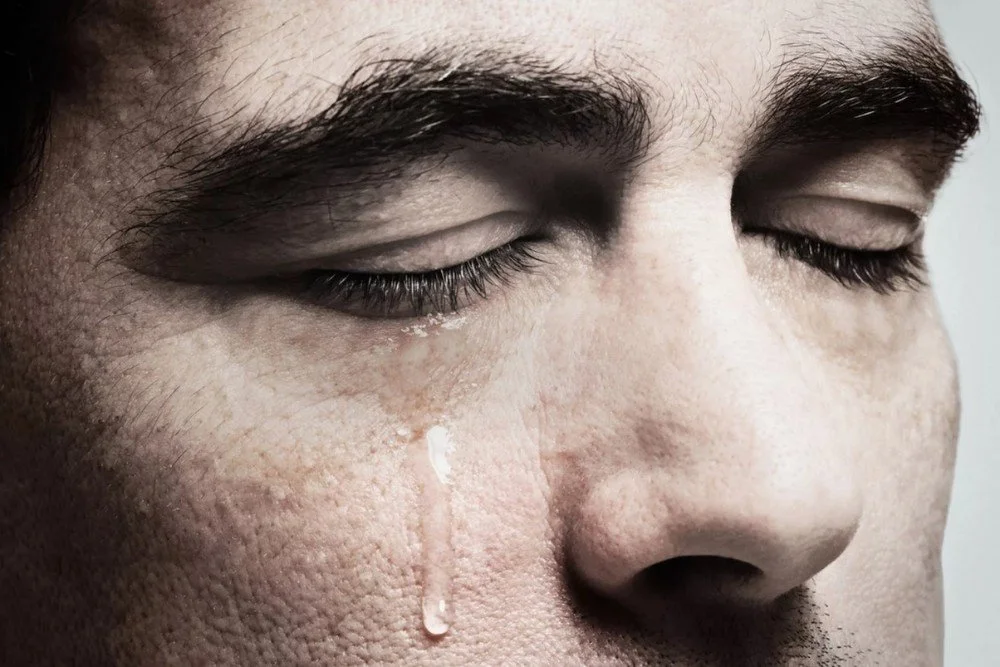
This week’s think piece is more than think piece. It’s more like a shudder, shake your head and even weep piece. Then you can think about it.

I am referring to a long, first-person piece that ran the other day at The Pillar and it’s causing lots of buzz in Catholic online life, for good reason. The headline doesn’t really tell you what is coming: “Cleveland priest gets life. Victims’ mother: ‘God is with us'.”

The first-person voice is essential and steers this away from hard-news territory — even though there are facts and news hooks buried inside the narrative. That’s the “thinking about it later” or thinking about it on the re-read side of this piece.

It’s really long, but you have to start at the beginning, with this editorial note:

Cleveland priest Fr. Robert McWilliams was sentenced to life in prison Tuesday, after the priest pled guilty to federal child trafficking, child abuse, and child exploitation charges.

McWilliams, 41, was ordained a priest in 2017. He was arrested in 2019, and pled guilty to federal charges in July of this year.

At his Nov. 9 sentencing hearing, the mother of four boys preyed upon by McWilliams urged a life sentence. That mother and her family told The Pillar their story.

The Pillar team also made the editorial team to change the name of the family and the victims, in order to protect their privacy.

In terms of the story itself, here are three moments — starting at the beginning:

“Ok. I love my Church, I love my family. I want my Church to be healed. Ok.”

When Rachel Christopher … begins to tell her family’s story, she usually starts with a few phrases — a litany, really — that remind her who she is, and what really matters.

This time, I think, she’s using them to remember why she is sitting down with a stranger — sitting down with me — to share the kind of painful memories that no parent wants even to imagine.

Rachel is telling the story of the priest who hurt her children.


Please respect our Commenting Policy

New podcast: Left, right, middle? Two giant U.S. seminaries are pro-vaccine, but anti-mandate

New podcast: Left, right, middle? Two giant U.S. seminaries are pro-vaccine, but anti-mandate

Let’s do a COVID-19 religion-news flashback, looking at a storyline or two near the start of the pandemic.

I’m doing this in order to analyze how the press is framing a major new development — the federal-court lawsuit filed by Southern Baptist Theological Seminary and Asbury Seminary challenging the Biden administration’s vaccine mandate. These are, by the way, two of the largest seminaries in the United States and, while other seminaries are collapsing, these two are growing.

Coverage of this lawsuit was the hook for this week’s “Crossroads” podcast. (CLICK HERE to tune that in.)

So now the flashback. Remember when I was writing — at GetReligion and in my national “On Religion” column for the Universal syndicate — about the vast majority of American religious groups who were caught in the middle of the “shelter in place” and lockdown wars linked to COVID-19?

Remember the Catholic priests in Texas who were trying to hear confessions out in the open air (in a big field and parking lot), while following guidelines for social distancing? Or how about the churches that were under attack for holding services in drive-in movie theaters, with the faithful in cars, while it was OK for folks to be in parking-lot scrums at liquor stores and big box super-marts? Then you had the whole casinos are “essential services” while religious congregations were not “essential.”

I argued, at that time, that this was way more complicated than religious people who cooperated with the government and those who didn’t. This was not a simple left vs. right, good vs. bad situation. In fact, there were at least FIVE different groups to cover in these newsy debates:

They are (1) the 99% of religious leaders who cooperated and took worship online, (2) some religious leaders who (think drive-in worship or drive-thru confessions) who tried to create activities that followed social-distancing standards, (3) a few preachers who rebelled, period, (4) lots of government leaders who established logical laws and tried to be consistent with sacred and secular activities and (5) some politicians who seemed to think drive-in religious events were more dangerous than their secular counterparts.

That’s complicated stuff.

The problem is that, in the world of American politics, things have to be crushed down into left and right templates or even, there for a few years, into pro-Donald Trump and the anti-Donald Trump. I’m sure we’re past that last part. Right?


Please respect our Commenting Policy

United Methodist pastor dives into HBO drag-queen culture, drawing joyful RNS applause

United Methodist pastor dives into HBO drag-queen culture, drawing joyful RNS applause

Religion news consumers who have been alive for a few decades are probably aware that — on issues related to the Bible and sexuality — United Methodists are, in fact, not united.

Anyone looking for deep background on that topic can turn to a classic document from the mid-1980s entitled “The Seven Churches of United Methodism.” Click here for the first of two “On Religion” columns I wrote about the continuing relevance of that report, which was written by Duke University sociologist Robert L. Wilson, who died in 1991, and William Willimon, now a retired bishop.

Of course, there are bipartisan plans for a United Methodist divorce that would create a more LGBTQ-friendly version of the current denomination and a global Methodist body that would retain traditional teachings on marriage and sexuality. Hold that thought.

Every now and then, Religion News Service — one of the definitive sources for news on the Christian left — produces a news report that perfectly illustrates just how divided Methodists are on edgy issues related to sexuality. This brings us to the following dramatic double-decker RNS headline:

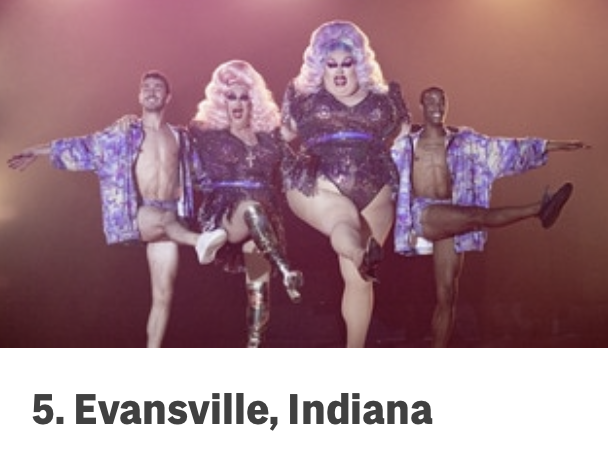
Meet the United Methodist pastor featured on HBO’s drag reality show ‘We’re Here’

Performing in drag was an ‘incredibly wonderful, refreshing, deepening, powerful spiritual experience,’ said Pastor Craig Duke of Newburgh United Methodist Church in Indiana.

Let me note, right up front, that this story opens all kinds of doors to discussions of the two doctrinal approaches that — on issues of biblical authority and a host of other issues — can be found in the current United Methodist Church. However, the story includes absolute zero voices from Methodists on the traditional side of these debates — even from members of the pastor’s own congregation who can be expected to ask questions about his TV leap into the world of drag culture.

Here is the overture to this advocacy-journalism report. This is long, but essential:


Please respect our Commenting Policy

Dang it! Your GetReligionistas pounced a bit too early on the 'parental rights' wars

Dang it! Your GetReligionistas pounced a bit too early on the 'parental rights' wars

Dang it (said the Texas Baptist preacher’s kid), I really hate it when GetReligion gets to a serious media topic Just. A. Bit. Too. Early.

What am I talking about?

Well, take a look at the New York Times headline featured in the tweet at the top of this post, a tweet authored by a symbolic figure in the wider world of Democratic Party life. Michael Wear is a political consultant, but he is best known as the faith-outreach director for Barack Obama's 2012 campaign and then as part of Obama's White House staff. Here’s that headline:

Republicans Seize on Schools as a Wedge Issue to Unite the Party

Rallying around what it calls “parental rights,” the party is pushing to build on its victories this week by stoking white resentment and tapping into broader anger at the education system.

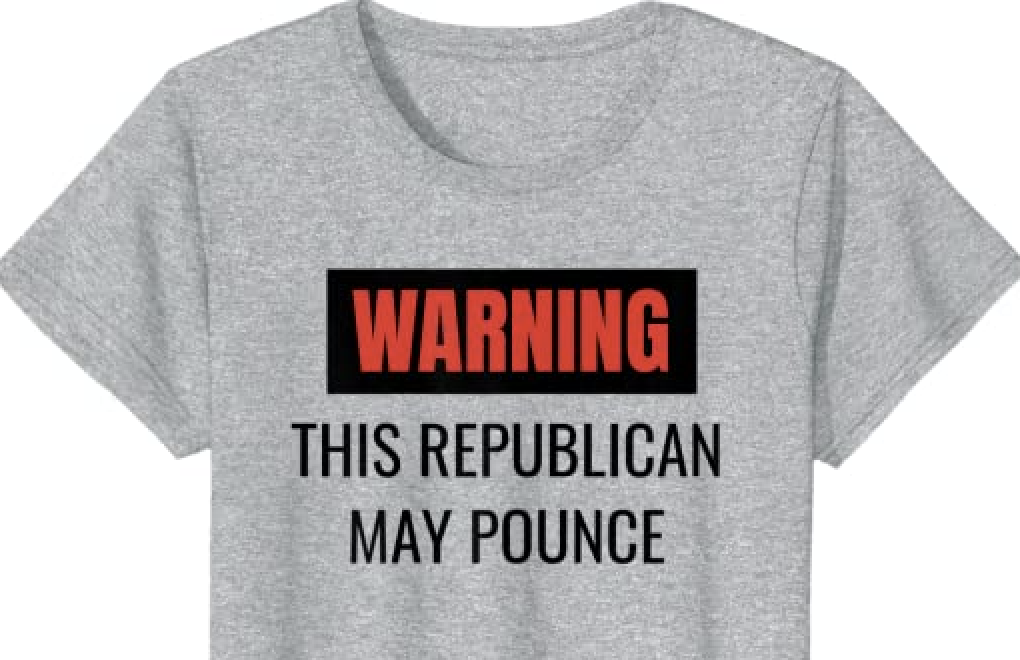
First of all, I think the verb “seize” is a stand-in for the world “pounce,” which has become a bit of a cliche in recent years. Here is the Urban Dictionary take on the “Republicans pounce!” phenomenon or click here for a National Review essay on the subject. The whole point is that the issue at hand isn’t really all that important, but conservatives have “pounced” on it and are using this alleged issue to hurt liberals in social media, conservative news sources, etc.

Major media on the coasts, of course, avoid covering the topic — unless it leads to an embarrassing defeats for Democrats in a symbolic state like Virginia.

Anyway, the Times headline may ring a bell or two for those who read this October 22 podcast-post here at GetReligion: “Are 'parental rights' references (inside scare quotes) the new 'religious liberty.” Here is the opening of that post:


Please respect our Commenting Policy

When facing modern chaos, priests need old symbols and truths -- not more politics

When facing modern chaos, priests need old symbols and truths -- not more politics

Chaos is coming, so get ready.

That was the warning that -- four years ago -- iconographer and YouTube maven Jonathan Pageau offered to leaders of the Orthodox Church in America's Diocese of the South.

The French-Canadian artist was reacting to cracks in "cultural cohesion" after Donald Trump's rise to power, with wild reactions on left and right. And corporate leaders, especially in Big Tech, were throwing their "woke" weight around in fights over gender, racism, schools, religious liberty and other topics. Fear and angst were bubbling up in media messages about zombies, fundamentalist handmaidens and angry demands for "safe spaces."

Pageau didn't predict a global pandemic that would lock church doors.

But that's what happened. Thus, he doubled down on his "chaos" message several weeks ago, while addressing the same body of OCA priests and parish leaders.

"If some of you didn't believe me back then, I imagine you are more willing to believe me now," he said.

Pageau focused, in part, on waves of online conspiracy theories that have shaken many flocks and the shepherds who lead them. Wild rumors and questions, he said, often reveal what people are thinking and feeling and, especially, whether they trust authority figures.

"Even the craziest conspiracy nuts, what they are saying is not arbitrary," he said, in Diocese of the South meetings in Miami, which I attended as a delegate from my parish in Oak Ridge, Tenn.

"It's like an alarm bell. It's like an alarm bell that you can hear, and you can understand that the person that's ringing the alarm maybe doesn't understand what is going on. ... They may think that they have an inside track based on what they've heard and think that they know what is going on. But the alarm is not a false alarm, necessarily."

The chaos is real, stressed Pageau. There is chaos in politics, science, schools, technology, economic systems, family structures and many issues linked to sex and gender.


Please respect our Commenting Policy

New podcast: Did Glenn Youngkin win the Latino vote in Virginia? Maybe ask folks in pews?

New podcast: Did Glenn Youngkin win the Latino vote in Virginia? Maybe ask folks in pews?

On the morning after The Virginia Election, I noted that the sharp folks at a must-bookmark niche-news website — A Journey Through NYC Religion — had done some old-fashioned digging and discovered some interesting religion ghosts (to use an old GetReligion term) in that political earthquake. Click here for that story: “Faith trumps Trump in Virginia.”

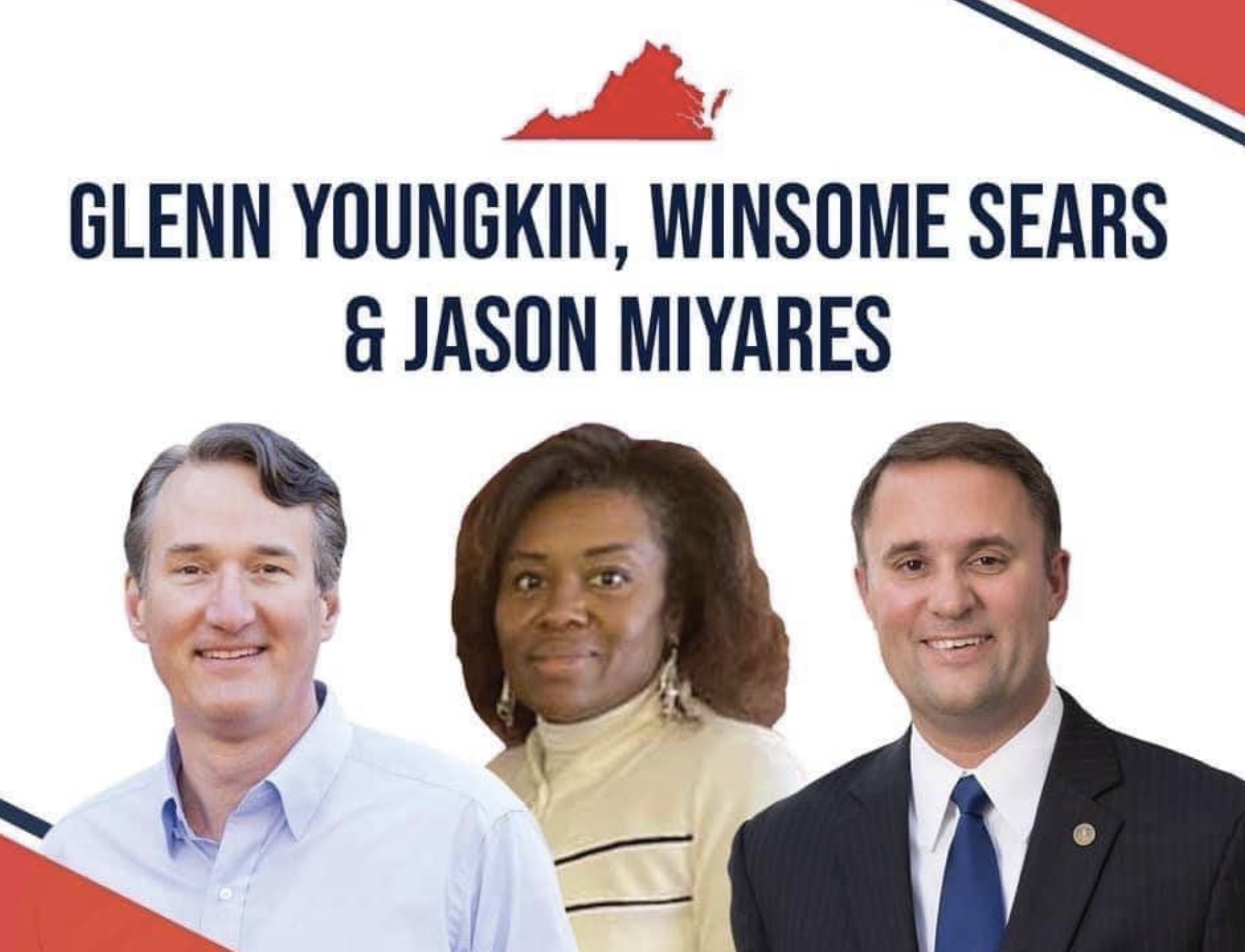
I sure didn’t know, from reading mainstream press coverage, that Governor-elect Glenn Youngkin was an evangelical Anglican who once was a leader in the Alpha course, an evangelism program that expanded from the Church of England into churches and denominations around the world.

I didn’t know that Lieutenant Governor-elect Winsome Sears, an African American evangelical and former Marine, had once led a Salvation Army ministry and that the state’s new attorney general, Jason Miyares, appears to be a Latino evangelical Episcopalian.

All of that showed up in my post-election piece with this headline: “Yes, there were overlooked religion angles in today's biggest U.S. political news story.”

We talk about all of that in this week’s “Crossroads” podcast (click here to tune that in), but also veered off into other religion-based angles in the current political climate. One of them took us into familiar territory, at least for those who have followed GetReligion for the past five or six ears. I’m talking about the rising political clout of Latino evangelicals, traditional Catholics and Pentecostal believers.

There’s some evidence that Youngkin and the diverse GOP lineup actually WON the Latino vote in the Virginia election (click here for a totally faith-free Politico discussion of that topic).

So here is that question again: How can journalists cover shifting patterns among Latino voters — and Black voters, as well — without examining the role of religion and cultural issues?

Let’s say: Is it safe to assume that pro-life Latinos are more likely — lacking acceptable Democrats on the ballot — to opt for Republicans? How about Latinos who favor school choice? Who old traditional Christian views on gender issues?


Please respect our Commenting Policy

Yes, there were overlooked religion angles in today's biggest U.S. political news story

Yes, there were overlooked religion angles in today's biggest U.S. political news story

Well what do you know. Evangelical Anglicans and the Salvation Army had a big night in the Commonwealth of Virginia.

That’s probably not the first thing that leaps to mind today, for political junkies who spent most of the night (the World Series finale was a big deal) watching political pundits express shock and, sometimes, grief watching a Republican newcomer upset name-brand Democratic Party candidate.

Lots of people talked about Donald Trump, of course. Some people dug a bit deeper and focused on how governor-elect Glenn Youngin managed to affirm some themes from the Trump revolution, while striving to stay as far away as possible from personal contact with Orange Man Bad.

This brings me to a headline this morning at A Journey Through NYC Religions, which is one of those niche-news websites that many religion-beat pros have in their browser favorites — because of its heady mix of hard facts and hard-to-label commentary.

Here’s the headline: “Faith trumps Trump in Virginia.”

Say what?

I think many journalists would assume — if they thought about religion angles in the Virginia race — that the members of the victorious GOP team probably came from White megachurches. But that’s not what veteran editor Tony Carnes found when he looked for the ties that bind, in this case. Here is his overture:

Most of the media attention in the Virginia elections has been on Trump and his influence. The Democratic candidate Terry McAuliffe tried unsuccessfully to tag his opponent Glenn Youngkin as a Trumper.

However, under the surface of politics, there was a deeper spiritual culture and social network that connected the top three candidates in Virginia. This characteristic made the GOP effort in Virginia more winsome (indeed, that is the first name of Winsome Sears, the next Lieutenant Governor.)


Please respect our Commenting Policy

Is this statement accurate? All true evangelicals wanted to vote for Donald Trump -- period

Is this statement accurate? All true evangelicals wanted to vote for Donald Trump -- period

As a rule, your GetReligionistas strive to avoid writing about analysis features that are published in magazines such as The Atlantic.

However, when I keep hearing people asking questions about one of these “think pieces,” it’s hard not to want to add a comment or two to the discussion.

So first, let’s start with something that GetReligion team members have been saying for nearly two decades, as a reminder to readers who have never worked in mainstream newsrooms: Reporters/writers rarely write the headlines that dominate the layouts at the top of their pieces.

Case in point: The double-decker headline on that buzz-worthy Peter Wehner commentary piece at The Atlantic:

The Evangelical Church is Breaking Apart

Christians must reclaim Jesus from his church.

Yes, I know. There is no such thing as “the evangelical church.”

Do basic facts matter? There are, of course, denominations that are predominantly evangelical. Some of them disagree on all kinds of things — such as baptism or the ordination of women. There are Pentecostal denominations that share many, but not all, doctrines with flocks that are connected with the evangelical movement. There are lots of evangelicals who still sit — though many are quite unhappy — in liberal Protestant pews.

We won’t even talk about that second line: “Christians must reclaim Jesus from his church.”

You can get to the heart of this confusion by — if you are reading the Wehner piece online — glancing at the tagline that appears in the subject line in your computer browser. That semi-headline reads: “Trump is Tearing Apart the Evangelical Church.”

Ah, that’s the heart of this matter.


Please respect our Commenting Policy

A lion of evangelical Anglicanism -- seeking Christian unity -- elects to swim the Tiber

A lion of evangelical Anglicanism -- seeking Christian unity -- elects to swim the Tiber

As always, rumors swirled around the favorites in the 2002 race to become the 104th Archbishop of Canterbury.

Efforts to derail Bishop Michael Nariz-Ali of Rochester were different, in part because he was born in Pakistan -- fluent in Urdu and Farsi -- and was poised to become the first non-white leader of the Church of England. Others noted that he attended Catholic schools as a boy and practiced that faith.

Progressives warned that Nazir-Ali was too conservative on issues dividing Anglicans. He opposed the ordination of noncelibate gays and lesbians, while defending ancient teachings on marriage. He was a fierce critic of Sharia law and "radical Islam," while defending persecuted Christians around the world Most of all, critics noted that he was a strong evangelical leader in the global Anglican Communion.

Nazir-Ali insisted that he was "evangelical and Catholic," even as he lost his shot at the Throne of Canterbury.

That's the same label that he used when he stunned the Anglican world by announcing that he was returning to Roman Catholicism. He is expected to be ordained as a Catholic priest this Sunday (Oct. 30), serving in the Ordinariate of Our Lady of Walsingham, a canonical structure established in 2011 by Pope Benedict XVI that allows Anglicans to enter Catholicism while retaining many Anglican rites and traditions. The 72-year-old Nazir-Ali is married and has two children.

This move was necessary "because I believe that the traditional Anglican desire to adhere to the fullness of apostolic, patristic and conciliar teaching can now best be maintained in this way," the former bishop announced.

Writing in The Daily Mail, he called the decision a "bittersweet moment."

"Bitter, because I am deeply saddened that the Church of England is not the church I joined. There are many individual parishes, priests, and believers who remain committed to biblical faith and values. But as an institution it seems to be losing its way," he said. "Sweet, because I am excited about the opportunities that joining the ordinariate will bring: to uphold human rights and help millions of suffering Christians and others round the world."


Please respect our Commenting Policy