Terry Mattingly

New podcast: Yes, religious issues are part of the great divide in media and, thus, America

New podcast: Yes, religious issues are part of the great divide in media and, thus, America

When journalism profs talk about “old-school journalism,” we are actually discussing a rather modern phenomenon which is often called the American Model of the Press. It was born when printing presses started speeding up in the mid-to-late 19th century and, as it evolved, it stressed accuracy, fairness and balance when dealing with controversial issues.

What does that mean? At the very least, it meant showing respect for competing points of view — in part to allow newspapers (and advertisers) to reach a broad, diverse audience of readers.

This model replaced, at least in newspapers and wire services, what is often called the European Model of the Press. In this model, accuracy is still emphasized, but newsroom coverage is clearly and honestly based on specific editorial points of view — liberal, conservative, labor, business, etc. It is openly biased.

I offer this journalism history flashback because these terms played a major role in this week’s “Crossroads” podcast (click here to tune that in). The key question this week: How are readers supposed to relate to journalists and newsrooms when they claim to use the American Model, but their news coverage (especially online) is, on most issues (especially topics mixing politics and religion), clearly being crafted to fit a particular cultural or political template? Yes, we are talking about “Kellerism,” a term long used here at GetReligion (click here and then here for background).

In part, host Todd Wilken and I focused on a viral tweetstorm by the Russian-British comedian Konstantin Kisin, instead of dissecting the contents of one or more mainstream news reports.

It’s crucial to note that Brexit — as opposed to Donald Trump-era America — was the first hook for Kisin’s long, long commentary. Also, the ultimate goal here is to understand why so many people are skeptical when it comes to the COVID-19 vaccines (whether one agrees with that point of view or not).

(Reminder to readers: As a 67-year-old grandfather with asthma, I got my COVID shots as soon as possible. I also wear a mask when visiting institutions that ask me to do so. As for church, I follow the instructions of my bishop and our priests. It also helps to know that, after decades as a pro-life Democrat, I am now a third-party voter.)

Here is the opening of the Kisin thread. Whether he knew it or not, it is a litany mourning the loss of the American Model of the Press.
Please respect our Commenting Policy

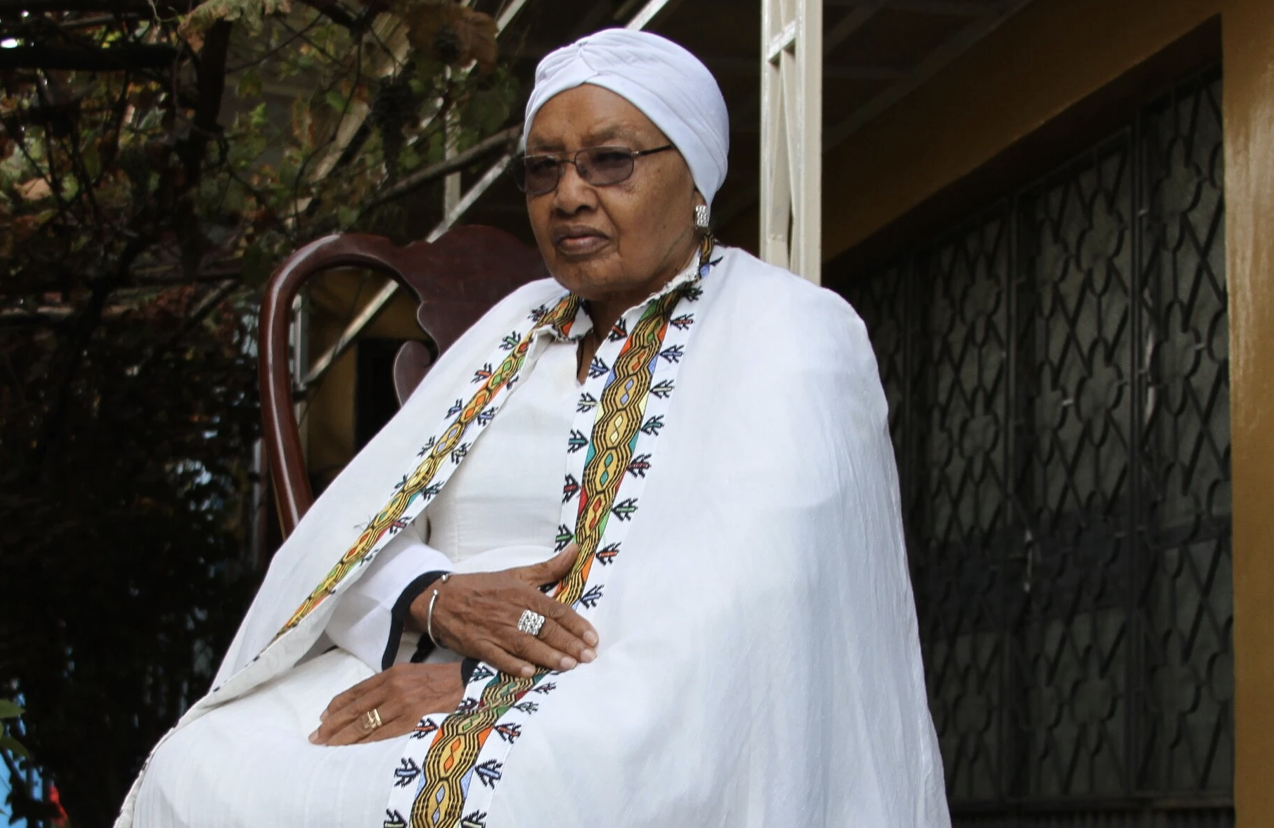
Yo, New York Times editors: Why edit faith out of obit for the 'Mother Teresa' of Africa?

Yo, New York Times editors: Why edit faith out of obit for the 'Mother Teresa' of Africa?

If you know anything about old-school journalism, then you have heard this mantra — “who, what, when, where, why and how.” During my nearly three decades as a journalism and mass media professor, I used to refer to these essential building blocks of hard-news reporting as the “W5H” formula.

Clearly, when you are dealing with the life story of a woman who sacrificed everything in order to help poor, suffering, abandoned children, the “why” factor in that equation is going to be especially important.

This brings us to two very different news reports about the death of one of modern Ethiopia’s most beloved figures, a woman who was frequently described as a living saint. Here is the New York Times headline: “Abebech Gobena, the ‘Mother Teresa’ of Africa, Dies at 85.” And here is the overture:

Abebech Gobena was returning from a pilgrimage to the holy site of Gishen Mariam, about 300 miles north of the Ethiopian capital, Addis Ababa, when she saw the woman and her baby.

It was 1980, and Ms. Gobena was passing through an area recently stricken by drought and an accompanying famine. All along the road were bodies — many dead, some dying, some still able to sit up and ask for food.

“There were so many of these hungry people sprawled all over, you could not even walk,” she said in a 2010 interview with CNN. She handed out what little she had — a loaf of bread, a few liters of water.

The word “holy” in the lede is rather important, since we are talking about Coptic Orthodox monastery of Gishen Mariam.

According to ancient traditions, Gishan Mariam is the location of a piece of the cross on which Jesus was crucified. It was a gift from St. Helena, the mother of Constantine I, and came to Ethiopia as a gift from the Patriarch of Alexandria. A festival called “Meskel,” celebrating the finding of the cross, is a major event in Ethiopian life.

So the story begins with Gobena returning from a pilgrimage to this holy site, which almost certainly tells us something about this woman’s life. This is interesting, since the Times piece does not include any of the following words — “Christian,” “Orthodox,” “Coptic,” “faith” or “saint.”

Would it make a difference, for example, to know that the small amount of water Gobena was carrying, which he gave to those who were suffering, was holy water that she was carrying home from the shrine to be used for rites of blessing and healing?


Please respect our Commenting Policy

Washington Post still thinks sin and repentance have nothing to do with Holy Communion

Washington Post still thinks sin and repentance have nothing to do with Holy Communion

For years now, quite a few mainstream journalists have made it pretty obvious that they think the bishops of the Catholic church have a moral and perhaps even legal obligation to let Catholics do whatever they want to do in public life while continuing to take Holy Communion.

All that matters, according this newsroom version of the evolving spirit of Vatican II, is that these Catholic individuals believe — as a matter of conscience — that they are good to go. Catholics who are on the right side of history even have the right to openly state, in word and deed, that they believe Catholic doctrine is wrong and should be changed. This used to be called Protestantism, but nevermind.

This brings us to yet another Washington Post report about the life and times of a Michigan judge named Sara Smolenski, her same-sex wife Linda and the East Grand Rapids parish in which she is not allowed to take Holy Communion. (For a flashback to earlier coverage, please see this Julia Duin post: “Press doesn't get why a Catholic priest would withhold Communion from outspoken gay judge.”)

This story does a great job of proving that progressive Catholics have strong views on this issue. The story also offers small bites of material from Catholics stating the church’s doctrinal stance on this matter. If you are looking for any sense of fairness and balance — such as Catholics explaining or defending church doctrine — then you are not going to find it in the Post coverage. Again.

One other key point: This story contains zero references to the role that Confession — the Sacrament of Penance — plays in Catholic teachings on sin, repentance, forgiveness, salvation and, thus, Holy Communion. Hold that thought, because we will return to that point.

The Post headline, this time around, states: “Bishops’ debate over Communion sparked by Biden seeps into holiest sacrament for Catholics.” Here’s the overture:

St. Stephen Catholic Church is the parish and school where Sara Smolenski grew up with her nine siblings, where her parents were married, where she worshiped on Sundays and served as a volunteer distributing Communion. It was also the place where the priest called in late 2019 to tell her she should no longer come up during Mass to receive the holy sacrament.

“He says: ‘I’m going to have to ask you not to take Communion because you’re married to Linda in the state of Michigan. He just kept saying: ‘Respect the church,’” said Smolenski, 63, a longtime District Court judge.


Please respect our Commenting Policy

Ticking United Methodist clock: Will the church's establishment Zoom to the left?

Ticking United Methodist clock: Will the church's establishment Zoom to the left?

As one of the founders of the United Methodist Centrist Movement, the Rev. Doug Damron spend years hiding his rejection of his church's rule that the "practice of homosexuality is incompatible with Christian teaching."

Centrists used a "perfectly delicious" theological platform defined by words such as "unity," "peace" and "moderate," he said, during a recent guest sermon at the historic Broad Church United Methodist Church in Columbus, Ohio. After decades of fighting about sex, many hoped "traditionalists" and "progressives" could keep "United" attached to "Methodist."

The goal was "compromise," he said, a "sweet word" that hid a "status quo of oppression." But there was "an institution to protect" and many clergy feared being honest. Thus, they didn't openly attack the denomination's Book of Discipline.

"By nature, I am a rule follower," he said. "I knew that such defiance may have cost me my clergy credentials."

Now it's time for candor and courage, said Damron. When United Methodists finally split, conservatives will build a church defined "by who they will exclude today and who they will exclude tomorrow." The question is whether progressives will act on their convictions.

"It is time to speak into existence, following the Spirit's leading, a church which fully welcomes, includes, affirms not only God's beloved gay and lesbian ones, but a host of other folks who have found the door of the church closed," he said. This would include embracing and ordaining "trans folks, bi folks, kink folks, poly folk, gender-fluid folk and others."

The United Methodist clock kept ticking this summer, even as COVID-19 realities delayed -- again -- votes on the "Protocol of Reconciliation and Grace Through Separation" negotiated by activists on the left and right. The General Conference will not meet until August 2022, since the UMC establishment has declined to take actions in virtual forums.


Please respect our Commenting Policy

New podcast: Indie fundamentalist near Nashville shows how to punch Washington Post buttons

New podcast: Indie fundamentalist near Nashville shows how to punch Washington Post buttons

For decades, I have felt a strange mix of anger and mild amusement whenever I heard news consumers, when complaining about something that upset them, say that journalists write and print “bad” stories “just to sell newspapers.”

“Bad,” of course, meant stories that they thought were biased, inaccurate or simply silly, perhaps something that in our digital age would be called “clickbait.” Of course, clickbait is clickbait because there’s digital evidence that readers consistently click on certain types of stories, which increases traffic and that helps the newsroom generate money (sort of like selling more newspapers).

Produce enough stories that please the faithful readers of a given publication — down South we call this “preaching to the choir” — and you can turn those readers into digital subscribers. That’s the Holy Grail, the ultimate goal, in the business-model crisis that has dominated American journalism for a decade or more.

This brings me to this unusual Washington Post headline that I saw the other day: “Evangelical pastor demands churchgoers ditch their masks: ‘Don’t believe this delta variant nonsense’.”

Now, was this pastor the leader of an important congregation somewhere in Beltway-land? Well, the answer is “no.”

If he wasn’t local, was he a prominent member of a major, powerful evangelical Protestant denomination or network of megachurches? Again, “no.” Was he connected, somehow, to an influential evangelical college, seminary, publishing company or parachurch ministry? A third time, “no.”

In other words, to ask the question that drove this week’s “Crossroads” podcast, why did editors decide that this story worthy of coverage by a reporter at the Post? (Click here to tune in this episode.)

Well, I think it’s safe to say that this stereotype-packed piece of simplistic, shallow, clickbait was produced because it punched all kinds of buttons that pleased digital niche-audience Post subscribers. In other words (I feel guilty typing these words), they did it to sell newspapers. Here is the overture:

Since the early months of the coronavirus pandemic, Greg Locke, the pastor at a Nashville-area church, has repeatedly called covid a hoax, undermined emergency mandates and refused to comply with guidance from public health officials.


Please respect our Commenting Policy

No vacation at Vatican? Thinking about an 'August surprise' from Pope Francis

No vacation at Vatican? Thinking about an 'August surprise' from Pope Francis

If you have lived and worked in Washington, D.C., you know that Beltway-land has its own unique media traditions.

For example, no one is surprised when politicos issue somewhat embarrassing statements and proposals late on Friday afternoons, especially during the seasons in which half of the city’s journalists and chattering-class superstars are parked in traffic on the Chesapeake Bay Bridge in Annapolis on their way to the beach. After all, who pays attention to the news on Saturdays and it’s too late to do a major feature for the Sunday newspaper.

Then there is the “October surprise,” which is when a presidential candidate who is trailing — especially an incumbent president — makes a wild domestic policy proposal, foreign policy gesture or accusation against his enemies in an attempt to jump-start the race and gain ground in the polls.

With that in mind, it’s interesting to pause and think about an interesting Crux analysis piece by editor and super-insider John L. Allen, Jr., that just ran with this headline: “Pope’s ‘August surprise’ could be most counter-cultural stand of all.” Allen didn’t make a specific proposal for an upcoming bombshell, but did say that this pope has a history of making news during a month when Italians — it's almost a sacred tradition — are on vacation.

I asked Clemente Lisi, our resident Italian and Catholic-media pro, what he thought of this thesis. He quickly answered — even though (irony alert) he is on vacation this week. His email said:

I know the feeling well. I spent every August in Italy as a child visiting relatives and being on vacation. And yes, everything was closed!

This papal August surprise could very well be a symptom of the media’s lack of attention during this month. In the pre-Donald Trump years, August was typically considered a “slow month” — at least in the United States — and also a time when many editors took time off after a long year. The same thing happens in Italy, probably on a grander scale.


Please respect our Commenting Policy

Here we go again: White House reaches out to Latino 'faith leaders'? Why not quote a few?

Here we go again: White House reaches out to Latino 'faith leaders'? Why not quote a few?

First, my apologies. Once again, I need to write about an issue that I have covered over and over here at GetReligion.

I mean, like this: “Why are Latinos veering into GOP? It's all about money, money, money (and zero faith).”

Then there was: “Concerning Hispanic evangelicals, secret Trump voters and white evangelical women in Georgia.

And also this: “New York Times listens to Latino evangelicals: 'Politically homeless' voters pushed toward Trump.”

Now, that third post did get to point readers to a passage in a New York Times story in which it appears that the reporter did pay attention to what a circle of Latino evangelicals had to say. For a brief moment, a window opened into a world that is larger than mere partisan politics:

When Pastor [Jose] Rivera looks at his congregation of 200 families he sees a microcosm of the Latino vote in the United States: how complex it is, and how each party’s attempt to solidify crucial support can fall short. There are not clear ideological lines here between liberals and conservatives. People care about immigration, but are equally concerned about religious liberty and abortion. …

To explain his own partisan affiliation, Mr. Rivera says he is “politically homeless.”

In that post, I noted that this sounded like words I have heard before, spoken by many frustrated Democrats in pews. To go further, I added:

That sounds just like the laments I have heard from all kinds of reluctant Trump voters — Catholic, Orthodox, evangelicals, etc. — who define themselves in terms of their religious convictions, more than loyalty to a political party. They feel stuck, but shoved toward the GOP because of an overwhelming sense of fear caused by Democrats (and mass media professionals) who now put “religious liberty” inside scare quotes.

So this brings me to a new headline at The New York Times: “Latino Voters Moved Toward Republicans. Now Biden Wants Them Back.” Yes, here we go again.


Please respect our Commenting Policy

Spot the religion test (again): What's at stake when politicos ask if nominees believe in God?

Spot the religion test (again): What's at stake when politicos ask if nominees believe in God?

This is one of those GetReligion topics that — alas — keep popping up every year or two. Here is the Deseret New headline on the latest case study for journalists to file in the growing “Spot the religion test” file: “Is it legal to ask nominees to federal office if they believe in God?”

There’s a reason that this keeps happening. Church-state conflicts, especially those involving Sexual Revolution doctrines, are among the hottest of America’s hot-button political issues. The First Amendment is, for different reasons, under assault from some camps on the political right and also from many illiberal voices on the left.

In terms of raw statistics, Democrats rely on a grassroots base that, with the exception of the Black Church, is increasingly made up of Nones, agnostics, atheists and religious liberals. Republicans seeking office cannot afford to ignore people in pews — period.

All of this leads us back to these words in Article 6 in the U.S. Constitution:

The Senators and Representatives … and the Members of the several State Legislatures, and all executive and judicial Officers, both of the United States and of the several States, shall be bound by Oath or Affirmation, to support this Constitution; but no religious Test shall ever be required as a Qualification to any Office or public Trust under the United States.

The headline on the Deseret News piece reads like an opinion essay, but this is actually a solid news feature that quotes a variety of voices active in debates about this church-state issue. Here is the overture:

The Constitution states that the government can’t create a religious test for public office. But does that mean confirmation hearings should include no mention of faith?

There are at least a few members of each party who think some religion questions are fair game.


Please respect our Commenting Policy

Old Southern Baptist stereotypes? Journalists need to update some information

Old Southern Baptist stereotypes? Journalists need to update some information

Anyone looking for Baptists should head to Greenville, S.C.

"People here say you can throw a rock in one direction and hit a Southern Baptist church and if you throw a rock in the other direction you'll hit an independent Baptist church," said Nathan A. Finn, provost of North Greenville University.

Finn's school -- with strong Southern Baptist ties -- isn't the only brand of "Baptist" life in town. There's the progressive Furman University, as well as the independent Bob Jones University, known for its rock-ribbed Baptist defense of fundamentalism.

The Baptist world is extremely complex and hard for many outsiders to navigate. Some of this confusion, said Finn, affects life inside the most prominent Baptist flock -- the Southern Baptist Convention -- and perceptions of SBC conflicts.

"Lots of people need to understand that Southern Baptists are far more diverse, ethnically and culturally, than they think we are," he said, in a telephone interview. "At the same time, we're more uniformly conservative that we often appear, especially since we spend so much time fighting with each other over some of the small points of theology on which we differ."

With some of these stereotypes in mind, Finn recently fired off a dozen Twitter messages describing different images of real "Southern Baptist" churches that are common today. The goal, he said, was to create "composites of what different kinds of SBC congregations look like" and he gave them "names that are common with certain types of real churches."

There is, of course, a "First Baptist Church" which Finn described as "a downtown church that runs 500 in worship. The church is affluent, which is reflected in their beautiful building. The worship service is traditional. There are lots of programs & committees" and the congregation is known for big donations to the SBC's shared "Cooperative Program" budget.

Then there is one of the megachurches that have dominated the American religious marketplace in recent decades. While the word "Baptist" is missing in its name, Finn noted: "CrossWay Church is a suburban church that runs 1400 in two services. The 'feel' of each service is laid back & contemporary. CrossWay has excellent recreational facilities" and its leaders are "considering launching a second campus."

These big churches frequently make headlines.


Please respect our Commenting Policy