Terry Mattingly

New podcast: When preachers copy preachers -- is this an old story or something new?

New podcast: When preachers copy preachers -- is this an old story or something new?

As longtime GetReligion readers may know, my father was a Southern Baptist minister, spending his whole career in Texas pulpits and hospitals.

I heard him, from time to time, gently correct people who called him “preacher.” He would note that he wasn’t a “preacher,” he was a pastor. Brother Bert’s life and ministry were not defined by his pulpit work, although I always admired his ability to teach the Bible to laypeople.

Like it or not, preaching is the crucial skill — almost a Darwinian performance art — in the world of megachurches and evangelical power. Superstar clergy, about 99% of the time, are known for their preaching skills, even in liturgical-church traditions. The styles may differ, from one church brand to another, but growing churches usually have orators who can pull people into the pews.

That was the subject looming over this week’s “Crossroads” podcast (click here to tune that in), which focused on a strong Religion News Service report about the #Sermongate controversy surrounding the new leader of the Southern Baptist Convention. The headline: “New SBC President Ed Litton apologizes for using JD Greear sermon quotes without credit.” Here is some crucial material right up top:

A video posted on YouTube Thursday (June 24) showed clips of a ­­­January 2020 sermon on the New Testament book of Romans from Litton and clips from a January 2019 sermon on the same Bible passage from J.D. Greear, whose term as SBC president ended in June.

At several points, the comments from the two preachers are nearly identical. … The two pastors also say very similar things about homosexuality, which both believe is sinful.

But they each say Christians have erred by treating sexual sin as if it is worse than other sins — and singling out LGBT people as the worst of sinners.

What does “nearly identical” look like?

Please respect our Commenting Policy

Any religion ghosts here? Martin Methodist College joins University of Tennessee system

Any religion ghosts here? Martin Methodist College joins University of Tennessee system

For years, parents have been asking me a logical question, in light of my quarter of a century teaching in Christian liberal arts colleges and programs. The question: How do we know which college is right for our kid? They often link this to questions about how small colleges can compete in the modern marketplace.

Hang in there with me, since — for me — these questions are linked to the news coverage of an interesting higher-education story that is unfolding here in Tennessee.

In my experience, Christian liberal-arts colleges are not for everyone. The key is whether a private school’s academic strengths (most schools are stronger in some areas than others) match a student’s needs. It’s also important to know if an academic subject is a good fit with that school’s history and sense of mission.

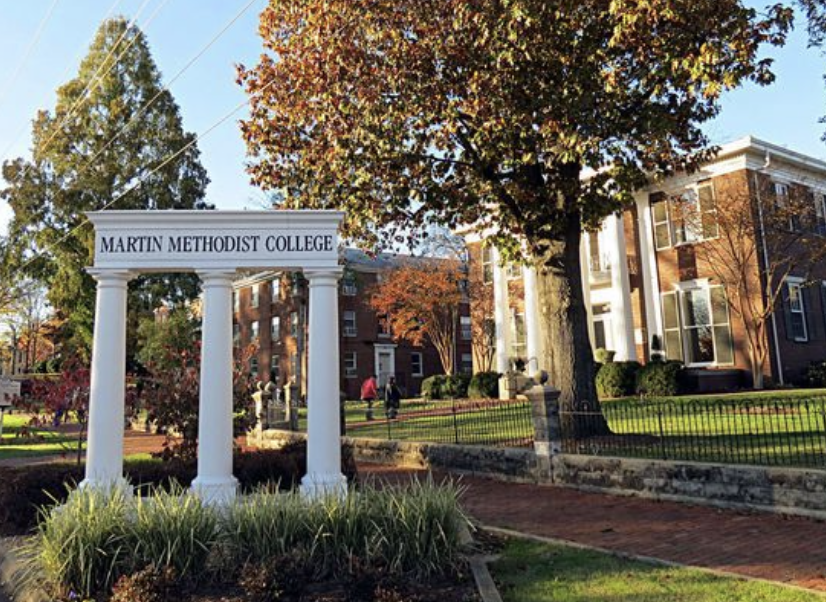
This brings me to this recent headline in the Gannett newspapers here in Tennessee: “University of Tennessee adds fifth campus with Martin Methodist College merger.” Here’s the overture:

The University of Tennessee System has added a fifth campus, the first addition to the statewide higher education network in more than 50 years.

Martin Methodist College, located in Pulaski, will join the system as the University of Tennessee Southern, a nod to the regional identity the system hopes to create. The merger with Martin Methodist College is intended to bring affordable higher education to southern Middle Tennessee. The school is located about 75 miles southwest of Nashville, near the Alabama border.

The UT board of trustees unanimously approved the merger … after nearly a year of collaboration with Martin Methodist.

I’ve been following this story throughout the year and the coverage has, to use one of the defining images of this blog, been haunted by religious questions linked to this merger between a Christian college and a massive, secular university system. In this case, “haunted” means the coverage hasn’t mentioned these issues at all.

I am really curious to know what will happen to programs at Martin Methodist — academic and service oriented — that were linked to its Christian identity and ties to Tennessee United Methodists. I would imagine that there were also changes in some campus policies linked to moral and social issues.


Please respect our Commenting Policy

Lighthouse parable again: Faith-shaped hole in report on Donald Trump's brush with death

Lighthouse parable again: Faith-shaped hole in report on Donald Trump's brush with death

Something is missing from that riveting Washington Post report by Damian Paletta and Yasmeen Abutaleb about Donald Trump’s battle with the coronavirus that may have been much more dangerous than the White House team let on.

The headline: “Inside the extraordinary effort to save Trump from covid-19.” This long feature was adapted from the upcoming book “Nightmare Scenario: Inside the Trump Administration’s Response to the Pandemic That Changed History.”

This is a story about Trump’s hubris that is, for a change, packed with on-the-record material. Thus, I kept waiting for a specific name to show up — but it never did. I was thinking, of course, about the “lighthouse parable” that I have shared many times here at GetReligion. If you prefer the Sherlock Holmes story about the dog that didn't bark, that will work, too. Here is a flashback to that lighthouse tale:

Once there was a man who lived in a lighthouse on the foggy Atlantic. This lighthouse had a gun that sounded a warning every hour. The keeper tended the beacon and kept enough shells in the gun so it could keep firing. After decades, he could sleep right through the now-routine blasts.

Then the inevitable happened. He forgot to load extra shells and, in the dead of night, the gun did not fire.

This rare silence awoke the keeper, who lept from bed shouting, "What was that?"

Now, in my experience, when religious believers get really sick — especially if they are close to the “critical” stage — they will almost always send for their pastor. In a life-and-death situation ministers are a source of prayer, comfort and, often, sound advice (my late father spent the final decade of his ministry working as a hospital chaplain).

Thus, I kept waiting to see a reference to the Rev. Paula White, the charismatic megachurch leader who Trump supporters frequently called his spiritual advisors (click here for a Julia Duin post on White). There were other clergy who, in this case, were candidates to get a call from the White House, like the Rev. Franklin Graham, perhaps.


Please respect our Commenting Policy

Nashville 2021 revisited: For Southern Baptists, sermons are part of how their work gets done

Nashville 2021 revisited: For Southern Baptists, sermons are part of how their work gets done

Whenever the Southern Baptist Convention gathers in times of trials and turmoil, one thing is certain -- someone will preach a sermon that makes a difference.

That's how Southern Baptists do what they do. These sermons may not produce as many headlines as SBC elections or fiery debates about hot-button social issues. But the sermons matter.

The big sermon during the 2021 convention in Nashville came at a logical moment -- when SBC President J.D. Greear gave his farewell address, just before tense voting to elect his successor.

In this "defining moment" address, the leader of the Summit Church in Raleigh-Durham, N.C., offered a stinging quote about an elephant that has camped in the SBC fellowship hall.

"We have to decide," Greear said, "if we want our convention primarily to be a political voting bloc or if we want it to be a Great Commission people. … Whenever the church gets in bed with politics, the church gets pregnant, and the offspring does not look like our Father in heaven."

America is important, he stressed. But America is not the whole picture for believers striving to build churches around the world. "God has not called us primarily to save America politically. He has called us to make the Gospel known to all," said Greear.

Southern Baptists can agree that "no compromise should be tolerated" on crucial social issues, he said. And no one wants to stop defending the inerrant truth of the Bible.


Please respect our Commenting Policy

Newsy thinking about SCOTUS, sports images, religious liberty and the Sexual Revolution

Newsy thinking about SCOTUS, sports images, religious liberty and the Sexual Revolution

Wait, you mean there was another important religion story during the traffic jam of stories about the right vs. further right showdown at the Southern Baptist Convention and America’s Catholic bishops arguing about Holy Communion, the Catechism and liberal Catholic politicos?

Obviously, I noticed headlines such as this one in the Washington Post: “Supreme Court unanimously rules for Catholic group in Philadelphia foster-care dispute.”

The word “unanimous” is certainly important, in the fractured age in which we live. But look for the other crucial word in the overture on that story:

The Supreme Court ruled unanimously … that Philadelphia was wrong to end a Catholic group’s contract to provide foster-care services because the organization refused to work with same-sex couples.

It was the latest victory for religious organizations at the increasingly conservative court, and the second time it has ruled against governments trying to enforce an anti-discrimination law protecting LGBTQ rights against those claiming religious liberty.

But the opinion, written by Chief Justice John G. Roberts Jr., was narrow enough to draw the support of the court’s three liberals — and the consternation of its three most conservative members for not going further.

Obviously, the crucial word is “but.” This ruling encouraged some church-state conservatives, but also provided some hope for those who believe that the Sexual Revolution will, more often than not, trump the free exercise of religion.

So, it’s time for two think pieces that explore the degree to which this ruling was a win for religious liberty.

No surprise here: Religious liberty pro David French, of The Dispatch, was encouraged: “Four Things You Need to Know After a Huge Day at SCOTUS — ‘Good night, Employment Division v. Smith. Good work. Sleep well. I’ll most likely kill you in the morning​.’ “ Here is his reaction, at the level of SCOTUS personalities:


Please respect our Commenting Policy

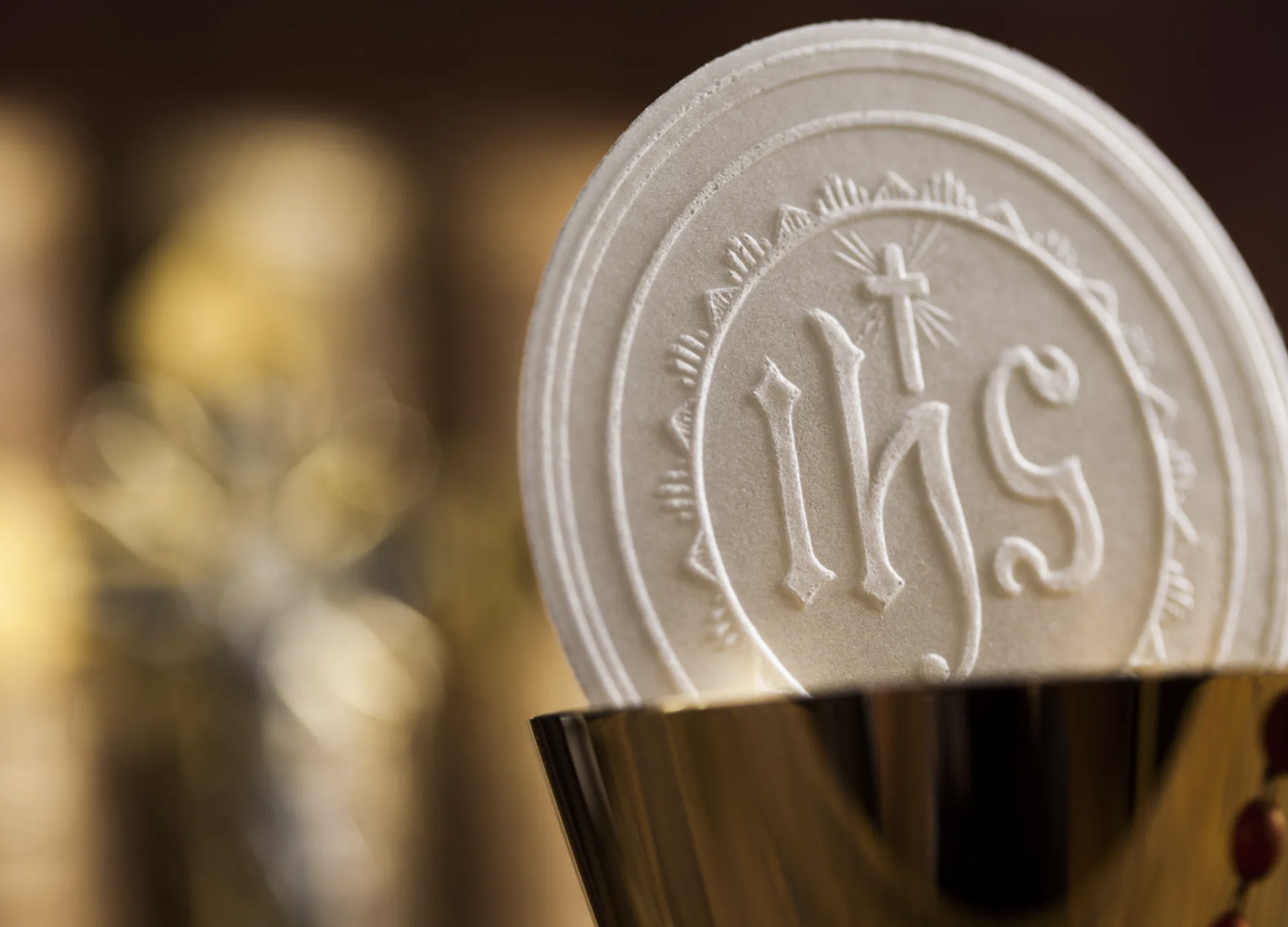
New podcast: What are the future news hooks as U.S. bishops wrestle with Holy Communion?

New podcast: What are the future news hooks as U.S. bishops wrestle with Holy Communion?

Let’s say that, at some point in the future, multimedia crews manage to discover where President Joe Biden was attending Mass on a given Sunday.

As the president attempts to leave, journalists shout an obvious question, something like: "Mr. President! The U.S. bishops are almost done with the final draft of their document on abortion, politics and Holy Communion. Are you concerned about this?”

Recently, Biden responded to a similar question by saying: "That's a private matter and I don't think that's going to happen."

This kind of language, that specific doctrinal issues are “personal” or “private,” has been part of American Catholic code ever since the famous 1984 address at the University of Notre Dame by the late New York Gov. Mario Cuomo. But let’s say — as I suggested in this week’s “Crossroads” podcast (CLICK HERE to tune that in) — that Biden decides to tweek this reply at some point in the future.

What would happen if he said this: “That’s between me and my father confessor, so I will have no response at this time.”

This response would have several implications. First of all, it would mean that Biden is saying that he (a) has a father confessor, (b) that he has gone to confession, (c) that he has confessed his sins, (d) that his confessor has assigned him some for of penance and (e) absolved him of his sins. That last part, of course, could be assumed if Biden is receiving Holy Communion.

Oh, and there’s one implication here: That this is happening with a blessing, to one degree or another, from the bishop in authority over Biden’s father confessor. Ah, there is the main news hook.

The bishop and the priest would not, of course, discuss the contents of the president’s confessions. The bishop, however, could say that Biden’s ongoing actions clashing with church doctrines — linked to abortion, same-sex marriage, trans advocacy or some other issue — require the denial of Holy Communion since these actions are, under Catholic doctrines, a threat to the president’s eternal soul.

After all, as the journalists (and canon lawyers) at The Pillar recently noted:


Please respect our Commenting Policy

A World Series MVP's marriage crashes and his pastor is more than a role player in the drama

A World Series MVP's marriage crashes and his pastor is more than a role player in the drama

Celebrity divorces are rarely tidy and uncomplicated. This is especially true when one of the people in the marriage is alleged to have been sleeping with the couple’s marriage counselor.

Two more details: The marriage counselor was (1) both the couple’s pastor and (2) the leader of a charitable foundation funded by the jilted husband. Now, throw in the fact that the husband was, at the time, a Major League Baseball star — the 2016 World Series MVP — with the Chicago Cubs.

This is not, alas, your usual upbeat Bobby Ross, Jr., story about God and baseball. Several news operations have reported on this sad affair, but the key report ran, logically enough, at The Chicago Tribune. The headline: “Ben Zobrist lawsuit alleges his pastor had an affair with his wife Julianna and defrauded the former Chicago Cubs player’s charity.

The story was written by a reporter who covers “sports pop culture with a Chicago focus as well as a range of other topics from the White Sox to fantasy football.” As you would expect, this story misses one or two religion details that many readers would have liked to have known. Here’s some crucial material right up top:

The lawsuit against Byron Yawn, CEO of the Nashville-area counseling firm Forrest Crain and Co., seeks $6 million in punitive and compensatory damages through a jury trial.

According to the complaint filed May 6 in Nashville Circuit Court, Yawn, while acting as the Zobrists’ marital counselor and executive director of Ben Zobrist’s charity, “usurped the ministerial-counselor role, violated and betrayed the confidence entrusted to him by the plaintiff, breached his fiduciary duty owed to the plaintiff and deceitfully used his access as counselor to engage in an inappropriate sexual relationship with the plaintiff’s wife.”

Yawn’s attorney, Christopher Bellamy of Nashville-based Neal and Harwell, told the Tribune …: “At the end of the day, a woman has the right to choose who she wants to be with. We’re in the middle of litigation, so I can’t really comment further at this point, but that’s what it boils down to.”

Yes, that certainly raises moral questions, in terms of the actions of high-profile conservative Christians. But that is not the stuff of journalism discussions.

I did, however, want to know more about this pastor and the church at the heart of this drama.


Please respect our Commenting Policy

Chris Hillman of the Byrds on fame, faith and the roots-music ties that bind

Chris Hillman of the Byrds on fame, faith and the roots-music ties that bind

The Byrds' classic "Turn! Turn! Turn!" didn't sound like anything on the radio when it hit No. 1 on the Billboard charts in 1965.

For starters, the lyrics came from the Book of Ecclesiastes, noting "there is a season, and a time for every purpose, under Heaven. A time to be born, a time to die. A time to plant, a time to reap. A time to kill, a time to heal. A time to laugh, a time to weep."

What critics failed to realize, said Byrds co-founder Chris Hillman, was that covering the late Pete Seeger's classic was a logical move for musicians steeped in American roots music. Songs about struggle, glory, sacrifice and faith were common in early '60s folk concerts.

"Where did all of our music come from? Blues and Gospel. … White church, black church, the music all came from church," said Hillman, in a recent interview. "With the Byrds, we went right to that well. We didn't think twice about it. We didn't say, 'We can't do a Christian song.' "

Hillman's musical roots became more obvious as the Byrds ventured into what many started calling "country rock," especially with the landmark "Sweetheart of the Rodeo" album in 1968. Bluegrass, country and Gospel themes played a larger role as Hillman began writing songs for the Byrds and his later bands.

While the Byrds put him in the Rock & Roll Hall of Fame, it was Hillman's grassroots connections that made history, according to the legend who produced his "Bidin' My Time" solo project in 2017. The late Tom Petty said: "Chris was a true innovator -- the man who invented country rock. Every time the Eagles board their private jet, Chris at least paid for the fuel."

That musical and spiritual journey is clear in Hillman's recent autobiography, "Time Between," with its mix of rock lore and personal reflections. Rather than offering a tell-all about sex, drugs and rock 'n' roll, Hillman focuses on lessons he learned along the way and his love for the musicians who, flaws and all, helped him.


Please respect our Commenting Policy

Thinking about 1962: Catholic politicos, an archbishop, excommunication, doctrine and race

Thinking about 1962: Catholic politicos, an archbishop, excommunication, doctrine and race

The equation was rather remarkable.

First you had some Catholic politicians who — in words and deeds — kept defying church teachings on an important and controversial topic in public life.

Then you had an archbishop who faced a tough decision about whether to do anything, beyond verbal warnings, to show them he was willing to defend these church teachings on moral theology and the sacraments.

When the archbishop stepped up and punished the politicos, denying them Holy Communion and more, the mainstream press — CBS and The New York Times, even — openly backed his actions with positive coverage.

Wait, what was that last thing?

Right now, the U.S. Catholic bishops are headed deeper into a showdown over the status of President Joe Biden and other Catholics who openly — through word and deed — defy church teachings on abortion, marriage, gender and other issues in which doctrines are defined in the Catholic Catechism and centuries of church tradition.

As part of the discussion this past week, America magazine — a strategic voice for Catholic progressives — can this fascinating essay: “What a 60-year-old excommunication controversy tells us about calls to deny Biden Communion.” It was written by Peter Feuerherd, a journalism professor at St. John's University in New York City. Here’s the overture:

In April 1962, Archbishop Joseph Rummel of New Orleans not only denied Communion to three Catholics in his archdiocese; he went a step beyond. At 86 years of age and in ill health — he would die two years later — he formally excommunicated the three, who vehemently opposed his efforts to desegregate Catholic schools.


Please respect our Commenting Policy