Terry Mattingly

Catholic News Agency looks at GetReligion (including why Catholics still care about news)

Catholic News Agency looks at GetReligion (including why Catholics still care about news)

There is no “Crossroads” post this week, in part because various people — including me — are engaged in long-awaited in what I think used to be called “vacations.” In my case, I will be trading the lovely mountains of East Tennessee for my old stomping grounds — the Rocky Mountains in Colorado.

If you want to check out some podcasts, by all means click here to head into our online library or go to Apple Podcasts and sign up for the automatic feed.

In place of a podcast, I think GetReligion readers — old and new — will want to check out a new Catholic News Agency feature — “GetReligion points out 'ghosts' in religion reporting among mainstream media“ — about the history of GetReligion and why we keep doing what we do. Here’s the overture:

The news-checking website GetReligion.org is in its 18th year of looking for “ghosts” in mainstream media. The “ghosts,” as co-founder and current editor Terry Mattingly calls them, are holes in news coverage that exist either because the media does not want to cover the religious aspect of a story or because the reporters are unaware that a religious component is present.

“The goal was to openly advocate for an old style, liberal approach to journalism where you are striving for accuracy and striving to let people on both sides of controversial issues have their voices heard in a way that is accurate and shows them respect,” Mattingly said.

GetReligion was founded in 2004. Mattingly and fellow co-founder Douglas LeBlanc set out to dissect news coverage and brought with them a number of experienced religion writers, including Richard Ostling, Ira Rifkin, Julia Duin and Bobby Ross. Together, they hoped to shed light on the inconsistencies in religion reporting or religion bias in the news.
Please respect our Commenting Policy

When covering Moore's exit from SBC power, scribes should ponder what made him 'liberal'

When covering Moore's exit from SBC power, scribes should ponder what made him 'liberal'

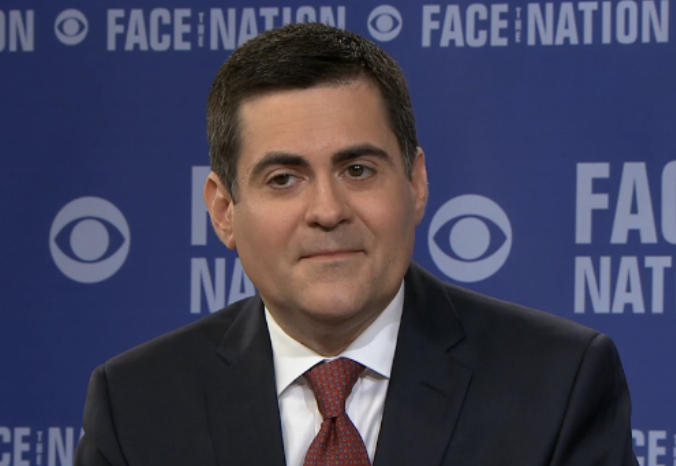
This may be a strange place to start when discussing early news coverage of the Rev. Russell Moore moving from the Ethics & Religious Liberty Commission — the crucial Southern Baptist camp in Beltway land — to what looks like a Christianity Today think tank on theology and public life.

So be it. This is where we will start — with the whole Moore is “too liberal” thing.

What does “liberal” mean in that curse that has been tossed about in Baptist social media?

Remember that one of Moore’s primary duties in Washington, D.C., has been to help Southern Baptists defend against attacks on religious liberty and the First Amendment in general. With that in mind, let me return to a question that I have been asking here at GetReligion — while focusing on the role that labels play in American journalism — for a decade or so. This is from a 2015 post:

What do you call people who are weak in their defense of free speech, weak in their defense of freedom of association and weak in their defense of religious liberty (in other words, basic First Amendment rights)?

The answer: I don't know, but it would be totally inaccurate — considering the history of American political thought — to call these people "liberals."

So what do you call someone, like Moore, who has been defending free speech, defending the freedom of association and defending religious liberty?

Wait. For. It. You can accurately call him a “liberal” in that context. In this framework, the New York Times editorial pages and, in many cases, the American Civil Liberties Union, are now — what? What is the accurate term, these days?

Note that this struggle to define “liberal” was at the heart of the celebrated clash between Bari Weiss and the Times. I would argue that it was part of the newsroom warfare that led to the ousting of Liz Spayd as the Times public editor (when she dared to ask if the newspaper was committed to fair, accurate coverage of half of America). It’s at the heart of the growing tensions between gay-rights icon Andrew Sullivan and the LGBTQ establishment. I could go on and on.

But back to another cluster of issues linked to Moore.


Please respect our Commenting Policy

First Baptist in Dallas works to promote COVID-19 vaccines: Was this a big news story?

First Baptist in Dallas works to promote COVID-19 vaccines: Was this a big news story?

If you have followed news coverage of debates about COVID-19 vaccines, you know that the leaders of churches and major religious denominations — Black and White — have been walking a tightrope on this issue.

Once this subject became politicized — like everything else in American life — there was almost no way to tackle it without causing more tension in their flocks.

Nevertheless, the vast majority of major religious leaders have been doing everything they can to make it possible for more people to safely return to the pews. These efforts have received quite a bit coverage at the local level.

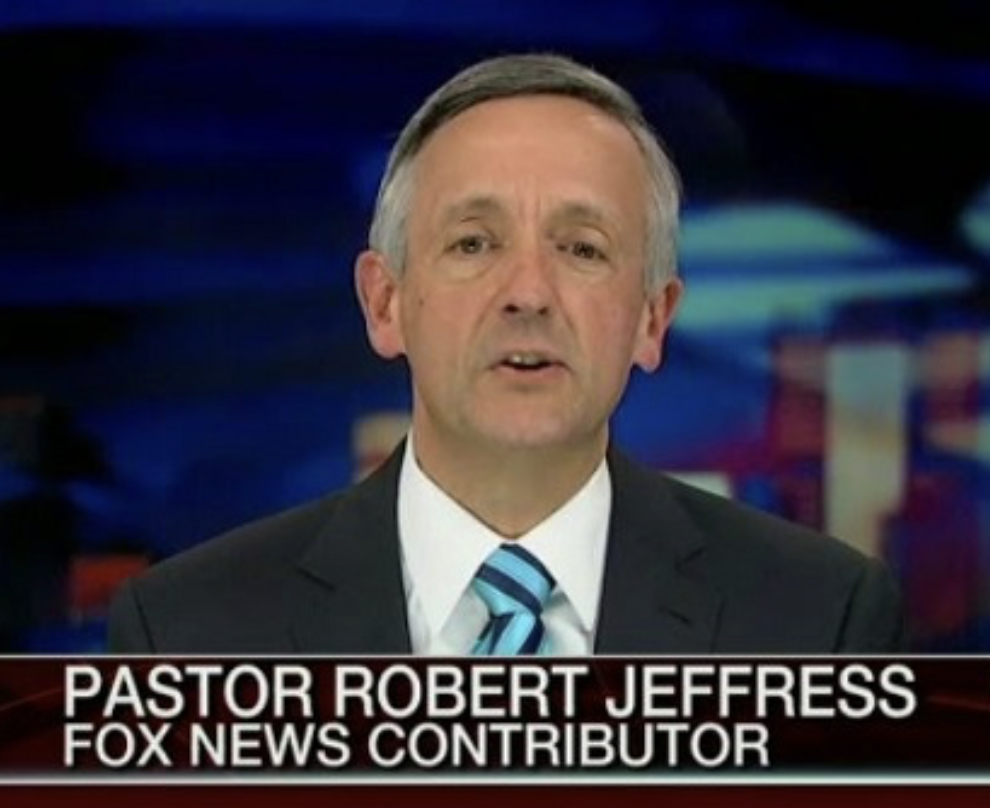
Take, for example, this recent headline in The Dallas Morning News: “Robert Jeffress hopes to combat vaccine fears with First Baptist Dallas’ COVID-19 vaccination effort.” Here is the overture:

To combat vaccine hesitancy among Christian evangelicals, First Baptist Church in Dallas will have a COVID-19 vaccination clinic. …

Senior pastor Robert Jeffress said he hopes the move will encourage people to get shots so more of his 14,000 congregants can come and worship in person.

“Our church will never be what it needs to be until you’re back. The greater risk is the spiritual danger of staying isolated,” Jeffress said in a recent sermon. “I’m not forcing anybody to get the vaccine. That’s your choice. But what I am saying is if you are not back yet, and would like to come back, one option is to take the vaccine, and therefore you don’t have to worry about what other people do or don’t do here in the church.”

Like I said, this was a totally normal local story on this issue.

However, stop and think about this question: Would this have been a bigger story — attracting coverage from TV networks and elite newsrooms such as The New York Times — if Jeffress had taken a stance against the vaccines?

You know it would have been a national story, in part because of this preacher’s past support for former President Donald Trump.


Please respect our Commenting Policy

Bishops debate 'Eucharistic coherence,' a matter of doctrine, politics and eternal judgement

Bishops debate 'Eucharistic coherence,' a matter of doctrine, politics and eternal judgement

Archbishop Joseph Cordileone leads the Archdiocese of San Francisco, a symbolic city in debates about modern American culture.

But what matters the most, as tensions rise among Catholic leaders, is that Cordileone is House Speaker Nancy Pelosi's hometown bishop. Thus, it's hard for politicos to avoid blunt passages in his new pastoral letter, "Before I Formed You in the Womb I Knew You."

Citing centuries of church doctrine, the archbishop argued that Catholics who "reject the teaching of the Church on the sanctity of human life and those who do not seek to live in accordance with that teaching should not receive the Eucharist. It is fundamentally a question of integrity: to receive the Blessed Sacrament in the Catholic liturgy is to espouse publicly the faith and moral teachings of the Catholic Church, and to desire to live accordingly."

There is, he added, "a great difference between struggling to live according to the teachings of the Church and rejecting those teachings. … In the case of public figures who profess to be Catholic and promote abortion, we are not dealing with a sin committed in human weakness or a moral lapse: this is a matter of persistent, obdurate and public rejection of Catholic teaching. This adds an even greater responsibility to the role of the Church's pastors in caring for the salvation of souls."

Citing a famous example, Cordileone recalled when former New York Mayor Rudolph Giuliani received Holy Communion during a 2008 Mass led by Pope Benedict XVI. This caused scandal and, according to the late Cardinal Edward Egan, violated an agreement that Giuliani would not receive the Sacrament because of his public support for abortion rights and other clashes with doctrine.

The big issue, as U.S. bishops prepare for June discussions of "Eucharistic coherence," is not how to handle a former New York City mayor. The question is whether bishops can address their own divisions about the status of pro-abortion-rights Catholics such as Pelosi and President Joe Biden. While vice president, Biden also performed two same-sex marriage rites.

San Diego Bishop Robert McElroy, firing back at Cordileone in America magazine, stressed that the "Eucharist must never be instrumentalized for a political end. … But that is precisely what is being done in the effort to exclude Catholic political leaders who oppose the church's teaching on abortion and civil law. The Eucharist is being weaponized and deployed as a tool in political warfare. This must not happen."


Please respect our Commenting Policy

New podcast: Yes, election of first trans/queer/gender fluid ELCA bishop was a big story

New podcast: Yes, election of first trans/queer/gender fluid ELCA bishop was a big story

Imagine that you are a pastor or a layperson in the Lutheran Church-Missouri Synod, the Wisconsin Evangelical Lutheran Synod or one of the other conservative Lutheran bodies in the United States.

So you sit down with your morning coffee and pop open your email and you see that friends and family have sent you emails enquiring about a headline that they saw on Twitter or somewhere else in today’s complicated news marketplace.

In this case, the headline is from the New York Times and it states: “U.S. Lutheran Church Elects Its First Openly Transgender Bishop.

The problem, of course, is that the “U.S. Lutheran Church” doesn’t exist There is no one denomination that fits that description. Or perhaps the person sending you the email saw, somewhere, the Religion News Service headline that ran with this headline: “Lutherans elect Megan Rohrer first transgender bishop.” Second verse, same as the first.

When it comes to Lutheranism, many journalists continue to struggle when describing who is who and what is what. This brand-name problem was the first layer of the complex issues — in terms of church doctrine and journalism style — that we explored in this week’s “Crossroads” podcast. Click here to tune that in.

The denomination that elected Bishop-elect Rohrer was, of course, the Evangelical Lutheran Church in America, one of the “Seven Sisters” — we may need to make that “Seven Siblings” — of liberal Protestantism.

But what happens if you put that denominational brand name in a headline (besides the fact that it’s way too long for most newspaper layouts)? If you do that, you have to explain the presence of “evangelical,” which has become a near curse word in a news context. And, hey, “Lutheran” by itself sounds more important. Damn the accuracy, full speed ahead.

This brings us to the key hook for this podcast: There was little or nothing surprising about the progressive ELCA electing a trans (if that is the best term, in this case) bishop.


Please respect our Commenting Policy

Same-sex Catholic blessing rites in Germany: Why talk to experts on both sides of this story?

Same-sex Catholic blessing rites in Germany: Why talk to experts on both sides of this story?

And this just in: Germany’s Catholic left proceeded with its planned same-sex blessing rites and, as you would expect (see previous GetReligion podcast and post on this topic), mainstream journalists were there to capture the details.

Sort of.

Actually, not so much.

The most important content — the precise wording of the blessing prayers, in doctrinal terms — appear to be Missing In Action. It’s possible that, as usual, journalists were not interested in the liturgical and doctrinal details. However, I could imagine a scenario in which journalists were asked by organizers to avoid that doctrinal content, with good cause. That material that will matter to canon lawyers.

Also, there was no need to look for content drawn from interviews with pro-Catechism Catholics who opposed the winds of change blowing in Germany. Clearly, this was a story with only one side that needed to be covered. Here is a key part of the Associated Press report written just before the main wave of events on May 10 (“German Catholics to bless gay unions despite Vatican ban”):

Germany is no stranger to schism: 500 years ago, Martin Luther launched the Reformation here. …

In Berlin, the Rev. Jan Korditschke, a Jesuit who works for the diocese preparing adults for baptism and helps out at the St. Canisius congregation, will lead blessings for queer couples at a worship service May 16.

“I am convinced that homosexual orientation is not bad, nor is homosexual love a sin,” Korditschke told The Associated Press in an interview Friday. “I want to celebrate the love of homosexuals with these blessings because the love of homosexuals is something good.”

The 44-year-old said it is important that homosexuals can show themselves within the Catholic Church and gain more visibility long-term. He said he was not afraid of possible repercussions by high-ranking church officials or the Vatican.


Please respect our Commenting Policy

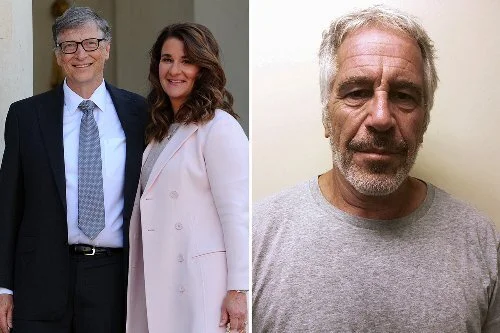
Religion ghosts in Bill and Melinda Gates split? There are some old questions to ask ...

Religion ghosts in Bill and Melinda Gates split? There are some old questions to ask ...

I have written quite a few headlines over the past four decades or so and read a kazillion more. Still, I have to admit that a news headline the other day in The Washington Post stopped me in my tracks: “If Bill and Melinda Gates can’t make a marriage work, what hope is there for the rest of us?

I immediately assumed this was some kind of first-person commentary.

However, it appears that this was a news feature — using the break-up of one of the world’s richest couples as a chance to examine the marital stress caused by COVID-19 lockdowns, life changes for aging Baby Boomers and the resulting need for professional counseling. Here’s the overture:

Just imagine how many hours of couples therapy you can afford when you’re among the world’s richest people. Or the shared sense of purpose you could forge while raising three children and running a $50 billion charitable foundation with your spouse.

Then imagine that it’s not enough to keep you together.

In announcing their decision to divorce, Bill and Melinda Gates cited the work they’d done on their marriage, and a mutual sense of pride in their children and philanthropy. But, they said in identical joint statements shared on Twitter, “we no longer believe we can grow together as a couple in this next phase of our lives.”

Now, for millions of Americans it would be logical to ask another question whenever a couple faces a crisis of this kind. It’s a kind of two-edged sword question that can be carefully worded as follows: Did religions and-or moral issues have anything to do with the break-up of this marriage?

All of the initial coverage that I saw didn’t include any religion/moral information at all. There is a chance that these questions will be asked in the days ahead, now that the Wall Street Journal and other publications have added a rather problematic name to the cast list in this drama — Jeffrey Epstein.

However, I had already opened a digital file folder on this topic because my pre-Internet (think dead tree pulp) files on this couple included a lengthy 1997 Time magazine feature with this headline: “In Search of the Real Bill Gates.” This long-ago article included several details of interest, including at least two of the religious-moral nature. We will take the less famous of these two details first:


Please respect our Commenting Policy

Movie mogul Tyler Perry preaches tolerance to the woke flock at Oscars 2021

Movie mogul Tyler Perry preaches tolerance to the woke flock at Oscars 2021

It was just like one of those inspiring Tyler Perry movie scenes when a believer does the right thing and helps a struggler have a come-to-Jesus epiphany.

Perry was walking to his car after some Los Angeles production work when he was approached by homeless woman.

"I wish I had time to talk about judgment," said Tyler, after receiving the Jean Hersholt Humanitarian Award during the 93rd Academy Awards. "Anyway, I reach in my pocket and I'm about to give her the money and she says: 'Excuse me sir, do you have any shoes?'

"It stopped me cold because I remember being homeless and having one pair of shoes," he added. "So, I took her into the studio. … We're standing there [in] wardrobe and we find her these shoes and I help her put them on. I'm waiting for her to look up and all this time she's looking down. She finally looks up and she's got tears in her eyes. She says: 'Thank you Jesus. My feet are off the ground.' "

Perry, of course, is a movie mogul who has built a 330-acre studio facility in Atlanta used for all kinds of work, including parts of the Marvel epic "The Black Panther." He has created many profitable films of this own, such as "Diary of a Mad Black Woman," "The Family that Preys" and "Madea's Family Reunion," part of a series in which Perry, in drag, plays a pistol-packing, Bible-quoting matriarch at the heart of Black-family melodramas.

It was logical for Perry to receive the Jean Hersholt award, in part because of his rags-to-riches life and his efforts to help churches and nonprofits help the needy. At the same time, it's unlikely that he could ever win a regular Oscar statue since critics and Hollywood elites have long mocked his movies as soapy parables crafted to appeal to ordinary church folks -- Black and White. It isn't unusual, in the final act of Perry movies, for weeping sinners to pull their lives together during Gospel-music altar calls.

Thus, Perry's sermonette was an unusual twist in an Oscar rite packed with political messages and wins by films that few American moviegoers saw or even knew existed.


Please respect our Commenting Policy

New podcast: Religious wars over vaccines? They're more complex than those headlines

New podcast: Religious wars over vaccines? They're more complex than those headlines

Once again, it’s time for some time travel on the religion beat — as we ponder the current state of news coverage about the COVID-19 mask-and-vaccine wars.

Think back to Easter a year ago. Church leaders were wrestling with the real possibility that they would not be able to worship during Holy Week and on the holiest day on the Christian calendar. This was got lots of ink from the press, with good cause. There appeared to be two camps: (1) Crazy right-wingers (many journalists saw Donald Trump looming in the background) who wanted face-to-face worship at any cost and then (2) sensible, sane clergy willing to move to online worship and leave it at that.

The reality was more complex, especially since some (not all) government leaders seemed to think that worship was more dangerous than other forms of public life. During this week’s “Crossroads” podcast (click here to tune that in), host Todd Wilken and I discussed how it’s easy to see the same patterns in news reports on bitter battles over COVID-19 vaccines. For some on the left — see this fascinating Emma Green piece at The Atlantic — super-strict coronavirus rules have evolved into faith-based dogma.

Now for that early COVID-19 flashback. In a post and podcast a year ago, I argued that this wasn’t really a simplistic story about two groups (good churches vs. bad churches), but one in which there were at least five camps to cover:

Those five camps? They are (1) the 99% of religious leaders who cooperated and took worship online, (2) some religious leaders who (think drive-in worship or drive-thru confessions) who tried to create activities that followed [government] social-distancing standards, (3) a few preachers who rebelled, period, (4) lots of government leaders who established logical laws and tried to be consistent with sacred and secular activities and (5) some politicians who seemed to think drive-in religious events were more dangerous than their secular counterparts.

Say what? … Why were drive-in worship services — with, oh, 100 cars containing people in a big space — more dangerous than businesses and food pantry efforts that produced, well, several hundred cars in a parking lot?

These five camps still exist and we can see them in the vaccine wars.


Please respect our Commenting Policy