Terry Mattingly

'Total Woman' redux: Obscure white evangelical says stupid things and it's national news

'Total Woman' redux: Obscure white evangelical says stupid things and it's national news

About the time that I started teaching journalism in Washington, D.C., I saw a movie in which Beltway professionals (including speechwriters) played a rather cynical bar game. I think the movie was “Speechless,” with Michael Keaton and Geena Davis.

If my memory is correct, the game was called “Spot the soundbite.” The goal was to watch a long, complicated political speech and then to accurately predict the tiny, often sensational 5-10 second “bite” that would make it into television news reports.

The message, of course, was that substance and nuance didn’t mean much in public life. Emotions and feelings linked to a fleeting soundbite — which could be funny or emotional or whatever — were what mattered. All together now: “Where’s the beef!” It was also clear that it was easy for journalists to pick good, sharp soundbites from “good” candidates and bad, stupid soundbites from “bad” candidates.

This brings us to this week’s “Crossroads” podcast (click here to tune that in), in which host Todd Wilken and I discussed the latest example of a preacher getting caught, in the age of YouTube and social media, failing to understand the rules of “Spot the soundbite.”

I heard about this epic news story when a former student — who has national print and television experience — sent me a wry email that said: “It’s weird that this random preacher’s sermon merits an NBC News story, no?” Indeed. In the world of short attention spans and tiny online news reports, this sermon by an unknown preacher, in a tiny church, in the middle of nowhere, in an obscure denomination, deserved a 900-word report.

My witty former student knew, of course, why this sermon received lots of national news coverage — including staff (not wire service) coverage in The New York Times (we will get to that shortly).

Yes, this preacher said some genuinely bizarre and disturbing stuff about women and marriage, especially when viewed through a #ChurchToo lens. However, was it national news that an unknown pastor said these things? Well, it is if the sermon contains the word “Trump” and this pastor can be turned into an archetypal symbol of white evangelicals in flyover country, the rubes many journalists blame for electing Orange Man Bad in the first place.

This preacher did not understand how to play “Spot the soundbite.”


Please respect our Commenting Policy

Hey journalists: Can you name three or more Ramadan news angles linked to COVID-19 vaccines?

Hey journalists: Can you name three or more Ramadan news angles linked to COVID-19 vaccines?

I don’t mind admitting it. I thought I had read just about every religion-angle COVID-19 vaccine story that there was to read (and I say that just before heading out the door to drive deep into the Cumberland Mountains to get shot No. 1 at a small-county health clinic).

The Detroit Free Press published a long, long story the other day that certainly proved me wrong on that. The headline: “Vaccine-mobile brings COVID-19 shots to Dearborn mosque, helping to convince the hesitant.

The key to the story was mentioned in an email from the GetReligion reader who (thank you readers who take the time to do this kind of thing) sent us the URL for this story. Here is part of her note:

What I really liked about this article was the way it presented vaccine concerns of the Metro Detroit Muslim community in the context of how the mosque met those concerns. Some of the concerns are unique to the Muslim community (such as the relationship of vaccination to the Ramadan fast) and others are more broad, but the article shows how this religious community is addressing them. The article quotes a variety of actual community members, which I always appreciate.

The Ramadan angle?

That’s the connection that I admit had not occurred to me. The key is explaining the specific link between the strict rules of the Ramadan fast and the simple act of getting a shot of vaccine. We are not talking, at this point, about conspiracy theory talk about the vaccine formulas containing traces of pork.

Here is the crucial part of the story, quoting Mirvat Kadouh, vice chair of the Islamic Center of America's Board of Trustees.

"We are trying to vaccinate as many people as we can before Ramadan," Kadouh said early Monday morning, spreading a plastic tablecloth over a folding table in a large conference room, where the Islamic Center's first COVID-19 vaccine clinic was about to begin.


Please respect our Commenting Policy

Why are Latinos veering into GOP? It's all about money, money, money (and zero faith)

Why are Latinos veering into GOP? It's all about money, money, money (and zero faith)

I know, I know. If you have read GetReligion for the past four-plus years, you know that we’re convinced that the rise of the Latino evangelical voter (often paired with traditional Catholic Latino voters) is an emerging story in American public life.

Part of this story is the rise of Pentecostalism in the Spanish-speaking world (classic Pew Research Center study here) and another part is linked to the defense of Latino family values (to use a loaded phrase).

There’s much more to this story than the role these voters played in Donald Trump’s surprising (to some) showings in some Florida and Texas zip codes. Click here (“New York Times listens to Latino evangelicals: 'Politically homeless' voters pushed toward Trump”) and then here (“Concerning Hispanic evangelicals, secret Trump voters and white evangelical women in Georgia”).

To be blunt about it, it appears that political-desk reporters are struggling with this issue, in part because it undercuts some themes in long-predicted demographic trends backing Democrats. You can see that in the recent, oh-so-predictable New York Times story that ran with this massive double-decker headline:

A Vexing Question for Democrats: What Drives Latino Men to Republicans?

Several voters said values like individual responsibility and providing for one’s family, and a desire for lower taxes and financial stability, led them to reject a party embraced by their parents.

The story is getting some Twitter attention because of this magisterial statement of woke Times doctrine:

Some of the frustrations voiced by Hispanic Republican men are stoked by misinformation, including conspiracy theories claiming that the “deep state” took over during the Trump administration and a belief that Black Lives Matter protests caused widespread violence.

But it’s more important to focus on the bigger picture, which is that this trend is all about Latino men wanting to get rich by being part of the American dream. The overture is long, but essential:


Please respect our Commenting Policy

That painful issue of SBC culture -- is 'Southern' more important than 'Baptist'?

That painful issue of SBC culture -- is 'Southern' more important than 'Baptist'?

When megachurch pastor J.D. Greear became the 62nd president of the Southern Baptist Convention he saw all kinds of statistics headed in all kinds of directions.

After decades of growth, America's largest Protestant flock faced steady decline as many members joined thriving nondenominational evangelical and charismatic churches. Ominously, baptism statistics were falling even faster. On the other side of the 2018 ledger, worship attendance and giving to SBC's national Cooperative Program budget were holding strong.

But one set of numbers caught Greear's attention, he told the SBC's executive committee, as he nears the end of his three years in office.

"Listen, I made diversity … one of my goals coming into this office, not because it's cool, or trendy, or woke," he said. "It's because in the last 30 years the largest growth we've seen in the Southern Baptist Convention has been among Black, Latino and Asian congregations. They are a huge part of our future. … Praise God, brothers and sisters."

Greear's blunt, emotional address came during a Feb. 22 meeting in Nashville in which SBC leaders ousted two churches for "affirming homosexual behavior" by accepting married gay couples as members and two more for employing ministers guilty of sexual abuse.

Those issues loomed in the background during Greear's remarks, which ranged from a fierce defense of the SBC's move to the right during 1980s clashes over "biblical inerrancy" to his concerns about "demonic" attacks from social-media critics who are "trying to rip us apart."

"I've read reports online that I was privately funded by George Soros with the agenda of steering the SBC toward political liberalism," he said. "My office has gotten calls from people who say they've heard that I am friends -- good friends -- with Nancy Pelosi and that we text each other regularly, that I am a Marxist, a card-carrying member of the Black Lives Matter movement and that I fly around on a private jet paid for by Cooperative Program dollars."


Please respect our Commenting Policy

Thinking about disunited Methodist future: Questions, terms and fault lines to ponder

Thinking about disunited Methodist future: Questions, terms and fault lines to ponder

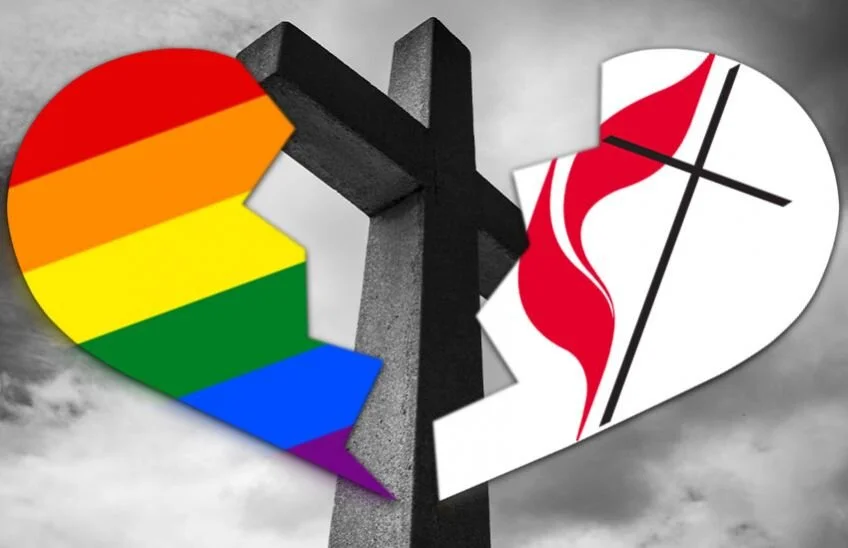
So the “United” Methodists are back on the clock, in terms of waiting for their amicable divorce?

It would appear so, as COVID-19 continues to delay all kinds of large-scale meetings for pretty much everyone. Maybe they could have a socially distanced meeting in something like the University of Michigan’s “Big House” stadium (which seats about 110,000 under normal conditions)?

This is a huge story, of course, any way you cut it — with major implications for the shrinking world of the Seven Sisters of oldline liberal Protestantism, as well as putting the spotlight on the thriving evangelicalism of the Global South. As GetReligion patriarch Richard Ostling noted the other day:

The United Methodist Church is on the brink of America's biggest religious schism since the Civil War, with the conflict centering on sexual morality, biblical authority and theological liberalism.

At stake is an empire with 6.7 million U.S. members and 31,000 congregations located across most American counties, 6.5 million members overseas and $6.3 billion in annual donations (though there's now a severe money crunch). Many of those churches sit on prime urban and suburban real estate.

You know that COVID-19 has to be affecting the economics of all of this, especially for the center-left UMC establishment. Will they try to run out the clock somehow, assuming that the doctrinal conservatives will simply leave on their own (thus avoiding the need for some kind of severance check)? But that kind of split would lead to legal warfare (think of it as the United Methodist lawyers Employment Act) over church sanctuaries, clergy benefits, etc. Ask the the Episcopalians about that.

This leads me to two think pieces for reporters and news consumers to file. The first comes from the Mark Tooley, the must-follow analyst on the Methodist right: “Global Methodism’s New Church.” He covers essential background, with logical attention to Methodist growth in Africa, then offers this helpful summary:

Why are conservatives leaving when they won at the General Conference?

Liberals, although outnumbered globally, dominate the U.S. church and its bureaucracy. Few American conservatives want to inherit liberal church agencies, seminaries, and local conference structures, whose financial viability is already dubious.


Please respect our Commenting Policy

New podcast: Yes, cover RFRA; but Equality Act coverage has also been quiet on local stories

New podcast: Yes, cover RFRA; but Equality Act coverage has also been quiet on local stories

What we have here is a logical question that journalists (and news consumers) should be asking at this point in coverage of debates about the Equality Act. It’s also one of the questions that “Crossroads” host Todd Wilken and dissected during this week’s podcast (click here to tune that in).

That question: How many religious health organizations, schools, recreation centers, homeless shelters, campgrounds, day-care centers and other forms of faith-driven ministries and nonprofit groups are located in the zip codes covered by the newsrooms of your local media outlets?

Earlier this week, I wrote a post (“Puzzle: Many reporters ignoring Equality Act's impact on this crucial Schumer-Kennedy legislation”) noting that a few mainstream news organizations have covered the ways in which the Equality Act would edit or even crush the Religious Freedom Restoration Act (RFRA) of 1993, which passed in the U.S. Senate vote of 97-3. That vote symbolized both the bipartisan nature of that legislation and stunning left-right coalition of sacred and secular groups that supported it.

That remains a valid angle for coverage. However, the more I thought about this topic, and the more Equality Act reports that I read, the more I focused in on another “quiet zone” in the mainstream news coverage — including at the local and regional levels.

For starters, let’s look at two pieces of a major New York Times report on the Equality Act:

It was the second time the Democratic-led House had passed the measure, known as the Equality Act, which seeks to amend the Civil Rights Act of 1964 to add explicit bans on discrimination against lesbian, gay, bisexual and transgender people in both public and private spaces.

Now, that’s remarkably broad language. What kinds of groups and institutions, pray tell, are included under “both public and private places”? And remember this old journalism mantra: All news is local.

Later on, the story adds:

In a landmark decision in June, the Supreme Court ruled that the 1964 civil rights law protects gay and transgender people from workplace discrimination, and that the language of the law, which prohibits discrimination on the basis of sex, also applies to discrimination based on sexual orientation and gender identity. House Democrats sought to build on that ruling with the Equality Act, which would expand the scope of civil rights protections beyond workers to consumers at businesses including restaurants, taxi services, gas stations and shelters.


Please respect our Commenting Policy

Yo, Nashville Tennessean: What does 'people of faith' mean in a political argument?

Yo, Nashville Tennessean: What does 'people of faith' mean in a political argument?

When I arrived at the Rocky Mountain News (RIP) long ago — think early ‘80s — I quickly learned that the city-desk team had an informal way of checking the Colorado pulse on religious issues.

Basically, they were interviewing clergy at the churches in downtown Denver. That was pretty much it. They would also call the Denver Catholic archdiocese (rather progressive at that time) and the “local seminary,” as in the already “woke” Iliff School of Theology, nationally known as an edgy United Methodist campus. It appeared no one knew about the larger Denver Seminary (evangelical) only a few blocks from Iliff.

What kind of churches were downtown? Almost all of them were mainline Protestant congregations and very few of them were showing any sign of life, in terms of attendance and growth. But they were nearby and most were progressive, so that was that. Why talk to folks at the region’s growing megachurches?

Hang in there with me. I am working toward a recent Nashville Tennessean article that ran with this headline: “Hundreds of people of faith call on Tennessee's Republican congressional delegation to repudiate lies about election fraud.” The key question: Define “people of faith”?

Back to Denver, for one more comment. Early on, I attended a press conference linked to the Colorado Council of Churches. Here is how I described what happened in a post back in 2013:

The key was that the organization … was claiming that it spoke for the vast majority of the state's churches. The problem was that, by the 1980s, the conversion of the Colorado Front Range into an evangelical hotbed (including evangelicals in many oldline Protestant bodies) was well on its way. Also, a more doctrinally conservative Catholic archbishop had arrived in town, one anxious to advocate for Catholic teachings on public issues on both sides of the political spectrum. …

Still, it was an important press conference that helped document one side of a religious debate in the state.

Near the end of the session, I asked what I thought was a logical question: Other than the Roman Catholic Archdiocese of Denver, did any of the CCC leaders present represent a church that had more members at that moment than during any of the previous two or three decades?

Well, hey, I thought it was a fair question.


Please respect our Commenting Policy

Puzzle: Many reporters ignoring Equality Act's impact on this crucial Schumer-Kennedy legislation

Puzzle: Many reporters ignoring Equality Act's impact on this crucial Schumer-Kennedy legislation

I have been following the Equality Act coverage and, so far, a crucial piece in this puzzle has been missing.

Thus, here is a one-question pop test. That question: Name the piece of stunningly bipartisan legislation — vote was 97-3 in U.S. Senate — from the Bill Clinton era that will be gutted by passage of the Equality Act? Hint: It was introduced in the House by Rep. Chuck Schumer (D-NY) on March 11, 1993, and in the Senate on the same day by the late Sen. Ted Kennedy (D-MA).

We are, of course, talking about the Religious Freedom Restoration Act (RFRA). In today’s advocacy-media age that would, of course, be the “Religious Freedom” Restoration Act, complete with “scare quotes.”

The key is the impact the Equality Act would have on religious parachurch groups, social ministries, hospitals and educational institutions, from preschools to universities.

Now, does everyone agree on how the Equality Act would impact the First Amendment rights of religious believers and their doctrine-defined ministries?

Of course not. There are strong, credible voices on both sides of that debate that deserve serious, accurate, informed coverage by the mainstream press. However, this process — let’s call it “journalism” — would require newsroom managers to admit that this issue exists.

That’s why Andrew Sullivan — one of the world’s best-known gay public intellectuals — called the introductory Washington Post Equality Act story a “press release” (think PR) for the Human Rights Campaign. Here is that story’s description of the legislation’s impact:

The Equality Act would amend existing civil rights laws, such as the Civil Rights Act of 1964 and the Fair Housing Act, to explicitly ban LGBTQ discrimination in the workforce, housing, education, credit, jury service and other areas of American life.

If passed, the legislation would provide the most comprehensive LGBTQ civil rights protections in U.S. history, advocates say, significantly altering the legal landscape in a country where more than half of states lack explicit legal protections on the basis of sexuality or gender identity. …


Please respect our Commenting Policy

Farewell to 'reindeer rules'? Indiana nativity scene case could have been turning point

Farewell to 'reindeer rules'? Indiana nativity scene case could have been turning point

Year after year, the Lion's Club sets up wire-frame Christmas decorations on the lawn of the historic Jackson County courthouse, facing Main Street in Brownstown, Ind.

The display, which belongs to the local ministerial alliance, glows from dusk to dawn from Thanksgiving until New Year's Day, with the county providing the electricity.

This led to yet another "Christmas Wars" dispute, with the recent Woodring v. Jackson County court decision offering a precise description of this tableau.

There is a "waving Santa Claus with his sleigh, a reindeer, seven large candy-striped poles, the nativity scene … and four carolers standing in front of a lamp post," noted Seventh Circuit Judge Amy Joan St. Eve. "Santa Claus and the reindeer are on the left. …To their right are three gift-bearing kings (Magi) and a camel, who look upon the nativity. On the right side of the sidewalk, Mary, Joseph, and infant Jesus in the stable are flanked on each side by trumpet-playing angels. To their right are several animals facing the nativity. The carolers stand in front of the animals, closer to Main Street."

Before the 2018 lawsuit, the Freedom From Religion Foundation warned that the nativity scene needed to come down. County officials responded by moving Santa and other secular symbols closer to the telltale manger.

That move was clearly linked to what activists call the "reindeer rules," in which secular and sacred symbols are mixed to honor guidelines from the Supreme Court's Lemon v. Kurtzman in 1971. The "Lemon test" asks if a government action's primary effect advanced religion, as opposed to a secular purpose, thus entangling church and state.

But the majority in the new 2-1 decision in Indiana argued that the "nativity scene is constitutional because it fits within a long national tradition of using the nativity scene in broader holiday displays to celebrate the origins of Christmas."

This post-Christmas decision in the heartland may have been a turning point.

"To the degree that the reindeer rules were based on Lemon, this decision said that we now have a new Supreme Court precedent. The reindeer rules appear to be gone," said Diana Verm, senior counsel for the Becket Fund for Religious Liberty, which filed a brief in the case.


Please respect our Commenting Policy