Terry Mattingly

Boy Scouts push trans button: So in which pulpits and pews are people celebrating?

So the Boy Scouts have made another move to dance with the Sexual Revolution, opening the doors to transgender boys.

As you would expect, there are all kinds of religion angles to this important culture-wars story. As you would expect, the New York Times led with words of praise from "critics of the organization who for years have called for more inclusive membership rules." The story also understands that, while some people celebrated the decision, others were grieving.

The twist in this particular Times report -- "Conservatives Alienated by Boy Scouts’ Shift on Transgender Policy" -- was that the story focused almost exclusively on the voices of the losers, thus missing a key element of where this story may be headed in the future.

Yes, you read that right -- the Times pretty much ignored the views -- religious and cultural -- of key leaders on the victorious Religious Left. Maybe that angle will get ink in future coverage? Here is a crucial piece of background material, which follows extensive comments from the Rev. Russell Moore of the Southern Baptist Convention:

Whether the new rules would lead to an influx of transgender scouts seemed uncertain. Besides one highly publicized case of a transgender boy being excluded from a New Jersey Scouting unit, there had been limited attention on the issue before this week. Boy Scouts officials declined to be interviewed, and would not comment on how many youths the decision might affect.
In a statement, a spokeswoman for the Boy Scouts said it was “no longer sufficient” to rely on a birth certificate to determine gender. “The B.S.A. is committed to identifying program options that will help us truly serve the whole family,” said the spokeswoman, Effie Delimarkos, adding that those efforts would remain “true to our core values, outlined in the Scout Oath and Law.”
For many years, the Boy Scouts have found themselves facing conflicting forces on issues of sexuality and inclusion. The Scouts contended with a pattern of declining membership, canceled corporate donations and public criticism over the group’s restrictions on gay youths before easing those rules in 2013. And the move this week to allow transgender youths was hailed by some as a positive, overdue step toward equality.

So the Southern Baptists -- a major player in terms of churches hosting Scouting programs -- are disappointed and this latest BSA policy shift may push more religious conservatives toward the exit door (to alternative programs such as Trail Life USA.

But who are the other major players, on the religion side of this debate?


Please respect our Commenting Policy

See any valid Super Bowl religion stories today? Here's one linked to the ultimate sin

Ah, Super Bowl Sunday. Another one of those days on the liturgical calendar of American civil religion when reporters have to stretch and stretch in an attempt to find valid story angles to fill niches in the inevitable wave of coverage.

Religion-beat pros can get sucked into this whirlpool, as well. The traditional Super Bowl religion-angle story is, of course, the whole "Does God care who wins a football game" story. As I have noted many times, the more devout the believer who is actually involved in the game (classic example would have been the great Dallas Cowboys coach Tom Landry), the less likely they are to believe in some kind of cause-and-effect prayer equation here.

Thus, most believers simply say that athletes should pray to play their best and for participants to avoid injuries.

But this is not the kind of theological problem that devout Christians actually think about, when faced with something like the Super Bowl. So, if reporters are looking for a valid story linked to The Big Game, what might that look like?

This year, let me point readers toward a feature by a former student of mine, Tim Ellsworth, a communications pro at Union University in Jackson, Tenn., who also writes sports features for Baptist Press. What's his angle this year?

Clue: It comes before a fall.

HOUSTON (BP) -- They work at a job where millions of people watch them. They are cheered, admired, lauded and pampered. People recognize them, hound them for autographs and care what they have to say.
Falcons' long snapper Josh Harris and Patriots' wide receiver Matthew Slater share how professional athletes often struggle with pride.


Please respect our Commenting Policy

Poignant think piece: Demographics are destiny in many dying Jewish communities

One of the things I am working on, at the moment, is a memo for seminar on religion reporting that is tentatively slated for this coming summer in Prague. The name of the memo, which will become one of the lectures that week, is this: "The Seven Deadly Sins of the Religion Beat."

After consulting with some former GetReligionistas, I have a list of about 11 deadly sins -- so there is some editing and condensing ahead.

Nevertheless, I know that one of the deadly sins that is sure to make the cut will center on an idea from M.Z. "GetReligionista emerita" Hemingway. She suggested: "Ignorance of religious landscape outside of big cities."

Dead on. There is a tendency for reporters at big news organizations to assume that all big religion stories and trends emerge in big places, in big flocks, with big buildings (that photograph well) and that are led by big people (who function as semi-political leaders or celebrities). If you know anything about the history of religion, you know that this is often not how things work.

I think, in particular, that journalists often struggle to find ways to convince editors that it is important to notice when institutions decline, as well as when they grow. Here at GetReligion, I have said, over and over, that the decline of America's liberal Protestant establishment is probably the most under-covered story of the past 50 years. Without the demographic collapse of the oldline churches, you would not have had a giant hole in the public square for the Religious Right to (in part) fill.

I thought about all of this when reading the top of a poignant think piece that ran this week at The Forward, with this headline: "These Are America’s Most Endangered Jewish Communities." Heads up, journalists: There are all kinds of stories in this piece to localize.

The bottom line is the bottom line: There is no painless way to cut a shrinking pie and, at some point, the pie may vanish altogether.


Please respect our Commenting Policy

Concerning the New York Times: 'Fake' news? No. 'Flawed' or 'flavored' news? From time to time ...

Concerning the New York Times: 'Fake' news? No. 'Flawed' or 'flavored' news? From time to time ...

It's the question many journalists are hearing right now from family and online friends as discussions of "fake news" keep heating up: "OK, where am I supposed to go to find balanced, accurate reporting these days?"

As you would expect, when I hear that question there is often an editorial twist in it, something like this: "OK, where am I supposed to go to find balanced, accurate reporting on religion news these days?" That's the question that loomed in the background during the latest "Crossroads" podcast (click here to tune that in), as host Todd Wilken and I discussed the fact that GetReligion marked it's 13th birthday this week.

It's crucial, for starters, to recognize that there are online sources that seem to welcome fake news and then there are established media brands that seem, every now and then, to catch a fake-news virus that affects one or two stories or issues. You can see my colleague Paul Glader of The King's College (he also directs The Media Project that includes GetReligion) striving to make that distinction in his Forbes piece, "10 Journalism Brands Where You Find Real Facts Rather Than Alternative Facts."

Glader is absolutely right on this basic issue of ethics and quality. At the same time, the minute I read the headline on his piece I could hear the voices of skeptical online friends saying, "Is that '10 Journalism Brands Where You WILL Find Real Facts' or is it '10 Journalism Brands Where You CAN Find Real Facts'?"

As we have stressed many times here at GetReligion, the quality of mainstream media coverage of religion news is consistently inconsistent. There are professionals who do fantastic work and then, in the same newsroom, there are reporters and editors who -- when it comes to getting religion -- think up is down and down is up. They don't know what they don't know.

For example, contrast the informed and nuanced religion-beat coverage of issues linking politics and religion at The Washington Post with the tone-deaf material produced throughout 2016 by the political desk in that newsroom.

Meanwhile, what are we to make of The New York Times, which remains one of the world's top two news organizations (I put BBC in that mix, as well) in terms of its reach and ambitions?

Anyone who ignores the high quality of work done at The Times is, well, ignoring the facts.

Yet it is clear, as the newspaper's own editor has stated, that the great Gray Lady struggles when it comes to grasping many basic facts about life in ordinary America -- starting with the role of religious faith in the life of millions of ordinary people (including in New York City).


Please respect our Commenting Policy

A blog's life: GetReligion turns 13, still clinging to hope that more journalists will get it

You know the old saying that one year in the life of a dog is equal to seven years for its owner?

Well, if people talk about the relative value of "dogs years," is there some kind of corresponding scale for comparing years in ordinary human life with those in digital, online and social-media life? I mean, how old are Apple iPhones? They seem like they have been here forever. Every year on Twitter equals how much time in the real world?

I bring this up because GetReligion turns 13 today. What does it mean when a weblog lasts long enough to become a teen-ager? 

If your evolving team of GetReligionistas has been at this media-criticism thing for 13 years on regular analog calendars, how long is that in "blog years?" By the way, we have published, oh, 10 million words or so of new material here in that amount of time.

Why do we keep doing what we do? (Click here for our "What we do, why we do it" trilogy.)

To be blunt, we still believe that it's impossible to understand real events and trends in the lives of real people living in the real world without taking religion really seriously. We still believe that the more controversial the religion-news story, the more journalists should strive to accurately cover the crucial voices of believers and thinkers on both sides. The word "respect" is crucial in that equation. Ditto for "balance." We believe that doctrine and history matter. We believe that, when in doubt, you should report unto others as you would want others to report unto you. We remain committed to the old-school (as historians would put it) American model of the press.

Trust me, we can go on. And we plan to. After all, the editor of The New York Times recently saidt: "We don't get religion. We don't get the role of religion in people's lives." Who knows what will happen in the next 12 months? 

But as we mark Feb. 2 once again, let me point readers toward a recent essay that ran at the The Common Vision website with this double-decker headline:


Please respect our Commenting Policy

Anti-clickbait 2.0: Warning! This post asks readers to think about messy life in Russia

Alas, it's true. As our own Bobby Ross Jr. mentioned earlier today, nothing seems to push readers away from a news-driven blog quicker than headlines about complex stories on the other side of the world.

Well, culture-wars readers on left and right might click to read something about a Pope Francis statement attacking President Donald Trump's refusal to put gender-neutral bathrooms at gateway facilities in a new border wall. Maybe. Just thinking out loud about that one.

So USA Today had an international story the other day that I ran into on Twitter, before I saw coverage of this topic elsewhere. The headline: "Russia parliament votes 380-3 to decriminalize domestic violence."

Now, that's a rather shocking headline, especially when we are talking about a culture that leans toward the authoritarian, to say the least. However, when I read the overture to the piece I found the details a bit more complex and nuanced than I expected.

Russia's parliament voted 380-3 ... to decriminalize domestic violence in cases where it does not cause "substantial bodily harm" and does not occur more than once a year.
The move, which eliminates criminal liability in such cases, makes a violation punishable by a fine of roughly $500, or a 15-day arrest, provided there is no repeat within 12 months. The bill now goes to the rubber-stamp upper chamber, where no opposition is expected. It then must be signed by President Vladimir Putin, who has signaled his support.
Kremlin spokesperson Dmitry Peskov told journalists that family conflicts do "not necessarily constitute domestic violence."

Now, I am no expert on Russia. Most of what I know is from books, from other Orthodox believers (my current parish includes more than a few Russians) and from an intense two weeks in Moscow a few days after the 1991 fall of the Soviet Union (click here for info on that).

When I read that lede, as opposed to the headline, I immediately had several reactions as a journalist:


Please respect our Commenting Policy

Snip, snip? The symbolic clout of Sikh man nodding approval for (a) Trump or (b) Schumer

Anyone who knows anything about America in the past half century or so knows that we live in a culture that is increasingly dominated by visual images and the emotions they produce.

Images were crucial as modern print journalism evolved. It goes without saying that images are crucial in visual storytelling in television, past and present. 

Today? While words matter in social media, nothing grabs people quite like that punchy, ironic, cute, infuriating or poignant image that seems to sum up (a) whatever is happening in the real world at the moment or (b) whatever we are consuming in order to be able to ignore whatever is happening in the real world at the moment.

Thus, a former GetReligionista sent the current team an email the other day -- with the simple headline, "Hmmmm" -- containing the item at the top of this post.

What's the point? The question has been asked many times: Why do so many people get confused and think that Sikhs are Muslims? Is there something compelling about the Sikh turban (the dastaar) that makes journalists think "foreign," "exotic," maybe "Arab" and, thus, "Muslim" or someone who would be accused of being a "Muslim terrorist"?

Ah, but the turban is VISUAL and it all but screams "diversity," "other world religions" and "multiculturalism."

At the moment, is the whole point -- in terms of journalism shorthand -- that a Sikh believer looks like the kind of man that the angry, fact-challenged, Islamophobic Donald Trump voter is supposed to want to (a) beat up and then (b) accuse of being a "Muslim" terrorist? 

Well, a few key facts are all wrong. But, hey, the point is to make a point. Right?


Please respect our Commenting Policy

Weekend of #MuslimBan: Did it help for press to ignore key contents of executive order?

Weekend of #MuslimBan: Did it help for press to ignore key contents of executive order?

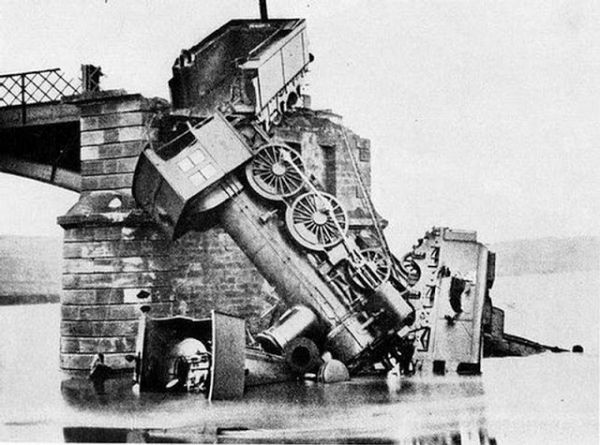
What a train wreck. There is really no way to dig into the thousands, maybe millions, of words that the mainstream press poured out over the weekend in coverage of President Donald Trump's rushed, flawed executive order creating a temporary ban on most refugees from lands racked by conflicts with radicalized forms of Islam.

My main question, in this post, does not concern the merits of order or the process that created it. That's clearly part of the train wreck and, as someone who was openly #NeverTrump (and #NeverHillary), I think mainstream reporters should go after that mess that with the same fervor they dedicated to the humanitarian impact of the previous administration's policies in Syria, Iraq, etc. We need to know who decided to rollout such a important executive order in such a slapdash, incompetent fashion -- especially whatever it did or didn't say about people in transit or those with green cards.

Now, I would like to focus on one question in particular related to this journalistic blitz that I think will be of special interest to GetReligion readers.

The hashtag for the day was clearly #MuslimBan, even though the order contained language specifically trying to protect many oppressed Muslims. The media also focused on Trump's statements pledging to protect oppressed Christians (I know it's hard to #IgnoreTrump, even when it's wise to do so), even though the text of the order said something else.

My question: Did journalists make this tragic crisis worse by ignoring or mangling some key contents of this order? Following the action on Twitter, it seemed that there are two stances on that.

The first was from Trump critics on the left, which included almost all elite media. It said: The news coverage of the executive order was fine. We all know what Trump meant, no matter what the order's words said. So there.

The second -- with very few exceptions -- was among conservative Trump critics (click here for essential National Review essay by #NeverTrump stalwart David French). I said: The EO was messed up and flawed, but press didn't help by ignoring the order's content. This, along with Trump sloppiness and ego, helped add to the panic and added to the firestorm that hurt real people.

It certainly did appear that, in many cases, panicky police and immigration officials acted like they were enforcing what press reports said the executive order said, rather than the text of the order (which was rushed out in a crazed, flawed manner). I hope there is follow-up coverage on that issue.

So, when considering these questions, what is the key passage of the #MuslimBan order?


Please respect our Commenting Policy

Flashback: Where did term 'opposition' come from in Trump vs. @NYTimes war?

Flashback: Where did term 'opposition' come from in Trump vs. @NYTimes war?

Believe it or not, we did get a "Crossroads" podcast recorded late this week, even as I keep fighting a sick-unto-death virus that I obtained on Capitol Hill in Washington D.C. at midweek. I've been sleeping, oh, about 16 hours a day.

Yes, I can follow Twitter some while laying on my back with my glasses perched on my nose. What I have been reading has only made me more and more furious.

Right, back to the podcast. Please click here to tune that in. You will probably be able to hear that I am under the weather in the recording. You will also hear that, for some strange reason (I blame fury and delirium), that I kept putting an "i" sound in the last name of Donald Trump's media-bating pro Stephen K. Bannon -- as in "Bannion." Mea culpa

The podcast focuses on the question of whether many elite journalists have reached the point that they simply not willing to listen to what Trump is saying (yes, it's often incoherent) or even to the factual details in the documents spelling out some of this actions. At the same time, we recorded as the annual March For Life was unfolding and it was clear that some media outlets had poured on the coverage (think The Washington Post), while others had done next to nothing with live work.

So, is the media listening? Do some elite journalists want to listen? Or, to use the Bannon phrase adopted (see video up top) by Trump, are The New York Times and other powerhouse news organizations now functioning as the clearly non-loyal opposition (after eight years of near worship for the previous president)?

Let's back up and look at two things one more time. First, what did Bannon tell the Times, once again?

“I want you to quote this,” Mr. Bannon added. “The media here is the opposition party. They don’t understand this country. They still do not understand why Donald Trump is the president of the United States.”

I do wonder what the word "here" means in that quote, as in "the media here is the opposition party." Is that D.C.? The Acela zone?

But where did Bannon get this idea that the Times, in particular, would fill that oppositional role so openly?


Please respect our Commenting Policy