Surveys & polls

News hooks abound: How will religious faith shape the 'birth dearth,' and vice versa?

News hooks abound: How will religious faith shape the 'birth dearth,' and vice versa?

Two January headlines a week apart signal that the past generation’s “population explosion” worries have reversed.

Observers fretted as China announced its population began to shrink last year as its birth rate reached a record low. Japan’s Prime Minister Fumio Kishida warned parliament that a declining birth rate means the rapidly aging nation is “on the verge of whether we can continue to function as a society.”

Then last Saturday a New York Times op-ed asserted that unfair burdens on wives and mothers created a “birth strike” and “marriage strike” that are “killing South Korea.” The nation has posted the world’s lowest fertility rate the past three years and deaths now outnumber births.

Such realities provoked the ever-interesting Times columnist Ross Douthat to ask whether “the defining challenge of the 21st Century” will be climate change decried by so many analysts or, instead, the globe’s accumulating “birth dearth” a.k.a. “baby bust” or “population implosion.”

The second trend could well undercut societies’ “dynamism and innovation” and pit “a swollen retired population” against the “overburdened young,” he warned, while listing geopolitical factors in the coming “age of demographic decadence.”

Attention newsroom managers: This is an apt time for media to consider U.S.-focused big-think pieces on how religious communities are shaping population trends and, vice versa, how those trends affect religion.

Pro-procreation government programs appear to have limited impact in boosting birth rates, which instead reflect cultural values regarding marriage and children, and complex individual decision-making. . Articles might examine related abortion policy.

Traditionally, all religions cherish children and favor reproduction, notably in the case of the Catholic Church, as The Guy discussed here a year ago (though today there’s little difference in fertility between U.S. Catholics and Protestants). On the other side of that equation, there’s universal acknowledgment that married couples raising children have been a pivotal constituency drawn to religious involvement.


Please respect our Commenting Policy

OK, we get it: That whole 'Christian nationalism' thing is hot, right now. But what is it?

OK, we get it: That whole 'Christian nationalism' thing is hot, right now. But what is it?

By all indications, urgent warnings against “Christian nationalism” (CN) will continue as a major media theme through Election Day 2024.

Journalists will need to be careful with a tricky label that’s mostly shunned by supposed participants in the CN movement and employed by opponents (as with “fundamentalist” or “ultra-“ or “cult”). How complex is the fighting about this term? Click here to tune in some of the YouTube debates.

Critics’ typical definition comes from attorney Amanda Tyler, who leads Christians Against Christian Nationalism (with a large “N”) and the proudly progressive Baptist Joint Committee for Religious Liberty. She says CN “seeks to merge American and Christian identities, distorting both the Christian faith and America’s constitutional democracy.” Its “mythological” view of founding of a “Christian nation” means America is singled out “to fulfill God’s purposes on earth.” Further, CN “demands a privileged place for Christianity in public life, buttressed by the active support of government at all levels.”

Writers could pursue this sort of theme sideways by reviewing or collecting pro and con reactions to “How to Be a Patriotic Christian: Love of Country as Love of Neighbor,” the latest book by middle-roading evangelical Richard Mouw of Calvin University, formerly president of Fuller Theological Seminary.

Otherwise, here's a rundown to guide journalists on some of the notable CN chatter since The Guy took a whack at the definition issue last year year at GetReligion.

Hang on, because this gets complex. For starters, ambiguity abounded in an October Pew Research survey.

Some 60% of adults think -- yes -- the founders intended the U.S. to be a “Christian nation,” and 45% think it actually “should be” such, though for many that means only generalized moral guidance while only 18% think the phrase indicates Christian-based governance. Importantly, a 54% majority had never even heard of CN.

That belief the U.S. “should be” a Christian nation was favored by fully 65% of Black Protestants (compared with e.g. only 47% of Catholics). Yet University of Texas political scientist Eric McDaniel wrote for TheConversation.com that CN believes the only “true” Americans are “white, Christian and U.S.-born and whose families have European roots.”


Please respect our Commenting Policy

Concerning Prince Harry, Episcopalians and the choices faced by millions of 'nones'

Concerning Prince Harry, Episcopalians and the choices faced by millions of 'nones'

If low-church Anglican evangelicals were active in the whole naming-saints thing, you know that the process would already be in motion to honor Queen Elizabeth II. The quiet dignity of her Christian faith was at the heart of her long life of service.

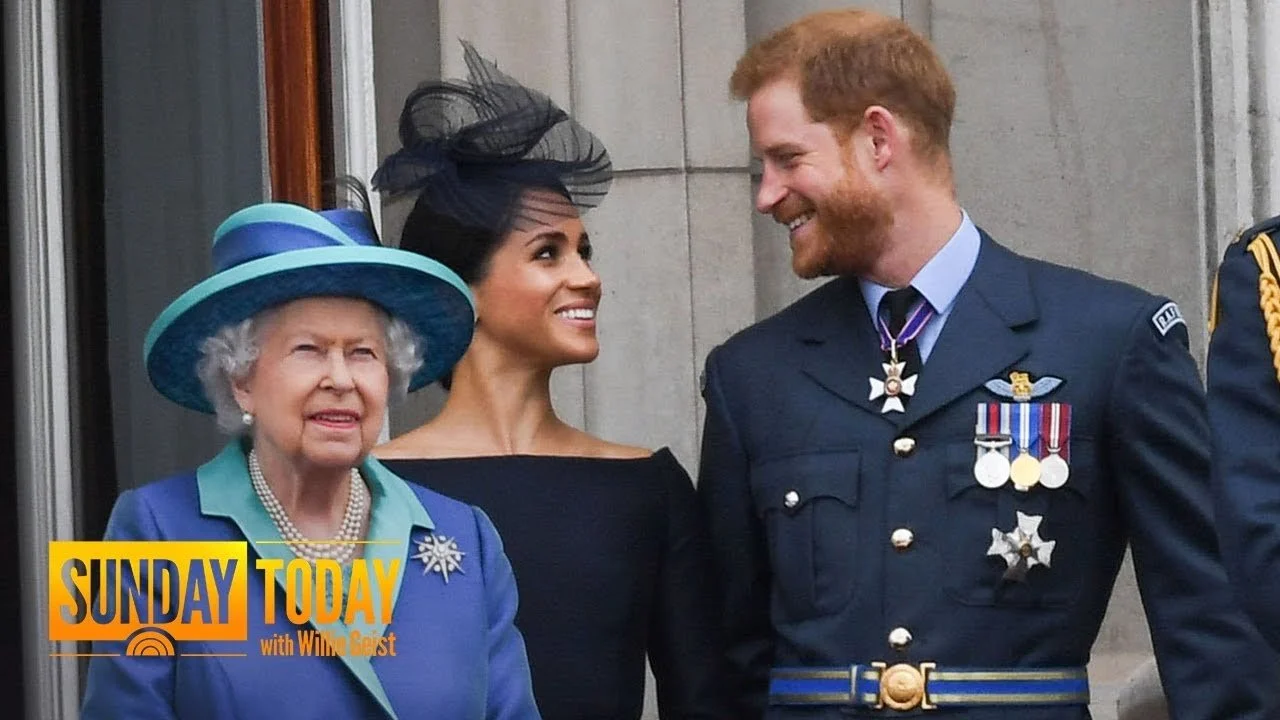
This brings us to what I would argue is a valid religion-angle story linked to “Spare,” the tell-all confessional memoir Prince Harry has released from the media-friendly alternative palace that he is creating with Meghan Markle here in America.

Here is the basic question: In what church will Harry and Meghan raise their children?

This points, of course, to broader questions about the seismic changes inside England’s Royal Family after the passing of Elizabeth the Great. Yes, some of these questions are linked to the complex ecumenical history of King Charles III (see “The Religion of King Charles III” at The National Catholic Register). But it’s pretty clear that there is another divide — in style and content — between the king and Prince Harry.

This brings us to a good news-bad news situation for one of America’s most symbolic denominations.

The good news: Prince Harry would make a great Episcopalian.

The bad news: Prince Harry would make a great Episcopalian, or he could be another “none” or “nothing in particular.”

In a way, Prince Spare faces choices about faith — even liberal Protestant faith — linked to the great exodus of Americans from established religion and, in particular, from the fading “Seven Sisters” of liberal Protestantism. Will the Duke of Sussex and his family become active, vocal Episcopalians or will they become examples of trends described in the book “Nonverts: The Making of Ex-Christian America,” by Stephen Bullivant.

Think about this for a minute. If you sort through the 17,900,000 or so stories in a Google News file about “Spare,” it’s hard to find a better high-point in this drama than the 2018 wedding of Prince Harry and Meghan Markle. And who was the rock star of that media circus? It was the preacher — the leader of the Episcopal Church in the United States. You can hear the hosannas in the overture of this celebratory New York Times feature:


Please respect our Commenting Policy

Two leaders of the new U.S. House could put Baptist diversity in the news spotlight

Two leaders of the new U.S. House could put Baptist diversity in the news spotlight

There could hardly be a greater contrast than New Yorker Hakeem Jeffries’ glide into leadership of the U.S. House Democratic minority and that of California Republican Kevin McCarthy’s agonizing 15-ballot crawl to barely become House Speaker in the worst such Capitol Hill fuss since the Civil War.

Jeffries, of course, wins news renown as Congress’s first African-American party leader. But here’s a factoid has gotten little media notice. Yes, this is a religion angle.

By coincidence, both party leaders are now Baptists, a faith that outside the South has generally been underrepresented among the political elite. Catholics (think Nancy Pelosi, John Boehner, Paul Ryan) monopolized the speaker and minority leader posts for much of the 21st.Century.

There would be good feature potential in comparing the two Baptists’ congregations.

Though Jeffries has an Arabic first name (meaning “wise”), he’s a lifelong worshiper at Cornerstone Baptist Church,  a prominent African-American congregation in Brooklyn. Senior Pastor Lawrence Aker III and his wife Cynthia have the distinction of holding diverse divinity degrees from both “evangelical” Dallas Theological Seminary and “mainline” Yale.

McCarthy’s congregation is the equally well-known Valley Baptist Church in his hometown of Bakersfield. Senior Pastor Roger Spradlin, who trained at Criswell College, has served Valley since 1983 and now leads a team of eight clergy. This is a typical white evangelical fellowship and affiliated with the nation’s largest Protestant denomination, the Southern Baptist Convention, which Spradlin has served as chairman of the national executive committee.

Speaking of religion on Capitol Hill, reporters will want to keep on file the official religious affiliations of all 534 members of the incoming House and Senate (with one vacancy due to death) accessible by clicking here. The handy list is compiled every two years by the Pew Research Center from information the legislators themselves file with CQ Roll Call.

Labels may say little.


Please respect our Commenting Policy

Plug-In: After the death of Benedict XVI -- questions about his legacy and his funeral

Plug-In: After the death of Benedict XVI -- questions about his legacy and his funeral

I’m your Weekend Plug-in columnist, and I’m excited to launch the fourth year of this newsletter.

Plug-in aims to highlight the best reads and top headlines in the world of faith. In 2023, we’re tweaking our format to make it even smarter and more concise.

Let’s jump right in!

What To Know: The Big Story

Pope Emeritus Benedict XVI died Saturday at age 95. Clementi Lisi recounts the life of the first pope in 600 years to resign.

Pope Francis presided over the funeral Mass for his predecessor, as Lisi reports. But some found fault with Francis’ brief homily for Benedict, according to The New York Times’ Jason Horowitz and Ruth Graham.

For more coverage from the Vatican, follow The Associated Press’ Nicole Winfield, the National Catholic Reporter’s Christopher White, Religion News Service’s Claire Giangravé and the Wall Street Journal’s Francis X. Rocca.

Looking ahead: Francis may have a freer hand after Benedict’s death, Rocca reports. But U.S. bishops’ rift with Francis is unlikely to ease, according to AP’s David Crary. At Crux, Elise Ann Allen explores whether Benedict’s death might open the door to new rules for retired popes.

More: Lisi presents “5 Catholic storylines you need to follow closely in 2023.”

Power Up: The Week’s Best Reads

1. Football and prayer: In America, the phrase “thoughts and prayers” is uttered frequently at painful times, as Poynter.org’s Al Tompkins notes.

But what happens when people actually pray?


Please respect our Commenting Policy

Nondenominational era 2.0: What are America's biggest local Protestant churches?

Nondenominational era 2.0: What are America's biggest local Protestant churches?

THE QUESTION:

What are America’s biggest local Protestant churches?

THE RELIGION GUY’S ANSWER:

Through American history, Catholic parishes tended to have large memberships while local Protestant congregations were relatively small, with a few prominent exceptions. But beginning in the 1970s, the U.S. has entered a remarkable era with, by now, at least 1,750 Protestant “megachurches,” typically defined by average (pre-COVID-19) weekend attendance of 2,000 or more.

These flocks often say they’re simply “Christian,” but The Guy insists the “Protestant” label is truly accurate. Most are young and they’re overwhelmingly “evangelical” in belief and ministry. Which are the biggest of these “big box” churches?

Outreach magazine posts annual listings of the 100 largest, based on churches’ own reports, and also calculates the 100 fastest-growing congregations. Both rankings are available at this website. The stats are collected by the Southern Baptist Convention-linked Lifeway Research and the Hartford Institute for Religion Research. The key: Look for the word “nondenominational.”

Here are the top 20:

* Life Church, Edmond, Oklahoma (85,000 weekend attendance counting all off-site locations; affiliated with the Evangelical Covenant Church).

* Church of the Highlands, Birmingham, Alabama (60,000; nondenominational).

* Lakewood Church, Houston (45,000; nondenominational).

* Crossroads Church, Cincinnati (35,253; nondenominational)

* Christ’s Church of the Valley, Peoria, Arizona; (30,482; Independent Christian Churches — see explanation below)

* Saddleback Church, Lake Forest, California (28,000; Southern Baptist Convention)


Please respect our Commenting Policy

Top trends of 2022? There are plenty of political and religion stories in these tweets

Top trends of 2022? There are plenty of political and religion stories in these tweets

It’s certainly been a volatile year on social media (#DUH).

Twitter is my platform of choice. It does exactly what I need it to do because it’s such a visual medium.

Post a graph. Write 50 or 60 words and then wait a few minutes to see what happens.

In many ways, it’s the antithesis of what it means to be an academic. We are taught to qualify every statement, to never engage in hyperbole, to use 1,000 words when 500 would do. Twitter has been teaching me over the last five years about how to visualize data in the simplest manner possible. It’s taught me that if the average reader can’t understand the point I’m trying to make in 280 characters, then it’s probably not worth making.

Then, Elon Musk bought the whole company. I can’t say that I agree with every decision that he is making in steering the Blue Bird Site, but I honestly don’t have a great alternative. So, I will go down with the ship, I suppose.

But, the end of the year always offers a nice opportunity to pause and reflect on what “worked” on Twitter. Out of the nearly 1,400 tweets I sent this year, I wanted to take the opportunity to catalog the five tweets that got the most retweets in 2022. Here they are in reverse order.

5. Education and Religion

I swear I could post a variation of this one once a month and it would get a ton of attention. It’s a really simple bit of analysis, to be honest.

The conclusion is straightforward and widely known among quantitative scholars of American religion. Folks with a higher level of education are more likely to align with a religious tradition and less likely to say that they are a religious “none.”

This reality replicates in every dataset that I’ve ever seen. Yet, it comes as an absolute shock to people on Twitter. Why is that? Any thoughts?


Please respect our Commenting Policy

What's up in 2023? The Guy offers a first draft of a religion-beat agenda

What's up in 2023? The Guy offers a first draft of a religion-beat agenda

The new year could be climactic for two aspects of LGBTQ issues, first, the rights of religious and conservative dissenters within liberalized western culture, and second, the ongoing conflicts within church groups.

What should journalists be prepared to cover?

By June, the U.S. Supreme Court will decide the 303 Creative case, in which a website designer — based on First Amendment claims — seeks exemption from Colorado’s anti-discrimination law to avoid work on postings that celebrate same-sex weddings (background here). The Court might broadly define what rights various forms of religious traditionalists have in a host of legal conflicts facing e.g. U.S. religious colleges, social-service agencies and individual businesses now that same-sex marriage is legalized.

Inside a specific religion brand, this could be a pivotal year for the global Anglican Communion with its 46 national branches and some 85 million baptized members. A mid-January meeting of bishops in the “mother” Church of England may well decide dioceses can permit same-sex weddings. That historic change would then need approval from clergy and lay delegates at the February 6–9 General Synod.

Such a move would add explosive potential to the April 17-21 meeting in Kigali, Rwanda, of the Global Fellowship of Confessing Anglicans (“GAFCON”), long vexed by liberal moves in England, the United States and elsewhere in declining First World churches. GAFCON unites the heads of 10 Anglican branches, three of which alone (Kenya, Nigeria, Uganda) encompass half the world’s Anglicans. GAFCON’s chairman, Archbishop Foley Beach (admin@anglicanchurch.net and 724-266-9400), heads a church of conservatives who’ve left the U.S. Episcopal Church and Anglican Church of Canada.

Already, key archbishops have boycotted global Anglican confabs, continuing a slow-motion breakup that began decades ago. Will the maneuvers in England and elsewhere provoke a huge, definitive break from the London-based Anglican Communion by churches in GAFCON and the related Global South Fellowship of Anglican Churches?

The United Methodist Church could be on the brink of the biggest U.S. Protestant split since the Civil War. That’s a huge story at the local, regional, national and global levels.


Please respect our Commenting Policy