Surveys & polls

Plug-In: Who were the religion-politics winners and who were the losers in '22 midterms?

Plug-In: Who were the religion-politics winners and who were the losers in '22 midterms?

America voted.

But you knew that already, so we’ll make this quick.

Big winners included abortion rights proponents and Florida Gov. Ron DeSantis, a potential 2024 GOP presidential contender.

Among the notable losers: a predicted red wave and former President Donald Trump. Alas, Trump is not one to acknowledge electoral defeat. The question becomes: Will the Republicans who’ve enabled him finally do so and move on?

Still to be decided: Georgia’s crucial U.S. Senate race, which is headed to a Dec. 6 runoff between Democratic incumbent Raphael Warnock and Republican challenger Herschel Walker. In the general election campaign, the two offered clashing religious messages, as noted by The Associated Press’ Bill Barrow.

For more insight on Tuesday’s voting, check out these religion stories:

Abortion rights scored the biggest midterm victory (by Yonat Shimron and Jack Jenkins, Religion News Service)

Republicans win on inflation but lose on abortion (by Daniel Silliman, Christianity Today)

After wins at the ballot, abortion rights groups want to ‘put this to the people’ (by Sarah McCammon, NPR)

Catholic leaders say abortion referendum results ‘does not bode well for the future’ (by John Lavenburg, Crux)

Please respect our Commenting Policy

What kind of believers want to sit in pews surrounded by their political allies?

What kind of believers want to sit in pews surrounded by their political allies?

Just over half of churchgoing American Protestants went into the tense midterm elections believing that the people in the pews around them would vote the same way they did.

A Lifeway Research online survey in September found that 50% of those in its national panel agreed with the statement, "I prefer to attend a church where people share my political beliefs, while 55% agreed that "My political views match those of most people at my church." At the same time, 10% were not sure about the first question and 22% the second.

"What we are seeing is a pretty complex situation," said Scott McConnell, executive director at Lifeway Research. While churchgoers are divided on the need for political uniformity in their pews, there are enough believers who take that stance to prove that "this is not one or two people that pastors need to talk to and try to understand. This is a GROUP of people in most of our churches and that's something pastors have to deal with now."

This new survey began with questions used in 2017, he noted, and while the results are similar some new trends are clear. In the earlier survey, 51% of the respondents felt their church was politically homogenous, with only 11% "strongly" agreeing. Now, 21% strongly agree. Also, a rising number of believers assume they can predict the politics of others in their churches. In 2017, 30% were unsure if they shared the views of others in their congregations, but that number dropped to 22% this time.

In a survey result clashing with a popular stereotype, those with evangelical beliefs (44%) were less likely than non-evangelicals (54%) to say they wanted a church in which believers shared their political views. The survey defined "evangelical" in doctrinal terms, stressing beliefs such as, "The Bible is the highest authority for what I believe" and "Only those who trust in Jesus Christ alone as their Savior receive God's free gift of eternal salvation." Other significant results included:


Please respect our Commenting Policy

Plug-In: Faith and politics 2022: Five religion-news storylines in the midterm elections

Plug-In: Faith and politics 2022: Five religion-news storylines in the midterm elections

I spent much of the past week on a Caribbean cruise, enjoying a vacation with my family.

Upon my return to the U.S., I discovered that — surprise! — a major election is fast approaching. Who knew?

Seriously, the 2022 midterms are next week, and once again, religion has emerged as a major factor.

Ahead of Election Day, here are five key faith-and-politics storylines:

Power Up: The Week’s Best Reads

1. Georgia on my mind: A closely watched U.S. Senate race pits Republican Herschel Walker, the 1982 Heisman Trophy winner urged to run by former President Donald Trump, against Democratic incumbent Raphael Warnock, who balances time in Washington with his role as a senior pastor in Atlanta.

Related headlines:

Amid scandals, Herschel Walker hopes voters ‘believe in redemption’ (by Mary Jordan, Washington Post)

The senator-pastor from Georgia mixes politics and preaching on the trail (by Maya King, New York Times)

6 midterm election races where religion could play a major factor (by Deborah Laker, ReligionUnplugged.com)

Black church tradition survives Georgia’s voting changes (by Sudhin Thanawala and Gary Fields, Associated Press)

Georgia pastor slams GOP nominee Herschel Walker in fiery sermon: 'We don't need a walker' (by Natalie Neysa Alund, USA Today)

2. ‘We need to make America Godly again’: CNN’s Nicole Chavez reports on “the growing political influence of Latino evangelicals.”

At Religion News Service, Alejandra Molina explores the central role of faith in Republican efforts to win Latino votes.


Please respect our Commenting Policy

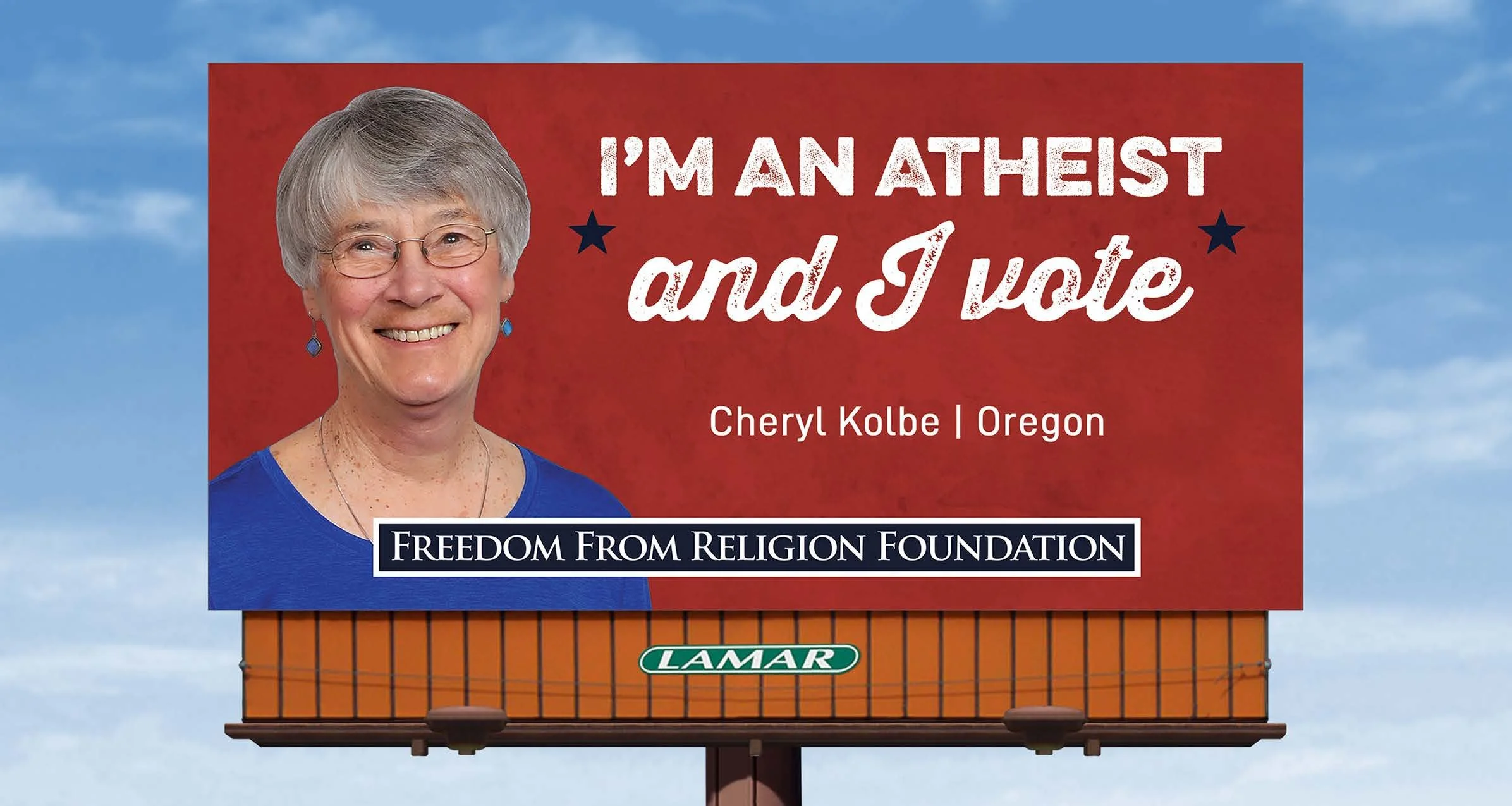
Overlooked voting trend: Atheists and agnostics are a growing force for Democrats

Overlooked voting trend: Atheists and agnostics are a growing force for Democrats

It’s hard to remember now, given the attempts to overturn the 2020 presidential election, but the day after votes were cast, one theme stood out — voter turnout.

Every state in the nation saw higher turnout in 2020 than 2016, according to an analysis from the Pew Research Center. Overall, there were more than 158 million votes cast, according to the Federal Election Commissionnearly 22 million more than just four years prior.

Turnout will likely play an outsize role in the 2022 midterms, too, as voters determine what political party will have control of the U.S. House of Representatives and the Senate in January 2023.

As a political scientist who studies the intersection of religion and politics, I am interested in which groups may have a strong impact on the balance of power. And if the data is any guide, there are two key communities political analysts often overlook — atheists and agnostics. Journalists need to be paying attention to these trends, as well.

In 2008, almost 8% of the entire U.S. population claimed to be atheist or agnostic, according to my analysis of data from the Cooperative Election Study, or CES — an annual survey coordinated by a team at Harvard University. Atheists believe that there is no higher power in the universe, while agnostics contend that a higher power may exist but it’s impossible to know for certain.

By 2021, that share had risen to just about 12%. But atheists and agnostics are often left-leaning in their political persuasion, and their rapid ascendance in the American religious landscape is proving much more consequential to the Democratic Party than the GOP.


Please respect our Commenting Policy

Adding a few sources for those post-midterms thumbsuckers on the religion beat

Adding a few sources for those post-midterms thumbsuckers on the religion beat

When the dust has (thankfully) settled following Election Day, writers on politics, and on religion, and on religion-and-politics, will be analyzing what it all means for the future direction of U.S. culture.

Some matters on the agenda:

* Are the results a fluke, or a trend? What do they signal about 2024? Is the “religious right” a growing or receding force? How will the expected Trump 2024 campaign affect evangelicalism? What will Trumpism be post-Trump? Did the abortion issue hurt Republicans? Did religious liberty issues hurt Democrats? How do moral concerns shape inflation? Immigration? Crime? Ukraine?

* Then factions. What’s going on with the pivotal white Catholics? And Hispanic Catholics? Can Republicans ever make inroads among Black Protestants? Did religiously interesting new figures emerge among the Republicans’ record number of minority candidates?

* Here is a growing niche that should get its own sidebar: How crucial are non-religious voters for Democrats’ prospects?

* Oh, and how should journalists define “Christian nationalism” and how influential is that crowd anyway?

* And whatever else develops.

Specialists will be familiar with ReligionLink, a valuable service of the Religion News Association that, among other features, posts periodic memos on a specific topic in the news, providing detailed background, links to articles and proposed sources. Subscribe for free here.

Its October 18 posting laid out he midterm elections, listing no less than 76 background items from varied media and 25 expert sources. This material will remain just as useful for those post-election analyses next week and beyond.


Please respect our Commenting Policy

U.S. bishops preach pro-life Catholic doctrine to Biden: Isn't that a story during midterms?

U.S. bishops preach pro-life Catholic doctrine to Biden: Isn't that a story during midterms?

The looming midterm elections have the Republicans giddy over the potential that they may take control of the House and Senate. Democrats, on the other hand, are hoping to stem the loses knowing that they still have President Joe Biden in the White House.

Amid all this midterm mania are the talking points politicians are pushing in order to appeal to their core voters. Republicans are campaigning on inflation and crime and Democrats on diversity and, of course, abortion following the repeal of Roe v. Wade.

Polls show that voters care more about inflation, but Democrats are hoping that talking up abortion will get out their base. Abortion, however, isn’t just a political issue. As Biden, a practicing Catholic, promises to make abortion a federal right by codifying Roe v. Wade into law should Democrats keep a majority, tension among him and several prominent U.S. bishops has heated up once again.

Some of these bishops have been in the news in the past regarding Biden’s support of abortion, threatening to deny him the sacrament of Holy Communion. It was last week that the issue came to the forefront again.

At least, it come to the forefront in Catholic news publications. In the elite press that GetReligion studies? Not so much or not at all.

This is how Catholic News Agency reported it on Oct. 25:

President Joe Biden, a professed Catholic, must end his “single-minded” abortion extremism and see the humanity in unborn children, the U.S. bishops have said. They said abortion’s impact is “tragic” and urged the president to support mothers.

“The president is gravely wrong to continue to seek every possible avenue to facilitate abortion, instead of using his power to increase support and care to mothers in challenging situations,” Archbishop William Lori of Baltimore, chair of the U.S. Conference of Catholic Bishops’ Committee on Pro-Life Activities, said Oct. 25.

“This single-minded extremism must end, and we implore President Biden to recognize the humanity in preborn children and the genuine life-giving care needed by women in this country,” he said.

The U.S. bishops’ statement noted that last week Biden declared that his top legislative priority after the November elections is to codify a national right to abortion.

This is a major story that was covered by the Catholic press, but big secular newsrooms ignored it.


Please respect our Commenting Policy

The rise of nondenominational churches, a big news trend that's really hard to cover

The rise of nondenominational churches, a big news trend that's really hard to cover

Maybe the biggest story in American Christianity over the last 40 years is the incredible rise in
the share of Americans who identify as nondenominational Protestant Christians.

In the 1970s, they were just a rounding error in the religious landscape. That was then.

Today it’s impossible to ignore the number of nondenominational churches — the vast majority of which are evangelical or Pentecostal — that have sprouted up in every city, suburb and rural area in the United States.

There are likely more nondenominational Protestants in the United States today than Southern Baptists and mainline Protestants combined. Yet, they are somewhat of an enigma to those reporters who cover religion.

Why? Because it’s impossible to make a lot of generalizations about this movement. It’s hard to pin them down, even when doing basic research.

The religious groups that are part of this non-movement movement don’t have annual meetings that are easy to track and for journalists to cover. They don’t have national spokespersons.

What makes it even more difficult is that many of these churches are, to some degree, still aligned with a denomination, but don’t publicize that on their websites or make mention of that in worship services.


Please respect our Commenting Policy

Catholic voters and the midterm elections: Mainstream news blitz ignores major voter bloc

Catholic voters and the midterm elections: Mainstream news blitz ignores major voter bloc

We are in the middle of another election season and in full mud-slinging mode.

Elections are an annual occurrence, to one degree or another, but the vote that will dominate this Nov. 8 are known as the midterms. It’s when a majority of seats in both the House and Senate are up for grabs, allowing for the party in the minority (in this case the Republicans in both chambers) to potentially becoming the majority. Midterm elections are also traditionally viewed as referendums on presidents.

This takes us to the Catholic vote and its impact on the outcome. This is a topic that is receiving little or no mainstream press coverage. As we say here at GetReligion: “Hold that thought.”

While inflation and crime will certainly be on the minds of most as they cast ballots, “culture war” issues are very much alive and well. Abortion, especially after this June’s Supreme Court decision that once again made it a state issue after Roe v. Wade was rolled back, will certainly be an issue.

There have been many, many news stories about how the abortion issue will motivate those on the political left to come out and vote following the Dobbs decision. The Washington Post, on Oct. 8, reported on the issue in a news feature that appeared under the headline, “Women powered Democrats in the 2018 midterms. Will they again in 2022?”

After opening with two Colorado women, Robin Kupernik and Elizabeta Stacishin, who had joined forces in 2016 to combat Donald Trump, who was elected to the presidency that year. This is the feature’s thesis:

In the 2018 midterm elections, women like Kupernik and Stacishin were part of a women-led army that changed politics. Women who had never been particularly active politically worked phone banks, wrote postcards and sent text messages to voters. They were repulsed by Trump and determined to do something about it.

They met in small groups, marched in the streets and went door-to-door to encourage people to vote for Democrats. Their passions were palpable. Many of the congressional candidates they were supporting flipped Republican-held seats, all part of a political tide strong enough to flush the GOP from control of the House, dealing Trump a major defeat. The Pew Research Center has estimated that 62 percent of White women with college degrees backed Democrats for the House four years ago.

That has become the major press-coverage storyline of the midterms.


Please respect our Commenting Policy