Surveys & polls

In search of the elusive liberal evangelical: Is this tiny flock worthy of big news coverage?

In search of the elusive liberal evangelical: Is this tiny flock worthy of big news coverage?

I was listening to a podcast the other day and the host asked a guest a question that I have heard way too many times over the last year — “Why did you decide to focus only on conservative evangelicals?”

I fully admit that a lot of my work does focus on conservative evangelicals. Why? Because, in the current political landscape, there’s not a more important force in American politics. The nones are too disorganized at this juncture to have a systemic impact. Catholics and Mainline Protestants are too politically divided to be considered anything close to a coherent voting bloc.

The fact is simply this: 13% of all American adults in 2020 were white evangelical Republicans.

No other group comes even close to that size. Nine percent of Americans are nothing in particular Democrats — but that’s not an easy group to wrap your arms around. There are twice as many white evangelical Republicans as there are white Catholic Republicans. For every Democratic atheist, there are 2.5 white evangelical Republicans.

But, I wanted to devote some time trying to look at the other side of the evangelical coin: those who describe themselves as politically liberal. Because the Cooperative Election Study is so large, even if that group is a relatively small percentage of the population, it’s still possible to do in-depth statistical analysis of liberal evangelicals.

Of all self-identified evangelicals, 58% describe themselves as conservative, 29% indicate they are moderate, while 13% say they are liberal. If that is restricted to just white evangelicals: 8% are liberal, 24% are moderate, and 68% say they are conservative.

That’s obviously much different than the general population. In 2020, 30% of all Americans said they were liberal, along with 28% of just white respondents.
Please respect our Commenting Policy

Emerging split inside old mainline: Is U.S. Christianity becoming two different religions?

Emerging split inside old mainline: Is U.S. Christianity becoming two different religions?

THE QUESTION:

Is Christianity in the United States becoming two different religions?

THE RELIGION GUY'S ANSWER:

If the question above seems off the wall, at least look why it has arisen.

Two years ago, The Guy wrote that he was quite astonished by some survey research reported in "The Twentysomething Soul" (Oxford University Press) by Tim Clydesdale of the College of New Jersey and Kathleen Garces-Foley of Marymount University.

Young Americans age 30 and under, quizzed about religion, were asked how they think of God.

One option was "a personal being, involved in the lives of people today." It doesn't get any simpler or more basic than that, whether you're Jewish, Christian or Muslim. Other choices were some impersonal "cosmic life force," or a deistic creator who is "not involved in the world now," or that God does not exist.

Not surprisingly, the evangelical Protestants were virtually unanimous in embracing the first definition. But remarkably, only half of those in the predominantly white, theologically pluralistic "mainline" Protestant church bodies made that choice, while 40 percent favored the vague "life force." Young adult Catholics fell in between the two Protestant groups. (In this random sample, 30 percent were evangelicals, 18 percent Catholic, 14 percent "mainline" Protestant, and 29 percent with no religious affiliation.)

The Guy therefore posed the question whether Protestants' long-running two-party rivalry "could be evolving toward a future with two starkly different belief systems."

Now a more radical version of that scenario is explored at book length in "One Faith No Longer" (New York University Press) by Baylor University sociologist George Yancey and Ashlee Quosigk, a visiting scholar of religion at the University of Georgia. More info here.


Please respect our Commenting Policy

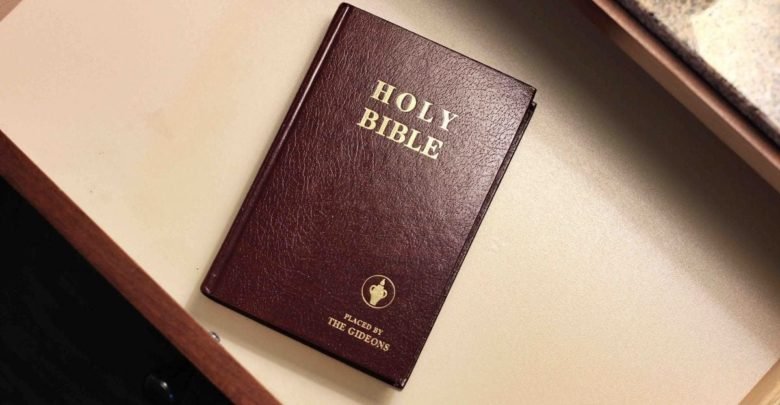
Thinking about a newsy mystery: Why are Gideon Bibles vanishing from hotel nightstands?

Thinking about a newsy mystery: Why are Gideon Bibles vanishing from hotel nightstands?

Thanksgiving is once again upon us and with it the official start of the busy holiday travel season that extends through Christmas.

As Americans continue to cope with the ongoing pandemic, travel has seen a steady increase once again. That means packed airports and bumper-to-bumper traffic on most major highways starting Wednesday. It also means more people will be staying in hotels.

This brings us to an interesting and highly symbolic news story, one that deserves coverage.

I have done my share of travel — both in the United States and internationally — over my two decades working as a journalist. The few things you could always count on for much of that time was a newspaper at the front desk, usually USA Today, and a Bible in your nightstand.

Not anymore. Print is slowly dying, and newspaper readers have migrated to the internet in recent years.

What about those Bibles?

They, too, seem to be slowly disappearing. I noticed this past summer, while on a trip to Washington, D.C., that there was no Bible in my hotel room.

The phasing out of Bibles in hotel rooms is actually part of a steady trend across the country over the past few years. In 2016, Marriott International, the world’s largest hotel chain, typically supplied both a Bible and Book of Mormon in its rooms. But the company decided that forgoing religious materials was the way to go at two of its hipper hotel brands such as Moxy and Edition. Note that both of these chains target younger guests.


Please respect our Commenting Policy

Podcast: It's time to pay attention to debates about girls, Instagram and mental-health woes

Podcast: It's time to pay attention to debates about girls, Instagram and mental-health woes

If you have followed GetReligion for a decade or so, you know that our religion-beat patriarch Richard Ostling writes a “Memo” post every week in which he focuses on religion trends and future events to which journalists should be paying attention.

This week’s Memo focused on why religious and secular debates about Death with Dignity laws will not be fading away anytime soon. As always, Ostling’s Memo posts are packed with links to relevant interest groups, experts and online resources to aid reporters.

This brings me to this week’s “Crossroads,” which — for a change — does not focus on a religion-news story in the mainstream press (click here to listen to the podcast). Instead, you can think of this feature as a kind of Mattingly Memo, in which host Todd Wilken and I discussed the news (and religious) implications of a new Atlantic Monthly essay by Jonathan Haidt that ran with this dramatic double-decker headline:

The Dangerous Experiment on Teen Girls

The preponderance of the evidence suggests that social media is causing real damage to adolescents

On its face, this essay was not a “religion news” piece at all. From my point of view, that was kind of the point.

One of the themes Haidt stressed was that teen-aged girls are pretty much alone, when it comes to wrestling with the moral, emotional and even medical side effects of addiction to social media — the invasive visual-image wonderland of Instagram, in particular. The article includes a depressing file of research slides on this mental-health issue from the Wall Street Journal (click here for that .pdf). Note, in particular, that teens believe their parents have next to zero understanding of what is going on.

If parents are tuned out, where does that put clergy? Should religious leaders be playing some kind of role in public-square (and personal) discussions of this issue?

These questions made me think of an “On Religion” column that I wrote in 2017 about the efforts of some Colorado teens — reacting to several suicides linked to cyber-bullying — to help their friends examine the impact of social-media programs on their lives.


Please respect our Commenting Policy

Dang it! Your GetReligionistas pounced a bit too early on the 'parental rights' wars

Dang it! Your GetReligionistas pounced a bit too early on the 'parental rights' wars

Dang it (said the Texas Baptist preacher’s kid), I really hate it when GetReligion gets to a serious media topic Just. A. Bit. Too. Early.

What am I talking about?

Well, take a look at the New York Times headline featured in the tweet at the top of this post, a tweet authored by a symbolic figure in the wider world of Democratic Party life. Michael Wear is a political consultant, but he is best known as the faith-outreach director for Barack Obama's 2012 campaign and then as part of Obama's White House staff. Here’s that headline:

Republicans Seize on Schools as a Wedge Issue to Unite the Party

Rallying around what it calls “parental rights,” the party is pushing to build on its victories this week by stoking white resentment and tapping into broader anger at the education system.

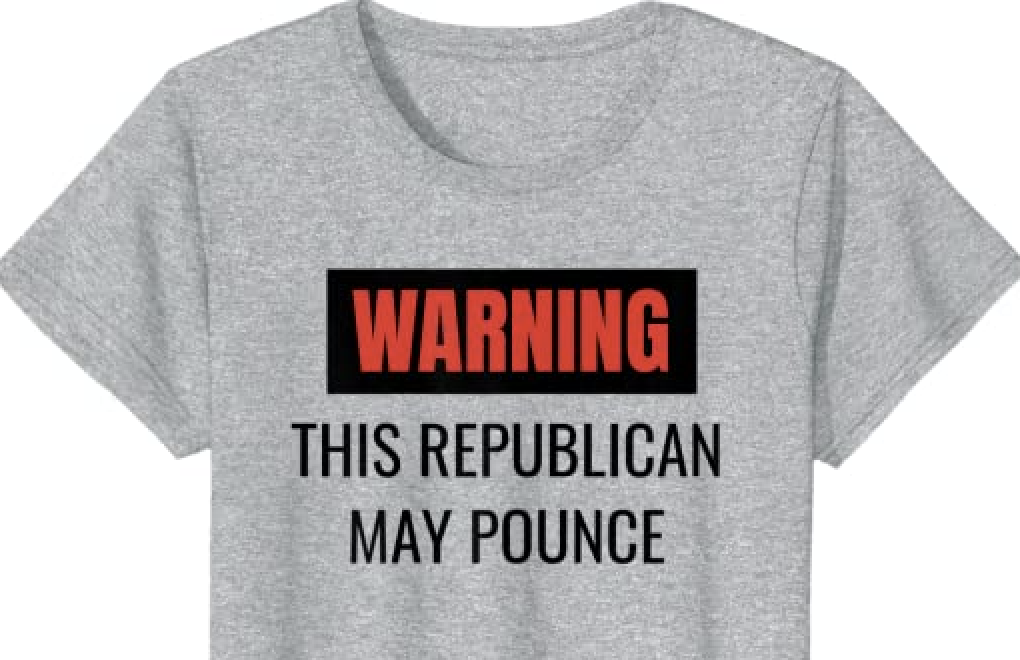
First of all, I think the verb “seize” is a stand-in for the world “pounce,” which has become a bit of a cliche in recent years. Here is the Urban Dictionary take on the “Republicans pounce!” phenomenon or click here for a National Review essay on the subject. The whole point is that the issue at hand isn’t really all that important, but conservatives have “pounced” on it and are using this alleged issue to hurt liberals in social media, conservative news sources, etc.

Major media on the coasts, of course, avoid covering the topic — unless it leads to an embarrassing defeats for Democrats in a symbolic state like Virginia.

Anyway, the Times headline may ring a bell or two for those who read this October 22 podcast-post here at GetReligion: “Are 'parental rights' references (inside scare quotes) the new 'religious liberty.” Here is the opening of that post:


Please respect our Commenting Policy

When facing modern chaos, priests need old symbols and truths -- not more politics

When facing modern chaos, priests need old symbols and truths -- not more politics

Chaos is coming, so get ready.

That was the warning that -- four years ago -- iconographer and YouTube maven Jonathan Pageau offered to leaders of the Orthodox Church in America's Diocese of the South.

The French-Canadian artist was reacting to cracks in "cultural cohesion" after Donald Trump's rise to power, with wild reactions on left and right. And corporate leaders, especially in Big Tech, were throwing their "woke" weight around in fights over gender, racism, schools, religious liberty and other topics. Fear and angst were bubbling up in media messages about zombies, fundamentalist handmaidens and angry demands for "safe spaces."

Pageau didn't predict a global pandemic that would lock church doors.

But that's what happened. Thus, he doubled down on his "chaos" message several weeks ago, while addressing the same body of OCA priests and parish leaders.

"If some of you didn't believe me back then, I imagine you are more willing to believe me now," he said.

Pageau focused, in part, on waves of online conspiracy theories that have shaken many flocks and the shepherds who lead them. Wild rumors and questions, he said, often reveal what people are thinking and feeling and, especially, whether they trust authority figures.

"Even the craziest conspiracy nuts, what they are saying is not arbitrary," he said, in Diocese of the South meetings in Miami, which I attended as a delegate from my parish in Oak Ridge, Tenn.

"It's like an alarm bell. It's like an alarm bell that you can hear, and you can understand that the person that's ringing the alarm maybe doesn't understand what is going on. ... They may think that they have an inside track based on what they've heard and think that they know what is going on. But the alarm is not a false alarm, necessarily."

The chaos is real, stressed Pageau. There is chaos in politics, science, schools, technology, economic systems, family structures and many issues linked to sex and gender.


Please respect our Commenting Policy

New podcast: Did Glenn Youngkin win the Latino vote in Virginia? Maybe ask folks in pews?

New podcast: Did Glenn Youngkin win the Latino vote in Virginia? Maybe ask folks in pews?

On the morning after The Virginia Election, I noted that the sharp folks at a must-bookmark niche-news website — A Journey Through NYC Religion — had done some old-fashioned digging and discovered some interesting religion ghosts (to use an old GetReligion term) in that political earthquake. Click here for that story: “Faith trumps Trump in Virginia.”

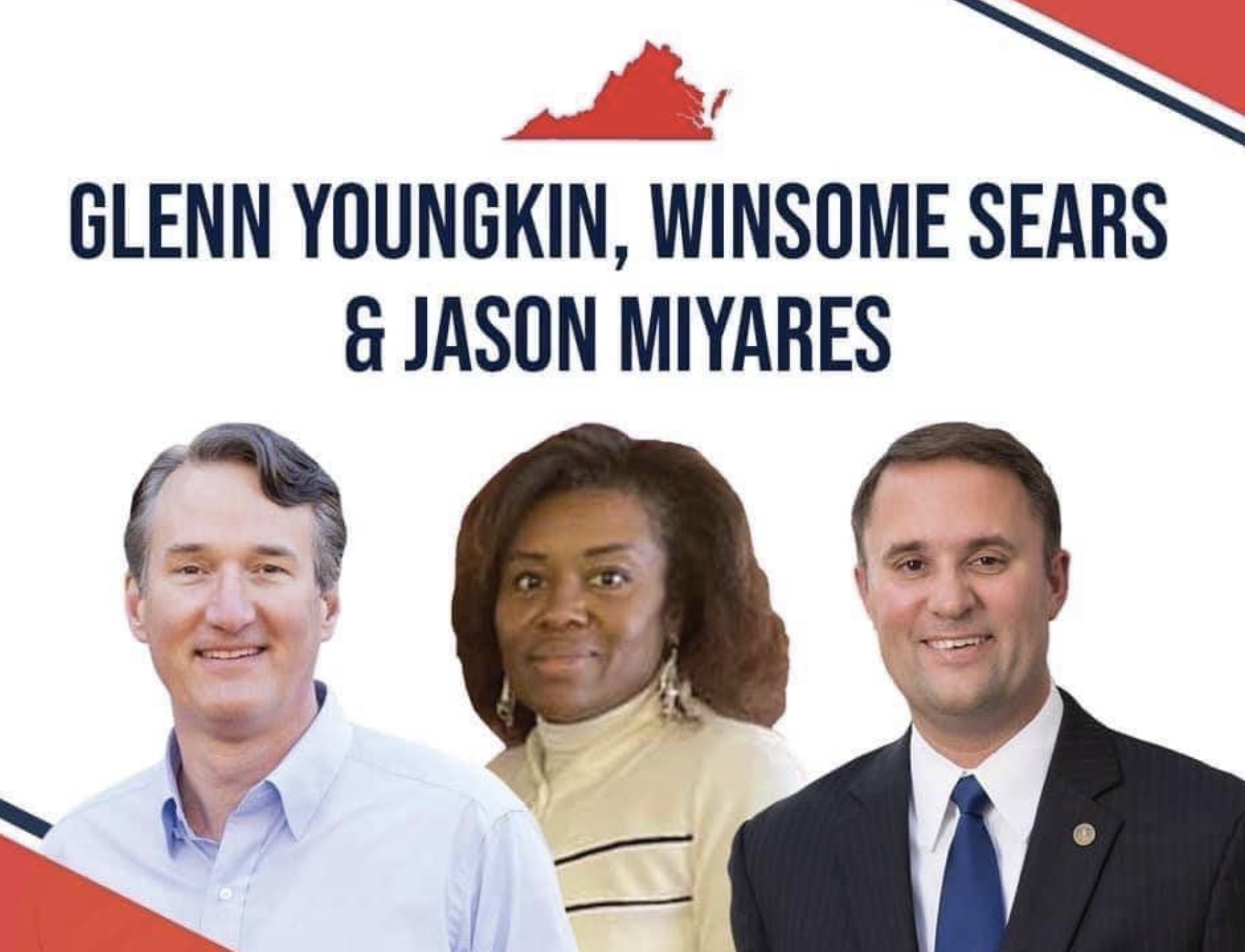
I sure didn’t know, from reading mainstream press coverage, that Governor-elect Glenn Youngkin was an evangelical Anglican who once was a leader in the Alpha course, an evangelism program that expanded from the Church of England into churches and denominations around the world.

I didn’t know that Lieutenant Governor-elect Winsome Sears, an African American evangelical and former Marine, had once led a Salvation Army ministry and that the state’s new attorney general, Jason Miyares, appears to be a Latino evangelical Episcopalian.

All of that showed up in my post-election piece with this headline: “Yes, there were overlooked religion angles in today's biggest U.S. political news story.”

We talk about all of that in this week’s “Crossroads” podcast (click here to tune that in), but also veered off into other religion-based angles in the current political climate. One of them took us into familiar territory, at least for those who have followed GetReligion for the past five or six ears. I’m talking about the rising political clout of Latino evangelicals, traditional Catholics and Pentecostal believers.

There’s some evidence that Youngkin and the diverse GOP lineup actually WON the Latino vote in the Virginia election (click here for a totally faith-free Politico discussion of that topic).

So here is that question again: How can journalists cover shifting patterns among Latino voters — and Black voters, as well — without examining the role of religion and cultural issues?

Let’s say: Is it safe to assume that pro-life Latinos are more likely — lacking acceptable Democrats on the ballot — to opt for Republicans? How about Latinos who favor school choice? Who old traditional Christian views on gender issues?


Please respect our Commenting Policy

Is this statement accurate? All true evangelicals wanted to vote for Donald Trump -- period

Is this statement accurate? All true evangelicals wanted to vote for Donald Trump -- period

As a rule, your GetReligionistas strive to avoid writing about analysis features that are published in magazines such as The Atlantic.

However, when I keep hearing people asking questions about one of these “think pieces,” it’s hard not to want to add a comment or two to the discussion.

So first, let’s start with something that GetReligion team members have been saying for nearly two decades, as a reminder to readers who have never worked in mainstream newsrooms: Reporters/writers rarely write the headlines that dominate the layouts at the top of their pieces.

Case in point: The double-decker headline on that buzz-worthy Peter Wehner commentary piece at The Atlantic:

The Evangelical Church is Breaking Apart

Christians must reclaim Jesus from his church.

Yes, I know. There is no such thing as “the evangelical church.”

Do basic facts matter? There are, of course, denominations that are predominantly evangelical. Some of them disagree on all kinds of things — such as baptism or the ordination of women. There are Pentecostal denominations that share many, but not all, doctrines with flocks that are connected with the evangelical movement. There are lots of evangelicals who still sit — though many are quite unhappy — in liberal Protestant pews.

We won’t even talk about that second line: “Christians must reclaim Jesus from his church.”

You can get to the heart of this confusion by — if you are reading the Wehner piece online — glancing at the tagline that appears in the subject line in your computer browser. That semi-headline reads: “Trump is Tearing Apart the Evangelical Church.”

Ah, that’s the heart of this matter.


Please respect our Commenting Policy

Define 'evangelical,' please. Alas, many Americans don't think that this is a religious term

Define 'evangelical,' please. Alas, many Americans don't think that this is a religious term

Here’s a scary thought: Who wants to dress up as an evangelical for Halloween?

Except, exactly what would that look like?

Would it involve wearing a red “Make America Great Again” hat? Does the term still have any religious and/or theological meaning left?

Those questions came to mind as I perused some of the week’s big religion stories — both news reports and major analytical takes. Here are five such headlines that caught my attention:

(1) Why ‘evangelical’ is becoming another word for Republican: “Instead of theological affinity for Jesus Christ, millions of Americans are being drawn to the evangelical label because of its association with the G.O.P.,” Ryan Burge, a frequent contributor to ReligionUnplugged.com, writes in an opinion piece for the New York Times.

(2) In a post-Donald Trump world, these pastors are ditching the evangelical label for something new: “They looked to each other to ask, What could it look like to organize as ‘post-evangelicals?’” religion writer Sarah Pulliam Bailey reports for the Washington Post. “They had at least one thing in common: They were all on some journey of deconstruction, the process of reexamining their long-held beliefs, and they wanted to participate in reconstruction and the building up of something new.”

(3) The evangelical divide: “Political and social issues are splintering American Christians. Can the Church find unity?” asks part one of a three-part series by World magazine senior reporter Sophia Lee.

(4) The evangelical church is breaking apart: “As a person of the Christian faith who has spent most of my adult life attending evangelical churches, I wanted to understand the splintering of churches, communities, and relationships,” contributing writer Peter Wehner explains in The Atlantic. “I reached out to dozens of pastors, theologians, academics, and historians, as well as a seminary president and people involved in campus ministry. All voiced concern.”


Please respect our Commenting Policy