
Surveys & polls

From Ryan Burge and Co. -- Has that rising 'religiously unaffiliated' tide started to slow?

Here is a headline that I was not expecting from Ryan Burge and his colleagues at the Religion in Public weblog: “The Decline of Religion May Be Slowing.

Argue with this crew all that you want. But what we have here is another snapshot of poll numbers that demonstrates why Religion in Public is a website that religion-beat professionals and their editors really need to have bookmarked. When in doubt, just follow GetReligion contributor Ryan Burge on Twitter.

In this case, Yonat Shimron of Religion News Service spotted this story pronto. We will come back to that report in a minute. But first, here is the top of the crucial Religion in Public post, written by Paul A. Djupe and Burge:

In a companion piece published … on Religion in Public, Melissa Deckman of Washington College finds that the probability of being a religious none in Gen Z (born after 1995) is the same as for Millenials (born between 1981-1994). This bombshell finding sent us running for other datasets. Like all good scientists, we trust, but verify. …

It is conventional wisdom at this point that the incidence of religious nones is on a steady rise after 1994. Driven by a mix of politics, scandal, and weak parental religious socialization, non-affiliates have risen from about 5 percent to 30 percent. That trend appears to be accelerating by generation, so the rate of being a religious none is much greater among Millennials than it is among Greatest, Silent, and Baby Boomer generations as the figure below shows using the General Social Survey time series. Those older generations are still experiencing some secularization (the rates are rising across time), but not nearly as rapidly as the young. From this evidence, we expected that the rate of being a none among Gen Z might be even higher, leading to a bump above Millennials. The initial, small sample estimate from the General Social Survey, however, suggests that Gen Z is not outpacing Millenials and may have even fallen behind.

The assumption for some media-beat pros, including me, has been that the percentage of actively involved religious believers would remain fairly steady — somewhere around the 20-22% numbers that appear in Gallup Organization work for several decades.

However, it seemed like the “nones” were going to keep growing by feeding on the vast, mushy, sort-of-religious middle of the American marketplace.

Please respect our Commenting Policy

There's a whiff of a tiff when the pros try to pick the past decade's top religion stories

What were the past decade’s top religion stories?

In the current Christian Century magazine, Baylor historian Philip Jenkins lists his top 10 in American Christianity and — journalists take note -- correctly asserts that all will “continue to play out” in coming years.  

His list: The growth of unaffiliated “nones,” the papacy of Francis, redefinition of marriage, Charleston murders and America’s “whiteness” problem, religion and climate change, Donald Trump and the evangelicals, gender and identity, #MeToo combined with women’s leadership, seminaries in crisis and impact of religious faith (or lack thereof) on low fertility rates.

Such exercises are open to debate, and there’s mild disagreement on the decade’s top events as drawn from Religion News Service coverage by Senior Editor Paul O’Donnell. Unlike Jenkins, this list scans the interfaith and global scenes.

The RNS picks:  “Islamophobia” in America (with a nod to President Trump), the resurgent clergy sex abuse crisis, #ChurchToo scandals, those rising “nones,” mass shootings at houses of worship, gay ordination and marriage, evangelicals in power (Trump again) as “post-evangelicals” emerge, anti-Semitic attacks and religious freedom issues.

You can see that the same events can be divvied up in various ways, and that there’s considerable overlap but also intriguing differences.

Jenkins  looks for broad “developments” and focuses on the climate and transgender debates, racial tensions, shrinking seminaries and low birth rates (see the Guy Memo on that last phenomenon).

By listing religious freedom, RNS correctly highlights a major news topic that Jenkins missed. RNS includes the U.S. legal contests over the contraception mandate in Obamacare and the baker who wouldn’t design a unique wedding cake for a gay couple. Those placid debates are combined a bit awkwardly with overseas attacks against Muslims in China, India and Myanmar, and against Christians in Nigeria. OK, what about Christians elsewhere?


Please respect our Commenting Policy

Trump and Buttigieg try to reach out to voters who -- to one degree or another -- are pro-life

Trump and Buttigieg try to reach out to voters who -- to one degree or another -- are pro-life

President Donald Trump and Democrat Pete Buttigieg recently offered radically different stands on abortion, as both attempted to reach out to Catholic and evangelical swing voters trapped between their parties.

Trump made history as the first president to speak in person at the national March for Life, which marks the anniversary of Roe vs. Wade. 

"All of us here understand an eternal truth: Every child is a precious and sacred gift from God. Together, we must protect, cherish and defend the dignity and the sanctity of every human life," said Trump, who for years backed abortion rights and Planned Parenthood. He insists that his views have evolved, like those of Republican hero Ronald Reagan.

"When we see the image of a baby in the womb, we glimpse the majesty of God's creation. ... When we watch a child grow, we see the splendor that radiates from each human soul. One life changes the world," he said.

While commentators stressed that Trump attended the march to please his conservative evangelical base, this massive event in Washington, D.C., draws a complex crowd that is hard to label. It includes, for example, Catholics and evangelicals from groups that have been critical of Trump's personal life and ethics, as well as his stands on immigration, the death penalty and related issues.

Videos of this year's march showed many signs praising the president, but also signs critical of his bruising brand of politics.     

A Facebook post by a Catholic priest -- Father Jeffrey Dauses of the Diocese of Baltimore -- captured this tension. Telling pro-lifers to "wake up," Dauses attacked what he called Trump's "callous disregard for the poor, for immigrants and refugees, for women. … This man is not pro-life. He is pro-himself."

Meanwhile, Buttigieg -- an openly gay Episcopalian -- did something even more daring when he appeared at a Fox News town hall in Iowa.


Please respect our Commenting Policy

Thinker from David French: Does it matter if media elites don't 'get' Pentecostalism?

Thinker from David French: Does it matter if media elites don't 'get' Pentecostalism?

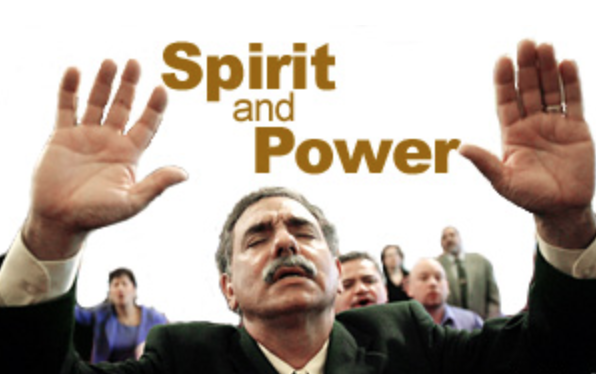
The other day I praised Religion News Service for jumping into the Twitter tornado caused by the Rev. Paula White’s wild sermon thundering about the powers of the “marine kingdom” and the miscarriage of “satanic pregnancies” and lots of other stuff.

It was just another day in America’s shattered and splintered public discourse.

Here’s the New York Times summary of what that Right Wing Watch clip unleashed:

The video shows part of a nearly three-hour-long service at the City of Destiny church in Apopka, Fla., on Jan. 5. In it, Ms. White can be seen talking about fighting witchcraft and demonic manipulation. She called for any “strange winds that have been sent to hurt the church, sent against this nation, sent against our president, sent against myself” to be broken.

“In the name of Jesus, we command all satanic pregnancies to miscarry right now,” Ms. White said. “We declare that anything that’s been conceived in satanic wombs, that it’ll miscarry. It will not be able to carry forth any plan of destruction, any plan of harm.”

As of Monday, the video had been watched more than eight million times.

It appeared that no one in this shouting match had the slightest interest in promoting understanding. Some commentators weren’t even interested in accurate, honest disagreements.

However, Adelle Banks and Bob Smietana wrote a short explainer that provided crucial information about what White was saying and, most importantly, what she was not saying. Click here to see my piece on that: “RNS pros offered crucial context for 'Satanic pregnancies' sound bite.”

Now I would like to do something that I rarely do: I want to point mainstream journalists and concerned readers to another explainer digging deeper into this topic. This one is by David French, a Harvard Law graduate and First Amendment expert who is one of the most quoted #NeverTrump conservatives in American political life.

In recent weeks, the former National Review star has been doing some brilliant religion-news analysis for his new publication — The Dispatch. His new piece (“Satanic Pregnancies, Explained”) is not an attempt — obviously — to support Paula White or her political master, President Donald Trump. However, it is an attempt to explain why White’s critics, especially scribes in the mainstream press, need to slow down and try to grasp what charismatic and Pentecostal Christians believe on the topic of fierce prayer and “spiritual warfare.”


Please respect our Commenting Policy

Mainstream journalists should pay attention if American Judaism gets into serious trouble  

How many articles have we read about the inexorable demographic slide of U.S. “mainline” Protestantism, difficulties lately hitting “evangelicals,” declining Mass attendance for Catholics and the growth of religiously unaffiliated people (“Nones”) who forsake all religious ties that bind?

There’s been far less media attention to the state of Judaism, the nation’s second-largest religion though Islam is moving up. It faces far worse prospects, according to premier chronicler Jack Wertheimer, a historian and former provost at Jewish Theological Seminary (JTS).

Reporters — if American Judaism is in serious trouble, that’s a big story by any definition.

This dire, developing story is a good example of the way scholarship that deserves media coverage can be mostly hidden for an extended period yet remain pertinent and newsworthy. Wertheimer’s “The New American Judaism” (Princeton), published two years ago, only caught The Guy’s eye when boss tmatt noted a review in the current edition of the Orthodox Union magazine Jewish Action. (The Guy has not yet read the book but that lengthy review provides ample substance and quotes.)

Wertheimer sees a “recession” — if not a great depression.

More than 2 million people of Jewish parentage “no longer identify as Jews.” Many others do not see themselves as part of the Jewish religion and define themselves only in cultural or ethnic terms. Rising intermarriage means fewer Jews tomorrow. Birth rates among the non-Orthodox are so low one wonders “who will populate Jewish religious institutions in the future.”

If the religion atrophies,  can non-religious communal life thrive?


Please respect our Commenting Policy

Weekend thinking with Ryan Burge: Emerging patterns in 'born again' Catholics confusion

Your GetReligionistas have been paying attention to the “born-again Catholic” debates for a long time (click here for a selection of posts).

Thus, we know this conflict didn’t originate with Vice President Mike Pence.

I’m old enough to remember when Southern Baptist (at that time) Jimmy Carter yanked the term “born again” out of religion textbooks and into American political discourse. Many reporters were confused about the term than and many still are.

I think some of the confusion is also linked to the rise of the charismatic renewal movement in Roman Catholicism. I mean, anyone who has her or his hands up in the air while praying in an unknown tongue for someone to be healed has to be “born again,” right? You mean terms like “evangelical,” “charismatic,” Pentecostal” and “born again” have actual content and definitions linked to church history?

Throw in the “Evangelicals & Catholics Together” movement — with doctrinal conservatives finding common ground on moral and social issues (think marriage and the right to life) — and some reporters began assuming that Catholics were “evangelical” or “born again” if they VOTED that way.

So there is confusion out there, However, in this week’s dose of Ryan Burge information, it’s easy to see that the confusion now points to some interesting stories. The confusion may have content, if that makes any sense. There is so much content in Burge’s new essay — “The Curious Case of Born-Again Catholics” — at the Religion in Public blog that I don’t know what to feature here.

Why not start with the reality that people are starting to pin this label on themselves?


Please respect our Commenting Policy

This week's podcast: They shoot (or shun) old United Methodists, don't they?

Before we get to the story (AP headline: “Struggling Minnesota church asks older members to go away”) behind this week’s “Crossroads” podcast (click here to tune that in), I would like to share a parable.

It’s about some elderly Lutherans and an old hymnal.

In the early 1980s, while working for The Charlotte News (RIP), I wrote a feature story about the last congregation in town that was resisting the use of a new hymnal prepared for the churches that merged to form the progressive Evangelical Lutheran Church in America.

Everyone called the “Service Book and Hymnal” the “red book,” and emerging ELCA elites thought it was old fashioned. Thus, the modernized “Lutheran Book of Worship” came out in 1978. It was the “green book.”

At this Charlotte church, I met with an older man who led the fight to retain the “red book.” He had a long list of reasons — historical and theological — for why the old hymnal and prayer book was superior to the new. A teacher by trade, he was very articulate and calm.

When the interview was over, we walked the center aisle toward the foyer and main exit. At the last pew, he stopped and picked up a battered red hymnal. Tears began running down his cheeks.

“I married my wife with this book,” he said. “Our children were baptized with this book. I buried my wife with this book. … They are not going to take it away from me.”

Forget his long list of defenses for the “red book.” What I was hearing was a cry from his heart, as well as his head. Church officials had ruled that his faith — his life — was out of date and he was hurting.

With that in mind, think about the press coverage that grew out of a Twin Cities Pioneer Press story that ran with this headline: “Cottage Grove church to usher out gray-haired members in effort to attract more young parishioners.” Here’s a key passage that captures the tone:


Please respect our Commenting Policy

Tips for mainstream journalists as they grapple with America's growing religious complexity

Last month, the Pew Research Center issued an innovative analysis of 49,719  sermons delivered between last April 7 and June 1 in 6,431 U.S. congregations that were posted online. This report made a bit of news and is worth perusing if you missed it (click here).

 This Guy Memo recommends to fellow writers that a useful appendix to that document (click here for .pdf) deserves more than a glance. It details Pew’s standard system for “classifying congregations by religious tradition,” with 244 specific identities cited in interviewing, grouped into 19 categories.

Pew makes a major contribution to analysis of American religion with its frequent polling practice of pushing to get respondents'  specific identities and affiliations beyond the usually unhelpful “Protestant” vs. “Catholic” approach of old-fashioned polling.

What kind of Protestant?

For that matter, what kind of, say, Presbyterian (tmatt shows a blitz of options here)?

Are you an active or nominal churchgoer?

With the media frenzy over religion and politics, polls nowadays at least usually ask Protestants whether they self-identify as “evangelical” or not, whatever that word means.

When Pew asks poll respondents about the specific congregation they affiliate with, it then helpfully lumps the Protestants into the three main categories of “Evangelical,” “Mainline” and “Historically Black.” These three groups are distinct not only on religion but in social and political terms. Writers are likely to be less perplexed by Pew’s other categories of Catholic, Orthodox Christian, “other Christian,”  “Mormon” (there’s that controversial word again!), Jehovah’s Witness, Jewish, Buddhist, Hindu, “other faiths,” "miscellaneous" and “unclassifiable.”   

The following examples from Pew’s Protestant taxonomy will indicate some of the difficulties with America’s astonishing religious variety, particularly for those new to religion writing.


Please respect our Commenting Policy

Mayor Pete evolving into Pastor Pete? Prepare for latest uptick in MSM ardor for religious left

If you have been paying any attention at all to the 2020 White House race, you were ready for the latest mini-sermon from Mayor Pete Buttigieg.

The setting, of course, was the last debate between Democratic Party hopefuls staged before the Iowa caucuses. Here is the key soundbite from Buttigieg, care of CNN, as the frequent churchgoing Episcopalian took yet another shot at Citizen Donald Trump, who — until recently — has been linked to mainline forms of Presbyterianism in great New York City.

Let us attend.

“If he keeps trying to use religion, if a guy like Donald trump keeps trying to use religion to somehow recruit Christianity into the GOP, I will be standing there not afraid to talk about a different way to answer the call of faith,” he said. “And insist that God does not belong to a political party.”

If that kind of language sounds familiar, there’s a good reason for that. Consider the top of the recent New York Times feature that ran with this double-decker headline:

Why Pete Buttigieg Has Made Religion Central to His Campaign

The former mayor is not only trying to bridge ground within the Democratic Party, he’s also making a direct appeal to disaffected conservatives who cannot stomach President Trump.

The overture, logically enough, is from a Sunday morning sermonette in which Mayor Pete proclaims:

“Look at what they do,” he said at a campaign stop about 45 minutes outside of Des Moines, calling out Republicans for “using faith as a way to tell some people they don’t belong.”


Please respect our Commenting Policy