Supreme Court

Newsy thinking about SCOTUS, sports images, religious liberty and the Sexual Revolution

Newsy thinking about SCOTUS, sports images, religious liberty and the Sexual Revolution

Wait, you mean there was another important religion story during the traffic jam of stories about the right vs. further right showdown at the Southern Baptist Convention and America’s Catholic bishops arguing about Holy Communion, the Catechism and liberal Catholic politicos?

Obviously, I noticed headlines such as this one in the Washington Post: “Supreme Court unanimously rules for Catholic group in Philadelphia foster-care dispute.”

The word “unanimous” is certainly important, in the fractured age in which we live. But look for the other crucial word in the overture on that story:

The Supreme Court ruled unanimously … that Philadelphia was wrong to end a Catholic group’s contract to provide foster-care services because the organization refused to work with same-sex couples.

It was the latest victory for religious organizations at the increasingly conservative court, and the second time it has ruled against governments trying to enforce an anti-discrimination law protecting LGBTQ rights against those claiming religious liberty.

But the opinion, written by Chief Justice John G. Roberts Jr., was narrow enough to draw the support of the court’s three liberals — and the consternation of its three most conservative members for not going further.

Obviously, the crucial word is “but.” This ruling encouraged some church-state conservatives, but also provided some hope for those who believe that the Sexual Revolution will, more often than not, trump the free exercise of religion.

So, it’s time for two think pieces that explore the degree to which this ruling was a win for religious liberty.

No surprise here: Religious liberty pro David French, of The Dispatch, was encouraged: “Four Things You Need to Know After a Huge Day at SCOTUS — ‘Good night, Employment Division v. Smith. Good work. Sleep well. I’ll most likely kill you in the morning​.’ “ Here is his reaction, at the level of SCOTUS personalities:

Please respect our Commenting Policy

Thinking about 1962: Catholic politicos, an archbishop, excommunication, doctrine and race

Thinking about 1962: Catholic politicos, an archbishop, excommunication, doctrine and race

The equation was rather remarkable.

First you had some Catholic politicians who — in words and deeds — kept defying church teachings on an important and controversial topic in public life.

Then you had an archbishop who faced a tough decision about whether to do anything, beyond verbal warnings, to show them he was willing to defend these church teachings on moral theology and the sacraments.

When the archbishop stepped up and punished the politicos, denying them Holy Communion and more, the mainstream press — CBS and The New York Times, even — openly backed his actions with positive coverage.

Wait, what was that last thing?

Right now, the U.S. Catholic bishops are headed deeper into a showdown over the status of President Joe Biden and other Catholics who openly — through word and deed — defy church teachings on abortion, marriage, gender and other issues in which doctrines are defined in the Catholic Catechism and centuries of church tradition.

As part of the discussion this past week, America magazine — a strategic voice for Catholic progressives — can this fascinating essay: “What a 60-year-old excommunication controversy tells us about calls to deny Biden Communion.” It was written by Peter Feuerherd, a journalism professor at St. John's University in New York City. Here’s the overture:

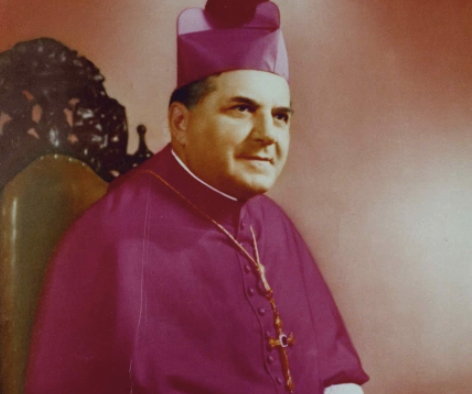
In April 1962, Archbishop Joseph Rummel of New Orleans not only denied Communion to three Catholics in his archdiocese; he went a step beyond. At 86 years of age and in ill health — he would die two years later — he formally excommunicated the three, who vehemently opposed his efforts to desegregate Catholic schools.


Please respect our Commenting Policy

The New York Times (#WHOA) probes ACLU's move away from First Amendment liberalism

The New York Times (#WHOA) probes ACLU's move away from First Amendment liberalism

I don’t know about you, but The New York Times was the last place that I expected to see a long news feature about disturbing trends at the American Civil Liberties Union away from its proud history of First Amendment liberalism.

I am sure that some ACLU insiders must have felt the same way, especially in light of recent headlines about the rising power of a generation of woke journalists at the Times. The pot calling the kettle black?

But there was no way around the contents of that dramatic double-decker headline the other day:

Once a Bastion of Free Speech, the A.C.L.U. Faces an Identity Crisis

An organization that has defended the First Amendment rights of Nazis and the Ku Klux Klan is split by an internal debate over whether supporting progressive causes is more important.

As the headline states, the emphasis in this report is about free speech. Maybe it was too much to ask Times editors to see the same illiberal trend developing in ACLU work defending the First Amendment clause protecting religious freedom, without “scare quotes.”

But we will take what we get because of the influence that the Times has in other newsrooms and even in some influential corners of elite academia.

The story opens with an event celebrating the career of lawyer David Goldberger, who played a key role in the famous 1978 case when the ACLU defended the free speech rights of Nazis to march in Skokie, Ill., the home of many Holocaust survivors. Read this long passage carefully:


Please respect our Commenting Policy

'On Religion' flashback to 1998: Ten years of reporting on a church-state fault line

'On Religion' flashback to 1998: Ten years of reporting on a church-state fault line

Back in the 1980s, I began to experience deja vu while covering event after event on the religion beat in Charlotte, Denver and then at the national level.

I kept seeing a fascinating cast of characters at events centering on faith, politics and morality. A pro-life rally, for example, would feature a Baptist, a Catholic priest, an Orthodox rabbi and a cluster of conservative Methodists, Presbyterians, Episcopalians and Lutherans. Then, the pro-choice counter-rally would feature a "moderate" Baptist, a Catholic activist or two, a Reform rabbi and mainline Methodists, Presbyterians, Episcopalians and Lutherans.

Similar line-ups would appear at many rallies linked to gay rights, sex-education programs and controversies in media, the arts and even science. Along with other journalists, I kept reporting that today's social issues were creating bizarre coalitions that defied historic and doctrinal boundaries. After several years of writing about "strange bedfellows," it became obvious that what was once unique was now commonplace.

Then, in 1986, a sociologist of religion had an epiphany while serving as a witness in a church-state case in Mobile, Ala. The question was whether "secular humanism" had evolved into a state-mandated religion, leading to discrimination against traditional "Judeo-Christian" believers. Once more, two seemingly bizarre coalitions faced off in the public square.

"I realized something there in that courtroom. We were witnessing a fundamental realignment in American religious pluralism," said James Davison Hunter of the University of Virginia. "Divisions that were deeply rooted in our civilization were disappearing, divisions that had for generations caused religious animosity, prejudice and even warfare. It was mind- blowing. The ground was moving."

The old dividing lines centered on issues such as the person of Jesus Christ, church tradition and the Protestant Reformation. But these new interfaith coalitions were fighting about something even more basic – the nature of truth and moral authority.


Please respect our Commenting Policy

Where will American religious groups fit into the newly electrified abortion debate?

Where will American religious groups fit into the newly electrified abortion debate?

The U.S. Supreme Court's agreement to review Mississippi's strict abortion law means that the public argument on this unending dispute will be the most intense in many years -- with a ruling due right in the midst of the 2022 election campaign.

Despite the Court's increased conservative majority, there's no certainty it will clamp new restrictions on abortion. Yet it's also possible that the Court might overthrow its own 1973 Roe v. Wade decision, which legalized most abortions nationwide in 1973.

If so, the impact will be momentous but not quite as apocalyptic as "pro-choice" advocates suggest. Abortion would remain widely available because decision-making would simply be returned to democratically elected state legislatures and many would maintain liberal policies. Charities might aid women in the "pro-life" states needing travel for out-of-state abortions.

For those covering the religion beat, the coming year is a major defining moment as America's variegated denominations state what they now believe about the morality of abortion and why.

After the Roe ruling, the 1976 conventions of the two major political parties began setting opposite stances. The Democrats' platform acknowledged that many Americans had "religious and ethical" concerns but opposed a Constitutional amendment to bar abortions. Similarly, the Republicans' platform stated that some in the party favored the Supreme Court's edict, but advocated such an amendment "to restore protection of the right to life for unborn children."

Religion writers well know how that basic split hardened and reshaped religious voters' political alignments. There's been less attention to the way the advent of open abortion turned around the Social Gospel thinking of Protestant liberals.


Please respect our Commenting Policy

When covering Moore's exit from SBC power, scribes should ponder what made him 'liberal'

When covering Moore's exit from SBC power, scribes should ponder what made him 'liberal'

This may be a strange place to start when discussing early news coverage of the Rev. Russell Moore moving from the Ethics & Religious Liberty Commission — the crucial Southern Baptist camp in Beltway land — to what looks like a Christianity Today think tank on theology and public life.

So be it. This is where we will start — with the whole Moore is “too liberal” thing.

What does “liberal” mean in that curse that has been tossed about in Baptist social media?

Remember that one of Moore’s primary duties in Washington, D.C., has been to help Southern Baptists defend against attacks on religious liberty and the First Amendment in general. With that in mind, let me return to a question that I have been asking here at GetReligion — while focusing on the role that labels play in American journalism — for a decade or so. This is from a 2015 post:

What do you call people who are weak in their defense of free speech, weak in their defense of freedom of association and weak in their defense of religious liberty (in other words, basic First Amendment rights)?

The answer: I don't know, but it would be totally inaccurate — considering the history of American political thought — to call these people "liberals."

So what do you call someone, like Moore, who has been defending free speech, defending the freedom of association and defending religious liberty?

Wait. For. It. You can accurately call him a “liberal” in that context. In this framework, the New York Times editorial pages and, in many cases, the American Civil Liberties Union, are now — what? What is the accurate term, these days?

Note that this struggle to define “liberal” was at the heart of the celebrated clash between Bari Weiss and the Times. I would argue that it was part of the newsroom warfare that led to the ousting of Liz Spayd as the Times public editor (when she dared to ask if the newspaper was committed to fair, accurate coverage of half of America). It’s at the heart of the growing tensions between gay-rights icon Andrew Sullivan and the LGBTQ establishment. I could go on and on.

But back to another cluster of issues linked to Moore.


Please respect our Commenting Policy

Hail to the resurrection of the Religious Left, creating media blitz No. 175 (or thereabouts)

Hail to the resurrection of the Religious Left, creating media blitz No. 175 (or thereabouts)

The Easter season 2021 came with legacy media belief in the resurrection -- of the Religious Left.

Since Jerry Falwell (Senior) emerged from the underbrush, how many times have we read forecasts that religiously inspired political liberals will supplant the political prominence and influence of the Religious Right? This must be something like round 175.

The latest, headlined "Progressive Christians Arise! Hallelujah!", emerged from the word processor of Nicholas Kristof, who treats religious themes more often than fellow New York Times commentators — except David Brooks and Ross Douthat.

The Religious Left, so prominent in the New Deal days and the anti-war and civil rights efforts of the 1960s, never went away. Witness the perpetual political pronouncements from the “Seven Sisters” of Mainline Protestantism, for example the United Methodist Church lobby headquartered across the street from the U.S. Capitol and next door to the U.S. Supreme Court.

Journalists need to carefully evaluate these claims because renewed political impact by a Religious Left would loom large on story agendas. What's the evidence?

Kristof pins hopes heavily upon Democrats with religious leanings "moving onto center stage" as follows. Catholic President Joe Biden is a faithful churchgoer (unlike Donald Trump). Veep Kamala Harris regularly "attended" Baptist churches (but note the past tense). Senator Elizabeth Warren "taught" Sunday School (another past tense). Senator Cory Booker and Transportation Secretary Pete Buttigieg "speak the language of faith fluently." And media star Alexandria Ocasio-Cortez says Catholicism "inspires" her radicalism.

The column also touts troubles on the right. Some of those rabid U.S. Capitol rioters invoked religion.


Please respect our Commenting Policy

New podcast: Rising tensions between religious liberty, pronoun wars, academic freedom, etc.

New podcast: Rising tensions between religious liberty, pronoun wars, academic freedom, etc.

My name is Terry Lee Mattingly. However, when I converted to Eastern Orthodoxy, I took the name of a patron saint — St. Brendan the Navigator.

Let’s pretend that I am young and attending a state university right now and that I have decided to require professors to address me as “Holy St. Brendan the Navigator.” It is, after all, my name. While we are at it, let’s say that all of the Catholic and Orthodox students take the same tack, if their saint names are different then the names they were given at birth.

Some professors would wince, but go along with this. But let’s say that one professor is very secular, a Marxist perhaps, and he refuses — stating that my request violates his personal convictions. I threaten to sue, along with other students in the same situation. Game on.

How would the leaders of this taxpayer-funded public university respond? Would this be treated as a natural request on my part, with the understanding that any refusal would attack my sense of identity? What if I requested that my university ID card state my name as “St. Brendan the Navigator”?

It’s a crazy question, of course. But it would — at a state university — raise issues about the First Amendment (free speech and religious liberty) and academic freedom. These questions were at the heart of this week’s “Crossroads” podcast discussion. Click here to tune that in. [This episode also includes a bizarre gaffe when — I’m wrestling with a painful medical condition right now — I messed up my own saint’s name, mixing St. Brendan’s title with that of St. Nicholas of Myra. Listen for it.]

At the heart of the podcast discussion is a timely question: Can the state force the professor to recognize and even affirm — with public speech — beliefs that violate his conscience?

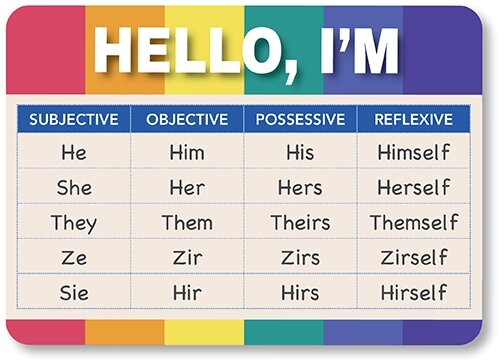
Now, as readers probably guessed right from the get go, this podcast focuses on another matter of personal identity — the degree to which professors can be forced to cooperate with students who chose to use any of the myriad and evolving gender pronouns linked to the LGBTQ+ movement. We looked at a Washington Post story with this headline: “A professor was reprimanded for refusing to use a transgender student’s pronouns. A court says he can sue.

Now, when these clashes take part in PRIVATE schools — left or right, religious or secular — it’s clear (pending passage of the Equality Act) that these doctrinally defined institutions have a right to create belief and lifestyle covenants that settle issues of this kind. Students can chose to affirm these beliefs, freely signing on the dotted line, or go to school somewhere else.

But what about state schools built and operated with tax dollars?


Please respect our Commenting Policy

Vague doctrine at for-profit company? Tennessean nails key issue in new Ramsey lawsuit

Vague doctrine at for-profit company? Tennessean nails key issue in new Ramsey lawsuit

Get ready for more stories in which religious believers clash with the increasingly woke doctrines proclaimed, and enforced, by the Human Resource personnel in modern corporations.

Can your company fire you for declining to use a colleague’s preferred pronouns? What happens if (a) someone declines to remove a study Bible from his or her desk or (b) some believers refuse to hang LGBTQ+ rainbow solidarity posters in their offices? What if an employee marches in a right-to-life parade? Battles continue, in some workplaces, over crosses, beards, headwear and other religious symbols.

That’s one side of the HR culture wars. Meanwhile, it’s clear — pending the outcome of the Equality Bill debates — that faith-defined nonprofits have the right to create lifestyle and doctrinal covenants for the people who chose to sign them and, thus, work in these ministries.

But what about for-profit companies led by executives who want to maintain faith-friendly images? What are the limits on their policies?

For example, Hobby Lobby won its U.S. Supreme Court case after rejecting the Obamacare requirement that contraceptives be included in employee benefits packages. But what if for-profit company leaders said that, for faith-based reasons, they could investigate and fire employees who USED contraceptives?

This brings us to another fascinating dispute inside the Ramsey Solutions empire. The Tennessean headline asks: “Can you be fired over your sex life? Dave Ramsey thinks so.” Here is the overture:

While a former employee has accused Ramsey Solutions of terminating her because of her pregnancy, the company disputes the claim. Company lawyers said in court filings the employee was fired for premarital sex and so were a dozen other employees.

Former administrative assistant Caitlin O'Connor, who was employed by Ramsey Solutions for over four years and never disciplined, said when she announced she was pregnant in June and requested paperwork for maternity leave, she was terminated for her pregnancy since she isn't legally married to her longtime partner, the baby's father.

Lawyers for Ramsey Solutions, owned by Dave Ramsey — a conservative financial titan who made headlines when he hosted a giant Christmas party during the pandemic and refused to let his employees work from home — said O'Connor wasn't fired because she was pregnant. She was terminated for having premarital sex.


Please respect our Commenting Policy