Scriptures

Redeemer Presbyterian's Tim Keller: An outsider who came to New York City -- to stay

Redeemer Presbyterian's Tim Keller: An outsider who came to New York City -- to stay

On the Sunday after 9/11, thousands of New Yorkers went to church, with many joining a line stretching outside the Redeemer Presbyterian services in a Hunter College auditorium.

The Rev. Tim Keller asked his staff if they could manage a second service -- doubling the day's attendance to 5,300. Keller's sermon, "Truth, Tears, Anger and Grace," began with Jesus weeping before raising Lazarus from the dead.

Many Americans were "coming to New York to fix things," he noted. "We are glad for them. They will try to fix the buildings. We need that. And eventually they will leave. But when Jesus weeps, we see that he doesn't believe that the ministry of truth -- telling people how they should believe and turn to God -- or the ministry of fixing things is enough, does he? He also is a proponent of the ministry of tears. The ministry of truth and power without tears isn't Jesus."

This sermon contained major themes from the life and work of Keller, who died on May 19 death at age 72, after a three-year battle with Pancreatic cancer. Instead of seeking quick fixes, especially through politics, he kept urging conservative Protestants to stress compassion and face-to-face ministry, while continuing to defend centuries of Christian doctrine.

In Keller's case, that meant building a church for New Yorkers that addressed their blunt, exhausting, even cynical, concerns about life.

In that first sermon after 9/11, Keller noted that everyone had an opinion about New York City and America as a whole. Some were claiming that "God is punishing us" because of rampant immorality. Others said America had been judged because of social injustice and greed. Instead of blaming the victims, Keller said it was time to ask who would stand their ground and love their neighbors.


Please respect our Commenting Policy

Tim Keller sought 'winsome' Manhattan apologetics, a goal that became more difficult

Tim Keller sought 'winsome' Manhattan apologetics, a goal that became more difficult

If one looks up the word “winsome” in a dictionary, here is a typical example of what shows up, via Merriam-Webster: “generally pleasing and engaging often because of a childlike charm and innocence.”

However, a Google search for the term “winsome,” when combined with “Tim Keller,” opens up a window into a completely different world — one closely linked to debates about the meaning of the word “evangelical” in a Donald Trump-era culture.

Frankly, I am not going to go there. What I will do is urge GetReligion readers who visit Twitter to follow the #TimKeller hashtag and check out the waves of tributes in the wake of the passing of one of the most important American evangelicals — defined in terms of doctrine — in recent decades.

Instead of looking at the tsunami of news coverage, I will simply note the obvious — Keller is receiving much, or even most, of this attention because he lived, worked, preached and wrote in New York City. If his career had unfolded in the Bible Belt, mainstream journalists would never have heard of him. Thus, here is the New York Times double-decker headline on its obituary (which ran quickly, but inside the print edition):

The Rev. Timothy Keller, Pioneering Manhattan Evangelist, Dies at 72

Shunning fire and brimstone, he became a best-selling author and founded Redeemer Presbyterian Church, which drew young New Yorkers.

The Gray Lady’s lede offered this:

The Rev. Timothy J. Keller, a best-selling author and theorist of Christianity who performed a modern miracle of his own — establishing a theologically orthodox church in Manhattan that attracted thousands of young professional followers — died on Friday at his home in Manhattan. He was 72.

Yes, we can talk about the accuracy of the word “evangelist” in the headline. Once again, there are mainstream journalists who believe that is simply another way to say “evangelical.” Unless I missed something, Keller was not active in holding the kinds of public events — think Billy Graham “crusades” — normally associated with public evangelism. Were there some Central Park rallies with Keller sermons and altar calls that I missed? Please let me know.

What he was, of course, was a church builder and an “apologist” for small-o orthodox Christianity, of the Reformed form,” both in preaching and in writing — in books and a host of other forms.


Please respect our Commenting Policy

Global South Anglicans are convinced that it's time to look forward (Part II)

Global South Anglicans are convinced that it's time to look forward (Part II)

Want to know how to cause a church split?

The deepest fault lines -- sex, money and pride -- have been obvious for centuries, said Archbishop Kanishka Raffel of the Anglican Diocese of Sydney, Australia.

"We use nationality or age or gender or wealth or clothing or accent or profession or politics -- to show off and communicate who we are and what sort of person we will or will not engage with," said Raffel, who was born in London, of Sri Lankan descent, and raised Buddhist.

"God's people are frail and very human. We bear the marks of weakness and humiliation. We can be loveless, faithless, tolerant of the intolerable and wretchedly self-satisfied. … God is angry about the abuse of people that comes through sexual immorality, greed and hateful, deceitful and cruel speech. We are not surprised."

For decades, he acknowledged, the 42 churches in the Anglican Communion have been rocked by divisions over biblical authority and colonial-era ecclesiastical structures -- with LGBTQ disputes grabbing headlines.

During the recent Global Anglican Future Conference, held in Kigali, Rwanda, Raffel was one of several bishops -- 315 attended, from 52 nations -- who stressed that traditionalists now need to look forward. It's time to focus on life in their rapidly growing churches, while dedicating less time and energy to clashes with declining churches in England, America, Canada and elsewhere.

This will, Raffel stressed, require looking in the mirror.

"We have been engaged in decades long conversation about sexual immorality. But we have often focused on one form of sexual sin, to the neglect of sexual sins which perhaps are more common among us and just as displeasing to God," he said. "How many women ... have shed rivers of tears over the way their sexuality has been misused by others? I suppose it would be millions. There is a self-serving blind spot of which we must repent, a log in our own eyes with which we are yet to deal. Lord, have mercy."


Please respect our Commenting Policy

Podcast: What's going on with Southern Baptist decline? Count the news hooks ...

Podcast: What's going on with Southern Baptist decline? Count the news hooks ...

Back in the early 1980s, the Southern Baptist Convention was enduring the crucial years of its civil war over — here’s the term headline writers hated — “biblical inerrancy.”

I was at the Charlotte News and then the Charlotte Observer back then, in a city in which one of the major roads was named after Billy Graham. The SBC spectrum in Charlotte ranged from hard-core conservatives to “moderates” who were basically liberal mainline Protestants with better preaching.

During that time, a moderate church welcomed the the late Rev. Gardner C. Taylor of Brooklyn to its pulpit for a series of sermons (“moderates” don’t have “revivals”). Taylor would make just about anyone’s list — Top 100 or even Top 10 — of that era’s most celebrated preachers. In 1980, Time magazine hailed him as the “the dean of the nation’s black preachers.” That’s saying something.

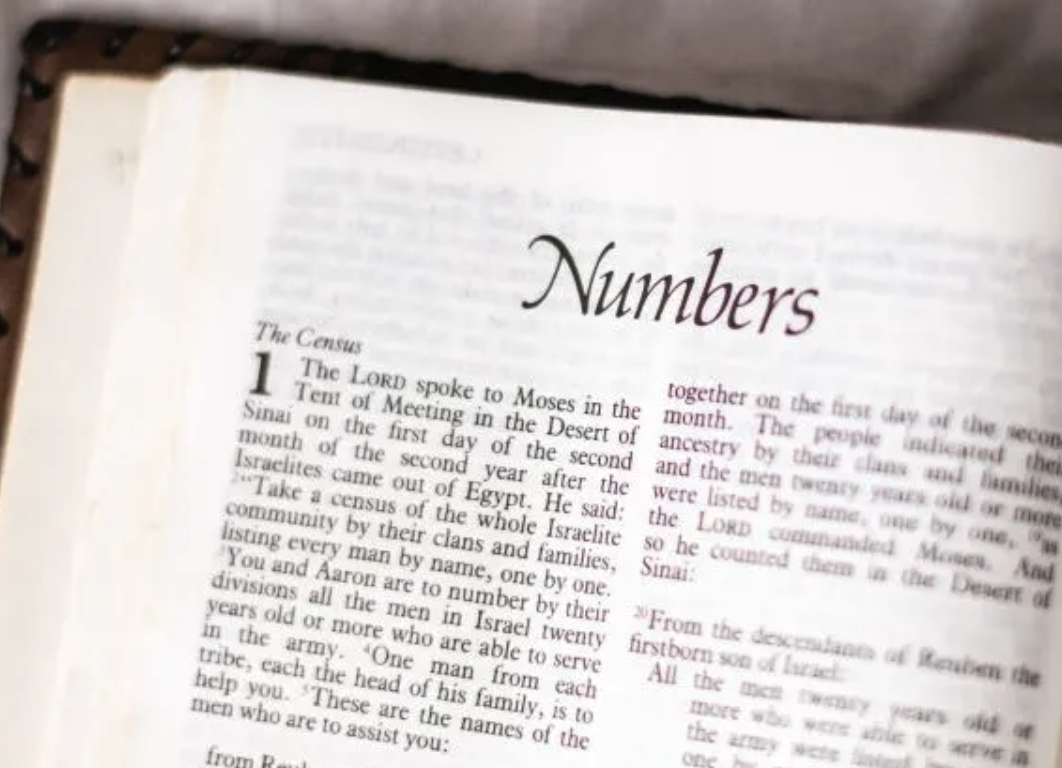
During one sermon, Taylor briefly addressed the SBC wars and added, with a slight smile, that he always thought that the primary book in the Bible that Southern Baptists “considered inerrant was the Book of Numbers.”

Southern Baptists have always loved their statistics (I grew up in Texas, the son of a Southern Baptist pastor) and, for decades, those statistics made their leaders smile.

Things are a bit more complex, right now, as seen in this RNS headline: “Southern Baptists lost nearly half a million members in 2022.” That story, and some other related online materials, provided the hook for this week’s “Crossroads” podcast (click here to tune that in).

Before we get to that solid news piece, by religion-beat veteran Bob Smietana (a scribe in Nashville for years), let’s grab some context from a new Substack post by chart-master Ryan Burge, a GetReligion contributor (and former Southern Baptist), with this headline: “The 2022 Data on the Southern Baptist Convention is Out.”

Check out these numbers from the past 80 years, a period in which the SBC’s rise “is just unmatched.”


Please respect our Commenting Policy

Newsworthy question (again): Does God exist? The latest twist in the perennial debate

Newsworthy question (again): Does God exist? The latest twist in the perennial debate

Early on in the 21st Century -- which turns out to be a thorny era for organized religion -- the “New Atheism” replaced past skeptics’ polite colloquies with fundamentalist-style attacks that demeaned believers as pretty much fools and knaves.

Some radicals even wanted to prevent parents from training children in their family’s religious faith (without imposing the same demand on atheistic families).

Religion writers will recall the so-called “Four Horsemen” of this much-publicized mini-movement in the popular press: neuroscientist Sam Harris (author of “The End of Faith,” 2004), biologist Richard Dawkins (“The God Delusion,” 2006), cognitive studies scholar Daniel Dennett (“Breaking the Spell,” 2006), and the late journalist Christopher Hitchens (“God Is Not Great,” 2007).

Though it hardly qualifies as the start of the New Anti-Atheism, a recent book answers that quartet with a more gracious but similarly popular style that ponders God’s existence in brass-tacks terms rather than abstruse philosophical theorems. Turns out to be a highly intriguing and readable project worth media consideration.

As the subtitle signals, the author of “Atheism on Trial: A Lawyer Examines the Case for Unbelief” (InterVarsity Press) is no theologian or philosophy professor but an attorney. And not any old attorney.

W. Mark Lanier has appeared on various Best Lawyers lists for his successes as a class-action litigator in some of the biggest product liability cases of our time (click here for details), involving prescription drugs, baby powder, artificial sweeteners, metal-on-metal hip implants and more. Out of court, Lanier teaches an adult Sunday School class at Houston’s Champion Forest Baptist Church and has amassed one of the nation’s largest private libraries on religion.

Lanier offers a courtroom-style case of the sort that wins verdicts, asking his readers as jurors to consider logic, common sense and circumstantial evidence from real life.


Please respect our Commenting Policy

Celebrities, monarchs, politicos, clergy and sacramental ghosts in coronation of Charles III

Celebrities, monarchs, politicos, clergy and sacramental ghosts in coronation of Charles III

If you read the main Associated Press report about the coronation of King Charles III then you know, in summary material near the top, that the rites were attended by “celebrities including Judi Dench, Emma Thompson and Lionel Richie.”

You would not, however, know that — for the first time in history — the monarch processed into Westminster Abbey behind a new Cross of Wales which, because of a recent gift from Pope Francis — contained two fragments from the “true cross” of Jesus discovered in 312 A.D. by the Empress Helen, mother of Constantine. We are talking about a relic reverenced by the early church and, ever since, by the ancient churches of East and West.

I know. It’s all about priorities. Was the coronation of Charles III a religious rite, a political ceremony or a mega-watt event in mass pop culture?

The obvious answer to this question is "Yes.” The issue, as usual, is which angle received the most accurate and informed attention in the AP report. Want to guess?

Before we go on, let me make a confession. I am, at the moment, high in the mountains of North Carolina and access to solid WiFi is, to be blunt, near zero. I drive into a small town about once day. Thus, I am going to focus on the religion details (and lack thereof) in the AP report alone — since that is what will be read by most news consumers in Middle America and elsewhere.

I will end with some questions about the rite that I have not been able to answer, questions linked to the ecumenical and interfaith content of the ceremony — details that appear to be close to the heart of the new king (background here from TheConversation website). But first, here is the overture:

LONDON (AP) — King Charles III was crowned … at Westminster Abbey, in a coronation ceremony steeped in ancient ritual and brimming with bling at a time when the monarchy is striving to remain relevant in a fractured modern Britain.

In displays of royal power straight out of the Middle Ages, Charles was presented with an orb, a sword and scepter and had the solid gold, bejeweled St. Edward’s Crown placed atop his head as he sat upon the 700-year-old oak Coronation Chair.

In front of world leaders, foreign royals, British aristocrats and stars, Charles declared: “I come not to be served but to serve.”


Please respect our Commenting Policy

Global South Anglicans make big effort to start cutting Canterbury ties that bind (Part I)

Global South Anglicans make big effort to start cutting Canterbury ties that bind (Part I)

After a half-century of decline, the U.S. Episcopal Church has 1.5 million members, and its average weekly attendance was just above 500,000 before COVID-19 and 300,000 afterwards.

After decades of explosive growth, the Anglican Church of Nigeria claims about 18 million members (others say 8 million), and the Center for Global Christianity near Boston estimates it has 22 million active participants in worship.

Caught in the middle of these two trends is the Most Reverend Justin Welby, by Divine Providence the 105th Lord Archbishop of Canterbury, Primate of All England and the "first among equals" among bishops in the 42 churches in the Anglican Communion. While his own flock claims 26 million baptized members, about 600,000 attend weekly services.

Now, Global South church leaders -- representing about 75% of Anglicans who frequent pews -- have decided that it's time to start cutting ties between the "Canterbury Communion" and the rest of the Anglican Communion.

“We have no confidence that the Archbishop of Canterbury nor the other Instruments of Communion led by him … are able to provide a godly way forward that will be acceptable to those who are committed to the truthfulness, clarity, sufficiency and authority of Scripture," warned the Global Anglican Future Conference, which met April 17-21 in Kigali, Rwanda. GAFCON IV drew 1,302 delegates from 52 nations, including 315 bishops.

Meeting together, leaders of GAFCON and the Global South Fellowship of Anglican Churches said they "can no longer recognize the Archbishop of Canterbury as an Instrument of Communion, the 'first among equals' of the Primates. The Church of England has chosen to impair her relationship with the orthodox provinces in the Communion."

While this gathering in Africa drew little or no coverage from Western news organizations, Lambeth Palace released a brief response, noting that the Kigali Commitment statement echoed many previous claims about Anglican governance.


Please respect our Commenting Policy

Define 'evangelical,' 2023: What is a 'reconstructionist,' low-church Protestant?

Define 'evangelical,' 2023: What is a 'reconstructionist,' low-church Protestant?

Yes, here we go again.

Please consider the following an update on “Define ‘evangelical’,” “Define 'evangelical,' yet again,” “Define 'evangelical,' please,” “That same old question for 2016: What is an 'evangelical,' anyway?”, “Once again, journalists need to ponder this question: What is an 'evangelical'?” and lots of other GetReligion offerings on this topic over nearly 20 years.

Yes, this is tough work — but somebody has to do it.

In this case, former GetReligionista Mark Kellner sent me the following Duluth News Tribune story, while expressing “more than a little sympathy “ for the general-assignment reporter who got caught up in the whole “evangelical” self-definition puzzle. Here’s this complex, but vague, headline from the world of mainline Protestant decline:

New generation, denomination takes over Duluth church

Attendees of Westminster Presbyterian Church were dwindling over the years. They decided to gift their church to a younger crowd of Christians focused on inclusivity.

The clue that there are plot twists ahead? That would be the word “inclusivity.”

Think about it: More “inclusive” than a congregation in the liberal mainline Presbyterian Church (ISA)?

Hold that thought. Here is the overture:

DULUTH — It's not every day that an offer for a new church building lands in your lap.

But that's exactly what happened to Pastor Kris Sauter of Neighborhood Church in Cloquet. Sauter received a phone call from the Rev. Carolyn Mowchan, part-time pastor for Westminster Presbyterian Church in western Duluth.

"And I don't usually take cold calls," Sauter said. "But I happened to pick up this time and she was like, 'Hi Kris, I'm Carolyn. How would you like a free building?' And I was like ... 'Hi Carolyn, I'm Kris.' And that led to a really beautiful conversation and series of conversations about taking over the building."


Please respect our Commenting Policy

Thinking about Bari Weiss, Twitter, evangelicals and New York Times op-ed doctrines

Thinking about Bari Weiss, Twitter, evangelicals and New York Times op-ed doctrines

Here’s a question for you: When it comes to defining the doctrines of blue-zip-America, which is more important — the news pages of The New York Times or the newspaper of record’s op-ed pages?

In the old days, I would have said the op-ed pages.

But that was back when most of the Times news desks were, to one degree or another, still part of (to one degree or another) the American Model of the Press (background in this .pdf file). That was certainly the case in the era of the late, great A.M. Rosenthal.

At this moment in time, there are signs of actual diversity — even tension — in the op-ed pages and maybe, just maybe, signs of a few glowing embers of editorial independence in the news papers.

But let’s still assume — as I argued in my Religion & Liberty essay, The Evolving Religion of Journalism — that the Times news operation is still operating as a niche-news, advocacy journalism publication anxious to please the new liberal, maybe illiberal, readers who pay cash for its content.

Let’s assume that the July, 2020, resignation letter posted by Bari “The Free Press” Weiss remains a must-read “think piece” for all news consumers. For those who need a refresh, as part of this “think piece” doubleheader, here are two key passages from that shot over the bow of the Gray Lady’s principalities and powers:

… [A] new consensus has emerged in the press, but perhaps especially at this paper: that truth isn’t a process of collective discovery, but an orthodoxy already known to an enlightened few whose job is to inform everyone else.

Twitter is not on the masthead of The New York Times. But Twitter has become its ultimate editor. As the ethics and mores of that platform have become those of the paper, the paper itself has increasingly become a kind of performance space. Stories are chosen and told in a way to satisfy the narrowest of audiences, rather than to allow a curious public to read about the world and then draw their own conclusions. I was always taught that journalists were charged with writing the first rough draft of history. Now, history itself is one more ephemeral thing molded to fit the needs of a predetermined narrative.

Here is another essential passage from this “read it all” classic. This comes after Weiss — a gay, Jewish, old-school First Amendment liberal — describes the in-house digital bullying that made her hit the exit door:


Please respect our Commenting Policy