Scriptures

Schism or not, what's next for the huge, disrupted global Anglican Communion?

Schism or not, what's next for the huge, disrupted global Anglican Communion?

If the Anglican Communion did not suffer schism on April 21, it’s the next best thing.

A declaration issued that day at the conclusion of an international church assembly in Kigali, Rwanda, means the media and other religion-watchers should gird loins for years of maneuvers, legalities, confusion and acrimony.

Here’s what’s at stake. This major segment of Christianity encompasses an estimated 85 to 90 million members worldwide in 46 regional branches. Its older western churches have a rich heritage in religious thought, worship, and fine arts, while the younger churches in the “Global South” are at the forefront of today’s creative Christian expansion.

This loose confederation has been organized like so.

(1) The archbishop of Canterbury, its titular leader as head of the “mother” Church of England, is no pope but summons and presides at these meetings.

(2) The Lambeth Conference, which gathers all Anglican bishops worldwide, most recently held — with many Global South leaders absent —last summer.

(3) The Primates’ Meeting (the confusing P-word refers to the leaders of regional branches), held most recently in March, 2022.

(4) The Anglican Consultative Council, a body of bishops, clergy and lay delegates that met most recently in February in Ghana.

The April 21 “Kigali Commitment,” which includes an emphatic vote of no confidence in all four of those entities, was issued by 315 bishops, 456 priests and 531 lay delegates from 52 countries. Sponsors claim their churches constitute nearly 85% of the world’s active Anglicans; for certain they represent a substantial — and growing — majority.
Please respect our Commenting Policy

Global South Anglicans cut their ties to Canterbury? Maybe that's a news story worth ink

Global South Anglicans cut their ties to Canterbury? Maybe that's a news story worth ink

One of the most depressing things about being a reporter these days is trying to accept the fact that we live in a split, divided, warped news marketplace in which stories that, in the past, would have been Big News for everyone are now “niche” news items that half of our journalism culture feels totally comfortable ignoring.

This happens on the journalist “right” as well as the journalism “left,” or whatever word people are using instead of “left” these days.

This just in: One of the world’s great Christian traditions — the global Anglican Communion — ran into a wall late last week. The big idea: Anglican leaders from nations that represent about 80% of all Anglicans regularly IN PEWS — as opposed to being names on membership lists that may or may not be relevant — voted to cut the ties between Canterbury and the most of the Anglican Communion.

I’ve been watching for elite media coverage all weekend. Here is a Google News file with logical search terms. Please click that search, which was made Sunday night. What do you see? Obviously, at that moment, this was a “conservative” and/or “religious” media story.

You see, the Anglicans in the Global Anglican Future Conference (GAFCON) represent the growing (in some cases booming) churches of Africa, Asia and the Third World. They do not, however, represent the zip codes in which the major newsrooms of the Western world are located. They also do not represent the world’s richest Anglicans. Thus, to be blunt, what these “lesser” Anglicans say is NEWS is not news until the New York Times says that it’s news. Right?

With that in mind read the top of this report — long, but essential — from the venerable Anglican publication called The Living Church: “GAFCON Rejects Archbishop Justin Welby’s Leadership.”

On April 21, primates representing a large majority of the Anglican Communion formally repudiated the historic leadership of the See of Canterbury.


Please respect our Commenting Policy

Amazing! Brief mention of doctrine in LGBTQIA+ war at Point Loma Nazarene University

Amazing! Brief mention of doctrine in LGBTQIA+ war at Point Loma Nazarene University

Oh my! It appears that we have an actual reference to a doctrinal “covenant” in a Religion News Service report about a First Amendment battle between the leaders of a private Christian university and the pro-LGBTQ members of their faculty, student body and alumni.

Journalists almost always ignore the role of "lifestyle” or “doctrinal” covenants in defining the boundaries of the life and work of private schools, which are voluntary associations. It’s always important to ask if faculty, staff and students are asked to sign these covenants, in which they (the details vary) agree to support the doctrinal foundations of the school or, at the very least, not to attack them.

This is an issue your GetReligionistas have written about 100+ times or more during the past 20 years.

The fact that this latest fight is happening at Point Loma Nazarene University in San Diego will not surprise anyone familiar with the recent history of denominational life in the Church of the Nazarene. But that’s another story for another day. The reality is that there are hidden schisms in the faculties of many Christian colleges and universities, when it comes to issues of centuries of Christian moral theology.

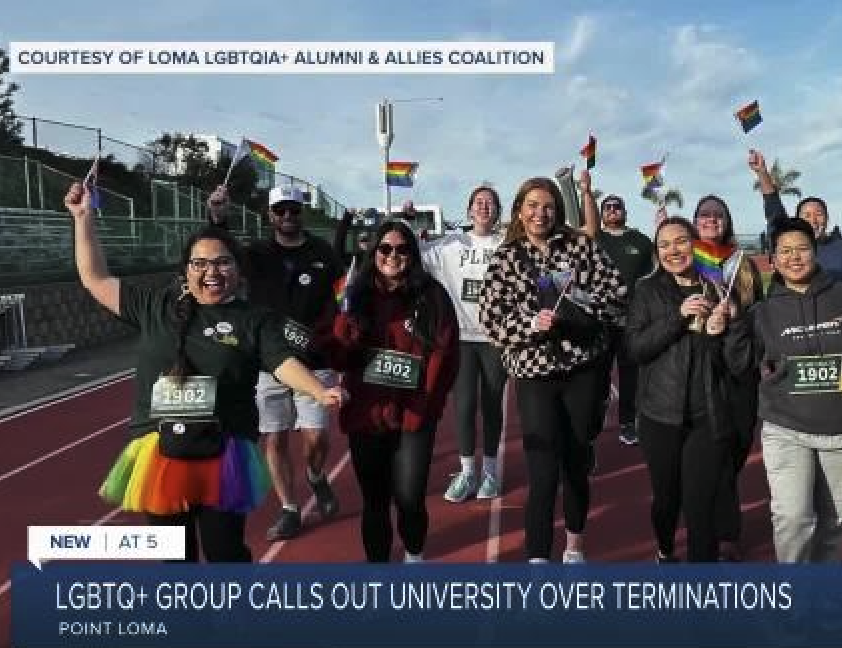
Thus, back to the RNS report: “LGBTQ group condemns Point Loma Nazarene University for theology dean’s dismissal.” The subhead is also important: “The university denies charges by Lauren Cazares, founder of Loma LGBTQIA+ Alumni & Allies Coalition, that the dean of the school of theology was terminated for 'anything related to the LGBTQIA+ community.' “

There is next to nothing surprising in this report. RNS editors included zero comments from insiders or experts who disagree with the viewpoints voiced over and over by the LGBTQIA+ activists who provided material for this “news” report. There is one quote from a university spokesperson who notes that the administration, due to privacy laws, cannot discuss the dismissal of a faculty member.

But, hey, there is one reference to “doctrine” in this story! Let’s start with the overture:

A coalition of LGBTQ alumni of Point Loma Nazarene University — a private Christian liberal arts college in San Diego — is protesting the firing of the dean of the university’s school of theology, who they say was dismissed for siding with an adjunct professor who was let go due to her own public support for the LGBTQ community.

Mark Maddix, the dean for the school of theology and Christian ministry, was fired on March 15 by the university’s chief academic officer, Kerry Fulcher, according to an April 5 statement released by alumna Lauren Cazares, who founded Loma LGBTQIA+ Alumni & Allies Coalition earlier this year.


Please respect our Commenting Policy

Campaign for thorough reform of Muslim law deserves mainstream coverage -- now

Campaign for thorough reform of Muslim law deserves mainstream coverage -- now

The world’s largest organization of Muslims is campaigning for thorough worldwide reform of how to understand the faith’s religious law (Sharia) and applied jurisprudence (Fiqh).

Such an ambitious goal may seem unlikely and, to date, western media have given the effort minimal coverage. It’s time for that trend to change.

Far from some esoteric intellectual discourse, such a philosophical change could potentially affect the future of the world’s second-largest faith regarding democracy, blasphemy laws, human rights, education, the role of women, treatment of other religions, warfare, extremism, terrorism and crime and punishment.

The organization in question is Nahdlatul Ulama (NU, meaning Revival of Islamic Scholars) in Indonesia, the nation with the largest Muslim population. Consider these numbers from James M. Dorsey, a freelance writer and adjunct senior fellow in international studies at Singapore’s Nanyang Technological University: NU encompasses an estimated 90 million lay followers, tens of thousands of religious scholars, 44 universities and 18,000 lower schools.

NU upholds Sunni orthodoxy, but with a more tolerant tone than is customary in the Mideast. Its legal reform program was prominent during the massive February celebration of its 100th anniversary, analyzed in Dorsey’s March 31 Substack column. His article is a good starting point for journalists, but its opinionated viewpoint warrants careful follow-up interviewing. Also note this 2021 NU backgrounder by political scientist Ahmet T. Kuru (akuru@sdsu.edu).

Moderate Muslim thinkers have long favored some sort of move away from rigid legal traditionalism. Dorsey depicts a two-sided struggle among them, pitting allies of NU’s fully democratic and tolerant outlook against religious leaders beholden to rulers in the Mideast, as in Saudi Arabia, where certain social liberation is being allowed without fundamentally rethinking Islamic law or politics.


Please respect our Commenting Policy

Weeks before the attack, Covenant's pastor preached on death, grief and the tears of Jesus

Weeks before the attack, Covenant's pastor preached on death, grief and the tears of Jesus

The Bible's shortest verse -- "Jesus wept" -- is also one of its most important.

That was the message delivered by the Rev. Chad Scruggs in a March 5 sermon -- "Death's Conqueror" -- as the faithful at Nashville's Covenant Presbyterian Church continued their Lenten journey toward Holy Week and Easter's promise of new life after death.

"How do we face death in our world," he asked, "especially untimely deaths, without the pain and confusion of death leading us to despair?"

That was three weeks before a gunman crashed through the glass doors of his church's Covenant School and killed three staff members and three 9-year-old students -- including the pastor's daughter, Hallie Scruggs. Police fatally shot the attacker, 28-year-old Audrey Hale, a former Covenant student who had taken the name "Aiden" and male pronouns online

Police confirmed that Covenant had been targeted. But Nashville officials and the FBI have declined to release a "manifesto" referenced in Hale's final social-media warning: "One day this will make more sense. I've left more than enough evidence behind."

The families of those killed have mourned in private, even as solemn Holy Week rites flowed toward Easter (April 9) -- surrounded by a whirlwind of familiar arguments about gun control and a mental-health crisis that has shattered so many lives.

In his sermon before the attack, Scruggs had already plunged into deeper, ancient, mysteries -- stressing that believers can trust that God understands the grief, anger and confusion caused by violence and death.

When meeting the grieving family of his friend Lazarus, Jesus responded with anger, as well as compassion. Thus, the importance of the Gospel of John's blunt words: "Jesus wept."


Please respect our Commenting Policy

God's Word? Concerning modern scholarship and those bloodthirsty Bible passages

God's Word? Concerning modern scholarship and those bloodthirsty Bible passages

QUESTION:

How do scholars explain bloodthirsty Bible passages?

THE RELIGION GUY’S ANSWER:

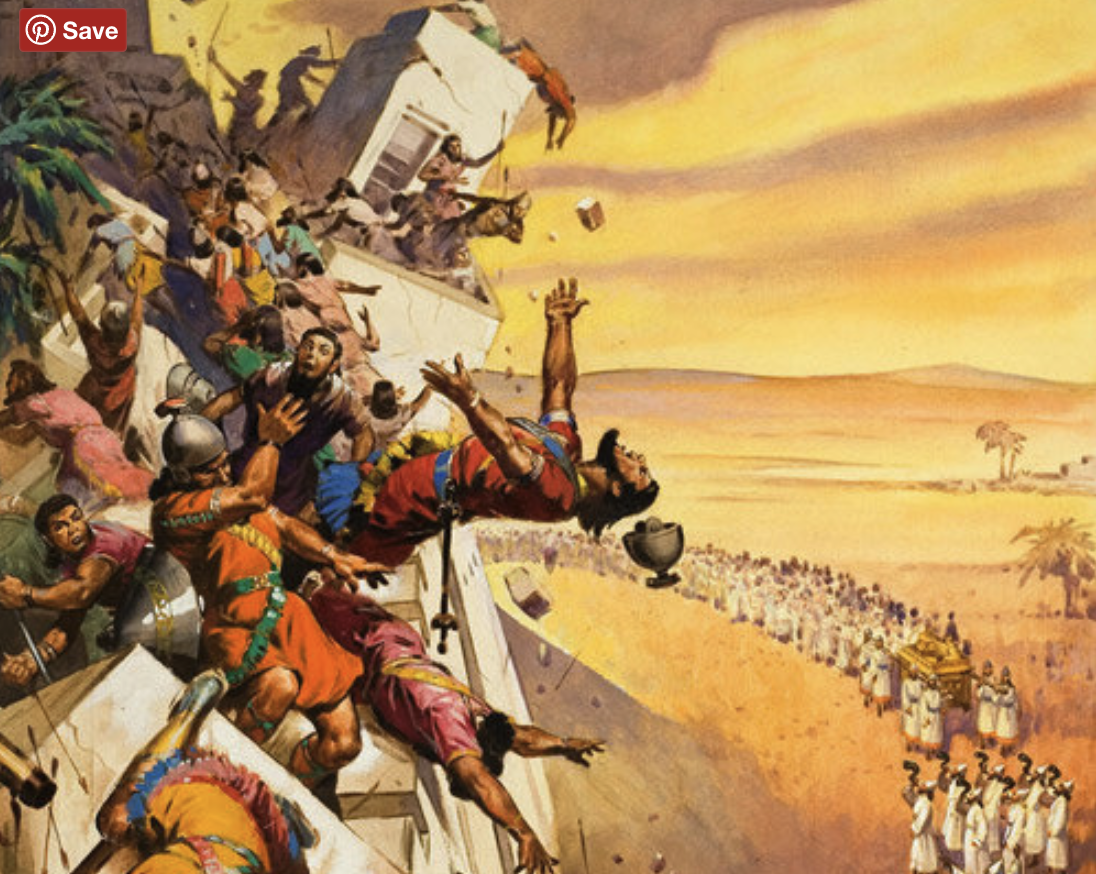
Skeptics seeking to disparage the Bible and, with it, Judaism and Christianity, cite certain passages in the Bible that depict all-out warfare as mandated by God. Consider Israel’s “conquest” of Canaan under Joshua, and a notably bloodthirsty passage like Deuteronomy 20:16-17, which says “you shall save alive nothing that breathes, but you shall utterly destroy them … as the LORD your God has commanded.”

Readers can see how that issue might, to say the least, be relevant to debates about some events in recent decades.

There’s been intriguing recent discussions of this complex issue. Even conservative evangelicals, who defend the Bible’s historical accuracy, are reinterpreting such passages, as we’ll see.

“Etz Hayim: Torah and Commentary,” issued by Judaism’s Conservative branch, freely admits a modern reader “recoils” from a demand to wipe out a population group. It says the context is the Canaanites’ “abhorrent” deeds. Verse 18 goes on to explain combat is necessary so “they may not teach you to do according to all their abominable practices which they have done in the service of their gods.”

Scholarly commentaries think ritual sacrifice of children was a major part of this. The context of such verses is said to be “the Torah’s abiding fear that these pagan nations will lead Israel astray.”

Here’s another part of the context. Risking any military advantage from surprise, Joshua informed Canaanites in advance about the invasion plan so they could flee from bloodshed, and he first offered a peace settlement before resorting to combat. (That was relatively humane for the cruel culture 3,000 years ago.) The same point is underscored by a classic source in Orthodox Judaism, the “Pentateuch & Haftorahs” compiled by Britain’s longtime chief rabbi, J.H. Hertz.

This Orthodox Jewish commentary also observes that the Israelites’ need for a homeland is part of all human history, including for most western nations.


Please respect our Commenting Policy

Attention mass-media leaders: What should Americans know about each others' faiths?

Attention mass-media leaders: What should Americans know about each others' faiths?

America’s three biggest hamburger chains have 27,000 local outlets.

The three biggest of America’s 2,800 or so religious denominations alone have 97,000 local congregations.

Which is to simply remind readers that faiths retain powerful impact in society despite the increase of people with no religious affiliation and other secular inroads.

Relations among major faiths feel especially pertinent in 2023, since Islam’s holy month of Ramadan with concluding Eid festival overlaps Jewish Passover and the two Easter dates observed by Christians.

Zeenat Rahman, executive director of the University of Chicago’s Institute of Politics, thinks American religion is “increasingly polarizing” and yet at the same time is “essential to rebuilding a strong civil society,” which means Americans “need a basic understanding of the faith of others.”

So, in practice what do people know about other major world religions? What should they know?

Those are important questions for regional or national journalists to explore via interviewing, plus polling if your medium has the money. Or consider commissioning brief articles where religious leaders sum up the basics they think others should know about their faiths and — especially helpful — what’s often misunderstood.

How about books? Stephen Wylen accepted this sort of challenge with his self-published “You Should Know This: A Rabbi Explains Christianity to Jews.” For years now, Terry Mattingly has also been recommending this classic by religion-beat veteran Mark Pinsky: “A Jew among the Evangelicals: A Guide for the Perplexed.”

Some standard book publisher should put together a non-sectarian and up-to-date anthology in which experts would depict their own religions for outsiders, including the main internal branches and variants.

Political scientist (and GetReligion contributor) Ryan Burge recently took up these matters, in a Religion News Service analysis, by re-examining 2019 interfaith data from the ubiquitous Pew Research Center.


Please respect our Commenting Policy

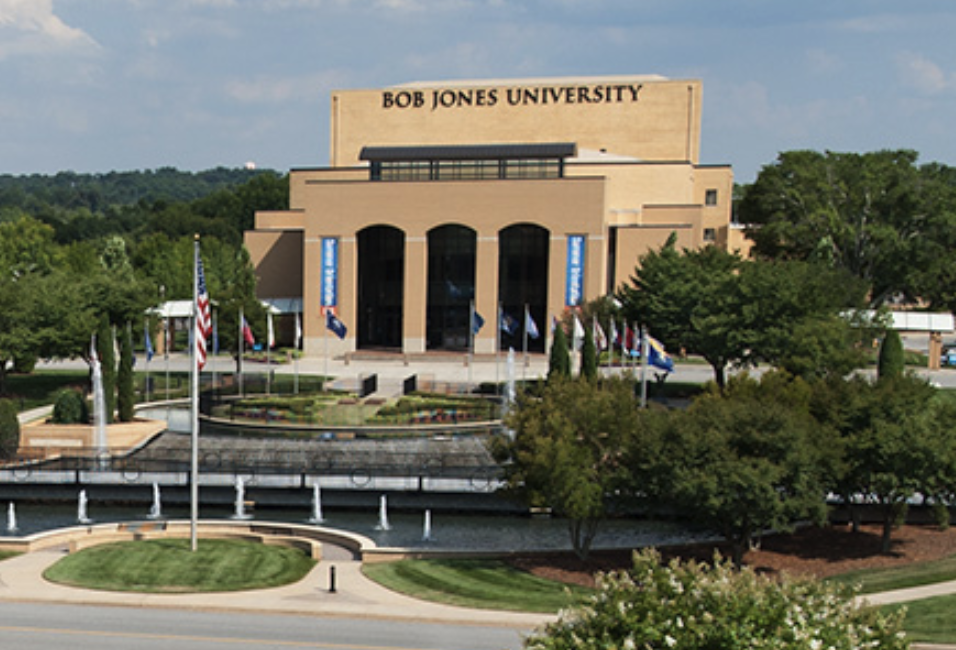
Tremors in a 'fundamentalist' empire: What kind of news story is unfolding at Bob Jones U?

Tremors in a 'fundamentalist' empire: What kind of news story is unfolding at Bob Jones U?

Attention religion-beat journalists: What we have here is a chance to use the hot-button word “fundamentalist” in way that is consistent with years of guidance from the Associated Press Stylebook.

Honest. Give it a try.

I am referring to news coverage of a rather mysterious power struggle at Bob Jones University in Greenville, S.C. At this point, there has been next to zero national coverage of this inside-baseball conflict, perhaps because it’s a fight between conservative Christians that does not appear to involve the words “Donald Trump.”

But there has been quite a bit of coverage at the regional level and in “Christian market” news, because this is a powerful and symbolic institution in the Bible Belt. You can see some major-league buzz words in the overture of the main story at The State: “SC Christian university president resigns, cites problems with governing board.” This is long, but essential:

The president of Bob Jones University has resigned amid long-simmering disagreements with the chairman of the board and grandson of the university’s founder over the discretion of the fundamentalist Christian school in Greenville.

Steve Pettit was named president in 2014, the first non-Jones family member to hold the job since the school was founded by Bob Jones Sr. in 1927. He was succeeded by Bob Jones Jr., Bob Jones III and then his great-grandson, Stephen Jones. Bob Jones IV elected not to work at the school.

In a four-page letter to the board, Pettit said board chair John Lewis had created disunity on the board, held a meeting without telling staff and was not taking seriously a comment made by a board member that “female students’ clothing and female student athlete uniforms accentuate their ‘boobs and butts.’”

Pettit said he had heard the board member took photos of women without their permission. He said he did not know if the information was true, but by law should have been turned over to the Title IX coordinator for investigation.

Ah, a Title IX fight. For those who have followed Bob Jones trends, that would lead straight into the crucial issue of whether this school will play ball with government agencies or outside educational authorities of any kind.

A big word here is “separatism,” along with “ultra-separatism” (click here for background). The key is the degree to which true “fundamentalist” would work with mere evangelicals who have associated, in any way, with liberal and modern trends in Christian faith.


Please respect our Commenting Policy

New question in the worship wars: Why have many worshippers stopped singing in church?

New question in the worship wars: Why have many worshippers stopped singing in church?

Anyone who has visited a shopping mall understands the Big Idea behind a food court.

"If you want Mexican food, you go here. … If you want pizza, you go over there," said Kenny Lamm, the worship ministry strategist for the Southern Baptist state convention in North Carolina. "Then we sit together and eat whatever we want. …

“The question is whether a food-court approach works if you are seeking unity while leading worship in a church."

In the latest wrinkle in what researchers have long called the "worship wars," some church leaders are asking a blunt question about the decision to trade traditional hymnals for contemporary Christian music. That question: Has the typical Sunday service become a semi-professional concert instead of a communal worship experience for all believers?

As part of his work, Lamm hears from many pastors, musicians and church members. One recent letter -- which he posted while keeping the writer anonymous -- combined many hot-button issues in this debate.

After four weeks of visiting a church, the writer noted that he was constantly distracted during worship by "haze machines," "programmable lights that blind the audience," concert-level darkness in the auditorium, as well as musicians wearing "ball caps," skinny jeans, "Chuck Taylor" tennis shoes and other "stage" apparel.

Many of the new songs seemed to confuse the congregation.

"The melody is unmemorable. Very few in the audience seem to know the songs either; indeed as we looked around during one of the songs, we did not see one person singing -- not one," noted this visitor. "Some of the songs are so high I cannot sing them. I wish the leaders would consider the average singer! … Why does just about every praise and worship song go up an octave and double in volume halfway through, then die back down at the end?"


Please respect our Commenting Policy