Scriptures

Abstinence may be 'in' again, but don't expect big-time media to give it a fair hearing

Abstinence may be 'in' again, but don't expect big-time media to give it a fair hearing

Some three weeks have passed since the Supreme Court dumped Roe v. Wade and the torrent of angry pro-abortion-rights pieces fills the pages of nearly every news publication out there.

Outlets like the New Yorker, for instance, just keep pumping them out at a rate that you have to wonder when they turned into the public voice of Planned Parenthood. The editors are, of course, preaching to their choir of faithful readers.

I’ll also say that the anti-abortion folks have been totally unprepared for the never-ending waves of attacks and, yes, some of the lies that have followed the ruling. I’m seeing precious few of their opinions out there in the secular media. Maybe they’re being blocked; hard to tell.

The underlying assumption of the argument is the gospel of the Sexual Revolution — people have a right to sex whenever, however, wherever and with whomever. This right is a modern invention. Most societies attempted to chaperone their teens and encouraged their offspring married young. They also punished adultery quite severely. One’s ‘right’ to sex was hedged in enormously.

Today, the thought of limiting one’s desires is equal to an obscenity in our culture, which is why the antidote to abortion –- abstinence -– draws such howls of protest. How dare anyone tell us no? And so an Religion News Service led a story on abstinence with these paragraphs:

(RNS) — In front of a room of middle schoolers, a youth minister in rural North Carolina scribbles “hand-holding” and “kissing” on the bottom of a whiteboard. He then writes “intercourse” on the top of the board. Between the gap, he draws a thick line, indicating that sex before marriage — anything more than kissing, actually — crosses a literal line of purity.

It’s a scene the Rev. Amelia Fulbright, now the transitional pastor of the Congregational Church of Austin, recalls from her childhood, when she attended a ministry-led sex-ed course.

The reporter chose someone from a liberal denomination, or responded to a a PR message from that church, to arrive at this inevitable conclusion.

Please respect our Commenting Policy

Pride meets Father's Day: Gay dads preach the 'radical inclusivity' of their Chicago parish

Pride meets Father's Day: Gay dads preach the 'radical inclusivity' of their Chicago parish

Landon Duyka and Alex Shingleton had almost given up on Catholicism.

Then they found Old St. Patrick's Church in Chicago, where their family was welcomed because the parish practices what its clergy call "radical inclusivity." This year, the two husbands created an online buzz when, after a decade in these pews, they shared the pulpit during a symbolic Sunday Mass.

“Chicago is celebrating Pride and, of course, today is Father's Day and, conveniently, we tick both of those boxes," said Duyka. "In all honesty, if you had told us as young boys who wasted countless hours of our lives in church trying to 'pray the gay away' that we someday would be standing in front of all of you in our Catholic church talking about our family on Father's Day, we would never have believed you."

At this historic parish, their adopted daughters are thriving. The youngest was baptized with no complications, unlike the "secret ceremony" for their first daughter at a previous church. In 2016, the Old St. Pat's altar featured -- for a month -- photos of victims from Orlando's Pulse nightclub massacre. Parishioners shook their hands during the Sign of the Peace. There was no need to worry about sermons opposing gay marriage or seeing conversion-therapy pamphlets.

The Father's Day "reflection" by Duyka and Singleton filled the homily slot in the Mass, following the Gospel reading. There was no homily, even though Canon law requires a "priest of deacon" to deliver one during Sunday Masses with a congregation.

The details of this Pride-season Mass inspired online debates since it occurred in the powerful Archdiocese of Chicago, led by Cardinal Blase Cupich.

Pope Francis recently named Cupich to the Vatican's Dicastery for Divine Worship and the Discipline of the Sacraments. The Chicago cardinal has been a fierce defender of the pope's Traditionis Custodes ("Guardians of the Tradition") document limiting use of the Tridentine Latin Mass. With its authority, Cupich has also restricted other worship traditions favored by Catholic conservatives, such as priests celebrating Mass "ad orientem," as opposed to the modern "versus populum" stance in which, when at the altar, they face their congregations.

On LGBTQ issues, Cupich made news with his response to a 2021 Congregation for the Doctrine of the Faith text forbidding blessings for same-sex couples.


Please respect our Commenting Policy

Podcast: Experts call the Unification Church a 'cult,' and that word requires explanation

Podcast: Experts call the Unification Church a 'cult,' and that word requires explanation

It has been a long time since I have done a podcast post about a developing news story only one day after I wrote the original post on that topic.

However, yesterday’s post — “New York Times report says the Unification Church is a 'church' and it's as simple as that” — turned out to have some old issues connected to it that, when discussed in this week’s “Crossroads” episode, took us back into a familiar journalism minefield. (To get to the actual podcast, JUST CLICK HERE.) Can you say “cult”?

Before we get to the old issue of journalists (and academics) struggling to define “cult,” let’s look at some of the ways and religious and political language are woven into the story of the assassination of former Prime Minister Shinzo Abe of Japan — primarily through the family history of Tetsuya Yamagami, who was arrested after the shooting. This is from The Guardian:

Tetsuya Yamagami has confessed to killing the former Japanese prime minister during a campaign speech on Friday. He blamed the global religious movement — whose members are often referred to as Moonies — for bankrupting his family, and believed that Abe had championed its activities in Japan.

The Japan branch of the church has confirmed that Yamagami’s mother is a member, but declined to comment on the suspect’s claims that she had made a “huge donation” more than 20 years ago that left the family struggling financially.

The branch’s president, Tomihiro Tanaka, told a press conference that Yamagami’s mother became a follower in the late 1990s, adding that the family had suffered financial ruin around 2002.

As I mentioned in the first post, it’s normal to call the Unification Church a “church” on first reference, since that is it’s primary name — as opposed to the Holy Spirit Association for the Unification of World Christianity or the Family Federation for World Peace and Unification.

The journalism issue here is how reporters describe this religious movement in follow-up references and how much material news reports include about the messianic claims of its founder, the Rev. Sun Myung Moon. Let’s return to the Guardian report:

Moon, who died in 2012, said he had had a vision aged 15 in which he was told by Jesus to complete his unfulfilled mission to restore humanity to a state of “sinless” purity.


Please respect our Commenting Policy

Norm Macdonald's 'Nothing Special' -- final thoughts on mortality while the clock was ticking

Norm Macdonald's 'Nothing Special' -- final thoughts on mortality while the clock was ticking

Comedians frequently take shots at taboo targets, but that wasn't what Norm Macdonald was doing when he addressed Down's Syndrome while solo recording what became the new "Nothing Special" on Netflix.

"I love people with Down Syndrome," said Macdonald, in a no-audience performance packed with his familiar pauses and bemused expressions. "I wish I had Down Syndrome, and I'll tell you why. They're happy. You know what I mean? …

"What's wrong with that? … People get mad at them … and they pity them. Now, who's the bad person in that scenario?"

The former Saturday Night Life star -- who died September 14 after a secret nine-year fight with cancer -- recorded nearly an hour of material during the coronavirus pandemic, before yet another operation in the summer of 2020. He said he "didn't want to leave anything on the table in case things went south."

This Netflix finale offers fresh musings on mortality and morality that, with Macdonald's blunt language and haunting images, evolve into meditations on how modern people deceive themselves. The X-factors in his art were religious faith and his love of literature ranging from Mark Twain to Fyodor Dostoyevsky.

"Macdonald showed respect for basically everyone, with the exception of himself and people like O.J. Simpson and Bill Clinton," said Rich Cromwell, a television professional and essayist for The Federalist. "He was not a Christian comedian -- that's clear. But that was part of who he was, and he treated faith with respect. …

"This Down's Syndrome material is a perfect example. He didn't turn that into an overt argument about abortion, but it's clear that he is saying all life is worthy of respect, even if some people don't judge that life to be worthy. He's saying people with Down's Syndrome are God's children, no matter what."

"Nothing Special" ends with an A-list reaction panel -- David Letterman, Adam Sandler, Conan O'Brien, Dave Chappelle, David Spade and Molly Shannon -- who knew Macdonald as a friend and colleague. This special was full of "third-rail stuff," noted O'Brien.

Macdonald riffed on his own "degenerate" gambling sins, his fear of airplane crashes ("Ashes to ashes, stuff to stuff, as the scriptures say"), cannibalism, slut-shaming, racism, transgenderism and his fear of dying and discovering that he picked the wrong religion. He also discusses living wills and giving doctors explicit instructions not to yank "that plug in the wall" in the event of a coma.


Please respect our Commenting Policy

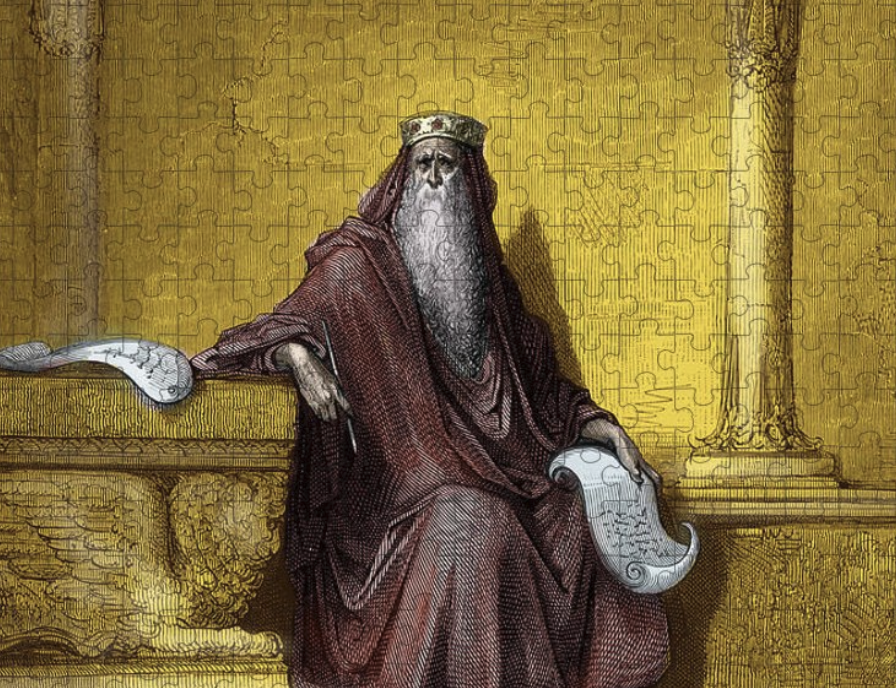
Scripture puzzle about wisdom: Was the biblical Solomon a good or a bad king?

Scripture puzzle about wisdom: Was the biblical Solomon a good or a bad king?

THE QUESTION:

According to the Bible, was Solomon a good or a bad king?

THE RELIGION GUY’S ANSWER:

Both.

With the political challenges afflicting the leaders of Britain, France, Israel, Nigeria, Ukraine, the United States and other nations, it’s interesting to look back to the rulers in the Bible even though their ancient monarchies were radically different.

Among them King Solomon, whose 40-year reign began 2,993 years ago, ranks with his father David in significance.

This ever-fascinating figure, portrayed onscreen by the likes of Yul Brynner (1959) and Ben Cross (1997), led Israel to its zenith of peace, prosperity, cultural sophistication and international stature. And yet a 2011 biography by Wheaton College President Philip Ryken demeans him with the title “King Solomon: The Temptations of Money, Sex, and Power.” Various Jewish legends outside the Bible both exaggerate his magnificence and the opposite, claiming his subjects rejected him and he died penniless.

I Kings 1–11 and parallels in II Chronicles 1–9 are the primary sources on his career (here using the Jewish Publication Society translation). King David and Bathsheba lost their first child, a son, as divine retribution for the adultery, homicide and deceit that led to their marriage. Solomon (whose name meant “peace” or “wholeness,” also named Jedidiah, meaning “beloved of the Lord”) became their oldest son and favorite.

David had prior sons by other polygamous wives and the oldest, Adonijah, had a strong dynastic claim to the throne, but the aging David had instead designated Solomon, who was probably age 14 when he took charge. The young king mastered palace intrigue and eventually executed Adonijah and his key supporters. “Thus the kingdom was secured in Solomon’s hands.”

Despite that turbulent start, Solomon — like his father — was devoted to the one true God and his commandments as the foundation of the regime. A crucial moment occurred several years into Solomon’s reign. God appeared to the king in a dream and asked what gift he desired. Solomon replied that he was “a young lad with no experience in leadership” and therefore needed most “an understanding mind to judge your people, to distinguish between good and bad.”


Please respect our Commenting Policy

Dear religion-beat pros: Sometimes small religious denominations merit a bit of attention

Dear religion-beat pros: Sometimes small religious denominations merit a bit of attention

With American public space monopolized by furor over abortion and also about sexual abuse in the huge Southern Baptist Convention, it seems eccentric to mention small Protestant denominations. But sometimes these flocks produce news and highlight developing trends that may merit news attention.

Consider actions in recent days by the Presbyterian Church in America (PCA) and Christian Reformed Church (CRC). [Disclosure: The Religion Guy is a longtime CRC member though not directly involved in the matters at hand.] These two bodies, generally similar in terms of Calvinist theology, exercise influence in the wider American evangelical marketplace of ideas that far exceeds their modest numbers.

The CRC, founded in 1857, has declined to 205,000 members in the U.S. and Canada. The PCA, launched in a 1973 southern breakaway among Presbyterians has added northern go-getters to reach a U.S.-only membership of 378,000. More liberal “mainline” Presbyterians dropped from 4 million in 1970 to a current 1.2 million.

The CRC and PCA were the largest church bodies in the conservative North American Presbyterian and Reformed Council until 2002, when the council terminated CRC participation for allowing female pastors and lay officers. Both denominations remained members of the National Association of Evangelicals (NAE) until last week, when the PCA quit the cooperative organization. Oddly, NAE President Walter Kim (contact: walter.kim@trinitycville.org), a Harvard Ph.D., is a PCA minister who led an important PCA church in Charlottesville, Va., and is now its “teacher in residence.”

Politics is involved in all of this, of course.

The PCA cited Presbyterians’ Westminster Confession of 1646, which declares that church bodies deal only with internal religious issues and “are not to intermeddle with civil affairs” except in “extraordinary” cases. The NAE indeed addresses many societal topics. The PCA lamented its policy statements on the environment, immigration, the death penalty and, especially, support of proposed “Fairness For All” legislation to acknowledge LGBTQ legal protections in return for religious-liberty guarantees.

Yet the PCA itself has issued statements on abortion, AIDS, alcohol, child protection, education, homosexuality, medical insurance, nuclear power, pornography and race relations. Does PCA separation from NAE-style evangelicals move it toward what we used to call cultural and religious “fundamentalism”?


Please respect our Commenting Policy

United Methodist conflict hits Bible Belt pews, while Tennessean report omits crucial facts

United Methodist conflict hits Bible Belt pews, while Tennessean report omits crucial facts

If you have followed United Methodist warfare for the past 40 years or so, as I have, you know that this is a local, regional, national and global story that is only getting more complex now that it has reached pews in local churches.

For years, the key battles were between activists in the global UMC majority (primarily growing churches in Africa and Asia) and the North American UMC establishment (rooted in agencies, seminaries and shrinking blue-zip-code flocks).

At the moment, the fiercest battles are in parts of the Midwest and the Bible Belt where doctrinally conservative churches (usually rural and suburban) will square off with establishment leaders based in big-city-friendly regional conferences. You can see this drama in a recent Tennessean story: “As United Methodists in Tennessee navigate schism, 60 churches leave denomination.” Here’s the overture:

As 60 churches in West and Middle Tennessee leave the United Methodist Church, churches in East Tennessee are so far sticking around but passionately debating denomination policies.

The departures and disagreements were features of recent annual meetings for Tennessee’s two UMC conferences, illustrating the regional variation of the ongoing schism in the UMC.

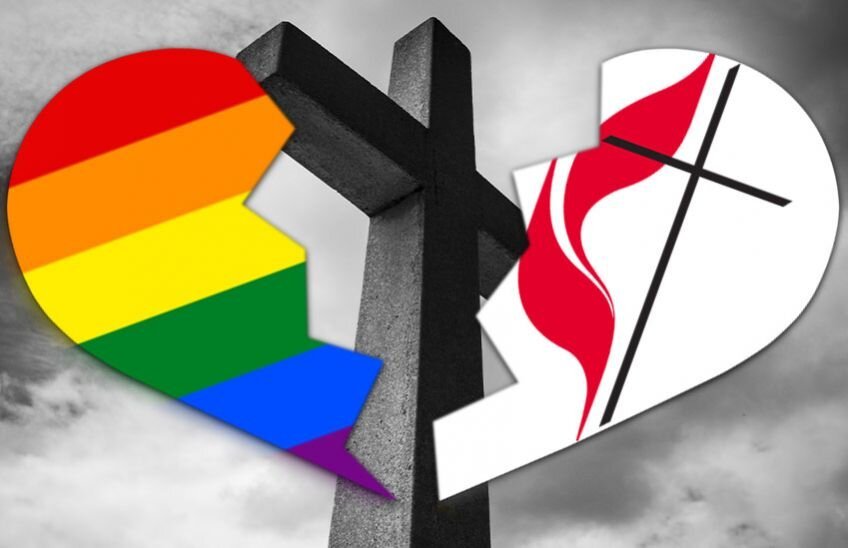
In May, the split within the UMC solidified when a new "traditionalist" denomination splintered from the UMC for churches with more conservative theological and cultural views, including on sexuality and gender.

When the new Global Methodist Church launched, the pace of churches leaving the UMC was expected to intensify.

Yes, there is that problematic word once again — “schism.” In this recent post — “In terms of church history, should the United Methodist break-up be called a 'schism'?” — I argued, for several reasons, that it’s more accurate to call what is happening a “divorce.”

Without repeating all of that, the crucial point is that group given the “traditionalist” label is, in fact, the majority in the GLOBAL denomination that has, for several decades, won tense votes defending the doctrines in the UMC’s Book of Discipline. The group seeking to change these doctrines is the entrenched North American establishment. According to the Tennessean framing, the majority is creating the “schism,” while the establishment minority represents the doctrinal heart of the denomination.

Instead of a “schism,” many in the denomination — a coalition on the doctrinal left and right —negotiated is a “divorce” plan that could save years of additional pain and millions of dollars in legal fees. That plan is the “Reconciliation and Grace Through Separation” protocol, which remains in limbo after establishment leaders twice delayed the vote, citing COVID-19 fears.

This Tennessean story never mentions this important document.


Please respect our Commenting Policy

What happens after Anaheim '22? That will unfold in pulpits, pews and big SBC institutions

What happens after Anaheim '22? That will unfold in pulpits, pews and big SBC institutions

Before the Southern Baptists Convention's strong vote to approve what supporters called "bare minimum" sexual-abuse reforms -- with victims in the crowd weeping with relief -- there was a strategic amendment to the recommendations.

Rather than stay with the independent Guidepost Solutions organization, the Abuse Reform Implementation Task Force would seek to use "best practices in keeping with Southern Baptist church polity," while a "Ministry Check" website tracking those "credibly accused" of abuse would be "established and maintained by an independent contractor."

Activist Rachel Denhollander pleaded, before the vote: "Institutions must be held accountable. It doesn't matter who they are. Justice and truth are always what we should pursue."

Afterwards, the attorney and #ChurchToo abuse survivor posted another challenge on Twitter: "It is the first, most basic steps. But it is a testament to the survivors who fought so long and so hard. I am grateful. Now let's keep working."

That work will depend on the cooperation of pastors and church leaders in the SBC's 47,000 local churches, as well as the administrators and trustees of agencies, boards, seminaries and other institutions at the state and national levels.

The bottom line: In Southern Baptist "polity" -- with sprawling structures of autonomous congregations that, to varying degrees, fund state, national and global ministries -- there are no leadership structures resembling local Presbyterian presbyteries, regional annual conferences among United Methodists or the powerful diocesan structures of Catholics, Episcopalians and others. Local churches ordain, hire and fire clergy.

Outsiders often struggle to understand the theological and practical implications of Baptist polity, said Thomas Kidd, who teaches church history at Midwestern Baptist Theological Seminary and Baylor University.

"Many people continue to think that the SBC can make its churches do this or that or the other and that simply isn't true," he said.


Please respect our Commenting Policy

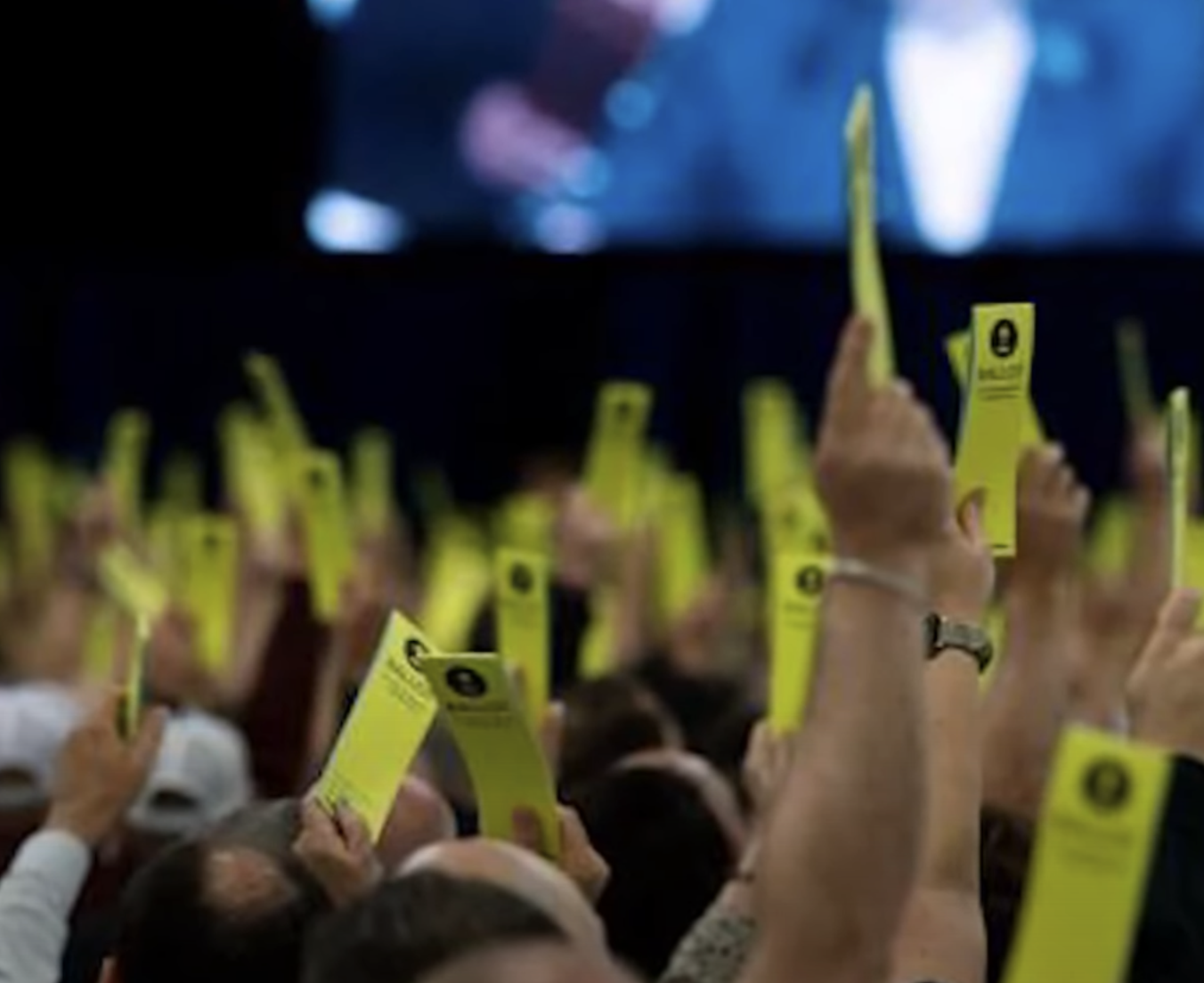
Podcast: Now what, after SBC 'messengers' have waved their yellow voting cards?

Podcast: Now what, after SBC 'messengers' have waved their yellow voting cards?

Here’s a warning to reporters who are preparing for future national meetings of the Southern Baptist Convention: Never call these folks “delegates.”

They are not delegates at some kind of political event. They are “messengers” from their local autonomous churches. You see, this isn’t some kind of cocktail-hour mainline Protestant denominational whatever, and many Baptists don’t like the word “denomination,” either. This is a “convention” and it only meets for three days each year.

Use the wrong language and Southern Baptists will give you a steely gaze and then say something nasty, like “Well, bless your heart.”

Quite a few journalists attended this year’s SBC meeting because there were headline-worthy — from their editors’ point of view — topics on the agenda, like clergy sexual abuse, Critical Race Theory and an election to determine if some new-breed conservative “pirates” (that was their term from 2021) were going to wrest the wheel of the ship away from the allegedly “woke” establishment conservatives.

As you would imagine, host Todd Wilken and I dug into all of this during the “Crossroads” podcast this week (CLICK HERE to tune that in). One of the big themes was that the hard-news coverage of this convention — especially by “Location, location, location” pros from major SBC centers, like Houston and Nashville — was top-notch.

Veteran GetReligion scribe Bobby “Positive” Ross, Jr., will offer pages of URLs in his Plug-In feature this week, so I will not try to do that (I’ll post a link when it goes public). But this is what happens when major newsrooms send religion-beat professionals to cover a major event. Readers don’t have to agree with every single thing that they saw in the #SBC2022 coverage, but what we had here was a tsunami of serious coverage from professionals, backed by the skilled Baptist Press team running the on-site newsroom.

With that in mind, let me note a Big Ideas from this podcast.

* If you study attendance numbers at previous “hot” SBC meetings, you will notice a logical trend linked to a map of the Bible Belt. In this online list, note the 1985 Dallas convention drew 45,519 messengers and the 1986 Atlanta convention drew 40,987.

Yes, these were the pivotal years in the historic “conservative resurgence” in SBC life. But, truth is, those numbers also reflect how far ordinary messengers can drive in one day jammed into the buses or vans owned by “ordinary” SBC congregations.


Please respect our Commenting Policy