Scriptures

Pope Francis questions the purpose of official Vatican media: Does he have a point?

Pope Francis questions the purpose of official Vatican media: Does he have a point?

The year was 2012 and then-Pope Benedict XVI, yearning to “encounter men and women wherever they are, and begin dialogue with them” sent out his first tweet.

The papal Twitter account in English — and associated accounts in different languages — continue to this day under Pope Francis. For the leader of the world’s 1.3 billion Roman Catholics, it remains a way to evangelize through the computer, especially during the pandemic.

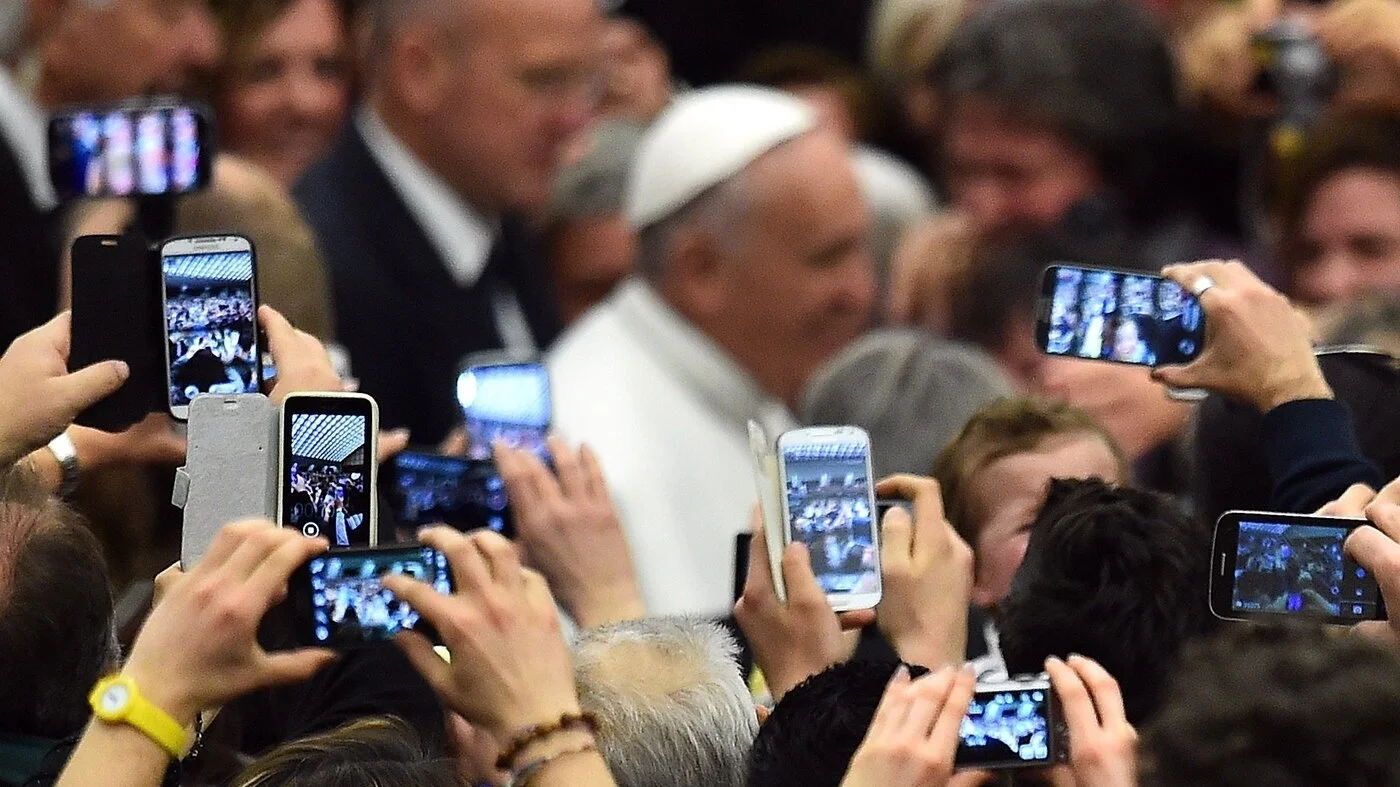
It did not go unnoticed when Francis — paying a visit on May 24 to the Dicastery of Communications to mark the 90th anniversary of Vatican Radio and the 160th anniversary of the Vatican’s newspaper L’Osservatore Romano — used the occasion to call the Vatican’s in-house media to stay relevant during a challenging media landscape.

The Associated Press, in its news story, noted the following:

Francis has vowed not to fire anyone to offset the economic crisis created by COVID-19 and the pandemic-related shuttering of one of the Holy See’s main sources of revenue, ticket sales from the Vatican Museums.

But in a warning of sorts to the Vatican communications staff, he opened his unscripted remarks Monday with a pointed question.

“There are a lot of reasons to be worried about the Radio, L’Osservatore, but one that touches my heart: How many people listen to the Radio? How many people read L’Osservatore Romano?” Francis asked.

He said their work was good, their offices nice and organized, but that there was a “danger” that their work doesn’t arrive where it is supposed to. He warned them against falling prey to a “lethal” functionality where they go through the motions but don’t actually achieve anything.

In dealing with Vatican-run media, journalists need to ask several questions:

* Why has Pope Francis questioned his own media?

Please respect our Commenting Policy

PBS special on Billy Graham claims the famous evangelist was always a political animal

PBS special on Billy Graham claims the famous evangelist was always a political animal

The best way I can describe the recent PBS special on the nation’s most famous evangelist is to say it’s a woke version of the life of Billy Graham.

It’s not only that the cast of commentators departs from the ranks of Graham’s largely white, male biographers to a mélange of scholars, several of whom are female or black and whose expertise on Graham remains unclear.

It’s how the nearly two-hour special that puts a political lense on everything — yes, everything — Graham did in his life and career. The show is barely a minute old when it comes up with the following quotes:

ANTHEA BUTLER, HISTORIAN: Billy Graham is like the Protestant pope.

WILLIAM MARTIN, BIOGRAPHER: There was a war between ambition and humility. He wrestled with that throughout his life.

REV. DR. JOHN HUFFMAN: Billy was attracted to political power like a moth is attracted to flame.

RANDALL BALMER, HISTORIAN: He was drawn to politicians. It was almost like a narcotic for him.

UTA A. BALBIER, HISTORIAN: The closer he moved Christianity to politics, the more he opened up the opportunity for Christianity being used to polarize, to politicize.

UTA A. BALBIER, HISTORIAN: He opened Pandora's box the second he stepped into the Oval Office for the very first time.

So, it’s simple to grasp right off the bat where this show is going. And the show’s director admitted the main idea was the explore the mix of politics and religion, curiously right after an era when conservative politics and conservative religion were bedfellows all four years of the Trump administration. Am I being skeptical in noticing the timing of this show?


Please respect our Commenting Policy

Plug-In: Tulsa Massacre centennial -- focusing on repentance, reconciliation, reparations

Plug-In: Tulsa Massacre centennial -- focusing on repentance, reconciliation, reparations

TULSA, Okla. — Today marks the 100th anniversary of the Tulsa Race Massacre, a truly dark moment in America’s history.

At the centennial, a prayer room at a downtown Tulsa church focuses on the sins of 1921 while asking God to bring healing, as I report here at ReligionUnplugged.com.

In separate dispatches for The Christian Chronicle, I explain how faith drives two leading advocates fighting for massacre justice and detail the racial unity effort by two Tulsa-area ministers — one Black, one White.

New Associated Press religion writer Peter Smith reports from Tulsa on how houses of worship commemorated the massacre Sunday.

At The Oklahoman, longtime faith editor Carla Hinton and her colleagues offer in-depth coverage, including a compelling story on how a modern-day Moses helped rebuild Tulsa’s Mount Zion Baptist Church.

A strong narrative piece by AP’s Aaron Morrison opens with a scene from Vernon African Methodist Episcopal Church, a congregation involved in a massacre reparations lawsuit that Religion News Service’s Adelle M. Banks highlights.

Check out the Tulsa World, too, for the latest developments, including a last-minute cancellation of a planned centennial event featuring John Legend and Stacey Abrams.


Please respect our Commenting Policy

Bob Dylan turns 80, while Dylanologists keep arguing about signs of faith in his art

Bob Dylan turns 80, while Dylanologists keep arguing about signs of faith in his art

Night after night, Bob Dylan's 1979 Gospel concerts at San Francisco's Warfield Theatre made news for all the wrong reasons, according to angry fans.

The November 11th show opened with Dylan roaring into "Gotta Serve Somebody" from "Slow Train Coming," the first of what Dylanologists called his "born-again" albums.

"You may be a businessman or some high-degree thief," he sang. "They may call you doctor, or they may call you chief, but you're gonna have to serve somebody. … Well, it may be the Devil, or it may be the Lord, but you're gonna have to serve somebody."

To add insult to injury, these concerts included fiery sermons by Dylan, while he avoided classic songs that made him a legend.

"I was 19 years old and that was my first Dylan concert," recalled Francis Beckwith, who teaches Church-State Studies at Baylor University. "The atmosphere was highly charged. Some people booed or walked out. … There were people shouting, 'Praise the Lord!', but you could also smell people smoking weed."

Beckwith kept going to Dylan concerts, while following years of reports about whether the songwriter was still a Christian, had returned to Judaism or fused those faiths. These debates will continue as fans, critics, scholars and musicians celebrate Dylan's 80th birthday on May 24th.

With a philosophy doctorate from Fordham University in New York and a law degree from Washington University in St. Louis, Beckwith is certainly not a conventional music critic. He made headlines in 2007 when -- while president of the Evangelical Theological Society -- he announced his return to Catholicism.

To mark that birthday, Beckwith is publishing online commentaries on what he considers Dylan's 80 most important songs. The Top 10: "Like a Rolling Stone," "My Back Pages," "Stuck Inside of Mobile With the Memphis Blues Again," "Mr. Tambourine Man," "Visions of Johanna," "Tangled Up in Blue," "Blowin' in the Wind," "Precious Angel," "It's Alright, Ma (I'm Only Bleeding) and "Desolation Row."

Beckwith considered three factors -- popularity, lasting cultural significance and, finally, whether each song was "something I could listen to over and over." He stressed that Dylan's entire canon includes images and themes rooted in scripture and faith.


Please respect our Commenting Policy

When covering Moore's exit from SBC power, scribes should ponder what made him 'liberal'

When covering Moore's exit from SBC power, scribes should ponder what made him 'liberal'

This may be a strange place to start when discussing early news coverage of the Rev. Russell Moore moving from the Ethics & Religious Liberty Commission — the crucial Southern Baptist camp in Beltway land — to what looks like a Christianity Today think tank on theology and public life.

So be it. This is where we will start — with the whole Moore is “too liberal” thing.

What does “liberal” mean in that curse that has been tossed about in Baptist social media?

Remember that one of Moore’s primary duties in Washington, D.C., has been to help Southern Baptists defend against attacks on religious liberty and the First Amendment in general. With that in mind, let me return to a question that I have been asking here at GetReligion — while focusing on the role that labels play in American journalism — for a decade or so. This is from a 2015 post:

What do you call people who are weak in their defense of free speech, weak in their defense of freedom of association and weak in their defense of religious liberty (in other words, basic First Amendment rights)?

The answer: I don't know, but it would be totally inaccurate — considering the history of American political thought — to call these people "liberals."

So what do you call someone, like Moore, who has been defending free speech, defending the freedom of association and defending religious liberty?

Wait. For. It. You can accurately call him a “liberal” in that context. In this framework, the New York Times editorial pages and, in many cases, the American Civil Liberties Union, are now — what? What is the accurate term, these days?

Note that this struggle to define “liberal” was at the heart of the celebrated clash between Bari Weiss and the Times. I would argue that it was part of the newsroom warfare that led to the ousting of Liz Spayd as the Times public editor (when she dared to ask if the newspaper was committed to fair, accurate coverage of half of America). It’s at the heart of the growing tensions between gay-rights icon Andrew Sullivan and the LGBTQ establishment. I could go on and on.

But back to another cluster of issues linked to Moore.


Please respect our Commenting Policy

New podcast: Yes, election of first trans/queer/gender fluid ELCA bishop was a big story

New podcast: Yes, election of first trans/queer/gender fluid ELCA bishop was a big story

Imagine that you are a pastor or a layperson in the Lutheran Church-Missouri Synod, the Wisconsin Evangelical Lutheran Synod or one of the other conservative Lutheran bodies in the United States.

So you sit down with your morning coffee and pop open your email and you see that friends and family have sent you emails enquiring about a headline that they saw on Twitter or somewhere else in today’s complicated news marketplace.

In this case, the headline is from the New York Times and it states: “U.S. Lutheran Church Elects Its First Openly Transgender Bishop.

The problem, of course, is that the “U.S. Lutheran Church” doesn’t exist There is no one denomination that fits that description. Or perhaps the person sending you the email saw, somewhere, the Religion News Service headline that ran with this headline: “Lutherans elect Megan Rohrer first transgender bishop.” Second verse, same as the first.

When it comes to Lutheranism, many journalists continue to struggle when describing who is who and what is what. This brand-name problem was the first layer of the complex issues — in terms of church doctrine and journalism style — that we explored in this week’s “Crossroads” podcast. Click here to tune that in.

The denomination that elected Bishop-elect Rohrer was, of course, the Evangelical Lutheran Church in America, one of the “Seven Sisters” — we may need to make that “Seven Siblings” — of liberal Protestantism.

But what happens if you put that denominational brand name in a headline (besides the fact that it’s way too long for most newspaper layouts)? If you do that, you have to explain the presence of “evangelical,” which has become a near curse word in a news context. And, hey, “Lutheran” by itself sounds more important. Damn the accuracy, full speed ahead.

This brings us to the key hook for this podcast: There was little or nothing surprising about the progressive ELCA electing a trans (if that is the best term, in this case) bishop.


Please respect our Commenting Policy

Same-sex Catholic blessing rites in Germany: Why talk to experts on both sides of this story?

Same-sex Catholic blessing rites in Germany: Why talk to experts on both sides of this story?

And this just in: Germany’s Catholic left proceeded with its planned same-sex blessing rites and, as you would expect (see previous GetReligion podcast and post on this topic), mainstream journalists were there to capture the details.

Sort of.

Actually, not so much.

The most important content — the precise wording of the blessing prayers, in doctrinal terms — appear to be Missing In Action. It’s possible that, as usual, journalists were not interested in the liturgical and doctrinal details. However, I could imagine a scenario in which journalists were asked by organizers to avoid that doctrinal content, with good cause. That material that will matter to canon lawyers.

Also, there was no need to look for content drawn from interviews with pro-Catechism Catholics who opposed the winds of change blowing in Germany. Clearly, this was a story with only one side that needed to be covered. Here is a key part of the Associated Press report written just before the main wave of events on May 10 (“German Catholics to bless gay unions despite Vatican ban”):

Germany is no stranger to schism: 500 years ago, Martin Luther launched the Reformation here. …

In Berlin, the Rev. Jan Korditschke, a Jesuit who works for the diocese preparing adults for baptism and helps out at the St. Canisius congregation, will lead blessings for queer couples at a worship service May 16.

“I am convinced that homosexual orientation is not bad, nor is homosexual love a sin,” Korditschke told The Associated Press in an interview Friday. “I want to celebrate the love of homosexuals with these blessings because the love of homosexuals is something good.”

The 44-year-old said it is important that homosexuals can show themselves within the Catholic Church and gain more visibility long-term. He said he was not afraid of possible repercussions by high-ranking church officials or the Vatican.


Please respect our Commenting Policy

The politics of Holy Communion and what it says about news coverage of Joe Biden

The politics of Holy Communion and what it says about news coverage of Joe Biden

If you regularly read mainstream political news coverage, you can often come away with the notion that President Joe Biden is a man who governs as a moderate, seeks unity with Republicans and is consistently guided by his “devout” Catholic faith.

A lot of this reflexive media coverage is largely a fantasy. Biden went from being compared to JFK before Inauguration Day to FDR by the time he recently reached the 100-day mark. He has outlined a series of initiatives that his adversaries on the other side of the aisle have dismissed as socialism. Biden, it must be highlighted, is president at a time when the Senate is split 50-50 and Democrats have a slim majority in the House. The American people did not, in a tight election, give him a healthy mandate.

But this post isn’t aimed at breaking down Biden’s politics.

Instead, it’s to focus on the news coverage around Biden’s faith and how his beliefs relate to the church’s own teachings and the U.S. bishops tasked with enforcing doctrines. Is Biden a progressive revolutionary on matters of morality and doctrine? If so, can he also be “devout” in his faith? Should he — along with many other Catholic politicians — continue to receive Holy Communion? What can, and will, the bishops do next?

A lot of what we know regarding the answers lies in how the press cover such political issues and religion, of course. Combine political politicization in an age of misinformation with the culture wars and you have a very complicated set of factors for the news media to cover.

It should be noted that secular newsrooms don’t dislike organized religion like many may believe. Instead, they just don’t like religious leaders who attempt to defend traditional dogmas that govern said faith. Therefore, news coverage is often framed this way: Biden can be both “very Catholic” and pro-choice. He’s a good, modern Catholic, not a bad, ancient Catholic.

This very issue was thrust back into the forefront again when The Washington Post published an account on April 29 regarding the ongoing conflict between the president and U.S. bishops, a news story promoted on the newspaper’s Twitter that “a rising group of right-wing U.S. Catholic bishops” had come into conflict with a “very Catholic” Biden over his abortion stance.


Please respect our Commenting Policy

Was Jesus truly without sin? Did he have doubts? Do these questions matter to anyone?

Was Jesus truly without sin? Did he have doubts? Do these questions matter to anyone?

THE QUESTIONS:

Was Jesus Christ totally without sin? Does it matter?

THE RELIGION GUY'S ANSWER:

Christian tradition says yes, and yes.

This month, related discussions with weighty implications popped up online, so The Religion Guy takes a look at this belief, which dates from the very earliest days of church history. But we begin with the fact, perhaps surprising to Christians, that Jesus' sinlessness is also taught by Islam. These two faiths combined engage upwards of 4 billion people.

In the Quran's account of Jesus' birth, older English translations of verse 19:19 say the child is "holy," but modern versions by Majid Fakhry (endorsed by the authoritative Al-Azhar University), A.S. Abdel Haleem, and Seyyed Hossein Nasr's team understand the Arabic adjective to mean the somewhat stronger "pure."

The Muslim belief is reinforced by a standard hadith saying of the Prophet Muhammad that "no child is born but that Satan touches, but when it is born it starts crying loudly because of being touched by Satan, except Mary and her Son.: (Sahih Al-Bukhari, 6.65.4550). Muslim commentators explain that Jesus, Muhammad and the other prophets may have made simple human mistakes but never sinned, that is, consciously violated the will of God.

Muhammad's mention of Mary befits Catholicism's Immaculate Conception, made mandatory dogma by Pope Pius IX in 1854. The Catholic Catechism states that "from the instant of her conception, she was totally preserved from the stain of original sin and she remained pure from all personal sin throughout her life."

Protestants dissent. But all Christians unite on Jesus' sinlessness, which is taught in four of the New Testament books:

-- "For our sake he [God] made him [Jesus Christ] to be sin who knew no sin, so that in him we might become the righteousness of God" (2 Corinthians 5:21).

-- "We have not a high priest who is unable to sympathize with our weaknesses, but one who in every respect has been tempted as we are, yet without sin" (Hebrews 4:15).

-- "He committed no sin" (1 Peter 2:22).


Please respect our Commenting Policy