Scriptures

Ira Rifkin offers Jewish (and Buddhist) thoughts as he lives with the ashes of his son

Ira Rifkin offers Jewish (and Buddhist) thoughts as he lives with the ashes of his son

I shared the following story a year ago, but I thought of it again when reading a stunning piece in the Forward by my GetReligion colleague Ira Rifkin. The headline there is simple, but unforgettable: “The day my son’s ashes arrived in the mail.

Journalists who cover the religion beat know that it includes everything from national politics to local-church politics, from sports to the arts, from fights over ancient doctrines to the latest trends in digital worship. But it’s important to remember the degree to which religious rites, traditions, doubts and questions help define many of the gateway moments in human life.

Before I share a few passages from Ira’s must-read essay, let me return to something that happened in the early 1980s when I was working for the now-deceased Charlotte News. I was writing a story about the last local church that was resisting the use of a hymnal prepared for the merger that created the Evangelical Lutheran Church in America.

It was a battle between the “red book” and the modernized “green book.” Here is a flashback:

At this Charlotte church, I met with an older man who led the fight to retain the “red book.” He had a long list of reasons — historical and theological — for why the old hymnal and prayer book was superior to the new. …

When the interview was over, we walked the center aisle toward the foyer and main exit. At the last pew, he stopped and picked up a battered red hymnal. Tears began running down his cheeks.

“I married my wife with this book,” he said. “Our children were baptized with this book. I buried my wife with this book. … They are not going to take it away from me.”

This man was wrestling with issues that transcended logic. He was dealing with the basic building blocks of his own life and faith, his past and his present. This was an issue that involved both head and heart.

This brings us to overture of Ira’s piece for the Forward:

The ashes came to my home in Maryland from Southern California, shipped via special delivery by the aptly named funeral home Ashes to Ashes. They arrived encased in a rectangular, polished, dark wood box about the size of a loaf of artisan bread. I immediately opened it to make sure it was not empty. It was not.



Please respect our Commenting Policy

What do you know? Doctrinal-covenant fights can occur on an Orthodox Jewish campus

What do you know? Doctrinal-covenant fights can occur on an Orthodox Jewish campus

By now, GetReligion readers are probably aware that some journalists have their doubts about whether the First Amendment actually protects religious doctrines and the “free exercise thereof” by believers.

The problem is that the old-liberal defense of “religious liberty” — inside the usual “scare quotes” — now clashes with the evolving doctrines of the Sexual Revolution. This leads to fights on religious campuses in which journalists pit bad religious believers who defend ancient doctrines against good believers who want those bad doctrines to evolve to mesh with the good teachings of the New York Times and other sacred texts.

The key in most of these clashes is whether students, faculty and staff sign a “doctrinal covenant” when they choose to work or study at one of these private schools. Private schools — liberal and conservative — have a right to defend the doctrines of the religious groups that founded them. As GetReligion readers know (explore this file), journalists often ignore the content of these covenants and fail to ask progressive activists whether they read these covenants before signing them.

Most of these stories focus on disputes at evangelical and Catholic schools. If you ever wondered how an education-beat newsroom would handle one of these stories in an Orthodox Jewish context, now you know — care of an Inside Higher Education report under this double-decker headline:

Students Sue Over Denial of LGBTQ+ Club Recognition

A lawsuit accuses Yeshiva University of violating New York City human rights law in its long-standing refusal to recognize an LGBTQ+ student group

The reader who forwarded this URL was rather blunt, stating that the article is “a mess. Journalistically speaking, it's biased, lopsided, and incurious.”

As usual, there is no way to know whether the school’s admission documents include a doctrinal covenant, since the reporting is sketchy, at best, on that subject.


Please respect our Commenting Policy

With open talk of schism, will German bishops mar the rest of Pope Francis's reign?

With open talk of schism, will German bishops mar the rest of Pope Francis's reign?

Conservative Catholic news outlets have thoroughly covered growing turmoil in Germany's Catholic Church, making available solid backgrounding for "mainstream" media who've generally been sluggish in picking up on this story.

That neglect presumably won't last, considering factors The Religion Guy will now underscore for colleagues' consideration.

A significant phalanx of German bishops, united with prominent lay activists, seem intent on revisionist change to come from their "Synodical Way" project, which the Vatican has sought to suppress, so far without success.

The German go-it-alone demands set up an inevitable showdown with the Holy See. The global repercussions were captured in a blunt Wall Street Journal headline April 16: "Can Pope Francis Head Off a Schism?" One week earlier a headline in the conservative National Catholic Register declared that "U.S. Theologians Echo Fears of Schism in Catholic Church in Germany."

The Religion Guy proposes a different hed that uses the P-word rather than the S-word: Will German Catholicism Go Protestant, Five Centuries Late?

Peg-hunting reporters will want to watch the "wires" (to use an anachronistic term) May 10 for the latest pageant of defiance. On the heels of the Vatican's papally-approved statement reaffirming opposition to church blessings and marriages for same-sex couples, a large network of German Catholics — with clergy involved — plan to stage same-sex blessing ceremonies across the nation. Watch for how many bishops are silent, or even pleased, when their priests are willing to participate.

The LGBTQ issue is only one aspect of the German imbroglio that dates from the 2019 launch of the "synodical" process, which is co-sponsored by the German Bishops' Conference and the Central Committee of German Catholics, an influential group of lay activists.


Please respect our Commenting Policy

GQ's religion-focused cover story is (clickbait) worth reading -- even for non-Beliebers

GQ's religion-focused cover story is (clickbait) worth reading -- even for non-Beliebers

Let’s open this week’s roundup with Justin Bieber — and not just for the clickbait.

“The Redemption of Justin Bieber,” GQ’s May cover story by senior writer Zach Baron, really is a fascinating read.

As Christianity Today’s Daniel Silliman put it on Twitter, “If you don't care at all about Justin Bieber, this is still a good story about someone who was young, stupid, powerful, privileged, destructive, and sad and nevertheless found grace.”

Not interested in Bieber?

Try $300 Bibles.

Religion News Service’s Emily McFarlan Miller delves into the marketing of an expensive, “modern version of God’s Holy Word.”

Miller explores not just the price tag but also the history behind so-called “premium” Bibles.

After Bieber and Bibles, I feel like I need one more “b” item to round out the set. What about ballgames?

Juggling church and football isn’t just for NFL fans anymore, writes AP sports writer Teresa M. Walker, with whom I worked during my time with The Associated Press in Nashville, Tenn.

“Thanks to the coronavirus pandemic, it became the norm for college fans like the Mosleys as most Football Championship Subdivision leagues moved their schedules to the spring,” Walker explains.


Please respect our Commenting Policy

Journalists get ready: Here comes the 'greatest celebration in all of history'

Journalists get ready: Here comes the 'greatest celebration in all of history'

Thinking long-term, a group of Christians has been quietly at work pulling together what they bill as "the greatest celebration in all of history."

Yes, you read that right. The Big Idea is that all imaginable sorts of believers will join in events across 24 time zones on -- mark your calendars! -- Easter morning, Sunday, April 17, 2033. That will mark the ultimate in anniversaries, 2,000 years since Jesus Christ's resurrection from the dead. (That's necessarily a symbolic date since there's no consensus on the exact year.)

They call it Jesus Celebration 2033 or "JC2033."

Lest anyone freak out about the date, organizers assure us that "in no way whatsoever are we associating this jubilee with" the Second Coming of Christ. "He will return when the Father in heaven decides and it is not given to us to know when (Mark 13:32)."

Explanatory materials envision that "every disciple of Christ" on earth will participate in collective witness to show "we love each other in the Holy Spirit!"

That will take some planning. However, "Christians from all backgrounds and God seekers" will celebrate "spiritual unity, not a theological unity. We believe in unity in diversity." This is presented as "a historical opportunity to share in words and in actions the Love of God to the ends of the earth."

Christians will also be asked to join in "tangible demonstrations of God's love." Festivities are intended to be "joyful, artistic and creative." Gatherings would not only occur in churches but "stadiums, squares, parks, mountains, fields, beaches, homes and on the Internet!"

OK, editors, reporters, producers and other media planners, that's a dozen years off, and there’s no telling whether the dream will fizzle. But the concept is bold enough to invite features now.


Please respect our Commenting Policy

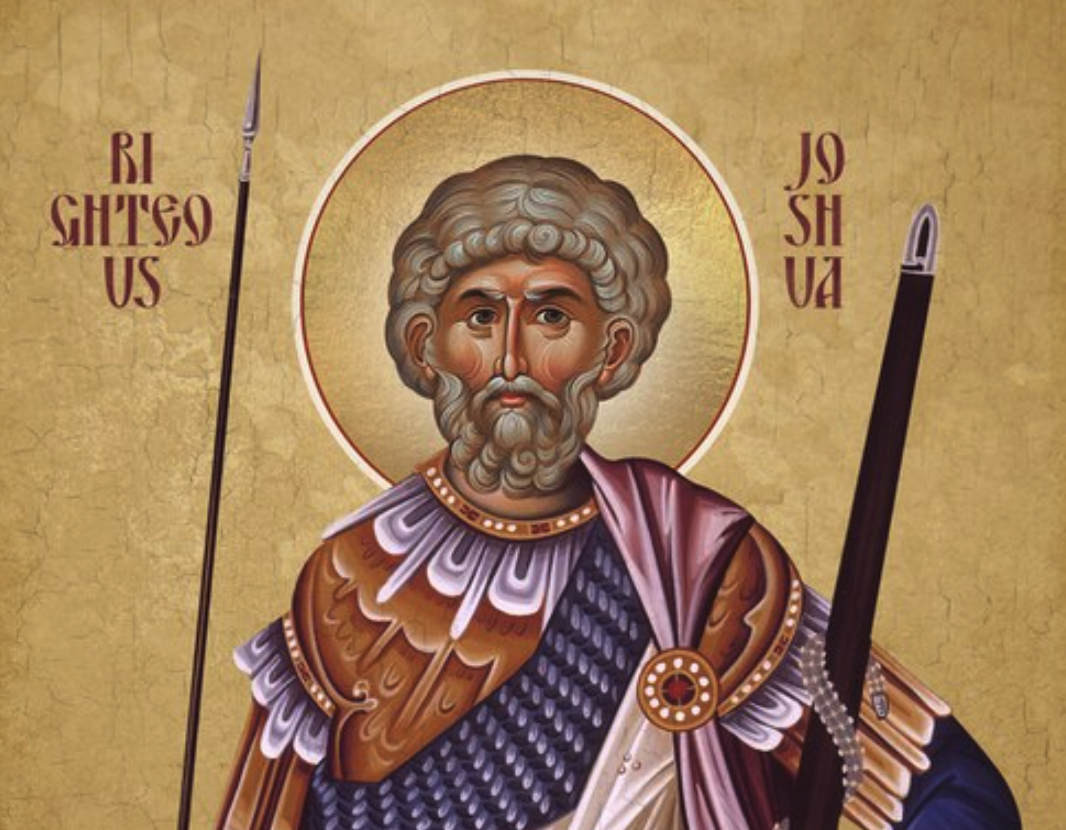
What can modern people (journalists even) know about biblical figures like Joshua?

What can modern people (journalists even) know about biblical figures like Joshua?

THE QUESTION (as raised by The New York Times):

What can we know about biblical figures, for instance Joshua?

THE ANSWER:

How do we know what we know, or think we know, or can know, or might know?

“Epistemology” is the branch of philosophy that ponders such matters. It may seem odd, but philosophers even ponder if there’s any basis for believing that anything we remember from before one second ago actually happened!

Back to earth, how do we assess what can be known about people and events from long ago that we ourselves did not witness? One approach is the ideology known as “logical positivism,’ which rules out supernatural claims in advance by definition and thus wipes out many assertions by the great world religions. That’s a simple method, but other philosophers say it’s far too simple.

Well, then, what can we know about the past, whether religious or not? The answer is almost entirely written records that have been passed down to us. This is obviously central with the biblical faiths of Judaism and Christianity, which center heavily upon historical narratives.

Which is why The Religion Guy continues to ponder eight words The New York Times found fit to print in a recent feature about Muslims in Iraq tending what they believe is the tomb of Joshua. Israelis say instead that the ancient patriarch is buried 20 miles north of Jerusalem.

Both claimed locations invite skepticism. But the influential newspaper went much further, informing readers: “There is no historical evidence Joshua actually existed.”

This is not a particularly prudent thing to say in the Muslim world, where Joshua is revered as an actual prophet of God in the line that culminated with the Prophet Muhammad, had no doubt Joshua existed, this according to authoritative hadith texts. Joshua is also referred to in the Quran, though not by name (18:60). The earlier Jewish and Christian Scriptures depict Joshua as an actual person.

In effect, the Times writer and copy editors tell us the Jewish Bible contains nothing that should count as historical evidence. Think about that. Liberal university professors will often teach that a particular Bible section has flawed evidence, or mixes fact with myth, or even is pure fiction. But they do not dismiss all evidence that the Bible records.


Please respect our Commenting Policy

Obvious question: Maybe Christian faith played a role in the Scott Drew and Baylor hoops story?

Obvious question: Maybe Christian faith played a role in the Scott Drew and Baylor hoops story?

Frankly, I am not the most enthusiastic of Baylor University alums (I once passed up a request to apply for a faculty slot by telling the president that I had already died once in Waco wasn’t anxious for a reprise).

Still, you didn’t think that the Baylor basketball team was going to win the national championship (after being a favorite in the COVID-canceled 2020 dance) without a word of comment here? I mean, I have heard from other Baylor grads who worked their way through lots of the mainstream news coverage of the March Madness finale while thinking “ghost,” “ghost,” “another religion ghost.”

Yes, this was the Texas Baptists vs. Jesuits matchup that hoops fans wanted. And then you had the simple reality that Baylor (for better and for worse) is the world’s most prominent Baptist academic institution.

But how could the press ignore or short-change the fact that the story of coach Scott Drew and his underdog Bears was packed with valid religion facts and themes? Would all fans care that Final Four MVP Jared Butler teaches a Sunday School class for little kids? Probably not. But millions of people would.

But they key to everything was this big question: Why was Drew at Baylor in the first place? Why did he pack up and head to Waco 18 years ago, when the program was dead, dead, dead or worse. Here’s the top of a long CBS Sports feature: “Scott Drew never let others change his story, path or program, and that's how he led Baylor to its first title.”

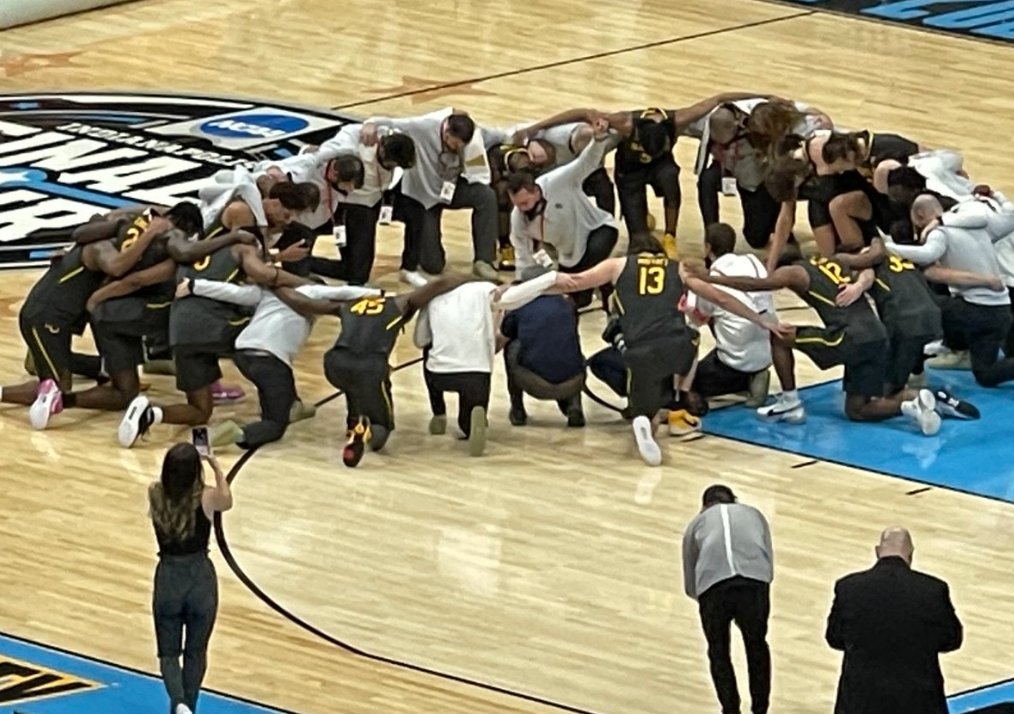
Leaping into the arms of his staff. College basketball's happiest coach on his happiest night. When it was over, Drew brought everyone into a huge circle on the court. They kneeled and said a prayer.

The greatest program reinvention in men's college basketball history was complete.

Drew took the Baylor job in 2003 when the program was near disintegration. The job Drew's done at Baylor in the 18 years since -- impressive is an understatement. There was no set of instructions when he got there, because there wasn't even a drawer to put them in. This was not a rebuild; what Baylor could be, in 2003, was a figment of Drew's imagination.

Drew is described in all kinds of upbeat, but strange, ways. This is one happy, upbeat, positive-thinking weirdo. Does it matter that, when he describes his bond with Baylor, he talks in terms of Christian faith, family and a sense that God called him to this job? Is that part of this national news story, just because Drew says so and there is tons of evidence that he means it?


Please respect our Commenting Policy

Big question linked to Easter: Does Christianity believe in 'the immortality of the soul'?

Big question linked to Easter: Does Christianity believe in 'the immortality of the soul'?

THE QUESTION:

Does Christianity believe in the “immortality of the soul”?

THE RELIGION GUY’S ANSWER:

No.

Not exactly. And before anyone has a heart attack reading that, The Guy hastens to explain that Christianity has always vigorously affirmed the Easter message that earthly death is followed by everlasting life. But the oft-used phrase about a mere “immortality of the soul,” which stems from ancient Greek philosophy, could suggest bodily life is problematic and mistakenly suppose that our soul exists through all eternity as only a disembodied spirit.

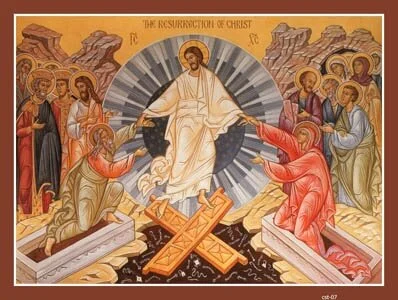
Instead, Christianity teaches that just as Jesus arose bodily from the grave, so the promise of everlasting life involves a person’s eventual resurrection that unites the soul with the body in a newly glorified state. As with the central belief that Jesus was God incarnate in full human and bodily reality, this Christian affirmation about the afterlife proclaims that, as in Judaism, our bodies are God’s good creation and fundamental to each person’s human identity.

This understanding of New Testament teaching was defined orthodoxy as early as A.D. 180 in Against Heresies by Bishop Irenaeus of Lyons, an authority and saint for Catholic and Orthodox Christians:

“… It is manifest that the souls of his disciples also, upon whose account the Lord underwent these things, shall go away into the invisible place allotted to them by God, and there remain until the resurrection, awaiting that event; then receiving their bodies, and rising in their entirety, that is bodily, just as the Lord arose” (from book 5, chapter 31).

A precise Protestant formulation appears in the Westminster Confession of Faith, the Presbyterian credo from 1647 (here “men” refers to both genders):


Please respect our Commenting Policy

Welcome to Holy Days 2021: How to handle the latest sensational claim about the Bible

Welcome to Holy Days 2021: How to handle the latest sensational claim about the Bible

The New York Times often ignores developments in religious scholarship, an especially serious deficiency of its Sunday Book Review (where Nash K. Burger, who was hired by fellow Mississippian Eudora Welty, long and carefully monitored the field until he retired in 1974).

Thus, hallelujahs should greet a huge article by culture reporter Jennifer Schuessler, posted March 10 and granted two full pages in the Arts & Leisure section of last Sunday's print edition.

The piece reports that young Israeli-American scholar Idan Dershowitz may have identified "the oldest known biblical manuscript by far," which offers "an unprecedented window into origins and evolution of the Bible" and, in particular, the Book of Deuteronomy. If substantiated, some say, this "will be the most consequential Bible-related discovery since the Dead Sea Scrolls in 1947."

Or not. Journalists assessing what's hot should consider that across the years, manuscript frauds and ill-supported speculations about the Bible have been rife.

The Times is known to sometimes "bury the lede," and in this case it buried the news peg. The piece was nicely timed for Jewish Passover and Christian Holy Week when media often dig into biblical mysteries and controversies. But the news here is the April publication of Dershowitz's book "The Valediction of Moses: A Proto-Biblical Book."

The book will fill in the missing element in the Times story and thus provide major fresh substance for reporters to develop: Which portions of Deuteronomy are involved in this discussion, and how do specific wordings and passages in today's Bibles compare with the purportedly ancient texts Dershowitz cites? On that basis, what do the agreements and contrasts tell us and why?

Dershowitz seeks to rehabilitate Wilhelm Moses Shapira, whose 19th Century Jerusalem shop sold both tourist trinkets and allegedly valuable ancient manuscripts. He tried to sell these Deuteronomy fragments to a regular customer, the British Museum, but its expert and others declared them forgeries in 1883, based on what Dershowitz considers slipshod study.

Shamed, Shapira soon committed suicide in Rotterdam. The leather fragments themselves then disappeared.


Please respect our Commenting Policy