Richard Ostling

Russell Moore on Christians who are switching churches or hitting exit doors -- period

Russell Moore on Christians who are switching churches or hitting exit doors -- period

“Book of the Month” is certainly an appropriate label for Russell Moore’s “Losing Our Religion: An Altar Call for Evangelical America,” released July 25 by Sentinel. I am borrowing that label, of course, from that venerable subscription club and corporate partner during The Guy’s days working with the old Time Inc.

The bottom line: Pretty much every religious professional will want to take a look at what this central figure has to say.

Ditto for journalists who write about religion.

Moore is, yes, controversial and opinionated but also thoughtful and knowledgeable, so it’s worth absorbing his latest plea for a thorough overhaul of this sprawling and complex Protestant movement (with some pertinence for Catholics, too).

This might be the right time for religion-beat pros to offer yet another broad look at evangelical pitfalls and prospects. The Twitter (er, X) traffic on this new Moore book will continue to be lively.

There’s a possible peg when Moore chats with Beth Moore (no relation), another prominent exile from the Southern Baptist Convention (SBC), in Houston on August 9, which will be live-streamed (details at www.russellmoore.com).

Moore famously opposed Donald Trump’s 2016 candidacy on moral grounds when many other evangelical thinkers carefully kept their qualms private. His 2020 private admonition to executives of the SBC, which later leaked, depicted years of “the most vicious guerilla tactics” against him, especially his activism on issues linked to sexual abuse cases and cover-ups and mishandled race relations. He’s now one of seven ministers at Immanuel Church in Nashville, a congregation with ties to evangelicals in several denominations (including Anglicanism) and part of the Acts 29 network (www.acts29.com).


Please respect our Commenting Policy

Want a tough, newsy 'theodicy' question? 'If God is good, why do animals suffer?'

Want a tough, newsy 'theodicy' question? 'If God is good, why do animals suffer?'

QUESTION:

If God is good, why do animals suffer?”

THE RELIGION GUY’S ANSWER:

This question was the sub-headline for a recent cover story in Christianity Today magazine (Why Does Creation Groan?”) by Calvin University theologian John R. Schneider. It’s a twist  on the age-old problem defined as follows by the eminent Christian intellectual C.S. Lewis in his best-selling classic “The Problem of Pain”:

“If God were good, He would wish to make His creatures perfectly happy, and if God were almighty He would be able to do what He wished. But the creatures are not happy. Therefore God lacks either goodness, or power, or both.”

Early in the COVID-19 scourge, The Religion Guy attempted to scan the current discussions in a field known technically as “theodicy” — as here. The issue is as ancient as the Bible’s poetic masterpiece from thousands of years ago, the Book of Job, which provides no snappy formulas to answer these mysteries.

Regarding humanity and its problems, theologians have blamed evils on humans’ free will that necessarily allows dire events to occur, and/or on Satan and demonic minions. However, the scale and depth of, for instance, the mass extermination of the Nazi Holocaust  raised the persistent but unanswerable question in both Jewish and Christian circles of why God did not miraculously intervene.

Writing just prior to that and other World War II atrocities, and his own battle wounds from World War I, Lewis advised us to be careful in thinking about God as “all-powerful” because He obviously cannot do things that by their nature are impossible to do. Along similar lines, leading contemporary philosopher Alvin Plantinga at the University of Notre Dame proposed that we cannot logically conceive of any possible universe where the Creator allows human free will to operate and at the same time our existence lacks all sin and consequently all suffering.


Please respect our Commenting Policy

How will religion fare as liberal arts education shrinks in the United States of America?

How will religion fare as liberal arts education shrinks in the United States of America?

Pity U.S. colleges coping with political feuds, “diversity,” declining applications and enrollments, student debt and tight budgets.

Add religious and moral issues and things get even more complex.

Some religious colleges are on survival watch. On June 29, the 140-year-old Alliance University (formerly Nyack College) decided it must shut down, and a second New York City Christian school, The King’s College, will also close unless there’s a last-minute reprieve. Early in the week, Religion News Service reported:

The last remaining evangelical Christian college in New York City, The King’s College, announced Monday (July 17) in an email that the school, which has faced dire financial challenges, would not offer classes in the fall. In an earlier meeting with faculty and staff it was announced that many teaching contracts would not renew or were canceled.

“This decision comes after months of diligently exploring numerous avenues to enable the College to continue its mission,” read the email, which was addressed to “members of the King’s community” and signed by the Board of Trustees. “In connection with this decision,” it continued, “it is with regret we share that our faculty and staff positions will be reduced or eliminated.

The running tally by www.HigherEdDive.com lists 96 colleges that have gone out of business since 2016, and Christianity Today counts 18 Christian colleges that shut down since COVID, with more likely.

Amid all those newsworthy developments, let’s not neglect the content of higher education. There’s been considerable media coverage on conservatives’ complaints over neglect of “dead white men,” liberal faculty bias, oppressive secularization, imbalance on American history, “cancel culture” and “woke” pressures.

Yet with considerably less fanfare, a different 21st Century trend is recasting the very definition of a well-educated citizen. College education as it existed in the West across the centuries was a huge invention and contribution of the Christian religion and, in turn, it enhanced value formation and spiritual depth. Any religion builds upon the past and non-technological reflection on what’s “good, true, and beautiful,” as the old formula expressed it.


Please respect our Commenting Policy

Forget about Hollywood for a moment: Where is the biblical Mount Sinai located?

Forget about Hollywood for a moment: Where is the biblical Mount Sinai located?

QUESTION:

Where is biblical Mount Sinai located?

THE RELIGION GUY’S ANSWER:

Why would anyone wonder about the sacred spot where God through Moses revealed the Ten Commandments and other biblical laws? Just look at the name. Doesn’t everybody know that Mount Sinai must of course be on the Sinai Peninsula and, specifically, at a long-venerated location there?

And yet a New York Times feature on June 25 reported that since Saudi Arabia opened up to tourists in 2019, some U.S. Christians have regularly traveled to the nation’s northwestern corner east of the Gulf of Aqaba and south of Jordan, to view what they insist is the true location – oddly enough, within Islam’s founding nation!

As the Times reported, the Arabia claim has been promoted by evangelical Christian tour guides, adventurers and treasure-hunters through popular books, Internet articles and videos. But there’s far more to it. Well-credentialed scholars of the Bible and ancient history in the Near East have proposed this location, which has been gaining ground in recent decades.

At least 13 locations for Mount Sinai (also called Mount Horeb in the Bible) have been proposed, according to the 1993 commentary on the Book of Exodus by Sweden’s Goran Larsson. Jewish tradition never preserved the identity of any location. In fact, Christians are far more interested in the question than Jews, who are more focused on historic sites in the Holy Land. Israeli skeptics and secularists even doubt the entire story about Moses and God’s giving of the Torah.

An article like this can only sketch a vigorous and highly complex debate, so interested readers are invited to explore the matter, starting with resources listed below.

To begin, it’s worth considering a proposed Mount Sinai location within present-day Israel in the southwestern sector of the arid southern wilderness known as the Negev.


Please respect our Commenting Policy

Still news? Media silent on pronouncements from World and National Councils of Churches

Still news? Media silent on pronouncements from World and National Councils of Churches

Who is listening?

Preachers face that question every weekend and it’s vital for strategizing by religious organizations -- or should be. The Religion Guy has lately been pondering a long-running religion-beat puzzle that possibly warrants some analytical articles, or at least reflection on the part of journalists.

Why do U.S. power-brokers, and journalists themselves, pay little or no heed to ardent pronouncements by the World Council of Churches (WCC) and the National Council of the Churches of Christ in the U.S.A. (NCC)? After all, the WCC says it represents 352 church bodies in 120 countries that encompass 580 million Christians. The NCC reports its 37 American member bodies include more than 30 million members in 100,000 congregations.

Last year, a Religion Guy Memo promoted media attention to the WCC’s upcoming global Assembly in Germany at the start of its 75th anniversary year. 

Journalists could not have asked for a stronger news peg. Russia’s bloody invasion of Ukraine was proceeding with hotly disputed blessings from the Moscow leaders of the Russian Orthodox Church, by far the WCC’s largest member body, which created a vast humanitarian crisis for fellow Christians in Ukraine.

(That Memo put special focus on the plight facing Metropolitan Hilarion, the Moscow patriarchate’s well-known ecumenical officer and foreign envoy. There were signals that his views on the invasion were quite different than those of Patriarch Kirill, and was soon abruptly “released from his duties” and reassigned to Hungary. Follow-up, anyone?)

The September Assembly stated that it “denounces this illegal and unjustifiable war” and (without naming Russian Orthodoxy) that delegates “reject any misuse of religious language and authority to justify armed aggression.” The meeting also called for “an immediate ceasefire” and “negotiations to secure a sustainable peace” — though at the time some critics figured that stance would undercut Ukraine’s position.

The situation facing the WCC and its Orthodox members surely counts as news, and still does.


Please respect our Commenting Policy

Notable Muslim angle in that Wall Street Journal survey of religious changes in Africa

Notable Muslim angle in that Wall Street Journal survey of religious changes in Africa

The New York Times “Sunday Opinion” section, a consistent source of valuable news analysis by journalistic pros in its former incarnations, has oddly transmogrified by indulging in off-the-news features, self-absorbed memoirs and random social psychology musings, often running at considerable length.

By contrast, the “Review” section of the weekend edition at The Wall Street Journal’s has maintained its customary serious mix of news analyses, book reviews and snappy little running features.

In particular, the in-depth articles that lead off each Journal section have emerged as must reading. In particular, religion writers and the news consumers that follow the beat should note that the first two pages in the June 24-25 edition offered an important survey under the capitalistic headline “The Competition for Believers in Africa’s Religion Market (yes, this is behind a paywall).”

Much of the Journal scenario in this essay — written, in part, by Vatican correspondent Francis X. Rocca (who frequently covers other religion news and trends — will be familiar to those who closely follow international religion news, but The Guy will spotlight one notable news angle here regarding Islam.

We’re told that the African continent, apart from its Muslim northern tier and south of the Sahara Desert, is “one of the world’s most active and contested religious markets.”

The Guy would amend that to say it’s clearly the single most contested market, one where shrinking indigenous faiths have given way to strong and all-too-often violent religio-political competition between Christians and Muslims.

The experts at the World Religion Database say the region had 7.4 million Christians in 1900 and is projected to have 1.3 billion by 2050, by then making up 38% of the world’s Christians. The team at the Pew Research Center figures that by 2037 the region’s Muslims will outnumber those in their religion’s historic heartland of North Africa and the Mideast.


Please respect our Commenting Policy

July 4, 2023, thoughts about our divided United States and potential for a 'civil war'

 July 4, 2023, thoughts about our divided United States and potential for a 'civil war'

What ails the United States of America? Why have some serious thinkers even talked about a second “civil war”?

Both journalists and religious leaders should be pondering that on July 4th. Consider some recent media coverage.

To begin, America’s religious center is imploding. Political scientist Ryan Burge (also a GetReligion contributor) calculates that if nine major Protestant denominations — especially the old “mainline” — had only kept pace with national population growth they’d have 21 million more members than they actually do. (Meanwhile, non-denominational independents surge.) And Burge analyzes the significant increase of Americans, and especially Democrats, who never attend worship.

Obituaries remind us how Pat Robertson, alongside fellow Virginia clergyman Jerry Falwell and others, unexpectedly rallied a sector of conservative Christians and upended American politics and religion -- as well as mass-media treatment of religion.

Culture wars envelop Disney, Target and Budweiser, and the Los Angeles Dodgers even honored a group that mocks the Catholic faith (pious Branch Rickey spins in Ohio grave).

One-year anniversary reporting conveys nationwide tumult since the Supreme Court returned abortion policy to Congress and 50 state legislatures.

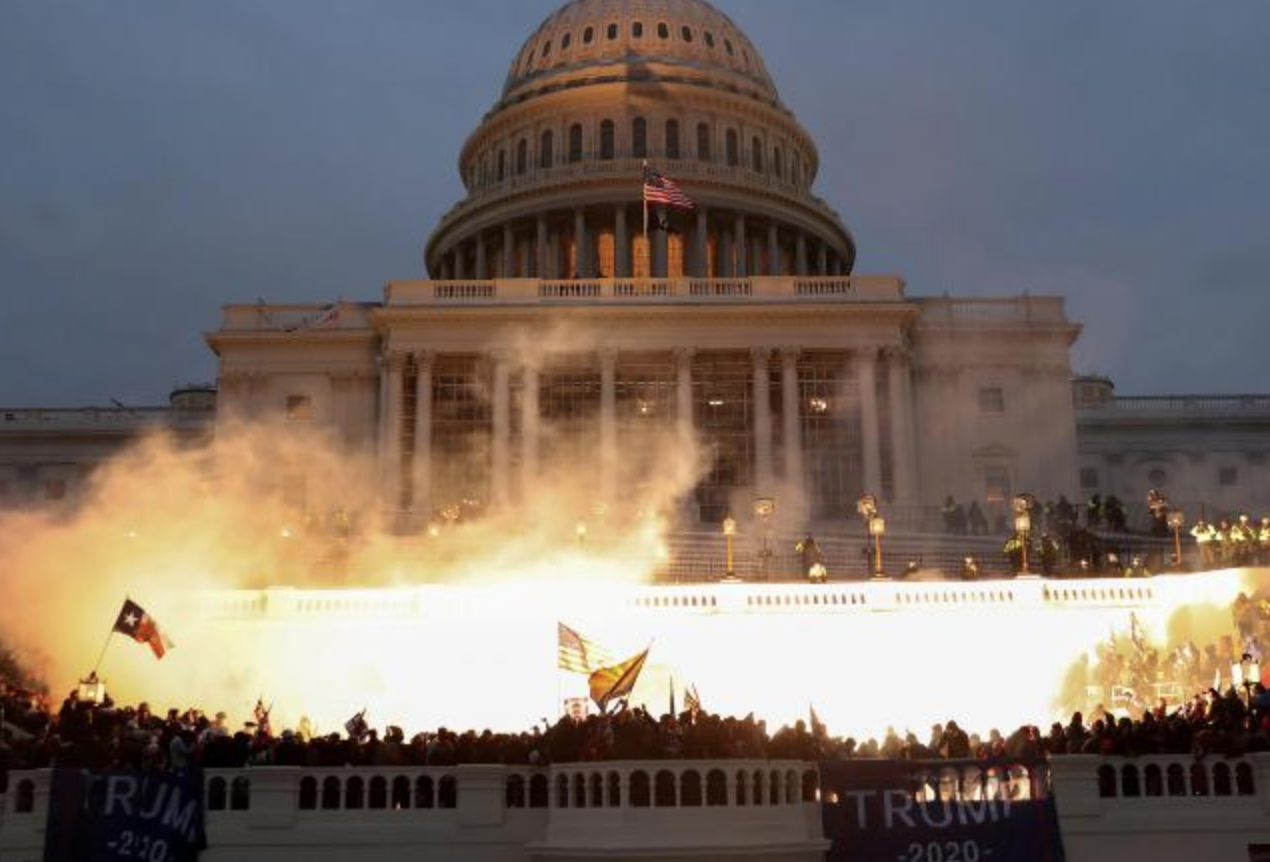
Then consider all the fears and furies over fentanyl deaths, teen suicide, urban crime, border chaos, race and reparations, college admissions, impeachment, gerrymandering, 2020 rehash, January 6, COVID-19 policy, gender transition laws and pronoun wars, LGBTQ+ rights and religious rights, “Christian nationalism,” “cancel culture,” “woke” classrooms, sliding test scores, book-banning, guns and whatever else you’d like to add.


Please respect our Commenting Policy

Doctrine and discrimination: Is the California anti-'caste' bill unfair to Hindu believers?

Doctrine and discrimination: Is the California anti-'caste' bill unfair to Hindu believers?

QUESTION:

Is California’s anti-“caste” effort unfair to Hindus?

THE RELIGION GUY’S ANSWER:

A bill sponsored by a Muslim legislator and passed by California’s Senate May 11 would make this the first U,S. state to add “caste” to the categories of illegal discrimination under civil rights laws.

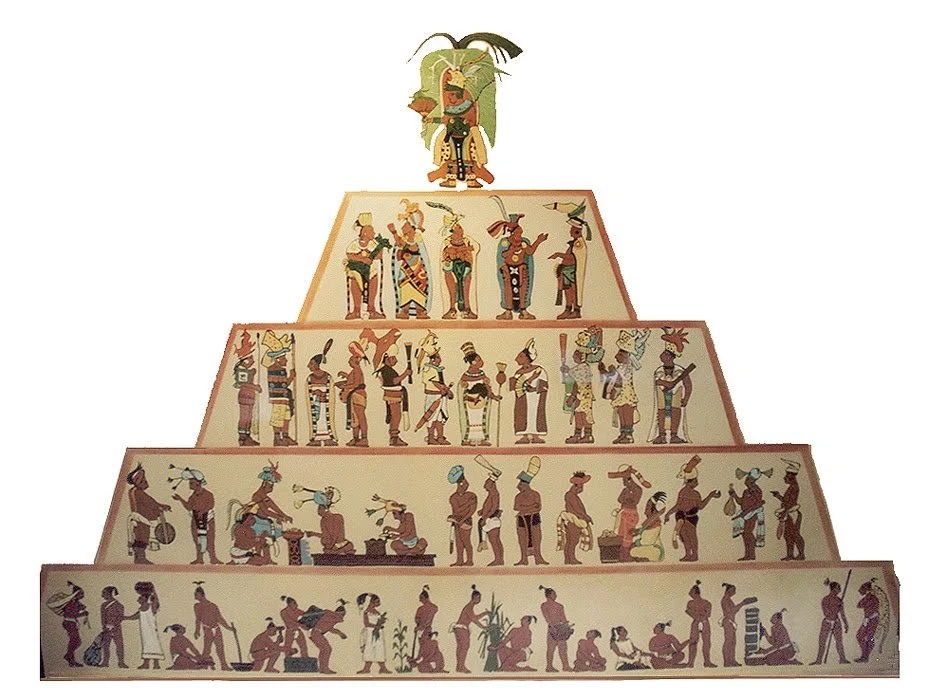
The bill defines caste as “a system of social stratification on the basis of inherited status” that involves “socially enforced restrictions on marriage, private and public segregation” and “social exclusion on the basis of perceived status.” Action on the bill by California’s state Assembly is pending. Earlier this year, Seattle became the first U.S. city to enact a parallel statute.

As of 2022, the 23 campuses of the California State University system likewise banned caste discrimination.  Other campuses with such policies include the University of California campus at Davis and California’s Claremont colleges as well as Brandeis University, Brown University, Carleton University, Colby College, Colorado College, and Harvard University, with others expected to join this new movement.

Caste is well-known for close association with Hinduism, whose billion followers make it the world’s third-largest religion behind Christianity and Islam. California’s actions have roused intense divisions among immigrants from India, with some telling legislators about incidents when they suffered from caste bias. A 2018 report by the anti-caste Equality Labs found 67% of Indian-Americans from low-status groups felt they were treated unfairly at work.

But groups such as the Hindu American Foundation contend that the bill itself “will perpetuate racist European stereotypes and misconceptions” and rouse discrimination against Hindus. Some deny that caste is any core tenet of the Hindu religion, if properly understood, or say that British colonial rule exaggerated and exploited the system.


Please respect our Commenting Policy

SBC and United Methodist news: Where are America's two largest Protestant flocks heading?

SBC and United Methodist news: Where are America's two largest Protestant flocks heading?

To recap: Last week’s heavily-covered Southern Baptist Convention (SBC) gathering was without doubt a watershed (pun intended) for America’s largest Protestant denomination. 

The local church “messengers” gathered in New Orleans not only expelled congregations that ordain female clergy but passed a constitutional amendment (that needs second approval next year) restricting SBC affiliation to congregations that allow “only men as any kind of pastor or elder.” That blocks any suggestion that females could perform pastoral roles apart from being head pastor of a congregation.

Amid all the gender excitement — and the SBC’s struggle to cope with sexual abuse scandals — the media should not neglect decisive rejection of the long Baptist tradition to uphold shared classical Christian doctrines, such as those in the 1833 New Hampshire Confession of Faith (.pdf), but leave most matters up to decisions by autonomous congregations.

Journalists might consider that current SBC teaching on women in the church and the home is in lockstep with the fundamentalist Baptist Bible Fellowship International of Springfield, Missouri. Yet that denomination also proclaims the old-fashioned belief that “the local church has the absolute right of self-government, free from the interference of any hierarchy of individuals or organizations.” Then again, the emerging SBC stance is similar to those of Rome, Eastern Orthodoxy and large numbers of Anglicans and Lutherans in the Global South.

Will the media now find any sizable breakaway from the SBC, as opposed to a predictable loss of some disgruntled individuals and scattered congregations? Doesn’t appear so in the early aftermath. The “moderates” have been leaving — slowly — for decades.

That contrasts with the ongoing split in the second-largest U.S. denomination, the United Methodist Church (UMC), over various issues of biblical authority and especially sexual morality.

Local and state news media have been covering the action, but The Guy thinks there’s ample room for comprehensive analysis of the over-all national and international situation. Mainstream journalists have consistently avoided covering important non-LGBTQ+ doctrinal issues linked to this war.

The establishment’s semi-official running tally posted here shows that what some called a “trickle” has become a flood, with (as this is written) 5,864 congregations quitting since 2019, of which 3,861 departed this year.


Please respect our Commenting Policy