Richard Ostling

Evolving journalism doctrines: Associated Press adds clarity on the 'T' in LGBTQ+

Evolving journalism doctrines: Associated Press adds clarity on the 'T' in LGBTQ+

The 70-year-old Associated Press Stylebook is continually updated and thus provides a barometer of societal trends as it sets widely-observed standards for media usage.

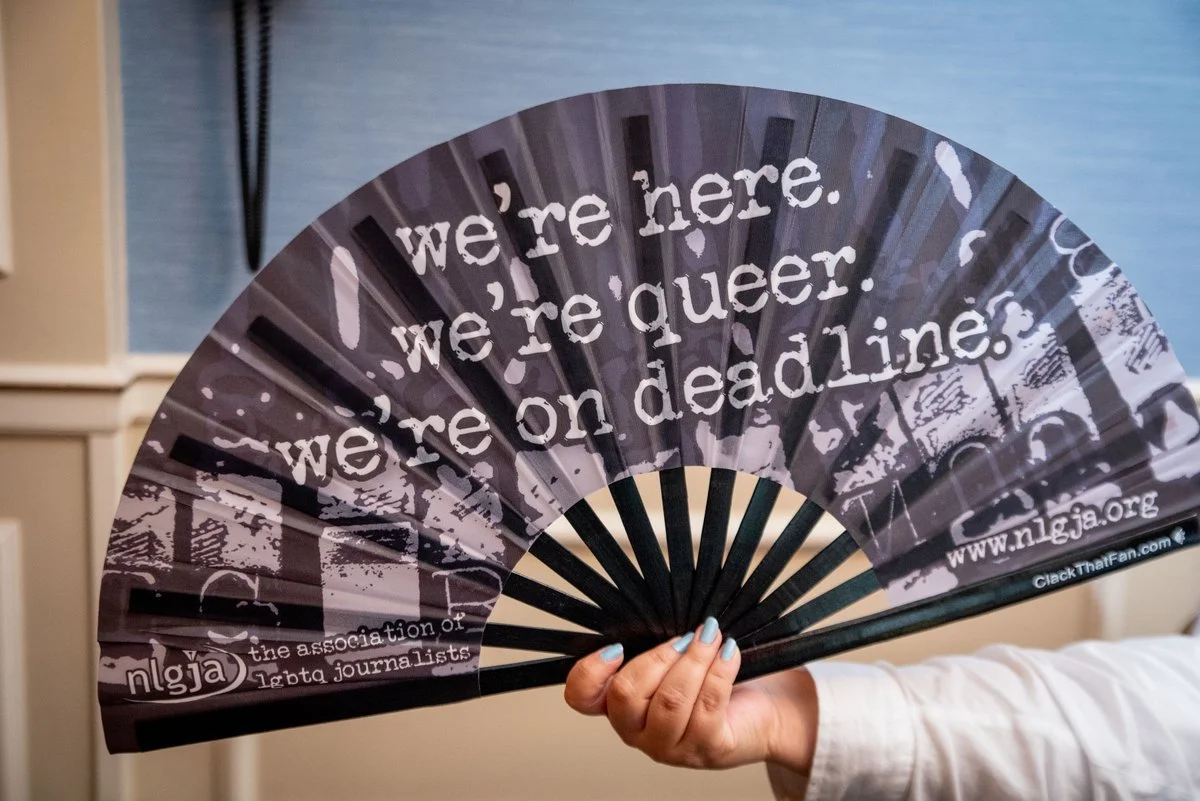
On June 2, the AP editorial team issued a updated “Transgender Coverage Topical Guide” that’s very timely, and not just because June is Pride Month. The AP style bible has been evolving on LGBTQ issues in recent years and this latest update is yet another step to embrace changes linked to the Sexual Revolution.

Just last week, CNN reported that 19 state legislatures have enacted new bills with various limits on “gender-affirming” treatments for transitions that apply puberty blockers, hormone replacement or surgery to alter genital organs.

Most of these laws apply only to minors. They’re usually promoted by Republicans and opposed by Democrats. Other familiar disputes involve sports participation, as well as privacy issues in locker rooms, bathrooms or shelters for girls and women.

Also last week, the Public Religion Research Institute released a poll whose big sample of 5,046 enabled breakdowns into 11 religious categories. Majorities in nine of the 11 believed “there are only two genders,” with only minority support among Jews and the religiously unaffiliated.

Comparison with a 2021 PRRI poll shows U.S. opinion is getting more conservative on these matters.

Among all respondents, 59% said “only two” in 2021 but 65% currently. Democrats rose from 38% to 44%. Hispanic Catholics jumped from 48% to 66% and white Catholics from 62% to 69%. (In March, the U.S. bishops’ doctrine committee stated that Catholic health institutions “must not” perform surgical or chemical change of a body’s “sexual characteristics,” whatever a patient’s age.)

Subscribers to the updated online “Stylebook” have much to ponder.

Please respect our Commenting Policy

200-plus North American Muslim authorities join the sexuality culture wars

200-plus North American Muslim authorities join the sexuality culture wars

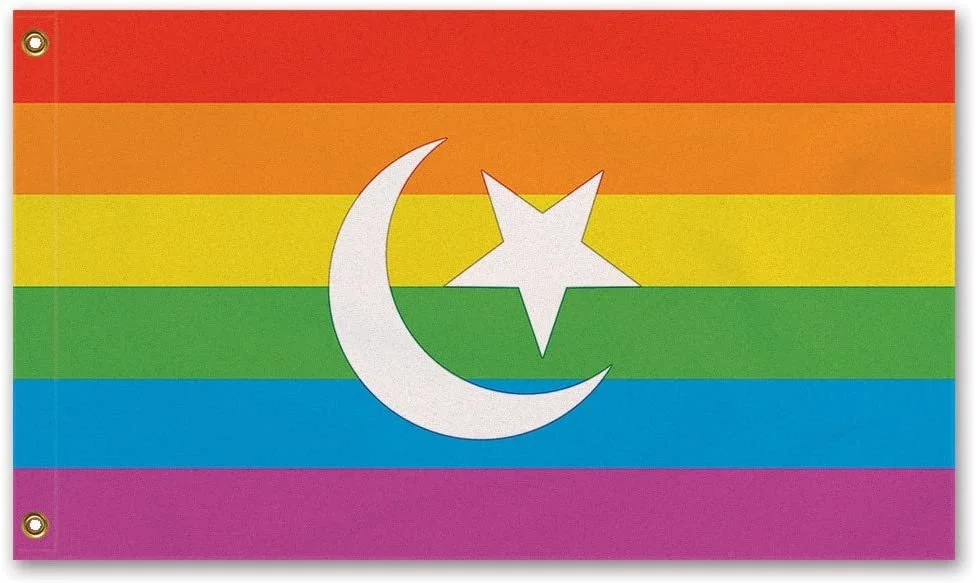
North America’s Christian and Jewish leaders have long been active, politically and legally, in taking differing sides on same-sex and transgender issues. Authorities in Islam are comparatively disengaged. That changes in dramatic fashion with a new declaration of alarm from a broad group of 59 authorities, quickly joined by 150 further endorsers from Muslim organizations and local mosques.

Journalists will want to ponder the May 23 “Navigating Differences” statement, which is publicized on Muslim websites and social media, though The Guy has seen no “mainstream media” coverage. Yet?

The ad hoc grouping upholds the “immutable” teaching on sexuality defined by the Quran and Hadith sayings of the Prophet Muhammad, then “unanimously agreed upon” in Islamic jurisprudence over the succeeding 14 centuries.

The newer news is that these scholars also assert that believers have been unfairly put on the defensive. The signers acknowledge that North American law and culture have moved away from traditional beliefs on marriage, sexual relations and gender identity, and affirm that citizens of a democracy who disagree with Islam have every right “to live in peace and free from abuse.”

However, they say, religious dissenters face “unwarranted accusations of bigotry” and, more troubling, “an increasing push to promote LGBTQ+ beliefs among children through legislation and regulations, disregarding parental consent” and suppressing Muslims’ “conscientious objection.” This is said to “subvert” parents, worsen “intolerance” in society and violate citizens’ religious freedom.

“We call on policymakers to protect our constitutional right to practice our religious beliefs freely, without fear of harassment, and to oppose any legislation seeking to stifle the religious freedoms of faith communities.”

These thinkers also urge public figures who are Muslims to “uphold the sanctity of our faith” and shun “erroneous pronouncements” on “sexual and gender ethics that contravene well-established Islamic teachings” and spurn or misrepresent “the will of God.” They “categorically reject” as indefensible any efforts to reinterpret tenets that are “not subject to revision.”

Journalists need to assess the importance of the declaration, which agrees with other religious conservatives.


Please respect our Commenting Policy

An important question pastors tend to avoid: 'Is premarital sex always sinful?'

An important question pastors tend to avoid: 'Is premarital sex always sinful?'

QUESTION:

“Is premarital sex always sinful?”

THE RELIGION GUY’S ANSWER:

The question above was the headline with an April article by Talley Cross, a “gender and sexuality” blogger with patheos.com. She responded with a cautious “no.”

A “yes” answer is the contrary and familiar doctrine and tradition in Judaism, Christianity, Islam and other faiths, and as we’ll see below has lately gotten a degree of backing from surprising places.

That age-old teaching is terribly counter-cultural these days and also subject to critique from within religions. The Gallup Poll says in 2001 a slim 53% majority of Americans thought sex between an unmarried man and woman was morally acceptable, but as of last year the number reached a record 76%. (Adultery got only 9% acceptance.)

In a 2019 Pew Research Center poll, 57% of those who identified as Christians “always” or “sometimes” approved of unwed sex for those in a “committed relationship” without marriage, with fully 79% approval among the non-religious respondents. As for casual sex without any “committed relationship,” 50% of the Christians accepted this “always” or “sometimes and the non-religious did so by 83%.

The influential New York Times (ditto for NPR) has developed an interest in a variant known as “polyamory,” romantic relationships with knowledge and consent among three or more participants, who sometimes take additional partners on the side.


Please respect our Commenting Policy

Yes, the perennial 'voters in pews' factor hovers as 2024 White House scenarios emerge

Yes, the perennial 'voters in pews' factor hovers as 2024 White House scenarios emerge

Only a candidate like Joe Biden is so problematic he could lose to a candidate like Donald Trump.

Only a Trump is so problematic he could lose to a Biden. That’s one way to frame what the early polls are telling us about Americans’ attitude about their 2024 choice.

Since Biden is so far successfully freezing out major Democratic competitors, the big question for journalists is whether any Republican can dethrone Donald Trump. Hovering over that -- as always with Republicans -- is how active churchgoers will assess the large flock (once again) of dump-Trump hopefuls in the winner-take-all primaries.

Take the newbies. Can Ron DeSantis’s grumpy Trumpiness freed from Trump’s baggage prevail, or the exact opposite?

Tim Scott’s Reagan-esque sunniness plus religiosity Trump lacks?

Can former Nikki Haley straddle both Trumpers (playing for Veep?) and anti-Trumpers?

Can pious Vice President Mike Pence overcome hostility from both those sides? Would Chris Christie eviscerate ex-pal Trump but without winning, as with Mario Rubio 2016?

If the more cheerful Asa Hutchinson or Chris Sununu also assail Trump, won’t they alienate his base? Would a rumored Glenn Youngkin entry come too late? Do the others have any hope?

By such common calculations, Trump appears all but inevitable 58 weeks before the nominating convention. But with such a surreal candidate -- with coming courtroom tangles -- might those pious Republicans shock the pundits? Wouldn’t that be a story?

The news media shouldn’t forget the religion angle with the Democrats and Joe Biden’s currently lethargic campaign.


Please respect our Commenting Policy

New Ipsos survey includes newsworthy updates on religious attitudes worldwide

New Ipsos survey includes newsworthy updates on religious attitudes worldwide

There’s obvious news potential in a poll about religious attitudes that covers 26 nations and with fresh data (collected between January 20 and February 3).

Media chart-makers could have fun with the many numbers in the 40-page “Global Religion 2023: Religious Beliefs Across the World,” issued May 11 by Ipsos, the noted international market research and polling firm. For more information, see the full document (.pdf here) and the basic press release (.pdf here).

Coverage by the Southern Baptist Convention’s press service plucked out one notable number that others also emphasized: “Nearly half, 47%, of the global population believes that religion does more harm than good [though Ipsos] did not explore the reasons behind the perception . …”

By contrast, there were heavily positive attitudes toward religion’s impact in Thailand, Turkey and four South American nations. The U.S. fell in the middle range with 39% seeing “more harm.”  

But journalists need to note this: The harshly negative view was especially powerful in both secularized Sweden and in India, which on many other Ipsos measures has the globe’s most devout population! Go figure.

Before plunging into other data, The Guy offers colleagues a few preliminary thoughts on news reporting about this survey, which follows a similar Ipsos project in 2017, and whether instead it’s wiser to just keep the report on file for selective later use where pertinent.

The “26-country average” used by Ipsos lumps together all its findings, suggesting numbers like the 47% who see “more harm” represent the entire global population.

The Guy thinks these numbers may be too sketchy to tell us much.


Please respect our Commenting Policy

Lots of interesting issues haunt this question! Should Christians Use Tarot Cards?

Lots of interesting issues haunt this question! Should Christians Use Tarot Cards?

QUESTION:

Should Christians Use Tarot Cards?

THE RELIGION GUY’S ANSWER:

If you think this topic is off the wall, at least it’s not off the news.

Tarot for Christians is promoted by the May cover story in The Christian Century, a venerable independent magazine that helps define what’s trendy and acceptable for “Mainline” and liberal Protestant readers.

The article’s author is the monthly’s own Associate Editor Jessica Mesman, who also co-founded the Sick Pilgrim blog aimed at “people who questioned EVERYTHING.” Her self-described social circle consists of fellow “lapsed Catholics” along with “exvangelicals, and other ‘deconstructing’ Christians” who seek to fill the vacuum left by their prior religious “narrative threads.”

For the uninitiated: Tarot cards consist of a deck numbering 78, with 22 to symbolize “Major Arcana” or life events, and 56 “Minor Arcana” that cover everyday occurrences.

Some devotees may claim the practice is rooted in ancient Egyptian magic. But conventional history says Tarot originated as an entertaining card game in 15th century Italy that later merged into the occult movement’s quest for liberating answers through access to hidden wisdom. Tarot was newly popularized as a “New Age” spiritual practice in America’s 1960s counterculture and the “Neo-Pagan” movement.

A Tarot card reader, whether a paid professional or the individual, turns over Tarot cards and reflects by intuition on what the images say. Often this is divination or “fortune telling,” believed to provide information and guidance about the future. But as with Christian writers like Brittany Muller, Mesman’s own practice reflects on the cards’ images as “a tool for self-directed spiritual contemplation,” rather like Enneagrams or the Myers-Briggs self-assessment questionnaire.

“There doesn’t have to be any magic involved — not in the sense of manipulation of supernatural power,” she explains.


Please respect our Commenting Policy

The past is dead? Time for news analysis of America's scrambled Protestant marketplace

The past is dead? Time for news analysis of America's scrambled Protestant marketplace

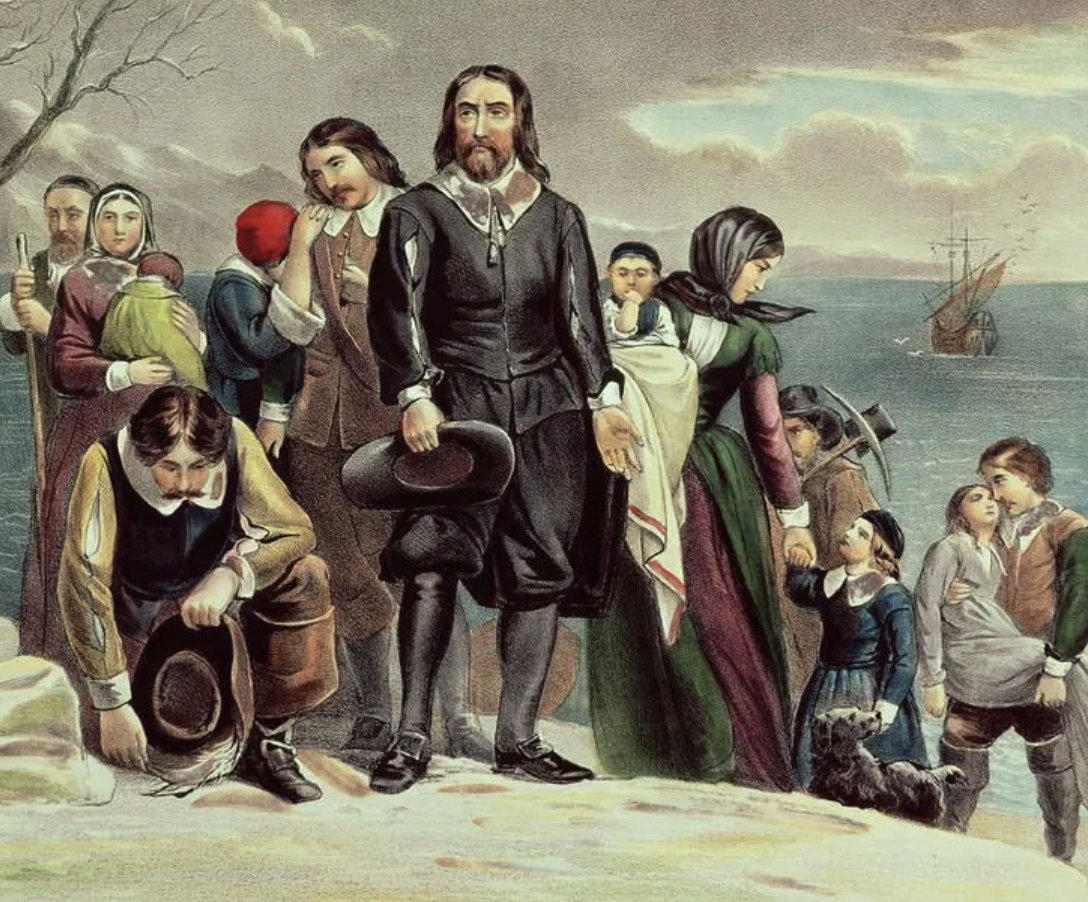
Starting with a band of Anglicans landing at Jamestown in 1607 and then Pilgrim dissenters at Plymouth in 1620, various forms of Protestantism collectively dominated what became the United States. That broad cultural hegemony persisted through Revolution, Civil War, Catholic immigration, industrialization, globalization, and Protestants’ countless internal squabbles, splits and reunions.

But the Religious Landscape Study from the Pew Research Center tells us the U.S. population is now only 46.6% Protestant. Add to that these newsworthy numbers on Protestantism’s Big Three and we find a scrambled scenario of historic proportions that invites thorough journalistic analysis.

* Last week the Southern Baptist Convention reported its worst-ever decline of 457,371 members from 2021 to 2022 – and of 1.5 million just since 2018 – to the current 13.2 million. The denomination had posted steady gains over a century until recent years. 

Oh, here’s a newsroom calendar alert: That slide should roil the Baptists’ important June 13-14 annual meeting in New Orleans, alongside disputes over female pastors and sexual abuse response, and a competitive presidential election.

* The news service of the United Methodist Church, #3 in size among U.S. Protestant groups, last week posted tabulation of departures since 2019 of 2,996 conservative congregations, roughly one-tenth of the denomination, with more in process. Most are joining the newborn Global Methodist Church. (Update: This week, Methodist conservatives put dropouts at 3,356 congregations, with another 1,000 or more likely.)

* Meanwhile, other Protestants are gaining. In particular, The Religion Guy has proclaimed the following as 2022’s “Story of the Year.” In November, the latest U.S. Religion Census revealed that independent, non-denominational congregations are now decisively the nation’s largest grouping of Protestants, with 21 million adherents in 44,319 congregations. Most are Evangelicals. This relegates the Southern Baptists down to #2 in size.

Pew Research defined three categories, “Evangelical Protestants” at 25.4% of Americans, “Mainline Protestants” at 14.7%, and members of “Historically Black” church groups at 6.5%.


Please respect our Commenting Policy

Newsworthy question (again): Does God exist? The latest twist in the perennial debate

Newsworthy question (again): Does God exist? The latest twist in the perennial debate

Early on in the 21st Century -- which turns out to be a thorny era for organized religion -- the “New Atheism” replaced past skeptics’ polite colloquies with fundamentalist-style attacks that demeaned believers as pretty much fools and knaves.

Some radicals even wanted to prevent parents from training children in their family’s religious faith (without imposing the same demand on atheistic families).

Religion writers will recall the so-called “Four Horsemen” of this much-publicized mini-movement in the popular press: neuroscientist Sam Harris (author of “The End of Faith,” 2004), biologist Richard Dawkins (“The God Delusion,” 2006), cognitive studies scholar Daniel Dennett (“Breaking the Spell,” 2006), and the late journalist Christopher Hitchens (“God Is Not Great,” 2007).

Though it hardly qualifies as the start of the New Anti-Atheism, a recent book answers that quartet with a more gracious but similarly popular style that ponders God’s existence in brass-tacks terms rather than abstruse philosophical theorems. Turns out to be a highly intriguing and readable project worth media consideration.

As the subtitle signals, the author of “Atheism on Trial: A Lawyer Examines the Case for Unbelief” (InterVarsity Press) is no theologian or philosophy professor but an attorney. And not any old attorney.

W. Mark Lanier has appeared on various Best Lawyers lists for his successes as a class-action litigator in some of the biggest product liability cases of our time (click here for details), involving prescription drugs, baby powder, artificial sweeteners, metal-on-metal hip implants and more. Out of court, Lanier teaches an adult Sunday School class at Houston’s Champion Forest Baptist Church and has amassed one of the nation’s largest private libraries on religion.

Lanier offers a courtroom-style case of the sort that wins verdicts, asking his readers as jurors to consider logic, common sense and circumstantial evidence from real life.


Please respect our Commenting Policy

Here is a strange question: Why doesn't the U.S. Census ask questions about religion?

Here is a strange question: Why doesn't the U.S. Census ask questions about religion?

QUESTION:

“Why doesn’t the U.S. Census ask about religion?”

THE RELIGION GUY’S ANSWER:

Most Americans may never have thought about this, an odd omission considering that religion is such an important aspect of society. Canada’s government, for example, has asked about religious affiliations since 1871.

But from the first once-a-decade U.S. Census conducted in 1790, the federal government has never directly asked all Americans about their religion (or lack thereof). Responses are anonymous, which should remove any sensitivities about answering such a question. The usual explanation is that “separation of church and state” forbids such questionining by a government agency, which is debatable.

Much of the history below draws upon an April 12  article about the Census by the Pew Research Center that has further detail for those interested, available by clicking here.

Instead of church-and-state entanglement, The Guy offers a different sort of objection to Census involvement. Religious affiliation or identity may be too complicated a matter for government nose-counters to deal with accurately.

Several non-government agencies with more expertise in this area collect standard data on Americans’ religion, with numbers that regularly conflict due to differing methods, assumptions and definitions.

One of the most important is Pew Research’s own Religious Landscape Study, last issued in 2014. www.pewresearch.org/religion/religious-landscape-study/Groundwork for the next round has already begun. Pew’s precision on religious factions and identities is vital because Protestant categories like “Lutheran” or “Presbyterian” mask big differences among groups with that label.

That sort of specificity is also provided in the “U.S. Religion Census” conducted each decade since 1990 by experts in religion statistics.


Please respect our Commenting Policy