Richard Ostling

New probe of origins of Islam's Quran resembles 200 years of New Testament conflict

New probe of origins of Islam's Quran resembles 200 years of New Testament conflict

Muslims -- and religion writers -- will want to ponder these quotations:

“There is not much reason to place a great deal of confidence in the Islamic tradition’s account of the Quran’s origins” in light of “the bewildering confusion and complexity” of early Muslim memories about this. Yes, “at least some, and perhaps much” of the holy book does have roots in the Prophet Muhammad’s actual preaching career in Arabia.

However, the book as Muslims know it is a “composite and composed text” that was “altered significantly” and “reimagined, rewritten, and augmented” during a half-century or so after the Prophet’s lifetime and finally standardized under Damascus-based Caliph Abd al-Malik (685–705 CE).

What Muslim tradition tells us about Muhammad’s career may contain factual “nuggets” but much of it is “little more than pious fiction” with “no basis in any genuine historical memories.”

There could be trouble. All that will certainly offend believers in the orthodox view that between 610 and his death in 632, Muhammad, guided by the angel Gabriel, received God’s verbatim words, memorized them, dictated them to scribes, and confirmed the entirety of the Quran’s revelations as they exist today.

This sort of dispute will be familiar to educated Christians, since similar western “historical criticism” or “higher criticism” has been aimed at their New Testament for 200 years.

Now that outlook is being applied to Islam’s holy book in “Creating the Quran.” Author Stephen J. Shoemaker, a prolific scholar of Christian and Muslim origins at the University of Oregon, asserts that experts have been too timid or reverential in promoting a revisionist viewpoint.

“Creating” was published last July but languished in academic obscurity until Baylor University historian Philip Jenkins boosted it as an eye-opener in a recent Patheos.com article. The University of Chicago’s Fred Donner blurbs that this is “a milestone in Quranic studies” and “the most comprehensive and convincing examination” of the issues currently available.



Please respect our Commenting Policy

A Jewish book that Christian strategists (and reporters) should be reading right now

A Jewish book that Christian strategists (and reporters) should be reading right now

Much of organized Judaism in the U.S. is “crumbling” and destined to suffer even worse decline in coming years, contends Rabbi Danny Schiff in his new book “Judaism in a Digital Age: An Ancient Tradition Confronts a Transformative Era” (Palgrave Macmillan).

Christian strategists face much the same cultural upheaval and should pay attention to this examination, alongside Jews and religion-beat journalists. Echoes of the “Mainline” Protestant plight are especially noteworthy. And consider the stakes for Judaism when the United States has 70% of the world Jewish population.

Schiff, a scholar with the Jewish Federation of Greater Pittsburgh, focuses on the two branches that dominated U.S. Judaism over the past century. Reform Judaism is devoutly liberal, with broad individual choice on belief and practice. Conservative Judaism is more tradition-minded — but has lately floated in Reform’s direction. The book pays less notice to the faith’s growing third main branch, Orthodoxy, because it is relatively stable as it resists modern pressures.

Here’s the situation in a numerical nutshell: As of 1990, 73% of U.S. Jews identified with these two main non-Orthodox branches. By Pew Research Center’s major Jewish survey in 2020, their combined following was down to 54%, while 32% of Jews reported “no particular identity” in terms of religion. (The Orthodox were a 9% minority that will grow due to higher birth rates.)

For Schiff, the years around 1990 were the end of an era when “partial emancipation” from past social barriers and prejudice turned to “hyper-emancipation.” Antisemitism, though still existing, was extinct in polite society.

A related sign was the prevalence of intermarriage with non-Jews, once relatively rare. By the 2010-2020 decade, 72% of marriages by the non-Orthodox were with non-Jews. Inexorably, that lowered the odds that children would follow in Judaism as adults. Added problems were widespread divorce, less marriage and lower birth rates. Finally, “barriers to leaving Jewish life are virtually non-existent.”


Please respect our Commenting Policy

Why do Southern Baptists and many like-minded Protestants still bar women pastors?

Why do Southern Baptists and many like-minded Protestants still bar women pastors?

THE QUESTION:

Why do Southern Baptists and like-minded Protestants bar women pastors?

THE RELIGION GUY’S ANSWER:

Why? Simple. Because they believe that’s what the Bible teaches.

But other conservative evangelical groups see female clergy as biblically proper, for example the Assemblies of God, Evangelical Covenant Church, Free Methodist Church and Salvation Army, along with many independent congregations.

The question is timely because the June 13-14 annual meeting of the Southern Baptist Convention, America’s largest Protestant denomination, will be a landmark on this. The gathering will decide whether to expel any congregation with a women pastor, thus affirming the SBC Executive Committee’s February expulsion of five such congregations.

Among them is one of the Baptists’ biggest and most influential, Saddleback Church in California, long led by popular author Rick Warren. (See this recent GetReligion post and podcast for more information: “Women in ministry remains a hot topic in SBC life, especially at the pulpit level.”)

Among Baptists, a local congregation ordains clergy, and the SBC upholds the total decision-making independence of each local congregation, so each is free to ordain women. However, the June meeting could establish a new nationwide policy that defines women’s ordination as such a doctrinal heresy that fellowship must be severed.

Across history, Christianity has largely been led by men, as with other world religions and with most societal institutions in most times and places, Protestants have been changing that.

In the U.S., a few U.S. Protestant women were ordained beginning in the 19th Century, including by evangelical churches. In the decades after World War Two, major “mainline” Protestant denominations ended their gender barriers. Women now make up 35% of the students at campuses in the Association of Theological Schools.

Though the SBC now anchors the men-only side in the ongoing debate among evangelicals, this was not always the case.


Please respect our Commenting Policy

With alarming new reports on American youth, what should religious leaders be doing?

With alarming new reports on American youth, what should religious leaders be doing?

Religion writers, like many other Americans, doubtless find a February report on the well-being of American teens from the federal Centers for Disease Control (.pdf here) nothing short of alarming.

There are religion-beat angles in these numbers. The question is whether religious leaders have figured that out yet. As we say here at GetReligion: Hold that thought.

Meanwhile, many news reports focused on the reported plight of teen-aged girls. The CDC survey in 2021 found that 57% persistently feel hopeless and sad, a 60% increase over the past decade and double the rate for boys, while 31% considered taking their own lives. The incidence of girls suffering sexual violence increased 20% in just the four years since 2017. Also, attempted suicide afflicted 22% of “LGBQ+” students.

Meanwhile, the media have lately put new emphasis on the troubled situation of boys and men.

Last August, Psychology Today said young and middle-aged men are more lonely than they’ve been in generations. A major consideration is that men are typically “happier and healthier” when married or “partnered.”

Internet dating is now a huge source of romantic connections, but 62% of users are men because “women are increasingly selective.” Men’s lack of “relationship skills” is said to produce less dating, more singleness, and thus less contentment.

That’s buttressed by a February 22 article from The Hill: “Most young men are single. Most young women are not.” New York University psychology professor Niobe Way’s view contrasts with the CDC, saying young adult men’s “social disconnect” means their suicide rate is quadruple that for women. And we all know distressed teen and young adult men are responsible for much of the national epidemic of mass shootings.

Young women, better-educated than men, “are getting more choosy” and are less likely to settle for problematic mates. Meanwhile, millions of young men have great relationship skills — with their digital screens.


Please respect our Commenting Policy

100 years ago this week, feisty Time magazine began changing the news game

100 years ago this week, feisty Time magazine began changing the news game

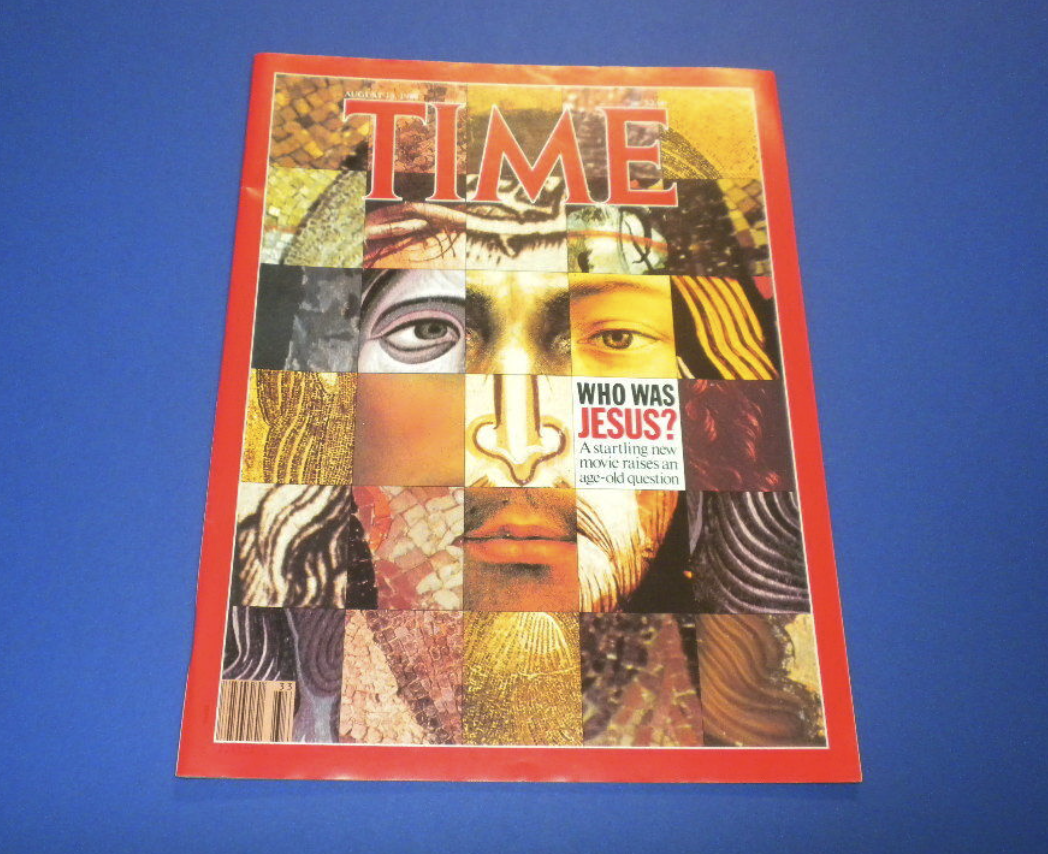
Friday, March 3, marks 100 years from the first issue date of Time magazine, self-described as “The Weekly News-Magazine.”

The feisty New York-based newcomer brought journalistic inventions that redefined what’s news and how it’s presented. When Time and other Time Inc. magazines were up for sale in 2018, an article in the rival New York Times bade farewell to “the pre-eminent media organization of the 20th Century.”

Here is a very obvious point of disclosure and personal privilege: The Guy worked there 1969-1998 as a field correspondent and Religion section writer.

Looking back, the magazine’s 75th anniversary spectacle converted Radio City Music Hall across the street into a banquet venue and invited every living person who’d ever appeared on its cover. The Rev. Billy Graham, say hello to Joe DiMaggio. President Bill Clinton, meet Lauren Bacall. You get the picture.

The current ownership, however, is low-key about the centennial. But Time’s survival is noteworthy in today’s harsh environment for print media, albeit with reduced circulation, budget, staffing and publishing frequency.

Then there is another important angle about the impact of Time in the news marketplace. News flash: Religion makes news!

Missionary Kid Henry Luce was the co-founder, and Time carried a religion news section each week, alongside other specialized “back of the book” sections like Press and Law -- subject areas that many dailies only covered with depth decades later.

Attention-grabbing Time covers, coveted real estate for all fields, added renown to numerous religious writers and thinkers (e.g. C.S. Lewis, 1947), bureaucrats (Eugene Carson Blake, 1961) and activists (Mother Teresa, 1975).

Some readers may recall one cover in particular — the much-misunderstood black-hued “Is God Dead?” Holy Week cover in 1966, written anonymously (no bylines in those days) by John Elson. This talented scribe, a churchgoing Catholic, was not undermining faith but asking whether there were any limits to the era’s “theological strip-tease” among liberal Protestants and post-Protestants. That cover was, in other words, ahead of its time.


Please respect our Commenting Policy

Loaded question: Is gambling evil? That's a religion-beat hook in many states

Loaded question: Is gambling evil? That's a religion-beat hook in many states

THE QUESTION:

Is gambling evil?

THE RELIGION GUY’S ANSWER:

Analysts anticipated a record high cash haul from the Super Bowl with the explosion in legalized online sports betting. The big weekend produced several interesting articles about the pros and cons, the inroads and innovations, of America’s gambling industry.

The Wall Street Journal’s Barton Swaim mulled religious aspects under the arresting headline “Would Jesus Bet on the Super Bowl?” He said that for Jews and Christians the Bible is “less than explicit” in warnings and yet its moral teachings do raise questions about gambling.

Swaim sympathizes with theologians who oppose the desire to “get something for nothing,” accompanied by the attitude that work to earn necessary income “is a mostly unhealthy activity best avoided.” But he admitted that’s also the case when we inherit assets or the value of property increases regardless of our own efforts.

For Swaim, the key moral aspect is what gambling “reveals about the gambler,” especially desire or lust for wealth. The last of the Ten Commandments (Exodus 20:17) even forbids private inward thoughts of material desire or coveting, and Jesus warned in the Sermon on the Mount that “you cannot serve both God and money” (Matthew 6:24).

Yet another moral problem for Swaim is the fact that a certain portion of gamblers “will end up addicted and in financial and moral ruin.” More on that below.

Looking at Judaism, a Super weekend survey in The Forward noted that the late Rabbi Joseph Soloveitchik, the prime thinker for the “modern Orthodox” movement, denounced casino attendance and that’s the view of “pretty much every other authority” on Jewish law, before and since. Even the rabbis of Judaism’s liberal Reform branch have called gambling  “non-productive and threatening to the social fabric.” A noted Jewish  therapist says even seemingly innocent small bets can be a gateway to addiction.

Among Christians, there’s a notable split between tolerant Catholics and Protestants, who’ve been mostly hostile.


Please respect our Commenting Policy

With her newsworthy 'firsts,' don't ignore religion angles in Nikki Haley v. Donald Trump

With her newsworthy 'firsts,' don't ignore religion angles in Nikki Haley v. Donald Trump

As a woman and as a child of immigrants from India, new presidential candidate Nikki Haley has scored notable career “firsts.”

But the media shouldn’t ignore that her life story is more religiously intriguing than any of the 16 Republicans on CNN’s list of other potential challengers to Donald Trump. She’s been regularly subjected to questions about conversion from her parents’ Sikh religious faith to Christianity at age 24.

Moreover, Haley right now has a link to a huge 2023 story, the global split in the United Methodist Church. Haley and family are members of Mt. Horeb church in Lexington, South Carolina’s largest UMC congregation with 5,000-plus members.

Mark your calendars: On February 26 the congregation meets to decide whether to leave the denomination after 132 years due to progressive trends in the denomination’s doctrines and discipline that conservatives believe will undermine the Bible’s authority, including on “sexual ethics.” Local coverage here: “SC’s largest United Methodist Church prepares to leave denomination.” Two-thirds approval will be needed to depart.

This doctrinal dispute may not matter in Republican primaries, but it’s easy to imagine Democrats highlighting religious affiliation and LGBTQ concerns if underdog Haley manages to win the Republican nomination for president or vice president.

Already, LGBTQNation and People For the American Way’s Right Wing Watch are on the warpath. Note the targeting of Haley’s friend Pastor John Hagee, who prayed at her campaign launch. As a candidate, she will need strong support from cultural conservatives, which will require clear stands on issues linked to parental rights, religious liberty and abortion.

Born Nimrata Nikki Randhawa and raised in Sikhism, Haley was encouraged by her parents to visit varied churches and understand the surrounding culture. She married husband Michael in both Sikh and Methodist ceremonies and soon after converted to Christianity.


Please respect our Commenting Policy

Dangerous four-way intersection looms ahead in Christian debates about LGBTQ issues

Dangerous four-way intersection looms ahead in Christian debates about LGBTQ issues

Flying home from his February Africa pilgrimage, Pope Francis held an unprecedented three-man press conference alongside Archbishop of Canterbury Justin Welby, leader of the Church of England and some 85 million members in the global Anglican Communion, and the Right Rev. Iain Greenshields, this year’s titular head of the Church of Scotland (equivalent of the mainline U.S. Presbyterians).

These men personify three emerging approaches to same-sex revisionism that reporters will be observing. A fourth option,of course, is strict limitation of sex to heterosexual marriage, a doctrine articulated in the Catholic Catechism and shared by all churches until recently. For example, see this summary issued last week by the Rev. J.D. Greear, a former Southern Baptist Convention president.

In the West, many “mainline” Protestant groups have shifted to option one — full-on approval of same-sex relationships, exemplified by liturgies to celebrate church weddings. The Church of Scotland joined them last May as assembly delegates gave this change 67% support. (Dissenting clergy will not be forced to perform weddings they oppose in conscience.) This followed an earlier go-ahead in America’s largest Presbyterian denomination.

With option two, Pope Francis has not proposed any alteration in the Catholic teaching that same-sex acts are sinful, but is ambiguous about how Catholic churches should welcome and potentially bless gay people (see this earlier GetReligion post on a test case in Chicago). That and his other “dialogue” initiatives rile doctrinal traditionalists. Backed by Welby and Greenshields, Francis asserted that secular law should not criminalize people for gay acts -- a striking plea in Africa, where many nations outlaw gay activity and some impose the death penalty.

Then Archbishop Welby’s church made an historic decision for option three — half-way liberalization. This approach would continue to bar same-sex weddings, while approving church “blessing” ceremonies for such couples after their civil marriages (legal in England since 2013). After six years of formal nationwide church discussion, and more than eight hours of floor debate, the General Synod voted February 9 to “welcome” that policy, which the bishops approved in January.

The motion expressed repentance over past and present “harm that LGBTQI+ people have experienced” in church. Welby and the Archbishop of York jointly stated that their church “will publicly, unreservedly and joyfully welcome same-sex couples.” This includes sexually active same-sex couples? Debate continues on that point.

This decision by no means settles matters.


Please respect our Commenting Policy

This keeps making news: Why do images of Prophet Muhammad so deeply offend Muslims?

This keeps making news: Why do images of Prophet Muhammad so deeply offend Muslims?

THE QUESTION:

Why do images of the Prophet Muhammad so deeply offend Muslims?

THE RELIGION GUY’S ANSWER:

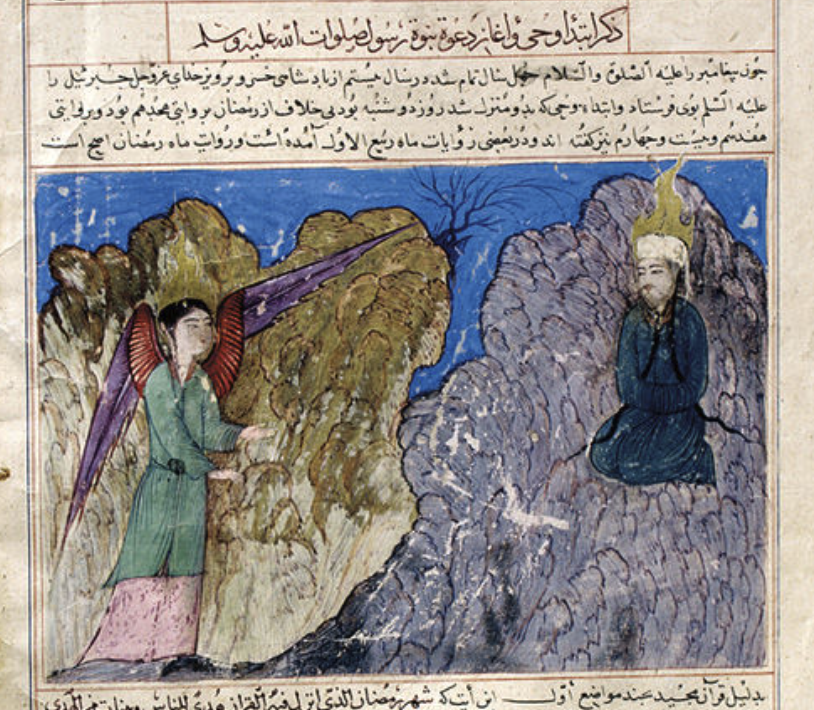
This issue has erupted unexpectedly at Methodist-related Hamline University in Minnesota. Last October, adjunct art teacher Erika Lopez Prater showed an online class two medieval paintings in which pious Muslims had portrayed the Prophet Muhammad receiving Quran revelations from the angel Gabriel.

Lopez Prater warned Muslim students in advance so they could avert thir eyes. Nonetheless, the president of the Muslim Students Association (MSA) complained that Lopez Prater’s “trigger warning” itself showed she had committed an offense against Islam. Hamline’s President Fayneese Miller called Lopez Prater’s deed “Islamophobic” (she later apologized for that word) and the school decided not to renew the teacher’s contract.

The faculty, alarmed over academic freedom, called January 24 for Miller’s resignation in a lopsided 71 – 12 vote of no confidence. Then in response to that response, 13 leaders from campus groups like the MSA, Student Congress, and diversity committee endorsed Miller’s leadership and accused the faculty of betraying students.

Meanwhile, Lopez Prater is suing the university for defamation and religious discrimination.

Christiane Gruber, a well-known professor of Islamic art at the University of Michigan, entered the fray to defend and explain her Hamline colleague’s classroom behavior in this article at TheConversation.com.

Whatever current scruples, Gruber said, Muslim artists centuries ago did in fact depict Muhammad and both Muslim and non-Muslim art historians regularly teach about this. Paintings of Muhammad are collected at Istanbul’s renowned Topkapi Palace Library, among other places.


Please respect our Commenting Policy