Richard Ostling

Do trends in Grand Rapids tell us something about religion, evangelicalism and the GOP?

Do trends in Grand Rapids tell us something about religion, evangelicalism and the GOP?

Tuesday was a good night for Kansas abortion-rights campaigners and for many Republicans blessed by Donald Trump. Democrats are calculating that both factors could foretell a good night for them on Election Day.

Whatever, journalists attuned to the potent though oft-neglected religion factor should especially focus on the Michigan Republican U.S. House primary win by neophyte John Gibbs, a Trump-endorsed 2020 election denier.

In this significant showdown, Gibbs edged incumbent Peter Meijer (pronounced “Meyer”) with 52%. It helps to remember that Trump staged his final campaign rallies in a very symbolic location — Grand Rapids — in 2016 and 2020.

As a brand-new House member, Meijer voted to impeach President Trump for attempting to overthrow President Biden’s Electoral College victory. (Meijer’s predecessor in the seat, Justin Amash, had backed the 2019 Trump impeachment, quit the Republican Party and retired.)

Among last year’s 10 pro-impeachment House Republicans, five others sought party re-nomination. At this writing two of them led Trumpite challengers in Washington state’s Tuesday “jungle primary,” Jaime Herrera Beutler and Dan Newhouse. North Carolina’s Tom Rice lost big, California’s David Valadao won and Liz Cheney faces Wyoming voters August 16. Four decided to retire.

Underscoring hopes to flip the Michigan seat, House Democrats’ campaign arm horrified some party stalwarts by spending $435,000 on ads to boost Gibbs’s name recognition, while undercutting Meijer as the far stronger November opponent. In what turned out to be an obituary, a Monday Meijer blog post denounced Democrats’ “nauseating” violation of “moral limits.”

This brings us to the obvious GetReligion question: Why religion-beat buzz about Michigan District 3?

Simply because it centers on Grand Rapids, as much as any northern town a buckle on an established Bible (especially Calvinist) Belt outside of the South.

Please respect our Commenting Policy

Here's a soundbite for you: In the Bible, does St. Peter call women the 'weaker sex'?

Here's a soundbite for you: In the Bible, does St. Peter call women the 'weaker sex'?

THE QUESTION:

In the Bible, does St. Peter call women the “weaker sex”?

THE RELIGION GUY’S ANSWER:

Yes.

But why? What did that mean? What was he saying about women’s status in a culture far different from that of the 21st Century?

A preliminary point. Word limits do not allow adequate examination here of liberal scholars’ contention that St. Peter did not really write the two New Testament letters the texts attribute to him, or of the reasons conservatives are convinced that these are authentic words from the figure Catholicism uplifts as the first pope and all Christians revere as an apostle, founder and martyr. The following discussion will assume Peter was the author.

Jackson Wu, an evangelical theologian with the Global Training Network, raised the question about I Peter 3:7 in this June 29 blog item. The verse at issue reads “likewise you husbands, live considerately with your wives, bestowing honor on the woman as the weaker sex, since you are joint heirs of the grace of life. …”

That’s the Revised Standard Version translation. Using the ever-handy www.BibleGateway.com, you can quickly compare 60 other English renditions.

Others that say “weaker sex” are the Living Bible, a modern U.S. paraphrase; Expanded Bible, which includes alternate translations; and the original New Revised Standard Version, but not last year’s updated edition. Others say weaker “partner” and many have weaker “vessel,” which is the more exact translation of the original Greek. That’s important.

Peter’s letter is abundantly clear that women are not inferior spiritually, or morally, or of any lesser status than men in the eyes of God.


Please respect our Commenting Policy

What's the role of religion as social trust unravels in American public life?

What's the role of religion as social trust unravels in American public life?

Time for a Religion Guy Memo that sidesteps the onrushing news of the moment for a broader-brush assessment of America and American religion that the media need to be thinking about.

Last Saturday, CNN host Michael Smerconish asked whether the United States is experiencing “a national nervous breakdown,” and conducted a (non-scientific) online poll in which 78% of 22,000-plus viewers answered “no” to this question: “Are concerns about America’s unraveling overblown?”

Devastating documentation on the situation came the morning after Independence Day from the Gallup Poll’s annual survey on the population’s confidence in the various institutions that lead, bind and shape the nation.

The Gallup organization stands out among pollsters for its data on identical or similar questions across many years. Writers who pursue this will want to examine the year-by-year “confidence in institutions” data, which in many cases date back to 1973.

Since this is GetReligion, we start with how much confidence this year’s 1,015 respondents have in “the church or organized religion.”

The following numbers combine the “a great deal” and “quite a lot” answers to yield a confidence index. (The poll’s other choices were “some,” “very little,” “none” and “no opinion.”) Note that these percentages track opinions among the general public, not just Americans who are personally involved or knowledgeable about religion.

Simply put, the populace’s confidence in organized religion has hit rock bottom in 2022 at 31%, compared with a 52% majority as recently as 2009, and consistent scores of 60% or better from 1973 through 1985. Digging into the internals we find 46% confidence among self-identified Republicans vs. a paltry 26% among Democrats.

What happened? The Guy sees no clear pattern of immediate reactions to, for instance, news eruptions regarding Catholic priestly predators or the abortion or the same-sex marriage disputes, though gradual accumulating impact seems likely. There’s possibly a bit of damage from a Christian faction’s visible conservative politicking, particularly in the Trump years, but even that is debatable.

The Guy proposes an explanation based upon all institutions gauged by the poll.


Please respect our Commenting Policy

Fringe Trump-style conservatives propose a HUGE legal rewrite on religion in public life

Fringe Trump-style conservatives propose a HUGE legal rewrite on religion in public life

All but overshadowed by the U.S. Supreme Court’s dramatic elimination of nationalized abortion rights, the just-concluded term was vital in terms of how the Constitution applies to religion.

There were moments of unity. The Court’s liberals joined emphatic rulings that Boston must allow the Christian flag to be shown on the same terms as other displays, and that a death-row inmate is entitled to religious ministrations.

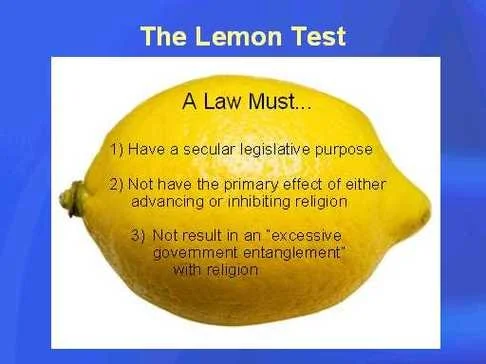
But then there were two highly contentious rulings, both in June. The high Court said a football coach is free to openly pray on the field after games and that a Maine program must include sectarian high schools if it pays tuition for other non-public campuses. That second decision explicitly erased key doctrine on what constitutes an “establishment of religion” that the Constitution forbids.

The current Court has become “exceedingly accommodating of people’s religious views,” and is “blowing a hole in the wall between church and state,” summarized the displeased New Yorker magazine.

Reporters should be watching one conservative faction’s hope for more radical renovation on the “establishment” clause. The Religion Guy learned about this, of all places, in a June 28 Rolling Stone item about the friend-of-the-court brief filed in the football prayer case, Kennedy v. Bremerton, by the group America First Legal. AFL became a player in the political litigation game only last year.

Where to begin? Repeat after me: “incorporation” and “disincorporation.”

No, not the formation and dissolution of a business, but an extremely important and often overlooked doctrine in Constitutional law. Simply put, the Supreme Court has extended the rights guaranteed in the First Amendment to cover all the states because — believe it not — the U.S. Constitution as written involved only the federal government.

The first incorporation decision was in the 1925 Gitlow case, when it required New York State to recognize freedom of speech, followed by the Near case (Minnesota, press freedom, 1931), De Jonge (Oregon, freedom of assembly, 1937) and Edwards (South Carolina, petitioning government, 1963).


Please respect our Commenting Policy

A key anti-Donald Trump evangelical ponders what seven years have wrought in America

A key anti-Donald Trump evangelical ponders what seven years have wrought in America

This is the 11th Guy Memo in a year guiding the media and other observers on dynamics within U.S. evangelical Protestantism. There are growing signs of a crack-up including, for sure, sexual scandals and self-inflicted wounds, but also the gap between institutional elites and the grassroots, creating division, instability and, we can expect, long-term damage.

If 11 articles seem like overkill, The Guy notes this has long been the most dynamic segment in American religion, and probably the largest in terms of active attendance. Though made up of organizationally chaotic fiefdoms, the movement’s impact rested upon substantial solidarity in belief and social outlook compared with other religious sectors.

Then seven years ago the disruptive force known as Donald J. Trump emerged.

Which brings us to last week’s significant scan by prominent evangelical Marvin Olasky in the conservative National Review.

Importantly, this does not come from some well-meaning outsider (thinking of you, David Brooks) but a career-long insider who’s profoundly conservative in both biblical belief and politics. But he is also anti-Trump.

Here we need to pause to sketch the landscape in evangelical journalism.

Olasky says the “big three” news outlets of evangelicalism are World magazine, where he was longtime editor-in-chief, the 66-year-old Christianity Today and Charisma, voice of the Pentecostal-charismatic wing of this hard-to-define world. (Beat specialists would of course add other informative websites without print editions.)

During Trump’s 2020 campaign, Charisma CEO Stephen Strang issued a book subtitled “Why He [Trump] Must Win and What’s at Stake for Christians If He Loses,” followed by a magazine piece telling readers “Why We Must Support Trump in Prayer and at the Polls.

But the other two top editors disagreed. In World, Olasky proclaimed Trump morally “unfit for power” just before the 2016 election. In 2019, Christianity Today editor-in-chief Mark Galli called for Trump’s impeachment and removal from office over Ukraine meddling for partisan purposes.


Please respect our Commenting Policy

Scripture puzzle about wisdom: Was the biblical Solomon a good or a bad king?

Scripture puzzle about wisdom: Was the biblical Solomon a good or a bad king?

THE QUESTION:

According to the Bible, was Solomon a good or a bad king?

THE RELIGION GUY’S ANSWER:

Both.

With the political challenges afflicting the leaders of Britain, France, Israel, Nigeria, Ukraine, the United States and other nations, it’s interesting to look back to the rulers in the Bible even though their ancient monarchies were radically different.

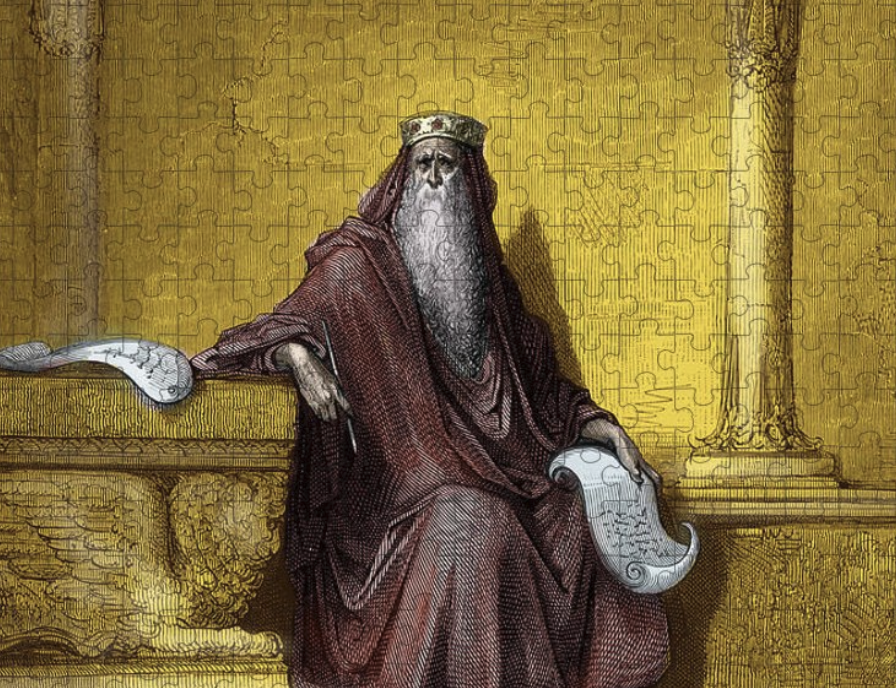
Among them King Solomon, whose 40-year reign began 2,993 years ago, ranks with his father David in significance.

This ever-fascinating figure, portrayed onscreen by the likes of Yul Brynner (1959) and Ben Cross (1997), led Israel to its zenith of peace, prosperity, cultural sophistication and international stature. And yet a 2011 biography by Wheaton College President Philip Ryken demeans him with the title “King Solomon: The Temptations of Money, Sex, and Power.” Various Jewish legends outside the Bible both exaggerate his magnificence and the opposite, claiming his subjects rejected him and he died penniless.

I Kings 1–11 and parallels in II Chronicles 1–9 are the primary sources on his career (here using the Jewish Publication Society translation). King David and Bathsheba lost their first child, a son, as divine retribution for the adultery, homicide and deceit that led to their marriage. Solomon (whose name meant “peace” or “wholeness,” also named Jedidiah, meaning “beloved of the Lord”) became their oldest son and favorite.

David had prior sons by other polygamous wives and the oldest, Adonijah, had a strong dynastic claim to the throne, but the aging David had instead designated Solomon, who was probably age 14 when he took charge. The young king mastered palace intrigue and eventually executed Adonijah and his key supporters. “Thus the kingdom was secured in Solomon’s hands.”

Despite that turbulent start, Solomon — like his father — was devoted to the one true God and his commandments as the foundation of the regime. A crucial moment occurred several years into Solomon’s reign. God appeared to the king in a dream and asked what gift he desired. Solomon replied that he was “a young lad with no experience in leadership” and therefore needed most “an understanding mind to judge your people, to distinguish between good and bad.”


Please respect our Commenting Policy

Dear religion-beat pros: Sometimes small religious denominations merit a bit of attention

Dear religion-beat pros: Sometimes small religious denominations merit a bit of attention

With American public space monopolized by furor over abortion and also about sexual abuse in the huge Southern Baptist Convention, it seems eccentric to mention small Protestant denominations. But sometimes these flocks produce news and highlight developing trends that may merit news attention.

Consider actions in recent days by the Presbyterian Church in America (PCA) and Christian Reformed Church (CRC). [Disclosure: The Religion Guy is a longtime CRC member though not directly involved in the matters at hand.] These two bodies, generally similar in terms of Calvinist theology, exercise influence in the wider American evangelical marketplace of ideas that far exceeds their modest numbers.

The CRC, founded in 1857, has declined to 205,000 members in the U.S. and Canada. The PCA, launched in a 1973 southern breakaway among Presbyterians has added northern go-getters to reach a U.S.-only membership of 378,000. More liberal “mainline” Presbyterians dropped from 4 million in 1970 to a current 1.2 million.

The CRC and PCA were the largest church bodies in the conservative North American Presbyterian and Reformed Council until 2002, when the council terminated CRC participation for allowing female pastors and lay officers. Both denominations remained members of the National Association of Evangelicals (NAE) until last week, when the PCA quit the cooperative organization. Oddly, NAE President Walter Kim (contact: walter.kim@trinitycville.org), a Harvard Ph.D., is a PCA minister who led an important PCA church in Charlottesville, Va., and is now its “teacher in residence.”

Politics is involved in all of this, of course.

The PCA cited Presbyterians’ Westminster Confession of 1646, which declares that church bodies deal only with internal religious issues and “are not to intermeddle with civil affairs” except in “extraordinary” cases. The NAE indeed addresses many societal topics. The PCA lamented its policy statements on the environment, immigration, the death penalty and, especially, support of proposed “Fairness For All” legislation to acknowledge LGBTQ legal protections in return for religious-liberty guarantees.

Yet the PCA itself has issued statements on abortion, AIDS, alcohol, child protection, education, homosexuality, medical insurance, nuclear power, pornography and race relations. Does PCA separation from NAE-style evangelicals move it toward what we used to call cultural and religious “fundamentalism”?


Please respect our Commenting Policy

What's news? Attacks on Christians in Nigeria provide an important case study

What's news? Attacks on Christians in Nigeria provide an important case study

As an undergrad, The Religion Guy took a valuable course titled “Evaluation and Display of News,” an elemental skill for journalists who cope with difficult choices.

Take the Johnny Depp-Amber Heard trash-a-thon. Please. Just as car crashes produce rubbernecking, “human interest” justified vast voyeurism that fed the market and stole print space and air time from more substantive stories.

Editors’ tendentious coverage decisions continually erode public trust in the media. Liberal outlets give scant play to the assassination plot against Brett Kavanaugh, harassment of other Supreme Court justices and their families and related attacks on a couple dozen pro-life agencies. Meanwhile, conservatives downplay the near-miss danger to Vice President Mike Pence and other high officials amid the January 6 attempt to block the Constitution’s election process.

The Guy could list other examples from both sides, and so could you.

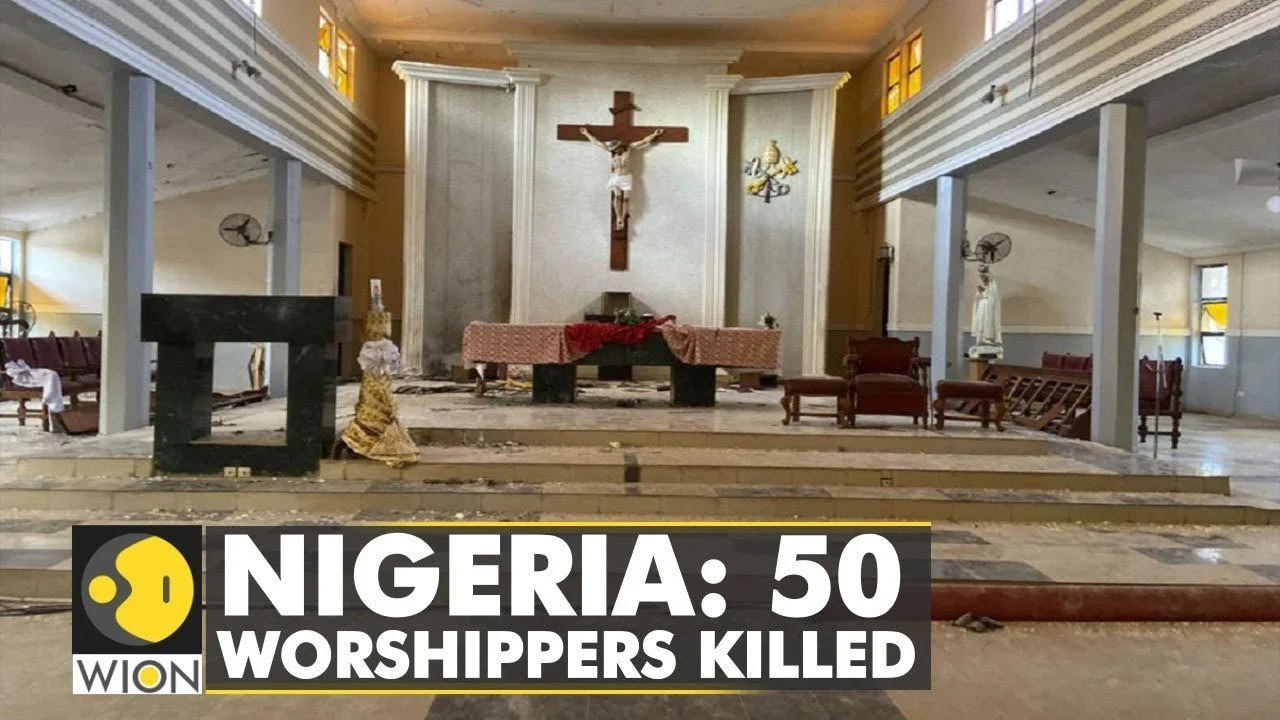
Let’s leap across the Atlantic to assess neglectful news judgment regarding the important plight facing Christians in Nigeria. Their continual conflict with Muslim jihadi factions has left an estimated 37,500 dead since 2011, says the latest annual report (.pdf here) from the U.S. Commission on International Religious Freedom (www.uscirf.gov; contact media@uscirf.gov or 202–523–3240).

The nondenominational watchdog group Open Doors USA says that in 2021“more Christians were murdered for their faith in Nigeria than in any other country,” making up nearly 80% of Christian deaths worldwide. Nigeria is the “most dangerous place to be a Christian” in the world, says the Intersociety for Civil Liberty and Rule of Law, a Nigerian human rights monitor. Christian observers speak openly of “genocide.”

In addition to the deaths, it’s all but impossible to count up the maimed victims who’ve survived, the kidnapped schoolchildren and clergy, forced child marriages and forced conversions or the widespread destruction of Christians' churches, homes, shops and even whole villages.

Sounds like compelling news from here.


Please respect our Commenting Policy

Question for Catholic politicos and others: Who receives Holy (Christian) Communion?

Question for Catholic politicos and others: Who receives Holy (Christian) Communion?

THE QUESTION:

Who should receive Christian Communion?

THE RELIGION GUY’S ANSWER:

By coincidence, Christianity’s practice for sharing the Communion bread and wine (or juice) is popping up in two separate controversies.

Item: San Francisco’s Archbishop Salvatore Cordileone sparked an ongoing fuss with his May 19 declaration that Speaker of the House Nancy Pelosi is not to receive the sacrament at Masses in her hometown because she vehemently advocates liberal abortion laws while openly identifying as Catholic.

Item: On June 27, Episcopal Church delegates will confer online on whether the agenda at a national convention in Baltimore July 8–11 will take up a radical proposal to offer Communion to people who are not baptized and thus not affiliated with the Christian religion.

Let’s first walk through the Catholic situation. Last year the U.S. bishops debated whether a forthcoming policy statement on the sacrament of Communion would address the fitness of pro-choice Catholic politicians to receive the elements at the altar. The advent of an ardently pro-choice and actively Catholic President, Joseph Biden, energized the discussion.

Kansas Archbishop Joseph Naumann, who chairs the U.S. bishops’ committee on pro-life issues, said it’s “a grave moral evil” to identify as Catholic and advocate open abortion choice “contrary to the church’s teaching.” In the end, however, the bishops’ statement sidestepped the problem.

Cordileone’s related stance toward Pelosi has been joined by the bishops of neighboring Santa Rosa, California; Tyler, Texas; and Arlington, Virginia. But policy on this is set by each local bishop and in Cardinal Wilton Gregory’s Washington, D.C., Pelosi has no problem finding a church to receive the sacrament.

In a similar action, on June 6 Denver Archbishop Samuel Aquila and three other Colorado bishops asked Catholic state legislators who voted for an abortion rights bill to “voluntarily refrain” from taking Communion.

Cordileone explained that he is simply implementing canon law, which prescribes that parishioners “who obstinately persist in manifest grave sin are not to be admitted to Holy Communion” (#915).


Please respect our Commenting Policy