Richard Ostling

Once again, secular science commends a religious instinct and outlook (think compassion)

Once again, secular science commends a religious instinct and outlook (think compassion)

Here’s new secular social science research that’s drenched with religious significance just waiting for examination by journalists.

Over the years, a substantial body of evidence from blue-ribbon universities and medical schools has demonstrated the physical and psychological benefits of regular religious involvement. A January Guy Memo here at GetReligion featured one such new study and then there’s that pioneering Mayo Clinic report from 2001 (.pdf here).

Note to journalists: The impact on life outcomes of youths who are raised in religious homes is especially striking.

Consider the 2019 book “Compassionomics: The Revolutionary Scientific Evidence That Caring Makes a Difference” by physicians Anthony Mazzarelli and Stephen Trzeciak, who are administrators and researchers at New Jersey’s Cooper University Health Care and Cooper Medical School. They reported evidence that health care staffers’ compassion toward patients has a powerful impact on improving both patient outcomes and the workers’ own well-being.

No kidding.

A new book by the same co-authors, going on sale June 21, dramatically extends the concept: “Wonder Drug: 7 Scientifically Proven Ways That Serving Others is the Best Medicine for Yourself” (St. Martin’s Essentials; contact publicity@stmartins.com). The Guy has not read the book but the news potential is obvious from a CNN interview with Mazzarelli last Saturday (click here for transcript).

Think of it as doing well by doing good.

From biblical times to the present, people have been urged to be helpful to others because (1) your Creator requires it and (2) it’s the right thing to do. The two clinicians tell us that a consistent commitment to helping other people is great for you in all kinds of medically provable ways and is thus the “wonder drug” of their title.

Please respect our Commenting Policy

Vatican game that never ends: Knowns and unknowns with covering next papal election

Vatican game that never ends: Knowns and unknowns with covering next papal election

It might seem ghoulish to outsiders, but the media have a duty to closely monitor news personalities’ retirement plans, health woes, aging processes and impending deaths, whether that of a British queen, U.S. president, Supreme Court justices, tycoons or even Hollywood superstars.

Or a pontiff.

Currently, there’s a season of speculation about Pope Francis’s future and whether his newly chosen cardinals to be installed August 27 are his final bid to shape the conclave that will elect the next pope.

Careful. If you figure he’s making sure it will be a fellow liberal, don’t forget that the conservative Popes John Paul II and Benedict XVI named the cardinals who elected Francis.

Speaking of successors, AP Correspondent Nicole Winfield follows the Rome bureau’s legendary Victor Simpson, who covered four popes across 41 years. On Sunday, she knowledgeably sifted some Francis scenarios.

Francis has just announced that when the cardinals gather in August he’ll visit the Italian hometown of Celestine V, the pope who famously resigned in A.D. 1294.

Surprisingly, Benedict did the same in 2013. So, is this trip a signal, or only a trip? Francis has remarked that Benedict was “opening the door” for resignation by future popes, hinting he might consider the idea. But Vaticanologists figure Francis will not resign so long as another ex-pope is alive.

At age 95, Benedict is alert but frail. Francis, age 85, appears reasonably healthy but underwent colon surgery last year and recently appeared in public in a wheelchair for the first time due to chronic knee pain.

Then there’s this. The cardinals elected Francis partly in hopes he’d reform the perpetually troubled Roman Curia (as in the sprawling Vatican bureaucracy). Restructure is now set in a Francis edict that took effect on Sunday. But fully implementing the scheme may be thorny and Francis may feel a responsibility to pursue his project.

Surveying the batch of incoming cardinal electors, Bishop Robert McElroy of San Diego stands out as the only American and as a mere bishop, not an archbishop (see this tmatt “On Religion” column about this drama). Francis again snubbed nearby Los Angeles Archbishop Jose Gomez, the Mexico-born head of the nation’s largest archdiocese and the elected president of the U.S. bishops. Did membership in the Opus Dei organization count against him?


Please respect our Commenting Policy

Should religion influence U.S. public policy? It always has, on both the left and right

Should religion influence U.S. public policy? It always has, on both the left and right

THE QUESTION:

Should religion influence U.S. public policy? For instance, look at Protestants.

THE RELIGION GUY’S ANSWER:

The media occasionally press this question upon us as, as with a timely May article by Religion News Service columnist Jeffrey Salkin titled “Should religion influence abortion policy?

He thinks not. Salkin acknowledges that “religious ideas are part of the public discourse” but even so “those ideas cannot determine policy. Public policy must be open to rational discourse, with provable data, and not merely rely on beliefs, however sacred their sources.” (Naturally, pro-lifers would reply that they rely on “rational discourse” and “provable data” from biology.)

He continues, “America does not allow you to turn your own religion’s theological ideas into public policy. ... This way lies chaos, and worse — holy wars between religious groups. This way lies a return to the Middle Ages. It is time for all religious people to call: Time out.” For Salkin, this approach is required by freedom of religion — or perhaps should we say freedom from religion?

Salkin champions the pro-choice public policy advocated by this own faith, Reform Judaism, which puts this among 17 causes on the agenda of its Washington lobby.

The pro-lifers believe laws should protect the tiny human life growing in the womb. Faiths such as Reform Judaism oppose such protection, believing that women must exercise unimpeded abortion choice. To a journalist, religious alliances on both sides seek to impose their belief as public policy.

Whether America’s religious groups should try to influence policy, they’ve in fact done so since Plymouth Rock and will continue to under the Bill of Rights. Reminders. As much as anything it was Christian zeal that led to abolition of slavery — and 620,000 Civil War deaths. Similarly with the colonists’ rebellion against Britain, women’s vote and, in a remarkable demonstration of Protestant power now mostly regretted, nationwide alcohol Prohibition written into the Constitution.

Which brings us to very important but oft-neglected history depicted convincingly in the new book “Before the Religious Right: Liberal Protestants, Human Rights, and the Polarization of the United States” (University of Pennsylvania Press) by University at Buffalo historian Gene Zubovich.


Please respect our Commenting Policy

Journalists might ask: Did fundamentalists actually win their debate with modernists?

Journalists might ask: Did fundamentalists actually win their debate with modernists?

Countless sermons each weekend may prove inspiring for American churchgoers, but historians “will little note nor long remember” most of them.

One great exception, titled “Shall the Fundamentalists Win?,” was delivered 100 years ago this spring by the Rev. Harry Emerson Fosdick at New York City’s First Presbyterian Church.

Fosdick threw a bright spotlight on the “Fundamentalist-Modernist controversy,” both predicting and demanding that his fellow modernists would win the era’s theological war. The Presbyterian Church had been debating whether to expel biblical liberals since 1892 and in 1910 mandated what later became known as the “five points of Fundamentalism.”

Yes, some of the pioneers of the “fundamentals of the faith” were part of the old Protestant mainline.

Fosdick’s oration attacked three of these beliefs, including the necessity of belief in Jesus Christ’s literal Virgin Birth and Second Coming. But his third target was pivotal, the contention that as the inspired Word of God, the Bible is free of error on history as well as spiritual and moral teachings. Fosdick conveyed the canard that this meant God “dictated” the words to earthly stenographers and then championed “progressive” revelation as promoted by scholarly biblical criticism. (Along the way he remarked that rigid interpretation of the Quran was a similar “millstone about the neck” for Islam.)

A dictionary note is required here. Fosdick defended what he called “evangelical” religion, using the word to broadly signify Protestants of whatever theology. In the 1940s, conservative Protestant foes of the modernists began embracing that same word to distinguish themselves from the unpopular hard-line “fundamentalists.”

Got that? The label has stuck ever since, though some contend it now signifies a Republican political bloc more than a theological movement.


Please respect our Commenting Policy

Top U.S. evangelical seminaries, and seminaries in general, face critical financial issues

Top U.S. evangelical seminaries, and seminaries in general, face critical financial issues

On Memorial Day weekend in 1944 an adventurous group of evangelical Protestants filled the rented Orchestra Hall to launch "Chicagoland Youth for Christ."

The preacher for that day was an unknown greenhorn from a modest suburban church, the Rev. Billy Graham by name. Soon Youth For Christ was staging rallies every week at the Michigan Avenue musical shrine, with Graham as its first full-time evangelist. On Memorial Day weekend 1945, an even more audacious breakthrough event drew 60,000 or more to Soldier Field.

What was the origin of America's oft-rambunctious, complex and remarkably successful evangelical Protestant movement as we have come to know it?

Some will cite the 1942 formation of the National Association of Evangelicals by conservatives — including many in mainline Protestant churches — fleeing the old "fundamentalist" brand. But The Guy contends it was those Chicago spectacles leading into a nationwide "parachurch" organization with Graham as its charismatic leader.

The media and their audiences tend to see evangelicalism in terms of star preachers, megachurches, media, music, missions and more recently immersion in Republican political wars. Oh, yes, and scandals.

But the movement cannot possibly be understood apart from its beliefs as propounded by thinkers at graduate-level divinity schools and the students they trained. Their impact has been profound, and global in scope.

Three multi-denominational seminaries led the way, and their current woes — part of negative trends in theological education as a whole — are worth substantive journalistic analysis.

* Fuller Theological Seminary in Pasadena, California was the pioneer, founded in 1947, with Graham as a long-time backer and board member.


Please respect our Commenting Policy

That big abortion scoop that Time forgot, and other tales from the news magazine era

That big abortion scoop that Time forgot, and other tales from the news magazine era

Nostalgia time (or even Time).

Many articles have chronicled the shrinkage of America's newspapers, but last week The New York Times reminded us of other print media carnage in feature titled, in the print edition, "Where Have All the Magazines Gone?" Online, that’s “The Magazine Business, From the Coolest Place to the Coldest One.

Alexandra Jacobs lamented the decline or demise of "the slicks" of yore with their cash, cachet and celebrity editors, naming no less than 30 of them. Their fall is "deeply felt," she confessed, and causes a "strange ache." The mags filled the dual role of both "authoritatively documenting" events of the day and "distracting from them," offering their readers stylish and entertaining fluff.

Also last week that first aspect, news gathering, was featured in a magazine that survives and thrives, The New Yorker. A "Talk of the Town" item brought to mind the old Time-Life News Service, whose corps of staffers and stringers served those two weeklies, with reporting exploits that were often anonymous and unheralded.

Remarkably, Time is still in print and marks its centennial next March. Disclosure: The Guy was a Time-Life correspondent before and after two decades writing Time's religion section.

The whole country is chattering about Politico's revelation of a draft Supreme Court majority ruling that in coming weeks will presumably return abortion for decisions by each of the 50 states.

That’s a huge scoop. But few recall that Time scored an equally big scoop when the 1973 Roe v. Wade ruling abolished all abortion laws nationwide?

Enter David Beckwith, a young Washington Bureau hire fresh out of the University of Texas Law School. Roe was a Texas case and Beckwith perked up when the Washington Post -- in the barely-noticed July 4 edition -- ran an odd item lacking byline or named sources with inside dope on the Supreme Court's abortion deliberations coming up for an unusual re-hearing.

Beckwith spent subsequent months cultivating sources, gathered string, and was first in print the following January 22 flatly asserting the sensational news that the high court would soon order legalized abortion across the nation.


Please respect our Commenting Policy

While polls show ambivalence, SCOTUS striking down Roe would let each state decide

While polls show ambivalence, SCOTUS striking down Roe would let each state decide

According to the Gallup Poll, 49% of American adults called themselves "pro-choice" last year versus 47% "pro-life," with the second designation chosen by 73% of those who attend worship weekly and 74% of Republicans.

The over-all population posted the same virtual tie in each of the prior three years. Journalists, by the way, should note that Gallup's question defied the widely-followed Associated Press Stylebook, which despite some criticism rejects both of those familiar labels in favor of "abortion-rights" versus "anti-abortion" while disallowing "pro-abortion."

After last week's leak to Politico of a Supreme Court draft opinion that would return abortion policy-making to each state, the Pew Research Center (media contact 202-419-4372) released poll results that are vitally important for media analysis.

Here’s where the stories will be found: The Pew team warns against Gallup's two-sided breakdown above, since "relatively few" Americans "take an absolutist view" for or against legality in all circumstances.

Much ambivalence is evident. Fully 33% of Pew respondents believed that whether to abort should "belong solely to the pregnant woman" (and 72% among Americans over-all) AND at the same time believed that "human life begins at conception so a fetus is a person with rights" (held by a 56% majority of Americans).

The Pew data fill a 78-page report, titled "America's Abortion Quandary." As typical with Pew, the new survey stands out for the precision and variety of questions, special skill in defining religious sectors (though this project does not distinguish between Hispanic and non-Hispanic Catholics), the huge sample of 10,441 (compared with 1,016 for that Gallup poll) and consequently a remarkably high response rate of 89% among members of Pew's ongoing American Trends Panel.

Another technical note on polls. Regarding political races they are often more accurate on the national level than with state races. And the Supreme Court draft indicates abortion policy will be returned to each individual state — so that's where legal and political fireworks will occur unless efforts in Congress succeed.


Please respect our Commenting Policy

Was Jesus a socialist? Concerning the 'rich young ruler' and modern economics

Was Jesus a socialist? Concerning the 'rich young ruler' and modern economics

THE QUESTION:

Was Jesus a Socialist?

THE RELIGION GUY’S ANSWER:

Well, no. For one thing, that term, as with rival capitalism, pertains to modern industrialized society.

The 1st Century economy consisted mostly of hand-to-mouth subsistence agriculture, along with fishermen, small-time merchants, individual craftsmen and a tiny class of wealthy overlords. But the question above was posed this month by a Wall Street Journal column, so let’s briefly scan a few aspects of Christianity and economics.

Those familiar with the New Testament will immediately think of the incident between Jesus and the “rich young ruler” recorded in three of the four Gospels (here we’ll follow Luke 18:18-27 in the RSV translation).

The ruler asks Jesus, “What shall I do to inherit eternal life?” Jesus recites several of the Ten Commandments that are to be obeyed. The ruler replies that he has done this since his youth. Jesus then tells him “one thing you still lack. Sell all that you have and distribute to the poor, and you will have treasure in heaven; and come, follow me.” The ruler “became sad, for he was very rich.”

Jesus then observes, “How hard it is for those who have riches to enter the kingdom of God! It is easier for a camel to go through the eye of a needle,” but he concludes, “What is impossible with man is possible with God.”

You can have some fun checking out commentaries on this passage online or in your local library. Softening the force of Jesus’ words (a bit too easily?), Bible experts often say this was a unique saying for one individual who was perhaps stingy and had set his heart too much on his wealth while neglecting God’s priority, that He be served through service to his needy people.

Whatever the ruler ended up doing with his wealth, we are familiar with Catholic men’s and women’s orders where those who join take voluntary vows of poverty and keep only minimal personal possessions, and the same in Buddhism.


Please respect our Commenting Policy

Alongside abortion, don't neglect the Supreme Court's big school prayer ruling

Alongside abortion, don't neglect the Supreme Court's big school prayer ruling

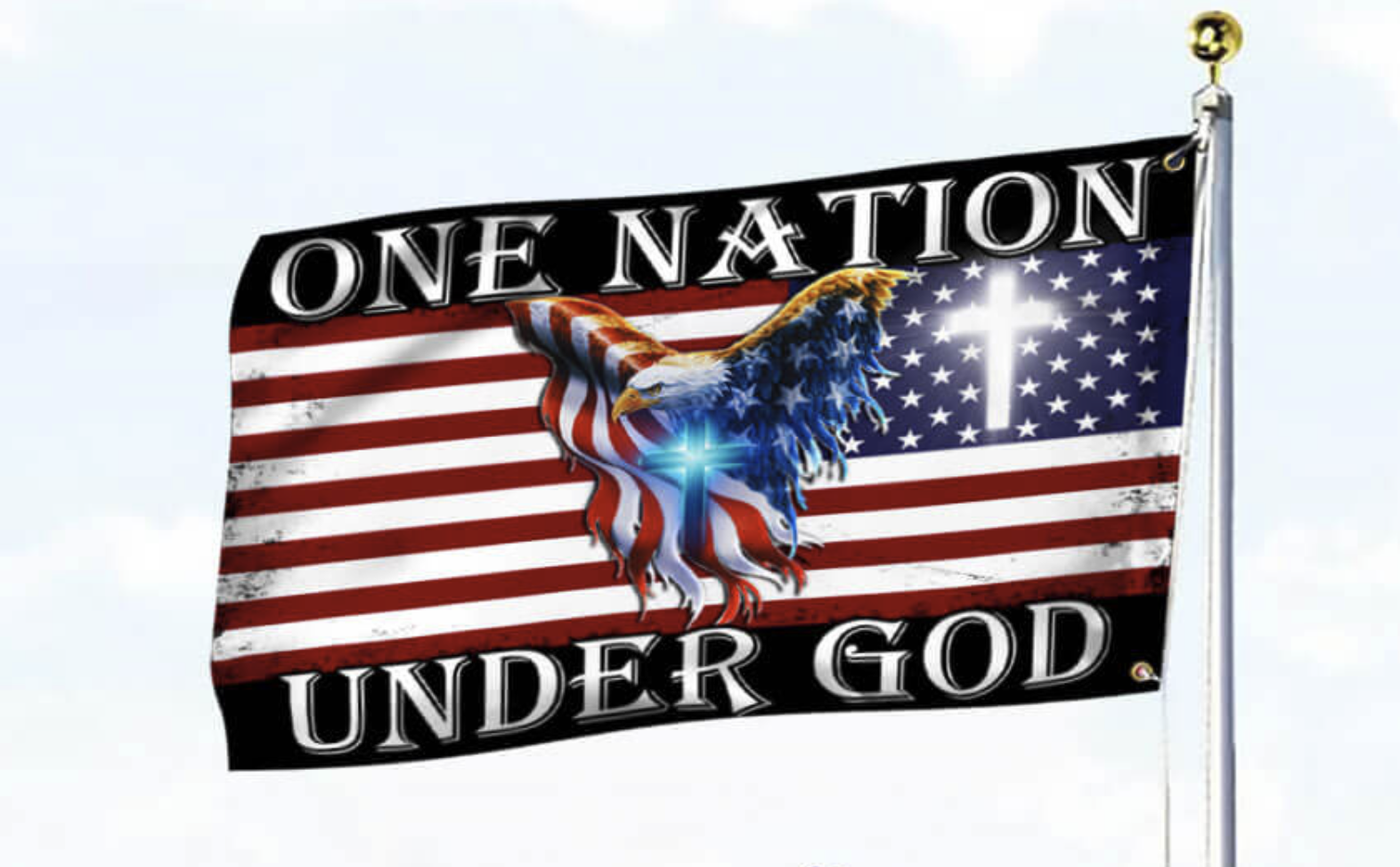
Vastly overshadowed by the uproar over Politico's bombshell report that the Supreme Court may be poised to overturn past abortion rulings, the court actually released religious-liberty ruling written by retiring Justice Stephen Breyer. His Shurtleff v. City of Boston opinion (.pdf here) reasoned that since Boston had permitted 284 city hall flag displays by varied groups, it violated freedom of speech to forbid a Christian flag for fear of violating church-state separation.

Harvard Divinity student Hannah Santos, writing for Americans United, said Christian flag displays would be "disturbing and demoralizing" and evoke the Puritan founders' "cruel" intolerance. But Breyer and the other two liberal justices joined six conservatives in this unanimous — repeat unanimous — decision.

There's likely to be less Court concord on another First Amendment ruling reporters need to prepare for in coming weeks. This dispute crisply demonstrates the culture-war split among American religious groups and between most Democrats and Republicans.

Kennedy v, Bremerton School District [Docket #21-418] involves the firing of Joseph Kennedy, an assistant high school football coach in Washington state. He violated the school's order against his kneeling to utter brief prayers on the 50-yard line after games, with students who wished joining him.

Here, too, Kennedy's freedoms of speech and religion ran up against school fears about violating the Constitution's clause barring government "establishment of religion." Click here for a recent Julia Duin post looking at some of the media coverage of this debate.

In preparing coverage to interpret the forthcoming ruling, keep in mind possible ramifications beyond the gridiron. As Christianity Today reported, hypothetical situations the justices discussed during the two-hour oral argument included teachers or coaches praying silently or aloud or reading the Bible before class, coaches praying on the sidelines perhaps with specific notice that students weren't required to pray or that they cannot pray or a player simply making the sign of the cross.

Also this. A court filing from the Jewish Coalition for Religious Liberty and the Islam team at the Religious Freedom Institute informed the justices that observant Jewish teachers and coaches need to speak brief public blessings before eating or drinking, and that Muslims must join daily prayer times during public school hours or while chaperoning a field trip.


Please respect our Commenting Policy