Richard Ostling

What is religion's role if powerful social media trends are endangering America?

What is religion's role if powerful social media trends are endangering America?

Whew! Within a matter of days Elon Musk bids $44 billion to get full control of Twitter, Netflix's market value plummets $54 billion, Florida's conservative version of "cancel culture" penalizes the Disney empire, and CNN kills off its streaming service in a month after investing $300 million -- perhaps the worst industry flop since Time Warner's 2001 merger with AOL.

Anchor Kasie Hunt, who left MSNBC for CNN+, embraced a life-goes-on attitude: "The news is the news is the news is the news." (She was quickly named CNN's Chief National Affairs Analyst.)

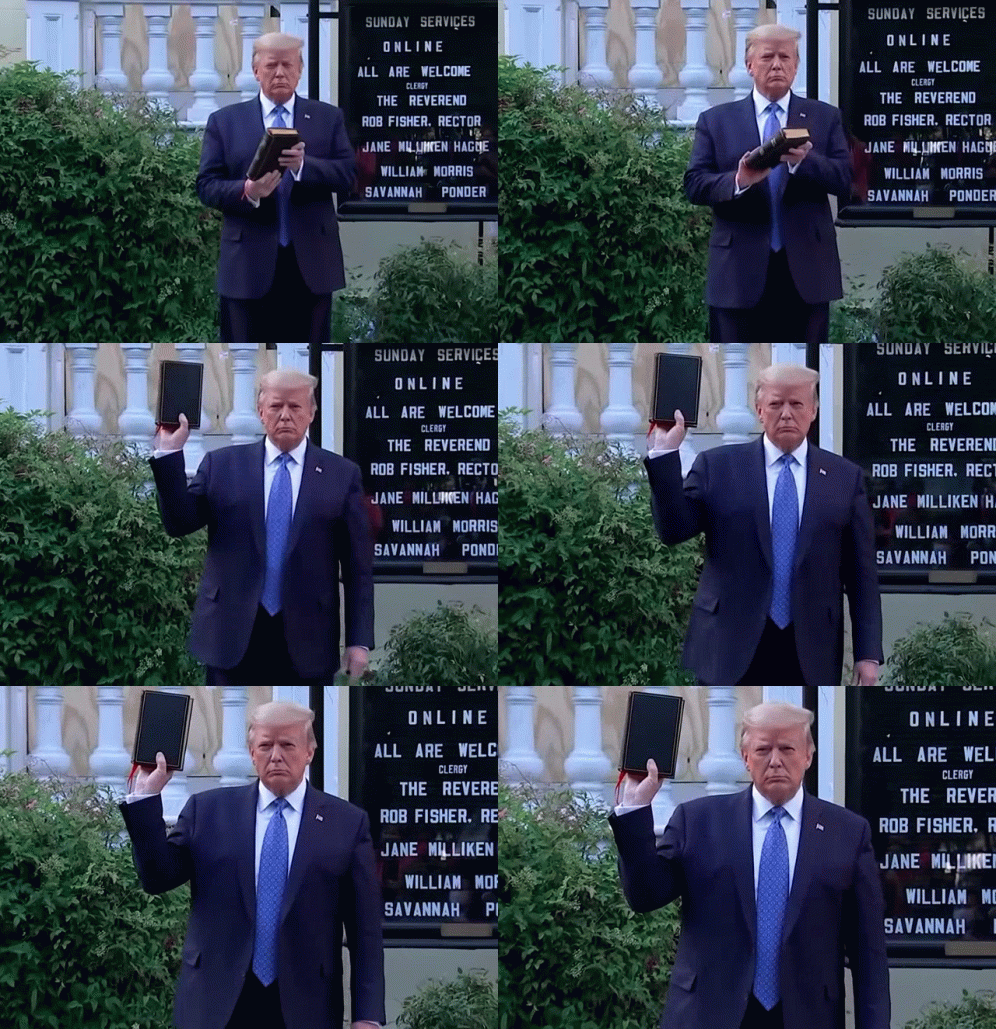
By the way, a certain influential newspaper in New York City also named a new team of top editors. Did you see those photos of incoming editor Joseph Kahn?

Maybe all that media turbulence is far less important than the inexorable accumulation of 21st Century cultural power by Twitter and other "social media: giants.

Thus, readers will want to consider this warning from Jonathan Haidt, a social psychologist at New York University's business school, in the May issue of The Atlantic: “Why the Past 10 Years of American Life Have Been Uniquely Stupid.”

American democracy is now operating outside the bounds of sustainability. If we do not make major changes soon, then our institutions, our political system, and our society may collapse during the next major war, pandemic, financial meltdown, or constitutional crisis.

Religion writers: Despite Haidt's imagery of failed communication taken from the biblical Tower of Babel (Genesis 11:1-9), his article sidesteps whether faith groups could help restore societal calm and how they're being reshaped by ubiquitous media. Perhaps he'll get into that in his book "Life After Babel Adapting to a World We Can No Longer Share," due from Penguin next year.

Though critics often say conflicting religions erode social cohesion, is it only coincidence that organized religion's slump to near-Depression status since A.D. 2000 occurred simultaneously with the disintegration Haidt decries?
Please respect our Commenting Policy

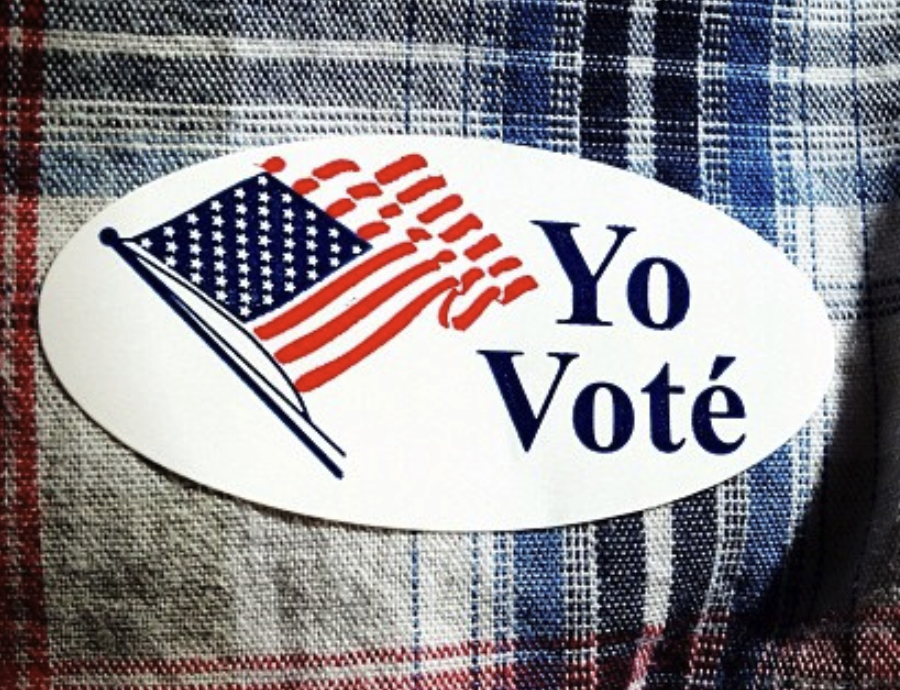
Could Hispanic-Americans, Protestants especially, shape the '22 and '24 elections?

Could Hispanic-Americans, Protestants especially, shape the '22 and '24 elections?

Something is afoot when two New York Times columnists, Charles Blow on the left and Ross Douthat on the right, both make the identical observation in Monday's edition.

Blow, who fears a "Biden blood bath" in the November midterms, underscored that Quinnipiac polling shows President Joe Biden's approval rating is even lower among Hispanics than whites, partly because "Hispanics hew conservative on some social issues." Douthat wrote that to win, Democrats need to do better with two groups from the Barack Obama coalition that have drifted rightward since, "culturally conservative Latinos and working class whites."

The 2020 election was a landmark for this community with an estimated 16.6 million voters, a record proportion of the electorate. There are a number of good analyses of the 2020 Hispanic vote online to consider. A Bloomberg piece reminds us "the Latinos of the United States have no single identity, no shared world view."

This article notes that Donald Trump won 53.5% in majority Hispanic precincts in Miami-Dade County on the way to carrying all-important Florida with its 29 electoral votes. Understandable aversion to any hint of "socialism" by those from Cuba, as well as Nicaragua and Venezuela, no doubt helped. In Arizona's populous Maricopa County, Trump improved his showing over 2016 in 61% of Hispanic-majority precincts. Exit polling said Trump improved over 2016 in Nevada by 8%. Other reports cited similar shifts in southern border areas of Texas. In 2004, George W. Bush proved Republicans can obtain a handsome number of Hispanic-Americans.

GetReligion's own tmatt has more than once proposed that the news media have neglected the religion aspect of recent Republican inroads and, in particular the growth of Hispanic Protestant churches. This is a big religion beat story in its own right. Or it could provide a strategic political analysis leading up to November 8 focusing either on politics nationally or on a specific regional audience.

The essential starting point for background is religion data from Pew Research Center's major survey of 5,103 U.S. Hispanic adults, in a report compiled in 2014.


Please respect our Commenting Policy

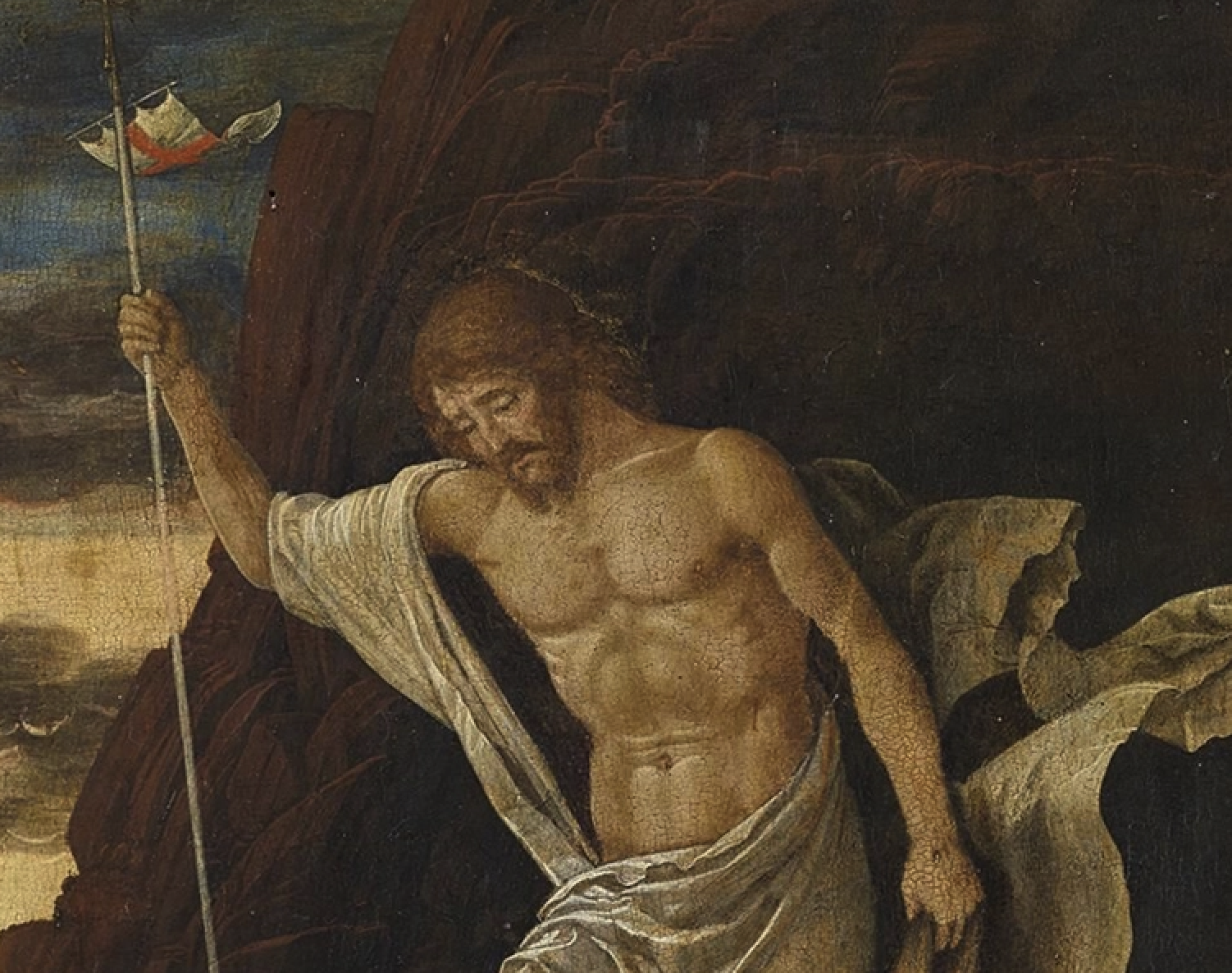
Just in time for Easter media and academic discussions: Did Jesus Exist?

Just in time for Easter media and academic discussions: Did Jesus Exist?

THE QUESTION:

Did Jesus Exist?

THE RELIGION GUY'S ANSWER:

Yes.

It would be the ultimate blow to the Christian religion if Jesus, and with him the entirety of the New Testament, is totally fictional.

However, the strong consensus among historians, including non-Christians and skeptics, is that, yes. Jesus was an actual person of the 1st Century (Anno Domini!!). Yet an Ipsos poll for the Episcopal Church, released last month, showed only 76% of Americans "believe in the historical existence" of Jesus, with 89% of self-identified Christians, 43% for adherents of other religions and 38% among the non-religious.

Among scholars, across the years certain "mythicists" have contended that he never existed.

University of North Carolina Professor Bart Ehrman, author of "Did Jesus Exist?" (2012) and rather skeptical himself, knows of only one such thinker among thousands of scholars with Ph.D. degrees who are working in the New Testament field. He's Robert Price, a onetime Baptist minister, member of the radical "Jesus Seminar," and author of "The Historical Bejeezus" who teaches at Johnnie Coleman Theological Seminary, a "New Thought" school.

Other mythicists have included Frank Zindler, a science educator, Jesus Seminar participant, and an editor with American Atheists. In 1970, Doubleday published an eccentric book by Britain's John M. Allegro, who thought there never was a Jesus and Christianity originated as a drug cult. John Remsburg, a 19th Century superintendent of public instruction for Kansas, backed mythicism by listing 42 ancient authors never wrote about Jesus. (A newsman like The Guy would figure that's what you'd expect with an itinerant teacher executed as a criminal in a backwater of the Roman Empire.)

But Remsburg raised an interesting question. Let's say for the sake of argument we totally exclude the New Testament as evidence (which historians would never do in judging the existence of other figures from ancient times). Do we have any other relevant documentation?


Please respect our Commenting Policy

Is evangelical Protestantism breaking into five factions in the United States of America?

Is evangelical Protestantism breaking into five factions in the United States of America?

Let’s start with two quotes.

A weary grievance from the Bible: "Of making many books there is no end" (Ecclesiastes 12:12). The same can be said about endless journalistic articles trying to figure out what's with U.S. evangelical Protestantism in the age of Donald Trump -- saith The Religion Guy himself.

"A successful political movement must incorporate both elites and the people. Only intermittently, however, has the American right been able to achieve such a synthesis. That is why its victories have been so tenuous." So writes Matthew Continetti in "The Right," his new opus about U.S. political conservatism.

The Guy has taken Continetti's view regarding U.S. conservative Protestantism and is far more interested in the gap between its intellectual elite and the grassroots than e.g. the current hullabaloo over The New York Times describing worship mingling with Trumpified politicking by a segment of evangelicals (see tmatt post here).

Which brings us to a must-read article entitled "The Five Emerging Factions in Evangelical Higher Education" by Daniel K. Williams (contact: 678-839-6034 and dkwillia@westga.edu). He's a history professor at the University of West Georgia and author of "God's Own Party" (2010), and "The Politics of the Cross" 2021).

Williams reflects on the recent convention of the Conference on Faith and History, an association of Christians who teach this subject at both secular and religious colleges. Crucial: He writes only about diverse camps among evangelical scholars and schools. But does this breakdown characterize U.S evangelicalism as a whole? He depicts five factions.

Culture warriors -- These political conservatives actively oppose socialism, critical race theory, feminism, the new sexuality and "cultural liberalism in all its forms," while embracing "Trumpist conservative partisanship." Such teachers at e.g. Bob Jones, Liberty and Regent Universities; Patrick Henry and Saint Andrews Colleges; and elsewhere rarely interact with "the rest of Christian academia."

Anti-nationalists -- These evangelicals mostly agree with the culture warriors on the issues but don't want to be "adjuncts of the Republican Party" and are anti-Trump.


Please respect our Commenting Policy

What do the latest statistics really tell us about the worldwide Catholic Church?

What do the latest statistics really tell us about the worldwide Catholic Church?

THE QUESTION:

What do the latest statistics tell us about the worldwide Catholic Church?

THE RELIGION GUY'S ANSWER:

The Vatican's Central Office of Church Statistics issued a summary report in February that says as of December 31, 2020, Catholicism had 1.36 billion adherents worldwide. That equals an impressive 17.7% of the world's people and keeps pace with over-all population growth. The church's gain of 16 million members over 2019 exceeds the combined populations of New York City, Los Angeles and Chicago.

The Guy would note, however, that the church counts as members all baptized infants, who as adults will not necessarily be active parishioners.

John L. Allen Jr., the editor of CruxNow.com and a go-to guy on Catholic trends, writes that these numbers counter western perceptions that "the church is shrinking" in the wake of sexual abuse scandals and other problems. Also see this tmatt post here at GetReligion on this topic: “Thinking about world Christianity, as Crux digs deep into many overlooked Catholic details.”

But Catholic expansion is centered in Africa and Asia, not western nations, and the church faces a personnel problem. The Vatican office admits that yet again there's an "obvious imbalance" in the geographical distribution of the slowly decreasing ranks of priests, currently totaling 410,219 worldwide. There's also declining enrollment in seminaries, now totaling just under 112,000, with only Africa showing an increase. Remarkably, Africa plus Asia produce 60% of the globe's seminary students. Here is another tmatt post on that trend: “Thinking about the Catholic vocations 'crisis': The Pillar asks if this is truly a global problem.

Let's drill down on the numbers.


Please respect our Commenting Policy

Ukraine war savagery will loom over this year's World Council of Churches Assembly

Ukraine war savagery will loom over this year's World Council of Churches Assembly

If Russian invaders continue their current aggression, how much of Ukraine will be turned to rubble and how many innocent civilians will be dead by August 31?

That's opening day for the 11th global Assembly in the 74-year history of the World Council of Churches (WCC). COVID willing, the delegates from 352 Protestant and Orthodox church bodies will be joined by thousands of observers, including Catholic and evangelical Protestant representatives.

The WCC has gotten little media ink in North America during recent times, but 2022 sparks obvious news interest in how the organization deals with the Ukraine imbroglio at the Assembly, which runs through Sept. 8 in Karlsruhe, Germany.

Media that do original international reporting and have the money should be laying plans to staff the event, which The Guy knows from covering the 1975, 1983 and 1998 Assemblies supplies numerous trend stories and features alongside the spot news. Reporters unable to attend in person should be lining up contacts to help interpret the goings-on long distance.

This is a critical moment for the WCC, Orthodoxy and global Christian unity. The Russian Orthodox Church, some of whose leaders have made public statements hacking Vladimir Putin's war, is by far the WCC's biggest member — claiming 113.5 million parishioners plus another 30 million in its Ukraine jurisdiction and with ties elsewhere. That compares with the WCC's reported over-all church constituency of 580 million.

On Sunday, former Archbishop of Canterbury Rowan Williams all but demanded that the WCC expel the Russian Orthodox Church from membership:

“The riot act has to be read. When a church is actively supporting a war of aggression, failing to condemn nakedly obvious breaches in any kind of ethical conduct in wartime, then other churches have the right to raise the question and challenge it — to say, unless you can say something effective about this, something recognizably Christian, we have to look again at your membership.”

Also last week, Bishop Rob Schenck of America's Dietrich Bonhoeffer Institute in Washington, D.C., took to Religion News Service to promote a Ukraine petition campaign. It urges the WCC to expel the Russian Orthodox from membership over Moscow Patriarch Kirill's "unholy compact" with Russian dictator Putin.


Please respect our Commenting Policy

Along the religion beat: Should 'mainstream media' pundits take sides on church disputes?

Along the religion beat: Should 'mainstream media' pundits take sides on church disputes?

The acerbic anti-Donald Trump conservative Jonah Goldberg says that — at National Review and currently TheDispatch.com — he has spent the past 25 years complaining about "liberal media bias."

But, he wrote last week, much has changed during that time with the breakup of America's onetime "hegemony" of three broadcast networks, the newsmagazines and a few influential newspapers. Now we have devoutly conservative news-talk radio and cable TV while infinite opinions of commentary and information overwhelm the Internet.

Then there's rising distrust in the news media, which The Religion Guy believes is a serious threat to healthy democracy. A Pew Research Center survey, reported last August, found that since 2016 the percentage of Americans with at least "some" trust in the national news media has slumped from 76% down to 58%, and among Trump-era Republicans and Republican leaners from 70% down to 35%.

Another simultaneous change, Goldberg said, is "the blurring of reporting with partisan punditry, particularly on cable news and social media." The Guy would contend that this distrust expands when partisan opinion seeps into or overshadows supposed hard news. (This is the spirit of our media age, since, as tmatt often observes here at GetReligion, opinion is cheap and actual reporting is expensive).

That brings us to religion coverage in the print media and the Internet (broadcasters and cable generally slight the beat) and a rather idiosyncratic must-read complaint about The New York Times from Hillsdale College historian D.G. Hart, posted at Real Clear Religion the same day as Goldberg's article. In case you missed it, the text is here.

Hart thinks the Times "rightly" figures that explicitly religious periodicals can handle faith news, which means he does not read the paper that closely (though it can be criticized for sins of omission). The article appears to suggest the Times and other outlets should downplay or eliminate attempts to do religion-beat reporting -- which would remove the very reason GetReligion exists.


Please respect our Commenting Policy

This is still a question that scholars debate: Why did early Christianity rise so rapidly?

This is still a question that scholars debate: Why did early Christianity rise so rapidly?

THE QUESTION:

Why did early Christianity rise so rapidly?

THE RELIGION GUY'S ANSWER:

New religions appear all the time, nowhere more than in the United States, but very few ever achieve prominence and permanence. Christianity is a rare and dramatic case of a faith that triumphed. The tale is told in Rodney Stark's classic "The Rise of Christianity" with this descriptive subtitle in the 1997 paperback edition (still on sale): "How the Obscure, Marginal Jesus Movement Became the Dominant Religious Force in the Western World in a Few Centuries."

Sociologist Stark is now retired as co-director of Baylor University's esteemed Institute for Studies of Religion. The book treats its subject as a puzzle to be explained by objective social science scholarship and does not consider whether Christian teachings are true.

Though we lack reliable census data, Stark's best estimate was that only 7,530 Christians existed at the close of the apostolic era in A.D. 100 [which conflicts with Acts 2:41]. He said the total exceeded 1 million by 250 when systemic persecution by the Roman empire was reaching its peak. The Edict of Milan in 313 allowed the faith to exist without harassment, and as of 350 there were 33.9 million Christians. Stark figured that was a 56.5% majority of the population. Inevitably, by 380 this became the empire's official creed.

What happened? Stark's scenario drew upon more than 300 works plus his own original research, and made heavy use of economic market theory. Let's skim some of what he concluded.

Stark thought Christianity's key advantages included the spread of Greek-speaking Jews across the Greco-Roman world who provided a base to build upon, the failures of rival paganism, attractive charitable efforts (especially during ruinous epidemics), innovative respect for women, high birth rates, good organization, close fellowship, demanding and respected moral standards, the inspiring example of martyrs willing to die rather than renounce their faith and positive doctrines that were attractive to new city dwellers coping with chaos and squalor.


Please respect our Commenting Policy

No longer a Ukraine news sidebar: Pope Francis asks if combat can ever be moral

No longer a Ukraine news sidebar: Pope Francis asks if combat can ever be moral

As Russia's invasion sought to erase Ukraine from the map, Moscow's Orthodox Patriarch Kirill, a key ally of dictator Vladimir Putin, met via video last week with Pope Francis.

The Religion Guy had planned to propose a wartime sidebar about the theological justifications for combat that could run any time, but suddenly the theme has gained timely mainbar status.

That's because an official Vatican release reported that Francis stated this at the meeting: "There was a time, even in our churches, when people spoke of a holy war or just war. Today we cannot speak in this manner. A Christian awareness of the importance of peace has developed. Wars are always unjust, since it is the people of God who pay."

Francis' 2020 encyclical Fratelli Tutti declared similarly that "it is very difficult nowadays to invoke the rational criteria elaborated in earlier centuries to speak of the possibility of a 'just war'."

Francis deplores the bloodshed in Ukraine, but did not publicly castigate Putin or Russia by name, presumably in case a neutral papacy could help negotiate an end to the conflict. (That argument is used to explain Pope Pius XII's silence during Nazi Germany's Holocaust against European Jewry.)

Journalists can, at this point, ask several logical questions:

* Is Francis declaring dead the church's "just war" teaching, first formulated in the 5th Century by St. Augustine?

* Should 1.36 billion Catholics shift to pacifism, which excludes support for all wars?

* Is Ukraine wrong to take up arms to defend its existence as a sovereign and democratic nation?

Nearly all Christian commentators agree that Russia's aggression is evil and Ukraine's military defense against it is justified.


Please respect our Commenting Policy