Richard Ostling

Twist on familiar assimilation questions: Where are trends leading Islam in U.K. (and U.S.)?

Twist on familiar assimilation questions: Where are trends leading Islam in U.K. (and U.S.)?

THE QUESTION:

Where are current trends leading Islam in the U.K. (and what about the U.S.)?

THE RELIGION GUY'S ANSWER:

As in the United States, the Muslim minority population is growing steadily in the United Kingdom, up 107% since 2001 to exceed 3 million -- even as participation in many Christian churches declines.

The odds are good that British society will be reshaped by the inner workings among followers of the world's second-largest religion. That underscores the importance of the new book "Among the Mosques: A Journey Across Muslim Britain" (Bloomsbury) by Ed Husain.

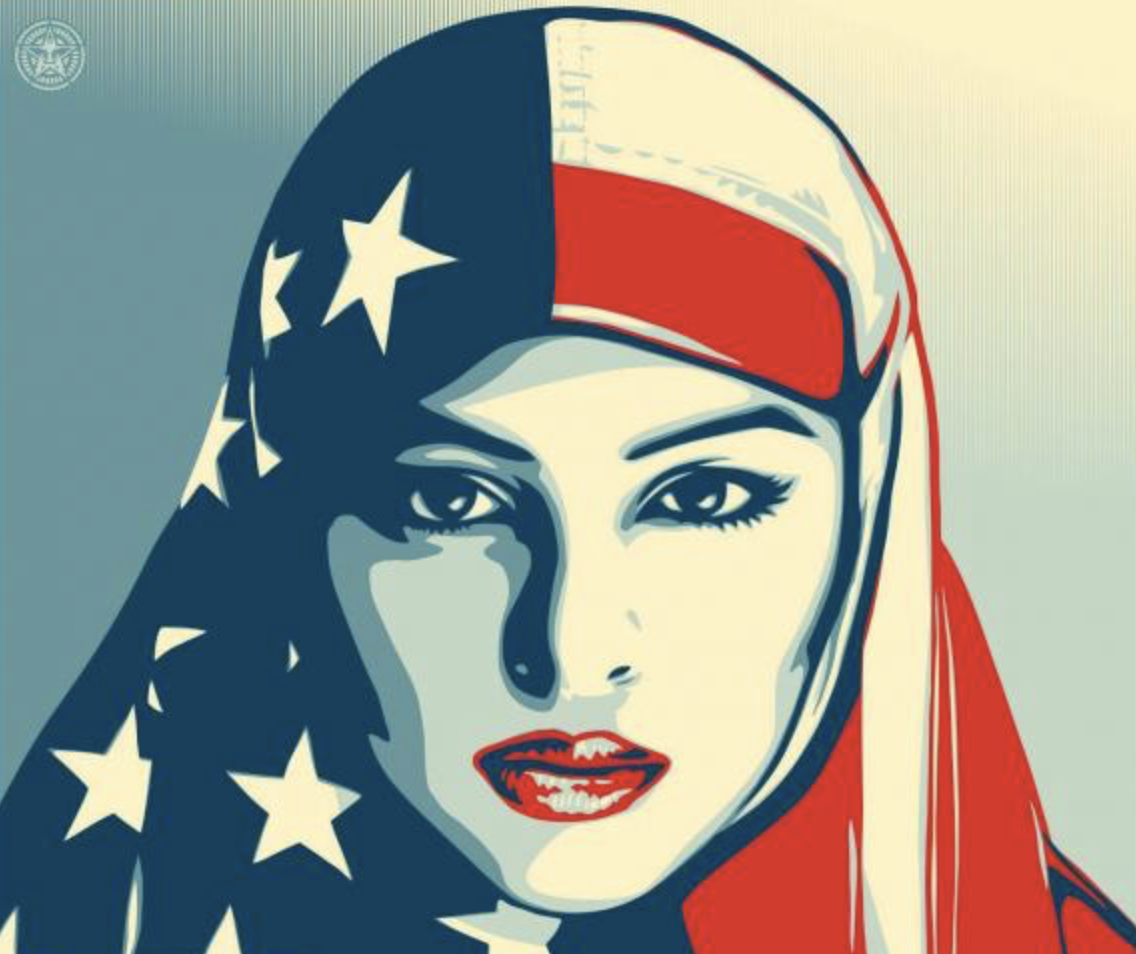
This depiction of Britain is rather unnerving, though France apparently faces a more fraught situation. There the enforcement of "laicite," rigid separation of religion from the state originally aimed at Christianity, limits sensitivity to Muslim concerns and adds to long-running alienation and failure to assimilate. Current disputes, for instance, involve public schools' headscarf bans and unwillingness to provide alternatives to pork on cafeteria menus.

British author Husain is a practicing Muslim, political consultant and adjunct professor at America's Georgetown University. A sympathizer with militant "Islamism" in his younger days, he now advocates a tolerant and modernized form of the faith and that shapes his narrative.

Just before COVID-19 hit, Husain toured London and five other cities in England, two in Scotland, and one each in Wales and Northern Ireland, mingling with fellow believers and non-Muslims at the grass roots to discern trends. His knowledge of the faith, reputation as an author on Islam, study overseas and command of languages like Arabic and Urdu aided the sort of access denied to outside investigators.

While older British Muslims tended to assimilate, he found, many more recent immigrants are suspicious or hostile toward their adopted nation and their neighbors, isolating to create what's somewhat a country within a country.
Please respect our Commenting Policy

For media exploration: Does church decline underlie what's depressing many Americans? 

For media exploration: Does church decline underlie what's depressing many Americans? 

Here's an off-the headlines theme for media to explore: To what extent does the slide toward a Great Depression for churches since 2000 underlie America's ills?

Think about it. Surveys and pundits underscore the rampant pessimism and dissatisfaction among many citizens, the toxic political divide and the way anything from calls for COVID vaccinations to Simone Biles's Olympics withdrawal will now stir partisan furies.

Consider ills that occurred simultaneously with weakened churches, bemoaned last week by New York Times columnist David Brooks. Major depression among teens jumped 63% from 2013 to 2016. Suicides increased 33% in the two decades ending in 2019. Estrangement from a family member is reported by 27% of Americans. Since 1990, those saying they lack even one close friend have quadrupled.

Such concerns evoke the classic book "Bowling Alone" by Harvard Professor Robert Putnam, a much-mulled 2000 tome now available in an updated 2020 edition. Not just bowling leagues but hyper-individualism, minus personal fellowship, is shrinking local lodges, civic groups and charities as well as churches. This seems to be an old problem (see the video with this post) that is only growing more intense.

The 2012 National Council of Churches yearbook (the 80th and last edition before publication ceased) reported that groups representing 330,222 local congregations claiming 159.8 million members filed data (a big undercount that omitted scads of independent churches). That was well over 20 times the current U.S. outlets for McDonald's or Starbucks. Big numbers, high stakes.

Local churches' centrality in community decline and prospects for recovery was asserted by Matt Lewis, a Daily Beast conservative, in an Eastertime piece (“America’s Losing Faith, and That Makes the Next Trump All But Inevitable“) and a follow-up last week (“How Trumpists Prey on Loneliness, and Loneliness Preys on Trumpists: Frankly, We Did Join a Cult“).

Lewis describes himself as a churchgoer (no specifics revealed) and "a (very flawed) Christian" who constantly needs God's forgiveness.


Please respect our Commenting Policy

Future scenarios emerge as the media debate the health of U.S. Mainline Protestantism 

Future scenarios emerge as the media debate the health of U.S. Mainline Protestantism 

What has long been called “Mainline” Protestantism suffered inexorable shrinkage this past generation, eroding so much of its once-potent U.S. cultural impact that the news media tend to neglect these moderate-to-liberal churches. Yet a new Public Religion Research Institute poll reported what it argues is a sudden comeback and indicates Mainliners even outnumber the rival conservative "evangelicals" widely thought to dominate Protestantism.

True? The Religion Guy assembled devastating statistics that raise questions about that claim.

U.S. religion's hot number-cruncher Ryan Burge is even more doubtful and notes the Harvard-based Cooperative Election Study found a recent rise in Americans who self-identify as "evangelical."

As reporters ponder that debate, they should also play out longer-term Mainline scenarios, for instance for the Episcopal Church and United Methodist Church.

The hed on another Burge article proclaimed that "The Death of the Episcopal Church is Near."

"I don't think it's an exaggeration at all to believe that Episcopalians will no longer exist by 2040," he contended.

His gloomy forecast relied partly on a stark, candid piece from the blog of the Living Church magazine. It reasoned that annual marriages and baptisms foretell how the denomination will fare. If trends continue, the former would fall from 39,000 in 1980 to 750 as of 2050, and the latter from 56,000 to 2,500, over decades when average worship attendance would plummet from 857,000 to 150,000.

Similarly, in 2019 the Evangelical Lutheran Church in America's research agency projected that this now-sizable denomination would dip below 67,000 members by 2050 and average Sunday attendance would hit 16,000 by 2041. Two years before that, Wheaton College's Ed Stetzer notably warned that Mainline Protestantism has "23 Easters left."


Please respect our Commenting Policy

Does this ancient document have authority in modern debates about moral theology?

Does this ancient document have authority in modern debates about moral theology?

THE QUESTION:

What was the ancient Didache and what is its to moral controversies relevance today?

THE RELIGION GUY'S ANSWER:

Except for the Bible or Quran, ancient writings rarely pop up in 21st Century public disputes. So it was rather interesting to see that happen with the Didache, whose importance rests on its likely status as the oldest surviving text from Christianity's earliest days other than the New Testament itself. Certain scholars think it was written even before the Gospels, between A.D. 50 and 70, but more common dating puts it in the early 2nd Century A.D.

This text's sudden media appearance involved the unending abortion debate, which is hotter than ever in the U.S. with the Supreme Court set to re-examine the law next term in the Dobbs case and the Catholic bishops' conference considering whether to endorse denial of Communion to "pro-choice" office-holders, President Biden included.

Garry Wills, the Northwestern University historian and renegade Catholic, recently sought to convince New York Times readers that "the cult of the fetus" embraced by Catholic bishops (also evangelical Protestants) is off-base because, among other things, Jesus and the New Testament authors never condemn abortion as sinful.

A blistering response by National Review's Michael Brendan Dougherty cited the Didache as prime evidence in contending that Christianity from its earliest phase opposed abortion. The document's second chapter forbids "grave sins," listed as follows:

"You shall not commit murder, you shall not commit adultery, you shall not commit pederasty, you shall not commit fornication, you shall not steal, you shall not practice magic, you shall not practice witchcraft, you shall not murder a child by abortion nor kill that which is born. You shall not covet the things of your neighbor, you shall not swear, you shall not bear false witness, you shall not speak evil, you shall bear no grudge . . . (Roberts-Donaldson translation).

A later section targets "murderers of children, destroyers of the handiwork of God" in a catalogue of people who are living out "the way of death."


Please respect our Commenting Policy

Did January 6 attack on Capitol highlight 'D.I.Y. Christianity' as decade's next big thing? 

Did January 6 attack on Capitol highlight 'D.I.Y. Christianity' as decade's next big thing? 

As investigations of the January 6 U.S. Capitol riot proceed, there's an intriguing religion angle for the media to explore. Welcome to the emerging prominence of "D.I.Y. Christianity" (that is, Do It Yourself).

After some of the Capitol rioters uttered odd prayers and waved religious placards, The New York Times reported that they demonstrated "some parts of white evangelical power." GetReligion boss tmatt then asked whether the mob included any representatives of actual "power" seen in the denominations, megachurches, parachurch ministries, schools or even the flocks of well-publicized Trumpite preachers.

(Despite the absence of evangelical leaders, freelancer Steve Rabey reports that several obscure Protestant pastors do face charges over January 6.)

Washington Post stalwart Michelle Boorstein revisited January 6 as a religious phenomenon and caught the moment by applying the D.I.Y. label not just for certain Capitol rioters but a broader trend emphasized by Adam Greenway, president of Southwestern Baptist Theological Seminary.

The D.I.Y. phenomenon could become the decade's next big thing in religion, a sizable groundswell of extremely individualistic or eccentric Americans who identify as Christians but are disconnected from conventional churches or even any definable religious fellowship or tradition.

Such radical individualism follows, of course, years of significant growth for non-denominational local congregations that are rigidly independent and lack ties or accountability with other Christians. This growing segment of U.S. evangelical Protestantism is nearly impossible to count accurately and thus its significance has often been neglected by journalists and scholars. GetReligion has been underlining the importance of this trend for years.

The Post cited analysts who believe one element on January 6 was that "institutional religion is breaking apart, becoming more individualized and more disconnected from denominations, theological credentials and oversight."


Please respect our Commenting Policy

Any kind of turnaround for 'Mainline' Protestantism would be big news, but is it true? 

Any kind of turnaround for 'Mainline' Protestantism would be big news, but is it true? 

One danger facing religion-beat veterans is that a broad trend becomes so familiar we overlook its continuing journalistic importance. One example is the year-by-year-by-year decline of America's once-influential "Mainline" Protestant churches over the past half-century, even as conservative or "Evangelical" Protestants generally kept up with population growth -- until recently.

(For additional background, please note that the June 24 Guy Memo lamented media neglect of Mainline angles in spot news coverage. See also this recent Ryan Burge post.)

The Mainline shrinkage is one of this era's momentous changes in American religion, a great void in the public square into which evangelicals moved. Other major trends include the substantial rise of unaffiliated "nones," immigration-driven increases in Hispanic Catholics and followers of Asian religions, and white Catholics' shift from loyal Democrats to pivotal Republican constituency.

It's big stuff if that Mainline Protestant slide has bottomed out or that’s any kind of upswing. And what if Mainliners now suddenly outnumber the rival white Evangelicals (leaving aside the distinctive Black and Hispanic Evangelicals). Such is the scenario in a major new survey released July 8 by the Public Religion Research Institute (contacts at press@prri.org or 202-238-9424).

PRRI tells us that white Mainliners are now 16.4% of the U.S. population, a remarkable gain from 13% as recently as 2016, while white Evangelicals have fallen to 14.5% from a 23% peak in 2006. White Catholics constitute a pretty stable 11.7%.

Politically, Mainliners are divided and thus have less clout than other groups, identifying as 35% Democrats, 33% Republicans, and 30% Independents.

As journalists ponder what to make of this surprising report, begin with what's “Mainline” in the church marketplace. The Guy (and others) say the word designates those Protestant denominations — the so-called “Seven Sisters” — born in Colonial America or the early Republic, with predominantly white memberships, that are affiliated with the National Council of Churches and are tolerant or favorable toward liberal belief. We could add that the well-educated Mainliners typically enjoy relatively high incomes and social status.

Here is the key: This PRRI survey at hand identified Mainliners by what they are not instead of what they are.


Please respect our Commenting Policy

Lawsuits and scarce donors: Religious colleges could be facing tough years ahead

Lawsuits and scarce donors: Religious colleges could be facing tough years ahead

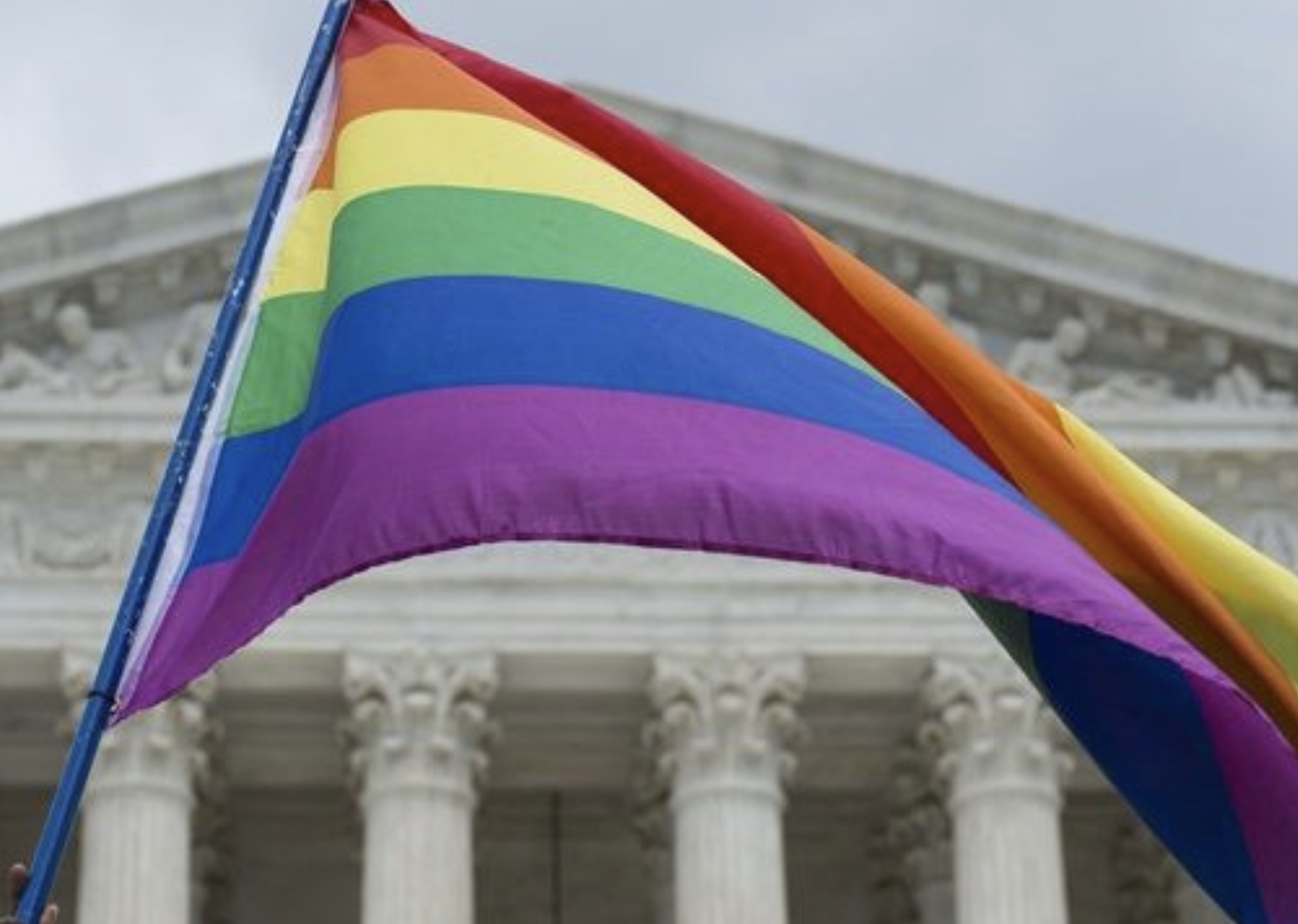
A narrowly-framed Supreme Court victory — the Fulton v. Philadelphia case — will allow Catholic Charities (at least for now) to preserve religious conscience and avoid placing foster children and children available for adoption with same-sex couples, despite the city's non-discrimination statute.

However, this does not settle the many similar legal disputes the media will be covering the next few years.

In particular, reporters will want to carefully monitor Hunter v. U.S. Department of Education, a potentially huge lawsuit filed in Oregon federal court March 29. This is a class action with 33 plaintiffs represented by Portland attorney Paul Southwick, director of the Religious Exemption Accountability Project or REAP (paul@paulsouthwick.com and 503-806-9517). Alliance Defending Freedom, a familiar participant in such matters, has filed a bid to defend the religious schools (media@adflegal.org or 480-444-0020). There are questions about the degree to which the current Justice Department will help in this defense.

The suit charges that LGBTQ students suffer "abuses and unsafe conditions" at "hundreds" of U.S. religious colleges with traditional doctrinal covenants so government should cut off their financial aid. Except for Brigham Young University and the Church of Jesus Christ of Latter-day Saints, REAP's targets are Protestant, led off by Oregon's George Fox University, a venerable Quaker campus attended by Herbert Hoover when it was a mere secondary school. George Fox's mission statement declares that "we desire the presence of Christ to be at the core of all we do."

Others include the likes of Azusa Pacific University, Baylor University, Bob Jones University, Dordt University, Eastern University, Fuller Theological Seminary, Liberty University, Messiah University, Moody Bible Institute, Seattle Pacific University, Union University and Westmont College. (Notably missing: Calvin, Gordon, Wheaton.)

Loss of aid for students would be a severe competitive blow in coming years when all colleges and especially private and religious ones expect to suffer declines in the student-age population and thus in applications, this on top of the institutional damage wrought by COVID-19. There are also prospective attacks on such schools' tax exemption and academic accreditation over sexuality. The status of athletic programs is also a hot-button issue.


Please respect our Commenting Policy

To tithe or not to tithe: Should 21st Century Christians give church 10% of their income?

To tithe or not to tithe: Should 21st Century Christians give church 10% of their income?

THE QUESTION:

Should 21st Century Christians still give 10% of their income to the church?

THE RELIGION GUY'S ANSWER:

A bad pun says that the week of a church's annual budget pledge drive the pastor preaches the Sermon on the Amount. Many churches are fretting about amounts these days, hoping attendance and offering-plate receipts will recover from the COVID crisis.

How much should modern-day Christians donate to support their churches? The oft-cited standard is the "tithe," a biblical term for 10% of income. But Keith Giles, a "progressive Christian" blogger at Patheos.com, argued that there are "very good reasons to stop tithing your 10% every week."

Definitions: Should that be 10% of wealth and accumulated assets or only income? Should all 10% go to the church only with any other giving counted beyond the 10%, or does the tithe cover all religious and charitable donations? Also, of course, the very different biblical situation involved gifts of agricultural produce, not money.

Speaking of the ancient context, Giles's main theme is that tithing was part of a bypassed Old Testament system that provided upkeep for the Jerusalem Temple and the priests working there who had no other livelihood. The Romans destroyed the Temple in A.D. 70 so there's no Temple or priesthood that need support.

However, that argument ignores that today's clergy similarly live off believers' financial support in order to carry out religious work. In fact, clergy typically get lower pay than other professionals with comparable years of training.


Please respect our Commenting Policy

How will this Supreme Court decide, or sidestep, pivotal religious liberty questions?

How will this Supreme Court decide, or sidestep, pivotal religious liberty questions?

The major U.S. Supreme Court ruling in Fulton v. Philadelphia (.pdf here) allows a Catholic agency to avoid placing foster-care children with same-sex couples. Importantly, the Catholics will place gay children and will place children with gay singles since there's no conscience crisis over defying the church's doctrines on marriage.

For decades there's been confusion and acrimony over the court's applications of the Constitution's ban on government "establishment of religion," but now disputes over the religious "free exercise" clause grab the spotlight. The Fulton ruling sidestepped the heart of this generation's conflagration between religious rights and LGBTQ+ rights and, thus, may even have added logs to the fire.

The justices backed the Catholic claim with what The Economist's headline correctly labeled "The 3-3-3 Court." The narrow technical grounds for the decision enabled the three liberals (Stephen Breyer, Elena Kagan, Sonia Maria Sotomayor) to make the ruling unanimous. The conservatives were split between three demanding a thorough overhaul of "free exercise" law (Justice Samuel Alito, in a vigorous 77 pages, joined by Neil Gorsuch and Clarence Thomas) and three unwilling to take the plunge at this time (Chief Justice John Roberts and the two newest members, Brett Kavanaugh and Amy Coney Barrett).

Similar caution apparently underlies the court's majority decision this week not to review transgender student Gavin Grimm's victory against his Virginia school over bathroom access.

Journalists should prepare for more years of extensive -- and expensive -- politicking and litigation before the Supreme Court defines -- or decides not to define -- how First Amendment guarantees apply in 21st Century culture.

For those on the religion beat, it is easy to see that this case has hardened the related conflict among major denominations.


Please respect our Commenting Policy