Richard Ostling

Passing of the guard at the Associated Press; the rise of Ministry Watch and the Roys Report

Passing of the guard at the Associated Press; the rise of Ministry Watch and the Roys Report

The death of a well-known religion reporter; a new job announcement from a beat veteran and a spotlight on two feisty independent religion news organizations is what concerns me this week.

Tmatt had previously offered an update on the health of Rachel Zoll, a former Associated Press religion specialist who came down with glioblastoma, a brain cancer that has no cure, in early 2018. That was only a few months after another religion-beat pro, Jeffrey Weiss of the Dallas Morning News, died of the exact same malady.

Last week, Zoll died at the age of 55 at her home in Massachusetts. She reported on religion for AP for 17 years.

There have been lots of tributes, so I’ll spotlight this Associated Press obit atop the list.

Zoll covered religion in all its aspects, from the spiritual to the political, and her stories reached a global audience. But her influence was far greater than that. Other publications often followed her lead, and AP staffers around the world depended on her generosity and guidance.

Zoll was at the forefront of coverage of two papal transitions, the clergy sex abuse scandal in the Catholic Church, and tensions within many denominations over race, same-sex marriage and the role of women.

She often broke news, as in 2014, when she was the first to report Pope Francis’ appointment of Blase Cupich to become the new archbishop of Chicago.

Fellow GetReligionista Dick Ostling, who was at AP from 1998-2006, wrote this:

My partner Rachel was simply a delight to work with and a personality enjoyed by everyone who knew her -- and who competed with her. But in broader and more historical terms she exemplified all that's needed in reporting and especially with a complex and emotion-laden field like religion. She was of course quick and accurate but those are the basics for any Associated Press writer. And then, remarkably intelligent. She knew her stuff and knew she needed to learn ever more stuff to handle this beat.
Please respect our Commenting Policy

Did mainstream media distort America's religion-and-politics divide? Are they still doing so?

Did mainstream media distort America's religion-and-politics divide? Are they still doing so?

While culling files from decades of religion-beat work, The Religion Guy has come across a forgotten and seminal article from 2002 that contended the media were distorting public understanding of American politics. It said "religious right" Republicans were blanketed with coverage and turned the tables, contending that "the true origins" of cultural conflict were found in increased "secularist" influence in the Democratic Party.

As journalists contemplate the tumult of the succeeding two decades, ask what the article in question might say about media performance, past and present.

Consider the hostility toward openly religious nominees expressed by Senators Schumer, Feinstein, and Harris (now vice president and prospective future president). Or contrast the Religious Freedom Restoration Act, which passed the Senate 97-3 in 1993, with current House Democrats' unanimous vote for the pending Equality Act, which would forbid practical applications of that very law.

Customary political history emphasizes such landmarks as the Rev. Jerry Falwell (Senior) launching Moral Majority in 1979, Ronald Reagan's Republicans cultivating conservative Christians in the winning 1980 campaign or the Rev. Pat Robertson founding Christian Coalition in 1989 after his Republican run for president.

These events were important, of course. But what about Democrats and the other half of what was happening?

That's the focus of the 2002 article, by political scientists Louis Boice and Gerald De Maio from the City University of New York's Baruch College, drawn from their 2001 presentation at an academic conference. The piece appeared in the conservative journal The Public Interest, which is now defunct, but fortunately the American Political Science Association archive has posted the text (.pdf here). Also, click here and then here for tmatt columns on this duo’s work.

In their telling, 1972, the year before the Supreme Court legalized abortion, was the pivot point for Democrats' shift on emotion-laden social issues away from cultural conservatism and an "accommodation" policy toward religion.


Please respect our Commenting Policy

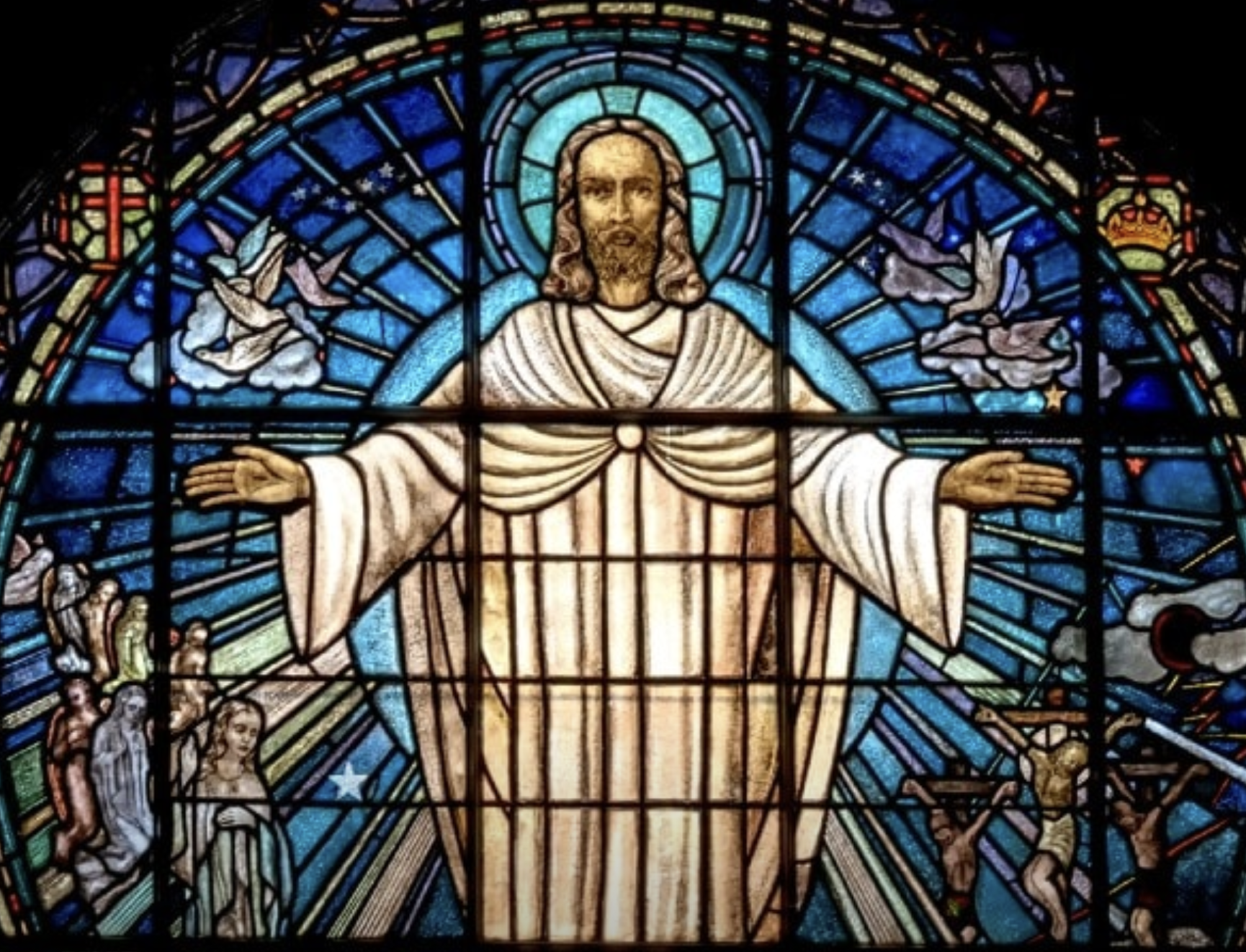
Was Jesus truly without sin? Did he have doubts? Do these questions matter to anyone?

Was Jesus truly without sin? Did he have doubts? Do these questions matter to anyone?

THE QUESTIONS:

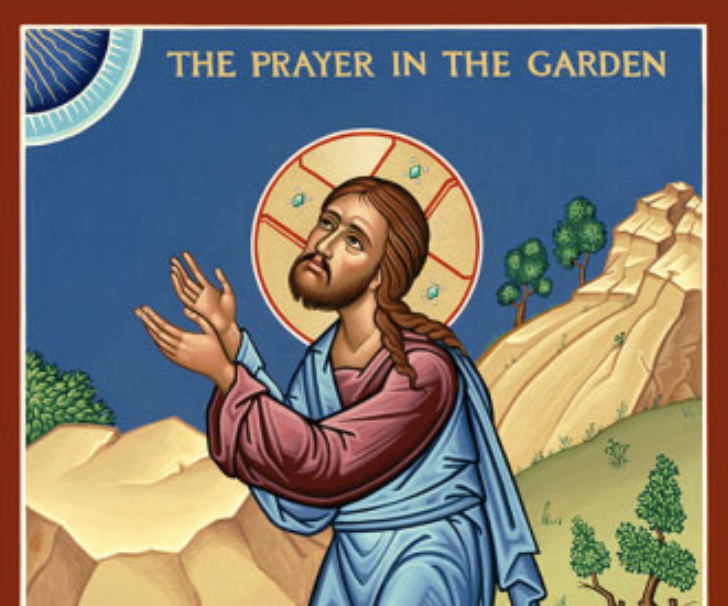
Was Jesus Christ totally without sin? Does it matter?

THE RELIGION GUY'S ANSWER:

Christian tradition says yes, and yes.

This month, related discussions with weighty implications popped up online, so The Religion Guy takes a look at this belief, which dates from the very earliest days of church history. But we begin with the fact, perhaps surprising to Christians, that Jesus' sinlessness is also taught by Islam. These two faiths combined engage upwards of 4 billion people.

In the Quran's account of Jesus' birth, older English translations of verse 19:19 say the child is "holy," but modern versions by Majid Fakhry (endorsed by the authoritative Al-Azhar University), A.S. Abdel Haleem, and Seyyed Hossein Nasr's team understand the Arabic adjective to mean the somewhat stronger "pure."

The Muslim belief is reinforced by a standard hadith saying of the Prophet Muhammad that "no child is born but that Satan touches, but when it is born it starts crying loudly because of being touched by Satan, except Mary and her Son.: (Sahih Al-Bukhari, 6.65.4550). Muslim commentators explain that Jesus, Muhammad and the other prophets may have made simple human mistakes but never sinned, that is, consciously violated the will of God.

Muhammad's mention of Mary befits Catholicism's Immaculate Conception, made mandatory dogma by Pope Pius IX in 1854. The Catholic Catechism states that "from the instant of her conception, she was totally preserved from the stain of original sin and she remained pure from all personal sin throughout her life."

Protestants dissent. But all Christians unite on Jesus' sinlessness, which is taught in four of the New Testament books:

-- "For our sake he [God] made him [Jesus Christ] to be sin who knew no sin, so that in him we might become the righteousness of God" (2 Corinthians 5:21).

-- "We have not a high priest who is unable to sympathize with our weaknesses, but one who in every respect has been tempted as we are, yet without sin" (Hebrews 4:15).

-- "He committed no sin" (1 Peter 2:22).


Please respect our Commenting Policy

2020 revisited: Repeat after me, White Catholic voters, White Catholic voters ...

2020 revisited: Repeat after me, White Catholic voters, White Catholic voters ...

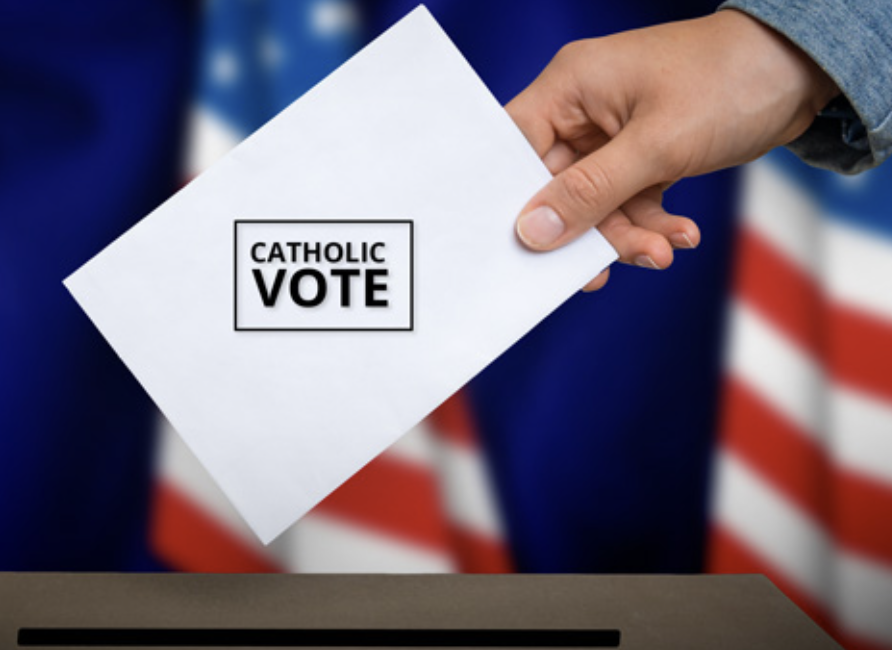
The two main November exit polls showed Joseph Biden, the first Catholic elected U.S. president since John F. Kennedy, won either 52% or 49% support among Catholics over-all.

That's quite the plummet from 1960, when the Gallup Poll found J.F.K. scored 78 percent.

Reporters covering either politics or religion pay heed: Other remarkable data appear in the first batch of 2020 findings from the Harvard University-based Cooperative Election Study (CES), with more due in July. Though Hispanic and other minority Catholics went only 30% for Donald Trump (up from 26% in 2016), white Catholics gave the Republican impressive 59% support over their fellow church member, up a notch from 57% in 2016.

The massive CES sample of 61,000 allows good breakdowns by religion (also a highly useful feature with many Pew Research surveys). The CES data were explored for Religion Unplugged by ubiquitous political scientist Ryan Burge, a GetReligion contributor.

The Guy once again preaches to the U.S. media that those white Catholics are the nation's largest chunk of swing voters who can decide competitive elections except in Protestant tracts of the Southeast, and that they deserve more attention than the lavishly covered white "evangelicals," perennial knee-jerk Republicans who may edge up or down but never "swing."

That was true in 2016. It was true again in 2020. It’s especially interesting to look for patterns among generic “Catholic voters” and voters who are active, Mass-attending Catholics.


Please respect our Commenting Policy

With open talk of schism, will German bishops mar the rest of Pope Francis's reign?

With open talk of schism, will German bishops mar the rest of Pope Francis's reign?

Conservative Catholic news outlets have thoroughly covered growing turmoil in Germany's Catholic Church, making available solid backgrounding for "mainstream" media who've generally been sluggish in picking up on this story.

That neglect presumably won't last, considering factors The Religion Guy will now underscore for colleagues' consideration.

A significant phalanx of German bishops, united with prominent lay activists, seem intent on revisionist change to come from their "Synodical Way" project, which the Vatican has sought to suppress, so far without success.

The German go-it-alone demands set up an inevitable showdown with the Holy See. The global repercussions were captured in a blunt Wall Street Journal headline April 16: "Can Pope Francis Head Off a Schism?" One week earlier a headline in the conservative National Catholic Register declared that "U.S. Theologians Echo Fears of Schism in Catholic Church in Germany."

The Religion Guy proposes a different hed that uses the P-word rather than the S-word: Will German Catholicism Go Protestant, Five Centuries Late?

Peg-hunting reporters will want to watch the "wires" (to use an anachronistic term) May 10 for the latest pageant of defiance. On the heels of the Vatican's papally-approved statement reaffirming opposition to church blessings and marriages for same-sex couples, a large network of German Catholics — with clergy involved — plan to stage same-sex blessing ceremonies across the nation. Watch for how many bishops are silent, or even pleased, when their priests are willing to participate.

The LGBTQ issue is only one aspect of the German imbroglio that dates from the 2019 launch of the "synodical" process, which is co-sponsored by the German Bishops' Conference and the Central Committee of German Catholics, an influential group of lay activists.


Please respect our Commenting Policy

Journalists get ready: Here comes the 'greatest celebration in all of history'

Journalists get ready: Here comes the 'greatest celebration in all of history'

Thinking long-term, a group of Christians has been quietly at work pulling together what they bill as "the greatest celebration in all of history."

Yes, you read that right. The Big Idea is that all imaginable sorts of believers will join in events across 24 time zones on -- mark your calendars! -- Easter morning, Sunday, April 17, 2033. That will mark the ultimate in anniversaries, 2,000 years since Jesus Christ's resurrection from the dead. (That's necessarily a symbolic date since there's no consensus on the exact year.)

They call it Jesus Celebration 2033 or "JC2033."

Lest anyone freak out about the date, organizers assure us that "in no way whatsoever are we associating this jubilee with" the Second Coming of Christ. "He will return when the Father in heaven decides and it is not given to us to know when (Mark 13:32)."

Explanatory materials envision that "every disciple of Christ" on earth will participate in collective witness to show "we love each other in the Holy Spirit!"

That will take some planning. However, "Christians from all backgrounds and God seekers" will celebrate "spiritual unity, not a theological unity. We believe in unity in diversity." This is presented as "a historical opportunity to share in words and in actions the Love of God to the ends of the earth."

Christians will also be asked to join in "tangible demonstrations of God's love." Festivities are intended to be "joyful, artistic and creative." Gatherings would not only occur in churches but "stadiums, squares, parks, mountains, fields, beaches, homes and on the Internet!"

OK, editors, reporters, producers and other media planners, that's a dozen years off, and there’s no telling whether the dream will fizzle. But the concept is bold enough to invite features now.


Please respect our Commenting Policy

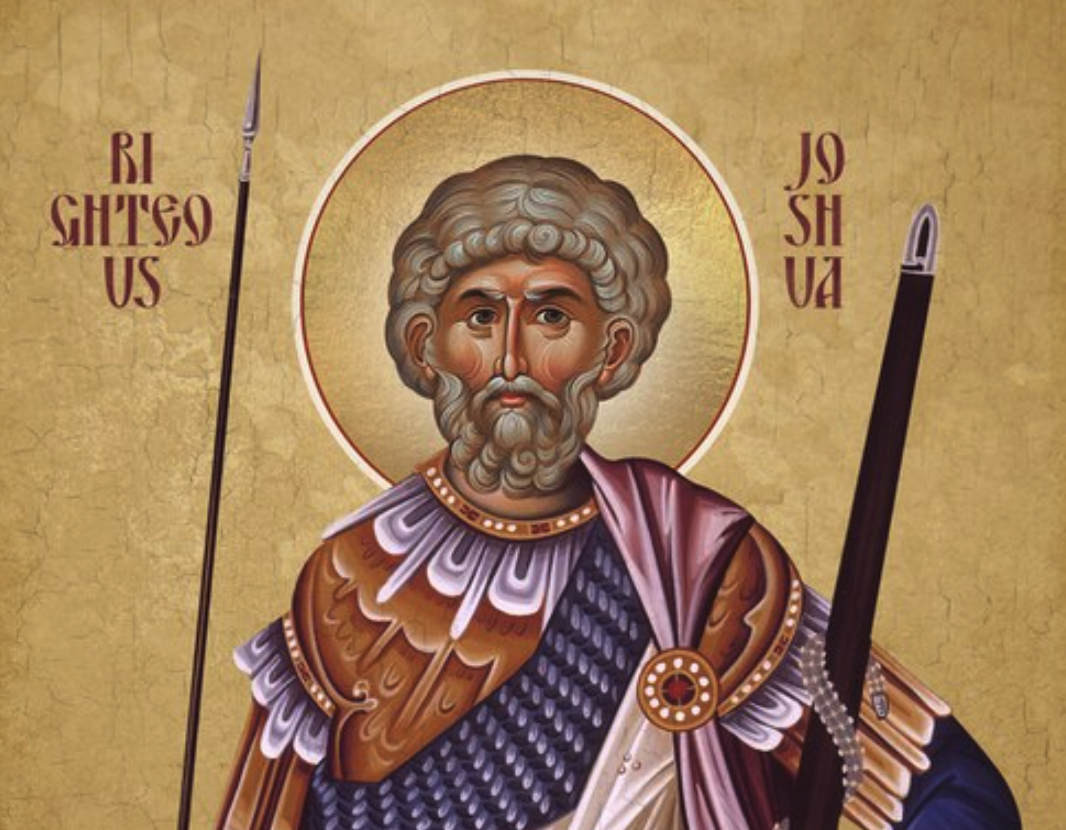
What can modern people (journalists even) know about biblical figures like Joshua?

What can modern people (journalists even) know about biblical figures like Joshua?

THE QUESTION (as raised by The New York Times):

What can we know about biblical figures, for instance Joshua?

THE ANSWER:

How do we know what we know, or think we know, or can know, or might know?

“Epistemology” is the branch of philosophy that ponders such matters. It may seem odd, but philosophers even ponder if there’s any basis for believing that anything we remember from before one second ago actually happened!

Back to earth, how do we assess what can be known about people and events from long ago that we ourselves did not witness? One approach is the ideology known as “logical positivism,’ which rules out supernatural claims in advance by definition and thus wipes out many assertions by the great world religions. That’s a simple method, but other philosophers say it’s far too simple.

Well, then, what can we know about the past, whether religious or not? The answer is almost entirely written records that have been passed down to us. This is obviously central with the biblical faiths of Judaism and Christianity, which center heavily upon historical narratives.

Which is why The Religion Guy continues to ponder eight words The New York Times found fit to print in a recent feature about Muslims in Iraq tending what they believe is the tomb of Joshua. Israelis say instead that the ancient patriarch is buried 20 miles north of Jerusalem.

Both claimed locations invite skepticism. But the influential newspaper went much further, informing readers: “There is no historical evidence Joshua actually existed.”

This is not a particularly prudent thing to say in the Muslim world, where Joshua is revered as an actual prophet of God in the line that culminated with the Prophet Muhammad, had no doubt Joshua existed, this according to authoritative hadith texts. Joshua is also referred to in the Quran, though not by name (18:60). The earlier Jewish and Christian Scriptures depict Joshua as an actual person.

In effect, the Times writer and copy editors tell us the Jewish Bible contains nothing that should count as historical evidence. Think about that. Liberal university professors will often teach that a particular Bible section has flawed evidence, or mixes fact with myth, or even is pure fiction. But they do not dismiss all evidence that the Bible records.


Please respect our Commenting Policy

Hail to the resurrection of the Religious Left, creating media blitz No. 175 (or thereabouts)

Hail to the resurrection of the Religious Left, creating media blitz No. 175 (or thereabouts)

The Easter season 2021 came with legacy media belief in the resurrection -- of the Religious Left.

Since Jerry Falwell (Senior) emerged from the underbrush, how many times have we read forecasts that religiously inspired political liberals will supplant the political prominence and influence of the Religious Right? This must be something like round 175.

The latest, headlined "Progressive Christians Arise! Hallelujah!", emerged from the word processor of Nicholas Kristof, who treats religious themes more often than fellow New York Times commentators — except David Brooks and Ross Douthat.

The Religious Left, so prominent in the New Deal days and the anti-war and civil rights efforts of the 1960s, never went away. Witness the perpetual political pronouncements from the “Seven Sisters” of Mainline Protestantism, for example the United Methodist Church lobby headquartered across the street from the U.S. Capitol and next door to the U.S. Supreme Court.

Journalists need to carefully evaluate these claims because renewed political impact by a Religious Left would loom large on story agendas. What's the evidence?

Kristof pins hopes heavily upon Democrats with religious leanings "moving onto center stage" as follows. Catholic President Joe Biden is a faithful churchgoer (unlike Donald Trump). Veep Kamala Harris regularly "attended" Baptist churches (but note the past tense). Senator Elizabeth Warren "taught" Sunday School (another past tense). Senator Cory Booker and Transportation Secretary Pete Buttigieg "speak the language of faith fluently." And media star Alexandria Ocasio-Cortez says Catholicism "inspires" her radicalism.

The column also touts troubles on the right. Some of those rabid U.S. Capitol rioters invoked religion.


Please respect our Commenting Policy

Big question linked to Easter: Does Christianity believe in 'the immortality of the soul'?

Big question linked to Easter: Does Christianity believe in 'the immortality of the soul'?

THE QUESTION:

Does Christianity believe in the “immortality of the soul”?

THE RELIGION GUY’S ANSWER:

No.

Not exactly. And before anyone has a heart attack reading that, The Guy hastens to explain that Christianity has always vigorously affirmed the Easter message that earthly death is followed by everlasting life. But the oft-used phrase about a mere “immortality of the soul,” which stems from ancient Greek philosophy, could suggest bodily life is problematic and mistakenly suppose that our soul exists through all eternity as only a disembodied spirit.

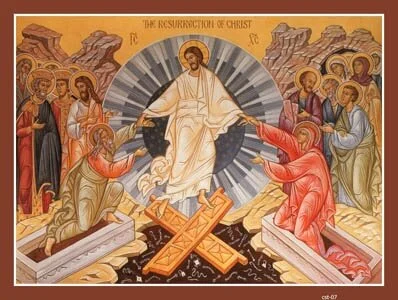
Instead, Christianity teaches that just as Jesus arose bodily from the grave, so the promise of everlasting life involves a person’s eventual resurrection that unites the soul with the body in a newly glorified state. As with the central belief that Jesus was God incarnate in full human and bodily reality, this Christian affirmation about the afterlife proclaims that, as in Judaism, our bodies are God’s good creation and fundamental to each person’s human identity.

This understanding of New Testament teaching was defined orthodoxy as early as A.D. 180 in Against Heresies by Bishop Irenaeus of Lyons, an authority and saint for Catholic and Orthodox Christians:

“… It is manifest that the souls of his disciples also, upon whose account the Lord underwent these things, shall go away into the invisible place allotted to them by God, and there remain until the resurrection, awaiting that event; then receiving their bodies, and rising in their entirety, that is bodily, just as the Lord arose” (from book 5, chapter 31).

A precise Protestant formulation appears in the Westminster Confession of Faith, the Presbyterian credo from 1647 (here “men” refers to both genders):


Please respect our Commenting Policy