Richard Ostling

Welcome to Holy Days 2021: How to handle the latest sensational claim about the Bible

Welcome to Holy Days 2021: How to handle the latest sensational claim about the Bible

The New York Times often ignores developments in religious scholarship, an especially serious deficiency of its Sunday Book Review (where Nash K. Burger, who was hired by fellow Mississippian Eudora Welty, long and carefully monitored the field until he retired in 1974).

Thus, hallelujahs should greet a huge article by culture reporter Jennifer Schuessler, posted March 10 and granted two full pages in the Arts & Leisure section of last Sunday's print edition.

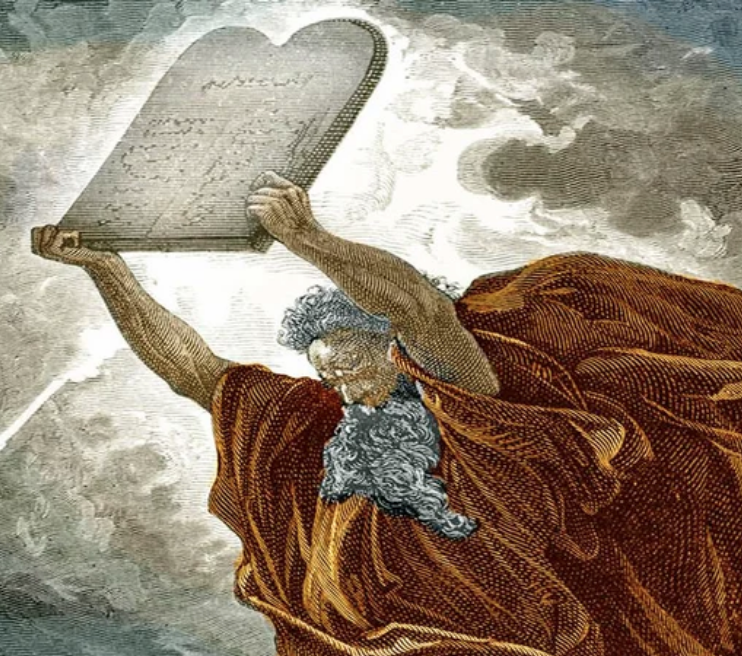
The piece reports that young Israeli-American scholar Idan Dershowitz may have identified "the oldest known biblical manuscript by far," which offers "an unprecedented window into origins and evolution of the Bible" and, in particular, the Book of Deuteronomy. If substantiated, some say, this "will be the most consequential Bible-related discovery since the Dead Sea Scrolls in 1947."

Or not. Journalists assessing what's hot should consider that across the years, manuscript frauds and ill-supported speculations about the Bible have been rife.

The Times is known to sometimes "bury the lede," and in this case it buried the news peg. The piece was nicely timed for Jewish Passover and Christian Holy Week when media often dig into biblical mysteries and controversies. But the news here is the April publication of Dershowitz's book "The Valediction of Moses: A Proto-Biblical Book."

The book will fill in the missing element in the Times story and thus provide major fresh substance for reporters to develop: Which portions of Deuteronomy are involved in this discussion, and how do specific wordings and passages in today's Bibles compare with the purportedly ancient texts Dershowitz cites? On that basis, what do the agreements and contrasts tell us and why?

Dershowitz seeks to rehabilitate Wilhelm Moses Shapira, whose 19th Century Jerusalem shop sold both tourist trinkets and allegedly valuable ancient manuscripts. He tried to sell these Deuteronomy fragments to a regular customer, the British Museum, but its expert and others declared them forgeries in 1883, based on what Dershowitz considers slipshod study.

Shamed, Shapira soon committed suicide in Rotterdam. The leather fragments themselves then disappeared.

Please respect our Commenting Policy

Keeping up with the times: If schools nix 'Mom and Dad,' is mainstream journalism next?

Keeping up with the times: If schools nix 'Mom and Dad,' is mainstream journalism next?

Reporters and editors want to be sensitive to personal and minority-group concerns alongside their professional duty to be clear, accurate and non-partisan.

How to handle this balancing act amid the West's fast-evolving verbiage to accommodate feminist or LGBTQ+ advocates? The media need to consider that proposed prohibitions now go well beyond replacement of "binary" pronouns with the singular usage of they-them-their (which breaks strict grammar in English and creates ambiguity on antecedents).

Grace Church School in lower Manhattan (sticker price $57,330 per year) provides a revealing rundown on new expectations for usage and diction in its "Inclusive Language Guide," enacted last September. It says e.g. that instead of "boys and girls," school personnel should now say "people, folks, friends," or specifics like "readers" or "mathematicians." Similarly, "husband, wife, boyfriend, girlfriend" give way to "spouse / partner / significant other." The Grace community is asked to say "grown-ups, folks or family" and shun the formerly acceptable "parents" or "Mom and Dad."

Some Moms and Dads were apparently upset upon learning about the guide when posted online in January. School leaders defended their new "inclusive" regimen but hastened to explain that wordings are "suggested," not "mandatory," and apply to the adult faculty and staff, not students.

The 12-page Grace guide, posted here under "Antiracism Resources" at is by no means unique in concept. It draws from such resources as the 2018 "language values" policy at New York City's Bank Street College of Education, which media policy-makers need to be monitoring.

The key disputes involve LGBTQ+ expectations and especially regarding gender identity and fluidity. Grace opposes "heteronormativity," that is, "the assumption that cisgender is the 'norm' or standard and transgender is the outlier or an abnormality." (Editors should ponder the "cisgender" neologism for labeling persons whose gender identity or gender expression matches their biology.)

"Language is constantly evolving," Grace correctly states, and the longstanding term "homosexual" should be eliminated. "More appropriate" designations include "queer,” formerly a derogatory equivalent of the N-word — but now rehabilitated as individuals' deliberate "political identification."


Please respect our Commenting Policy

Inspiring Easter feature idea sent aloft by (what are the odds?) producers at MSNBC

Inspiring Easter feature idea sent aloft by (what are the odds?) producers at MSNBC

Most media consumers will think of MSNBC as a heavy-breathing, politically and socially liberal cable television news operation — 24/7/365. Nor, so far as The Guy knows, has it shown much interest in religion coverage.

So it was quite the eyebrow-raiser when the March 11 edition of "Morning Joe" aired a relatively long and serious discussion of a theme that journalists may want to grab if they're looking for a promising Easter feature idea.

Adding to the surprises, MSNBC located and featured two intelligent evangelical Protestant leaders of the sort who all too rarely get air time on cable news networks, whether liberal or conservative.

One of this era's most successful pastors, the Rev. Timothy Keller of New York City, appeared to chat about his newly released book "Hope in Times of Fear: The Resurrection and the Meaning of Easter" (Viking). Joining him was journalist-attorney David French of TheDispatch.com, booked this time not as a #NeverTrump scribe but to undergird Keller's case for why modern people can believe in Jesus Christ's literal resurrection and what this means for them.

Adding to the drama, Keller mulled his simultaneous publication of one of those must-read articles, a very personal account for The Atlantic about writing an objective book on life and death during a year when he was coping with his own fatal diagnosis of pancreatic cancer.

As Keller confesses, it's one thing for a pastor to try to help parishioners face terminal illness and quite another for the pastor himself to face the same. In Keller's case, it took months for questions to give way to an even sweeter appreciation of life and of faith.


Please respect our Commenting Policy

This is a religion question: How many kinds of 'nones' are there and what do they believe?

This is a religion question: How many kinds of 'nones' are there and what do they believe?

THE QUESTION:

How do the three main categories differ among America’s rising non-religious “nones”?

THE RELIGION GUY’S ANSWER:

Political scientist Ryan Burge of Eastern Illinois University (a contributor here at GetReligion) has lately emerged as the most prolific analyst of the religion factor in U.S. politics, The Religion Guy contends. He’s now out with a book examining the biggest trend of our times within U.S. religion: “The Nones: Where Thy Came From, Who They Are, and Where They Are Going.”

“Nones” refers to Americans who say they have “none” when pollsters ask about their religious affiliation or religious identity. Since the turn of the century they’ve grown rapidly and make up around a fourth of the U.S. adult population, so this book is highly recommended for anyone interested in contemporary American religion.

Burge is an interesting figure. On the one hand, he’s a hard-nosed, objective observer of poll-driven facts, while on the other a religious practitioner as a long-serving, part-time pastor of a American Baptist congregation. His local flock typifies our era’s second major trend, the unprecedented membership decline in aging white “mainline” Protestant denominations that in former times dominated the national culture, as distinguished from conservative “evangelical” Protestantism.

The most revelatory material in this data-rich survey of all things “none” is the distinctions among the three subcategories of non-religious people carefully marked out by Pew Research Center surveys. Atheists are those who are certain God does not exist, and the same for all supernatural aspects. Agnostics say we do not or cannot know such things. By far the largest segment of nones, however, choose Pew’s third option of “nothing in particular” (NIP).

Burge thinks the NIPs “might be the most consequential religious group in the United States, and no one is talking about them the way they talk about atheists or agnostics.” NIPs are one-fifth of the population and “the fastest-growing religious group in the United States.” On point after point, they are notably different from both atheists and agnostics. Lumping all the non-religious together as the same “glosses over vast differences in the lifestyles, occupations and political worldviews.”


Please respect our Commenting Policy

Christians, Jews, Muslims and lobbyists left and right fret over SCOTUS 'donor privacy' case  

Christians, Jews, Muslims and lobbyists left and right fret over SCOTUS 'donor privacy' case   

What cause could ever possibly unite Christian Right activists, the Council on American-Islamic Relations, the Zionist Organization, "pro-family," "pro-life," "pro-choice" and gun-rights lobbies, Mitch McConnell, the American Civil Liberties Union, Chamber of Commerce, Judicial Watch, NAACP, People for the Ethical Treatment of Animals, Planned Parenthood, Southern Poverty Law Center, Columbia University's First Amendment institute and religious-liberty advocates?

Answer: These and many more are allied in the Americans for Prosperity Foundation v. Becerra case (#19-251), which the U.S. Supreme Court put on its upcoming docket January 8.

Yes, that Becerra is Xavier, as in President Biden's controversial pick for secretary of Health and Human Services, acting in his previous role as California's attorney general. Moreover, this situation implicates the track record of his predecessor as A.G., Kamala Harris — now U.S. vice president and a major 2024 presidential prospect.

At issue is "donor privacy." Non-profit groups cannot operate or raise money in the state of California unless they give its attorney general the names and addresses of their major donors, the same list that's required as an appendix to their federal IRS returns. The non-profits argue that this violates their right to freedom of association under the Constitution's First Amendment.

Obviously this is something for alert media eyes, including pros on the religion beat.

Adding to news interest, this case displays contrasting beliefs of the U.S. Department of Justice in its Trump Administration brief filed last November (.pdf here) versus its revised stance under the new Biden Administration (.pdf here). The Trump brief strongly backs non-profit interest groups. The Biden brief dodges the question and asks the court to bounce the case for further investigation.

Religion specialists note: The Supreme Court consolidated the Americans for Prosperity case, raised by the libertarian political foundation established by the Koch brothers, with a second appeal from the Thomas More Law Center. This second agency provides free legal representation for "people of faith" to uphold "the religious freedom of Christians, time-honored family values and the sanctity of human life."


Please respect our Commenting Policy

Polls apart: Pew Research switching methodologies with its much-used U.S. religious surveys

Polls apart: Pew Research switching methodologies with its much-used U.S. religious surveys

Political journalists give lavish attention to polls and often slide past those footnotes about a "95 percent level of confidence" and "margin of error plus or minus 4 percentage points."

Thus, numbers are never exact and a three-point edge could actually be seven points ahead or one point behind. Not to mention that even the best poll is merely a time-bound snapshot of reality (and it always pays to check how questions are worded).

After Election Day 2020, complaints about misleading political polls were as loud as usual, perhaps even louder. Take the bizarre Maine Senate race data. Polls consistently showed incumbent Susan Collins would lose, and she was behind 6% in the one closest to Election Day. She won easily by an 8.6% margin.

Or consider recent surveys about whether Americans plan to get COVID-19 shots. The Wall Street Journal notes that "yes" answers have ranged from 20% to 63% depending on the methodology, the wording and, especially, whether respondents were offered more than two options.

These days the "response rates" among those in randomly selected samples are so low it's tough to tell how representative the people are.

That's among the major problems raised by eminent Princeton sociologist Robert Wuthnow in his 2015 book "Inventing American Religion: Polls, Surveys, and the Tenuous Quest for a Nation's Faith.”

Gallup data about U.S. religion are important because the firm has asked consistent questions across so many decades. But 21st Century religion writers rely heavily upon the Pew Research Center (where Alan Cooperman, a former Washington Post colleague, is director of religion research). Pew's expertise often provides all-important distinctions between white "mainline" and white "evangelical" Protestants, and between white and Hispanic Catholics.

Pew is changing the way it surveys religious behavior and attitudes, so the media will want to be aware of why and how.

Of major importance is how this affects writing about trend lines over time that uses past surveys.


Please respect our Commenting Policy

Ask any church-state lawyer and you'll hear that this is a hard question: What is religion?

Ask any church-state lawyer and you'll hear that this is a hard question: What is religion?

THE QUESTION:

What is religion?

THE RELIGION GUY’S ANSWER:

Oddly, “Religion Q&A” entered its ninth year online before getting around to this question.

It’s not an easy one.

During the tax season, we may not feel particularly fond toward the IRS but can pity the staffers who spent years on a long-running dispute that ended in 1993 when the godless Scientology system was finally defined as a “religion” and thus eligible for the tax exemption benefit.

Then there are the federal and state disputes — beloved of journalists and too numerous to summarize here — over tax exemption for the “Universal Life Church,” and whether marriages performed by its clergy are legit. The ULC provides instant internet ordinations, sometimes for the likes of comedian Conan O’Brien, with no questions asked and no requirements of training, creed, or church. The ordination itself is free but the group sells such paraphernalia as a “Doctor of Divinity” certificate, a bargain at $20, and a $59.99 kit for performing weddings.

Let’s back up for the basics. Whatever the IRS might think, here are definitions of “religion” from the authoritative Merriam-Webster folks :

* “The service and worship of God or the supernatural.”

* “Commitment or devotion to religious faith or observance” (which is certainly a circular definition. Religion is religious.).

* “A personal set or institutionalized system of religious attitudes, beliefs, and practices.” (Again, religion is religious.)

* “A cause, principle, or system of beliefs held to with ardor and faith.” (This means devoutly embraced atheism or Communism can be deemed a de facto religion although, as “Religion Q & A” has learned over the years, this terminology can provoke atheists’ fury.)

Another definition, labeled “archaic,” is “scrupulous conformity” to something.


Please respect our Commenting Policy

United Methodists remain on clock: Will 2022 see biggest church split since Civil War? (updated)

United Methodists remain on clock: Will 2022 see biggest church split since Civil War? (updated)

The United Methodist Church is on the brink of America's biggest religious schism since the Civil War, with the conflict centering on sexual morality, biblical authority and theological liberalism.

At stake is an empire with 6.7 million U.S. members and 31,000 congregations located across most American counties, 6.5 million members overseas and $6.3 billion in annual donations (though there's now a severe money crunch). Many of those churches sit on prime urban and suburban real estate.

But when? The 2020 General Conference to settle matters was postponed until this coming Aug. 29- Sept. 7 in Minneapolis, a city that currently limits meetings to 150 people. News calendars are iffy until the imminent UMC decision on whether it can meet then, or must delay a second time or whether it's possible to manage such a complex international meeting online.

Whenever and however delegates assemble, by most accounts they're prepared to adopt some version of the 33-page "Protocol of Reconciliation & Grace Through Separation" (.pdf here) hashed out last year via professional mediation among representatives of various factions.

One breakaway has occurred prematurely. Online worship last Nov. 29 established the hard left "Liberation Methodist Connection." The new denomination is intended for Methodist exiles to live out their "God-given identities" regardless of not only same-sex identity but e.g. gender expression, sexual non-monogamy, immigration status, piercings, body art or drug use.

However, the main event involves who inherits the UMC's name, logo, endowments, properties and structures. In U.S. Methodism, liberals and centrists combined have political power to install a laissez-faire LGBT policy, while the evangelical wing dissents alongside millions of Methodists in Africa and the Philippines. (This structure is unusual. Most "mainline" denominations that have legislated full LGBT inclusion are U.S.-only.)

The Wesleyan Covenant Association figures conservative congregations and pastors will happily leave behind UMC assets, schools and agencies and is busily preparing a new breakaway denomination under "Protocol" terms that would merge Americans and booming churches overseas.


Please respect our Commenting Policy

Anatomy of a scandal: What's next for journalists working on the Ravi Zacharias fallout?

Anatomy of a scandal: What's next for journalists working on the Ravi Zacharias fallout?

File this memo under “be careful what you wish for.”

Those planning last May's funeral for evangelical star Ravi Zacharias were pleased to obtain live-streamed tributes from celebrities like Vice President Mike Pence and athlete Tim Tebow. Those outside the oft-disdained evangelical subculture may not comprehend the esteem Zacharias won by turning "apologetics" (defense of the Christian faith) from defensive bombast to intelligent and personable persuasion through books, countless personal appearances worldwide and the global team of some 100 speakers he built.

Presidential Press Secretary Kayleigh McEnany teared up as she told CBN News that Zacharias equipped multitudes so "you didn’t have to check your brain at the door when you became a Christian." She concluded, "Rest assured, his legacy will always be here and he will continue to change lives."

That encapsulates the drama of this harder-they-fall saga.

All the posthumous praise for Zacharias shocked one onlooker, a massage therapist who says he groped her, masturbated in her presence and asked her for sexualized photos. She searched his name online, contacted Steve Baughman of the hyper-hostile RaviWatch.com and then spoke with Daniel Silliman, news editor of the evangelical magazine Christianity Today.

Silliman's resulting investigation found three victimized massage therapists and provoked fury among some staffers and beyond, eventually forcing Ravi Zacharias International Ministries (RZIM) to drop its kid-gloves response and commission a totally independent investigation by a major Atlanta law firm, Miller & Martin.

Media analysts should understand that it takes far more guts for an evangelical magazine that survives on donors and advertisers to expose such situations than a metropolitan newspaper. Upshot: Silliman and colleagues can take satisfaction in distinguished service to the Christian constituency — which echoes those utterly candid authors of the Bible. [Disclosure: The Guy was this magazine's news editor early in his career.]

As agreed, RZIM released the attorneys' full findings on Feb. 9 (click here for .pdf) and they were mind-numbing. Christianity Today's lede had this socko summation:


Please respect our Commenting Policy