Religious Liberty

ISIS executes another Coptic Christian: Once again, this appears to be 'conservative' news

ISIS executes another Coptic Christian: Once again, this appears to be 'conservative' news

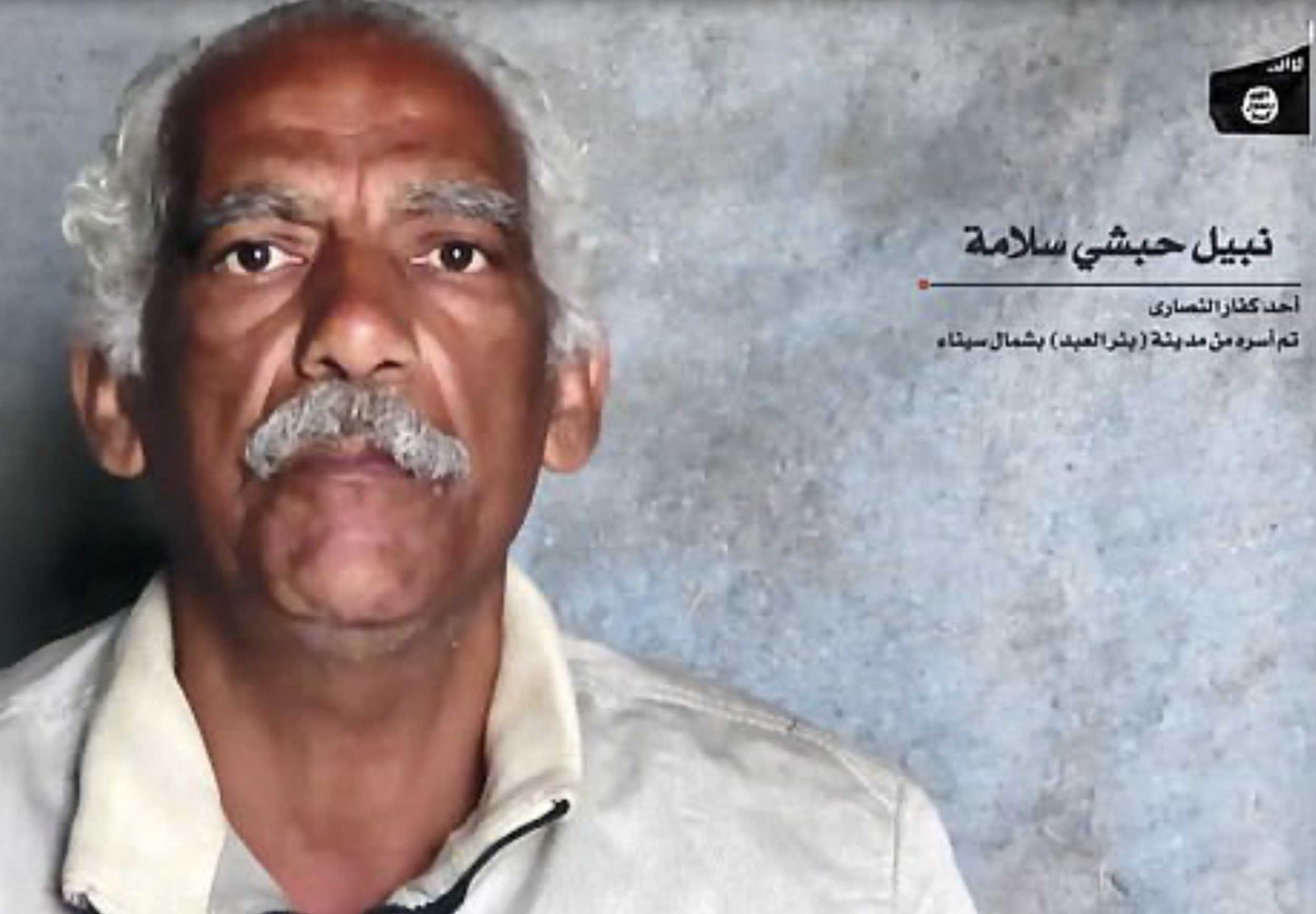
Let’s spend a moment examining a basic (you would think) file produced by a Google News search for this name — “Nabil Habashi Salama.”

Who is this man in the news? Simply stated, he is the latest Coptic Orthodox Christian killed by ISIS.

Does his death matter? Alas, this appears to be a political question, one that shapes basic journalism decisions about what stories are worthy of mainstream coverage.

First things first: Here is the overture of a report about his death published at Christianity Today. The headline: “ISIS Executes Christian Businessman Kidnapped in Egypt’s Sinai.”

The Islamic State has claimed another Christian victim. And Egypt’s Coptic Orthodox Church has won another martyr.

“We are telling our kids that their grandfather is now a saint in the highest places of heaven,” stated Peter Salama of his 62-year-old father, Nabil Habashi Salama, executed by the ISIS affiliate in north Sinai.

“We are so joyful for him.”

The Salamas are known as one of the oldest Coptic families in Bir al-Abd on the Mediterranean coast of the Sinai Peninsula. Nabil was a jeweler, owning also mobile phone and clothing shops in the area. Peter said ISIS targeted his father for his share in building the city’s St. Mary Church.

In a newly released 13-minute propaganda video entitled The Makers of Slaughter (or Epic Battles), a militant quotes the Quran to demand the humiliation of Christians and their willing payment of jizya — a tax to ensure their protection.

Now, what is Christianity Today?

Please respect our Commenting Policy

Ponder this news question: What happens to Afghan religious minorities post-USA?

Ponder this news question: What happens to Afghan religious minorities post-USA?

First things first. There is no question that, if and when U.S. troops leave Afghanistan, the biggest security issue will be protecting women who have taken modest steps to move into public life in recent decades.

Thus, it is totally appropriate that information about women’s rights received the lion’s share of attention in the recent New York Times report on the sobering behind-the-scenes realities in that troubled land. You can see that right in the headline: “Afghans Wonder ‘What About Us?’ as U.S. Troops Prepare to Withdraw,” with its subhead mentioning fears that the “country will be unable to preserve its modest gains toward democracy and women’s rights.”

Again, this news hook is totally valid. However, I think that this story needed some information — at least a paragraph of two — acknowledging the serious concerns of members of minority religious groups in Afghanistan. These range from Islamic minorities (and more moderate forms of that faith) as well as small, but historic, communities of Baha’is, Sikhs, Jews and Christians. And then there are the reports about growing underground networks of secret Christian converts.

This is, literally, a life-and-death situation for thousands of people. Might this human-rights issue be worth a sentence or two?

Hold that thought. First, here is the overture in this otherwise fine feature:

KABUL, Afghanistan — A female high school student in Kabul, Afghanistan’s war-scarred capital, is worried that she won’t be allowed to graduate. A pomegranate farmer in Kandahar wonders if his orchards will ever be clear of Taliban land mines. A government soldier in Ghazni fears he will never stop fighting.

Three Afghans from disparate walks of life, now each asking the same question: What will become of me when the Americans leave?

President Biden on Wednesday vowed to withdraw all American troops by Sept. 11, 20 years after the first Americans arrived to drive out Al Qaeda following the 2001 terrorist attacks. “War in Afghanistan was never meant to be a multigenerational undertaking,” he said, speaking from the White House.

The American withdrawal would end the longest war in United States history, but it is also likely to be the start of another difficult chapter for Afghanistan’s people.


Please respect our Commenting Policy

Despite China's vast religious and political repression, 2022 Olympic boycott still unlikely

Despite China's vast religious and political repression, 2022 Olympic boycott still unlikely

We’re rapidly approaching the inflection point on whether China will get to stage the 2022 Winter Olympics without some sort of concurrent international protest — such as a major boycott — prompted by Beijing’s often outrageous treatment of its Muslim Uighur, Tibetan Buddhist and underground Christian religious minorities, as well as its secular pro-democracy movement.

The question for me is: Will the international community — and in particular the United States and other democracy-espousing nations — punk out as it did with the Nazi-run 1936 Berlin Olympics. Or will the International community find some righteous backbone and either boycott the 2022 winter games, or make its opposition to Beijing’s policies known in another significant and unmistakable manner?

China, of course, has threatened retaliation against any nation that dares to challenge it by linking the Olympics and human rights.

When I last posted about the possibility of an international boycott of the upcoming China Games, — back in 2019 — I wrote off any boycott possibility as an extreme long shot.

As of this writing, I think a widespread boycott is still highly unlikely. But it’s no longer a completely dismissible long shot, I believe, because of changed circumstances — not the least of which is the ongoing coronavirus crisis and China’s oblique explanations of the pandemic’s Wuhan region origins.

Why still unlikely? Ironically, for the very same reason a protest is now slightly more conceivable, the coronavirus.

The U.S., without which no boycott can succeed, as well as its major pro-Western democratic allies, are all still deeply engaged in trying to halt the coronavirus.

We don’t know how much longer this fight will go on or what surprises are ahead. Regardless, the effort has left them economically vulnerable and politically drained. I’d say they lack the necessary additional emotional and intellectual bandwidth to take on another international crisis. Certainly not one they can avoid without triggering immediate dire consequences for their own citizens.

Forget the morality of the situation. Moral avoidance is a well-honed government strategy with a global heritage.


Please respect our Commenting Policy

Plug-In: Even with ailing digit, Bobby Ross, Jr., manages to cut and paste week's top stories

Plug-In: Even with ailing digit, Bobby Ross, Jr., manages to cut and paste week's top stories

Power Up: The Week’s Best Reads

1. Evangelical leaders are encouraging their congregants — many of whom are skeptical — to get the vaccine.

* Why "the pathway to ending the pandemic runs through the evangelical church" (by Kathryn Watson, CBS News)

* Love Your Neighbor' And Get The Shot: White Evangelical Leaders Push COVID Vaccines (by Sarah McCammon, NPR)

* White Evangelical Resistance Is Obstacle in Vaccination Effort (by Elizabeth Dias and Ruth Graham, New York Times)

* Vaccine skepticism runs deep among white evangelicals in US (by David Crary, Associated Press)

2. A Nashville church is planting a community garden to survive after the building was destroyed in tornadoes last year.

* A tornado destroyed their church. Now, faith takes root in a garden planted to serve the community (by Holly Meyer, The Tennessean)

* After 13 months apart, Easter service brings Watson Grove church members together again (by Cassandra Stephenson, The Tennessean)


Please respect our Commenting Policy

Hail to the resurrection of the Religious Left, creating media blitz No. 175 (or thereabouts)

Hail to the resurrection of the Religious Left, creating media blitz No. 175 (or thereabouts)

The Easter season 2021 came with legacy media belief in the resurrection -- of the Religious Left.

Since Jerry Falwell (Senior) emerged from the underbrush, how many times have we read forecasts that religiously inspired political liberals will supplant the political prominence and influence of the Religious Right? This must be something like round 175.

The latest, headlined "Progressive Christians Arise! Hallelujah!", emerged from the word processor of Nicholas Kristof, who treats religious themes more often than fellow New York Times commentators — except David Brooks and Ross Douthat.

The Religious Left, so prominent in the New Deal days and the anti-war and civil rights efforts of the 1960s, never went away. Witness the perpetual political pronouncements from the “Seven Sisters” of Mainline Protestantism, for example the United Methodist Church lobby headquartered across the street from the U.S. Capitol and next door to the U.S. Supreme Court.

Journalists need to carefully evaluate these claims because renewed political impact by a Religious Left would loom large on story agendas. What's the evidence?

Kristof pins hopes heavily upon Democrats with religious leanings "moving onto center stage" as follows. Catholic President Joe Biden is a faithful churchgoer (unlike Donald Trump). Veep Kamala Harris regularly "attended" Baptist churches (but note the past tense). Senator Elizabeth Warren "taught" Sunday School (another past tense). Senator Cory Booker and Transportation Secretary Pete Buttigieg "speak the language of faith fluently." And media star Alexandria Ocasio-Cortez says Catholicism "inspires" her radicalism.

The column also touts troubles on the right. Some of those rabid U.S. Capitol rioters invoked religion.


Please respect our Commenting Policy

New podcast: Rising tensions between religious liberty, pronoun wars, academic freedom, etc.

New podcast: Rising tensions between religious liberty, pronoun wars, academic freedom, etc.

My name is Terry Lee Mattingly. However, when I converted to Eastern Orthodoxy, I took the name of a patron saint — St. Brendan the Navigator.

Let’s pretend that I am young and attending a state university right now and that I have decided to require professors to address me as “Holy St. Brendan the Navigator.” It is, after all, my name. While we are at it, let’s say that all of the Catholic and Orthodox students take the same tack, if their saint names are different then the names they were given at birth.

Some professors would wince, but go along with this. But let’s say that one professor is very secular, a Marxist perhaps, and he refuses — stating that my request violates his personal convictions. I threaten to sue, along with other students in the same situation. Game on.

How would the leaders of this taxpayer-funded public university respond? Would this be treated as a natural request on my part, with the understanding that any refusal would attack my sense of identity? What if I requested that my university ID card state my name as “St. Brendan the Navigator”?

It’s a crazy question, of course. But it would — at a state university — raise issues about the First Amendment (free speech and religious liberty) and academic freedom. These questions were at the heart of this week’s “Crossroads” podcast discussion. Click here to tune that in. [This episode also includes a bizarre gaffe when — I’m wrestling with a painful medical condition right now — I messed up my own saint’s name, mixing St. Brendan’s title with that of St. Nicholas of Myra. Listen for it.]

At the heart of the podcast discussion is a timely question: Can the state force the professor to recognize and even affirm — with public speech — beliefs that violate his conscience?

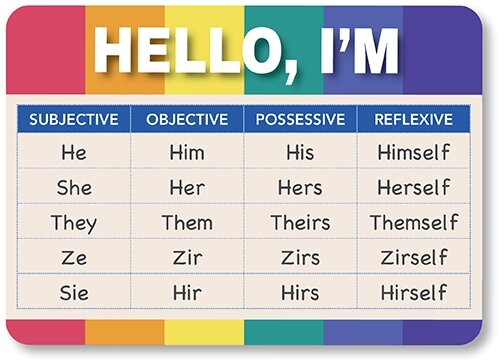
Now, as readers probably guessed right from the get go, this podcast focuses on another matter of personal identity — the degree to which professors can be forced to cooperate with students who chose to use any of the myriad and evolving gender pronouns linked to the LGBTQ+ movement. We looked at a Washington Post story with this headline: “A professor was reprimanded for refusing to use a transgender student’s pronouns. A court says he can sue.

Now, when these clashes take part in PRIVATE schools — left or right, religious or secular — it’s clear (pending passage of the Equality Act) that these doctrinally defined institutions have a right to create belief and lifestyle covenants that settle issues of this kind. Students can chose to affirm these beliefs, freely signing on the dotted line, or go to school somewhere else.

But what about state schools built and operated with tax dollars?


Please respect our Commenting Policy

Vague doctrine at for-profit company? Tennessean nails key issue in new Ramsey lawsuit

Vague doctrine at for-profit company? Tennessean nails key issue in new Ramsey lawsuit

Get ready for more stories in which religious believers clash with the increasingly woke doctrines proclaimed, and enforced, by the Human Resource personnel in modern corporations.

Can your company fire you for declining to use a colleague’s preferred pronouns? What happens if (a) someone declines to remove a study Bible from his or her desk or (b) some believers refuse to hang LGBTQ+ rainbow solidarity posters in their offices? What if an employee marches in a right-to-life parade? Battles continue, in some workplaces, over crosses, beards, headwear and other religious symbols.

That’s one side of the HR culture wars. Meanwhile, it’s clear — pending the outcome of the Equality Bill debates — that faith-defined nonprofits have the right to create lifestyle and doctrinal covenants for the people who chose to sign them and, thus, work in these ministries.

But what about for-profit companies led by executives who want to maintain faith-friendly images? What are the limits on their policies?

For example, Hobby Lobby won its U.S. Supreme Court case after rejecting the Obamacare requirement that contraceptives be included in employee benefits packages. But what if for-profit company leaders said that, for faith-based reasons, they could investigate and fire employees who USED contraceptives?

This brings us to another fascinating dispute inside the Ramsey Solutions empire. The Tennessean headline asks: “Can you be fired over your sex life? Dave Ramsey thinks so.” Here is the overture:

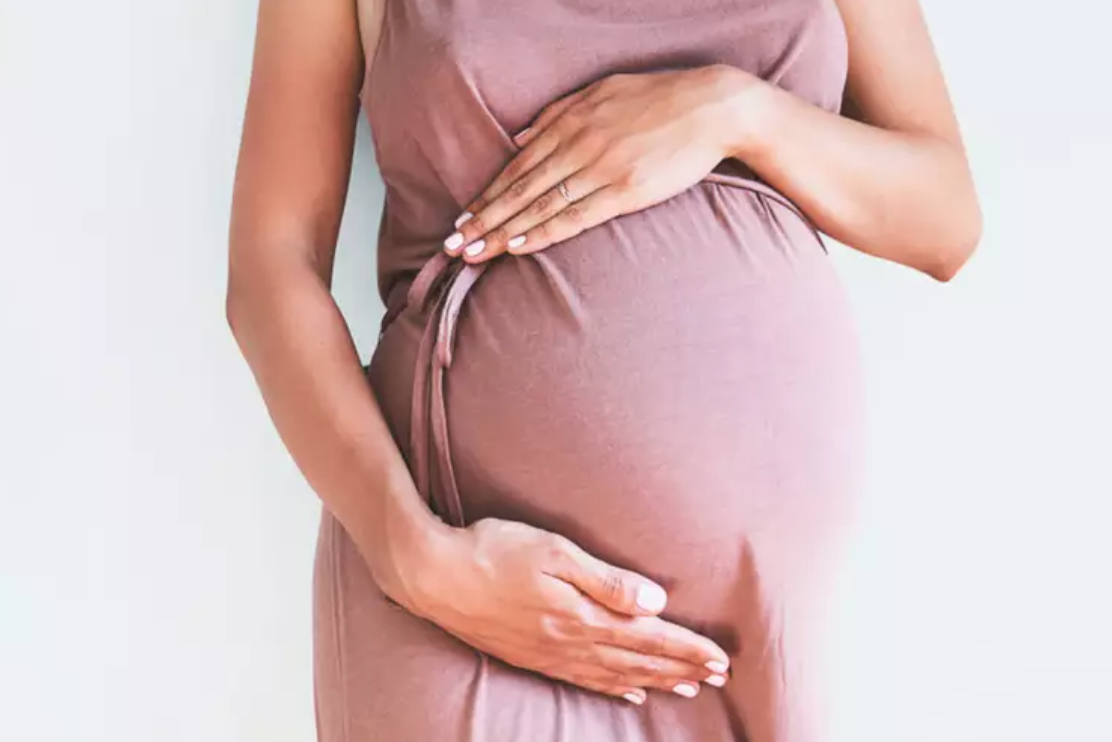
While a former employee has accused Ramsey Solutions of terminating her because of her pregnancy, the company disputes the claim. Company lawyers said in court filings the employee was fired for premarital sex and so were a dozen other employees.

Former administrative assistant Caitlin O'Connor, who was employed by Ramsey Solutions for over four years and never disciplined, said when she announced she was pregnant in June and requested paperwork for maternity leave, she was terminated for her pregnancy since she isn't legally married to her longtime partner, the baby's father.

Lawyers for Ramsey Solutions, owned by Dave Ramsey — a conservative financial titan who made headlines when he hosted a giant Christmas party during the pandemic and refused to let his employees work from home — said O'Connor wasn't fired because she was pregnant. She was terminated for having premarital sex.


Please respect our Commenting Policy

New podcast: Tensions with NCAA and Christian schools? That issue will not go away

New podcast: Tensions with NCAA and Christian schools? That issue will not go away

A decade or so ago, I had a chance to speak to journalism students at Oral Roberts University. My strongest memories — other than visions of the shiny modernist architecture — center on an unusual moment during a campus chapel service.

There’s nothing unusual about a Christian university having a full-house chapel service. There’s nothing unusual about a student-led praise-rock band blasting out Contemporary Christian Music songs that inspired lots of people to do their share of swaying and dancing.

But here’s the memory. My visit to the campus took place during a meeting of ORU’s board of trustees, who sat together near the front of the auditorium during chapel. Looking down from the balcony, I was surprised to see that (a) many of the trustees were rather young, (b) a much higher than normal number of them were Black or Latino and (c) several were enthusiastically dancing with the students, including at least one in an aisle (the current board doesn’t look quite as young).

All of this was a reminder that much of the racial and cultural diversity at ORU — a major factor in campus life — was and is linked to the school’s roots in charismatic and Pentecostal Christianity, a movement that as been highly multiracial since its birth. Founder Oral Roberts was a famous, and often controversial, leader among charismatic Christians, even though, as an adult, he aligned with the United Methodist Church (which is more conservative in Oklahoma than, let’s say, parts of Illinois and other blue zip codes).

I bring this up because of a recent USA TodayFor the Win” column that served as the hook for this week’s “Crossroads” podcast (click here to tune that in). Here’s the headline for that piece, which was written by the “race and inclusion editor” at USA Today sports: “Oral Roberts University isn't the feel good March Madness story we need.” Here is a crucial passage:

… As the spotlight grows on Oral Roberts and it reaps the good will, publicity and revenue of a national title run, the university’s deeply bigoted anti-LGBTQ+ polices can’t and shouldn’t be ignored.

Founded by televangelist Oral Roberts in 1963, the Christian school upholds the values and beliefs of its fundamentalist namesake, making it not just a relic of the past, but wholly incompatible with the NCAA’s own stated values of equality and inclusion.


Please respect our Commenting Policy

Prayers and bloodshed during Lent: Catholic bishops cry out for help in Nigeria

Prayers and bloodshed during Lent: Catholic bishops cry out for help in Nigeria

Another day, with yet another funeral.

Catholics in Nigeria had buried many priests and believers killed in their country's brutal wars over land, cattle, honor and religion. But this was the first time Bishop Matthew Hassan Kukah of the Sokoto Diocese had preached at the funeral of a seminarian.

A suspect in the crime said 18-year-old Michael Nnadi died urging his attackers to repent and forsake their evil ways.

"We are being told that this situation has nothing to do with religion," said Kukah, in remarks distributed across Nigeria in 2020. "Really? … Are we to believe that simply because Boko Haram kills Muslims too, they wear no religious garb? Are we to deny the evidence before us, of kidnappers separating Muslims from infidels or compelling Christians to convert or die?"

The bishop was referring to fierce debates -- in Nigeria and worldwide -- about attacks by Muslim Fulani herders on Christian and Muslim farmers in northern and central Nigeria. The question is whether these gangs have been cooperating with Boko Haram, Al-Qaeda and the Islamic State.

The conflict has claimed Catholics, Anglicans, Pentecostal Christians and many others, including Muslims opposed to the violence. Prominent Muslim leaders have condemned Boko Haram and church leaders have condemned counterattacks by Christians. In recent years it has become next to impossible to keep track of the number of victims, including mass kidnappings of school children and the murders of clergy and laypeople, including beheadings.

"Religion is not the only driver of the mass atrocities," said Nina Shea of the Hudson Institute's Center for Religious Freedom, in December testimony before members of the House Foreign Affairs Committee. "Not all 40 million members of the Fulani ethnic group in the region are Islamic extremists. However, there is evidence that some fraction of the Fulani have an explicit jihadist agenda. …

"A mounting number of attacks in this region also evidence deep religious hatred, an implacable intolerance of Christians, and an intent to eradicate their presence by violently driving them out, killing them or forcing them to convert."

In a sobering Feb. 23 statement (.pdf here), the Catholic Bishop's Conference of Nigeria warned that the "nation is falling apart."


Please respect our Commenting Policy