Religious Liberty

On the agenda until Inauguration Day 2025: Whither Trumpism and, thus, evangelicalism? 

On the agenda until Inauguration Day 2025: Whither Trumpism and, thus, evangelicalism? 

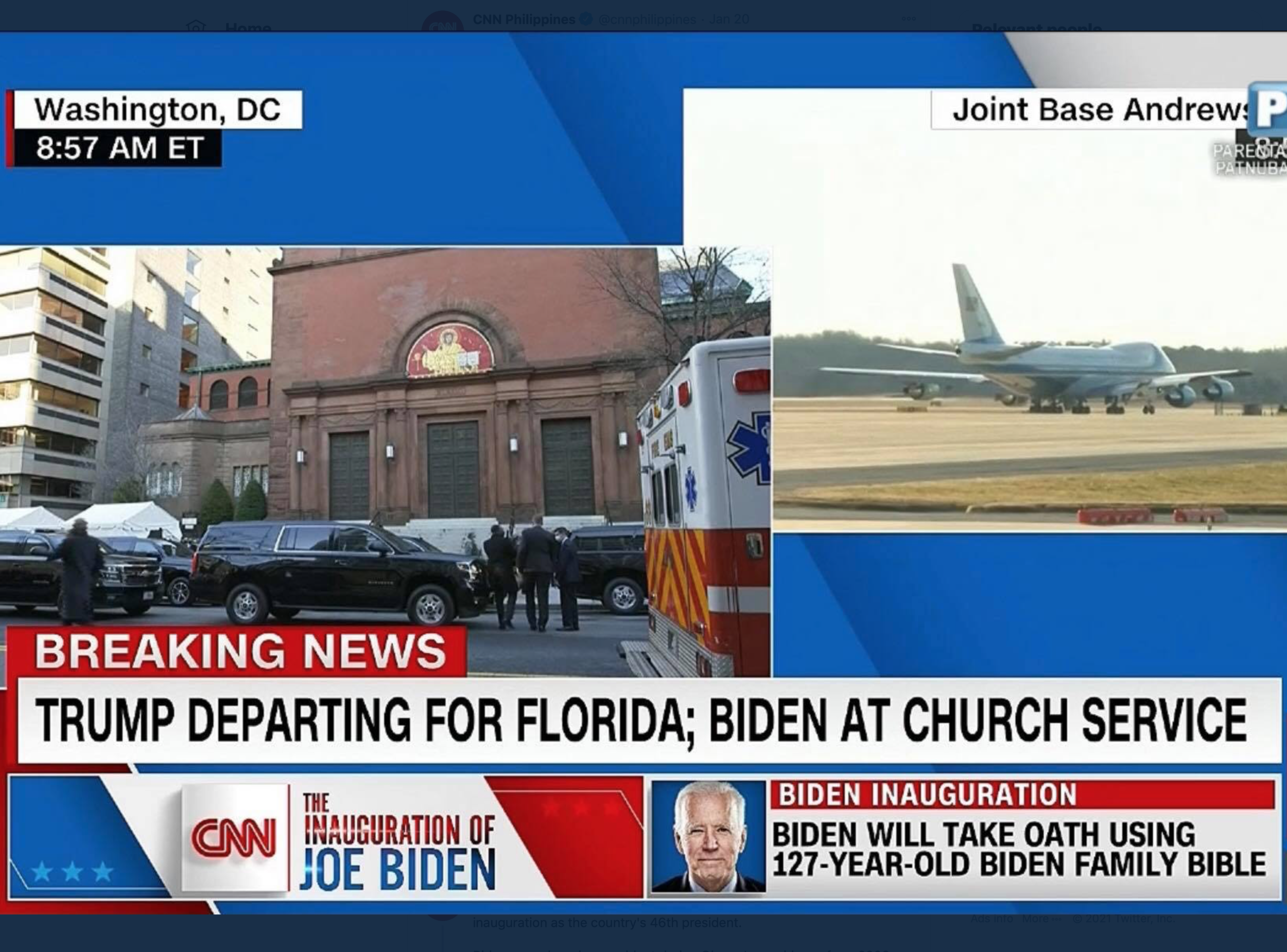
In a city locked down as an armed encampment, Joseph Biden and Kamala Harris were inaugurated without the disruptions many feared. There were prayers and familiar political calls for healing and unity.

References to the January 6th riot at the U.S. Capitol came early and often.

Regarding that historic day, much remains to be investigated but Wall Street Journal veteran Gerald Seib offered a brisk summary: "Mr. Trump sent a crowd of his supporters to the Capitol to stop the constitutional transfer of power to his elected successor. That crowd turned into a mob that ransacked the seat of American democracy and tried to hunt down its elected leaders." Senate Republican leader Mitch McConnell stated much the same Tuesday.

Seib added that in the melee, "mainstream Trump supporters were overshadowed by those swinging fire extinguishers at cops and a man wearing a 'Camp Aushwitz' sweatshirt." That is, the fringe dwellers, unhinged devotees and insurrection plotters emerged from a larger throng that obeyed the president's summons to attend his "Stop the Steal" rally and march upon the Capitol.

The same with a certain number of evangelical-style Protestants at the "Steal" protest and explicitly religious "Jericho" march. They were swept into the criminal rampage alongside violent extremists who trashed the symbolic citadel, spewed F-bombs, assaulted police (battering one to death) and chanted threats to assassinate America's #1 evangelical office-holder, Vice President Mike Pence.

Several top religion reporters publicized this unnerving aspect of the fray. In response, GetReligion editor Terry Mattingly questioned whether the rioting rabble truly represented elements of the power structures of the evangelical movement and its leadership, as some claimed.

The evangelical elite does not control many among the proletariat, as The Guy noted while pondering evangelicalism's future last July 29, and the gap has grown since then. Revulsion over Trump's words and deeds provoked some evangelical leaders to favor Biden but evangelical voters gave Trump a healthy margin (as always with Republican nominees, witness Romney, McCain, Bush). This is especially true among nondenominational, independent churches and among some self-proclaimed Pentecostal prophets (see this important Julia Duin post)

Whatever the numbers and stature of the those who waved Jesus banners, the day sullied evangelical Protestantism, and perhaps even religious faith in general, for the vast American citizenry that believes Trump and his disciples tried to steal the election from Biden.

Fairly or not, in the public mind and in the media, evangelicalism is now fused not just with the Republican Party but its dominant Trumpite wing.

Please respect our Commenting Policy

UK ready to welcome waves of Hong Kong residents (Yes, BBC ignored religion angles)

UK ready to welcome waves of Hong Kong residents (Yes, BBC ignored religion angles)

On the night of the Hong Kong handover to China, I walked through that great city’s old airport — noting the many residents who sat, passports in hand, preparing to leave. I was leaving after a small international gathering of journalists and academics focused, naturally, on religion and the news.

I talked to a few of the solemn people I saw that night in 1997. Some said they were leaving for good. Others said they were going abroad to explore the legal and economic hurdles they would need to clear if or when they decided to leave. I didn’t hear a single optimistic voice.

Like the people I interviewed for the two “On Religion” columns I researched during that stey, they said that they expected that, in a few years, the Chinese authorities would crack down on dissent, free speech and, yes, some mentioned freedom of religion. Here are those columns: “Silence and tension in Hong Kong” and “Hong Kong II: There’s more to life than $.”

I bring this up because of an important story that is unfolding, in slow motion, in the United Kingdom. Here is the top of a long BBC website story with this headline: “The Hong Kong migrants fleeing to start new lives in the UK.

The UK will introduce a new visa at the end of January that will give 5.4 million Hong Kong residents — a staggering 70% of the territory's population — the right to come and live in the UK, and eventually become citizens.

It is making this "generous" offer to residents of its former colony because it believes China is undermining Hong Kong's rights and freedoms.

Not everyone will come. Some of those eligible to leave have expressed their determination to stay and continue the fight for democracy.

In the end, Britain estimates that about 300,000 will take up the visa offer over the next five years.

As you would expect, the story introduces a family that is already in the UK, exploring their reasons for making the leap. Any signs of religion here?

Readers are told that Andy Li and his wife Teri Wong moved to York in October, just after the announcement of plans for this policy change. They said, no surprise, that they were thinking about their children, daughter Gudelia, 14, and son Paul, 11.

"We feel that the things we treasure about Hong Kong — our core values — are fading over time," said Mr Li. "So we decided we needed to provide a better opportunity for our children, not only for their education, but also for their futures."


Please respect our Commenting Policy

Catholic press braces for Biden presidency: How it will further polarization on doctrine

Catholic press braces for Biden presidency: How it will further polarization on doctrine

Inauguration Day this year comes two weeks after pro-Trump rioters descended on the U.S. Capitol before President-elect Joe Biden’s victory was certified by lawmakers. It was the latest — and most stark — demonstration of how our nation’s media ecosystem is in a state of decay and under attack.

Two weeks removed from that awful day, it’s worth taking stock in where we are, how we got here and, more importantly, what can we expected over the next four years under Biden.

This road, more than a decade in the making, was exasperated by Donald Trump’s presidential run and election in 2016. At the same time, citizens on the left and right have grown increasingly weary of institutions (the press being one of them) and that’s made violence an acceptable means for retribution.

As a result, the political, cultural and religious polarization that has taken place over the past four years, ignited further last year amid a pandemic and the presidential election, can’t be undone. The violence on Jan. 6 in Washington, D.C. is the latest tangible example of where we are as a country. The National Catholic Register made this observation in the wake of the riot:

The United States is troubled today by something deeper: At its core this is a spiritual and cultural crisis, even more than a political one.

The Founding Fathers worried about the same factionalism we saw on full and ugly display at the Capitol. But in the past, as Alexis de Tocqueville observed in Democracy in America, shared religious values have provided a glue that allowed for peaceful coexistence in our strikingly individualistic nation, while reminding us that politics was not ultimate.

Today, that is no longer the case. The system of Judeo-Christian values that grounded our political and civic life for more than two centuries has eroded and not been replaced. The ensuing vacuum means our national tendency toward factionalism has no “ballast” to steady the ship of state at turbulent moments, such as this disputed presidential transition.

The events of the last six months and how they have been covered by news organizations — spanning the COVID-19 lockdowns and #BlackLivesMatter protests to the presidential race and the attack on the Capitol — mark an end to an era in press history. It would appear that the American Model of the Press is dead and that reality has become mangled as Americans get their news through a prism of advocacy, partisan media sources.

This journalism earthquake has shaken Catholic media, as well. Hold on, because that’s where we are headed.


Please respect our Commenting Policy

After the U.S. Capitol riot: Personality cults do not mix well with traditional Christian faith

After the U.S. Capitol riot: Personality cults do not mix well with traditional Christian faith

Year after year, thousands of Americans attend the March for Life, marching past the U.S. Capital on a late January date close to the anniversary of Roe vs. Wade.

Most of the marchers are young and come by bus from Catholic and evangelical schools. While most of the groups present are conservative, there are smaller groups like Secular Pro-Life and Democrats for Life. Most of the banners contain slogans such as, "Abortion Hurts Women," "Love Life, Choose Life" or "We are the Pro-Life Generation."

Things were different at the Save America March backing President Donald Trump's efforts to flip the 2020 election. Some banners contained messages like "Jesus is my Savior, Trump is my President." But many more proclaimed "Stand with Trump!" or "Trump 2020: No More Bulls--t."

It's one thing to march for a cause. It is something else to hail a political leader as the key to saving America, said Southern Baptist Seminary President R. Albert Mohler, Jr., a central figure in evangelical debates about Trump.

"The American experiment in ordered liberty is inherently threatened by a cult of personality. And we saw the results of that. … So many of those who were there as protestors explicitly said that they were there in the name of Donald Trump," said Mohler, in a podcast the day after U.S. Capitol riot. "It was Trump that was the name on the banners. They were not making the argument about trying to perpetuate certain political principles or even policies or platforms."

History shows that personality cults -- left or right -- are dangerous, he stressed. After this "American nightmare," Christians should soberly ponder the "way sin works" and its impact on powerful leaders who are tempted to become demagogues.

"Demagoguery simply means that you have a character who comes to power on the basis of emotion, rather than argument, and passion rather than political principles," said Mohler.

It's crucial to know that, in 2016, Mohler was numbered among evangelical leaders who opposed Trump's candidacy. When the New York City billionaire clinched the GOP nomination, Mohler tweeted: "Never. Ever. Period."

But in 2020 he said he would vote for Trump in support of the Republican Party, thus opposing the Democratic Party platform.


Please respect our Commenting Policy

Thinking with Bob Dylan (sort of): Everything is broken in the three Americas of 2021

Thinking with Bob Dylan (sort of): Everything is broken in the three Americas of 2021

So. Much. To. Read.

So. Much. To. Think. About.

This is one of those times when it really helps to cue up a Bob Dylan playlist and turn up the volume.

I have two Dylan playlists that fit the bill, right now — Dylan Hymns I and Dylan Hymns II. They aren’t full of real hymns or even Gospel arrangements (that’s in the Dylan Gospel playlist), but they are full of songs with obvious faith content from the openly born-again albums and then the many interesting discus that followed, almost always with a few tracks that include clear Christian images and themes.

Hang in there with me. I am getting to this weekend’s “think pieces,” I promise.

The Dylan Hymns II playlist opens with another version of the same song that ended Dylan Hymns I — “When the Night Comes Falling From the Sky” (click here for a fiery live take with Tom Petty and the Heartbreakers). That would be a great song for right now. But the song that really fits is, “Everything Is Broken” (lyrics here). Here’s some crucial images from the end of the song:

Broken cutters, broken saws
Broken buckles, broken laws
Broken bodies, broken bones
Broken voices on broken phones
Take a deep breath, feel like you’re chokin'
Everything is broken

Every time you leave and go off someplace
Things fall to pieces in my face

Broken hands on broken ploughs
Broken treaties, broken vows
Broken pipes, broken tools
People bending broken rules
Hound dog howling, bullfrog croaking
Everything is broken

This brings us to our first “think piece,” by Axios CEO Jim VandeHei. The thesis statement says, “America, in its modern foundational components, is breaking into blue America, red America, and Trump America — all with distinct politics, social networks and media channels.”

The emphasis here is, of course, politics and there is no openly stated religion theme. You know: politics is real and religion is not so real.


Please respect our Commenting Policy

EU hypocrisy? Foie gras and factory farming continue, but kosher and halal traditions nixed

EU hypocrisy? Foie gras and factory farming continue, but kosher and halal traditions nixed

My fantasy very best self adheres to a strictly vegan diet. That means consuming no foods from members of the animal kingdom.

No meat, no eggs, no fish, no dairy, and just for consistency’s sake, no honey or even vitamin supplements containing traces of animal products. My fantasy very best self believes a plant-based diet to be best for me based on ethical, environmental, and health considerations (I’ve had serious heart issues).

But as you’ve probably already deduced, my current best self falls way short of my fantasy best self. While I rarely eat red meat (a couple of times a year at most), I regularly eat poultry, fish, eggs and dairy. So I’m by no means there yet.

When I do eat animal flesh, however, I restrict myself to animals in accord with traditional Judaism’s dietary protocols. That means I won’t eat pork or shell fish and won’t mix meat with dairy at the same meal. My wife and I also restrict our consumption to organic, free-range animal products. It also means that the allowed meats I do eat must be slaughtered in accordance with kosher guidelines.

As a theologically liberal Jew, I do not do all this because I believe HaShem — God — has directly commanded me to do so. I do this as a way to sustain my Jewish identity and as a voluntary spiritual discipline.

Which is why recent news out of Europe concerning the outlawing of kosher slaughtering protocols caught my attention. Journalists should note that traditional Muslims, who adhere to a similar slaughtering protocol, are also impacted by the European Union court ruling.

Here’s the gist of the issue, courtesy of a December story from JTA, the international Jewish news service:

(JTA) – The European Union’s highest court has upheld Belgium’s bans on slaughtering animals without first stunning them, a ruling that confirms the prohibition on the production of kosher and halal meat in parts of Belgium and clears a path for additional bans across Europe.

Israel’s ambassador to Belgium called the ruling “a blow to Jewish life in Europe.”


Please respect our Commenting Policy

Courage vs. civility? It doesn't help when believers join mobs in social media

Courage vs. civility? It doesn't help when believers join mobs in social media

It seemed that whenever the Rev. Daniel Darling ventured into social media, he saw the same red flags -- so he posted a commentary on "Christians and Conspiracy Theories."

"Because it's online, doesn't mean it's true," he noted. "Because a story is advanced by someone whose ideology I agree with, doesn't mean it's true. …

"For some reason, we are a people who want to believe there is a big plot behind every single thing that happens. … If you watch enough cable TV, depending on your political persuasion, you will come to think that behind every act in Congress there is a string of connected dots that go back to either George Soros (liberal) or the Koch brothers (conservative)."

This wasn't a hot take on QAnon letters or rumors of shredded Georgia ballots.

Darling wrote those words a decade ago, while leading an evangelical church near Chicago. Now he's a crucial voice for the National Religious Broadcasters and author of a book -- "A Way with Words: Using Our Online Conversations for Good" -- pleading for believers to think twice about their online lives.

"I'm not saying we should run away and hide," said Darling, in a telephone interview. "There's no way to avoid the fact that social media is a crucial part of American life. I don't think Christians have any choice about whether or not to be engaged. …

"What we need to do is be more careful when deciding where to draw lines and take stands. But, unless you're Amish, I don't see anyone sitting this one out."

It's especially important for religious leaders to warn their followers not to join the online "mobs" that are destroying America's ability to have sane public debates. In some cases, digital attacks are also threatening lives and reputations.

Consider, for example, the woke social-media attacks that fueled inaccurate mainstream news reports about Covington Catholic High School students at the 2019 March for Life. Then there were the conservative social-media warriors who embraced #pizzagate conspiracy theory claiming that prominent Democrats were linked to a global child-trafficking ring.

Did Russia steal the White House in 2016? Yes, there were mainstream-news reports. Did China, Cuba, Venezuela or some other evil force steal the 2020 election? Yes, there have been headlines on the other side of America's partisan media wars.

The result is anger and pain that has reached many pews and some pulpits.


Please respect our Commenting Policy

Thinking about, and with, Al Mohler: America's 'ordered liberty' was set afire -- by Trump

Thinking about, and with, Al Mohler: America's 'ordered liberty' was set afire -- by Trump

If you have followed the divisions inside the Southern Baptist Convention since 1979, or even earlier, you know this name — R. Albert Mohler, Jr. He was — for some — a L’enfant terrible among the conservatives in the early biblical inerrancy wars who (like him or not) grew, as president of Southern Baptist Theological Seminary, into one of the most important Southern Baptist voices of the late 20th and early 21st centuries.

It would be hard to describe the degree to which many Southern Baptists in the defeated “moderate” establishment detest Mohler, for a variety of theological, cultural and political reasons. At the same time, in the Donald Trump era, there are many in the ranks of far-right Southern Baptist life who view him as a traitor or even “politically correct.”

This is not an easy era in which to lead conservative religious institutions, even those with clout and many supporters. And it’s crucial to know that Southern Baptists leaders were, like evangelical leaders in general, sharply divided on whether to support the rise of Trump in 2015-2016. (Click here for the GetReligion typology describing six different evangelical views of Trump.)

Out of the tsunami of important statements by religious leaders following the U.S. Capitol riot, I have selected — as this weekend’s “think piece” — two articles by and about Mohler, Trump and the hellish scenes of January 6th. The first is a Houston Chronicle interview with Mohler by Robert “wut is happening?” Downen, an emerging religion-beat force in Texas and American in general. The headline: “Evangelical leader Albert Mohler says he’s horrified by chaos at Capitol, but stands by Trump vote.”

Downen notes that:

Mohler is the longtime president of the Southern Baptist Convention’s flagship seminary in Louisville, Ky., and is a contender to lead the SBC when the faith group elects a new president in June.

The evangelical leader has forcefully condemned Trump over the last half-decade, characterizing him as a sexual predator at one point and, after Trump clinched the Republican Party nomination in 2016, Tweeting simply: “Never. Ever. Period.”


Please respect our Commenting Policy

New podcast: Who stands in the middle of American politics? Often, that's a religion question

New podcast: Who stands in the middle of American politics? Often, that's a religion question

There were two major stories in American life this week, when it seemed like the world turned in a matter of minutes.

The riot at the U.S. Capitol grew out of yet another legal Donald Trump rally, with its familiar mix of hero worship, populist rage and, yes, rhetoric and symbols used by conservative, often Pentecostal, Christians. Fired up by a truly radical message from the president, many (not all) of these protestors marched to Capitol and turned into an illegal mob, crashing through security fences and then through doors and windows. Yes, some of the Christian banners and signs went with them.

We will be learning more about the makeup of that mob as participants are identified, arrest and tried — perhaps under (irony alert) Trump’s June 26th executive order authorizing a “penalty of up to 10 years’ imprisonment for the willful injury of Federal property.”

There have been waves of statements by religious leaders condemning the violence, including many by evangelicals who (a) opposed Trump, (b) reluctantly voted for him or (c) enthusiastically backed him. I expect more coverage on all of that (I’m collecting material for an “On Religion” column). Readers can start with this piece from the left, care of HuffPost.com: “Trump’s Evangelical Allies Condemn Violence At The Capitol.” It focuses on evangelicals who are still finding it hard to attack Trump, while — almost hidden at the end — noting views from some of condemned both the violence and the president’s role in it.

Let me know, via comments or email, if you see more religion-driven riot coverage.

Meanwhile, this week’s “Crossroads” podcast (click here to tune that in) centered on a GetReligion post that was written about two hours before the riots began: “Life after Georgia — Questions about a pro-life Democrat in U.S. Senate and other issues ...

The key is that victories by two Democrats (one a liberal Baptist pastor) put a very interesting conservative (and Catholic) senator at the middle of America’s increasingly divided and even bloody political map.

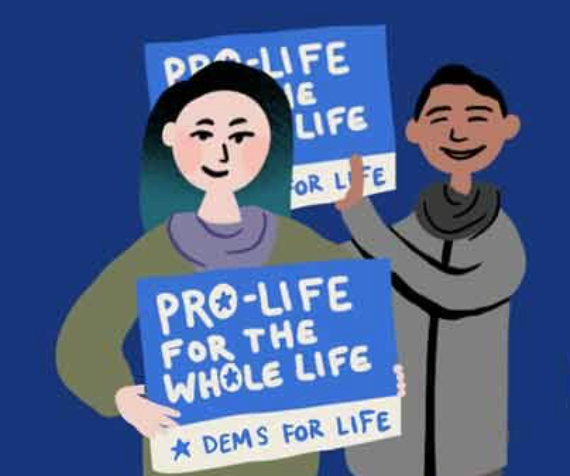
That man, Sen. Joe Manchin of West Virginia, is a living symbol of what used to be a major force in American politics — the white Southern Democrat. Although he has been endorsed by Democrats For Life, his pragmatic political views on that topic will not be found in the Democratic or Republican platforms, but do resemble the views of millions of centrist Americans.

Many Democrats, in the past, have insisted that Manchin is not really a Democrat. Well, how many want to toss him out of the party right now (with that 50-50 Senate split)?


Please respect our Commenting Policy