Race

Do trends in Grand Rapids tell us something about religion, evangelicalism and the GOP?

Do trends in Grand Rapids tell us something about religion, evangelicalism and the GOP?

Tuesday was a good night for Kansas abortion-rights campaigners and for many Republicans blessed by Donald Trump. Democrats are calculating that both factors could foretell a good night for them on Election Day.

Whatever, journalists attuned to the potent though oft-neglected religion factor should especially focus on the Michigan Republican U.S. House primary win by neophyte John Gibbs, a Trump-endorsed 2020 election denier.

In this significant showdown, Gibbs edged incumbent Peter Meijer (pronounced “Meyer”) with 52%. It helps to remember that Trump staged his final campaign rallies in a very symbolic location — Grand Rapids — in 2016 and 2020.

As a brand-new House member, Meijer voted to impeach President Trump for attempting to overthrow President Biden’s Electoral College victory. (Meijer’s predecessor in the seat, Justin Amash, had backed the 2019 Trump impeachment, quit the Republican Party and retired.)

Among last year’s 10 pro-impeachment House Republicans, five others sought party re-nomination. At this writing two of them led Trumpite challengers in Washington state’s Tuesday “jungle primary,” Jaime Herrera Beutler and Dan Newhouse. North Carolina’s Tom Rice lost big, California’s David Valadao won and Liz Cheney faces Wyoming voters August 16. Four decided to retire.

Underscoring hopes to flip the Michigan seat, House Democrats’ campaign arm horrified some party stalwarts by spending $435,000 on ads to boost Gibbs’s name recognition, while undercutting Meijer as the far stronger November opponent. In what turned out to be an obituary, a Monday Meijer blog post denounced Democrats’ “nauseating” violation of “moral limits.”

This brings us to the obvious GetReligion question: Why religion-beat buzz about Michigan District 3?

Simply because it centers on Grand Rapids, as much as any northern town a buckle on an established Bible (especially Calvinist) Belt outside of the South.

Please respect our Commenting Policy

Podcast: Anglicans in liberal West and conservative Global South face broken communion -- again

Podcast: Anglicans in liberal West and conservative Global South face broken communion -- again

This week’s “Crossroads” podcast was recorded (live on radio and then edited) this past Wednesday afternoon and it is already a bit out of date (CLICK HERE to tune that in).

You see, this episode was intended as a kind of “walk-up” feature about press issues at the 15th Lambeth Conference of Anglican bishops from around the world (July 26-Aug. 8) in Canterbury. At that point, there wasn’t much coverage to critique, other than some reports the Guardian, as in: “Justin Welby forced to allow Anglican bishops to reject statement on sexuality.” Since then, Religion News Service has released this: “Same-sex marriage sparks divisive debate at twice-delayed Lambeth Conference.”

As you can see, the coverage — so far — has been shaped by a familiar template in which decades of Anglican warfare is reduced to a rather political fight over homosexuality, as opposed to church doctrines about biblical authority and sex outside of traditional marriage.

The twist in this old, old story is that most of the heroes in the press coverage are White progressives from rich First World nations and the villains are People of Color from the Global South (think Africa and Asia). Does that framework sound familiar to many news consumers? Hold that thought.

The podcast argued that sexuality is the popular news hook for the Anglican wars, but that the doctrinal issues at stake run much deeper. Thus, I would like to place the unfolding Lambeth 2022 drama in the context of what your GetReligionistas have long called “Anglican timeline disease.

With that in mind, let’s flash back to 1992 — that’s three decades, for those keeping score. Here is the top of the 1999 “On Religion” column I wrote about this behind-the-scenes event: “The time for broken communion?” This is long, but essential:

It's been seven years since Bishop C. FitzSimons Allison faced the fact that some of his fellow bishops worship a different god than he does.

The symbolic moment came during an Episcopal House of Bishops meeting in Kanuga, N.C., as members met in small groups to discuss graceful ways to settle their differences on the Bible, worship and sex. The question for the day was: "Why are we dysfunctional?"

"I said the answer was simple — apostasy," said Allison, a dignified South Carolinian who has a doctorate in Anglican history from Oxford University. "Some of the other bishops looked at me and said, 'What are you talking about?'"


Please respect our Commenting Policy

Podcast: America is splitting, says trending Atlantic essay. This is news? Actually, it's old news

Podcast: America is splitting, says trending Atlantic essay. This is news? Actually, it's old news

In case you haven’t heard, controversial Supreme Court decisions are causing dangerous divisions in the United States of America.

Yes, I know. If you’re old enough you have been hearing people say that since 1973. And there is, of course, an element of truth in these statements, then and now. SCOTUS has become the only branch of government that matters when it comes to forcing one half of America to accept the legal, cultural and moral changes sought by the other half. Study several decades worth of presidential elections.

However, when it comes to mainstream media coverage, not all controversial Supreme Court decisions are created equal. If you have followed Twitter since the fall of Roe v. Wade, you know that large numbers of professionals in major newsrooms are freaking out.

Is this “new” news or old news? Truth is, arguments about red America (“Jesusland”) and blue America (“The United States of Canada”) have been getting louder and louder for several decades. This was the topic that dominated (once again) this week’s “Crossroads” podcast (CLICK HERE to tune that in), which focused on this Ronald Brownstein essay at The Atlantic: “America Is Growing Apart, Possibly for Good.”

What’s interesting about this piece is that it says America’s divisions have nothing to do with traditional forms of religion, culture, the First Amendment or the U.S. Constitution (especially Federalism). No, this is a war about racism, period. SCOTUS has been seized by the enemies of reason and freedom and, thus, America’s future is at risk. This is a concept with serious implications for news coverage.

IT MAY BE TIME to stop talking about “red” and “blue” America. That’s the provocative conclusion of Michael Podhorzer, a longtime political strategist for labor unions and the chair of the Analyst Institute, a collaborative of progressive groups that studies elections. In a private newsletter that he writes for a small group of activists, Podhorzer recently laid out a detailed case for thinking of the two blocs as fundamentally different nations uneasily sharing the same geographic space.

“When we think about the United States, we make the essential error of imagining it as a single nation, a marbled mix of Red and Blue people,” Podhorzer writes. “But in truth, we have never been one nation. We are more like a federated republic of two nations: Blue Nation and Red Nation. This is not a metaphor; it is a geographic and historical reality.”

The bottom line:

To Podhorzer, the growing divisions between red and blue states represent a reversion to the lines of separation through much of the nation’s history. The differences among states in the Donald Trump era, he writes, are “very similar, both geographically and culturally, to the divides between the Union and the Confederacy.


Please respect our Commenting Policy

Dear religion-beat pros: Sometimes small religious denominations merit a bit of attention

Dear religion-beat pros: Sometimes small religious denominations merit a bit of attention

With American public space monopolized by furor over abortion and also about sexual abuse in the huge Southern Baptist Convention, it seems eccentric to mention small Protestant denominations. But sometimes these flocks produce news and highlight developing trends that may merit news attention.

Consider actions in recent days by the Presbyterian Church in America (PCA) and Christian Reformed Church (CRC). [Disclosure: The Religion Guy is a longtime CRC member though not directly involved in the matters at hand.] These two bodies, generally similar in terms of Calvinist theology, exercise influence in the wider American evangelical marketplace of ideas that far exceeds their modest numbers.

The CRC, founded in 1857, has declined to 205,000 members in the U.S. and Canada. The PCA, launched in a 1973 southern breakaway among Presbyterians has added northern go-getters to reach a U.S.-only membership of 378,000. More liberal “mainline” Presbyterians dropped from 4 million in 1970 to a current 1.2 million.

The CRC and PCA were the largest church bodies in the conservative North American Presbyterian and Reformed Council until 2002, when the council terminated CRC participation for allowing female pastors and lay officers. Both denominations remained members of the National Association of Evangelicals (NAE) until last week, when the PCA quit the cooperative organization. Oddly, NAE President Walter Kim (contact: walter.kim@trinitycville.org), a Harvard Ph.D., is a PCA minister who led an important PCA church in Charlottesville, Va., and is now its “teacher in residence.”

Politics is involved in all of this, of course.

The PCA cited Presbyterians’ Westminster Confession of 1646, which declares that church bodies deal only with internal religious issues and “are not to intermeddle with civil affairs” except in “extraordinary” cases. The NAE indeed addresses many societal topics. The PCA lamented its policy statements on the environment, immigration, the death penalty and, especially, support of proposed “Fairness For All” legislation to acknowledge LGBTQ legal protections in return for religious-liberty guarantees.

Yet the PCA itself has issued statements on abortion, AIDS, alcohol, child protection, education, homosexuality, medical insurance, nuclear power, pornography and race relations. Does PCA separation from NAE-style evangelicals move it toward what we used to call cultural and religious “fundamentalism”?


Please respect our Commenting Policy

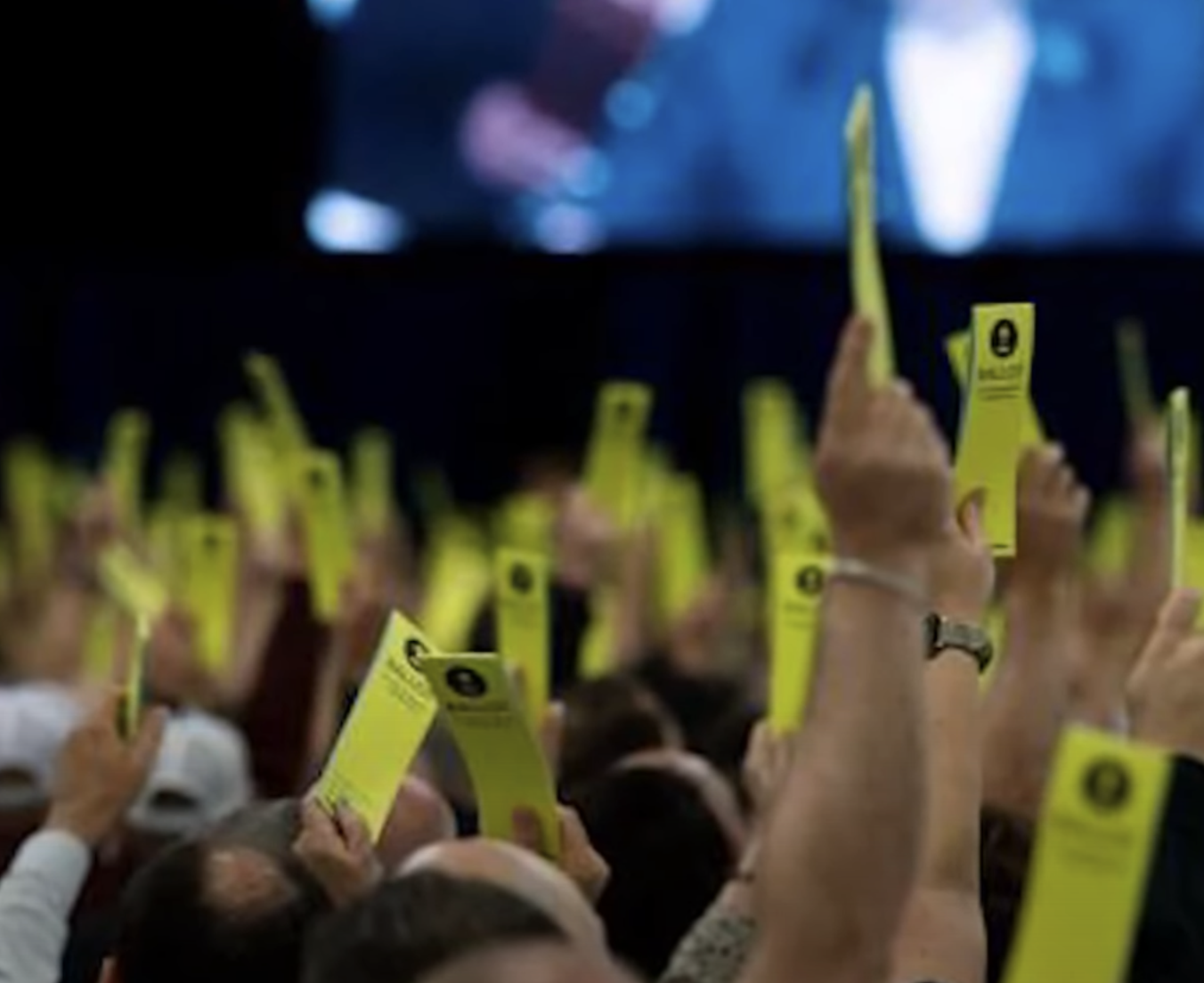
Podcast: Now what, after SBC 'messengers' have waved their yellow voting cards?

Podcast: Now what, after SBC 'messengers' have waved their yellow voting cards?

Here’s a warning to reporters who are preparing for future national meetings of the Southern Baptist Convention: Never call these folks “delegates.”

They are not delegates at some kind of political event. They are “messengers” from their local autonomous churches. You see, this isn’t some kind of cocktail-hour mainline Protestant denominational whatever, and many Baptists don’t like the word “denomination,” either. This is a “convention” and it only meets for three days each year.

Use the wrong language and Southern Baptists will give you a steely gaze and then say something nasty, like “Well, bless your heart.”

Quite a few journalists attended this year’s SBC meeting because there were headline-worthy — from their editors’ point of view — topics on the agenda, like clergy sexual abuse, Critical Race Theory and an election to determine if some new-breed conservative “pirates” (that was their term from 2021) were going to wrest the wheel of the ship away from the allegedly “woke” establishment conservatives.

As you would imagine, host Todd Wilken and I dug into all of this during the “Crossroads” podcast this week (CLICK HERE to tune that in). One of the big themes was that the hard-news coverage of this convention — especially by “Location, location, location” pros from major SBC centers, like Houston and Nashville — was top-notch.

Veteran GetReligion scribe Bobby “Positive” Ross, Jr., will offer pages of URLs in his Plug-In feature this week, so I will not try to do that (I’ll post a link when it goes public). But this is what happens when major newsrooms send religion-beat professionals to cover a major event. Readers don’t have to agree with every single thing that they saw in the #SBC2022 coverage, but what we had here was a tsunami of serious coverage from professionals, backed by the skilled Baptist Press team running the on-site newsroom.

With that in mind, let me note a Big Ideas from this podcast.

* If you study attendance numbers at previous “hot” SBC meetings, you will notice a logical trend linked to a map of the Bible Belt. In this online list, note the 1985 Dallas convention drew 45,519 messengers and the 1986 Atlanta convention drew 40,987.

Yes, these were the pivotal years in the historic “conservative resurgence” in SBC life. But, truth is, those numbers also reflect how far ordinary messengers can drive in one day jammed into the buses or vans owned by “ordinary” SBC congregations.


Please respect our Commenting Policy

Nowhere to hide: Los Angeles Times hit job focuses on one side of Biola University tensions

Nowhere to hide: Los Angeles Times hit job focuses on one side of Biola University tensions

If you have followed trends in academic and student life at Biola University over the past 25 years or so — I have spoken there about 10 times in that period — you know that this is a complex campus, with all kinds of divisions on theological, moral, political and cultural issues.

As a rule, campus administrators there are just as uncomfortable with strong conservative voices as they are with candid evangelical progressives. Thus, all kinds of Biola believers have learned to state radically different convictions in language that can be called “evangelical” to one degree or another. The goal is to keep painful fights out of publications read by parents, donors and even trustees.

It’s important to keep this in mind while reading the Los Angeles Times morality-tale sermon that ran the other day with this headline: “CRT, Trumpism and doubt roil Biola University. Is this the future of evangelical Christianity?” The headline failed to include the key issue in this story — clashes over the validity of 2,000 years of Christian doctrine on sexuality and marriage.

For additional insights on political and theological diversity found Christian campuses, it will help to read this classic 1995 essay at The Atlantic — “The Warring Visions of the Religious Right” — by the liberal Baptist scholar Harvey Cox of Harvard Divinity School (author of the ‘60s bestseller, “The Secular City”).

Oh, and speaking of liberal Baptist scholars, one of the defining voices in the new Los Angeles Times feature is David Gushee of Mercer University. It was totally valid to include his voice in this story, but it was interesting that he is quoted as a neutral academic expert on these matters, as opposed to being an articulate spokesman for activists on one side of the doctrinal war being covered in this story.

After all, it was Gushee who opened a classic 2016 essay for Religion News Service with these lines:

Middle ground is disappearing on the question of whether LGBT persons should be treated as full equals, without any discrimination in society — and on the related question of whether religious institutions should be allowed to continue discriminating due to their doctrinal beliefs.

It turns out that you are either for full and unequivocal social and legal equality for LGBT people, or you are against it, and your answer will at some point be revealed. This is true both for individuals and for institutions.

Neutrality is not an option. Neither is polite half-acceptance. Nor is avoiding the subject. Hide as you might, the issue will come and find you.

Thus, the Los Angeles Times has come to confront the leaders of Biola University.


Please respect our Commenting Policy

Thinking, with Aaron Renn, about the 'three worlds' shaping American evangelical debates

Thinking, with Aaron Renn, about the 'three worlds' shaping American evangelical debates

f you have been paying much attention to evangelical Twitter in the past year or so, you may have noticed quite a few heated arguments involving the word “elite.”

If you doubt this, run a basic Google search for “Tim Keller,” “evangelical” and “elite.” Then try “David French,” “evangelical” and “elite.”

What you’ll find is more evidence of the relevance of this recent GetReligion “Memo” by religion-beat patriarch Richard Ostling: “Is evangelical Protestantism breaking into five factions in the United States of America?

You may want to click a few of these links if you are planning to read, write or report about the upcoming Southern Baptist Convention, which is June 12-15 in Anaheim, Calif.

There is a very good chance that, at some point, one or more Baptists taking part in speeches or in floor debates will use one or more of these terms — “Positive “World,” “Neutral World” and “Negative World.” Most people will “get” the references being made.

However, I think that it would be good — as a weekend “think piece” — to point to the source of those terms as they were used earlier this year in a First Things essay by social-media scribe Aaron M. Renn. The logical title: “The Three Worlds of Evangelicalism.” Here is the overture:

American evangelicalism is deeply divided.

Some evangelicals have embraced the secular turn toward social justice activism, particularly around race and immigration, accusing others of failing to reckon with the church’s racist past. Others charge evangelical elites with going “woke” and having failed their flocks. Some elites are denounced for abandoning historic Christian teachings on sexuality. Others face claims of hypocrisy for supporting the serial adulterer Donald Trump. Old alliances are dissolving.


Please respect our Commenting Policy

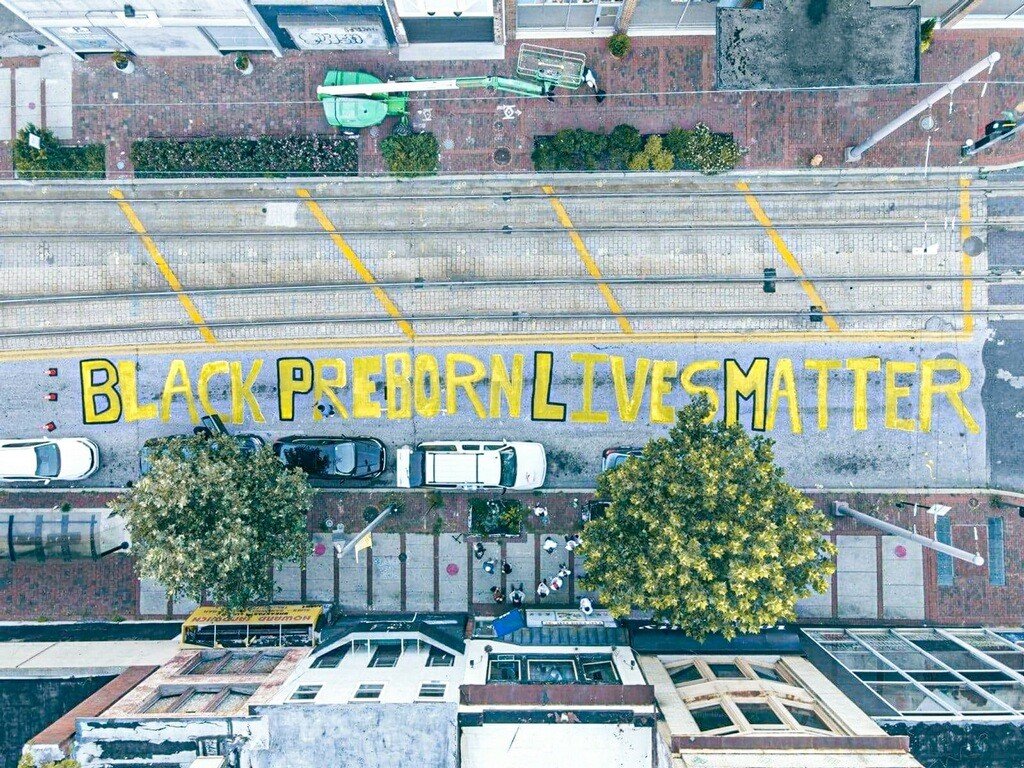
When reporting about black churches and abortion, why not seek sources on both sides?

When reporting about black churches and abortion, why not seek sources on both sides?

You’d think an asteroid was hurtling toward Earth judging from the outraged coverage on abortion the past three weeks after Politico announced on May 3 that the Supreme Court may be poised to reverse Roe v. Wade.

If the coverage was measured, even-handed and inclusive, I could deal with it. In that case, we would be talking about a standard journalistic response to a major story.

But no, what we are seeing — in commentaries and even in news reports — is a mash of “The Handmaid’s Tale, “ the imminent end of civilization as we know it and White supremacy because — as we all know — male White nationalists are behind all this.

So, when I saw this Washington Post piece on how black Protestants view abortion (curiously, Catholics were totally left out of the piece), I figured I’d get a fresh look at the issue and some crucial information. Black women are 13% of the female population but 30% of those who abort their young. Yes, this is an important issue in Black churches and communities.

One would think. And the headline said black churches were “conflicted” over the possibility of abortion access being curtailed, so I read further, hoping the article would air the views of Black church leaders and believers on both sides of the issue.

I can’t say they did.

When a draft Supreme Court opinion leaked indicating that Roe v. Wade could be overturned, the Rev. Cheryl Sanders felt conflicted.

The senior pastor of D.C.’s Third Street Church of God personally doesn’t support abortion but is weary of the politics around being labeled “pro-life” and is grappling with how to address the issue before her predominantly Black congregation. “If you understand that in the politicized term, it’s fraught with problematic racial views and exceptions and blind spots,” she says. And Sanders doesn’t want to align herself with far-right conservative activists she disagrees with on many social issues.


Please respect our Commenting Policy

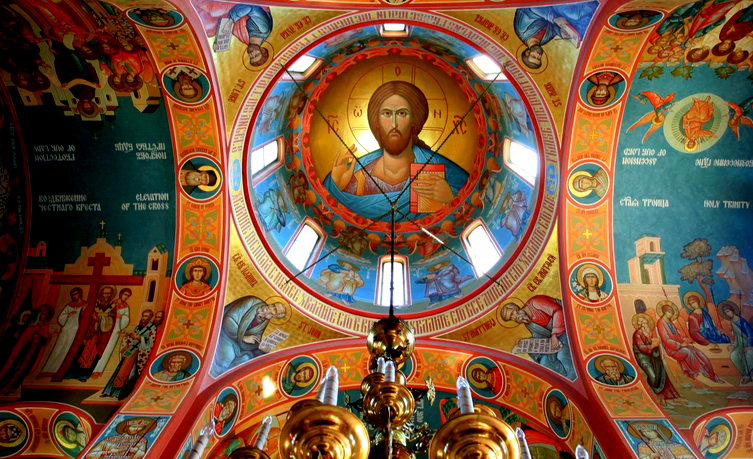
Concerning the new converts to Eastern Orthodoxy: Are they MAGA clones or worse?

Concerning the new converts to Eastern Orthodoxy: Are they MAGA clones or worse?

Yes, to all of those who have written — I have seen the National Public Radio feature that ran with this headline: “Orthodox Christian churches are drawing in far-right American converts.”

It would be hard to imagine a more vicious, one-sided propaganda piece than this one and, if you want to see a blow-by-blow breakdown, read this post by Orthodox convert Rod Dreher: “The Cathedral Vs. The Orthodox Church.”

Rod is using the term “cathedral” as a reference to a particular set of elite media and cultural institutions on what used to be called the “left.” Needless to say, NPR — like the editorial pages of The New York Times — plays a crucial doctrinal role in this cathedral. Dreher (a close friend for nearly 30 years) notes, right up top, concerning this NPR sermon:

… I concede that it is based on a kernel of truth: some outsiders are finding their way to Orthodoxy, thinking that it will be the far right at prayer. A friend who attends a large parish told me last year that they are seeing some young men showing up with that in mind, only to find out otherwise. Let me be clear at the start of this essay that I concede that this phenomenon is not invented out of whole cloth.

In my own small parish, we have seen a surge of young inquirers, but they are coming not with far-right politics in mind, but because they are looking for something more stable and deeper than the churches they had been attending. And yes, it is true that some come because they correctly sense that Orthodoxy is much less likely to surrender to the wokeness that is infesting many Protestant and Catholic congregations. Note well, though, that to NPR, all of this is “far-right.”

Veteran GetReligion readers will know that I am a convert to Eastern Orthodoxy, as well — coming from a Texas Baptist family with several members in the center of Southern Baptist life. If you want to know more about my own journey, see this lecture/essay from 2006: “What do the converts want?”

When people ask why I converted, my short response is that I was seeking a beautiful, conservative, ancient form of Christian tradition that didn’t include ties to American fundamentalism. Since my conversion 23 years ago, I have talked to — conservative estimate — several hundred converts in various settings, including my own parishes.

I would like to focus on the most obvious errors of omission and commission in the NPR piece — an important detail or two about the actual history of the “convert era” in “American” Orthodoxy, which began in the 1980s (click here for link to a crucial book). But first, here is the overture:


Please respect our Commenting Policy