Race

Dang it! Your GetReligionistas pounced a bit too early on the 'parental rights' wars

Dang it! Your GetReligionistas pounced a bit too early on the 'parental rights' wars

Dang it (said the Texas Baptist preacher’s kid), I really hate it when GetReligion gets to a serious media topic Just. A. Bit. Too. Early.

What am I talking about?

Well, take a look at the New York Times headline featured in the tweet at the top of this post, a tweet authored by a symbolic figure in the wider world of Democratic Party life. Michael Wear is a political consultant, but he is best known as the faith-outreach director for Barack Obama's 2012 campaign and then as part of Obama's White House staff. Here’s that headline:

Republicans Seize on Schools as a Wedge Issue to Unite the Party

Rallying around what it calls “parental rights,” the party is pushing to build on its victories this week by stoking white resentment and tapping into broader anger at the education system.

First of all, I think the verb “seize” is a stand-in for the world “pounce,” which has become a bit of a cliche in recent years. Here is the Urban Dictionary take on the “Republicans pounce!” phenomenon or click here for a National Review essay on the subject. The whole point is that the issue at hand isn’t really all that important, but conservatives have “pounced” on it and are using this alleged issue to hurt liberals in social media, conservative news sources, etc.

Major media on the coasts, of course, avoid covering the topic — unless it leads to an embarrassing defeats for Democrats in a symbolic state like Virginia.

Anyway, the Times headline may ring a bell or two for those who read this October 22 podcast-post here at GetReligion: “Are 'parental rights' references (inside scare quotes) the new 'religious liberty.” Here is the opening of that post:
Please respect our Commenting Policy

New podcast: Did Glenn Youngkin win the Latino vote in Virginia? Maybe ask folks in pews?

New podcast: Did Glenn Youngkin win the Latino vote in Virginia? Maybe ask folks in pews?

On the morning after The Virginia Election, I noted that the sharp folks at a must-bookmark niche-news website — A Journey Through NYC Religion — had done some old-fashioned digging and discovered some interesting religion ghosts (to use an old GetReligion term) in that political earthquake. Click here for that story: “Faith trumps Trump in Virginia.”

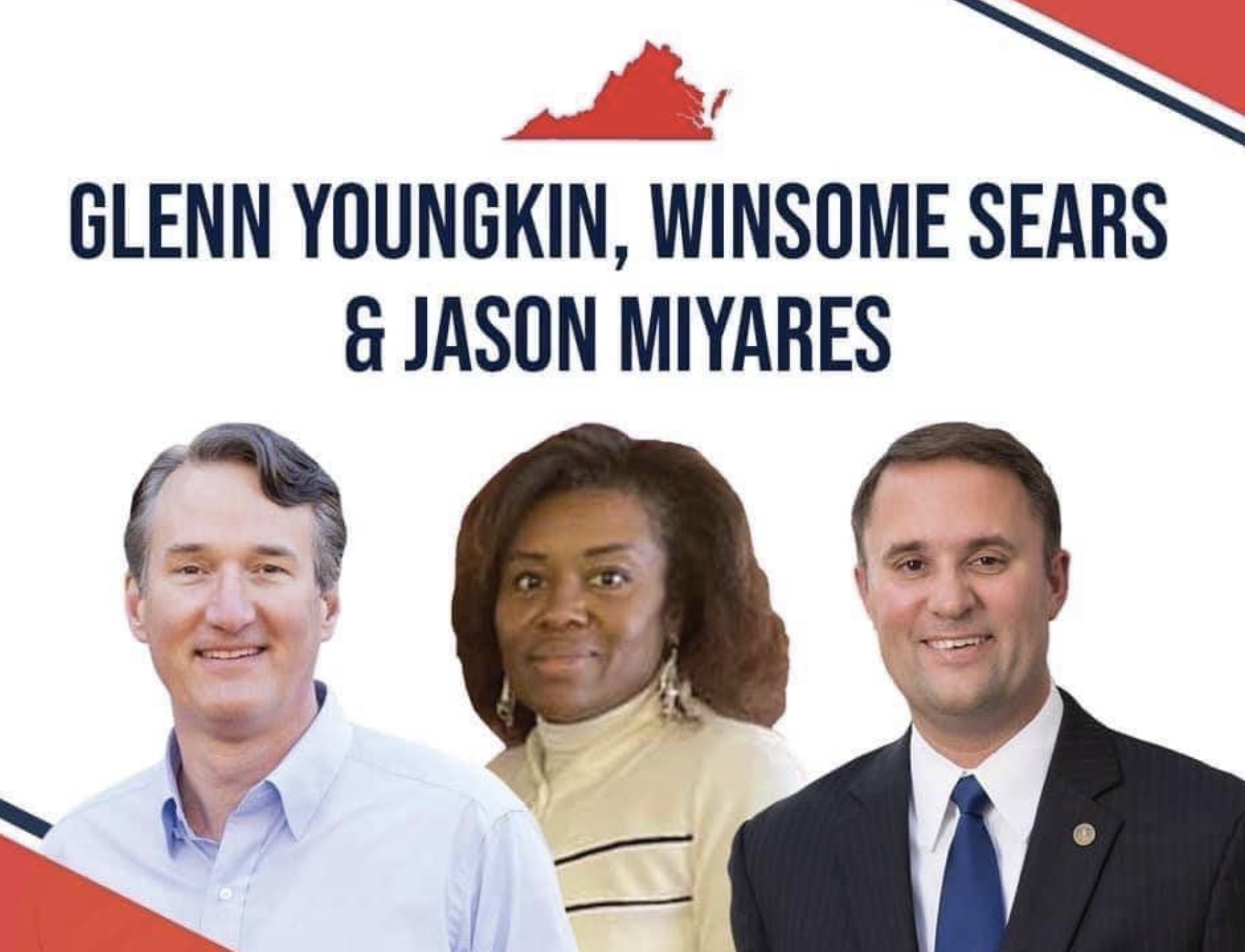
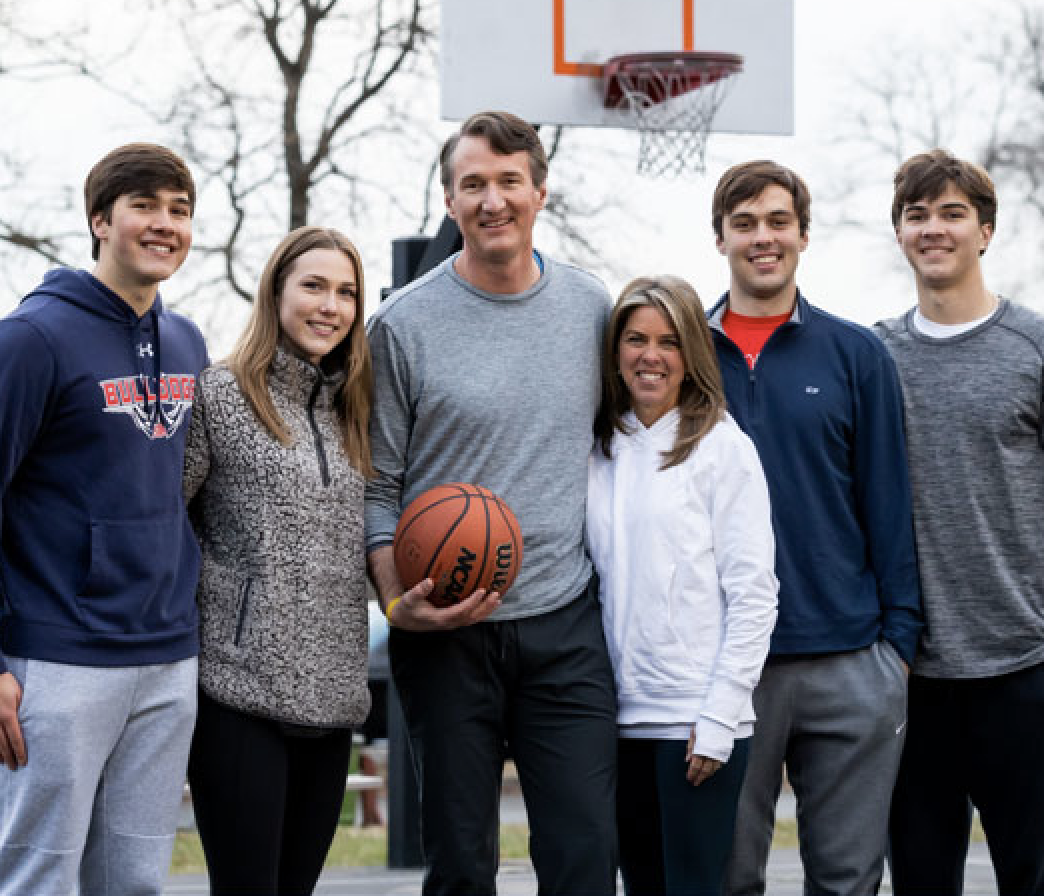
I sure didn’t know, from reading mainstream press coverage, that Governor-elect Glenn Youngkin was an evangelical Anglican who once was a leader in the Alpha course, an evangelism program that expanded from the Church of England into churches and denominations around the world.

I didn’t know that Lieutenant Governor-elect Winsome Sears, an African American evangelical and former Marine, had once led a Salvation Army ministry and that the state’s new attorney general, Jason Miyares, appears to be a Latino evangelical Episcopalian.

All of that showed up in my post-election piece with this headline: “Yes, there were overlooked religion angles in today's biggest U.S. political news story.”

We talk about all of that in this week’s “Crossroads” podcast (click here to tune that in), but also veered off into other religion-based angles in the current political climate. One of them took us into familiar territory, at least for those who have followed GetReligion for the past five or six ears. I’m talking about the rising political clout of Latino evangelicals, traditional Catholics and Pentecostal believers.

There’s some evidence that Youngkin and the diverse GOP lineup actually WON the Latino vote in the Virginia election (click here for a totally faith-free Politico discussion of that topic).

So here is that question again: How can journalists cover shifting patterns among Latino voters — and Black voters, as well — without examining the role of religion and cultural issues?

Let’s say: Is it safe to assume that pro-life Latinos are more likely — lacking acceptable Democrats on the ballot — to opt for Republicans? How about Latinos who favor school choice? Who old traditional Christian views on gender issues?


Please respect our Commenting Policy

Yes, there were overlooked religion angles in today's biggest U.S. political news story

Yes, there were overlooked religion angles in today's biggest U.S. political news story

Well what do you know. Evangelical Anglicans and the Salvation Army had a big night in the Commonwealth of Virginia.

That’s probably not the first thing that leaps to mind today, for political junkies who spent most of the night (the World Series finale was a big deal) watching political pundits express shock and, sometimes, grief watching a Republican newcomer upset name-brand Democratic Party candidate.

Lots of people talked about Donald Trump, of course. Some people dug a bit deeper and focused on how governor-elect Glenn Youngin managed to affirm some themes from the Trump revolution, while striving to stay as far away as possible from personal contact with Orange Man Bad.

This brings me to a headline this morning at A Journey Through NYC Religions, which is one of those niche-news websites that many religion-beat pros have in their browser favorites — because of its heady mix of hard facts and hard-to-label commentary.

Here’s the headline: “Faith trumps Trump in Virginia.”

Say what?

I think many journalists would assume — if they thought about religion angles in the Virginia race — that the members of the victorious GOP team probably came from White megachurches. But that’s not what veteran editor Tony Carnes found when he looked for the ties that bind, in this case. Here is his overture:

Most of the media attention in the Virginia elections has been on Trump and his influence. The Democratic candidate Terry McAuliffe tried unsuccessfully to tag his opponent Glenn Youngkin as a Trumper.

However, under the surface of politics, there was a deeper spiritual culture and social network that connected the top three candidates in Virginia. This characteristic made the GOP effort in Virginia more winsome (indeed, that is the first name of Winsome Sears, the next Lieutenant Governor.)


Please respect our Commenting Policy

Is this statement accurate? All true evangelicals wanted to vote for Donald Trump -- period

Is this statement accurate? All true evangelicals wanted to vote for Donald Trump -- period

As a rule, your GetReligionistas strive to avoid writing about analysis features that are published in magazines such as The Atlantic.

However, when I keep hearing people asking questions about one of these “think pieces,” it’s hard not to want to add a comment or two to the discussion.

So first, let’s start with something that GetReligion team members have been saying for nearly two decades, as a reminder to readers who have never worked in mainstream newsrooms: Reporters/writers rarely write the headlines that dominate the layouts at the top of their pieces.

Case in point: The double-decker headline on that buzz-worthy Peter Wehner commentary piece at The Atlantic:

The Evangelical Church is Breaking Apart

Christians must reclaim Jesus from his church.

Yes, I know. There is no such thing as “the evangelical church.”

Do basic facts matter? There are, of course, denominations that are predominantly evangelical. Some of them disagree on all kinds of things — such as baptism or the ordination of women. There are Pentecostal denominations that share many, but not all, doctrines with flocks that are connected with the evangelical movement. There are lots of evangelicals who still sit — though many are quite unhappy — in liberal Protestant pews.

We won’t even talk about that second line: “Christians must reclaim Jesus from his church.”

You can get to the heart of this confusion by — if you are reading the Wehner piece online — glancing at the tagline that appears in the subject line in your computer browser. That semi-headline reads: “Trump is Tearing Apart the Evangelical Church.”

Ah, that’s the heart of this matter.


Please respect our Commenting Policy

All those fast-growing Christian schools: Are they really bastions of racism, intolerance?

All those fast-growing Christian schools: Are they really bastions of racism, intolerance?

Usually most New York Times’ pieces about anything conservative and (particularly) Christian gets reams of nasty remarks in the comments section. But a recent story on the rapid growth of private Christian schools drew a wider range of constructive responses.

I’m talking about Ruth Graham’s piece about a Christian school in an obscure corner of southwestern Virginia (drive west of Richmond, then head south) and how such schools are booming around the country in the wake of COVID-19 realities.

It’s a trend that a lot of us have seen coming. The key question, for GetReligion readers, is how the story handled the “Why?” factor looming over this trend. We will start at the beginning:

MONETA, Va. — On a sunny Thursday morning in September, a few dozen high school students gathered for a weekly chapel service at what used to be the Bottom’s Up Bar & Grill and is now the chapel and cafeteria of Smith Mountain Lake Christian Academy.

Five years ago, the school in southwestern Virginia had just 88 students between kindergarten and 12th grade. Its finances were struggling, quality was inconsistent by its own admission, and classes met at a local Baptist church.

The Smith Mountain Lake real estate market is the largest marketplace for lake property in Virginia unless you can afford expensive beachfront to the east.

Now, it has 420, with others turned away for lack of space. It has grown to occupy a 21,000-square-foot former mini-mall, which it moved into in 2020, plus two other buildings down the road.

Smith Mountain Lake is benefiting from a boom in conservative Christian schooling, driven nationwide by a combination of pandemic frustrations and rising parental anxieties around how schools handle education on issues including race and the rights of transgender students.

Homes in Franklin County, which includes Smith Mountain Lake, are selling at 35% above assessed value, so people are definitely moving to this exurb because, well, they can.

Everyone is working remote these days and if you don’t HAVE to live near a place like Washington, DC (about a four-hour drive to the north), why would you?


Please respect our Commenting Policy

New podcast: Are 'parental rights' references (inside scare quotes) the new 'religious liberty'

New podcast: Are 'parental rights' references (inside scare quotes) the new 'religious liberty'

Here’s a question that I heard recently from a young person down here in Bible Belt country: Why do students at (insert public school) need permission forms from their parents and a doctor to take (insert over-the-counter medication), but the school can assist a student’s efforts to change her gender identity while keeping that a total secret from the parents?

Obviously, something had changed at this school. The crucial question was whether parents had any right to shape or attempt to influence the education — or the moral and physical transformation — of their child in this setting controlled by the state and funded by their tax dollars. Yes, there are religious doctrines involved in many or even most of these cases.

Here’s the question we discussed during this week’s “Crossroads” podcast: Are media reports about this issue starting to turn parental rights into “parental rights,” complete with those prickly “scare quotes” that have turned references to old-school religious liberty issues into so-called “religious liberty” issues. Click here to listen to that podcast.

You can find traces of this conflict if you dig deep enough in a recent New York Times story with this double-decker headline:

The Unlikely Issue Shaping the Virginia Governor’s Race: Schools

Virginia Republicans in a tight governor’s race have been staging “Parents Matter” rallies and tapping into conservative anger over mandates and critical race theory.

The team behind this fascinating Times story didn’t spot the obvious religion ghost in this story. But this story didn’t attempt to turn these standoffs into libertarian dramas in which Trumpian parents are only concerned about COVID-19 conflicts about masks and vaccines (see a related Washington Post story, for example).


Please respect our Commenting Policy

Progressive Catholic cardinal of Washington, D.C., pours praise on America's embattled press

Progressive Catholic cardinal of Washington, D.C., pours praise on America's embattled press

With a controversial Catholic in the White House, there was no way for Cardinal Wilton Gregory to face a pack of Beltway journalists without fielding political questions.

Job 1 was addressing President Joe Biden's statement: "I respect them -- those who believe life begins at the moment of conception and all -- I respect that. Don't agree, but I respect that."

The leader of the Catholic Archdiocese of Washington, D.C., has made it clear that Biden can receive Holy Communion. However, Gregory also noted: "The Catholic Church teaches, and has taught, that life -- human life -- begins at conception. So, the president is not demonstrating Catholic teaching."

That was the big headline after this event, but this wasn't the topic Gregory came to the National Press club to discuss. In his recent address, he poured praise on America's mainstream press, especially journalists who -- during this "anxious time" -- have openly pushed for change on issues linked to racism and social justice.

"You are the ones we rely on to keep us informed, updated and connected as a global community of various faith traditions," said Gregory, America's first Black cardinal. "Like all industries, journalism has certainly changed over the years. Technology has expanded your reach and abilities to share our life stories, our dreams and our hopes.

"You are the professionals with just the right words, who immerse yourselves in a community, a situation or even a crisis -- to bring us the facts, the people and the takeaways that can help us work toward living in true peace and equality for all, without the threat of violence or harm."

According to a sobering blast of data from Gallup, the cardinal's critique of the national press would ring true for Democrats and political progressives -- but not for Republicans and cultural conservatives. Catholics can be found in both of those camps, of course.

In their Sept. 1-17 poll, Gallup researchers asked: "In general, how much trust and confidence do you have in the mass media -- such as newspapers, TV and radio -- when it comes to reporting the news fully, accurately and fairly -- a great deal, a fair amount, not very much or none at all?"


Please respect our Commenting Policy

New podcast: Yes, New York's governor urged church folks to be her 'apostles' backing vaccines

New podcast: Yes, New York's governor urged church folks to be her 'apostles' backing vaccines

Hey news consumers, remember that time when President Donald Trump stood in front of a church (sort of in an urban war zone), held up a Bible and the world went nuts?

Chances are good that you heard about it. However, as a refresher, here are 66,100,1000 Google references to this incident, as well as as an imperfect collection of other Trumpian news involving the word “Bible.”

Or remember that time when Trump — long-time member of the liberal Presbyterian Church (U.S.A.) and probably, in terms of private life, one of the most secular presidents in American history — went to Liberty University to court evangelicals and said this (care of an NPR report):

"We're going to protect Christianity. I can say that. I don't have to be politically correct," he thundered at the beginning of his speech at the conservative evangelical university.

Then he moved on to cite "Two Corinthians 3:17, that's the whole ballgame. ... Is that the one you like?" Trump asked. "Now the Lord is that Spirit: and where the Spirit of the Lord is, there is liberty."

Over at Google, there appear to be a mere 2,380,000 references to this “Two Corinthians” incident.

Truth is, politicians often say and do strange things while courting support in religious settings that are way outside their own cultural comfort zone.

This brings us to this week’s “Crossroads” podcast, which focuses on the coverage — actually, the lack of coverage — of the recent visit that New York Gov. Kathy Hochul paid to the Christian Cultural Center, a massive and very influential predominantly African-American megachurch in Brooklyn. Click here to get that podcast, or head over to Apple Podcasts.

Now, there was more to this political-religious event than the hilarious typo in the rushed transcript of the governor’s remarks produced, apparently, by a staff member. Check out the opening words here: “The phrase be to God, this is the day the Lord has made. Amen, amen.”

Let’s assume that the governor actually said “praise be to God.”


Please respect our Commenting Policy

Possible clues for reporters seeking religion angles in 2022 and 2024 elections

Possible clues for reporters seeking religion angles in 2022 and 2024 elections

A year from now the Supreme Court will have ruled on its lollapalooza Dobbs abortion case, we'll know how much permanent damage Afghanistan dealt to the Biden-Harris Administration and -- we can hope -- COVID-19 and Delta may finally be under control.

Also, journalists will be in the thick of covering a red-hot election for the U.S. House and Senate and the state legislatures.

How will religion play into the outcome? Though church numbers are sliding, reporters shouldn't forget that more than with many other factors, religious participants by the millions provide readily organized activists and voting blocs.

There could be clues in Pew Research Center's report last week offering the last word on religious voters in 2020, with some comparative information from its 2016 post-election report. Rather than exit polling, Pew analyzed responses from 9,668 members of its ongoing, randomly selected American Trends Panel who were verified as having actually voted by checking commercially available lists.

White evangelical Protestants went 84% for Donald Trump's re-election, which is not surprising but remains significant for Republican strategists (and for this movement's own societal and outreach prospects). Pew says they gave Trump "only" 77% in 2016, slightly less than was shown in exit polls and a bit below Mitt Romney's 2012 support.

But evangelicals always go Republican. That’s no surprise.


Please respect our Commenting Policy