Politics

Yo, LA Times: Maybe, must maybe, issues of faith, family and culture matter in California?

Yo, LA Times: Maybe, must maybe, issues of faith, family and culture matter in California?

If you follow the mainstream press coverage of religion — primarily coverage by reporter who are NOT religion-beat specialists — then you know that what really matters in life is politics.

As we say here at GetReligion: Politics is real. Religion? Not so much.

Now, it’s also true that money is real, as in news coverage of economics (which often overlap with politicals). If a story cannot be linked directly to politics, journalists will study its economic implications.

The Big Idea: Politics and economics matter more than culture and religion. Maybe journalists think they can ignore that classic book by candid liberal Thomas Frank: “What's the Matter with Kansas?

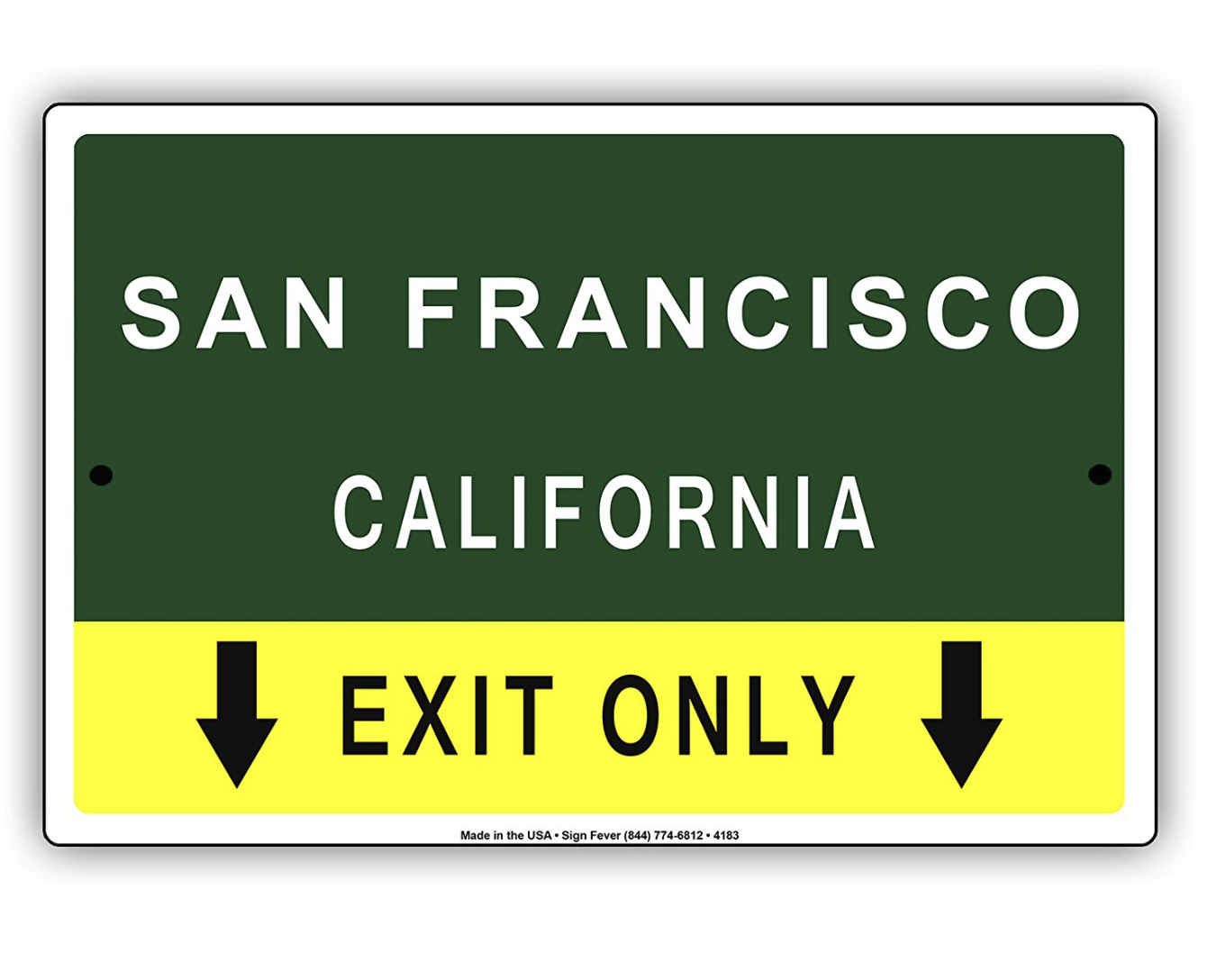
This brings me to a recent Los Angeles Times piece that ran (this is the Yahoo! News version) with this headline: “4 in 10 California residents are considering packing up and leaving, new poll finds.”

This is a religion-free story. Sort of. Here is the sunny overture:

With its unmatched natural splendor and cultural attractions, California is a beacon that attracts people from around the world who put down roots and call it home.

About 70% of residents said they are happy living here, a new statewide poll shows, crediting the state's diversity, economic opportunities and an enjoyable lifestyle as reasons to stick around.

Yet large swaths of residents are also considering packing up and leaving. Many also believe that the state is headed in the wrong direction, and are anxious about the direction of the economy and their ability to pay their bills.

Message received, right there at the end.

Just in case you missed the point, the Times team goes further:


Please respect our Commenting Policy

American College of Pediatricians: How many times must we hear about its religious ties?

American College of Pediatricians: How many times must we hear about its religious ties?

It started as a data breach at a faith-friendly medical group that opposes transgender therapies and same-sex parenting.

It morphed into a quasi-investigative piece co-written by three Washington Post reporters and one contributor –- none of them a religion specialist –- about “conservative doctors” who have influenced public discussion about abortion and transgender individuals.

When I first saw this, I wondered what issue was so important that it required a triple byline, especially since the story was originally broken by other outlets weeks before. The following piece — “Documents show how conservative doctors influenced abortion, trans rights”ran last week in the Post:

A small group of conservative doctors has sought to shape the nation’s most contentious policies on abortion and transgender rights by promoting views rejected by the medical establishment as scientific fact, according to documents reviewed by The Washington Post that describe the group’s internal strategies.

Actually, the entire “medical establishment” doesn’t reject these views. This is another example of erasing an important debate.

The records show that after long struggling to attract members, the American College of Pediatricians gained outsize political influence in recent years, primarily by using conservative media as a megaphone in its quest to position the group as a reputable source of information.

The organization has successfully lobbied since 2021 for laws in more than a half-dozen states that ban gender-affirming care for transgender youths, with its representatives testifying before state legislatures against the guidelines recommended by mainstream medical groups, according to its records. It gained further national prominence this year as one of the plaintiffs in the federal lawsuit to limit access to mifepristone, a key abortion drug.

That put it in the media crosshairs, for sure.

Despite efforts to invoke the credibility of the medical profession, the American College of Pediatricians is viewed with skepticism by the medical establishment. For years, the group has presented statistics and talking points to state legislators, public school officials and the American public as settled science while internal documents emphasize how religion and morality influence its positions.


Please respect our Commenting Policy

What's up with the Rev. Bart Barber's easy win as SBC president? Don't ask the Gray Lady

What's up with the Rev. Bart Barber's easy win as SBC president? Don't ask the Gray Lady

One of the most interesting stories from the 2023 meeting of the Southern Baptist Convention was the easy win by the Rev. Bart Barber, a low-key Texas Baptist who was elected to a second term as president.

Under normal conditions, SBC presidents are elected to a second term without opposition.

However, words like “normal” do not apply to Southern Baptist life in the Internet age — in which there are ordinary conservative Southern Baptists and then there are those gathered in the Conservative Baptist Network tent.

Barber faced opposition from the right, which was a newsworthy fact in and of itself. I would say that the opposition came from the “theological” right, but I haven’t seen strong evidence that this conflict is about theology.

Still, Barber’s easy win in the New Orleans convention was a blow to the rebel conservatives and a win for the establishment conservatives. I found it interesting that some in the elite press didn’t seem to realize this, or appeared predestined to ignore it.

Check out the top of the New York Times wrap-up report on the SBC meeting. The massive double-decker headline tells the readers what really matters:

Southern Baptists’ Fight Over Female Leaders Shows Power of Insurgent Right.”

Moves this week to oust women from church leadership in the nation’s largest Protestant denomination offer an early look into the psyche of evangelical America ahead of 2024.

Whoa. “Ahead of 2024?” Is this a reference to the next SBC election or a suggestion that what happened in New Orleans is important because it was some kind of symbolic foretaste of what really matters to the religion-desk at the Times — which is the 2024 White House race?

As always, remember: Politics is what is real. Religion? Not so much.

That journalism question, once again: Is this Times sermon “analysis” or “news”?


Please respect our Commenting Policy

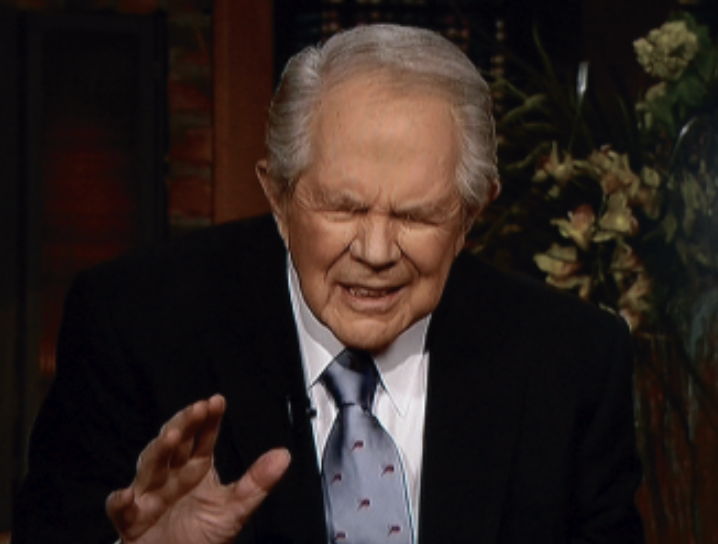
The Rev. Pat Robertson -- a charismatic broadcaster who preached to his own choir

The Rev. Pat Robertson -- a charismatic broadcaster who preached to his own choir

The Pat Robertson for President advance team made it clear that journalists were barred from its campaign rally in a church near Denver.

The candidate wanted friendly faces. As one volunteer said: "What Pat might have to say to a group of pastors … might not be the kinds of things he'd want mainstream Republicans to read in the press."

The faithful inside that 1988 event raised their hands in praise to God and sang familiar choruses with a true believer that they knew shared their embrace of miracles, prophecy and "speaking in tongues." That kind of trust fueled Robertson's media-driven career, which ended on June 8 with his death at age 93.

Yes, I was on the outside of that door, researching my very first syndicated "On Religion" column. Before Robertson arrived, supporters prayed for a "special anointing" of God's power on their candidate. There is the kingdom of heaven, and there is the kingdom of the earth, one man prayed. "We thank you for men of courage, like Pat Robertson, who are working to bring these two kingdoms closer together," he added.

Robertson avoided blunt faith language when facing the press during that high-wire political campaign. However, he kept blending subtle biblical references into remarks about economics, foreign policy and hot cultural issues. He knew fans of his daily 700 Club broadcasts could break the code.

"Robertson had his own program. He knew he could say whatever he wanted to say there," said Kenneth Woodward, known for decades of work at Newsweek and books such as "Getting Religion: Faith, Culture and Politics from the Age of Eisenhower to the Era of Obama."

On one level, "he didn't need to talk to the press because he could talk straight to his own people. But that doesn't always work in politics, when you need to reach other people in order to succeed," said Woodward, reached by telephone.

Once Robertson veered into politics, his critics paid closer attention to what he said, about almost anything.


Please respect our Commenting Policy

Gallup team think piece: Concerning the 'Thorny Challenge of Defining Evangelicals'

Gallup team think piece: Concerning the 'Thorny Challenge of Defining Evangelicals'

Your GetReligionistas have, over the past two decades, dedicated oceans of digital ink to mainstream press struggles (especially political reporters) to grasp the meaning of this church-history term — “evangelical.”

You ask: Oceans?

Here is a small sample of those headlines:

* Define ‘evangelical’

* Please define 'evangelical' (yet again)

* Define 'evangelical,' please. Alas, many Americans don't think that this is a religious term

* Define 'evangelical,' 2023: What is a 'reconstructionist,' low-church Protestant?

This is a complex topic. The Rev. Billy Graham told me, back in the late 1980s, that he had no idea what “evangelical” meant. Honest.

Now, the professionals at the Gallup organization have offered a Frank Newport “think piece” on this topic that journalists and news consumers need to read. The headline: “The Thorny Challenge of Defining Evangelicals.” Here’s the overture:

The practical challenge arising from any analysis of evangelical Protestants in the U.S. is finding a reliable and valid way to measure the group. Much of the data about evangelicals comes from surveys, creating the need for a lucid and straightforward measure that can be easily incorporated into questionnaires.

In recent decades, this challenge has more often than not been met by using the question, “Would you describe yourself as ‘born-again’ or evangelical?”

Gallup began incorporating this question into its surveys in the summer of 1986, primarily as a way of understanding political issues.


Please respect our Commenting Policy

Pat Robertson: Was he an influential religious broadcaster or some kind of 'evangelicalist'?

Pat Robertson: Was he an influential religious broadcaster or some kind of 'evangelicalist'?

I must admit that I have not had the time to dig into the 666 million words or so (that’s an estimate) of news and commentary dedicated to the death of the Rev. Pat Robertson. It’s hard to do much reading when at the wheel of a car for about 1,400 miles (and that was the return trip).

But I do have some thoughts on the passing of the charismatic quote machine that journalists loved, loved, loved to hate (see my 2005 commentary for the Poynter Institute). If Robertson didn’t exist, blue-zip-code pundits would have created him ex nihilo.

Truth be told, I never met the man — even though, technically speaking, I briefly worked for him during a failed 2000 attempt to build a D.C. beltway-based master’s degree journalism program for Regent University.

How to describe Pat Robertson?

First and foremost, he was a media maven and entrepreneur, creating the Christian Broadcasting Network in 1960. Years later, he sold the Family Channel for something like $2 billion. Love it or hate it, the niche-news and commentary DNA of The 700 Club can be found all over the place on cable television.

For journalists, he was mainly a political activist — playing a major role in the creation of the Christian Coalition. In 1988 he made a surprisingly relevant attempt to win the White House, seeking the Republican nomination. He was the son of a U.S. senator and, before jumping into media work, graduated from Yale Law School and New York Theological Seminary.

The media entrepreneur poured millions of dollars into academica, with the creation of Regent University — which only offered graduate-school degrees in subjects that Robertson considered culturally significant (such as law and mass communications).

Robertson was a bestselling author, with the help of numerous ghost writers (including a major gay-rights pioneer).

I would argue that his most significant achievement was helping merge the charismatic movement into mainstream evangelical Protestantism, adding doctrinal elements of Pentecostalism into the rapidly growing world of post-denominational Christianity in America and around the world.

But here is the big journalism question: Why do so many mainstream journalists call Robertson an “evangelist,” even though crusades and public preaching of that style were never part of his life and work?


Please respect our Commenting Policy

DeSantis' Catholic faith goes under the media microscope before '24 presidential primaries

DeSantis' Catholic faith goes under the media microscope before '24 presidential primaries

The presidential race is just starting to heat up. While it may still be early, candidates are popping up every few days and announcing their intention to seek the Republican nomination in 2024.

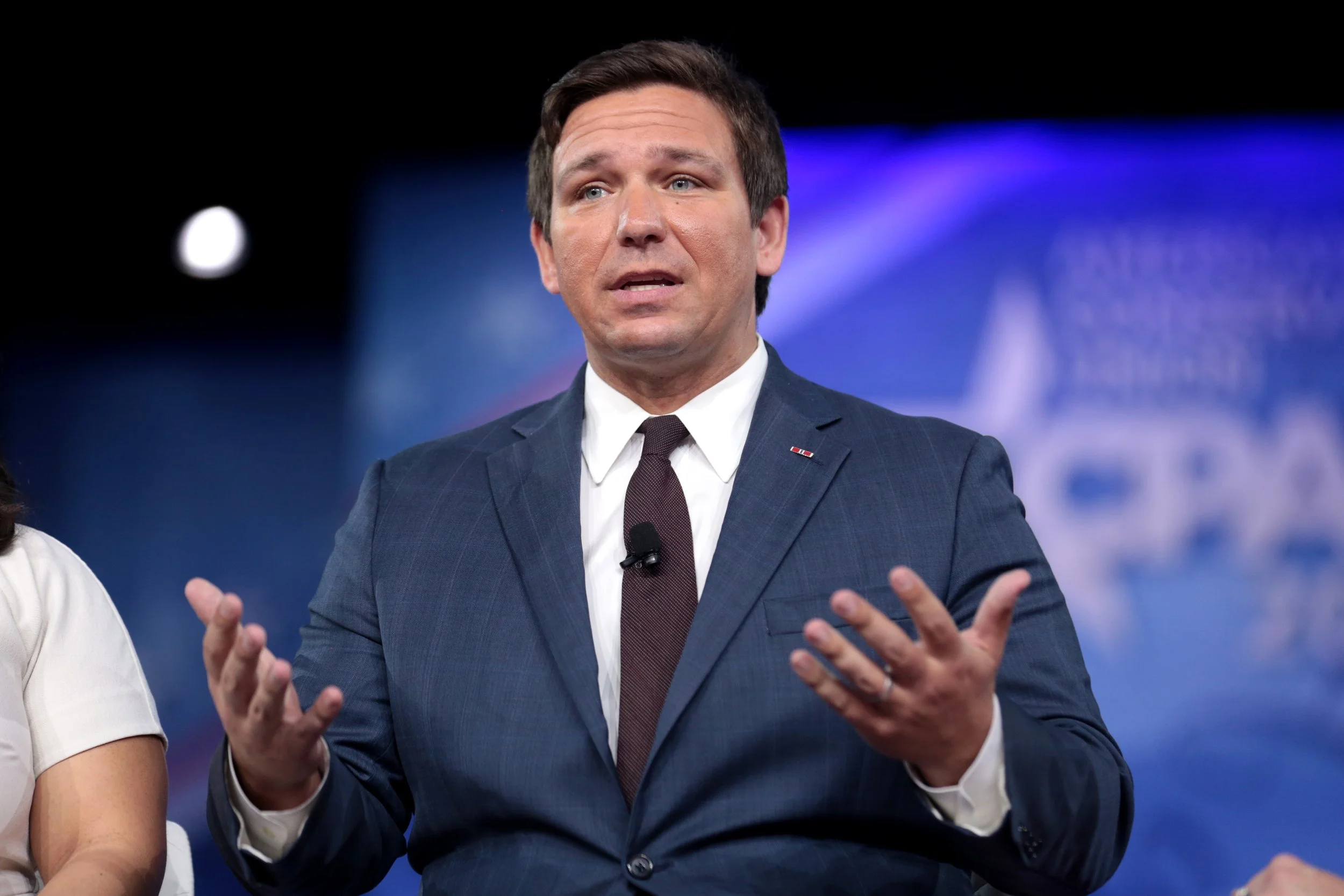
Among those seeking to dislodge the early favorite — polling shows that to be former President Donald Trump — is Florida Gov. Ron DeSantis. This is the same man who has become something of a conservative darling in recent years for relentlessly going after “woke” ideology. His battle with Disney is an example of a culture war fight DeSantis hasn’t been afraid to address in recent years.

DeSantis has been criticized for many things, from whether his wife Casey is “a problem” to confusion over the pronunciation of his last name.

As the past weeks have shown, DeSantis’ foray into national politics has come shone a brighter media spotlight on him, his family and beliefs.

Yes, Christian beliefs. It’s true that DeSantis is seen as possibly the only candidate in the ever-growing GOP primary field capable of defeating Trump and possibly even President Joe Biden.

This increased scrutiny — both by the mainstream and religious press — has included whether or not DeSantis, a Catholic, is personally devout. I tackled this very topic more than a year ago in a post that ran under the headline “As Florida’s DeSantis wages culture war, his Catholic faith isn’t news — unless it’s used to attack him.”

Here was the main thrust of my argument:


Please respect our Commenting Policy

Plug-In: Life after Pat Robertson, a religious broadcaster who mixed religion and politics

Plug-In: Life after Pat Robertson, a religious broadcaster who mixed religion and politics

In the headlines, former President Donald Trump has been indicted on federal charges in the classified documents case. A possible prison sentence aside, will the case help or hurt Trump with conservative Christian voters? Stay tuned.

Here in Oklahoma City, where I am, the Oklahoma Sooners celebrate their third straight Women’s College World Series championship. The best team in college sports finished the season by winning a record 53 games in a row.

And yes, Jesus is a big part of their team chemistry, as ESPN’s Hallie Grossman has highlighted.

This is our weekly roundup of the top headlines and best reads in the world of faith. We start with Thursday’s death of Pat Robertson at age 93.

What To Know: The Big Story

‘He obeyed God’: That’s how the Christian Broadcasting Network characterizes Pat Robertson’s life.

More from CBN:

Pat Robertson dedicated his life to preaching the Gospel, helping those in need, and educating the next generation. He founded the Christian Broadcasting Network and numerous organizations, including Operation Blessing, Regent University, the American Center for Law and Justice, and International Family Entertainment Inc. He was also a New York Times best-selling author and host of The 700 Club.

Pat was married to the love of his life and partner in ministry for 67 years, Dede Robertson, until she died in 2022. Together, they had four children, 14 grandchildren, and 24 great-grandchildren.

Religion and politics: Robertson was a “pugnacious conservative whose Christian Broadcasting Network defined televangelism for decades,” the Washington Times’ Mark A. Kellner writes.

“With CBN, ‘The 700 Club,’ Regent, the Christian Coalition, and a run for president, he changed evangelicals’ place in public life,” according to Christianity Today’s Kate Shellnutt.

The 1988 Republican presidential candidate “turned evangelicals into a powerful constituency that helped Republicans capture Congress in 1994,” the New York Times’ Douglas Martin notes.

Robertson’s legacy: The Associated Press’ Ben Finley explains:


Please respect our Commenting Policy

Podcast: Who gets to pin labels on the armies fighting in those good 'ole SBC wars?

Podcast: Who gets to pin labels on the armies fighting in those good 'ole SBC wars?

Once upon a time, starting in the late 1970a, the Southern Baptists Convention had a big civil war — fighting about the authority of the Bible and “biblical inerrancy,” a rather inside-baseball term that was little known by pew-folks at that time.

There were two big armies, with the gray three-piece-suit players of the Southern Baptist establishment and on the other the rebels who, if my memory is correct, sometimes wore plaid. Cut me some slack, because it’s been a long time. But this background was crucial in this week’s “Crossroads” podcast (click here to tune that in), focusing on early coverage of strife leading up to the 2023 SBC meetings next week in New Orleans.

The good guys back then called themselves “moderates” because they tended to seek compromise stances on hot-button issues — such as abortion and the ordination of women. Thus, journalists called them “moderates.”

The bad guys called themselves “conservatives” and took strong stands on the big Bible issues (with the exception, let’s say, of economic justice). Thus, many journalists called them “fundamentalists” — including some rather ordinary evangelicals who didn’t fit that f-word term.

The right said there were “liberals” all over the place and the SBC left said “liberals” didn’t exist. Truth is, there were very few doctrinal liberals around (in a seminary chair or two) who were weak in defending ancient beliefs — think the Resurrection and the Virgin Birth of Jesus. Journalists were not interested in investigating facts related to these debates, since the “moderates” said that was all, well, disinformation.

Flash forward to the present. The few remaining “moderates” have mainline Protestant demographics and often have quiet disputes about mainline Protestant-style issues (think LGBTQ+ matters).

The hot-button SBC 2023 issues are (1) how tough to be on fighting sexual abuse and (2) the ordination of women (and old issue is back).

Everyone defends biblical inerrancy (while maybe offering slightly different definitions). Everyone stands together on the big doctrinal issues. In the background, however, is an important issue — when it comes to an issue like ordaining women, does the SBC have “doctrines” or “opinions”?


Please respect our Commenting Policy