Politics

Podcast: What's going on with Southern Baptist decline? Count the news hooks ...

Podcast: What's going on with Southern Baptist decline? Count the news hooks ...

Back in the early 1980s, the Southern Baptist Convention was enduring the crucial years of its civil war over — here’s the term headline writers hated — “biblical inerrancy.”

I was at the Charlotte News and then the Charlotte Observer back then, in a city in which one of the major roads was named after Billy Graham. The SBC spectrum in Charlotte ranged from hard-core conservatives to “moderates” who were basically liberal mainline Protestants with better preaching.

During that time, a moderate church welcomed the the late Rev. Gardner C. Taylor of Brooklyn to its pulpit for a series of sermons (“moderates” don’t have “revivals”). Taylor would make just about anyone’s list — Top 100 or even Top 10 — of that era’s most celebrated preachers. In 1980, Time magazine hailed him as the “the dean of the nation’s black preachers.” That’s saying something.

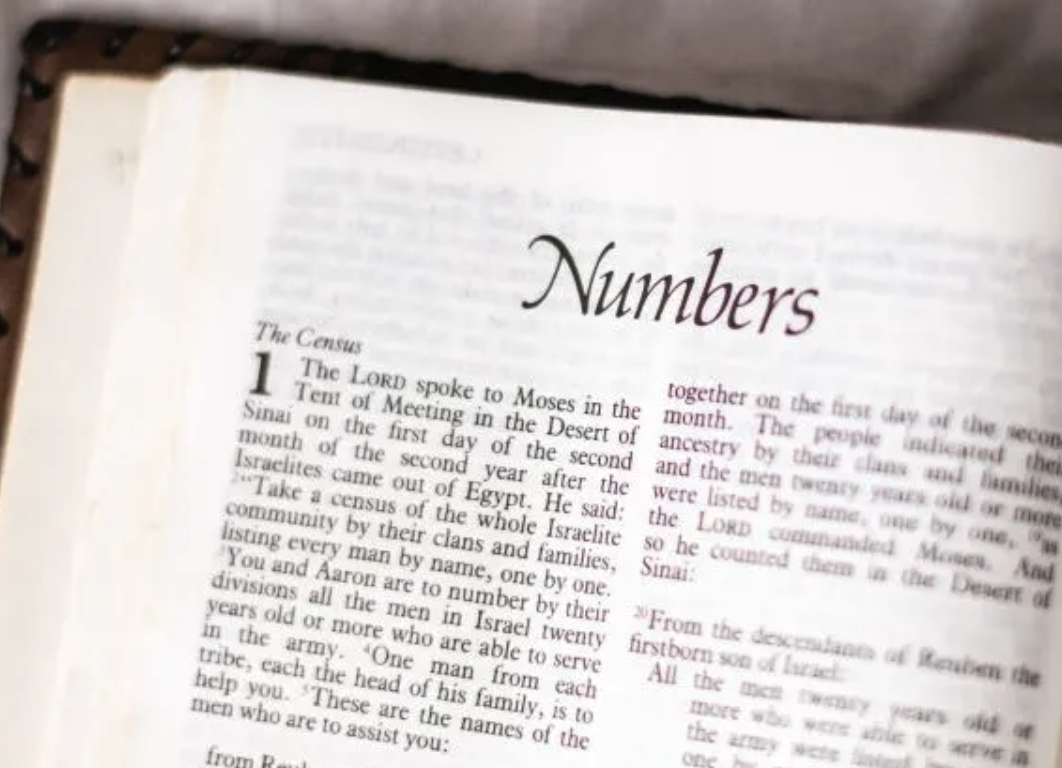
During one sermon, Taylor briefly addressed the SBC wars and added, with a slight smile, that he always thought that the primary book in the Bible that Southern Baptists “considered inerrant was the Book of Numbers.”

Southern Baptists have always loved their statistics (I grew up in Texas, the son of a Southern Baptist pastor) and, for decades, those statistics made their leaders smile.

Things are a bit more complex, right now, as seen in this RNS headline: “Southern Baptists lost nearly half a million members in 2022.” That story, and some other related online materials, provided the hook for this week’s “Crossroads” podcast (click here to tune that in).

Before we get to that solid news piece, by religion-beat veteran Bob Smietana (a scribe in Nashville for years), let’s grab some context from a new Substack post by chart-master Ryan Burge, a GetReligion contributor (and former Southern Baptist), with this headline: “The 2022 Data on the Southern Baptist Convention is Out.”

Check out these numbers from the past 80 years, a period in which the SBC’s rise “is just unmatched.”
Please respect our Commenting Policy

'Cultural Christianity' is fading and that reality is linked to some other newsy trends

'Cultural Christianity' is fading and that reality is linked to some other newsy trends

One of the trends I have been tracking a bit recently is the concept of “cultural Christianity.”

There’s really no settled definition of what it means, but I’ve always conceived of it as people who like the idea of being Christian without all the obligations or attachments of being part of a local church community. In other words — religion without all the hard stuff.

Once upon a time — especially in the American heartland — it really helped to be a member of a religious flock, to one degree or another. It was good for business. It offered positive social ties, especially if your pew was in a respectable mainline church. Those days are gone in many, many zip codes.

But here is the Big Idea for this post: There seems to be two competing forces in American politics and religion. The first is that we are becoming more religiously polarized — the rise of the nones on the left, but also the consistent strength of those conservative religious traditions on the right. However, a countervailing narrative is that despite that bifurcation of faith in the United States, Americans still have an overriding deference to religious expression — especially if it's the Christian religion. 

The starting point for this post is a graph with a strong political-news hook.

Democrats who leave religion behind, just walk from all of it. Among those who never or seldom attend religious services, just 10% say that religion is very important. That hasn’t changed in the last 14 years.

 However, among Republicans who never or seldom attend religious services, the share who say that religion is very important has risen from 17% to 27%.

Attention journalists: It’s this fusion of conservative political ideology and religious identity — without the behavior part — that is really worth watching, especially in GOP primaries where voters have more options (think, other than Donald Trump in recent years).


Please respect our Commenting Policy

Celebrities, monarchs, politicos, clergy and sacramental ghosts in coronation of Charles III

Celebrities, monarchs, politicos, clergy and sacramental ghosts in coronation of Charles III

If you read the main Associated Press report about the coronation of King Charles III then you know, in summary material near the top, that the rites were attended by “celebrities including Judi Dench, Emma Thompson and Lionel Richie.”

You would not, however, know that — for the first time in history — the monarch processed into Westminster Abbey behind a new Cross of Wales which, because of a recent gift from Pope Francis — contained two fragments from the “true cross” of Jesus discovered in 312 A.D. by the Empress Helen, mother of Constantine. We are talking about a relic reverenced by the early church and, ever since, by the ancient churches of East and West.

I know. It’s all about priorities. Was the coronation of Charles III a religious rite, a political ceremony or a mega-watt event in mass pop culture?

The obvious answer to this question is "Yes.” The issue, as usual, is which angle received the most accurate and informed attention in the AP report. Want to guess?

Before we go on, let me make a confession. I am, at the moment, high in the mountains of North Carolina and access to solid WiFi is, to be blunt, near zero. I drive into a small town about once day. Thus, I am going to focus on the religion details (and lack thereof) in the AP report alone — since that is what will be read by most news consumers in Middle America and elsewhere.

I will end with some questions about the rite that I have not been able to answer, questions linked to the ecumenical and interfaith content of the ceremony — details that appear to be close to the heart of the new king (background here from TheConversation website). But first, here is the overture:

LONDON (AP) — King Charles III was crowned … at Westminster Abbey, in a coronation ceremony steeped in ancient ritual and brimming with bling at a time when the monarchy is striving to remain relevant in a fractured modern Britain.

In displays of royal power straight out of the Middle Ages, Charles was presented with an orb, a sword and scepter and had the solid gold, bejeweled St. Edward’s Crown placed atop his head as he sat upon the 700-year-old oak Coronation Chair.

In front of world leaders, foreign royals, British aristocrats and stars, Charles declared: “I come not to be served but to serve.”


Please respect our Commenting Policy

Here is a strange question: Why doesn't the U.S. Census ask questions about religion?

Here is a strange question: Why doesn't the U.S. Census ask questions about religion?

QUESTION:

“Why doesn’t the U.S. Census ask about religion?”

THE RELIGION GUY’S ANSWER:

Most Americans may never have thought about this, an odd omission considering that religion is such an important aspect of society. Canada’s government, for example, has asked about religious affiliations since 1871.

But from the first once-a-decade U.S. Census conducted in 1790, the federal government has never directly asked all Americans about their religion (or lack thereof). Responses are anonymous, which should remove any sensitivities about answering such a question. The usual explanation is that “separation of church and state” forbids such questionining by a government agency, which is debatable.

Much of the history below draws upon an April 12  article about the Census by the Pew Research Center that has further detail for those interested, available by clicking here.

Instead of church-and-state entanglement, The Guy offers a different sort of objection to Census involvement. Religious affiliation or identity may be too complicated a matter for government nose-counters to deal with accurately.

Several non-government agencies with more expertise in this area collect standard data on Americans’ religion, with numbers that regularly conflict due to differing methods, assumptions and definitions.

One of the most important is Pew Research’s own Religious Landscape Study, last issued in 2014. www.pewresearch.org/religion/religious-landscape-study/Groundwork for the next round has already begun. Pew’s precision on religious factions and identities is vital because Protestant categories like “Lutheran” or “Presbyterian” mask big differences among groups with that label.

That sort of specificity is also provided in the “U.S. Religion Census” conducted each decade since 1990 by experts in religion statistics.


Please respect our Commenting Policy

Podcast: Religion ghosts in Pornhub's battle with Utah, Louisiana and red-state America?

Podcast: Religion ghosts in Pornhub's battle with Utah, Louisiana and red-state America?

When I first encountered David French, roughly two decades ago, he was a First Amendment expert known for his defense of religious liberty — for all kinds of people, including evangelicals in blue zip codes.

That was “conservative,” back then. Today, French has moved to the op-ed pages of The New York Times. I guess, in the ongoing Donald Trump era (#ALAS), that makes him what some would call a “New York Times conservative.” That isn’t a compliment.

I don’t always agree with French, but he remains a voice that old-school First Amendment liberals — folks who are often called “conservative” these days — will need to follow as conflicts continue to escalate on issues of free speech, religious liberty and freedom of association.

This brings me to a byte of French material that I inserted into this week’s “Crossroads” podcast (CLICK HERE to tune that in). These are the first two sentences of French’s must-read 2020 book “Divided We Fall: America’s Secession Threat and How to Restore Our Nation.” Here we go:

“It’s time for Americans to wake up to a fundamental reality: the continued unity of the United States cannot be guaranteed. At this moment in history, there is not a single important cultural, religious, political, or social force that is pulling Americans together more than it is pulling us apart.”  

A few lines later he adds this material, to which I alluded in the podcast (and in my recent Religion & Liberty essay on the state of American journalism):

“We lack a common popular culture. Depending on where we live and what we believe, we watch different kinds of television, we listen to different kinds of music, and we often watch different sports.

“We increasingly live separate from each other. … The geography that a person calls home, whether it is rural, exurban, suburban, or urban, is increasingly predictive of voting habits.”

The Internet, however, is everywhere. So is digital pornography.

Some people are more concerned about that than others and, yes, the level of concern seems to have something to do with religion and culture (and, thus, zip codes). This brings us to the Axios headline that inspired this podcast: “Pornhub blocks access in Utah in protest of new age verification law.”

The religion angle? Well, we are talking about politics in Utah. Here is some of that Axios news-you-can-use information:

Driving the news: Pornhub.com now opens on devices in Utah with a message that states the company has "made the difficult decision to completely disable access to our website in Utah."


Please respect our Commenting Policy

Repeat after me: White Catholics voting in 2004. White Catholics voting in 2024 ...

Repeat after me: White Catholics voting in 2004. White Catholics voting in 2024 ...

The topic of this Memo will not surprise readers.

It’s time to focus on the U.S. Catholic vote in 2024, following up a prior Memo assessing religion angles with Donald Trump’s prospects. The Guy once again advises journalists and other observers that Catholics are more pivotal politically than unbudgeable Democrats such as Black Protestants, non-Orthodox Jews and non-religious Americans.

Ditto with the long-running lockstep Republican loyalty among white evangelical Protestants and Latter-day Saints, in national-level elections when they are pushed into a two-party vise. As for America’s other major religious bloc, the more liberal “Mainline” Protestants, they are nearly split down the middle, usually with slim Republican majorities, and they are declining in influence as memberships shrink.

The past generation saw two U.S. political earthquakes. With one, many Southern white Protestants left the Democrats, effectively ending that party’s “Solid South” that dated from the Civil War, Reconstruction and the New Deal eras. Earthquake No. 2 was the move of white (that is, non-Hispanic) Catholics away from Democratic identity that originated in 19th Century immigration, reinforced in the presidential nominations of Al Smith and John F. Kennedy (who won 78% of Catholic voters in 1960, according to Gallup).

Today, this chunk of the broadly defines “Catholic vote” provides pretty consistent and modest but all-important Republican majorities. The Pew Research Center reports they were evenly split between the two parties as recently as 1994, the year Republicans finally won the U.S. House after four decades of failure. By 2019 they identified as Republican by 57% (and weekly Mass attenders moreso) even though the G.O.P. has never nominated a Catholic. (Could Florida’s Ron DeSantis be the first?)

Around two-thirds of Hispanic Catholics have consistently identified as Democrats, but the media will want to closely monitor their float toward the G.O.P in certain regions, especially pivotal parts of Florida and Texas. Note that Pew newly reports that 67% of Hispanics identified as Catholic in 2010 but only 43% in 2022. The cause was not Protestant inroads, but a remarkable jump from 10% to 30% over a mere dozen years in those who lack religious identity.


Please respect our Commenting Policy

Elite editors often ignore Catholic stories, so why is St. Pope John Paul II a target?

Elite editors often ignore Catholic stories, so why is St. Pope John Paul II a target?

What is news? Who gets to define that term?

These are questions that I ask students when I teach journalism during their freshman year in college.

It sounds like a simple question — but increasingly an important one as we examine trends in recent religion coverage in the news media.

The bottom line: There is a trend where many religion stories — especially those regarding Catholicism — receive zero coverage whatsoever in the secular mainstream press. However, stories about evangelicals, Anglicans, Eastern Orthodoxy and other faiths have also vanished or never appeared in the first place.

When some issues do get coverage, it’s often because it has more to do with politics than debates about doctrine, theology or faith. Why?

That’s the key question.

It takes us back to the original question: What is news?

This trend includes Catholic stories that I have written about here — vandalism of churches/pro-life centers and the FBI spying on parishioners — and others that I have not regarding other faith traditions such as the split in the Anglican Communion.

All of these stories are news — “big” news, even. However, they clash with what left-leaning readers of major legacy news organizations want to see and hear in the publications that they support with their online clicks and subscription payments. That appears to affect a majority of elite editors and reporters (click here for tmatt’s Religion & Liberty manifesto on that topic).

Coverage of these stories either never happened or just vanished, like the manifesto of the Nashville school shooter. Regarding Catholic storylines, a recent First Things essay — written by a prominent American bishop — that all but accused a cardinal of heresy never drew any mainstream media ink.

Neither have the statements of a progressive cardinal who now heads the pro-life Vatican office who says he has no issue with euthanasia.


Please respect our Commenting Policy

What's missing from that 'conservatives pounce' New York Times sermon on trans fights?

What's missing from that 'conservatives pounce' New York Times sermon on trans fights?

At this point in journalism history, does anyone expect to read New York Times coverage of events and trends on the Religious Right and find a single sentence that presents interesting, provocative information — drawn from interviews with cultural conservatives — that supports that point of view?

OK, #TriggerWarning. This post assumes that, when dealing with hot-button issues, journalists should present information that accurately represents the views of people on both sides of those debates. Here is another way of stating that: Stories about controversial, divisive issues should contain information that make people on each sides uncomfortable.

This brings us to that recent Times piece with this headline: “How a Campaign Against Transgender Rights Mobilized Conservatives.” This is a classic case of the “conservatives pounce” trend in which news stories are defined in terms of conservative responses to a national trend, with next to zero discussions of the origins and nature of the trend itself.

Before we get to the Times sermon on this topic, let’s back up a bit and consider some background information. Here is a byte from a Reuters report:

In 2021, about 42,000 children and teens across the United States received a diagnosis of gender dysphoria, nearly triple the number in 2017, according to data Komodo compiled for Reuters. Gender dysphoria is defined as the distress caused by a discrepancy between a person’s gender identity and the one assigned to them at birth.

Overall, the analysis found that at least 121,882 children ages 6 to 17 were diagnosed with gender dysphoria from 2017 through 2021.

Here’s another look at the general trend, which includes a few hints at the wider debates:

The number of young people who identify as transgender has nearly doubled in recent years, according to a new report that captures a stark generational shift and emerging societal embrace of a diversity of gender identities.

The analysis, relying on government health surveys conducted from 2017 to 2020, estimated that 1.4 percent of 13- to 17-year-olds and 1.3 percent of 18- to 24-year-olds were transgender, compared with about 0.5 percent of all adults. Those figures illustrated a significant rise since the researchers’ previous report in 2017, though the analyses used different methods.


Please respect our Commenting Policy

Plug-In: For GOP White House hopefuls, it's time for faith-and-freedom questions again

Plug-In: For GOP White House hopefuls, it's time for faith-and-freedom questions again

She was 19. I was 22. We said “I do” in a little church east of Oklahoma City exactly 33 years ago today. Happy anniversary to my wife, Tamie!

While you do the personal math on the above numbers, it’s time for another edition of Weekend Plug-in.

As always, I appreciate you reading this newsletter.

Pope Francis arrived in Hungary this morning, “walking, rather than using a wheelchair as he has on the last four foreign trips,” the National Catholic Reporter’s Christopher White notes.

Check out White’s advance coverage of the pope’s trip.

Meanwhile, let’s jump right into the rest of the week’s top headlines and best reads in the world of faith.

What To Know: The Big Story

Is this heaven?: No, it’s Iowa. But not the one with Kevin Costner.

“The Iowa Faith and Freedom Coalition’s Spring Kick-off event on Saturday represented the first cattle call of the year, a forum for GOP candidates to court an indispensable voting bloc,” Christianity Today’s Kelsey Kramer McGinnis explains.

The key takeaway of McGinnis’ interviews with voters: “The world feels out of control. They want someone who will fix it.”

Trump vs. Pence: At New York Magazine, political columnist Ed Kilgore writes about former President Donald Trump, former Vice President Mike Pence and the “struggle for the souls of Iowa evangelicals.”


Please respect our Commenting Policy