Politics

Amazing! Brief mention of doctrine in LGBTQIA+ war at Point Loma Nazarene University

Amazing! Brief mention of doctrine in LGBTQIA+ war at Point Loma Nazarene University

Oh my! It appears that we have an actual reference to a doctrinal “covenant” in a Religion News Service report about a First Amendment battle between the leaders of a private Christian university and the pro-LGBTQ members of their faculty, student body and alumni.

Journalists almost always ignore the role of "lifestyle” or “doctrinal” covenants in defining the boundaries of the life and work of private schools, which are voluntary associations. It’s always important to ask if faculty, staff and students are asked to sign these covenants, in which they (the details vary) agree to support the doctrinal foundations of the school or, at the very least, not to attack them.

This is an issue your GetReligionistas have written about 100+ times or more during the past 20 years.

The fact that this latest fight is happening at Point Loma Nazarene University in San Diego will not surprise anyone familiar with the recent history of denominational life in the Church of the Nazarene. But that’s another story for another day. The reality is that there are hidden schisms in the faculties of many Christian colleges and universities, when it comes to issues of centuries of Christian moral theology.

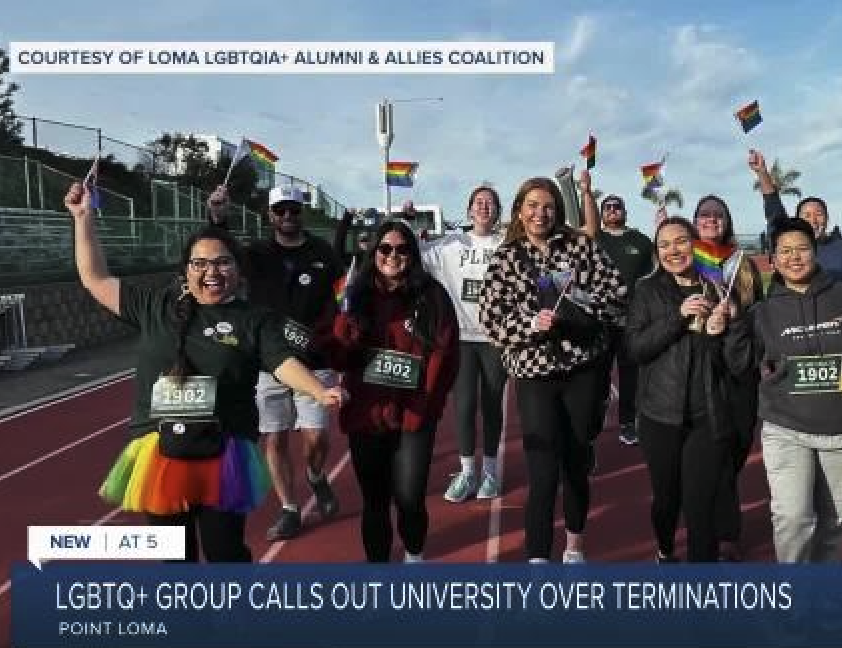
Thus, back to the RNS report: “LGBTQ group condemns Point Loma Nazarene University for theology dean’s dismissal.” The subhead is also important: “The university denies charges by Lauren Cazares, founder of Loma LGBTQIA+ Alumni & Allies Coalition, that the dean of the school of theology was terminated for 'anything related to the LGBTQIA+ community.' “

There is next to nothing surprising in this report. RNS editors included zero comments from insiders or experts who disagree with the viewpoints voiced over and over by the LGBTQIA+ activists who provided material for this “news” report. There is one quote from a university spokesperson who notes that the administration, due to privacy laws, cannot discuss the dismissal of a faculty member.

But, hey, there is one reference to “doctrine” in this story! Let’s start with the overture:

A coalition of LGBTQ alumni of Point Loma Nazarene University — a private Christian liberal arts college in San Diego — is protesting the firing of the dean of the university’s school of theology, who they say was dismissed for siding with an adjunct professor who was let go due to her own public support for the LGBTQ community.

Mark Maddix, the dean for the school of theology and Christian ministry, was fired on March 15 by the university’s chief academic officer, Kerry Fulcher, according to an April 5 statement released by alumna Lauren Cazares, who founded Loma LGBTQIA+ Alumni & Allies Coalition earlier this year.

Please respect our Commenting Policy

Weeks before the attack, Covenant's pastor preached on death, grief and the tears of Jesus

Weeks before the attack, Covenant's pastor preached on death, grief and the tears of Jesus

The Bible's shortest verse -- "Jesus wept" -- is also one of its most important.

That was the message delivered by the Rev. Chad Scruggs in a March 5 sermon -- "Death's Conqueror" -- as the faithful at Nashville's Covenant Presbyterian Church continued their Lenten journey toward Holy Week and Easter's promise of new life after death.

"How do we face death in our world," he asked, "especially untimely deaths, without the pain and confusion of death leading us to despair?"

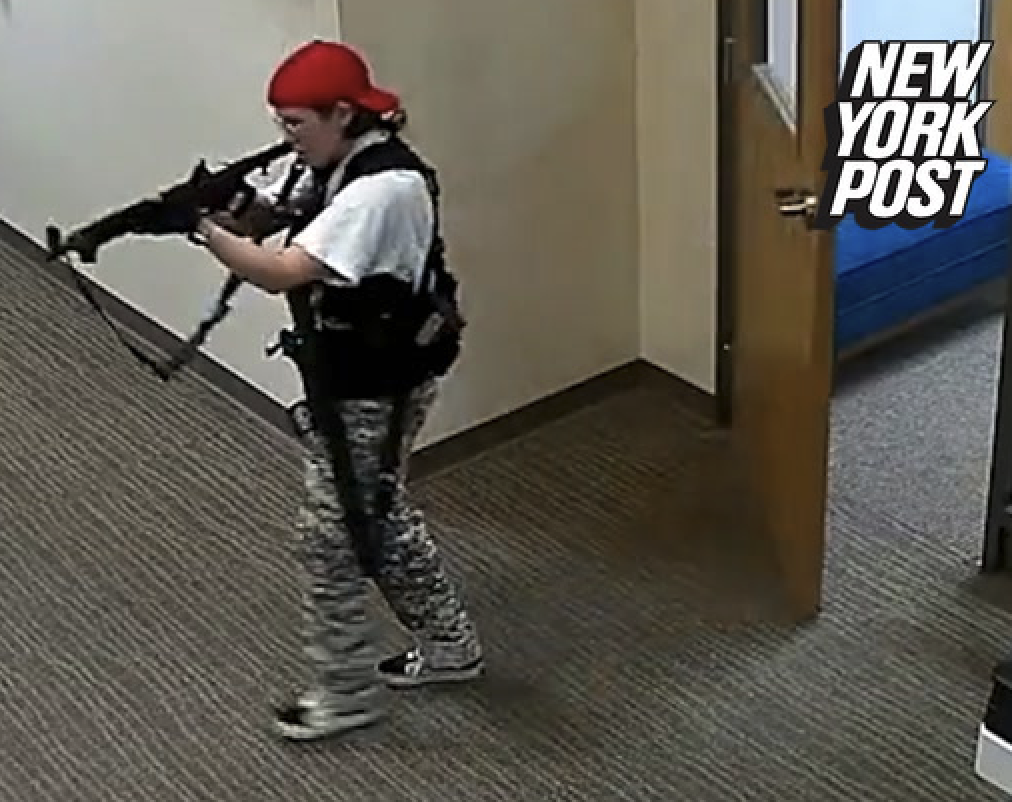
That was three weeks before a gunman crashed through the glass doors of his church's Covenant School and killed three staff members and three 9-year-old students -- including the pastor's daughter, Hallie Scruggs. Police fatally shot the attacker, 28-year-old Audrey Hale, a former Covenant student who had taken the name "Aiden" and male pronouns online

Police confirmed that Covenant had been targeted. But Nashville officials and the FBI have declined to release a "manifesto" referenced in Hale's final social-media warning: "One day this will make more sense. I've left more than enough evidence behind."

The families of those killed have mourned in private, even as solemn Holy Week rites flowed toward Easter (April 9) -- surrounded by a whirlwind of familiar arguments about gun control and a mental-health crisis that has shattered so many lives.

In his sermon before the attack, Scruggs had already plunged into deeper, ancient, mysteries -- stressing that believers can trust that God understands the grief, anger and confusion caused by violence and death.

When meeting the grieving family of his friend Lazarus, Jesus responded with anger, as well as compassion. Thus, the importance of the Gospel of John's blunt words: "Jesus wept."


Please respect our Commenting Policy

Attention mass-media leaders: What should Americans know about each others' faiths?

Attention mass-media leaders: What should Americans know about each others' faiths?

America’s three biggest hamburger chains have 27,000 local outlets.

The three biggest of America’s 2,800 or so religious denominations alone have 97,000 local congregations.

Which is to simply remind readers that faiths retain powerful impact in society despite the increase of people with no religious affiliation and other secular inroads.

Relations among major faiths feel especially pertinent in 2023, since Islam’s holy month of Ramadan with concluding Eid festival overlaps Jewish Passover and the two Easter dates observed by Christians.

Zeenat Rahman, executive director of the University of Chicago’s Institute of Politics, thinks American religion is “increasingly polarizing” and yet at the same time is “essential to rebuilding a strong civil society,” which means Americans “need a basic understanding of the faith of others.”

So, in practice what do people know about other major world religions? What should they know?

Those are important questions for regional or national journalists to explore via interviewing, plus polling if your medium has the money. Or consider commissioning brief articles where religious leaders sum up the basics they think others should know about their faiths and — especially helpful — what’s often misunderstood.

How about books? Stephen Wylen accepted this sort of challenge with his self-published “You Should Know This: A Rabbi Explains Christianity to Jews.” For years now, Terry Mattingly has also been recommending this classic by religion-beat veteran Mark Pinsky: “A Jew among the Evangelicals: A Guide for the Perplexed.”

Some standard book publisher should put together a non-sectarian and up-to-date anthology in which experts would depict their own religions for outsiders, including the main internal branches and variants.

Political scientist (and GetReligion contributor) Ryan Burge recently took up these matters, in a Religion News Service analysis, by re-examining 2019 interfaith data from the ubiquitous Pew Research Center.


Please respect our Commenting Policy

Catholicism's internal cracks go public with Cardinal Robert McElroy ban on EWTN

Catholicism's internal cracks go public with Cardinal Robert McElroy ban on EWTN

It should come as no surprise to anyone that politicians don’t much like the press. This isn’t a shocking statement to anyone old enough to remember President Richard Nixon and Watergate.

Nixon, of course, wasn’t alone. A watchdog press has ran afoul of many presidents, including Ronald Reagan, Bill Clinton, Barack Obama and Donald Trump. This last one most of all.

In Catholicism, popes have also been media targets. Popes, compared to presidents, have been more gracious when speaking of the press. That even goes for the hyper-aggressive Italian media and their daily Vatican coverage.

As the left-right political divide widens, while many journalists working for mainstream publications abandon objectivity, so have the Catholic left-right doctrinal feuds. Francis’ papacy, in fact, has been plagued by it. Mainstream news coverage, for those who read this space, know that readers are increasingly fed narratives over reality.

The Catholic press operates differently. Those on the left wish to reform the church. Those on the right want to uphold and preserve centuries-old doctrines. Catholic media, depending where the publication or TV station falls on the doctrinal spectrum, isn’t governed by objectivity but by church teachings. This is where the conflict arises and when culture war battles within the church — and society at large — can manifest themselves.

This is an internecine battle among members of the Catholic hierarchy. In the crosshairs is EWTN. The media empire, founded by Mother Angelica in 1980, is a news organization that does all of its reporting through the lens of traditional Catholic teaching. It’s the 1992 Catholic Catechism network.

That frequently comes into direct conflict with the words and actions of Pope Francis’ strongest supporters, when dealing with ministry to LGBTQ Catholics, for example, and other culture-war issues.

Just as Obama went after Fox News and Trump against most everyone (even Fox News following the 2020 presidential election), we now have Catholic cardinals openly criticizing Catholic media. The recent case involving San Diego Cardinal Robert McElroy is an example of Catholicism’s internal divisions playing out in Catholic media.

McElroy’s target is EWTN, one of the largest Catholic news organization in the world.


Please respect our Commenting Policy

LSU's always controversial Kim Mulkey offers a highly personal quote (#crickets)

LSU's always controversial Kim Mulkey offers a highly personal quote (#crickets)

I always watch the final March Madness games in the women’s tournament, because of the high quality of the playing and coaching and, yes, because as a Baylor University alum and legacy guy, it was hard not to watch coach Kim Mulkey’s teams in the dynasty years.

That said, I was one of the Baylor fans who were miffed when the administration either (a) smiled and let her hit the exit door for a few more dollars from her home-state school or (b) sort of pushed her toward that exit because she was too flashy, too conservative (however one wants to define that), too private or too willing to step on the toes of powerful men and women.

Mulkey is not a woman who knows her place.

So I paid attention to the stunningly improbable LSU run to the national title — at the end of Mulkey’s second year at that job, after arriving at a school in or near the SEC cellar.

I wondered, frankly, if she was going to say one of those things that she says that the press kind of has to look away and pretend that she didn’t say. I wasn’t expecting it to be a quote about religion.

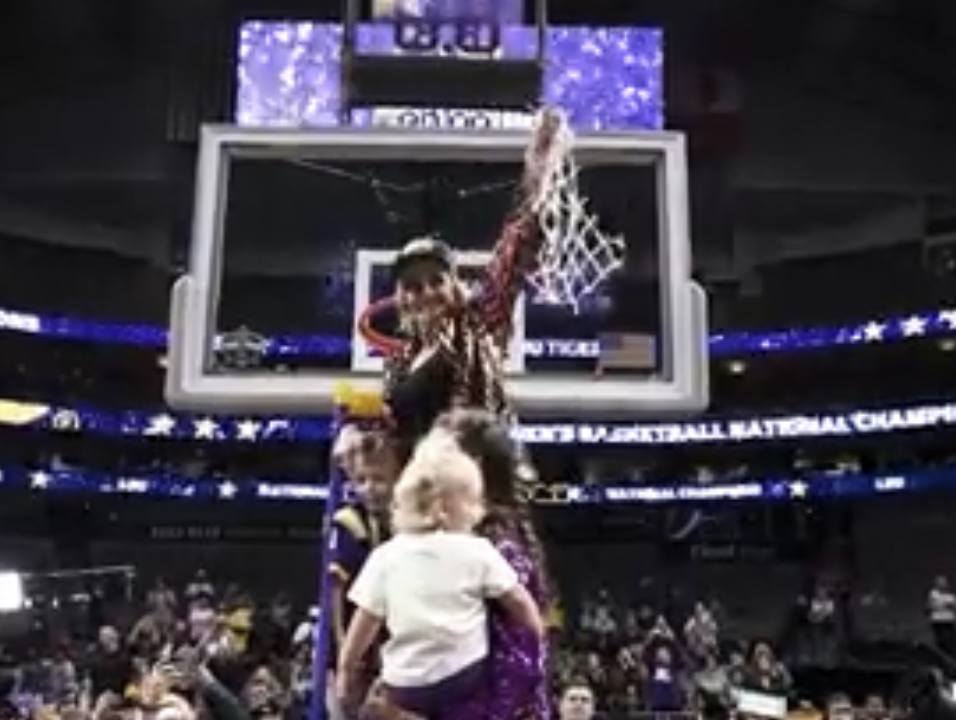
With a minute to go in the game, Mulkey was shown crying — almost weeping — on the sideline when the dagger three-pointer hit the net to defeat a great Iowa team. The Tiger queen was still fighting to control her emotions during her first post-game comments to ESPN. Struggling to speak, and wiping away tears, she finally managed to answer the inevitable “How do you feel?” question from reporter Holly Rowe.

“Coaches coach for a lifetime. This is the fourth time that I’ve been blessed,” Mulkey said to Holly Rowe postgame. “Never in the history of LSU basketball, men or women, have they ever played for a championship. And to win it? I think my tears are tears of joy. I’m so happy for everybody back home in Louisiana.”

“Blessed” is, of course, deep-Bible Belt talk.

That’s from a Sam Gillenwater post at the On3 website: “Kim Mulkey 'blessed' after leading LSU to program's first national championship.” It’s the quote that ended the interview that caught my attention.


Please respect our Commenting Policy

Podcast: Was the attack on a conservative Presbyterian school in Nashville a religion story?

Podcast: Was the attack on a conservative Presbyterian school in Nashville a religion story?

Was the attack on the elementary school at Nashville’s Covenant Presbyterian Church a religion-news story?

Of course it was, for at least four reasons that we discussed during this week’s “Crossroads” podcast (click here to tune that in).

(1) It was an attack on a conservative Christian school at a conservative Presbyterian church in a city that is often called the buckle fn the Bible Belt (although locals know that the Nashville establishment, especially in media, is left of center).

(2) Religious groups have played a major role in Tennessee debates about parental rights, education and LGBTQ issues. What does that have to do with the shooting? Hold that thought.

(3) Religious groups have played a major role in discussions of gun-control legislation in Tennessee and, in this case, it is important to avoid political labels such as “liberal” and “conservative” in that discussion.

(4) The young adult who attacked the Covenant School was a former student there. Audrey Hale had recently identified as Aiden Hale in social media, with male pronouns. Hale was still living in a conservative Christian home, with a mother who both was a strong advocate of gun control and on the staff of Village Chapel in Nashville.

What else do news readers know about the shooter? That depends — in this new age of partisan, advocacy media — on which news organizations a reader follows. In most mainstream coverage, even in Nashville, questions about the life and beliefs of the shooter have all but vanished.

Consider this short paragraph late, late in a Religion News Service follow-up report: “Grief, fear haunt Nashville as residents gather to mourn in wake of Covenant shooting.”

Very little is known about the shooter, a former student at Covenant who was killed by police. The shooter reportedly left a manifesto that has not been made public. 

Really? “Very” little?


Please respect our Commenting Policy

Debates in England about free speech and religion veer into 'thoughtcrimes' zone

Debates in England about free speech and religion veer into 'thoughtcrimes' zone

Wherever he goes, Father Sean Gough prays for the people he encounters -- sometimes out loud and often silently.

This isn't unusual, since he is a priest in the Catholic Archdiocese of Birmingham, England. Gough was praying silently when he was arrested near an abortion facility in a Public Spaces Protection Order protected zone, while holding a "Praying for free speech" sign. His car was parked nearby, with a small "unborn lives matter" bumper sticker.

The priest was charged with "intimidating service users," although the facility was closed at the time. The charges were later dropped.

Officers also raised questions about his clothing.

"When interrogated by police for silently praying in the censorship zone, they challenged me for wearing a cassock," said Gough, on Twitter. "When do I normally wear one? Don't I realize it'll be perceived as intimidating? These are not questions a person should be asked under caution in a democracy!"

Clause 11 of a recent Public Order Bill -- waiting to be signed into law -- would criminalize all forms of "influence" inside a 15-meter "buffer zone" around every abortion facility in England and Wales. An amendment to permit silent prayer and consensual conversations failed by a 116-299 vote in Parliament.

After years of debates about religious liberty and freedom of speech, recent events in England have veered into what activists and politicos have described as "thoughtcrimes," a term used in George Orwell's dystopian novel "1984" to describe thoughts that violate ruling-party dogmas.

In the U.S. House of Representatives, eight Republicans circulated a letter claiming it's "imperative that the U.S. speak boldly and clearly to its friend when the U.K. has failed to protect unalienable rights." The document condemned policies that "persecute Christians and other pro-life citizens for thoughtcrimes."


Please respect our Commenting Policy

Religion in politics, again: What is Sikhism, candidate Nikki Haley’s one-time faith?

Religion in politics, again: What is Sikhism, candidate Nikki Haley’s one-time faith?

QUESTION:

What is Sikhism, candidate Nikki Haley’s one-time religion?

THE RELIGION GUY’S ANSWER:

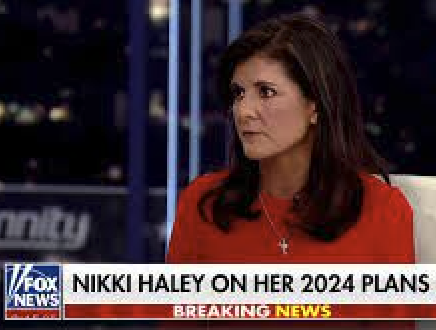
Nikki Haley, who is challenging Donald Trump for the Republican presidential nomination, was raised in the religion of Sikhism  (“SEEK-ism”) by immigrant parents from India. But soon after both Sikh and Methodist weddings she converted to husband Michael’s Christianity.

During Haley’s first run for South Carolina governor in 2010, National Public Radio posted a notably nasty piece by a fellow Indian-American who said “I’m not buying” Haley’s “Christian bit,” noting that “serious churchgoers” and political opponents suspected a “conversion of convenience” in a heavily Protestant state. However, Haley adopted Christianity at age 24 and only entered politics eight years later.

Partners in mixed marriages do have to make religious choices. Haley has repeatedly professed that she is a Christian believer but respects her family and does not criticize its religious heritage. Though a Methodist churchgoer, she occasionally attends Sikh services and has visited the faith’s holiest sanctuary, the Temple of God in Amritsar, India (known as the Golden Temple because it’s covered in gold leaf).

As a journalist, The Guy has no business examining Haley’s soul, but sees her candidacy as a good opportunity for Americans to learn more about her former faith. Sikhism claims to be the fifth-largest world religion after Christianity, Islam, Hinduism and Buddhism, though it does not evangelize and counts only a modest 30 million adherents. Still, that’s double the global number for Judaism.

Sikhism is by far the youngest of the major world religions. Its homeland is the Punjab region of northern India and adjacent Pakistan. The founder, Guru Nanak (1469-1539), was a married accountant with two sons who had a dramatic encounter with God, whence he proclaimed “there is no Hindu; there is no Muslim” and gathered a following as a spiritual teacher.

Western scholars often depict Sikhism as a classic example of syncretism (blending of different religions) or a reforming “offshoot” of Hinduism.


Please respect our Commenting Policy

Podcast: Painful fighting inside Ukrainian Orthodoxy? Schism began long before the war

Podcast: Painful fighting inside Ukrainian Orthodoxy? Schism began long before the war

Nearly 15 years ago, I traveled to Kiev to speak during a forum with Ukrainian journalists, and a few activists, focusing on religion coverage in that already tense nation. I was there as a representative of the Oxford Centre for Religion & Public Life.

Obviously, this meant talking about the fractured state of Eastern Orthodox Christianity in Ukraine, with bitter tensions between the historic (in many ways ancient) Ukrainian Orthodox Church and new rival churches — including leaders who had previously been excommunicated from canonical Orthodoxy.

Again, let me stress that this was in 2009, during a time when the Ukrainian government was, basically, content to let global Orthodox leaders work this out — oh so slowly — as an Orthodox canon-law issue.

These conflicts were truly byzantine (small “b”) and Ukrainian journalists said it was obvious that most journalists from Europe and America knew next to nothing about the Orthodox splits and, frankly, didn’t care to learn the details.

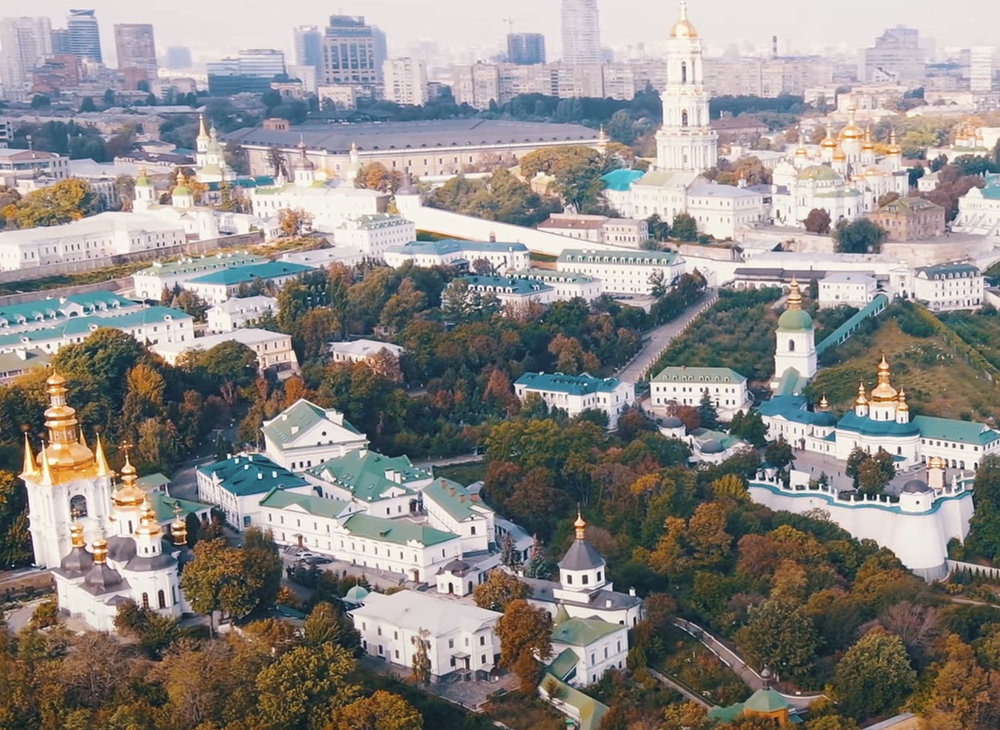
The Holy Dormition-Kiev Caves Lavra? That’s just a historic site. End of story.

Things have changed, sort of, but for all the wrong reasons.

With Vladimir Putin’s invasion of Ukraine, journalists now care about the state of Orthodoxy in this war. The question discussed during this week’s “Crossroads” podcast (click here to tune that in) is whether elite journalists have any interest in the centuries of facts behind the current Orthodox conflict. The church conflict is linked, of course, to the February 24, 2022, invasion — but also to earlier actions by leaders in the United States, the European Union, the current Ukrainian government and, last but not least, a strategic 2019 move by the Ecumenical Patriarchate in Istanbul.

Note: All of these events took place before the Russian invasion. The Orthodox schism in Ukraine predates the war — by decades.

Where to begin? Let’s start with some of what I learned, and described, 15 years ago, in a column with this title: “Religion ghosts in Ukraine.”


Please respect our Commenting Policy