Politics

Concerning Pope Francis, hockey, Pride night and putting 'scare quotes' around 'beliefs'

Concerning Pope Francis, hockey, Pride night and putting 'scare quotes' around 'beliefs'

I have no idea if Pope Francis follows professional hockey — but that really isn’t what this post is about.

This post starts with some fascinating “scare quotes” in a headline with a Reuters report about another Pride Night controversy in the National Hockey League.

The use of “scare quotes” is a topic that, to put it mildly, consistently pushes buttons for GetReligion readers. Once again, here is a Merriam-Website definition of that term:

scare quotes …

: quotation marks used to express especially skepticism or derision concerning the use of the enclosed word or phrase

This brings us to that Reuters headline: “Rangers back right to 'beliefs' after Pride Night jerseys absent from warm-ups.” Actually, based on the context, that should have been “religious beliefs” — because it’s clear that this reference refers to centuries of religious doctrines, in several faiths.

What happened here? New York Rangers players were scheduled to take part in pre-match warm ups, as part of the team’s seventh annual Pride Night festivities, with Pride-themed jerseys and hockey sticks. That didn’t happen, which made headlines. Here is a key part of that Reuters story, which I will note did not contain “scare quotes” around the controversial term.

… one player told the New York Post … that he saw only his standard jersey hanging in his locker when he went to get ready and did not know why the alternate top was not available.

"Our organization respects the LGBTQ+ community and we are proud to bring attention to important local community organizations as part of another great Pride Night," Rangers said in a statement.

"In keeping with our organization’s core values, we support everyone’s individual right to respectfully express their beliefs."

I guess it is possible that a professional athlete could have “political” beliefs that were relevant in this case. There may even be Seinfeld-ian “compelled speech” issues here (Click here for classic clip on YouTube). In light of recent news, it’s clear the headline writer’s “scare quotes” nod refers to centuries of Christian doctrine on marriage and sex.


Please respect our Commenting Policy

OK, we get it: That whole 'Christian nationalism' thing is hot, right now. But what is it?

OK, we get it: That whole 'Christian nationalism' thing is hot, right now. But what is it?

By all indications, urgent warnings against “Christian nationalism” (CN) will continue as a major media theme through Election Day 2024.

Journalists will need to be careful with a tricky label that’s mostly shunned by supposed participants in the CN movement and employed by opponents (as with “fundamentalist” or “ultra-“ or “cult”). How complex is the fighting about this term? Click here to tune in some of the YouTube debates.

Critics’ typical definition comes from attorney Amanda Tyler, who leads Christians Against Christian Nationalism (with a large “N”) and the proudly progressive Baptist Joint Committee for Religious Liberty. She says CN “seeks to merge American and Christian identities, distorting both the Christian faith and America’s constitutional democracy.” Its “mythological” view of founding of a “Christian nation” means America is singled out “to fulfill God’s purposes on earth.” Further, CN “demands a privileged place for Christianity in public life, buttressed by the active support of government at all levels.”

Writers could pursue this sort of theme sideways by reviewing or collecting pro and con reactions to “How to Be a Patriotic Christian: Love of Country as Love of Neighbor,” the latest book by middle-roading evangelical Richard Mouw of Calvin University, formerly president of Fuller Theological Seminary.

Otherwise, here's a rundown to guide journalists on some of the notable CN chatter since The Guy took a whack at the definition issue last year year at GetReligion.

Hang on, because this gets complex. For starters, ambiguity abounded in an October Pew Research survey.

Some 60% of adults think -- yes -- the founders intended the U.S. to be a “Christian nation,” and 45% think it actually “should be” such, though for many that means only generalized moral guidance while only 18% think the phrase indicates Christian-based governance. Importantly, a 54% majority had never even heard of CN.

That belief the U.S. “should be” a Christian nation was favored by fully 65% of Black Protestants (compared with e.g. only 47% of Catholics). Yet University of Texas political scientist Eric McDaniel wrote for TheConversation.com that CN believes the only “true” Americans are “white, Christian and U.S.-born and whose families have European roots.”


Please respect our Commenting Policy

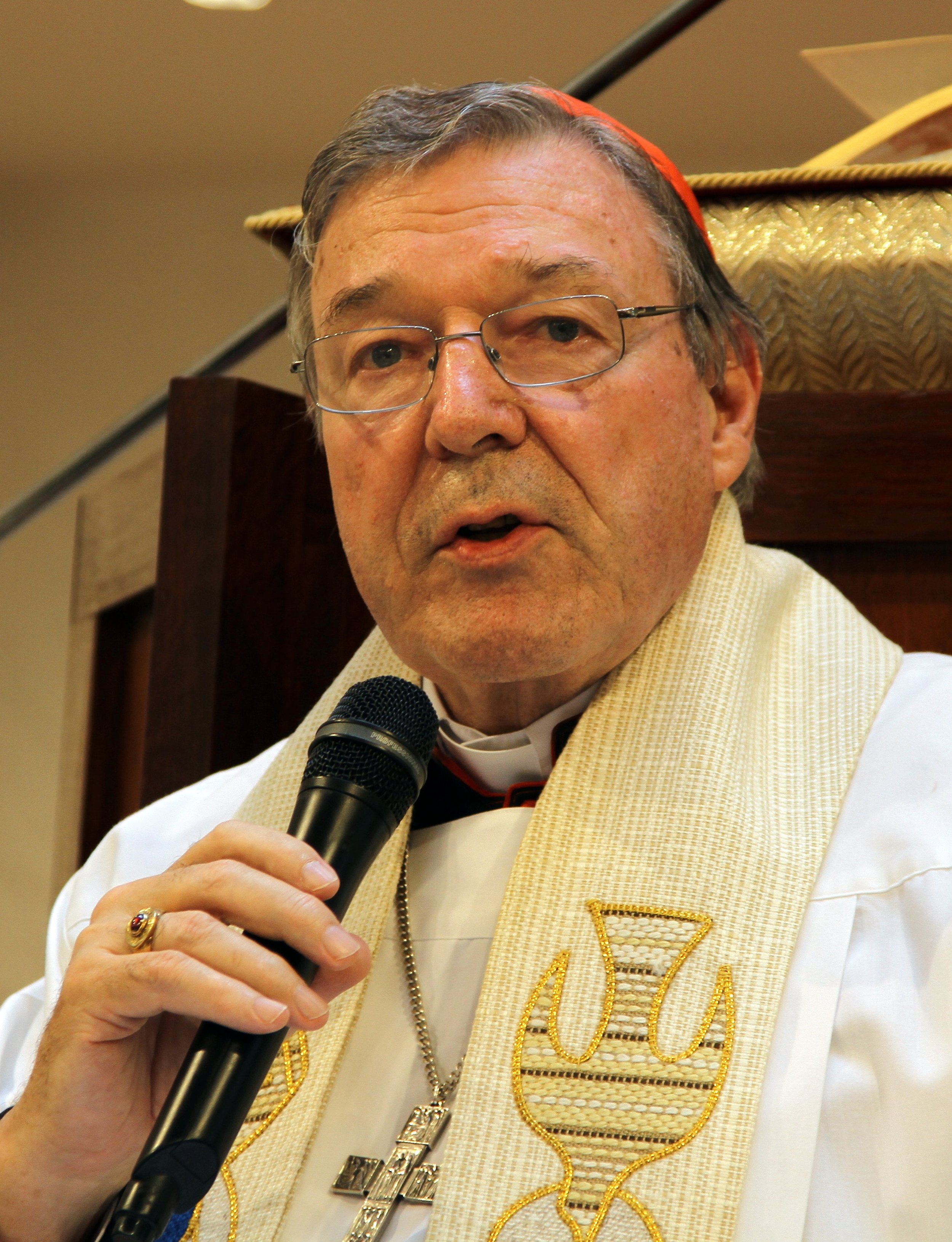
Cardinal Pell's death puts spotlight on his words and arguments about Catholicism's future

Cardinal Pell's death puts spotlight on his words and arguments about Catholicism's future

The Catholic church recently lost a giant. The death of Cardinal George Pell on Jan. 10 at the age of 81 was the literal loss of a giant — he stood at a towering 6-foot-6 and was once an Australian Rules Football player in his youth. But he was also a man who attracted both controversy and consternation.

Many remember Pell for what took place in the last chapter of his life — that of being found guilty of child sexual abuse in 2018. The cardinal won on appeal two years later, the convictions quashed by Australia’s High Court.

Pell also had some very real disagreements with Pope Francis regarding theology and the direction of the church in recent years — something that earned him headlines after his death calling him “divisive” and “controversial.”

Nearly two weeks after his death, Pell continues to be written about in both the secular and Catholic press. A lot of this coverage has been thin on reporting and loaded with commentary, conjecture and analysis. In fact, Pell’s death wasn’t only a reflection of the past, but where the church is headed in the future and what Francis’ papacy means.

It’s within this context — and some of the juicier revelations to come out once Pell died — that has kept journalists busy. Once again, the coverage is skewed heavily towards familiar arguments whether the church should stay true to beliefs regarding marriage and sex that go back 2,000 years or look to the future in order to mesh with the mores of the present.

It is through that prism that Pell has received coverage, especially after a secret memo Pell had penned was made public just days after his death.


Please respect our Commenting Policy

Gay Pride vs. Russian Orthodoxy: NHL star takes stand and journalists pounce in social media

Gay Pride vs. Russian Orthodoxy: NHL star takes stand and journalists pounce in social media

Let’s face it, the Ivan Provorov story had everything that Big Tech-era social warriors could have wanted — Gay Pride, religion, big-time sports, Russia and waves of hot-headed social-media commentary by journalists covering the story.

What it didn’t have, unless I missed it in my reading and search-engine work, was journalists connecting a few dots and spotting a possible role for a true villain — as in Russian ruler Vladimir Putin. Hold that thought.

If you missed this drama, here is the top of the Associated Press story what probably made it into many local newspapers with a headline something like this: “Flyers’ Provorov cites religion for boycott on Pride night.”

Flyers defenseman Ivan Provorov cited his Russian Orthodox religion as the reason he did not participate in pregame warmups when the team wore Pride-themed jerseys and used sticks wrapped in rainbow Pride tape.

The 26-year-old Provorov didn’t take part in the pregame skate with his teammates before their game against Anaheim … , when the Flyers celebrated their annual Pride night in celebration and support of the LGBTQ community. He played nearly 23 minutes in Philadelphia’s 5-2 victory.

“I respect everybody’s choices,” Provorov said after the game. “My choice is to stay true to myself and my religion. That’s all I’m going to say.”

Provorov declined to answer follow-up questions about his decision.

Flyers coach John Tortorella said Provorov “was true to himself and to his religion.”

“It’s one thing I respect about Provy, he’s always true to himself,” Tortorella said.

The AP story, quoting Flyers player Scott Laughton, hinted that the story probably wasn’t over.

Laughton said there would be more conversations ahead with Provorov, who moved from Russia to the United States as a teenager. He signed a six-year, $40.5 million contract before the 2019 season and won the Barry Ashbee Trophy as the Flyers’ outstanding defenseman in his rookie season, the youngest Philadelphia player to receive the honor.

Yes, Eastern Orthodoxy (I am a convert to this ancient Christian communion) defends centuries of Christian teachings and tradition when it comes to the sacrament of marriage and all forms of sex outside of marriage. This frequently creates clashes with the ever-evolving doctrines of the Sexual Revolutions.

These clashes draw relatively little ink, in part because Orthodoxy isn’t a major player, yet, in the marketplace of American religion news. However, Putin’s hellish invasion of Ukraine has changed that to some degree.


Please respect our Commenting Policy

Plug-In: Yes, the March For Life faithful gathered, marking a new era after fall of Roe

Plug-In: Yes, the March For Life faithful gathered, marking a new era after fall of Roe

Good morning, Weekend Plug-in readers! We open with Dolly Parton, who celebrated her 77th birthday Thursday and gave the world a gift — a new song.

“I had a dream about God standing on a mountain, looking down on us, saying ‘Don't make me have to come down there,’” she said of her inspiration.

Give it a listen as we dive into the top headlines and best reads in the world of faith.

What To Know: The Big Story

Yes, opponents of abortion gathered for the annual March for Life on Capitol Hill in Washington, D.C. Click here to see a research file on the mainstream coverage of this year’s event.

Fifty years after Roe v. Wade — and seven months after its overturning — the anti-abortion movement has “multiple reasons to celebrate — and some reasons for unease.”

That’s the assessment of The Associated Press’ David Crary. The movement has reached a crossroads, as The New York Times’ Ruth Graham notes. And since last year’s ruling, the fight has moved to statehouses, as noted in this report from Religion News Service.

Stand for Life: A new organization with Southern Baptist ties “will bridge anti-abortion groups … as the larger movement redirects focus in a major way,” The Tennessean’s Liam Adams points out.

More: In Missouri, religious leaders who support abortion rights filed a lawsuit Thursday challenging the state’s abortion ban, AP’s Jim Salter reports. At the same time, Indiana’s top court is weighing a challenge to that state’s abortion ban.

Power Up: The Week’s Best Reads

1. Family slain in Utah: “The seven caskets sat in a neat row at the front of the quiet chapel.”

That’s how The Salt Lake Tribune’s Courtney Tanner begins her sensitive, nuanced coverage of the funeral for a Latter-day Saint family — five children, their mother and their grandmother.

The man who killed his family had been investigated two years prior for child abuse, according to AP’s Sam Metz.


Please respect our Commenting Policy

Thinking about persecution in Nigeria: It isn't news (#SIGH), but why is the Vatican so quiet?

Thinking about persecution in Nigeria: It isn't news (#SIGH), but why is the Vatican so quiet?

Tragically, I could have written a “think piece” post about the following topic during every week over the past few years and it would have been relevant in terms of debates about politics, human rights, religious freedom and the practice of journalism.

I am talking about religious conflict in Nigeria, which often escalates into ISIS-level outbreaks of violence and persecution. But Nigeria is only one example of a wider problem in international news, at the moment. For more background, see the recent Richard Ostling religion-beat Memo with this title: “Buried story of 2022? The persecution of Christians keeps surging around the world.”

But let’s start with this new Reuters headline: “Catholic priest burned to death, another shot in north Nigeria.

Actually, there is testimony that Father Isaac Achi was already dead, from gunshot wounds, when his attackers set fire to his home. There is some chance, however, that he was burned alive. Here’s the overture of the Reuters piece, which may be the only mainstream media coverage that has been done of this latest hellish vision of religious life in Nigeria:

Gunmen burned a Catholic priest to death and shot and injured his colleague in northwest Nigeria on Sunday, police said, the latest violence raising concerns about security ahead of an election next month.

Nigerians will vote for a new president on Feb. 25 but kidnappings for ransom and killings by armed gangs in the north have lead to fears that polls may not be held in some areas.

The motive for the latest attack was not immediately clear but gunmen have previously targeted priests in the largely Muslim north.

Once again, we see a phenomenon that I have written about many times here at GetReligion.

This kind of international story, in the context of America’s niche-media realities, is now seen as a merely religious, Catholic or even “conservative” story. Click here to see a Google News file illustrating this, in the case of the murder of this particular priest. There are the major, trend-defining newsrooms in this picture? That is, of course, the question.

But you can find more details (#DUH) in Catholic media.


Please respect our Commenting Policy

Podcast: Let's play 'spot the sound bite' with Joe Biden's sermon at Ebenezer Baptist

Podcast: Let's play 'spot the sound bite' with Joe Biden's sermon at Ebenezer Baptist

Communications specialists inside the D.C. Beltway — journalists, PR pros, everybody — used to have a game they would play when watching major speeches. Check out the Michael Keaton and Geena Davis flick “Speechless,” about two dueling speechwriters whose romance causes complications.

The goal: Watch the speech and predict the sound bite that would make it into news reports. The key was “buzz,” that mysterious factor linked to quotes — positive or negative — that grab editors and producers and, hurrah, affect whatever political war or horse race was in the headlines.

I offered a variation on this process during this week’s “Crossroads” podcast broadcast (CLICK HERE to tune that in), only I applied it, at first, to the pope.

My editors always thought the most important part of a papal speech was whatever he said that was linked to “real news,” as in American politics. I argued that it helped to figure out what the pope was trying to say to millions of Catholics around the world and this (#TriggerWarning) usually had something to do with faith, worship and, well, Catholicism. You know, Jesus stuff.

The goal in this podcast was to apply this process to the elite press coverage of President Joe Biden’s Sunday morning appearance in the pulpit of the historic Ebenezer Baptist Church in Atlanta, where the Rev. Martin Luther King, Jr., was once pastor. This was, according to most of the mainstream press, a “sermon,” as opposed to a political speech of some kind (click here to read the White House transcript).

As you would imagine, conservative media focused on Biden remarks that may or may not have had some connection to real events or even his own life. Was it accurate, for example, for Biden to say he was active, as a young man, in the Civil Rights Movement and highly influenced by the Black church?

The mainstream press mainly went with political sound-bites, but stressed the ones that contained references to Biden’s liberal Catholic faith, biblical social-justice language or muted jabs at Republicans. In other words, the MSM focused on the messages that Biden wanted to deliver. Hold that thought.


Please respect our Commenting Policy

Two leaders of the new U.S. House could put Baptist diversity in the news spotlight

Two leaders of the new U.S. House could put Baptist diversity in the news spotlight

There could hardly be a greater contrast than New Yorker Hakeem Jeffries’ glide into leadership of the U.S. House Democratic minority and that of California Republican Kevin McCarthy’s agonizing 15-ballot crawl to barely become House Speaker in the worst such Capitol Hill fuss since the Civil War.

Jeffries, of course, wins news renown as Congress’s first African-American party leader. But here’s a factoid has gotten little media notice. Yes, this is a religion angle.

By coincidence, both party leaders are now Baptists, a faith that outside the South has generally been underrepresented among the political elite. Catholics (think Nancy Pelosi, John Boehner, Paul Ryan) monopolized the speaker and minority leader posts for much of the 21st.Century.

There would be good feature potential in comparing the two Baptists’ congregations.

Though Jeffries has an Arabic first name (meaning “wise”), he’s a lifelong worshiper at Cornerstone Baptist Church,  a prominent African-American congregation in Brooklyn. Senior Pastor Lawrence Aker III and his wife Cynthia have the distinction of holding diverse divinity degrees from both “evangelical” Dallas Theological Seminary and “mainline” Yale.

McCarthy’s congregation is the equally well-known Valley Baptist Church in his hometown of Bakersfield. Senior Pastor Roger Spradlin, who trained at Criswell College, has served Valley since 1983 and now leads a team of eight clergy. This is a typical white evangelical fellowship and affiliated with the nation’s largest Protestant denomination, the Southern Baptist Convention, which Spradlin has served as chairman of the national executive committee.

Speaking of religion on Capitol Hill, reporters will want to keep on file the official religious affiliations of all 534 members of the incoming House and Senate (with one vacancy due to death) accessible by clicking here. The handy list is compiled every two years by the Pew Research Center from information the legislators themselves file with CQ Roll Call.

Labels may say little.


Please respect our Commenting Policy