Politics

Journalism question for these times: When are death threats 'real' death threats?

Journalism question for these times: When are death threats 'real' death threats?

Here is a journalism question for you: When is a death threat an actual “death threat”?

Let me state that another way: When do words that clearly communicate a death threat represent a “real” or legitimate death threat in the eyes of journalists, local police and (wait for it) the Department of Justice?

We can add another question I received via email from a religion-beat veteran: In what sense is a death threat “pro-choice”?

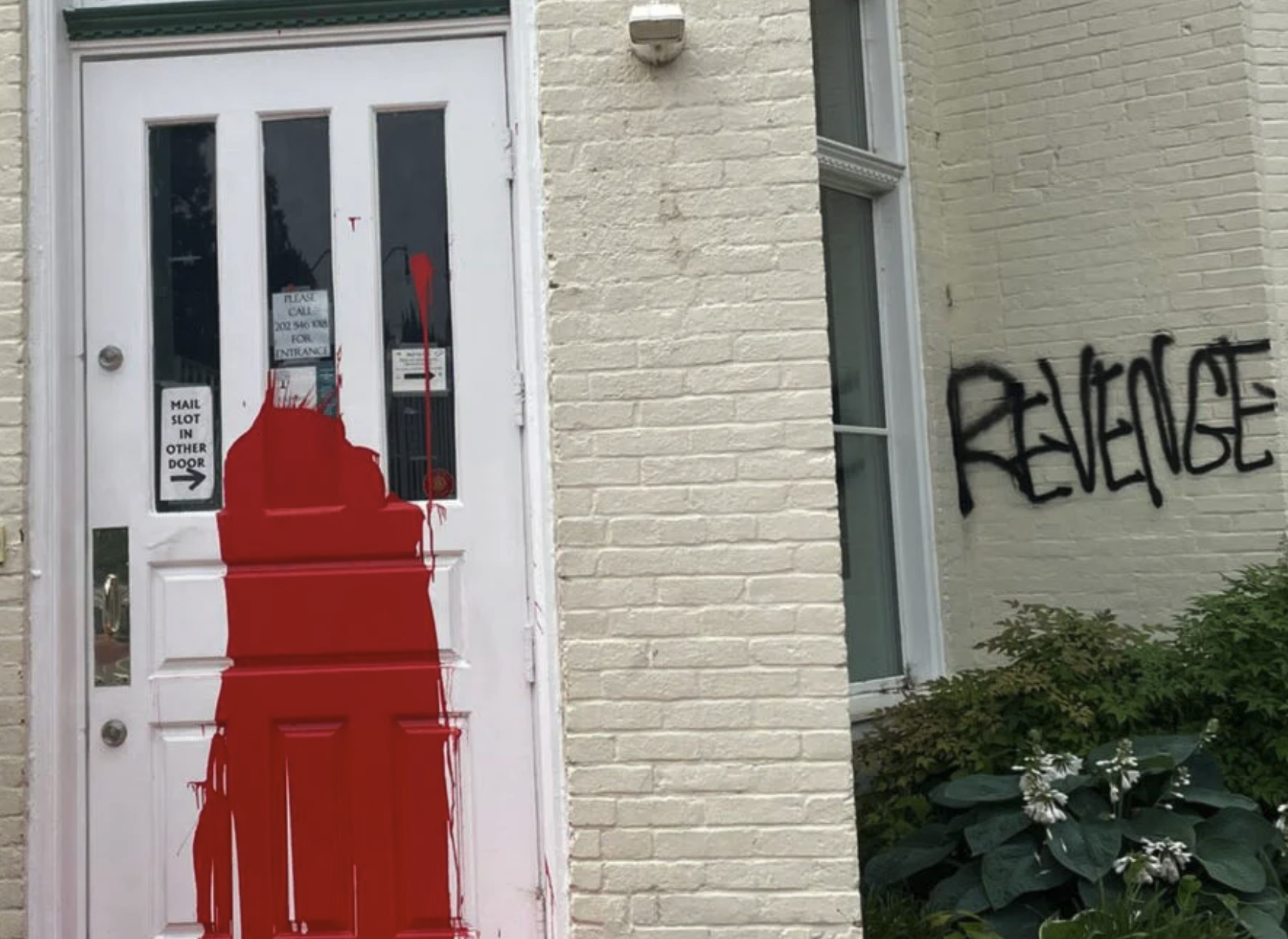
Yes, once again we are looking at a story that is linked to abortion, a topic that mixes politics, religion, law and science. In this case the event that made news (barely) was the vandalism of yet another Catholic church in a blue zip code. Here is the entire report from a local CBS newsroom and note the headline, which inspired that email question: “Catholic Church in Lansing vandalized with pro-choice graffiti.”

(CBS DETROIT) - The Diocese of Lansing released video footage of three people vandalizing the Church of the Resurrection with spray-painted pro-choice graffiti.

The incident happened on Saturday, Oct. 8, between 11:52 p.m. and 11:56 p.m. Video footage shows the three suspects walking up to the church from the area of Jerome and Custer, spay-painting the church, and then leaving the area.

The suspects spray-painted on the doors, signage, and sidewalk of the church, and the messages included: "Restore Roe" and "Is overturning Roe worth your life or democracy?"

Police are reviewing the security footage and searching for the suspects. According to the Diocese of Lansing, the graffiti has been power-washed.

If anyone has any information about this crime, they are urged to contact the Lansing Police Department at 517-483-4600.

The key language: “Is overturning Roe worth your life or democracy?" What are the logical implications of the words “worth your life”?

I realize that some anti-abortion demonstrators use chants claiming (thinking “mortal sin” consequences) that those taking part in abortions are risking their souls. Is that the same thing as saying that the U.S. Supreme Court voting to overturn Roe v. Wade is, addressing Catholic worshippers, “worth your life”?

Please respect our Commenting Policy

Politicos and Scripture: What does biblical religion teach about forgiving loans?

Politicos and Scripture: What does biblical religion teach about forgiving loans?

THE QUESTION:

What does biblical religion teach about forgiving loan debts?

THE RELIGION GUY’S ANSWER:

President Joe Biden’s pre-election executive order to limit or erase college students’ loan debts is still in the news this week. The non-partisan Congressional Budget Office issued its “highly uncertain” estimate that the plan will cost at least $420 billion, the first federal lawsuits filed against it argued that only Congress can legally enact spending, and the Department of Education scaled back the numbers who get this benefit.

The president claims the power to bypass Congress under the “HEROES Act,” passed after the 9/11/01 attacks, which allows forgiveness in case of a “military operation or national emergency.” Biden interprets the COVID pandemic as such an emergency; critics call that a stretch.

Biden says that now “people can start to finally crawl out from under that mountain of debt to get on top of their rent and their utilities, to finally think about buying a home or starting a family or starting a business.” But a Wall Street Journal editorial considered cancellations “unfair to Americans who repaid their loans or didn’t go to college” and accused Biden of “the biggest executive usurpation of Congress in modern history.”

As all this plays out, does the Bible, which has so long shaped moral judgments on public policy, have anything to say on such matters?

Liberal Protestant blogger John Pavlovitz chided Christians who oppose Biden, saying they ignore that “their entire professed religion is based on the idea of a cancelled debt. Way to lose the plot, kids.”

Podcaster Allie Beth Stuckey responded for World magazine that “the debt is sin, and Jesus, God made flesh, voluntarily paid it on our behalf through his death on a cross” so that “we are reconciled to God forever.”

One wording of history’s most-recited prayer asks God to “forgive us our debts as we forgive our debtors.”


Please respect our Commenting Policy

Podcast: Are (all) evangelicals the only folks tempted to gloss over candidates' sins?

Podcast: Are (all) evangelicals the only folks tempted to gloss over candidates' sins?

Oh my. It appears that editors at the New York Times has veered back into what could be called “evangelical voter monolith mode” once again.

I base that comment on the thesis paragraphs of a recent Times report that ran with the headline, “‘Saved by Grace’: Evangelicals Find a Way Forward With Herschel Walker.” That story was the hook for this week’s “Crossroads” podcast (CLICK HERE to tune that in). I will return to the Walker drama in a minute.

But before we go there, let’s pause and flash back to a Gray Lady report from a few months ago that ran with this headline: “As a ‘Seismic Shift’ Fractures Evangelicals, an Arkansas Pastor Leaves Home.” It’s the first half of that headline that interests us, right now. Here is some of the crucial language:

Across the country, theologically conservative white evangelical churches that were once comfortably united have found themselves at odds over many of the same issues dividing the Republican Party and other institutions. …

Michael O. Emerson, a sociologist at the University of Illinois Chicago, described a “seismic shift” coming, with white evangelical churches dividing into two broad camps: those embracing [Donald] Trump-style messaging and politics, including references to conspiracy theories, and those seeking to navigate a different way.

That’s accurate, of course. Anyone who has followed evangelical debates in the Trump era knows that the big story is rooted in tension, pain and divisions — not monolithic unity about how to approach politics.

At the same time, evangelicals are still facing a crushing binary reality when they approach election-day decisions — trying to decide, in some cases, between what they view as flawed GOP candidates and Democratic candidates whose stances on First Amendment and sanctity-of-life issues put them in a “can’t go there” category.

Evangelicals of various kinds do not agree on how to handle that, falling into camps that resemble the 2016 and 2020 national elections.

Thus, here is a flashback to my Trump-era evangelical voter typology from several years ago. When reading it this time, simply substitute “Walker” for “Trump” and apply these camps to White, Black (they exist) and Latino (they exist) evangelical/charismatic voters in Georgia.


Please respect our Commenting Policy

Book bans: Are these fights about a Christian nationalist plot or something else entirely?

Book bans: Are these fights about a Christian nationalist plot or something else entirely?

Ever since the Jan. 6, 2021, attempted takeover of the U.S. Capitol, journalists have been trying to find some kind of national nexus for “White Christian nationalism.”

The term, which I’m putting in quotes because its meaning is all over the map, needed a locale.

About two months ago, national media thought they had one: tiny Bonners Ferry, Idaho, where there was a dust-up between a local library and a cadre of locals who wanted certain books banned. That the locale was — in the popular imagination — is Ground Zero for conservative crazies, was no surprise.

A CNN story made the case for the book burners being newcomers with an agenda:

And who are these newcomers she speaks of? Well, we reached out to a number of the people pushing the recall and demanding that books be banned. None of them would talk to us.

But they have made their feelings known at library board meetings. “Things need to change,” one man told the board at a meeting in late August. “Otherwise, you bring curses upon yourselves. Period. From the Most High.”

Definitely a religion angle there.

And at a meeting in July, Donna Capurso, a local realtor, said this: “My job is to protect our kids from sexual deviants, who will be drawn to our library if inappropriate sexual material is on our library shelves.” Capurso is an occasional contributor to a website called Redoubt News, which caters to a growing group here in northern Idaho of self-described, “God-Fearing, Liberty-Loving Patriots.”

“The American Redoubt” is a term coined in 2011 by a Christian survivalist. The idea is that Christian patriots should retreat here from modern America to live their truth and defend themselves. The Redoubt is a large chunk of land encompassing all of Idaho, Montana and Wyoming as well as eastern slivers of Washington and Oregon.

What’s curious now is that the right-wing banned books movement (as opposed to Big Tech leaders who fight the sales of conservative books) has spread around the country — with some extra PR poured on the flames during the recent Banned Books Week.


Please respect our Commenting Policy

Yes, Southern Baptists are talking about '60 Minutes' (while Ryan Burge keeps doing the math)

Yes, Southern Baptists are talking about '60 Minutes' (while Ryan Burge keeps doing the math)

One thing is certain, if you follow political scientist Ryan Burge on Twitter. You are going to read quite a few things that you agree with and quite a few things with which you will disagree.

Here’s the key to that statement: It really doesn’t matter who “you” are. You can be a liberal mainline Protestant and you will read things that please you and things that infuriate you. Ditto, if you are Southern Baptist Convention leader.

If you are a religious “none,” in Pew Research Center terms, then Burge is mapping your life and beliefs, one chart after another. If you are a nondenominational, independent evangelical/charismatic leader, Burge was one of the first researchers who grasped that your world is now the fastest growing corner of the marketplace of American religion.

Burge makes many Southern Baptists mad. He also makes many Episcopalians and liberal mainliners mad, even though Burge is, himself, a progressive Baptist pastor/thinker as well as a political science professor at a state university. I would imagine, however, that leaders on the right and the left are learning that they are going to have to study the trends shown in all of those Burge charts on Twitter (and in his books).

To be honest with you, I can’t remember when I spotted Burge’s byline and I’m not sharp enough, in terms of computer skills, to spot the oldest item in the nearly 4,000 items that show up in a Google search for “Ryan Burge” and “Terry Mattingly.” I’m guessing 2018 or so. However, Burge has been cooperating with GetReligion for several years now, with me retweeting, oh, hundreds of his tweets with a “Yo. @GetReligion” slug. He also has allowed me to re-publish some of the essays he has written for the Religion in Public weblog (and for Religion Unplugged).

I bring all of this up for two reasons.

(1) Many news consumers who continue to follow legacy media may have seen him featured last night in a “60 Minutes” feature about the Rev. Bart Barber, the new president of the Southern Baptist Convention.

(2) Burge and I recently agreed on the format for a new GetReligion feature that we will call “Do the Math,” in which he will take four or five of his data-backed tweets and then connect them to spotlight trends that journalists need to follow.


Please respect our Commenting Policy

Plug-In: From Loretta Lynn to Aaron Judge, the week's top nine religion newsmakers

Plug-In: From Loretta Lynn to Aaron Judge, the week's top nine religion newsmakers

A country music queen. A home run king.

A former White House press secretary. A current U.S. Supreme Court plaintiff.

They are among nine key religion newsmakers who made headlines this past week (in alphabetical order):

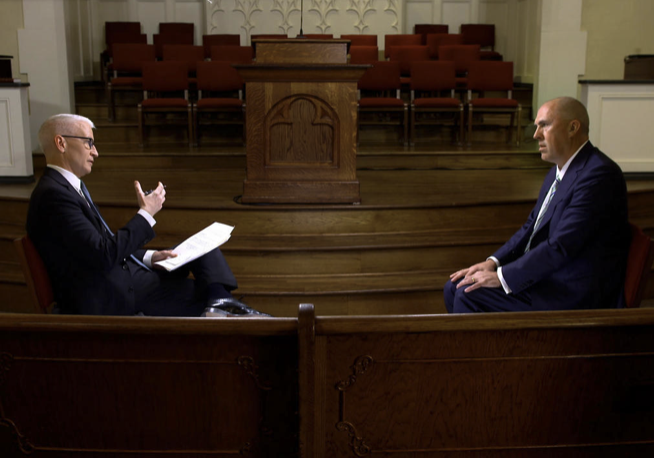
Bart Barber: I’m showing a little bias here because I wrote this week’s Associated Press profile of Barber, a small-town Texas pastor and rancher elected to lead the 13.7 million-member Southern Baptist Convention at a time of major crisis. Barber will be featured Sunday night in a “60 Minutes” interview with Anderson Cooper.

Chris Jones and Sarah Huckabee Sanders: Jones is the Democrat and Sanders the Republican in Arkansas’ gubernatorial race. “With two preachers’ kids and a pastor in the race, Arkansans are poised to elect a governor who can sing hymns by heart and quote Scripture from memory,” the Arkansas Democrat-Gazette’s Frank Lockwood writes as he delves into faith and politics. (Sanders served as former President Donald Trump’s White House press secretary from 2017 to 2019.)

Aaron Judge: The New York Yankees star made history when he hit his 62nd home run of the season Tuesday night. Prayer and faith played a key role during Judge’s chase, reports the Deseret News’ Ryan McDonald.

Loretta Lynn: The country music superstar and Kentucky coal miner’s daughter died Tuesday at age 90. “She really was serious about her faith and a devout member of the church,” retired minister Terry Rush, who maintained a close friendship with Lynn, told me.

John Henry Ramirez: The Texas killer fought all the way to the U.S. Supreme Court to have his pastor lay hands on him and pray during his execution. “Just know that I fought a good fight, and I am ready to go,” Ramirez said before his death by lethal injection Wednesday, as noted by The Associated Press’ Juan A. Lozano and Michael Graczyk.

Lorie Smith and Jack Phillips: The two claim in an opinion piece for USA Today that Colorado is trampling on their First Amendment rights as Christian artists, and they’re fighting back. Website designer Smith’s case is headed to the U.S. Supreme Court, the Deseret News’ Kelsey Dallas reports.


Please respect our Commenting Policy

Thinking about online temptations: Maybe Catholics should log off now and then?

Thinking about online temptations: Maybe Catholics should log off now and then?

If you know anything about religion and social-media, you know that Catholic Twitter can be a wild place.

Niche digital religion is really something. I mean, if Elon Musk decided to swim the Tiber, all of the Big Tech servers would probably turn to pillars of salt. If he became an evangelical Protestant this White House might resort to nuclear weapons.

The question many Catholic priests, and other mainstream religious folks, have asked is rather basic: Is something like Twitter a good, safe, worthy place to invest their talents? Or should they consider it a dangerous waste of time?

I’ve read some interesting essays on topics related to this question and, this time, I will share one as this weekend’s think piece. The headline at RealClearReligion.org is rather blunt: “Catholics, Log Off.” The author is Jack Butler, an editor at National Review Online and a fellow at the Institute for Human Ecology at the Catholic University in America.

Let’s start with the obvious: What would Satan tweet?

The fight against Lucifer was going pretty well — until the devilish enginery appeared. As John Milton depicts the battle of Satan's rebellious angels against the forces of Heaven in his epic poem "Paradise Lost," the demons were on the backfoot, until they devise "implements of mischief" that will "dash/To pieces, and orewhelm whatever stands/Adverse, that they shall fear we have disarmd/The Thunderer of his only dreaded bolt."

Not all artifices are inherently evil. But if the prayer to St. Michael the Archangel is true and demons "prowl about the world, seeking the ruin of souls," they can show up in our devices, too. William Peter Blatty suggests this in his novel "The Exorcist." The demon Pazuzu, having possessed a young girl, is asked if it minds being recorded. "Not at all," the demon says. "Read your Milton and you'll see that I like infernal engines. They block out all those damned silly messages from him."

But what does it mean for technology to obstruct our path to God?

To put this in small-o “orthodox” theological terms, technology is merely another development in a world that is both glorious and fallen.


Please respect our Commenting Policy

Podcast: Talking fetus scene in 'Blonde' has created another media storm about abortion

Podcast: Talking fetus scene in 'Blonde' has created another media storm about abortion

Ask any pastor about times when Americans tend to take stock of their religious commitments and it’s likely you will hear something like the following.

For most people, but especially for those who are married or/or have children, there are obvious gateways from one stage of life to another and, frequently, there are religious teachings and rites that go with them. Think birth, baptism, marriage, children, aging and, finally, death. In many lives, there are moments of conversion or doubt, as well as life-threatening illnesses and tragedies. Divorce? Broken relationships with children? Yes, more symbolic gates.

Clergy know they will have to help women and men deal with these gates. I have always argued, in discussions with editors, that these gateways are often linked to important trends and news events. Changing a prayerbook or hymnal, for example, may threaten doctrines and symbols that, for the devout, are linked to rites that frame these life events.

This brings us to this week’s “Crossroads” podcast (CLICK HERE to tune that in), which focuses on some news and commentary about the life of one of Hollywood’s greatest superstars — Marilyn Monroe. The problem is that the controversial, lurid new movie “Blonde” includes events and images that clearly link abortion to other life-defining events, especially horrors such as rape and other forms of sexual and emotional abuse.

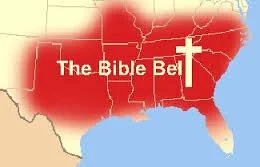
Abortion can lead to grief and may be viewed as a form of violence against women? That pushes several hot buttons at the same time, and not just for right-wing Christians in the Bible Belt. Consider the symbolism of mourners visiting the famous Garden of Unborn Children in Japan.

As always, let me stress that abortion is a topic that, for many, raises religious issues — as well as moral, legal and political questions. This raises challenges for journalists and artists alike.

First, let’s look at the obvious news hook — that Planned Parenthood officials needed to react to this brutal NC-17 movie, a flick that is creating Oscar buzz surrounding the work of actress Ana de Armas.

The headline at The Hollywood Reporter proclaims, “Planned Parenthood: ‘Blonde’ Is “Anti-Abortion Propaganda.”


Please respect our Commenting Policy