Politics

Podcast: Return of the SBC civil war? That'd be a huge development in American religion

Podcast: Return of the SBC civil war? That'd be a huge development in American religion

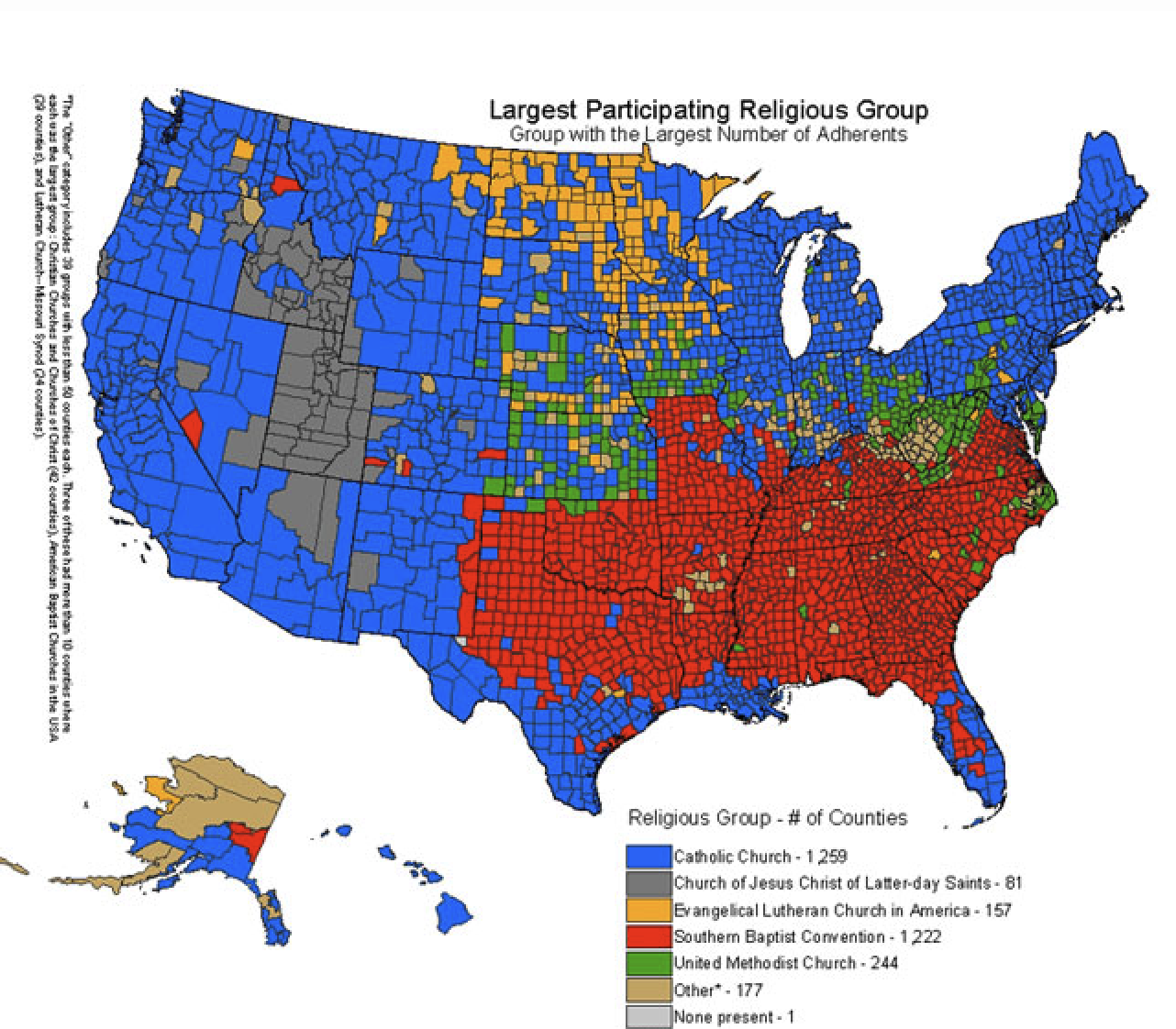
In the early 1980s, the Religion Newswriters Association (now the Religion News Association) held many of its annual meetings in the days just before the Southern Baptist Convention’s big national gatherings .

With good cause: The SBC was in the midst of a spectacular, painful civil war — “moderates” fighting the armies of “biblical inerrancy” — for control of America’s largest non-Catholic flock Big headlines were a certainty, year after year. Religion reporters knew their editors — back in the days when more newsrooms had travel budgets for this sort of thing — would pay to get them to the SBC front lines.

Thus, the trip was a twofer. Religion-beat pros arrived early and started work during the meetings that preceded the actual convention, such as the Pastors’ Conference (a preaching festival featuring rising SBC stars) and the Women’s Missionary Union. The RNA would work its own seminars into the gaps.

One of my favorite memories was in New Orleans in 1982. Religion-beat patriarch Russell Chandler of the Los Angeles Times and some other scribes got into a convention-hotel elevator, carrying a box of wine and liquor for an RNA social hour. The elevator was packed with WMU women, who didn’t like the looks of that box.

When the RNA folks got off the elevator, one of the women said, under her breath: “Well, they’re not here for the Southern Baptist Convention.” Over his shoulder, Chandler replied: “Oh, yes we are.”

I bring this up because there’s plenty of evidence that the Southern Baptists are about to have a second civil war. As I argued during this week’s “Crossroads” podcast (CLICK HERE to tune that in), that would be a big news story for at least three reasons.

Before we get to those, here’s a few key passages from a Religion News Service story by Bob Smietana describing a big SBC domino that tipped over this week: “SBC President Ed Litton won’t run again — to focus on racial reconciliation instead.” Here’s the overture:

Saying he wants to spend his time focusing on racial reconciliation, Southern Baptist Convention President Ed Litton announced via video Tuesday (March 1) that he would not seek a second term in office.

Litton will become the first SBC president in four decades to not seek reelection after his first one-year term.

Please respect our Commenting Policy

Two insiders' writings should be weighed carefully by evangelical-watchers in the press

Two insiders' writings should be weighed carefully by evangelical-watchers in the press

As U.S. Protestant evangelicalism copes with internal divisions and problematic status in the broader society, along with the usual brickbats from the Left, non-partisan journalists and evangelical strategists alike should carefully monitor the thinking of knowledgeable insiders who are not wedded to customary loyalties and assumptions. Two in particular: David French and the lesser-known Michael F. Bird.

Preliminaries: (1) The media should indicate when they're talking about WHITE evangelicals, who are so distinct from the Hispanic and Black subgroups in socio-political terms. (2) Contrary to the customary media story line, it's important to acknowledge that grassroots, evangelicalism remains the LEAST politically involved of U.S. religion's major segments, as seen in the National Congregations Study.

Attorney-turned-pundit David French is, yes, a critic of Donald Trump who even flirted with a quixotic third-party run against him in 2016. Therefore his journalism is ignored if not despised by legions yearning for a second Trump term (which would end when he's age 82.5). Yet consider that though a Harvard Law product, French is a conservative's conservative and an evangelical's evangelical.

The Tennessee-based writer, who worships in the conservative Presbyterian Church in America, is a senior editor of The Dispatch and formerly a National Review writer. During his prior legal career he was a senior counsel with two top evangelical shops, the American Center for Law and Justice and the Alliance Defending Freedom, and president of the Foundation for Individual Rights in Education. Perhaps no attorney has labored more effectively to defend Christian voices and organizations on U.S. campuses, harassed local churches and conservatives and pro-lifers exercising Bill of Rights freedoms.

Additionally, he served with the U.S. Army in Iraq, winning the Bronze Star for combat service. His importance as a conservative thinker was depicted in this 2019 New Yorker article. Wife Nancy was a Sarah Palin ghostwriter and founded Evangelicals for Romney in 2012.

With that background, you'll understand why The Guy keeps thinking about the contention in French's weekly column on religion February 13 that "the seeds of renewed political violence are being sown in churches across the land."


Please respect our Commenting Policy

The New York Times fails to ask a key 'parental rights' question linked to Texas trans wars

The New York Times fails to ask  a key 'parental rights' question linked to Texas trans wars

No one in his or her right (or left) mind would expect the college of journalism cardinals at The New York Times to write a balanced story about one of the latest battles in Texas over core doctrines of the Sexual Revolution.

In this case, I am not referring to Gray Lady coverage of the state’s efforts to ban most abortions after unborn children have detectable heartbeats, which is about six weeks into pregnancies.

No, I am referring to a massive new story about Gov. Greg Abbott call for child-abuse investigations of parents who back appeals by their children and teens to begin medical efforts to transition to another gender. The double-decker headline is rather restrained, when one considers the level of outrage among the vast majority of Times-persons.

Texas Investigates Parents Over Care for Transgender Youth, Suit Says

The investigations by the state’s Department of Family and Protective Services started last week with an employee of the agency, according to the suit, after Gov. Greg Abbott called for such inquiries.

As I said, no one would expect the Times to do a balanced story on this kind of subject, one that is so close to the newspaper’s doctrinal heart.

I was, however, surprised that this story didn’t include (a) some kind of reference to the newspaper’s involvement in an important discussion of a related topic by two of America’s leading trans activists and medical professionals and (b) some input from religious conservatives — major players in Texas life — discussing whether Abbott’s actions limit parental rights in decisions affecting their children. Religious conservatives have been very concerned, in the past, about government efforts (see this ongoing Canada case) to punish parents who oppose transition efforts by their children (usually backed by a former spouse).

Back to the Times report. Here is some crucial material:

The investigations by the state’s Department of Family and Protective Services, which have not been previously reported, were started in response to an order from Mr. Abbott to the agency, the lawsuit says. The order followed a nonbinding opinion by the Texas attorney general, Ken Paxton, that parents who provide their transgender teenagers with puberty-suppressing drugs or other medically accepted treatments — which doctors describe as gender-affirming care — could be investigated for child abuse.


Please respect our Commenting Policy

Can someone please report on the real Ginni Thomas? The truth is out there

Can someone please report on the real Ginni Thomas? The truth is out there

If it’s late winter, it must be time to report on the U.S. Supreme Court, its upcoming decisions and particularly about its most senior justice, Clarence Thomas.

Thomas is also the lone Black justice, although that may change in that President Joe Biden is poised elect the first black woman to the high court.

Two investigative stories have come out recently about Ginni Thomas, the second wife of the Supreme Court justice, and how her political activities are allegedly compromising her famous husband. One was this New Yorker piece and the other is this lengthy New York Times Magazine piece. I’ll be critiquing the latter in a moment, but I do want to excerpt one paragraph from the New Yorker piece:

Ginni Thomas has complained that she and her husband have received more criticism than have two well-known liberal jurists with politically active spouses: Marjorie O. Rendell continued to serve on the appeals court in Pennsylvania while her husband at the time, Ed Rendell, served as the state’s governor; Stephen Reinhardt, an appeals-court judge in California, declined to recuse himself from cases in which the American Civil Liberties Union was involved, even though his wife, Ramona Ripston, led a branch of the group in Southern California.

She may have a point. When I read the adulation that that the Times accords to people like Justice Ruth Bader Ginsburg (who made no secret of her political leanings) or Hillary Clinton (who wrote the book on activist wives), Ginni Thomas may be justified in complaining.

This is not to say she doesn’t have her issues, even with her Republican friends, and I’m not objecting to the reporting on Ginni Thomas’ activities about town. Fair is fair, but I simply don’t see the same disdain and suspicion meted out to activist spouses on the Left. Whenever the latter is politically active, that’s laudable. But if it’s someone on the cultural Right –- well, they’re compromisers.

I am no expert on anything pertaining to the U.S. Supreme Court; I’ve covered two or three hearings in person over the years and that’s that. So I’ll stick to the religious content of the piece. Here are two paragraphs that appear in the middle of the piece:


Please respect our Commenting Policy

Eastern Orthodox thinking on Ukraine? Reporters can't settle for the predictable voices

Eastern Orthodox thinking on Ukraine? Reporters can't settle for the predictable voices

For the past week or so, I have been getting quite a few emails and messages from people wanting to understand what “the Orthodox” think about the invasion of Ukraine.

That’s a massive question. In my experience, the Orthodox are praying for a ceasefire and negotiations, seeking a Ukraine that is militarily independent of the United States-European Union and, certainly, Vladimir Putin’s Moscow regime.

At this point, no one should be surprised that Orthodox leaders aligned with USA-EU and Turkey are releasing fierce statements against Putin’s arrogant and evil invasion of Ukraine. At the same time, no one should be surprised that Patriarch Kirill of Moscow has tried to call for peace, while avoiding any language that openly clashes with the autocrat next door. You end up with language such as:

As the Patriarch of All Russia and the primate of a Church whose flock is located in Russia, Ukraine, and other countries, I deeply empathize with everyone affected by this tragedy.

I call on all parties to the conflict to do everything possible to avoid civilian casualties. I appeal to the bishops, pastors, monastics, and laity to provide all possible assistance to all victims, including refugees and people left homeless and without means of livelihood.

The Russian and Ukrainian peoples have a common centuries-old history dating back to the Baptism of Rus’ by Prince St. Vladimir the Equal-to-the-Apostles. I believe that this God-given affinity will help overcome the divisions and disagreements that have arisen that have led to the current conflict.

Note this meek language — “I call on all parties to the conflict to do everything possible to avoid civilian casualties” — that still manages to condemn the current actions of Russia’s leaders.

Anyone seeking the “Orthodox mind” on this matter needs to remember that Eastern Orthodoxy, no matter what Western media think, has no pope and that its (I should candidly say “our”) conciliar approach to settling disputes moves very slowly, with good cause.


Please respect our Commenting Policy

Plug-In: Why some experts insist Vladimir Putin is motivated by history and religion

Plug-In: Why some experts insist Vladimir Putin is motivated by history and religion

What’s religion got to do with Russia’s attack on Ukraine?

A whole lot, according to some experts.

Writing at GetReligion early this month (then republished by Religion Unplugged), Richard Ostling stressed that journalists shouldn’t neglect the importance of the Byzantine histories of the two rival Orthodox churches in Ukraine. Readers will also want to see tmatt’s Feb. 19 “think piece” building on that: “Thinking about Orthodox history and the complex West vs. East divisions in Ukraine.

Ostling, retired longtime religion writer for Time magazine and The Associated Press, noted:

Russia and Ukraine contain, by far, the two largest national populations in Eastern Orthodox Christianity. The new World Christian Encyclopedia edition — which belongs in every media and academic library — counts 114 million Orthodox in Russia, for 79% of the population, and 32 million in Ukraine, for 73%.

Terminology note for writers: “Eastern Orthodox” is the precise designation for such churches — related historically to the Ecumenical Patriarchate based in Turkey — that affirm the definition of Jesus Christ’s divinity by the Council of Chalcedon (A.D. 451). The separate branch of so-called “Oriental Orthodox” is non-Chalcedonian; its largest national church is in Ethiopia.

Ukraine’s ecclesiastical history, like its political history, is highly complex. The saga began with the A.D. 988 “baptism of Rus” in Kyiv — Russians prefer “Kiev” — when Prince Vladimir proclaimed Orthodoxy the religion of his realm and urged the masses to join him in conversion and baptism.

Russians see Christendom’s entry into Eastern Europe as the origin of their homeland and the Russian Orthodox Church. Russian President Vladimir Putin cites this history to support his claim for Ukraine as a client area within greater Russia instead of a validly independent nation. His post-Soviet Kremlin maintains close bonds with the Russian Church’s Moscow Patriarchate, which in turn has centuries of ecclesiastical authority within Ukraine.

At Religion News Service, religion author Diana Butler Bass makes the case that “Kyiv is essentially Jerusalem, and this is a conflict over who will have control of Orthodoxy — Moscow or Constantinople.”

Bass writes:

While the secular media tries to guess Vladimir Putin’s motives in Ukraine, one important aspect of the current situation has gone largely ignored: religion.


Please respect our Commenting Policy

Podcast: What's the SCOTUS story? New Colorado case focuses on free speech, not religious liberty

Podcast: What's the SCOTUS story? New Colorado case focuses on free speech, not religious liberty

Here we go again?

That’s a logical question, in light of the news that — once again — church-state activists on left and right are preparing for more U.S. Supreme Court arguments involving the state of Colorado, a traditional Christian believer, LGBTQ rights and the First Amendment.

That was the news hook for this week’s “Crossroads” podcast (CLICK HERE to tune that in). But to understand that conversation, it really helps to dig into a key passage or two in the majority decision in that 2019 SCOTUS case focusing on Masterpiece Cakeshop and the Colorado Civil Rights Commission (full text .pdf here).

So, all rise. The writer is, of course, then Justice Anthony Kennedy:

The laws and the Constitution can, and in some instances must, protect gay persons and gay couples in the exercise of their civil rights, but religious and philosophical objections to gay marriage are protected views and in some instances protected forms of expression. While it is unexceptional that Colorado law can protect gay persons in acquiring products and services on the same terms and conditions as are offered to other members of the public, the law must be applied in a manner that is neutral toward religion.

The result was one of those narrow decisions much beloved by Chief Justice John Roberts.

Then, what you hear in this next passage is the sound of Kennedy punting the crucial religious-liberty decision in this First Amendment case into the mists of the future:

The outcome of cases like this in other circumstances must await further elaboration in the courts, all in the context of recognizing that these disputes must be resolved with tolerance, without undue disrespect to sincere religious beliefs, and without subjecting gay persons to indignities when they seek goods and services in an open market.


Please respect our Commenting Policy

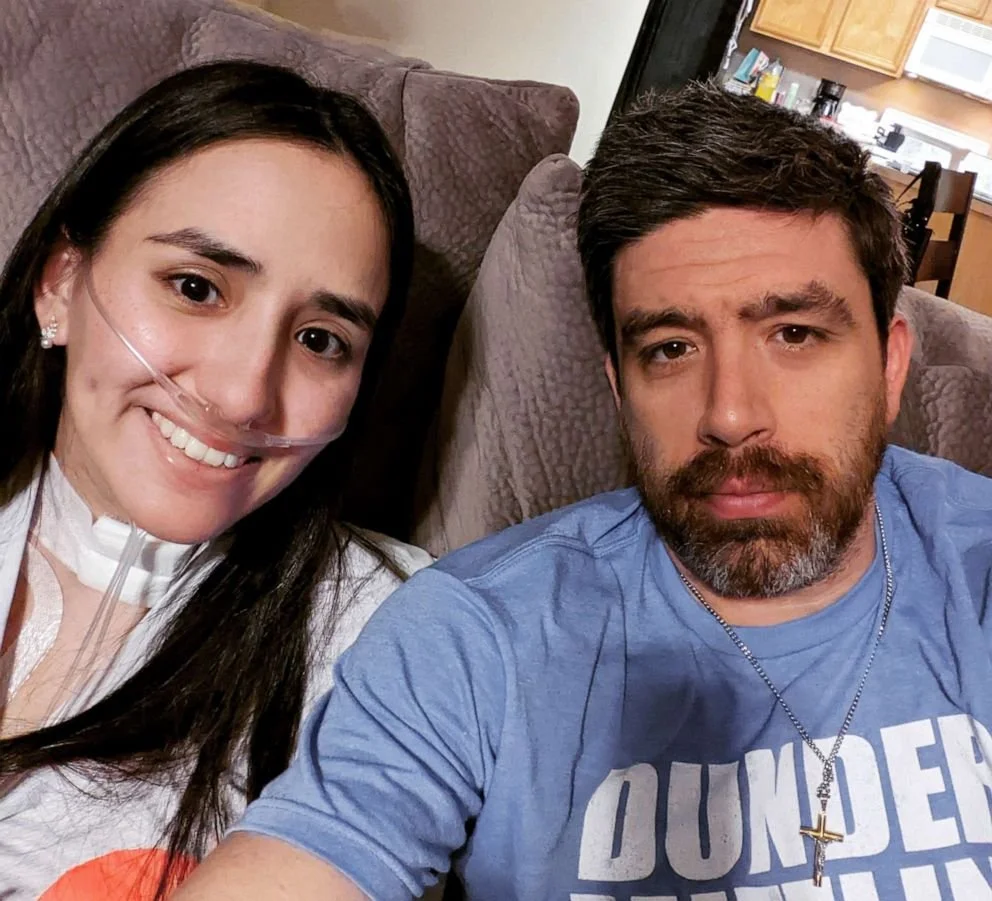
Texas couple survives journey through COVID hell, apparently without clergy help of any kind

Texas couple survives journey through COVID hell, apparently without clergy help of any kind

One of my closest friends is a veteran doctor in a town deep in the Bible Belt. I’ve had lots of conversations with him about this experiences during the coronavirus pandemic. He has had COVID and so have I.

One common theme in our conversations has been a sense of mystery that medical professionals, from the beginning, have had about this evolving disease. They understand why COVID hits some people hard, especially older patients and people who, for various reasons, have respiratory problems. The mystery is why this disease strikes with deadly force in some cases — but clearly not all — involving young, healthy adults. And why does COVID attack some hearts and not others?

Readers will collide with some of these mysteries while reading a stunning Washington Post story about a family’s 139-day hospital drama that has received quite a bit of attention in social media and the mainstream press. The headline: “Chris Crouch was anti-vaccine. Now his pregnant wife had covid, and he faced a terrible choice.” Here is the overture:

KINGWOOD, Tex. — Chris Crouch had had low expectations for online dating. He was a police officer in his 30s, almost a year out from a painful divorce, and, he said, the women he had met had been “playing games” in ways that left him dispirited.

Then he met her.

Diana Garcia Martinez was 24 and a busy single mom whose sister had set up her profile without her knowing. She was intelligent, empathetic and upfront, and by the third date, he was in love. “It was just a feeling. … I felt like I knew her my whole life,” he recalled explaining to his cousin Gilbert, knowing it was a cliche but also true.

What role does religious faith play in this story? That’s a complex question.

I mean, we are talking about people in Texas. No one should be surprised by frequent Godtalk and references to prayer.

However, as the son of a Texas Baptist pastor (who spend the last decade of his ministry as a hospital chaplain), I was very surprised that the word “church” is missing. Did this couple really go through this medical hell alone, without a pastor or friends who share a pew with them? Maybe this couple is in the “Nothing in particular” demographic, but I have my doubts.


Please respect our Commenting Policy

Pronoun wars? The 'usual suspects' quoted by the press skewed Baptism-gate coverage

Pronoun wars? The 'usual suspects' quoted by the press skewed Baptism-gate coverage

What is the role of journalism? Above all, it is to inform and educate. We know that reliable information is needed for any society to properly work. At the very least, readers deserve accurate information.

What happens when this isn’t the case? That’s the dilemma that befell many news organizations in recent days when a big Catholic news story came across their newsroom desks.

Yes, I’m referring to the botched baptism story out of Arizona last week that made so many headlines. And that’s hard to do considering the ongoing pandemic, the Beijing Olympics and Russia-Ukraine crisis.

Yes, baptism-gate has been all the rage. News coverage of it, however, not so good. More on that later.

To summarize: a priest named Andres Arango, following a church investigation, determined that he’d incorrectly performed thousands of baptisms over more than 20 years. It meant that those who had been baptized in Phoenix, and at his previous parishes in Brazil and San Diego, needed to be baptized again.

What did he do wrong? Arango, who has since resigned after making the mistake, used the wrong pronoun. Instead of saying, “I baptize you in the name of” he used “we.” After diocesan officials found out, they said people who Arango baptized aren’t officially Catholic. That means they weren’t eligible for other sacraments like Holy Communion.

This is where the news coverage got interesting. Once again, on an issue of great importance to Catholic readers and church leaders, secular news outlets assumed the views of one side were normative — even accurate — at the expense of church doctrine. Here at GetReligion, we have a name for that approach (click here for information).

Everyone from The New York Times and USA Today to NPR and local news outlets covered the story. What we learned from the coverage was telling. It was also largely one-sided and inaccurate.


Please respect our Commenting Policy