Politics

Give the charismatic world's 'new prophets' more ink? Julia Duin still says 'yes' (updated)

Give the charismatic world's 'new prophets' more ink? Julia Duin still says 'yes' (updated)

Surely you’ve heard of the “new prophets” in the rowdy world of charismatic Christianity?

In terms of hooks for news, these folks have everything.

We’re talking about lots of energy and egos, with the kind of on-camera talent that produces megachurches and social-media outbursts that go viral. There are also plenty of links to the powers that be around Donald Trump. This is “charisma” in every sense of that word.

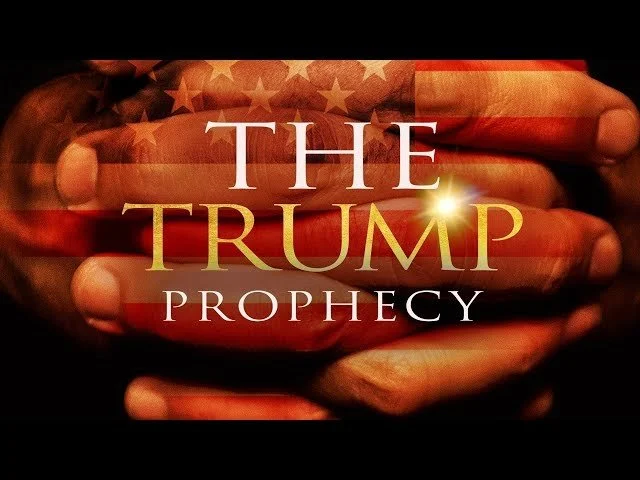
Julia Duin has been sounding this horn here at GetReligion for years, long before the events surrounding January 6th caught the attention of Big Media. Here is a chunk of a 2018 post: “Religion News Service — Movie claims 'red tsunami' will vindicate Donald Trump in November.”

… (S)ecular America doesn’t get how vehemently many people believe that God orchestrated President Trump’s 2016 victory. And what’s more, many of those people believe God has mandated another victory for Trump in 2020.

You’ve not heard this? Folks, you’re not reading the right websites. …

It’s not so much evangelical Protestants who are pushing this idea, but a daughter movement made up of charismatics and Pentecostals (linked up with Liberty University film people). I’ve been amazed over the years how few religion reporters follow these folks, even though this demographic was instrumental in getting Trump elected. Plus, a growing percentage of world Christianity is Pentecostal/charismatic (see this classic major Pew Forum study). Visit Brazil, if you don’t believe me. And much of Africa.

You want more? How about this piece early in 2020: “About Todd Bentley and 2020 prophecies: How are reporters supposed to cover this stuff?

Julia was back with more information and news hooks linked to the this new generation of self-proclaimed prophets (and the people who warned about getting tied up in politics) months later with this piece: “Who's covering this? Are charismatics and Pentecostals behind Trump's refusal to concede?

Everyone remembers that viral “strike and strike and strike” rap from the Rev. Paula White-Cain.

Please respect our Commenting Policy

Religion news 2021: Which story was No. 1? Return of Taliban or Jan. 6 riot at U.S. Capitol?

Religion news 2021: Which story was No. 1? Return of Taliban or Jan. 6 riot at U.S. Capitol?

For journalists who braved the chaos, the Jan. 6th riot on Capitol Hill offered a buffet of the bizarre -- a throng of Proud Boys, QAnon prophets, former U.S. military personnel and radicalized Donald Trump supporters that crashed through security lines and, thus, into history.

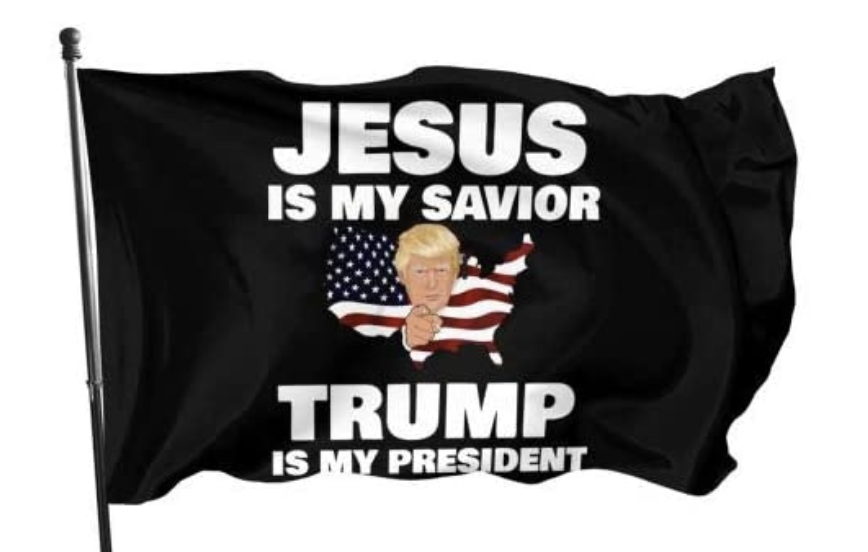
Many protestors at Trump’s legal "Save America" rally carried signs, flags and banners with slogans such as "Jesus is my Savior, Trump is my president" or simply "Jesus 2020." In this context, "Jesus saves" took on a whole new meaning.

Some of that symbolism was swept into the illegal attack on the U.S. Capitol.

In its poll addressing major religion events in 2021, members of the Religion News Association offered this description of the top story: "Religion features prominently during the Jan. 6 assault on the U.S. Capitol by pro-Trump insurrectionists. Some voice Christian prayers, while others display Christian or pagan symbols and slogans inside and outside the Capitol."

Consider, for example, Jacob Anthony Chansley -- or Jake "Yellowstone Wolf" Angeli. With his coyote-skin and buffalo-horns headdress, red, white and blue face paint and Norse torso tattoos, the self-proclaimed QAnon shaman, UFO expert and metaphysical healer became the instant superstar of this mash-up of politics, religion and digital conspiracy theories.

"Thank you, Heavenly Father … for this opportunity to stand up for our God-given inalienable rights," he said, in a video of his U.S. Senate remarks from the vice president's chair. "Thank you, divine, omniscient, omnipotent, omnipresent Creator God for filling this chamber with your white light and love. Thank you for filling this chamber with patriots that love you and that love Christ. …

“Thank you for allowing the United States of America to be reborn. Thank you for allowing us to get rid of the communists, the globalists and the traitors within our government."

That was one loud voice. A big question that must be answered, in future trials and the U.S. House investigation, is whether it's true -- as claimed by the New York Times -- that the "most extreme corners of support for Mr. Trump have become inextricable from some parts of white evangelical power in America."


Please respect our Commenting Policy

Painting or icon? That big hole in New York Times report on Catholic University controversy

Painting or icon? That big hole in New York Times report on Catholic University controversy

Let’s start here: There is nothing new about artists painting images of Jesus as a Black man.

A few of these images may have been controversial at the time of their creation, in part because of the political motivations of some (repeat “some”) artists. But the vast majority are clearly works of Christian devotion showing reverence for the Incarnation of Jesus Christ. For many Christians, these images are way less problematic than the omnipresent Warner Sallman “Head of Christ” painting from 1940, depicting Jesus with light, wavy hair and very European features.

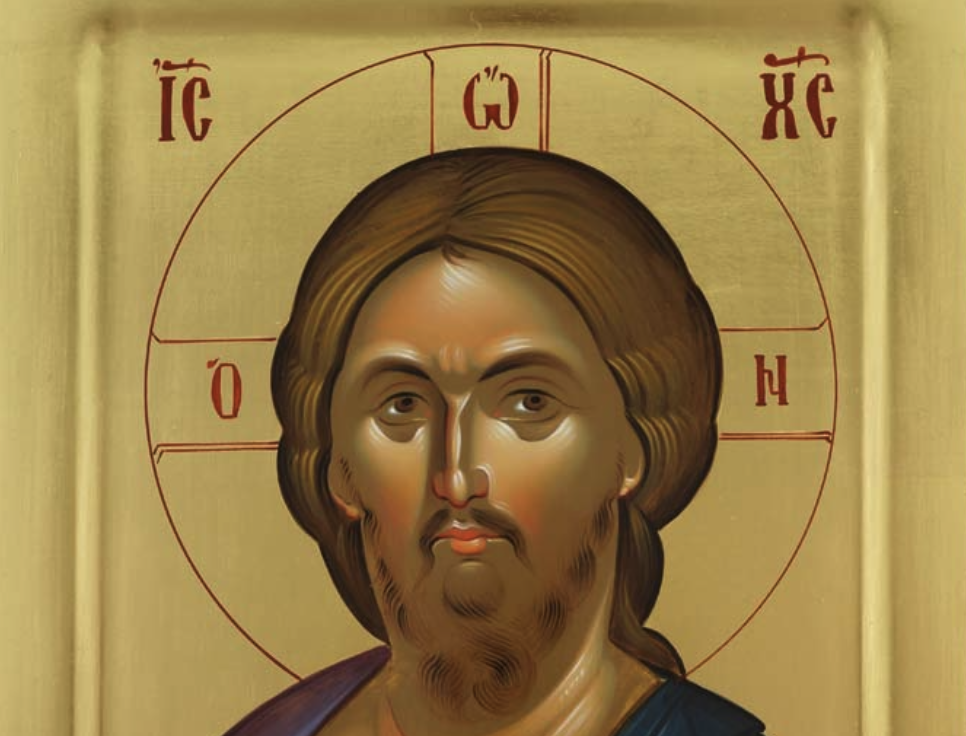
As an Eastern Orthodox Christian, the image of Jesus that I know best is the ancient Christ Pantocrator icon from St. Catherine’s Monastery at Mt. Sinai. It is a complex icon of Jesus that, well, would be hard to label as one of the “surfer Jesus” images in some contemporary churches.

This brings me to that New York Times story that ran the other day with this dramatic double-decker headline:

A Painting of George Floyd Roils Catholic University

At the Catholic University of America in Washington, conservative students called for a campus ban on further displays of an artwork that depicts Floyd as Jesus.

This story does a pretty good job of describing the timeline of this controversy — which is described as yet another clash over race, art and religion. It’s clear that, for the leaders of private schools, controversies of this kind are especially complex.

The problem, for me, is that the image in question — “Mama,” by Kelly Latimore — is consistently described as a painting based on the famous Pieta statue by Michelangelo.

Thus, what we have here is a “painting,” based on one of the most famous statues in Western Christian art, but is clearly meant to be interpreted as a holy icon in the Eastern Orthodox tradition.

Did you follow that? The journalism question here is whether the Times team did an adequate job of describing why the term “icon” — which does not appear in the story — is so important, if the goal is to understand the thinking of some of the Catholics (the story contains zero input from the Orthodox) who believe that this painting is blasphemous. Here is the overture:


Please respect our Commenting Policy

Five big Catholic news angles that journalists will need to cover during 2022

Five big Catholic news angles that journalists will need to cover during 2022

As 2021 comes to a close, everyone is looking towards 2022. The news cycle over the last two years has been dominated by COVID-19 and that doesn’t seem to be subsiding — given the rash of infections the past few weeks as a result of the Omicron variant.

The Catholic world, meanwhile, had in 2021 one of its busiest years. The election of Joe Biden as president — this January will officially mark his first year in office — also dominated news coverage. That Biden was also a Catholic (only second after John F. Kennedy in 1960) thrust Catholicism into the political news coverage. Politics plus religion equals news. It’s a familiar formula.

Biden, a practicing Catholic who attends Mass on Sundays, was at odds this year with many U.S. bishops — setting up a year-long debate over whether he (and other pro-abortion politicians) should receive Holy Communion. In the end, the bishops offered more clarification in the importance of the Eucharist without singling out Biden. Truth is, no one knows if the bishops actually considered mentioning Biden or other pro-abortion-rights Catholics.

Issues around politics and religion will likely dominate once again in 2022. The abortion issue and a pending Supreme Court decision regarding access to it will be a big story in the coming year. The Catholic church, a major part of the abortion debate in this country for decades, will play a major role in news stories that will be written over the coming months.

At the same time, Pope Francis, who recently turned 85, will again be surrounded by rumors that he will either resign or die. Whether this pope — the most polarizing in centuries — can chip away at his agenda to change the church in the 21st century will continue to pit traditionalists versus progressives.

Here are the five big news trends and stories journalists need to keep an eye on in the new year:

(5) Pope Francis and his focus on a progressive agenda

This coming year could be the one where the battle between this pontiff and doctrinal traditionalists intensifies even further. A Dec. 17 Associated Press story set the stage for such a confrontation in what will be Francis’ ninth year as head of the Catholic church.


Please respect our Commenting Policy

New podcast: Top Godbeat story of 2021? Look for Jan. 6 religion hooks (#DUH)

New podcast: Top Godbeat story of 2021? Look for Jan. 6 religion hooks (#DUH)

beat stories.

Trust me, I understand that preparing the ballot for this poll is a thankless job. One of the hardest tasks is finding a way to describe some of the broader trends during any given year. It’s easier — most of the time — to describe singular events.

During this week’s “Crossroads” podcast (CLICK HERE to tune that in), host Todd Wilken asked me to describe some of the patterns that I have seen in the RNA poll results through the decades.

Trend No. 1 is clear: Name the biggest political story of the year and look for a religion angle. After all, politics is the true religion of many folks who run newsrooms.

Trend No. 2 works about 76% of the time: What did the pope do this year, especially if it has any implications for U.S. political fights over moral and social issues (see trend No. 1).

Trend No. 3 comes and goes: What did liberal leaders of the Seven Sisters of Mainline Protestantism proclaim about sex and did it cause new revolts that might split their churches? Every now and then, the Southern Baptists slip in with battles over sex, race or politics (newsworthy topics, in other words).

In light of these trends, it was easy to predict that the RNA poll’s top story for 2021 would be:

Religion features prominently during the Jan. 6 assault on the U.S. Capitol by pro-Trump insurrectionists. Some voice Christian prayers, while others display Christian or pagan symbols and slogans inside and outside the Capitol.

That’s actually a careful wording and, in particular, note that the RNA leaders refrained (this must have been hard) from including a reference to “white evangelicals.”

The key, in this description, is the tension between “prominently” and “some,” as in the folks saying “Christian” prayers. It’s safe to assume that this is the rebel that they had in mind (as quoted in one of my “On Religion” columns):


Please respect our Commenting Policy

Tops in religion for 2021: Gallup spotlights America's downward Church Lurch

Tops in religion for 2021: Gallup spotlights America's downward Church Lurch

As Religion News Association colleagues vote on the top stories of 2021, here's The Guy's own pick for first place: Gallup spotlights the great downward Church Lurch in 21st Century America.

The polling organization, which is unmatched for data on trends that span decades — including a steady barrage of questions about religion — marked the Easter and Passover seasons by announcing that only a minority of Americans report membership in a religious congregation any longer.

Yes, yet again we confront those religiously unaffiliated "nones,” “nothing in particulars” and the long-emerging flock often called “spiritual, but not religious.”

The much-buzzed-about poll report, full details here, said membership rates held remarkably steady from the 73% in Depression-era 1937, when the question was first asked, through 70% in 2000. But now, self-reported affiliation has plummeted to 47% -- and a mere 36% for younger Americans in the Millennial generation. Equally significant, a three-year aggregate of 6,000 respondents in 2018-2020 also gave membership minority status at 49%.

This slump drew attention from media that rarely mention much less cover religion substantively. Assessing the many reactions, GetReligion boss Mattingly's post back in April — “Thinking with two key Southern Baptists: Concerning those scary Gallup Poll numbers” — astutely focused on two pieces by Baylor historian Thomas Kidd and the Rev. Russell Moore, who was soon to quit as president of the Southern Baptist Convention's Ethics and Religious Liberty Commission. They analyzed Protestantism with little specific to Catholicism or other faiths. Links to both articles are included in Mattingly's post.

Note that responses in 2000 would not capture the potential negative impact of COVID-19 — which was hurting attendance and donations — on future membership counts.

So, what's happening?


Please respect our Commenting Policy

Why the press loves Santa Claus and the case for more news about St. Nicholas of Myra

Why the press loves Santa Claus and the case for more news about St. Nicholas of Myra

We are currently in “the most wonderful time of the year,” as the popular Christmas song by Andy Williams goes. For many Christians, however, the four weeks leading up to Christmas Day are marked by Advent, a time of prayer in preparation for the birth of Jesus. In Eastern churches, this season is called Nativity Lent.

Advent is one of those religious customs largely ignored by the mainstream press. Many newspapers and TV networks are more preoccupied with the economics around the season — Black Friday marks the beginning of the shopping-mall season for them — and things like trendy Advent calendars (which these days are largely devoid of any religiosity) and Santa Claus, the hero previously known as St. Nicholas.

In fact, the things the mainstream media value this time of year are starkly different from the message worshippers in ancient Christian traditions get in church during Sunday liturgies in the weeks preceding December 25th.

This is not something that’s entirely new. Even as a child, I could sense a disconnect between the materialism around me growing up in New York and the Christmas I celebrated at home featuring a Nativity crèche and Advent wreath. The Peanuts Christmas special had Charlie Brown bemoaning commercialization of the season — and that aired in 1965 (and network executives worried that it was too religious, even back then).

Where are we in 2021? Amid talk of supply-chain issues, inflation, the ongoing pandemic and political bickering in Washington (with politicians posing with guns on their Christmas cards), it looks pretty bleak out there.

This time of year is yet another reminder of what mainstream media values and the divide over what most Americans think and believe. This is where the Catholic press is of great value to help frame not just what’s important, but also what is more connected to the traditions and reality of this time of year.

In particular, it’s interesting to look for coverage of the backstory of Santa Claus. Hold that thought.

Let’s start here. Scanning various news sites the last two weeks led me to notice a larger trend.


Please respect our Commenting Policy

About that Southern Baptist 'binder' story: What do Black biblical 'inerrantists' say about CRT?

About that Southern Baptist 'binder' story: What do Black biblical 'inerrantists' say about CRT?

Reporters receive all kinds of bizarre things in the mail (analog or digital). Religion-beat reporters have been known to have some really, really bizarre items come out of nowhere.

My all-time “favorite” (I am using that term loosely) was a 35-page, handwritten manifesto detailing why — using lots of biblical references — Barbra Streisand was the Antichrist. I filed that one away. That wasn’t the case, however, with the typed, unsigned note in a plain white envelope that pointed to public documents detailing the arrest of a prominent clergyman for a sex crime committed in a public bathroom.

Journalists offered hot documents have to ask two questions:

(1) Can this information be verified as accurate?

(2) What are the motives of the person sharing the information? That question leads to another: How can those motives be explained to readers without identifying the person who provided the documents?

It goes without saying that documents from an on-the-record source will be trusted — by informed readers and “stockholders” in the story — more than those from a source demanding anonymity. The key is to give as much information as possible about the source of the information as possible, including why anonymity was acceptable in this case.

This leads us to the Nashville Tennessean story that rocked the world of Southern Baptist Convention social media, the one with this headline: “Inside the Southern Baptist Convention's battle over race and what it says about the denomination.

The entire story pivots on documents linked to a former SBC president, the Rev. James Merritt, and the Rev. J.D. Greear, the convention’s leader at the time of the events described in the story. It also helps to know that Merritt was the chair of the national convention resolutions committee in 2021.

All of this focuses on efforts to pass a 2021 SBC resolution that condemned “critical race theory” outright — by name and with no qualifications, as desired by leaders of the SBC’s most conservative churches. Here is a key passage:


Please respect our Commenting Policy

In search of the elusive liberal evangelical: Is this tiny flock worthy of big news coverage?

In search of the elusive liberal evangelical: Is this tiny flock worthy of big news coverage?

I was listening to a podcast the other day and the host asked a guest a question that I have heard way too many times over the last year — “Why did you decide to focus only on conservative evangelicals?”

I fully admit that a lot of my work does focus on conservative evangelicals. Why? Because, in the current political landscape, there’s not a more important force in American politics. The nones are too disorganized at this juncture to have a systemic impact. Catholics and Mainline Protestants are too politically divided to be considered anything close to a coherent voting bloc.

The fact is simply this: 13% of all American adults in 2020 were white evangelical Republicans.

No other group comes even close to that size. Nine percent of Americans are nothing in particular Democrats — but that’s not an easy group to wrap your arms around. There are twice as many white evangelical Republicans as there are white Catholic Republicans. For every Democratic atheist, there are 2.5 white evangelical Republicans.

But, I wanted to devote some time trying to look at the other side of the evangelical coin: those who describe themselves as politically liberal. Because the Cooperative Election Study is so large, even if that group is a relatively small percentage of the population, it’s still possible to do in-depth statistical analysis of liberal evangelicals.

Of all self-identified evangelicals, 58% describe themselves as conservative, 29% indicate they are moderate, while 13% say they are liberal. If that is restricted to just white evangelicals: 8% are liberal, 24% are moderate, and 68% say they are conservative.

That’s obviously much different than the general population. In 2020, 30% of all Americans said they were liberal, along with 28% of just white respondents.


Please respect our Commenting Policy