Politics

Progressive Catholic cardinal of Washington, D.C., pours praise on America's embattled press

Progressive Catholic cardinal of Washington, D.C., pours praise on America's embattled press

With a controversial Catholic in the White House, there was no way for Cardinal Wilton Gregory to face a pack of Beltway journalists without fielding political questions.

Job 1 was addressing President Joe Biden's statement: "I respect them -- those who believe life begins at the moment of conception and all -- I respect that. Don't agree, but I respect that."

The leader of the Catholic Archdiocese of Washington, D.C., has made it clear that Biden can receive Holy Communion. However, Gregory also noted: "The Catholic Church teaches, and has taught, that life -- human life -- begins at conception. So, the president is not demonstrating Catholic teaching."

That was the big headline after this event, but this wasn't the topic Gregory came to the National Press club to discuss. In his recent address, he poured praise on America's mainstream press, especially journalists who -- during this "anxious time" -- have openly pushed for change on issues linked to racism and social justice.

"You are the ones we rely on to keep us informed, updated and connected as a global community of various faith traditions," said Gregory, America's first Black cardinal. "Like all industries, journalism has certainly changed over the years. Technology has expanded your reach and abilities to share our life stories, our dreams and our hopes.

"You are the professionals with just the right words, who immerse yourselves in a community, a situation or even a crisis -- to bring us the facts, the people and the takeaways that can help us work toward living in true peace and equality for all, without the threat of violence or harm."

According to a sobering blast of data from Gallup, the cardinal's critique of the national press would ring true for Democrats and political progressives -- but not for Republicans and cultural conservatives. Catholics can be found in both of those camps, of course.

In their Sept. 1-17 poll, Gallup researchers asked: "In general, how much trust and confidence do you have in the mass media -- such as newspapers, TV and radio -- when it comes to reporting the news fully, accurately and fairly -- a great deal, a fair amount, not very much or none at all?"
Please respect our Commenting Policy

New podcast: Did the mainstream press ever figure out why Pat Robertson was important?

New podcast: Did the mainstream press ever figure out why Pat Robertson was important?

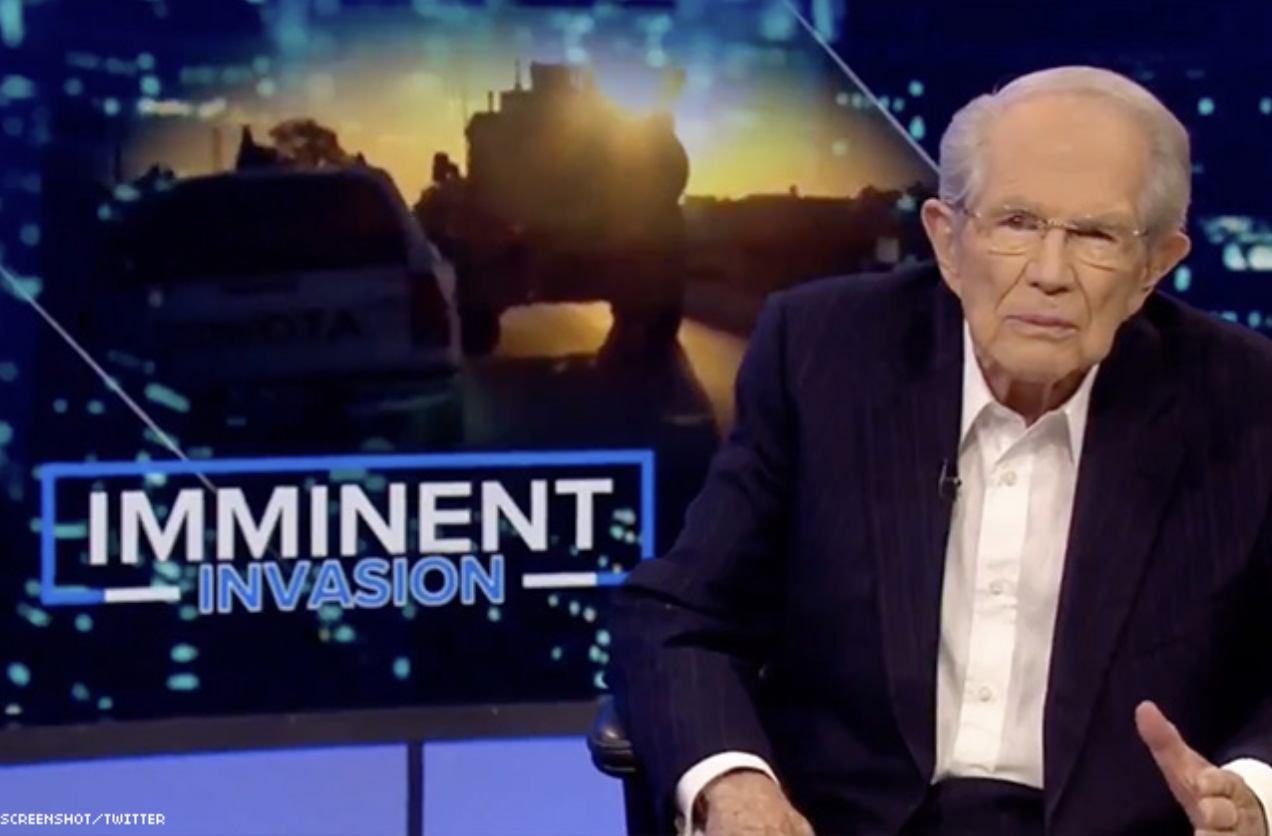
If you look at the headline and the art for this post, it’s obvious that this week’s “Crossroads” podcast (click here to tune that in) focused on media coverage of the Rev. Pat Robertson’s retirement as host of the “700 Club.”

Try to forget that. Work with me here, for a moment.

What if I told you that the man at the heart of this story grew up in Washington, D.C., as the son of a U.S. Senator. Then he did his undergraduate work at a quality school known for its academic rigor, graduating magna cum laude while studying history at Washington and Lee University.

Later, he earned a Yale Law School degree. After that — think low New York bar exam scores and a big religious conversion — he earned an MDiv degree from New York Theological Seminary.

Somewhere in that mix, he served in the U.S. Marines. Later, he founded a multi-million-dollar broadcasting empire and started a graduate-school university and a law school.

Does it sound like someone with a pretty good shot at having an impact on American life and culture?

Well, that’s Pat Robertson — sort of. It's clear that, for most journalists, this resume doesn’t have much to do with the man’s life and work. This is, after all, the religious broadcaster (as opposed to televangelist) who, for decades, served up “spew your coffee” soundbites that launched waves of embarrassing headlines and late-night TV jokes. He was important because this was the kind of wild man who helped lead the Religious Right further into the heart of Republican Party politics.

The minute anything crazy or scary happened in the world — from politics and pop culture to hurricanes and earthquakes — the press turned to Robertson for what was billed as semi-official “evangelical” reactions, even as his words frequently left mainstream evangelical leaders sad, puzzled or furious.

Robertson was one of the official alpha-male media voices of evangelicalism, even after he women and men had emerged who had more clout and connections in the movement.

I was never a Robertson fan. However, it was always clear to me — thinking in terms of church history — that he wasn’t really an “evangelical,” strictly defined, even though he was an ordained Southern Baptist minister. The key is that he was a leader in the rising tide of charismatic and Pentecostal Christianity in America and the world at large (see this Pew Research Center resource page).

Does that matter? Well, Pentecostal Christianity very diverse, in terms of race and class, and is the fastest growing for of religious faith on the planet.


Please respect our Commenting Policy

Finding voices on both sides of Texas abortion debate? The Atlantic comes out on top

Finding voices on both sides of Texas abortion debate? The Atlantic comes out on top

In recent weeks, Texas has swung back and forth between prohibiting abortions after six weeks, then being forced bu judges to allow them, then managing to forbid them once again.

Currently, once the fetal heartbeat is detected, abortions are forbidden in the Lone Star state.

Meanwhile, journalists have gone full court press on the matter. There’s no surprise there. But did anyone strive to talk to women and men on both sides of this hot-button issue? Hold that thought.

Now, I don’t expect Hollywood ever to be balanced on the topic but a recent offering in The Hollywood Reporter on 12 abortion-positive movies was over the top, even for them.

It’s been 49 years since the two-part “Maude’s Dilemma” — written by future Golden Girls and Soap creator Susan Harris — premiered, but the choice faced by Bea Arthur’s title character, finding herself pregnant at 47, and the determination of Norman Lear’s show to discuss that choice in depth, and engage in a nuanced debate, would be provocative in an American broadcast sitcom today.

It’s still incredibly rare to find TV comedies dealing with actual abortions, though shows like Girls and Sex and the City used it as a conversation piece. Frequently, American television falls back on abortion being a thing characters talk about on-camera, do off-camera and then never speak of again..

Then comes the list:

“Dirty Dancinga clear and unapologetic argument for reproductive choice.” “Grandma,” which is “abortion as a regrettable but necessary option in many young women’s lives.” Or “Never Rarely Sometimes Always” about “a candid and clear-eyed contemplation of abortion as a choice arrived at not with hand-wringing but with sobering pragmatism.” Or “One Sings, the Other Doesn’t” about “love, whimsy, joyful bohemia and tenderness no less than healthy anger over injustice.”

You get the picture.


Please respect our Commenting Policy

What was the goal of Gov. Kathy Hochul's 'God gave us the vaccine' sermonette?

What was the goal of Gov. Kathy Hochul's 'God gave us the vaccine' sermonette?

In an age in which satire and news often overlap, it was hard to know what to make of this headline: "New York Atheists Claim Religious Exemption From Vaccine After Governor Claims That It's From God."

This was satire, care of the Babylon Bee website. But the barbed humor focused on real quotes from the governor of New York that raised eyebrows on the cultural left and right.

"We are not through this pandemic," said Gov. Kathy Hochul, at a New York City megachurch. "I prayed a lot to God during this time and you know what -- God did answer our prayers. He made the smartest men and women, the scientists, the doctors, the researchers -- he made them come up with a vaccine. That is from God to us and we must say, thank you, God. ...

"All of you, yes, I know you're vaccinated, you're the smart ones. But you know there's people out there who aren't listening to God. ... I need you to be my apostles. I need you to go out and talk about it and say, we owe this to each other. We love each other."

Clearly, the governor said, getting vaccinated was the best way to obey God in this crisis.

Writing at The Friendly Atheist website, Beth Stoneburner argued that this was not the kind of church-state sermonette that should trouble atheists and other secularists.

"Is it a speech that atheists will appreciate? Probably not," she noted. "But as far as a politician using the language of faith to reach an audience that desperately needs to get vaccinated -- but might not because other prominent Christians are feeding them lies -- it's arguably effective."

If this blast of God-talk from a Democrat "helps Christians get vaccinated when some of them might choose otherwise, then perhaps that outweighs any criticisms people may have of her speech," said Stoneburner.

At the same time, Hochul's explicitly Christian remarks on vaccines drew little or no news coverage, as opposed to the media firestorms that often greet faith-based statements by Republicans attempting to win the support of conservative Christians in similar settings.


Please respect our Commenting Policy

Does church attendance reduce political polarization? Not among White conservatives

Does church attendance reduce political polarization? Not among White conservatives

There are some concepts in political science that have just become impossible to ignore. Whether it’s leading a classroom discussion, talking to a member of the media, or just chatting with friends about the current state of the world, I can’t help but bring it all back to political polarization.

Put simply, it’s the idea that American society has become more politically tribalized, with Democrats huddled in the far left corner of the political spectrum and Republicans doing the same on the right side of the scale with a huge chasm between the two. And, the two parties loathe each other — not just disagreeing, but believing that if the other party wins an election, it will lead to the end of the Republic.

Compromise becomes impossible in a world in which you see the other side not only as wrong, but also as the enemy. The inherent problem is that our democratic processes grind to a halt without a level of bi-partisan support.

There’s been a ton of great research done on measuring the level of polarization in the United States Congress by using DW-NOMINATE scores. The results indicate that both parties have moved away from the center, but that is more pronounced among the GOP than among the Democrats. This visual (it comes from this paper) is one I use in class to show just how bad it’s gotten.

But, I wanted to take a different approach here. I wanted to see just how much polarization is perceived by the average American, how that has changed over time, and how religion plays a role in that perception.

Here’s how I did it.

Since 2012, the CCES has asked respondents a battery of questions that require them to place the Democratic Party, the Republican Party, and themselves on an ideology scale running from 1 (very liberal) to 7 (very conservative), with the moderate option described as “middle of the road.” For my purposes someone has a polarized view of the world if they describe either the Democrats as “very liberal” or the Republicans as “very conservative.” In essence, they are saying: “that political party can’t get any more extreme.”


Please respect our Commenting Policy

New podcast: Yes, New York's governor urged church folks to be her 'apostles' backing vaccines

New podcast: Yes, New York's governor urged church folks to be her 'apostles' backing vaccines

Hey news consumers, remember that time when President Donald Trump stood in front of a church (sort of in an urban war zone), held up a Bible and the world went nuts?

Chances are good that you heard about it. However, as a refresher, here are 66,100,1000 Google references to this incident, as well as as an imperfect collection of other Trumpian news involving the word “Bible.”

Or remember that time when Trump — long-time member of the liberal Presbyterian Church (U.S.A.) and probably, in terms of private life, one of the most secular presidents in American history — went to Liberty University to court evangelicals and said this (care of an NPR report):

"We're going to protect Christianity. I can say that. I don't have to be politically correct," he thundered at the beginning of his speech at the conservative evangelical university.

Then he moved on to cite "Two Corinthians 3:17, that's the whole ballgame. ... Is that the one you like?" Trump asked. "Now the Lord is that Spirit: and where the Spirit of the Lord is, there is liberty."

Over at Google, there appear to be a mere 2,380,000 references to this “Two Corinthians” incident.

Truth is, politicians often say and do strange things while courting support in religious settings that are way outside their own cultural comfort zone.

This brings us to this week’s “Crossroads” podcast, which focuses on the coverage — actually, the lack of coverage — of the recent visit that New York Gov. Kathy Hochul paid to the Christian Cultural Center, a massive and very influential predominantly African-American megachurch in Brooklyn. Click here to get that podcast, or head over to Apple Podcasts.

Now, there was more to this political-religious event than the hilarious typo in the rushed transcript of the governor’s remarks produced, apparently, by a staff member. Check out the opening words here: “The phrase be to God, this is the day the Lord has made. Amen, amen.”

Let’s assume that the governor actually said “praise be to God.”


Please respect our Commenting Policy

Notable omission among liberal religious voices in phase 2 of Supreme Court abortion case

Notable omission among liberal religious voices in phase 2 of Supreme Court abortion case

The media are prepping for the U.S. Supreme Court's December 1 hearing on the strict Mississippi abortion law and the subsequent ruling.

In a prior Guy Memo on religious "friend of the court" briefs filed on the pro-life side, I promised a second rundown when pro-abortion-rights activists weighed in with their views. Now that second wave of religious arguments has landed — with a notable omission in those ranks that journalists will want to pursue.

To explain, we'll need some religion-beat history on this issue.

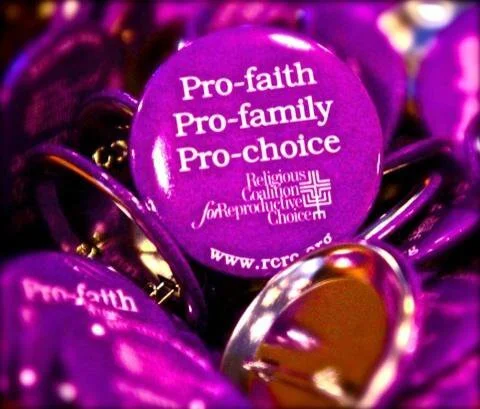
In 1967, two years before NARAL Pro-Choice America was founded, the 1,400-member Clergy Consultation Service formed to help women obtain abortions and fight legal barriers. After the high court legalized U.S. abortions in the 1973 Roe v. Wade decision currently at issue, the related Religious Coalition for Abortion Rights was founded to campaign for moral acceptance. (In 1994 it dropped the A-word and was renamed the Religious Coalition for Reproductive Choice or RCRC).

Founders included a significant chunk of "mainline" and liberal Protestantism, including the Episcopal Church, Presbyterian Church (U.S.A.) Mission Agency, United Church of Christ and several independent Protestant caucuses. The United Methodists' General Board of Church and Society hosted the founding, and the Methodist women's division also joined, but both later backed away. The Coalition also included major non-Orthodox Jewish organizations and the Unitarian Universalist Association (UUA).

In the new Court filings, abortion-rights law gets continued support from RCRC, UUA and Jewish organizations. But no Protestant denomination that favors abortion choice has joined to support Roe. Reporters should find out why they sidestepped this historic showdown. For example, have complex schism talks led to silence on the United Methodist left, as opposed to earlier debates (see YouTube video at the top of this post)?

The silence from "mainline" churches deprives the high court of in-depth moral thinking from pro-choice Christians that answers conservatives on issues that make abortion unusually difficult for public policy, among them: Does a genetically unique and developing human embryo or fetus have value? Why, or why not?


Please respect our Commenting Policy

Bonus podcast: 'What's next in Afghanistan?' Warning: this news topic involves religion

Bonus podcast: 'What's next in Afghanistan?' Warning: this news topic involves religion

Here is a truth claim that, over the years, I have heard (or seen) stated in a number of ways by journalists and mass-media professors: Without strong, or at least adequate, visual images a story doesn’t exist in television news.

Yes, there are exceptions. But the exceptions almost always take place when big stories break in print media and television producers are highly committed to getting them on air — somehow.

Now, in the smartphone era, there are lots of ways for visual images to emerge (ask Hunter Biden). However, in our era of partisan, niche news, it may not matter if images exist. What citizens cannot see (or read) will not hurt them?

This brings me back to a subject I addressed in this recent GetReligion essay: “What's next in Afghanistan? Press will have to face issues of religion, culture and gender.”

The big question: Where does the Afghanistan story go next and, frankly, will elite American media cover the religion elements of this story?

That question was at the heart of a recent Religion Unplugged podcast discussion that I had with a friend and, long ago, a former religion-beat colleague — Roberta Green. In recent decades, she is better known as the philanthropist and fine arts-maven Roberta Green Ahmanson (click here for a typical arts lecture).

This new podcast is entitled, “How Will Afghanistan's Next Chapter be Written?” Click here to head over to iTunes to tune that in. Meanwhile, here is a key chunk of the GetReligion essay linked to our discussion about religion, journalism, culture, politics and “nation building”:

Viewed through the narrow lens of Taliban doctrine, it doesn’t matter if Western governments were forcing open doors for the work of Planned Parenthood or Christian missionary/relief groups, the work of LGBTQ think tanks (or the American corporations that back them) or Islamic thinkers and clerics whose approach to the faith clashed with their own.


Please respect our Commenting Policy

Pope Francis lashes out at conservative Catholic press, calls its criticism 'work of the Devil'

Pope Francis lashes out at conservative Catholic press, calls its criticism 'work of the Devil'

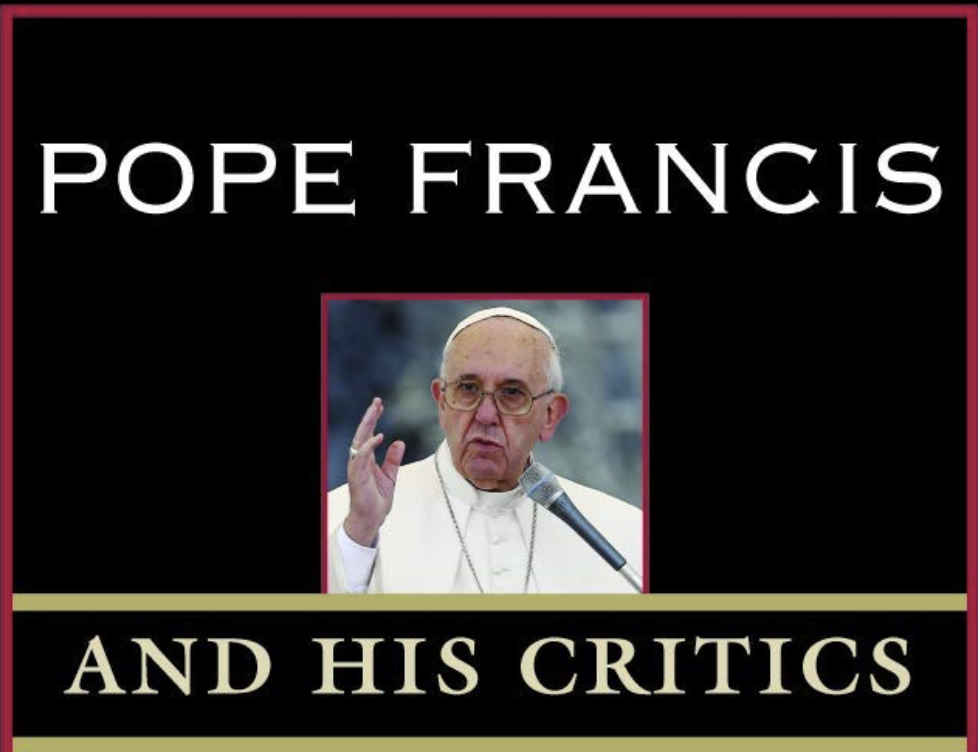
Pope Francis is no fan of press criticism — especially when it comes from Roman Catholic news outlets on the doctrinal right.

So here we go again, with another round of tensions in the growing world of Catholic media.

The 84-year-old Argentinian-born pontiff was caught in a candid moment during his recent trip to Slovakia when he was asked about his health after a recent operation.

“Still alive,” the pope replied, “even though some people wanted me to die.”

The shocking statement came in a meeting the pope had with 53 Jesuits from Slovakia on Sept. 12 in Bratislava. Antonio Spadaro, a priest and editor-in-chief of the Rome-based Jesuit magazine La Civiltà Cattolica, was present at the meeting and on Sept. 21 published the full transcript of the conversation.

The comments immediately sparked a Catholic media war that again highlighted how polarized Catholics have become during Francis’ papacy, as have the official and independent church media that a large swarth of parishioners choose to read.

Asked by another Jesuit at the same gathering how he felt by those who view him with suspicion, Francis replied:

There is, for example, a large Catholic television channel that has no hesitation in continually speaking ill of the pope. I personally deserve attacks and insults because I am a sinner, but the church does not deserve them. They are the work of the devil. I have also said this to some of them.

The TV channel to which he referred is EWTN, according to the National Catholic Reporter.

The Eternal World Television Network was founded in 1980 by a nun named Mother Angelica and began broadcasting a year later from a garage at the Our Lady of the Angels Monastery in Irondale, Alabama. Since then, it has grown to become one of the largest and most influential Catholic news organizations in North America and around the world.


Please respect our Commenting Policy