Politics

Does this ancient document have authority in modern debates about moral theology?

Does this ancient document have authority in modern debates about moral theology?

THE QUESTION:

What was the ancient Didache and what is its to moral controversies relevance today?

THE RELIGION GUY'S ANSWER:

Except for the Bible or Quran, ancient writings rarely pop up in 21st Century public disputes. So it was rather interesting to see that happen with the Didache, whose importance rests on its likely status as the oldest surviving text from Christianity's earliest days other than the New Testament itself. Certain scholars think it was written even before the Gospels, between A.D. 50 and 70, but more common dating puts it in the early 2nd Century A.D.

This text's sudden media appearance involved the unending abortion debate, which is hotter than ever in the U.S. with the Supreme Court set to re-examine the law next term in the Dobbs case and the Catholic bishops' conference considering whether to endorse denial of Communion to "pro-choice" office-holders, President Biden included.

Garry Wills, the Northwestern University historian and renegade Catholic, recently sought to convince New York Times readers that "the cult of the fetus" embraced by Catholic bishops (also evangelical Protestants) is off-base because, among other things, Jesus and the New Testament authors never condemn abortion as sinful.

A blistering response by National Review's Michael Brendan Dougherty cited the Didache as prime evidence in contending that Christianity from its earliest phase opposed abortion. The document's second chapter forbids "grave sins," listed as follows:

"You shall not commit murder, you shall not commit adultery, you shall not commit pederasty, you shall not commit fornication, you shall not steal, you shall not practice magic, you shall not practice witchcraft, you shall not murder a child by abortion nor kill that which is born. You shall not covet the things of your neighbor, you shall not swear, you shall not bear false witness, you shall not speak evil, you shall bear no grudge . . . (Roberts-Donaldson translation).

A later section targets "murderers of children, destroyers of the handiwork of God" in a catalogue of people who are living out "the way of death."
Please respect our Commenting Policy

Did January 6 attack on Capitol highlight 'D.I.Y. Christianity' as decade's next big thing? 

Did January 6 attack on Capitol highlight 'D.I.Y. Christianity' as decade's next big thing? 

As investigations of the January 6 U.S. Capitol riot proceed, there's an intriguing religion angle for the media to explore. Welcome to the emerging prominence of "D.I.Y. Christianity" (that is, Do It Yourself).

After some of the Capitol rioters uttered odd prayers and waved religious placards, The New York Times reported that they demonstrated "some parts of white evangelical power." GetReligion boss tmatt then asked whether the mob included any representatives of actual "power" seen in the denominations, megachurches, parachurch ministries, schools or even the flocks of well-publicized Trumpite preachers.

(Despite the absence of evangelical leaders, freelancer Steve Rabey reports that several obscure Protestant pastors do face charges over January 6.)

Washington Post stalwart Michelle Boorstein revisited January 6 as a religious phenomenon and caught the moment by applying the D.I.Y. label not just for certain Capitol rioters but a broader trend emphasized by Adam Greenway, president of Southwestern Baptist Theological Seminary.

The D.I.Y. phenomenon could become the decade's next big thing in religion, a sizable groundswell of extremely individualistic or eccentric Americans who identify as Christians but are disconnected from conventional churches or even any definable religious fellowship or tradition.

Such radical individualism follows, of course, years of significant growth for non-denominational local congregations that are rigidly independent and lack ties or accountability with other Christians. This growing segment of U.S. evangelical Protestantism is nearly impossible to count accurately and thus its significance has often been neglected by journalists and scholars. GetReligion has been underlining the importance of this trend for years.

The Post cited analysts who believe one element on January 6 was that "institutional religion is breaking apart, becoming more individualized and more disconnected from denominations, theological credentials and oversight."


Please respect our Commenting Policy

When the FBI infiltrates a Bible study, why does CNN say it was a fake 'Bible study'?

When the FBI infiltrates a Bible study, why does CNN say it was a fake 'Bible study'?

Every so often, one comes across a news story that’s beyond odd.

Ever since the Jan. 6 attack on the U.S. Capitol, law enforcement has been trying to get to the bottom as to who and what were the planners for all this. We all know that. But this time around, the FBI infiltrated something new — a Bible study in Alexandria.

Or, as many media are saying, a “Bible study.”

Look at this part of a CNN piece. The key is to try to find some information on a specific religious institution or movement linked to this activity:

The FBI has infiltrated a "Bible study" group in Virginia that after the January 6 riot had members discussing surveilling the US Capitol and their wish for secession from the US, and investigators closely followed one member's plans to build and test Molotov cocktails, according to recently unsealed court records.

The newly disclosed criminal case against Virginia man Fi Duong -- who also goes by "Monkey King" and "Jim," according to the court record -- arose after Duong interacted with undercover law enforcement officers several times on January 6 and into recent months, when the FBI ultimately gained access to his group in Virginia then accompanied him to an old jail as Duong allegedly pursued bomb-building.

Looks like an FBI agent befriended Duong and began hanging out with him and his friends.

Duong told the FBI agent that his group tried to be "cloak and dagger" and wanted to "build resistances," according to court records. The agent then attended what the group members called a "Bible study" meeting at an Alexandria, Virginia, house in February, where the group members discussed the Bible and secession, weaponry and combat training, and using methods to make their communications private, according to court records.

One person in the group commented at the meeting about creating "a semi-autonomous region" for Virginia. "I like the Constitution; I don't like the Democratic sh*t this region keeps voting for," the person said, according to the FBI.

I’m curious why the scare quotes are put around this Bible study group when it’s obvious there really was discussion about the Bible at this gathering. I listened to CNN’s video alongside the article and the reporter called the gathering “a so-called Bible study meeting.”


Please respect our Commenting Policy

Hot Takes: Ryan Burge on return of debates about evangelicals and QAnon (etc.)

Hot Takes: Ryan Burge on return of debates about evangelicals and QAnon (etc.)

Well, Bobby Ross, Jr., is taking the week off.

Thus, I went looking for another list of religion-news material featuring short punchy takes on lots and lots of different topics.

I settled on this VICE News chat with GetReligion contributor Ryan Burge — that must-follow guy on Twitter who is also well known for his work at the Religion in Public weblog.

To say that this punchy little video report includes some Hot Takes is an understatement. Yes, there is a flashback to the whole QAnon and evangelicalism wars.

However, let me stress that there are some producers at VICE News who are sincerely interested in the complex world of American evangelicalism and they are doing their homework. I know this because I sent about three hours with one of their production teams several months ago and I know the wide range of materials that we covered.

That video is still in a vault somewhere. It would be interesting if they turned bites of it into a bullet-list collection of takes similar to this one with the always quotable Burge.

So what shows up in this Burge blast? He put this list out on social media:

Things I discuss in this Vice News video:

QAnon

John Darby

Dispensationalism

Thomas Jefferson as the anti-Christ


Please respect our Commenting Policy

Newsy question that won't go away: Should Southern Baptist Convention change its name?

Newsy question that won't go away: Should Southern Baptist Convention change its name?

THE QUESTION:

After 176 years, does the Southern Baptist Convention need a new name?

THE RELIGION GUY'S ANSWER:

This question has simmered over the years within the Southern Baptist Convention (SBC), which is by far America's largest Protestant body. How long? Check out the video at the top of this post (and note the name of the local pastor who was interviewed).

Discussions heated up a decade ago and are now more pertinent than ever, in part due to the growth of African-American churches in the SBC. Some Baptists hope this step toward a fresh new image might help overcome public relations disasters over SBC mishandling of sexual abuse cases, misogyny, racial insensitivity and partisan politicizing of the Gospel -- at a time when slow membership decline follows decades of impressive growth.

One reason to keep the old name is that the SBC has had what historian Bill Leonard calls "a powerful denominational self-consciousness" more than other Protestants. Its clear identity has long been associated with biblical conservatism in belief and energetic evangelistic effort at home and abroad. And yet the SBC faces the general move of U.S. Protestants away from loyalty and identity with a particular denomination. Some SBC congregations no longer emphasize their affiliation or even shun "Baptist" in their name.

Then again, is the Southern Baptist Convention even “southern” any longer? If not, the name is misleading even as it announces a narrowly sectional identity.

The answer to this is “yes” and “no.”

On the one hand, for a generation domestic missionaries and southern expatriates have extended the SBC's presence across the North and West to create a truly nationwide denomination. On the other, about four-fifths of members still live in the traditional turf extending southward from the arc of Virginia, Kentucky, Missouri and Oklahoma.


Please respect our Commenting Policy

New podcast: Spot any 'ghosts' in New York Times story about aid for (large) U.S. families?

New podcast: Spot any 'ghosts' in New York Times story about aid for (large) U.S. families?

At first glance, it looks like another New York Times story about all those public policy debates between the entrenched Republicans and White House, along with the narrow Democratic majorities on Capitol Hill.

But if you look carefully, there is a reason that this Gray Lady update about the arrival of the expanded Child Tax Credit was, to use a turn of phrase from “Crossroads” host Todd Wilken, a “haunted house” of religion-news ghosts. He was riffing on a term your GetReligionistas have used since Day 1 at this blog. (Click here to tune in this week’s GetReligion podcast.)

OK, let’s play “spot the religion ghost.” First, here is the double-decker headline on this report:

Monthly Payments to Families With Children to Begin

The Biden administration will send up to $300 per child a month to most American families thanks to a temporary increase in the child tax credit that advocates hope to extend.

Nine out of 10 children in the United States will be eligible for these payments, which are linked to the COVID-19 crisis, but call back memories of policies from the old War on Poverty. The program will expire in a year, at which point the debates over its effectiveness will crank into a higher gear. Here’s the Times overture:

WASHINGTON — If all goes as planned, the Treasury Department will begin making a series of monthly payments in coming days to families with children, setting a milestone in social policy and intensifying a debate over whether to make the subsidies a permanent part of the American safety net.

With all but the most affluent families eligible to receive up to $300 a month per child, the United States will join many other rich countries that provide a guaranteed income for children, a goal that has long animated progressives. Experts estimate the payments will cut child poverty by nearly half, an achievement with no precedent. …

While the government has increased many aid programs during the coronavirus pandemic, supporters say the payments from an expanded Child Tax Credit, at a one-year cost of about $105 billion, are unique in their potential to stabilize both poor and middle-class families.

As you would expect, many Republicans oppose what they consider a return to old-style “welfare” payments of this kind.

That’s many Republicans, but not all.


Please respect our Commenting Policy

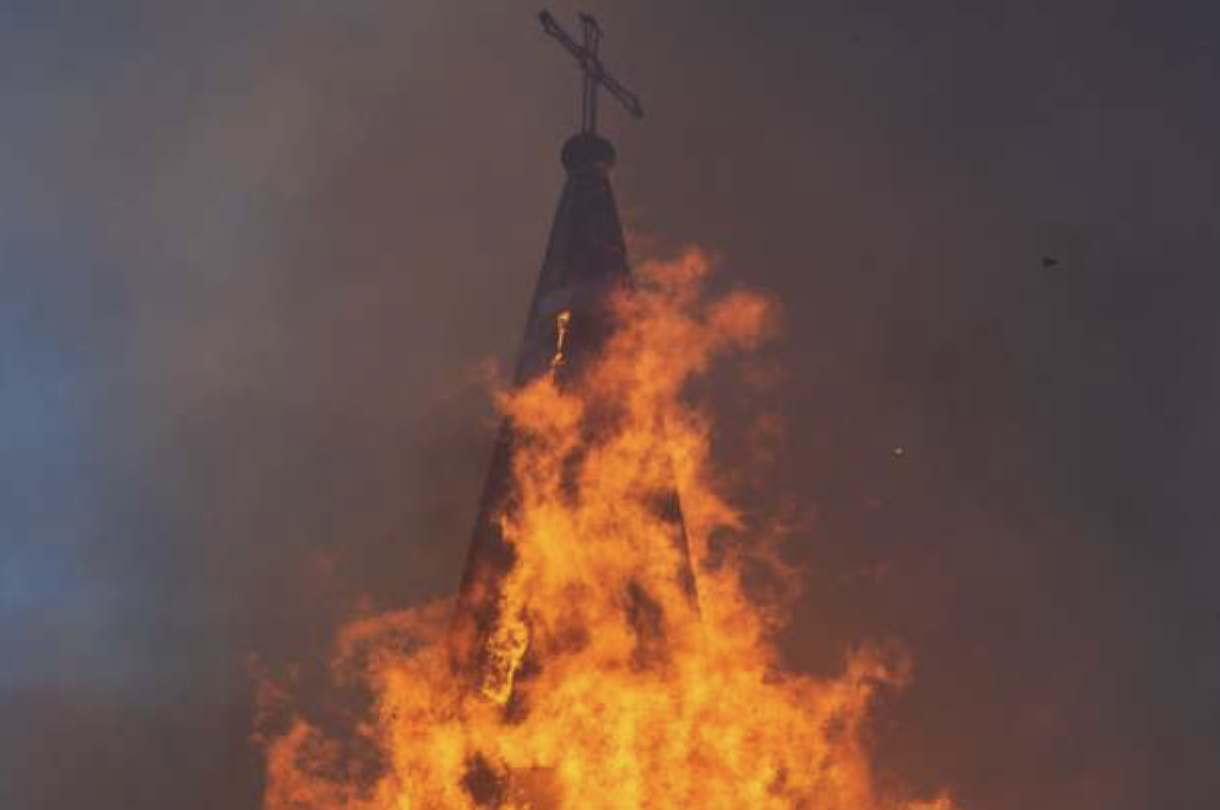
Journalists covering Canadian church arsons need to ask: Who's behind these attacks?

Journalists covering Canadian church arsons need to ask: Who's behind these attacks?

We’ve been here before, unfortunately. The “here” to which I am referring is a rash of suspicious church fires. We saw it pre-pandemic across France, during the COVID-19 outbreak in this country last summer and now in Canada just as the virus seemingly dissipates amid increased vaccinations.

In all, there have been fires at 10 Canadian churches — mostly Catholic ones — and multiple acts of vandalism this summer.

Why? That’s the question more mainstream journalists should be asking. So who not ask it?

This is how the Catholic news website Aleteia reported on the incidents in a July 9 report:

The incidents followed news that Native Canadians have used ground-penetrating radar in cemeteries on the grounds of former residential schools, which were part of a Canadian program to assimilate indigenous peoples. The existence of the cemeteries had been known, but the news this spring and summer has put the controversy over the residential schools back in the limelight.

Many of the schools, which stretched across Canada and were in operation from the mid-19th to the late-20th centuries, were run by Catholic religious orders. A truth and reconciliation commission several years ago detailed the ways children were forcibly removed from their families to be educated in European traditions at the schools, forbidden to use their native languages and forced to drop elements of their Native culture.

Prime Minister Justin Trudeau, who has called for Pope Francis to come to Canada to apologize for the Church’s role in the schools, said last week that he understands the anger behind the church burnings but said it was “not something we should be doing as Canadians.”

The way the indigenous people were treated is certainly a stain on Canada’s history and has been a widely reported news story, as it should be, in Canada as well as the United States. The vandalism churches have suffered stemming from that has been covered as well — but notably absent is any journalistic focus or investigation on who may be responsible for these acts and what motivates them.

Are these church burnings hate crimes, even acts of terrorism?


Please respect our Commenting Policy

Scripture, faith, race, politics: Mississippi Today on the story behind the state's new flag

Scripture, faith, race, politics: Mississippi Today on the story behind the state's new flag

Every newsroom in which I worked kept a large hardback Bible in the copy desk’s collection of reference books (this was pre-Internet, of course).

I often wondered why this was true, since almost every time I used long quotes in a news story or column in which believers talked about the specifics of their beliefs — because the material was directly linked to crucial facts or their motivations — most newsroom pros rolled their eyes. Those quotes tended to get shortened and, sometimes, edited out. This was especially true when politicians talked about their religious beliefs, for whatever reason.

I thought of this recently when I read a strong Mississippi Today feature — part one of a five-story series — about the role that Speaker of the House Philip Gunn played in changing that state’s controversial flag.

This was a story that centered on a public action, as seen in the headline: “Why Philip Gunn became the first prominent Republican to call for changing the state flag.”

Yes, the word “Republican” is important. But the key word there is “why.” Here is block of material early on that begins to link the political action with the beliefs behind it.

Less than a week before in South Carolina, a young white man walked into a Black church in Charleston and brutally murdered nine worshippers. Because the gunman had publicly documented his obsession with the Confederate battle emblem, the murders inspired debate across the country about the government-sanctioned use of the Confederate symbol.

The TV reporter asked Gunn about the Mississippi state flag, which was the last in the nation containing the Confederate battle emblem. While the camera rolled, Gunn advocated for a new flag.

As soon as Gunn left the fundraiser, he called Nathan Wells, his then-chief of staff and longtime top political adviser. The two had been privately talking for years about their shared disdain of the state flag and how they could work to change it.

“He said, ‘Nathan, uh, I think we need to release a statement,’ ” Wells recounted to Mississippi Today in an interview earlier this year.

That official statement in 2015 said:


Please respect our Commenting Policy

Independent, charismatic churches getting new scrutiny, but do reporters get why people choose them?

Independent, charismatic churches getting new scrutiny, but do reporters get why people choose them?

It wasn’t that long ago that I was trying to get reporters to wake up to a whole new world of charismatic/Pentecostal churches that are networked into a movement led by modern-day apostles and prophets.

I chaired a panel at a 2017 gathering of religion reporters in Nashville that had two representatives of this movement plus a third person who opposed it. But very few writers caught on. One reason is because it’s so tough to define. Observers and participants can’t even agree on a name. Some call the movement the New Apostolic Reformation (NAR) and others call it the apostolic/prophetic movement.

Then Jan. 6 happened at the US Capitol. Now it seems as though reporters can’t get enough of asking: Who were these people? Every week now seems to be something new about this movement, like this piece in Christianity Today, which is a fairly decent overview of what’s happened since last fall. The reporter wrung some quotes out of reclusive former prophet Jeremiah Johnson, which is a first.

My one plaint is that the CT piece is several months late, as some of us were reporting on this in April. Plus, given the extra time the reporter had, I would have liked to have seen fresher material. And California evangelist Shawn Bolz should have been dinged for wrongly prophesying the end of the coronavirus back in April 2020. The up note the article ends on doesn’t reflect the reality that the majority of the false prophets out there have not repented nor apologized.

On the other side of the spectrum, the Washington Post has come out with two pieces, one including the “cowboy shaman” so visible in the attack on the Capitol and the other an account of a visit to Mercy Culture Church in Fort Worth.

The first piece was an attempt to explain just what these Capitol invaders believe.

Many forces contributed to the attack on the Capitol, including Trump’s false claims of electoral victory and American anger with institutions. But part of the mix, say experts on American religion, is the fact that the country is in a period when institutional religion is breaking apart, becoming more individualized and more disconnected from denominations, theological credentials and oversight.

That has created room for what Yale University sociologist Phil Gorski calls a religious “melee, a free for all.”

I’d definitely agree that it’s everyone for him or herself out there. However, non-denominational churches have been on the scene since the late 1970s. It just took scholars several decades to start tracking them. And do you think the typical church member really cares what the theologians are saying?


Please respect our Commenting Policy