Politics

Plug-In: Pastors and plagiarism -- why a very, very old story is making new headlines

Plug-In: Pastors and plagiarism -- why a very, very old story is making new headlines

Two decades ago, while serving as religion editor for The Oklahoman, I investigated allegations of plagiarism and faked endorsements by a prominent Baptist pastor who had written a book.

I still remember how angry the 2002 story made some church members — at me for reporting it.

“One thing great preachers enjoy about traveling is that they can hear other people preach,” Terry Mattingly wrote in a 2003 “On Religion” column on plagiarism and the pulpit. “But the American orator A.J. Gordon received a shock during an 1876 visit to England. Sitting anonymously in a church, he realized that the sermon sounded extremely familiar — because he wrote it.”

While plagiarism by pastors falls under the category of “nothing new under the sun” (see Ecclesiastes 1:9), the subject is making timely new headlines.

Prominent among them: a front-page “Sermongate” story this week by New York Times religion writer Ruth Graham.

Credit questions over past sermons by Ed Litton, the new president of the Southern Baptist Convention, for the fresh interest in the subject.

Last week’s Weekend Plug-in pointed to related coverage by Religion News Service’s Bob Smietana and the Washington Times’ Mark A. Kellner. Check out, too, Mattingly’s recent GetReligion podcast on the topic.

Even before the Litton controversy, Smietana produced an excellent story earlier this year headlined “‘If you have eyes, plagiarize’: When borrowing a sermon goes too far” with a related piece on “Why some preachers rely on holy ghostwriters and other pulpit helps.”


Please respect our Commenting Policy

Jimmy and Rosalynn Carter: Why did some journalists bury the faith tie that binds them?

Jimmy and Rosalynn Carter: Why did some journalists bury the faith tie that binds them?

If it’s been said once it’s been said a thousand times: Jimmy Carter may have been a very unsuccessful U.S. president, but his life after the White House has been top-notch.

In fact, according to a 2015 poll, the American public thinks he’s No. 1 among the nation’s post-presidents.

Obviously, there was that Nobel Peace Prize in 2002, which was awarded for “his decades of untiring effort to find peaceful solutions to international conflicts, to advance democracy and human rights, and to promote economic and social development." But if you ask average Americans what they admire about Carter’s life post-White House, I think most of them would mention two, or maybe three, parts of his life.

First, there is his record in volunteer work and public service, symbolized by decades of work with Habitat For Humanity building homes for the working poor. If you have followed that story at all, you know that Carter doesn’t just show up with a hammer for the photo-ops. Second, there is the remarkable marriage-partnership between Jimmy and Rosalynn Carter. I have heard Southerners refer to them as the “anti-Clintons,” as in Bill and Hillary Rodham.

Finally, there is — as Jerry Falwell, Jr., of all people, once put it — Carter’s many decades of work as the “world’s most famous Sunday school teacher.” Ths smiling Baptist did that work week after week whether there were TV cameras present or not.

That faith element was the subject of this week’s “Crossroads” podcast (click here to tune that in) in which host Todd Wilken and I looked at three mainstream-press features about Jimmy and Rosalynn Carter celebrating their 75th wedding anniversary. If readers are interested in the faith tie that binds in this marriage, they should start with this fine Washington Post feature, with it’s one-word headline: “Inseparable.” Here’s the overture:

PLAINS, Ga. — When they arrived, they strolled hand-in-hand toward their pond with a graceful willow at its edge.

“We’re going to be buried right there, on that little hill,” Jimmy Carter said, motioning toward the lawn sloping up from the pond.


Please respect our Commenting Policy

Lawsuits and scarce donors: Religious colleges could be facing tough years ahead

Lawsuits and scarce donors: Religious colleges could be facing tough years ahead

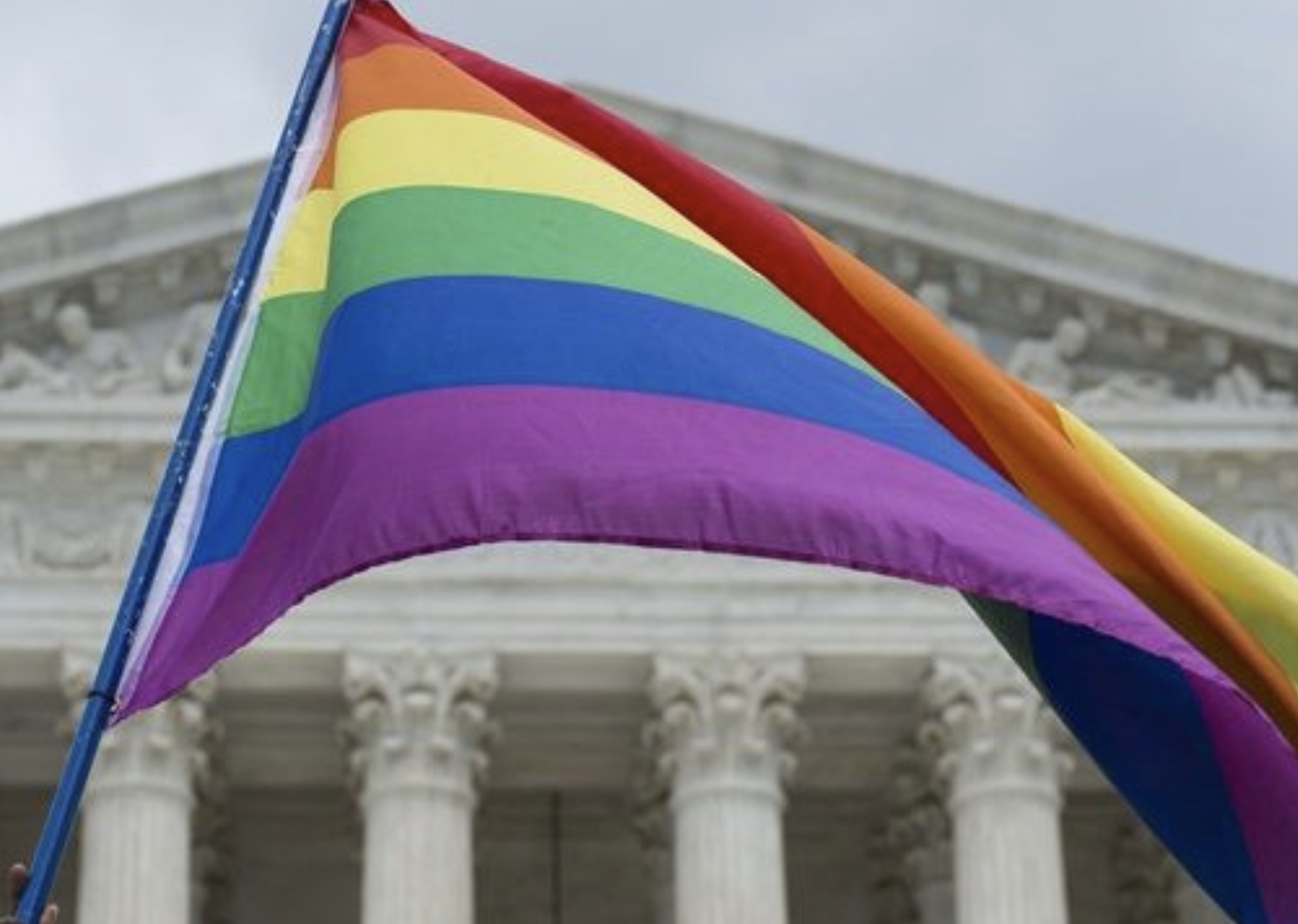
A narrowly-framed Supreme Court victory — the Fulton v. Philadelphia case — will allow Catholic Charities (at least for now) to preserve religious conscience and avoid placing foster children and children available for adoption with same-sex couples, despite the city's non-discrimination statute.

However, this does not settle the many similar legal disputes the media will be covering the next few years.

In particular, reporters will want to carefully monitor Hunter v. U.S. Department of Education, a potentially huge lawsuit filed in Oregon federal court March 29. This is a class action with 33 plaintiffs represented by Portland attorney Paul Southwick, director of the Religious Exemption Accountability Project or REAP (paul@paulsouthwick.com and 503-806-9517). Alliance Defending Freedom, a familiar participant in such matters, has filed a bid to defend the religious schools (media@adflegal.org or 480-444-0020). There are questions about the degree to which the current Justice Department will help in this defense.

The suit charges that LGBTQ students suffer "abuses and unsafe conditions" at "hundreds" of U.S. religious colleges with traditional doctrinal covenants so government should cut off their financial aid. Except for Brigham Young University and the Church of Jesus Christ of Latter-day Saints, REAP's targets are Protestant, led off by Oregon's George Fox University, a venerable Quaker campus attended by Herbert Hoover when it was a mere secondary school. George Fox's mission statement declares that "we desire the presence of Christ to be at the core of all we do."

Others include the likes of Azusa Pacific University, Baylor University, Bob Jones University, Dordt University, Eastern University, Fuller Theological Seminary, Liberty University, Messiah University, Moody Bible Institute, Seattle Pacific University, Union University and Westmont College. (Notably missing: Calvin, Gordon, Wheaton.)

Loss of aid for students would be a severe competitive blow in coming years when all colleges and especially private and religious ones expect to suffer declines in the student-age population and thus in applications, this on top of the institutional damage wrought by COVID-19. There are also prospective attacks on such schools' tax exemption and academic accreditation over sexuality. The status of athletic programs is also a hot-button issue.


Please respect our Commenting Policy

Catholic bishops, politicos and Holy Communion: Little has changed in this old debate

Catholic bishops, politicos and Holy Communion: Little has changed in this old debate

The questions that haunted the Pontifical Academy for Life conference were familiar, controversial and exhausting, since Catholics and their bishops had been arguing about them for years.

The year was 2006, but little has changed in 2021.

What should bishops do when prominent Catholics -- even presidential candidates -- defended and promoted abortion rights? What if they said they accepted churched teachings on the sanctity of human life, while their actions suggested otherwise?

Would it violate the "separation of church and state" if bishops denied them access to Holy Communion? What if bishops asked these politicos to go to Confession?

"This is silly," said scholar Robert P. George, addressing that Vatican gathering. A Catholic shepherd "acting on his authority as a bishop to discipline members of his flock, who commit what the Church teaches are grave injustices against innocent human beings" would be "exercising his own constitutional right to the free exercise of religion. …

"Freedom is a two-way street. No one is compelled by law to accept ecclesiastical authority," stressed George, an outspoken Catholic layman and professor of jurisprudence at Princeton University. Thus, a bishop has "every right to exercise spiritual authority over anyone who chooses to accept it. There is a name for people who do accept the authority of Catholic bishops. They are called 'Catholics.' "

At that time, most debates centered on Sen. John Kerry, the Democratic Party's presidential nominee in 2004.

Cracks inside the U.S. Conference of Catholic Bishops widened with the election of President Joe Biden, a rosary-carrying Catholic who -- in word and deed -- has evolved into a fierce defender of abortion and LGBTQ rights. Biden quickly dropped his longstanding opposition to the federal funding of abortion, after criticism from the left in the 2019 primaries.


Please respect our Commenting Policy

Examining Joe Biden the Catholic is the story, not just what the bishops are doing

Examining Joe Biden the Catholic is the story, not just what the bishops are doing

British singer Winston Marshall, the banjo player for Mumford & Sons, announced that he decided to leave the band. The move came months after he’d faced criticism over a tweet in which he praised journalist Andy Ngo on his recent book — “Unmasked” — about the roots and strategies of the political protest movement known as antifa.

Marshall wrote an op-ed last Thursday for Medium under the headline “Why I’m Leaving Mumford & Sons” is a commentary on the world we live in today.

This is the section of his essay that stood out most for me, in the context of how mainstream journalists are covering America’s Catholic president:

Though there’s nothing wrong with being conservative, when forced to politically label myself I flutter between “centrist,” “liberal” or the more honest “bit this, bit that.” Being labeled erroneously just goes to show how binary political discourse has become. I had criticized the “Left,” so I must be the “Right,” or so their logic goes.

Indeed, it is this “binary political discourse” that dominates our lives these days. It may be a result of social media — Marshall details how he was attacked for his initial tweet and later his apology — in a world where nameless and faceless trolls dictate the discourse.

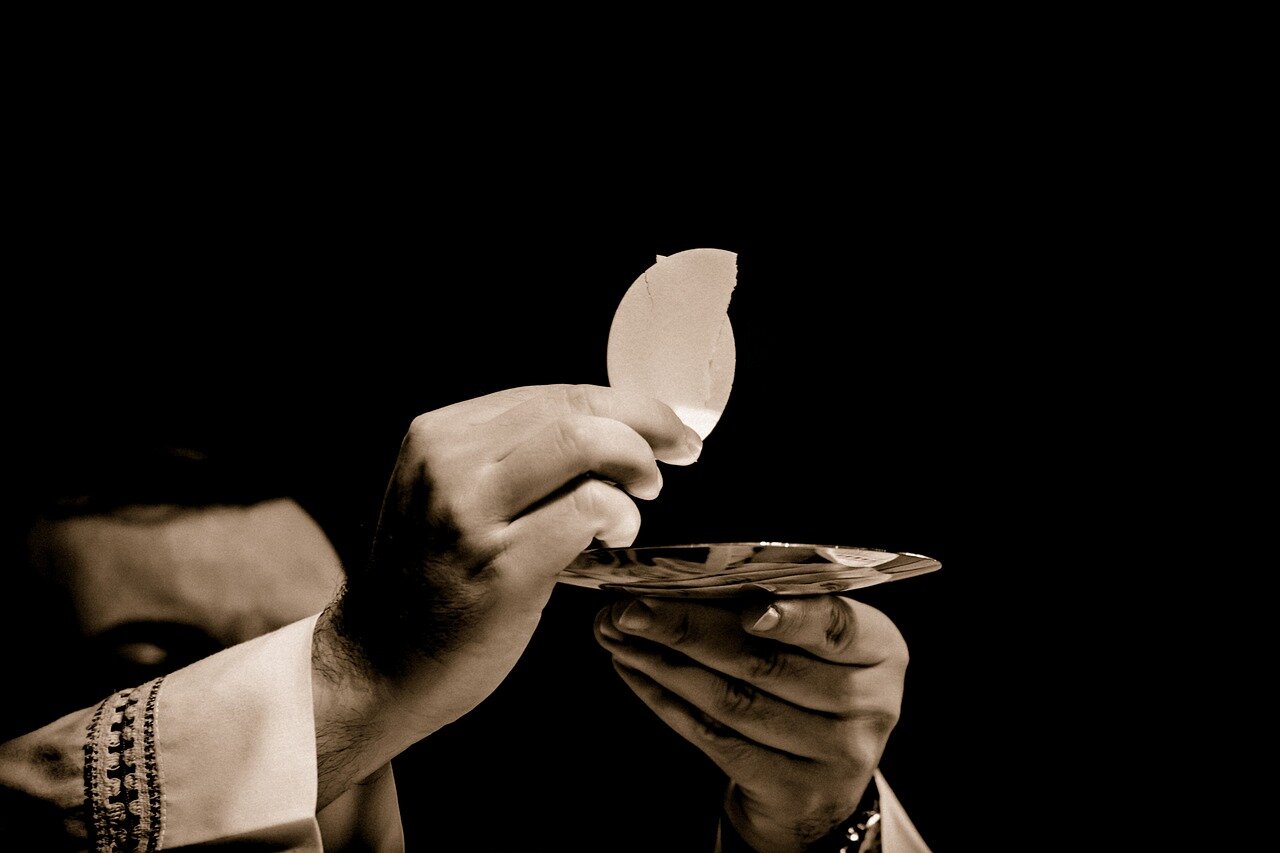
This takes me to the ongoing fallout from the U.S. bishop’s vote to draft a document that addresses “Eucharistic coherence” continues to be debated. The proposal’s aim is to ultimately decide whether Catholic politicians, like President Joe Biden, should be denied Holy Communion.

The news coverage in secular media on this very complicated theological matter has been disappointing, sub-par even in some cases. It’s no surprise at a time when skilled religion reporters are as hard to spot as a unicorn on stories of this kind. Far too often, political desk reporters at major news organizations cover such religious/theological issues. Politics, after all, is what matters.


Please respect our Commenting Policy

How will this Supreme Court decide, or sidestep, pivotal religious liberty questions?

How will this Supreme Court decide, or sidestep, pivotal religious liberty questions?

The major U.S. Supreme Court ruling in Fulton v. Philadelphia (.pdf here) allows a Catholic agency to avoid placing foster-care children with same-sex couples. Importantly, the Catholics will place gay children and will place children with gay singles since there's no conscience crisis over defying the church's doctrines on marriage.

For decades there's been confusion and acrimony over the court's applications of the Constitution's ban on government "establishment of religion," but now disputes over the religious "free exercise" clause grab the spotlight. The Fulton ruling sidestepped the heart of this generation's conflagration between religious rights and LGBTQ+ rights and, thus, may even have added logs to the fire.

The justices backed the Catholic claim with what The Economist's headline correctly labeled "The 3-3-3 Court." The narrow technical grounds for the decision enabled the three liberals (Stephen Breyer, Elena Kagan, Sonia Maria Sotomayor) to make the ruling unanimous. The conservatives were split between three demanding a thorough overhaul of "free exercise" law (Justice Samuel Alito, in a vigorous 77 pages, joined by Neil Gorsuch and Clarence Thomas) and three unwilling to take the plunge at this time (Chief Justice John Roberts and the two newest members, Brett Kavanaugh and Amy Coney Barrett).

Similar caution apparently underlies the court's majority decision this week not to review transgender student Gavin Grimm's victory against his Virginia school over bathroom access.

Journalists should prepare for more years of extensive -- and expensive -- politicking and litigation before the Supreme Court defines -- or decides not to define -- how First Amendment guarantees apply in 21st Century culture.

For those on the religion beat, it is easy to see that this case has hardened the related conflict among major denominations.


Please respect our Commenting Policy

Lighthouse parable again: Faith-shaped hole in report on Donald Trump's brush with death

Lighthouse parable again: Faith-shaped hole in report on Donald Trump's brush with death

Something is missing from that riveting Washington Post report by Damian Paletta and Yasmeen Abutaleb about Donald Trump’s battle with the coronavirus that may have been much more dangerous than the White House team let on.

The headline: “Inside the extraordinary effort to save Trump from covid-19.” This long feature was adapted from the upcoming book “Nightmare Scenario: Inside the Trump Administration’s Response to the Pandemic That Changed History.”

This is a story about Trump’s hubris that is, for a change, packed with on-the-record material. Thus, I kept waiting for a specific name to show up — but it never did. I was thinking, of course, about the “lighthouse parable” that I have shared many times here at GetReligion. If you prefer the Sherlock Holmes story about the dog that didn't bark, that will work, too. Here is a flashback to that lighthouse tale:

Once there was a man who lived in a lighthouse on the foggy Atlantic. This lighthouse had a gun that sounded a warning every hour. The keeper tended the beacon and kept enough shells in the gun so it could keep firing. After decades, he could sleep right through the now-routine blasts.

Then the inevitable happened. He forgot to load extra shells and, in the dead of night, the gun did not fire.

This rare silence awoke the keeper, who lept from bed shouting, "What was that?"

Now, in my experience, when religious believers get really sick — especially if they are close to the “critical” stage — they will almost always send for their pastor. In a life-and-death situation ministers are a source of prayer, comfort and, often, sound advice (my late father spent the final decade of his ministry working as a hospital chaplain).

Thus, I kept waiting to see a reference to the Rev. Paula White, the charismatic megachurch leader who Trump supporters frequently called his spiritual advisors (click here for a Julia Duin post on White). There were other clergy who, in this case, were candidates to get a call from the White House, like the Rev. Franklin Graham, perhaps.


Please respect our Commenting Policy

Nashville 2021 revisited: For Southern Baptists, sermons are part of how their work gets done

Nashville 2021 revisited: For Southern Baptists, sermons are part of how their work gets done

Whenever the Southern Baptist Convention gathers in times of trials and turmoil, one thing is certain -- someone will preach a sermon that makes a difference.

That's how Southern Baptists do what they do. These sermons may not produce as many headlines as SBC elections or fiery debates about hot-button social issues. But the sermons matter.

The big sermon during the 2021 convention in Nashville came at a logical moment -- when SBC President J.D. Greear gave his farewell address, just before tense voting to elect his successor.

In this "defining moment" address, the leader of the Summit Church in Raleigh-Durham, N.C., offered a stinging quote about an elephant that has camped in the SBC fellowship hall.

"We have to decide," Greear said, "if we want our convention primarily to be a political voting bloc or if we want it to be a Great Commission people. … Whenever the church gets in bed with politics, the church gets pregnant, and the offspring does not look like our Father in heaven."

America is important, he stressed. But America is not the whole picture for believers striving to build churches around the world. "God has not called us primarily to save America politically. He has called us to make the Gospel known to all," said Greear.

Southern Baptists can agree that "no compromise should be tolerated" on crucial social issues, he said. And no one wants to stop defending the inerrant truth of the Bible.


Please respect our Commenting Policy

Newsy thinking about SCOTUS, sports images, religious liberty and the Sexual Revolution

Newsy thinking about SCOTUS, sports images, religious liberty and the Sexual Revolution

Wait, you mean there was another important religion story during the traffic jam of stories about the right vs. further right showdown at the Southern Baptist Convention and America’s Catholic bishops arguing about Holy Communion, the Catechism and liberal Catholic politicos?

Obviously, I noticed headlines such as this one in the Washington Post: “Supreme Court unanimously rules for Catholic group in Philadelphia foster-care dispute.”

The word “unanimous” is certainly important, in the fractured age in which we live. But look for the other crucial word in the overture on that story:

The Supreme Court ruled unanimously … that Philadelphia was wrong to end a Catholic group’s contract to provide foster-care services because the organization refused to work with same-sex couples.

It was the latest victory for religious organizations at the increasingly conservative court, and the second time it has ruled against governments trying to enforce an anti-discrimination law protecting LGBTQ rights against those claiming religious liberty.

But the opinion, written by Chief Justice John G. Roberts Jr., was narrow enough to draw the support of the court’s three liberals — and the consternation of its three most conservative members for not going further.

Obviously, the crucial word is “but.” This ruling encouraged some church-state conservatives, but also provided some hope for those who believe that the Sexual Revolution will, more often than not, trump the free exercise of religion.

So, it’s time for two think pieces that explore the degree to which this ruling was a win for religious liberty.

No surprise here: Religious liberty pro David French, of The Dispatch, was encouraged: “Four Things You Need to Know After a Huge Day at SCOTUS — ‘Good night, Employment Division v. Smith. Good work. Sleep well. I’ll most likely kill you in the morning​.’ “ Here is his reaction, at the level of SCOTUS personalities:


Please respect our Commenting Policy