Politics

Thinking about evangelicals and COVID-19 vaccines: Wait! The numbers show WHAT?!?!

Thinking about evangelicals and COVID-19 vaccines: Wait! The numbers show WHAT?!?!

The last 14 months have given the world a series of public health challenges that it has never had to grapple with before.

Will people willingly disrupt their lives in order to contain the spread of a potentially lethal virus? Can drug manufacturers develop and test a vaccine in a very short period of time that is effective against COVID-19? Will those same pharmaceutical companies be able to ramp up manufacturing capabilities quickly enough to satisfy the demand for those vaccines?

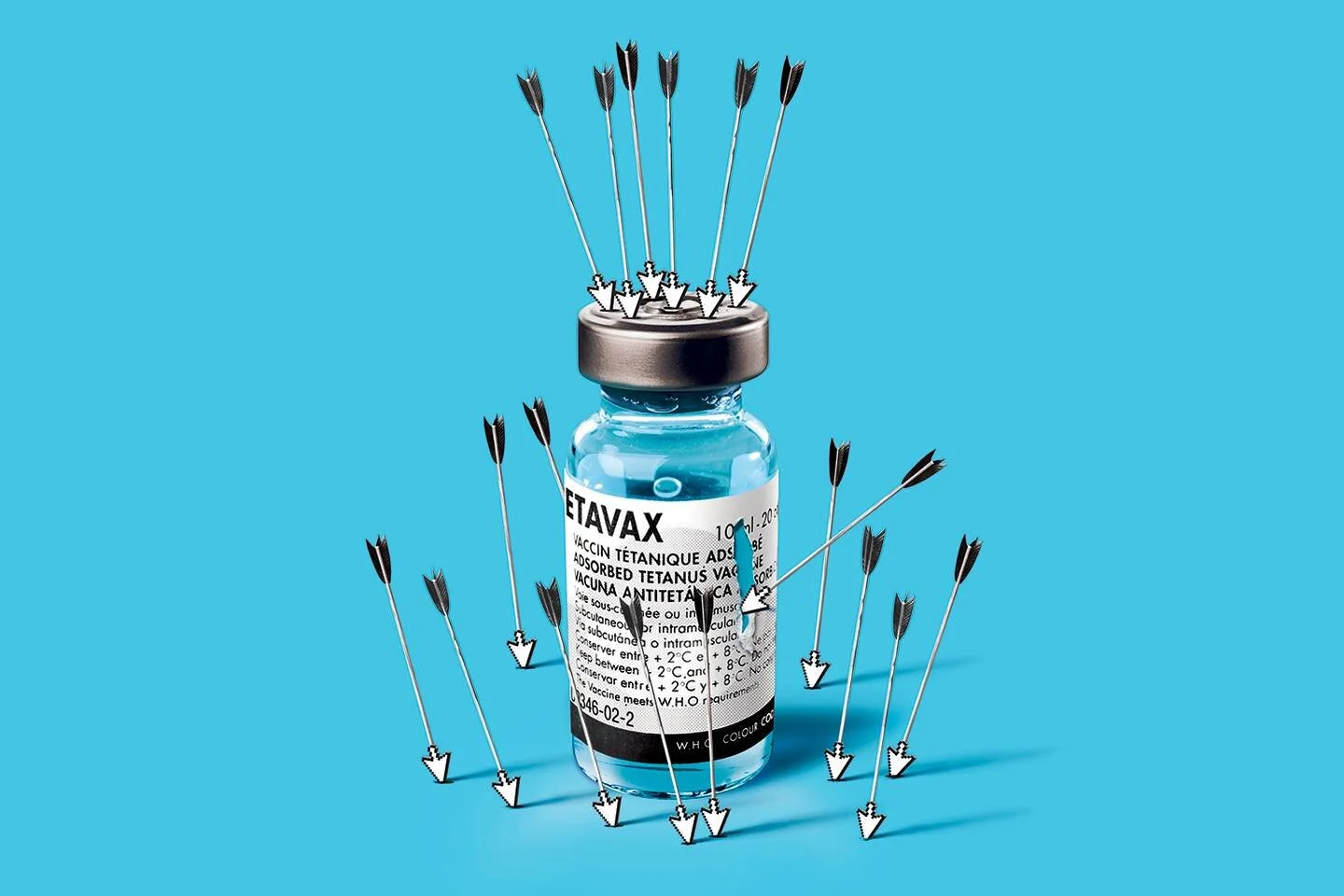
In terms of vaccine creation and distribution, there’s no doubt that it’s been an unqualified success. Every estimate indicates that the United States will be awash in vaccines by May. However, the question that is looming on the very near horizon is the most important and difficult to answer: will the United States be able to vaccinate enough of the population to get to a state of herd immunity and finally put an end to this year long nightmare?

It’s not the hard sciences that are under the microscope, it’s the social sciences. To reach herd immunity, most experts believe that a country needs to get at least 75% of the population fully vaccinated as a minimum threshold. Will that even be possible? Are societal factors like religion actually making the goal of herd immunity even more difficult?

The organization Data for Progress has been putting a poll into the field since the very beginning of the pandemic in March of 2020 as a way to get a sense of what percentage of the public is engaging in risky behaviors and how they feel the government is handling the crisis. Since January they have begun to ask respondents questions about their receptiveness to the vaccine. What these results indicate is that there are some reasons for hope, but there is also ample evidence that getting shots into arms may prove to be a lot more difficult in the very near future.

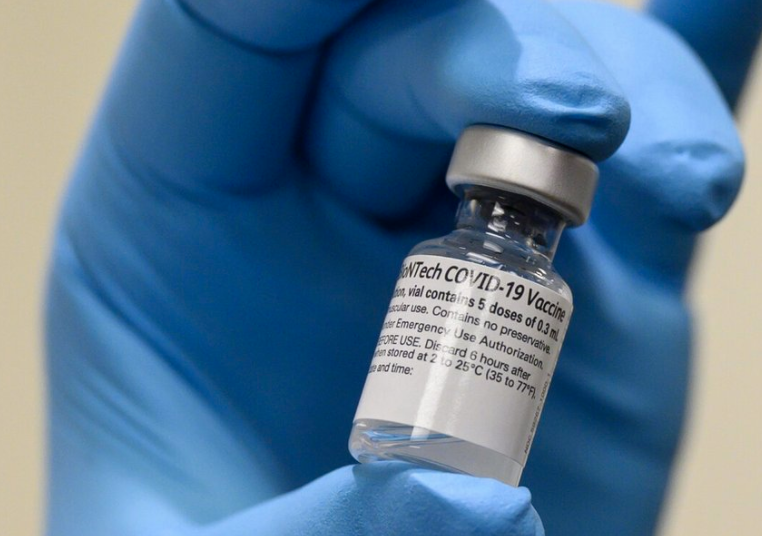
The survey asked respondents if they had received at least one dose of the COVID-19 vaccine. As can be quickly inferred, those shots were in short supply in January. Just about 6% of the entire sample indicated that they had gotten the vaccine at that point. However, things improved rapidly from there and the share of Americans who had been inoculated essentially doubled every month from January through early April, when 44% of the population had gotten a dose of the vaccine.

However, when the sample is broken down into the three of the largest religious groups: White evangelicals, White Catholics and the religiously unaffiliated, some disparities begin to emerge.
Please respect our Commenting Policy

New podcast: Religious wars over vaccines? They're more complex than those headlines

New podcast: Religious wars over vaccines? They're more complex than those headlines

Once again, it’s time for some time travel on the religion beat — as we ponder the current state of news coverage about the COVID-19 mask-and-vaccine wars.

Think back to Easter a year ago. Church leaders were wrestling with the real possibility that they would not be able to worship during Holy Week and on the holiest day on the Christian calendar. This was got lots of ink from the press, with good cause. There appeared to be two camps: (1) Crazy right-wingers (many journalists saw Donald Trump looming in the background) who wanted face-to-face worship at any cost and then (2) sensible, sane clergy willing to move to online worship and leave it at that.

The reality was more complex, especially since some (not all) government leaders seemed to think that worship was more dangerous than other forms of public life. During this week’s “Crossroads” podcast (click here to tune that in), host Todd Wilken and I discussed how it’s easy to see the same patterns in news reports on bitter battles over COVID-19 vaccines. For some on the left — see this fascinating Emma Green piece at The Atlantic — super-strict coronavirus rules have evolved into faith-based dogma.

Now for that early COVID-19 flashback. In a post and podcast a year ago, I argued that this wasn’t really a simplistic story about two groups (good churches vs. bad churches), but one in which there were at least five camps to cover:

Those five camps? They are (1) the 99% of religious leaders who cooperated and took worship online, (2) some religious leaders who (think drive-in worship or drive-thru confessions) who tried to create activities that followed [government] social-distancing standards, (3) a few preachers who rebelled, period, (4) lots of government leaders who established logical laws and tried to be consistent with sacred and secular activities and (5) some politicians who seemed to think drive-in religious events were more dangerous than their secular counterparts.

Say what? … Why were drive-in worship services — with, oh, 100 cars containing people in a big space — more dangerous than businesses and food pantry efforts that produced, well, several hundred cars in a parking lot?

These five camps still exist and we can see them in the vaccine wars.


Please respect our Commenting Policy

The politics of Holy Communion and what it says about news coverage of Joe Biden

The politics of Holy Communion and what it says about news coverage of Joe Biden

If you regularly read mainstream political news coverage, you can often come away with the notion that President Joe Biden is a man who governs as a moderate, seeks unity with Republicans and is consistently guided by his “devout” Catholic faith.

A lot of this reflexive media coverage is largely a fantasy. Biden went from being compared to JFK before Inauguration Day to FDR by the time he recently reached the 100-day mark. He has outlined a series of initiatives that his adversaries on the other side of the aisle have dismissed as socialism. Biden, it must be highlighted, is president at a time when the Senate is split 50-50 and Democrats have a slim majority in the House. The American people did not, in a tight election, give him a healthy mandate.

But this post isn’t aimed at breaking down Biden’s politics.

Instead, it’s to focus on the news coverage around Biden’s faith and how his beliefs relate to the church’s own teachings and the U.S. bishops tasked with enforcing doctrines. Is Biden a progressive revolutionary on matters of morality and doctrine? If so, can he also be “devout” in his faith? Should he — along with many other Catholic politicians — continue to receive Holy Communion? What can, and will, the bishops do next?

A lot of what we know regarding the answers lies in how the press cover such political issues and religion, of course. Combine political politicization in an age of misinformation with the culture wars and you have a very complicated set of factors for the news media to cover.

It should be noted that secular newsrooms don’t dislike organized religion like many may believe. Instead, they just don’t like religious leaders who attempt to defend traditional dogmas that govern said faith. Therefore, news coverage is often framed this way: Biden can be both “very Catholic” and pro-choice. He’s a good, modern Catholic, not a bad, ancient Catholic.

This very issue was thrust back into the forefront again when The Washington Post published an account on April 29 regarding the ongoing conflict between the president and U.S. bishops, a news story promoted on the newspaper’s Twitter that “a rising group of right-wing U.S. Catholic bishops” had come into conflict with a “very Catholic” Biden over his abortion stance.


Please respect our Commenting Policy

Did mainstream media distort America's religion-and-politics divide? Are they still doing so?

Did mainstream media distort America's religion-and-politics divide? Are they still doing so?

While culling files from decades of religion-beat work, The Religion Guy has come across a forgotten and seminal article from 2002 that contended the media were distorting public understanding of American politics. It said "religious right" Republicans were blanketed with coverage and turned the tables, contending that "the true origins" of cultural conflict were found in increased "secularist" influence in the Democratic Party.

As journalists contemplate the tumult of the succeeding two decades, ask what the article in question might say about media performance, past and present.

Consider the hostility toward openly religious nominees expressed by Senators Schumer, Feinstein, and Harris (now vice president and prospective future president). Or contrast the Religious Freedom Restoration Act, which passed the Senate 97-3 in 1993, with current House Democrats' unanimous vote for the pending Equality Act, which would forbid practical applications of that very law.

Customary political history emphasizes such landmarks as the Rev. Jerry Falwell (Senior) launching Moral Majority in 1979, Ronald Reagan's Republicans cultivating conservative Christians in the winning 1980 campaign or the Rev. Pat Robertson founding Christian Coalition in 1989 after his Republican run for president.

These events were important, of course. But what about Democrats and the other half of what was happening?

That's the focus of the 2002 article, by political scientists Louis Boice and Gerald De Maio from the City University of New York's Baruch College, drawn from their 2001 presentation at an academic conference. The piece appeared in the conservative journal The Public Interest, which is now defunct, but fortunately the American Political Science Association archive has posted the text (.pdf here). Also, click here and then here for tmatt columns on this duo’s work.

In their telling, 1972, the year before the Supreme Court legalized abortion, was the pivot point for Democrats' shift on emotion-laden social issues away from cultural conservatism and an "accommodation" policy toward religion.


Please respect our Commenting Policy

Donald Trump enthroned with the angels: Why are media missing this story?

Donald Trump enthroned with the angels: Why are media missing this story?

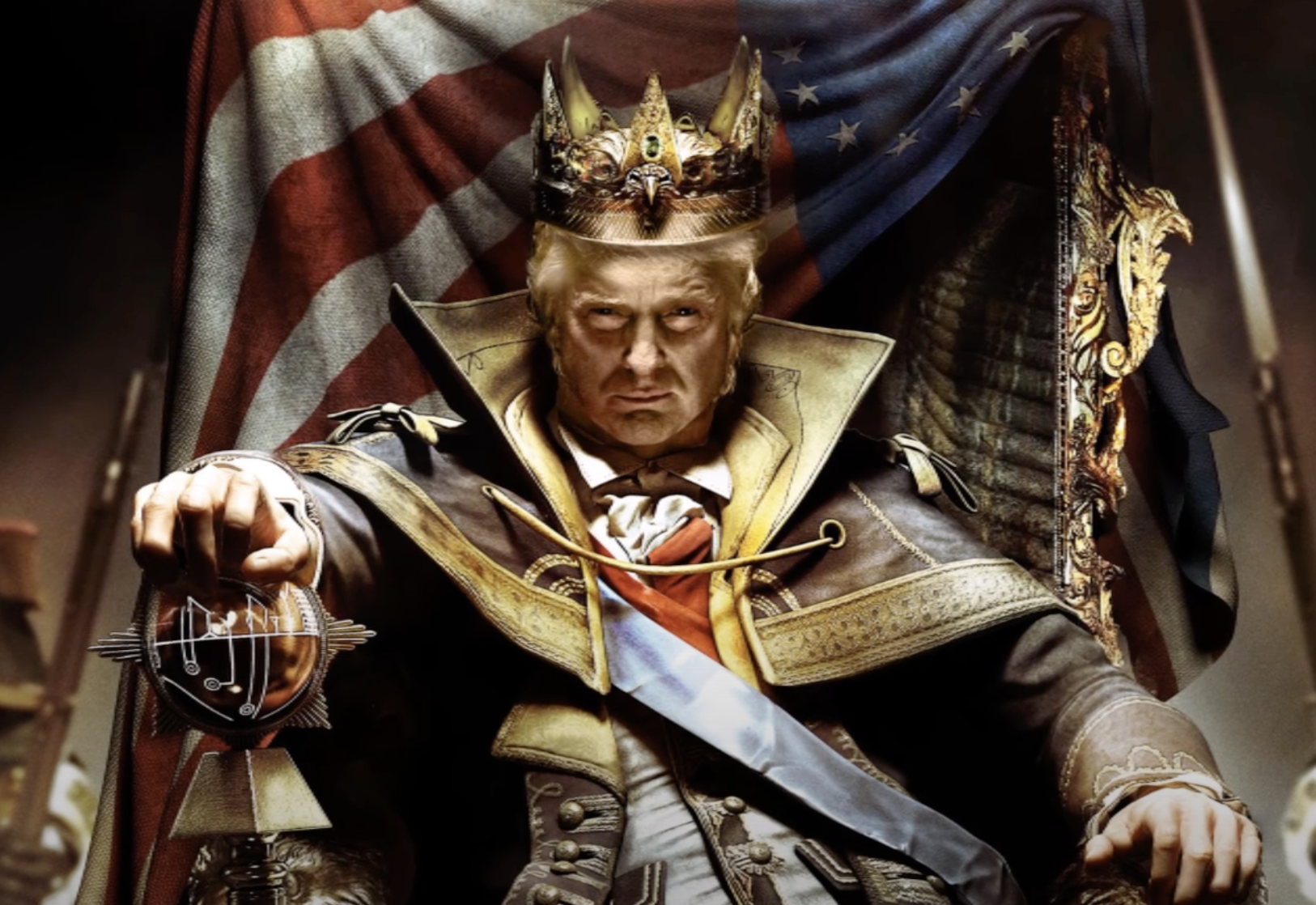
This just in: Former President Donald Trump not only has an angelic host surrounding him — he’s also seated on a throne with a golden crown and holding a golden scepter.

You’ve not heard about this edgy hook for a news story?

Then you’re not attuned to “Prophet Wars,” my name for the fistfight going on between powerful factions of the Pentecostal/charismatic movement over whether the 45th president will be restored to the White House sometime soon.

I’ve been amazed at how this large Pentecostal chunk of American Christianity — and there are roughly 65 million Americans that belong to this group — is being ignored by much of the media. Trump’s spiritual advisor, the Rev. Paula White-Cain, is part of this segment, so it’s not an obscure bunch.

Last week, I wrote a piece for ReligionUnplugged on a group of 85 leaders in this movement who were fed up with the “Trump prophecies;” predictions from dozens of people to the effect that Trump would coast his way into the White House last November. When that didn’t happen, several leaders began apologizing for their false prophecies; a phenomenon I covered for GetReligion here.

I followed this with a lengthy story in Politico. Ruth Graham of the New York Times wrote a similar piece here.

Then we all waited for a few months. Most of the false prophets did not retract their prophecies. Meanwhile, as detailed in the ReligionUnplugged story, a group of charismatic leaders drafted a four-page document of “prophetic standards” spelling out what biblical prophecy is — and is not — and suggesting that those who prophesy falsely, especially in a public forum, need to apologize when they get it wrong. Those who refuse to do so won’t be allowed on their social media platforms.


Please respect our Commenting Policy

Ministry after 2020? The year when COVID-19 caused clergy stress to zoom to a new level

Ministry after 2020? The year when COVID-19 caused clergy stress to zoom to a new level

When training pastors and chaplains, educators frequently stress the need for "boundaries" between work and home.

Clergy need -- somehow -- to find "personal" time, along with face-to-face contact with loved ones. That challenge became more difficult in the age of smartphones, texting and emails, noted Marlon C. Robinson, pastoral care director at AdventHealth in Manchester, Ky., and a specialist in marriage and family therapy.

Then came the COVID-19 lockdowns and the pressures on clergy zoomed to a whole new level.

"Everything came home, all at once," said Robinson, reached by telephone. "Pastors were spending more and more time with their families -- jammed into one space. But this wasn't quality time. Everyone was at home, but they were staring at their own phones and computer screens. There was no intimacy, and all the pressures of ministry grew even more intense."

To make matters worse, the usual struggles with church leadership and finances were complicated by political warfare and conspiracy theories that, literally, began to shape how congregations handled worship, pastoral care, education and even efforts to keep sanctuaries clean and safe.

Instead of arguing -- to cite church clichés -- about the color of new carpet or outdated hymnals, the faithful were fighting about whether masks were necessary to save lives or merely "politically correct" virtue signals.

Meanwhile, people were sick, and some died, with their pastors and families on the other side of locked hospital or nursing-home doors. And it was illegal to have funerals? Attendance dropped, along with offerings. More than a few members vanished.

Ministers "are inundated with phone calls, emails, text and WhatsApp messages, and communications through a host of other platforms," wrote Robinson, in Ministry Magazine.

While it's impossible to know how many will flee the ministry, early research indicates pastors are "experiencing intensified stress levels that … put them at increased risk for developing a mental illness. …


Please respect our Commenting Policy

New podcast: Should religious leaders and the cultural right applaud lousy Oscar ratings?

New podcast: Should religious leaders and the cultural right applaud lousy Oscar ratings?

Pick a headline, just about any Oscar headline.

The ratings for the 2021 Academy Awards were bad. How bad? Here’s the take from the world-weary folks at Entertainment Weekly: “Oscars hit another historic low in ratings.”

The New York Post has been known to produce blunt headlines. Thus: “Oscar ratings drop to an all-time low with unwatchable show.”

But what matters, of course, is what runs in prestige settings such as The New York Times. The big business-desk headline there provided some extra, rather acidic, context:

Oscars Ratings Plummet, With Fewer Than 10 Million Tuning In

Sunday night’s pandemic-restricted telecast drew 58 percent fewer viewers than last year’s record low.

Wait, there’s more bad news:

Among adults 18 to 49, the demographic that many advertisers pay a premium to reach, the Oscars suffered an even steeper 64 percent decline, according to preliminary data from Nielsen. …

[The] Oscars have been on a slide since 1998, when 57.2 million people tuned in to see “Titanic” sweep to best-picture victory.

What’s the religion-news hook in this story, other than the semi-religious role that the Oscar rites play in the cult of Hollywood? That was the subject of this week’s “Crossroads” podcast. Click here to tune that in or head over to Apple Podcasts to sign up for a weekly feed.

Let’s walk through this.


Please respect our Commenting Policy

2020 revisited: Repeat after me, White Catholic voters, White Catholic voters ...

2020 revisited: Repeat after me, White Catholic voters, White Catholic voters ...

The two main November exit polls showed Joseph Biden, the first Catholic elected U.S. president since John F. Kennedy, won either 52% or 49% support among Catholics over-all.

That's quite the plummet from 1960, when the Gallup Poll found J.F.K. scored 78 percent.

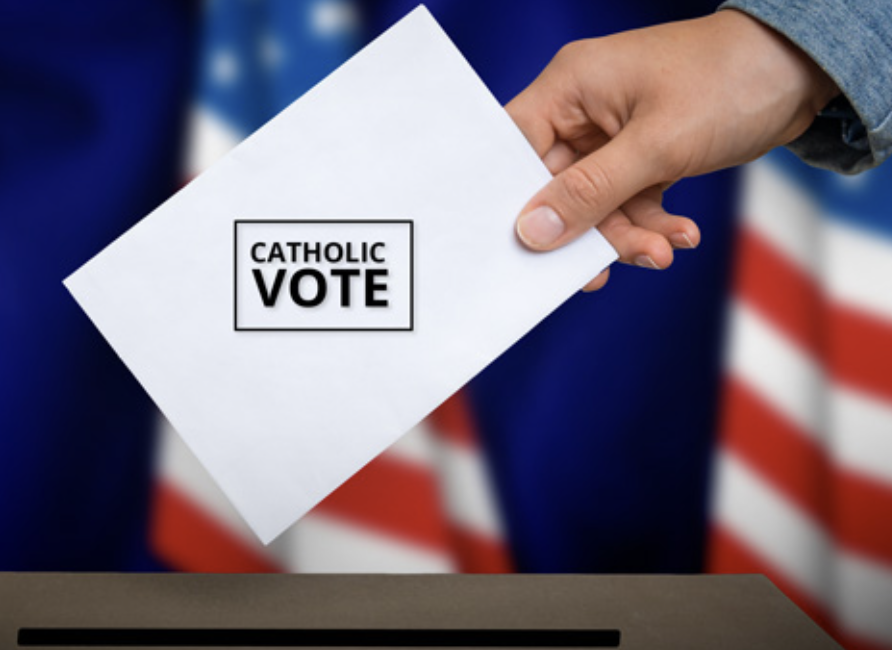
Reporters covering either politics or religion pay heed: Other remarkable data appear in the first batch of 2020 findings from the Harvard University-based Cooperative Election Study (CES), with more due in July. Though Hispanic and other minority Catholics went only 30% for Donald Trump (up from 26% in 2016), white Catholics gave the Republican impressive 59% support over their fellow church member, up a notch from 57% in 2016.

The massive CES sample of 61,000 allows good breakdowns by religion (also a highly useful feature with many Pew Research surveys). The CES data were explored for Religion Unplugged by ubiquitous political scientist Ryan Burge, a GetReligion contributor.

The Guy once again preaches to the U.S. media that those white Catholics are the nation's largest chunk of swing voters who can decide competitive elections except in Protestant tracts of the Southeast, and that they deserve more attention than the lavishly covered white "evangelicals," perennial knee-jerk Republicans who may edge up or down but never "swing."

That was true in 2016. It was true again in 2020. It’s especially interesting to look for patterns among generic “Catholic voters” and voters who are active, Mass-attending Catholics.


Please respect our Commenting Policy

Plug-In: Murder convictions in death of George Floyd -- why faith angles were important

Plug-In: Murder convictions in death of George Floyd -- why faith angles were important

Guilty. Guilty. Guilty.

This week’s big news — former Minneapolis police officer Derek Chauvin’s conviction on all counts in George Floyd’s murder — is a story about police brutality. And racial justice. And yes, the power of faith.

USA Today captures this powerful scene:

George Floyd's brother Philonise Floyd was sitting with his head bowed and his hands folded in front of his face in prayer before the verdict was read. As each verdict was read, his hands increasingly shook and his head nodded up and down.

"I was just praying they would find him guilty. As an African American, we usually never get justice," Floyd said.

The exceptional coverage by the Minneapolis Star-Tribune’s Chao Xiong and Paul Walsh contains this important highlight:

As news spread of the verdicts — guilty on all counts — social media sites reposted the Minneapolis Police Department's initial report that Floyd died of a medical event at the scene, an assertion that might never have been contradicted so forcefully were it not for a teenage girl, Darnella Frazier, walking by and recording Floyd's death last May 25 on her cellphone and posting it for the world to see.

"I just cried so hard. This last hour my heart was beating so fast, I was so anxious, anxiety [busting] through the roof," Frazier, who was 17 at the time, posted on Facebook after the verdict. "But to know GUILTY ON ALL 3 CHARGES !!! THANK YOU GOD THANK YOU … George Floyd we did it!! Justice has been served."

The Los Angeles Times’ Kurtis Lee recounts this scene:


Please respect our Commenting Policy