Politics

The complicated, often painful, Orthodox roots of Prince Philip's faith journey

The complicated, often painful, Orthodox roots of Prince Philip's faith journey

The first nun the Bolsheviks threw into the abandoned mineshaft was best known as the Grand Duchess Elizabeth Feodorovna, the sister of the Russian Empress Alexandra.

After the 1905 assassination of her Grand Duke husband, Elizabeth became an Orthodox nun, giving away her wealth to build hospitals and orphanages. She was executed, in 1918, along with others linked to her doomed brother-in-law, Tsar Nicholas II.

When the nuns didn't drown, a soldier used a grenade. He later testified that "we heard talking and a barely audible groan. I threw another grenade. And what do you think -- from beneath the ground we heard singing! … They were singing the prayer: 'Lord, save your people!' "

Finally, there was silence. The body of St. Elizabeth the New Martyr was buried in 1920 at the Church of St. Mary Magdalene on the Mount of Olives in Jerusalem. Her life inspired many, including her grieving niece, the Greek Princess Alice of Battenberg. Alice was the great-granddaughter of Queen Victoria of England and the mother of Prince Philip, Duke of Edinburgh and for 73 years the husband of Queen Elizabeth II.

The complicated history of the royals, past and present, loomed over the short, dignified funeral for Prince Philip in St. George's Chapel, Windsor -- with only 30 mourners due to COVID restrictions. The prince's liturgical choices shaped an Anglican rite that stressed images of service, eternal hope and the beauties of God's creation.

The man many Brits called the "grandfather of the nation," was born on the Greek island of Corfu in 1921, the fifth child and only son of Prince Andrew of Greece and Princess Alice. He was baptized Greek Orthodox, before his life was rocked by wars and revolutions that shattered his family.


Please respect our Commenting Policy

ISIS executes another Coptic Christian: Once again, this appears to be 'conservative' news

ISIS executes another Coptic Christian: Once again, this appears to be 'conservative' news

Let’s spend a moment examining a basic (you would think) file produced by a Google News search for this name — “Nabil Habashi Salama.”

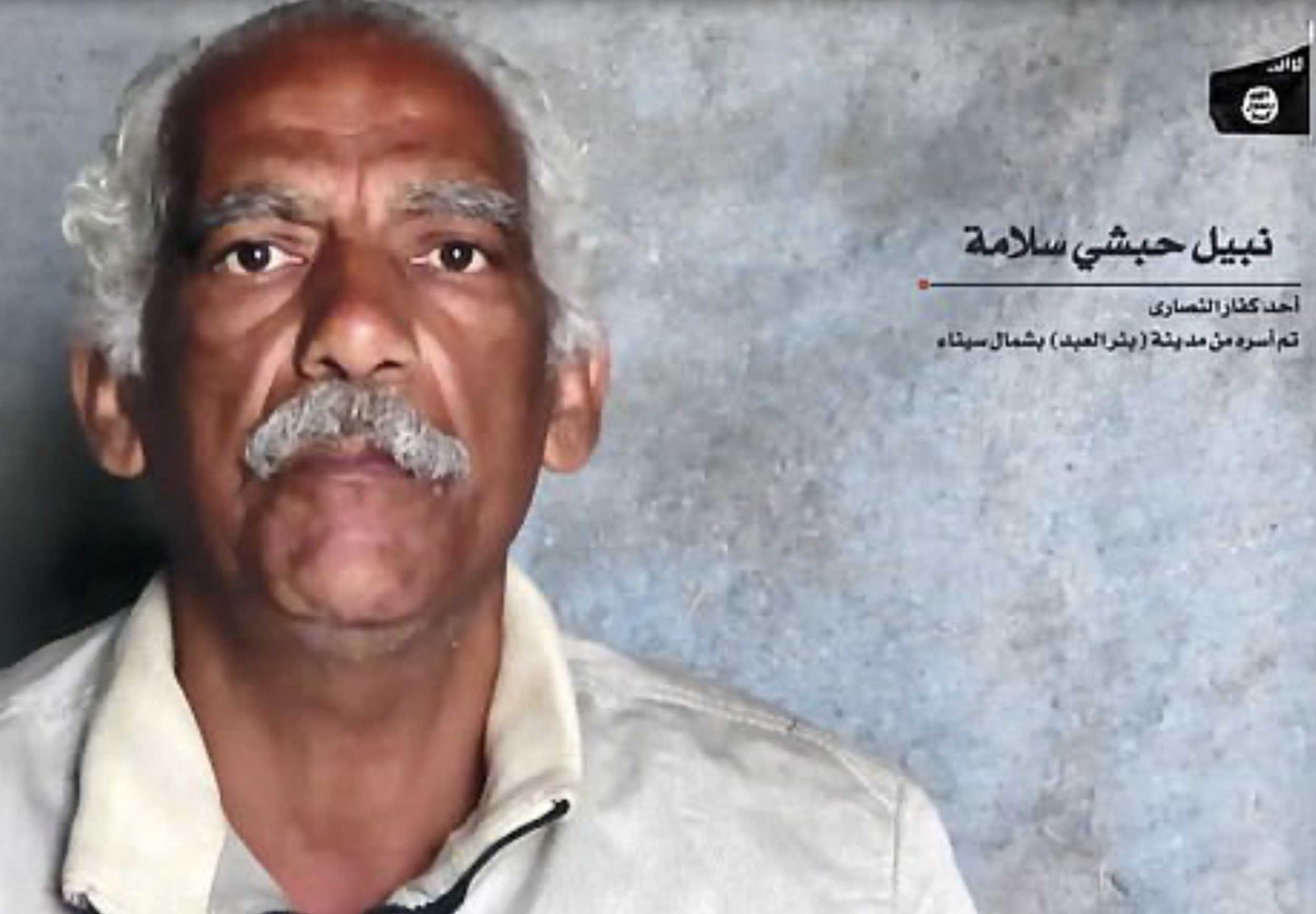
Who is this man in the news? Simply stated, he is the latest Coptic Orthodox Christian killed by ISIS.

Does his death matter? Alas, this appears to be a political question, one that shapes basic journalism decisions about what stories are worthy of mainstream coverage.

First things first: Here is the overture of a report about his death published at Christianity Today. The headline: “ISIS Executes Christian Businessman Kidnapped in Egypt’s Sinai.”

The Islamic State has claimed another Christian victim. And Egypt’s Coptic Orthodox Church has won another martyr.

“We are telling our kids that their grandfather is now a saint in the highest places of heaven,” stated Peter Salama of his 62-year-old father, Nabil Habashi Salama, executed by the ISIS affiliate in north Sinai.

“We are so joyful for him.”

The Salamas are known as one of the oldest Coptic families in Bir al-Abd on the Mediterranean coast of the Sinai Peninsula. Nabil was a jeweler, owning also mobile phone and clothing shops in the area. Peter said ISIS targeted his father for his share in building the city’s St. Mary Church.

In a newly released 13-minute propaganda video entitled The Makers of Slaughter (or Epic Battles), a militant quotes the Quran to demand the humiliation of Christians and their willing payment of jizya — a tax to ensure their protection.

Now, what is Christianity Today?


Please respect our Commenting Policy

Zero objectivity: Seattle Times report on Franklin Graham-backed police dinner hits new low

Seattle is in trouble.

People don't feel safe taking their kids into downtown Seattle, even the public parks (they support through taxes). The place is dirty. Mentally ill people wander about. Drug use and crime and widespread. And in the middle of it all are the demoralized Seattle police, who saw one of their precinct stations closed by rioters for three weeks last summer during the infamous CHOP occupation.

So, you’d think that an event honoring these same police would get some good press.

Not so fast. According to the Seattle Times:

The invitation to a free dinner at a four-star hotel in Bellevue starts out by thanking law enforcement officers for their bravery and service and goes on to promise an uplifting message, fellowship and practical wisdom from God’s word.

That invitation showed up in the inboxes of Seattle Police Department employees on Wednesday, according to a copy of the department wide email obtained by The Seattle Times. On Friday, police Chief Adrian Diaz revoked the email invitation because the dinner, billed as a law-enforcement appreciation event, is reportedly hosted by the Billy Graham Evangelistic Association. The invitation was signed by the association’s CEO, Franklin Graham, a conservative, second-generation Christian televangelist who has a history of opposing LGBTQ rights.

Some of you may remember that Graham got negative press treatment this time a year ago for setting up a tent in Central Park that had the temerity to treat COVID-19 patients. Largely ignored was the fact that a local health organization, Mount Sinai Health System, contracted with Graham to set up the tent. Most reports in the local media made it sound like it was as if Adolf Hitler had set up shop.

Despite his organization’s policy that only the caregivers, not the recipients of care, affirm centuries of Christian doctrine that marriage is only between a man and a woman, Graham was demonized as an anti-gay bigot. He couldn’t win; if he didn’t help out, he was neglecting the masses; if he did, he was imposing his beliefs on others.

I am curious if the Seattle Times reporter read this New York Times interview with Graham that said that New York City’s Commission on Human Rights found no evidence that Graham had discriminated against patients and included a link from the editor of a Jewish publication slamming local politicians for their own bigotry.

Now we’re moving the media-bias battle to Seattle. Back to the Times:

The email to SPD employees was sent by the department’s Wellness Unit after being approved by the unit’s lieutenant, according to the original email.

Diaz sent his own department-wide email just after 4:30 p.m. Friday and a message was posted on the department’s online blotter, stating that based on “Graham’s history and affiliations,” concerns had been raised that SPD does not fully support the community’s LGBTQ members.

The article then runs through the usual PR comments by various police officials, a withering quote by Seattle City Council President M. Lorena González (thanks to the council’s defund-the-police actions, a record number of 144 officers have left in the past year), an angry police officer (no doubt the source for the email being forwarded to the Times), an openly gay police officer and so on.

As someone who lives in the Seattle suburbs, the hypocrisy of it all stuns me. Here’s a city that’s overrun with homeless, whose tents are smack in the middle of major tourist attractions (like the city’s gorgeous waterfront), plus crime is surging and even Amazon is decamping for neighboring Bellevue and the media-friendly culture warriors are upset about this?

The police officers are telling local TV stations they are refusing to work for “this socialist city council” and when an outside organization tries to hold an appreciation dinner for the stoic officers who remain, the best the Seattle Times can do is a one-sided report?

Contrasted to the five sources that trashed Graham and his organization, the Times ran no balancing quotes from any local leaders who would offer an opposing point of view.

A sentence saying that Graham’s group didn’t answer an email sent the day before doesn’t cut it. The sponsoring Billy Graham Evangelistic Association is based in Charlotte, N.C., which is three time zones ahead of Seattle. The chances are good that the email arrived too late for anyone in charge to take a look.

Plus, when the reporter can’t find a quote from a prime source, she’s supposed to look for one from a secondary source. Evangelical organizations and churches do exist in Seattle and I can’t believe she couldn’t find a pastor in one of them who could have offered some kind of defense for Graham. Sadly, the Times did away with its religion beat years ago, so apparently the newsroom has no one with the local religious contacts.

Hint: There are plenty of evangelical organizations in town: (World Relief, Union Gospel Mission, Seattle Pacific University, Northwest University for starters) who’ve got talking heads. Start cultivating them.

To get right to the point: The Fellowship of Christian Peace Officers has a Seattle affiliate. I found a contact name and phone number in less than 30 seconds.

Plus, Graham himself recorded a video several months ago explaining why he wants to do these police appreciation dinners in places like Seattle, Portland and Kenosha, Wisc. Surely, a quote could have been lifted from that.

But no. Here we see “Kellerism,” a term created by a GetReligion reader after former New York Times editor Bill Keller implied in a speech there’s no need for balance or fairness when the reporting is about morality, culture, religion, etc. You can read the Keller quotes for yourself right here.

To find the other side of the story, I didn’t need to look much harder than this column by KTTH Radio show host Jason Rantz, who said that Gonzalez’ anti-cop views were at the base of it all. He said in part:

Gonzalez frames her concern over LGBTQ issues, calling out Graham’s religious views as anti-gay. But her concerns are contrived. This is about getting in the way of supporting police officers. In the process, she wins some plaudits from anti-police activists upset she hasn’t done enough to abolish the police.

The event is free for law enforcement officers. It offers appreciation for the work law enforcement does in a city where the Council and a loud activist community turn cop-hating into a sport. It’s also religious in nature, as the invite promises an “uplifting message, encouraging and practical wisdom from God’s Word, live music, and fellowship with other law enforcement officers.”

But because of its religious nature, and Graham’s religious objection to gay marriage, Gonzalez feigned outrage.

Now what the Times and the above column did add is that the event was sponsored by the Billy Graham Evangelistic Association, not by Franklin Graham’s organization Samaritan’s Purse. Yes, the younger Graham signed the invite, but that was his only involvement. But folks out here in western Washington are going to punish him if that’s the last thing they do. The dinner will occur in mid-May and The Stranger, a local lefty site, is encouraging folks to bring their cameras and take photos of whichever police officers decide to attend.

But hey, doxxing is OK when the group is related to Franklin Graham.

I get that journalists can’t help the craziness that reigns in the Emerald City at present. But when it comes to reporting on something like this, at least try — try to include an opposing point of view. Show some respect for people on both sides of public debates. It’s called “journalism.”

I know it’s a stretch. But it can be done. Trust me.


Please respect our Commenting Policy

Ponder this news question: What happens to Afghan religious minorities post-USA?

Ponder this news question: What happens to Afghan religious minorities post-USA?

First things first. There is no question that, if and when U.S. troops leave Afghanistan, the biggest security issue will be protecting women who have taken modest steps to move into public life in recent decades.

Thus, it is totally appropriate that information about women’s rights received the lion’s share of attention in the recent New York Times report on the sobering behind-the-scenes realities in that troubled land. You can see that right in the headline: “Afghans Wonder ‘What About Us?’ as U.S. Troops Prepare to Withdraw,” with its subhead mentioning fears that the “country will be unable to preserve its modest gains toward democracy and women’s rights.”

Again, this news hook is totally valid. However, I think that this story needed some information — at least a paragraph of two — acknowledging the serious concerns of members of minority religious groups in Afghanistan. These range from Islamic minorities (and more moderate forms of that faith) as well as small, but historic, communities of Baha’is, Sikhs, Jews and Christians. And then there are the reports about growing underground networks of secret Christian converts.

This is, literally, a life-and-death situation for thousands of people. Might this human-rights issue be worth a sentence or two?

Hold that thought. First, here is the overture in this otherwise fine feature:

KABUL, Afghanistan — A female high school student in Kabul, Afghanistan’s war-scarred capital, is worried that she won’t be allowed to graduate. A pomegranate farmer in Kandahar wonders if his orchards will ever be clear of Taliban land mines. A government soldier in Ghazni fears he will never stop fighting.

Three Afghans from disparate walks of life, now each asking the same question: What will become of me when the Americans leave?

President Biden on Wednesday vowed to withdraw all American troops by Sept. 11, 20 years after the first Americans arrived to drive out Al Qaeda following the 2001 terrorist attacks. “War in Afghanistan was never meant to be a multigenerational undertaking,” he said, speaking from the White House.

The American withdrawal would end the longest war in United States history, but it is also likely to be the start of another difficult chapter for Afghanistan’s people.


Please respect our Commenting Policy

Thinking with two key Southern Baptists: Concerning those scary Gallup Poll numbers

Thinking with two key Southern Baptists: Concerning those scary Gallup Poll numbers

Let’s fly up to high altitude for a moment, before reading two interesting think pieces about those Gallup Poll numbers — “U.S. Church Membership Falls Below Majority for First Time” — that launched a kazillion headlines.

If you’ve been paying attention to the state of Christianity in America for the past 50 years or so, you’re aware of several broad trends.

* In terms of demographics, the world of oldline Protestantism — the “Seven Sisters” churches — is in freefall, with these aging denominations losing around 50% of their members after peaking in the 1960s.

* Catholic churches have grown, kind of, in part due to rising numbers of Latinos in the pews. Worship numbers are down. New vocations for priests and nuns are way down (but it’s fascinating to note the cases in which numbers are steady, or rising). Mass attendance and birth-rate trends are crucial.

* Evangelical Protestants surged, especially in the Sunbelt, filling much of the public-square void created by mainline decline. Growth was especially strong with charismatics and Pentecostals — Black and White. In the past decade or two, the rapid growth of nondenominational or even post-denominational churches and networks has hurt mainstream evangelicalism, especially the Southern Baptist Convention. Most evangelical numbers have stalled or gone into a slower decline.

Summary: Churches are growing or holding steady if members are (a) having children, (b) raising children in the faith, (c) retaining the loyalty of those children into the next generation and (d) winning converts (that final point has more to do with doctrine than politics).

Notice that the words “Donald Trump” are missing. Like I said, this is a view from the heavens.

With all that in mind, let’s look at two essays: “Why American Church Membership Is Plummeting,” by historian Thomas Kidd, care of The Gospel Coalition website, and “Why the Church Is Losing the Next Generation,” in the latest newsletter by the Rev. Russell Moore of the SBC’s Ethics and Religious Liberty Commission.

First, here are two crucial chunks of the Kidd essay, which opens — logically enough — with a discussion of the weaknesses of polling data.

… (A)s I have suggested before, we should take religion polls with a grain of salt. … They usually tell us about some trends on the religious landscape, to be sure, but they are almost always open to widely varying interpretation. Polls are at their best when there is little wiggle room for interpretation in the data.


Please respect our Commenting Policy

Lots of Mississippi folks don't want COVID-19 vaccines: They're white evangelicals, right?

Lots of Mississippi folks don't want COVID-19 vaccines: They're white evangelicals, right?

One of the snarkiest things an editor can say to a reporter — after reading a story that has been turned in for editing — is this: You really need to read your own newspaper.

Most of the time, this means that a reporter has produced a story about a topic the newspaper has already covered, yet the new story failed to engage with some of the previously reported information. Maybe the new material even clashes with an earlier story. That may be good, but the earlier reporting still needs to be acknowledged.

I thought about this while reading a New York Times piece that ran with this double-decker headline:

Why Mississippi Has Few Takers for 73,000 Covid Shots

The good news: There are more shots available. The challenge is getting people to take them.

Now, what I’m about to say may sound strange, in light of what I argued in last week’s “Crossroads” podcast, the one linked to the post with this headline: “New podcast: Familiar splits among white 'evangelicals,' only now they're about vaccines.

That post/podcast focused, in large part, on a recent Times piece that claimed believers inside the dreaded white-evangelical monolith were America’s biggest pandemic problem, in terms of flyover-country people who are refusing to get their COVID-19 vaccine shots. A quotation linked to that thesis said:

“If we can’t get a significant number of white evangelicals to come around on this, the pandemic is going to last much longer than it needs to,” said Jamie Aten, founder and executive director of the Humanitarian Disaster Institute at Wheaton College, an evangelical institution in Illinois.

The story cited a poll indicating that 45% of white evangelicals planned to refuse their shots, while 55% planned to cooperate with anti-pandemic programs. I noted that these numbers were solid evidence of a DIVISION inside white evangelicalism, not a sign of unity in opposition to vaccines.

What is the big problem in Mississippi, where there are lots of empty slots on the lists where people sign up for appointments to get shots?


Please respect our Commenting Policy

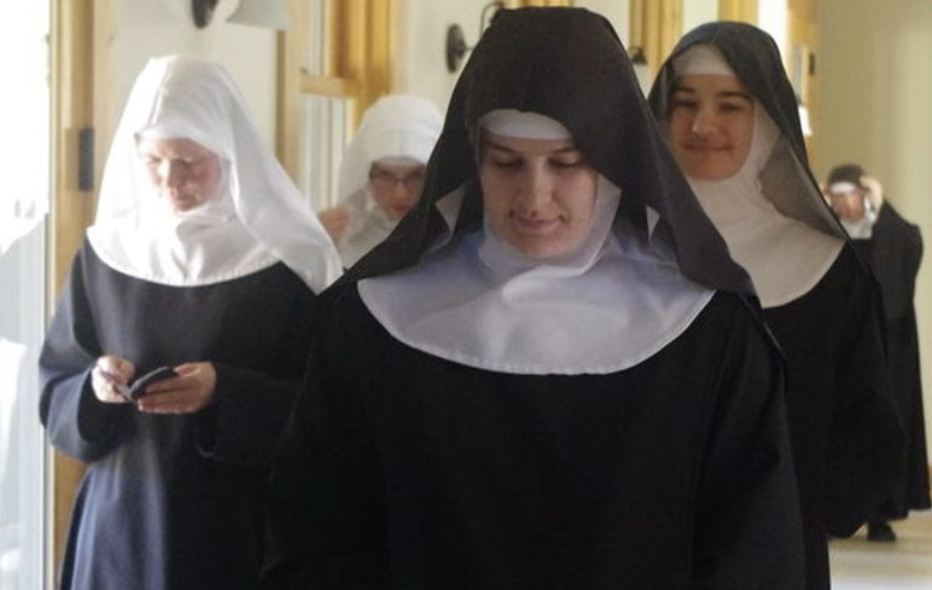
What is news? Apparently, strangers shooting at nuns in an American convent isn't news

What is news? Apparently, strangers shooting at nuns in an American convent isn't news

It’s a question journalists hear all the time from mystified readers: “What is ‘news’?”

At least, that was a question we used to hear when newspapers tried to appeal to all kinds of people in a community, including those on both sides of common cultural and political divisions.

Why are some stories big local, regional and national news stories, while others are not?

Years ago, a Charlotte megachurch pastor asked me why it was news when a downtown Episcopal parish replaced a window, but it wasn’t news when his church built a multi-million-dollar facility. Well, I explained, there was controversy about changing that window because it was part of a historic sanctuary. What I didn’t say is that editors tend to think that what happens downtown is, by definition, more important than what happens in suburbs.

I raise this issue because of events that unfolding in rural Missouri. But before we get to that, let me ask a few questions. Would it be local, regional and even national news if strangers kept shooting rifles at a:

* Mosque in the Bible Belt?

* Catholic parish with an LGBTQ+ rainbow flag?

* Baptist church at the forefront of local #BlackLivesMatter demonstrations?

Clearly, the answer would “yes” in all three cases, especially if that Baptist church was in Georgia.

Now let’s look at an example of a story that is NOT news, care of the Catholic News site called The Pillar: “Missouri nuns targeted in multiple ‘extremely disturbing’ shooting incidents, motive unknown.” Here is the overture on this recent story:

Shots have been fired at a rural Missouri abbey of nuns on several occasions this Lent, the sisters have said, with a bullet from one shooting lodging in the bedroom wall of the order’s superior. The nuns are fundraising for a security fence, while local law enforcement is providing extra security and investigating the shootings.


Please respect our Commenting Policy

Plug-In: Even with ailing digit, Bobby Ross, Jr., manages to cut and paste week's top stories

Plug-In: Even with ailing digit, Bobby Ross, Jr., manages to cut and paste week's top stories

Power Up: The Week’s Best Reads

1. Evangelical leaders are encouraging their congregants — many of whom are skeptical — to get the vaccine.

* Why "the pathway to ending the pandemic runs through the evangelical church" (by Kathryn Watson, CBS News)

* Love Your Neighbor' And Get The Shot: White Evangelical Leaders Push COVID Vaccines (by Sarah McCammon, NPR)

* White Evangelical Resistance Is Obstacle in Vaccination Effort (by Elizabeth Dias and Ruth Graham, New York Times)

* Vaccine skepticism runs deep among white evangelicals in US (by David Crary, Associated Press)

2. A Nashville church is planting a community garden to survive after the building was destroyed in tornadoes last year.

* A tornado destroyed their church. Now, faith takes root in a garden planted to serve the community (by Holly Meyer, The Tennessean)

* After 13 months apart, Easter service brings Watson Grove church members together again (by Cassandra Stephenson, The Tennessean)


Please respect our Commenting Policy

'Nothing in particular' is the growing American religion niche few are studying

'Nothing in particular' is the growing American religion niche few are studying

While working on the 1985 book "Habits of the Heart," the late sociologist Robert N. Bellah met "Sheila," who described her faith in words that researchers have quoted ever since.

"I can't remember the last time I went to church," she said. "My faith has carried me a long way. It's Sheilaism. Just my own little voice." The goal was to "love yourself and be gentle with yourself. … I think God would want us to take care of each other."

A decade later, during the so-called "New Age" era, researchers described a similar faith approach with this mantra -- "spiritual but not religious."

Then in the 21st Century's first decade, the Pew Research Center began charting a surge of religiously unaffiliated Americans, describing this cohort in a 2012 report with this newsy label -- "nones."

Do the math. "Nones" were 10% of America's population in 1996, 15% in 2006, 20% in 2014 and 26% in 2019. This stunning trend linked many stories that I have covered for decades, since this past week marked my 33rd anniversary writing this national "On Religion" column.

Obviously, these evolving labels described a growing phenomenon in public and private life, said political scientist Ryan Burge of Eastern Illinois University, author of the new book, "The Nones: Where They Came From, Who They Are, and Where They Are Going."

But hidden under that "nones" umbrella are divisions that deserve attention. For example, the 2018 Cooperative Congressional Election Study found that 5.7% of the American population is atheist, 5.7% agnostic and 19.9% "nothing in particular."

"When you say 'nones' and all you think about is atheists and agnostics, then you're not seeing the big picture," said Burge, who is a contributor at the GetReligion.org website I have led since 2004. "Atheists have a community. Atheists have a belief system. They are highly active when it comes to politics and public institutions.

"But these 'nothing in particular' Americans don't have any of that. They're struggling. They're disconnected from American life in so many ways."


Please respect our Commenting Policy