Podcasts

Podcast: It's time to pay attention to debates about girls, Instagram and mental-health woes

Podcast: It's time to pay attention to debates about girls, Instagram and mental-health woes

If you have followed GetReligion for a decade or so, you know that our religion-beat patriarch Richard Ostling writes a “Memo” post every week in which he focuses on religion trends and future events to which journalists should be paying attention.

This week’s Memo focused on why religious and secular debates about Death with Dignity laws will not be fading away anytime soon. As always, Ostling’s Memo posts are packed with links to relevant interest groups, experts and online resources to aid reporters.

This brings me to this week’s “Crossroads,” which — for a change — does not focus on a religion-news story in the mainstream press (click here to listen to the podcast). Instead, you can think of this feature as a kind of Mattingly Memo, in which host Todd Wilken and I discussed the news (and religious) implications of a new Atlantic Monthly essay by Jonathan Haidt that ran with this dramatic double-decker headline:

The Dangerous Experiment on Teen Girls

The preponderance of the evidence suggests that social media is causing real damage to adolescents

On its face, this essay was not a “religion news” piece at all. From my point of view, that was kind of the point.

One of the themes Haidt stressed was that teen-aged girls are pretty much alone, when it comes to wrestling with the moral, emotional and even medical side effects of addiction to social media — the invasive visual-image wonderland of Instagram, in particular. The article includes a depressing file of research slides on this mental-health issue from the Wall Street Journal (click here for that .pdf). Note, in particular, that teens believe their parents have next to zero understanding of what is going on.

If parents are tuned out, where does that put clergy? Should religious leaders be playing some kind of role in public-square (and personal) discussions of this issue?

These questions made me think of an “On Religion” column that I wrote in 2017 about the efforts of some Colorado teens — reacting to several suicides linked to cyber-bullying — to help their friends examine the impact of social-media programs on their lives.

Please respect our Commenting Policy

Podcast: Why was the New York Times so interested in Marvin Olasky? Take a guess ...

Podcast: Why was the New York Times so interested in Marvin Olasky? Take a guess ...

Why was The New York Times so interested in Marvin Olasky and his views on journalism and Christian faith?

That’s a question that I heard several times this week from readers and others.

Actually, the Times published a previous article on Olasky, which I mentioned in a post here earlier this week (“Wut happened? Tensions behind World's move to push Olasky out of his editor's chair”). So let’s tweak that question a bit, to get to the point that host Todd Wilken and I discussed in this week’s “Crossroads” podcast (click here to listen to it).

Why was the Times team so interested — it’s a long, complex feature — in Olasky right now?

Actually, the answer to that question is pretty clear. Read the headline: “His Reasons for Opposing Trump Were Biblical. Now a Top Christian Editor Is Out.” Now,. read the thesis statement:

At one level, Mr. Olasky’s departure is just another example of the American news media sinking deeper into polarization, as one more conservative news outlet, which had almost miraculously retained its independence, is conquered by Mr. Trump.

It also marks the end of a remarkable era at a publication that has shaken evangelical churches and related institutions with its deeply reported articles. … At a time when hot takes get the clicks, these articles offered something old-fashioned and hard for any community to take: accountability reporting.

That’s actually two answers, isn’t it.

Answer No. 1: Trump, Trump, Trump, Trump. Answer No. 2: Olasky has built a magazine known for producing hard-news articles. That’s rare, in today’s digital world dominated by a quick-click business model that loves opinions and commentary work. The editorial approach at World was shaped by cultural, religious conservatism, more than partisan politics.

Think of this magazine as an evangelical version of the late, great New Republic.


Please respect our Commenting Policy

New podcast: Left, right, middle? Two giant U.S. seminaries are pro-vaccine, but anti-mandate

New podcast: Left, right, middle? Two giant U.S. seminaries are pro-vaccine, but anti-mandate

Let’s do a COVID-19 religion-news flashback, looking at a storyline or two near the start of the pandemic.

I’m doing this in order to analyze how the press is framing a major new development — the federal-court lawsuit filed by Southern Baptist Theological Seminary and Asbury Seminary challenging the Biden administration’s vaccine mandate. These are, by the way, two of the largest seminaries in the United States and, while other seminaries are collapsing, these two are growing.

Coverage of this lawsuit was the hook for this week’s “Crossroads” podcast. (CLICK HERE to tune that in.)

So now the flashback. Remember when I was writing — at GetReligion and in my national “On Religion” column for the Universal syndicate — about the vast majority of American religious groups who were caught in the middle of the “shelter in place” and lockdown wars linked to COVID-19?

Remember the Catholic priests in Texas who were trying to hear confessions out in the open air (in a big field and parking lot), while following guidelines for social distancing? Or how about the churches that were under attack for holding services in drive-in movie theaters, with the faithful in cars, while it was OK for folks to be in parking-lot scrums at liquor stores and big box super-marts? Then you had the whole casinos are “essential services” while religious congregations were not “essential.”

I argued, at that time, that this was way more complicated than religious people who cooperated with the government and those who didn’t. This was not a simple left vs. right, good vs. bad situation. In fact, there were at least FIVE different groups to cover in these newsy debates:

They are (1) the 99% of religious leaders who cooperated and took worship online, (2) some religious leaders who (think drive-in worship or drive-thru confessions) who tried to create activities that followed social-distancing standards, (3) a few preachers who rebelled, period, (4) lots of government leaders who established logical laws and tried to be consistent with sacred and secular activities and (5) some politicians who seemed to think drive-in religious events were more dangerous than their secular counterparts.

That’s complicated stuff.

The problem is that, in the world of American politics, things have to be crushed down into left and right templates or even, there for a few years, into pro-Donald Trump and the anti-Donald Trump. I’m sure we’re past that last part. Right?


Please respect our Commenting Policy

When facing modern chaos, priests need old symbols and truths -- not more politics

When facing modern chaos, priests need old symbols and truths -- not more politics

Chaos is coming, so get ready.

That was the warning that -- four years ago -- iconographer and YouTube maven Jonathan Pageau offered to leaders of the Orthodox Church in America's Diocese of the South.

The French-Canadian artist was reacting to cracks in "cultural cohesion" after Donald Trump's rise to power, with wild reactions on left and right. And corporate leaders, especially in Big Tech, were throwing their "woke" weight around in fights over gender, racism, schools, religious liberty and other topics. Fear and angst were bubbling up in media messages about zombies, fundamentalist handmaidens and angry demands for "safe spaces."

Pageau didn't predict a global pandemic that would lock church doors.

But that's what happened. Thus, he doubled down on his "chaos" message several weeks ago, while addressing the same body of OCA priests and parish leaders.

"If some of you didn't believe me back then, I imagine you are more willing to believe me now," he said.

Pageau focused, in part, on waves of online conspiracy theories that have shaken many flocks and the shepherds who lead them. Wild rumors and questions, he said, often reveal what people are thinking and feeling and, especially, whether they trust authority figures.

"Even the craziest conspiracy nuts, what they are saying is not arbitrary," he said, in Diocese of the South meetings in Miami, which I attended as a delegate from my parish in Oak Ridge, Tenn.

"It's like an alarm bell. It's like an alarm bell that you can hear, and you can understand that the person that's ringing the alarm maybe doesn't understand what is going on. ... They may think that they have an inside track based on what they've heard and think that they know what is going on. But the alarm is not a false alarm, necessarily."

The chaos is real, stressed Pageau. There is chaos in politics, science, schools, technology, economic systems, family structures and many issues linked to sex and gender.


Please respect our Commenting Policy

New podcast: Did Glenn Youngkin win the Latino vote in Virginia? Maybe ask folks in pews?

New podcast: Did Glenn Youngkin win the Latino vote in Virginia? Maybe ask folks in pews?

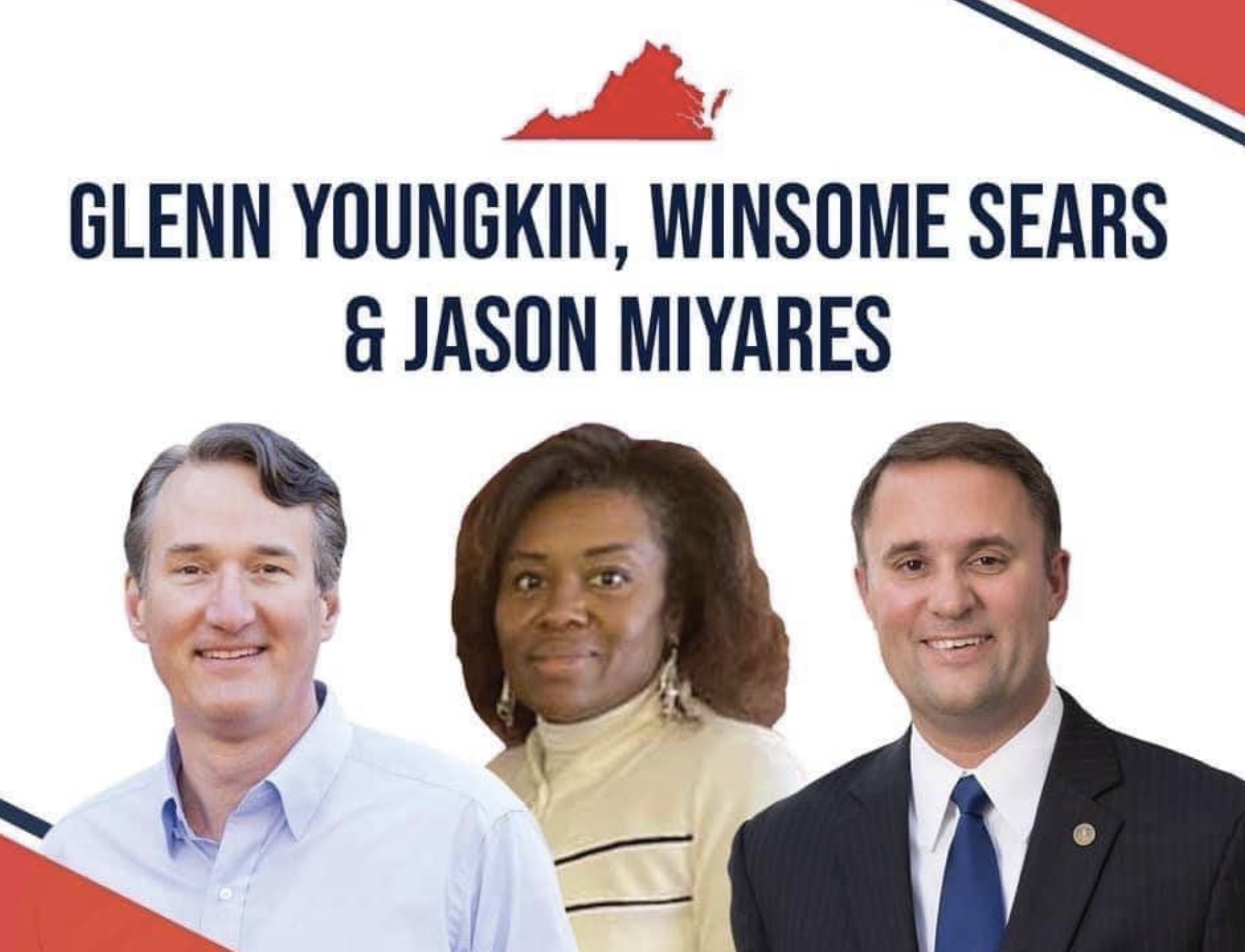
On the morning after The Virginia Election, I noted that the sharp folks at a must-bookmark niche-news website — A Journey Through NYC Religion — had done some old-fashioned digging and discovered some interesting religion ghosts (to use an old GetReligion term) in that political earthquake. Click here for that story: “Faith trumps Trump in Virginia.”

I sure didn’t know, from reading mainstream press coverage, that Governor-elect Glenn Youngkin was an evangelical Anglican who once was a leader in the Alpha course, an evangelism program that expanded from the Church of England into churches and denominations around the world.

I didn’t know that Lieutenant Governor-elect Winsome Sears, an African American evangelical and former Marine, had once led a Salvation Army ministry and that the state’s new attorney general, Jason Miyares, appears to be a Latino evangelical Episcopalian.

All of that showed up in my post-election piece with this headline: “Yes, there were overlooked religion angles in today's biggest U.S. political news story.”

We talk about all of that in this week’s “Crossroads” podcast (click here to tune that in), but also veered off into other religion-based angles in the current political climate. One of them took us into familiar territory, at least for those who have followed GetReligion for the past five or six ears. I’m talking about the rising political clout of Latino evangelicals, traditional Catholics and Pentecostal believers.

There’s some evidence that Youngkin and the diverse GOP lineup actually WON the Latino vote in the Virginia election (click here for a totally faith-free Politico discussion of that topic).

So here is that question again: How can journalists cover shifting patterns among Latino voters — and Black voters, as well — without examining the role of religion and cultural issues?

Let’s say: Is it safe to assume that pro-life Latinos are more likely — lacking acceptable Democrats on the ballot — to opt for Republicans? How about Latinos who favor school choice? Who old traditional Christian views on gender issues?


Please respect our Commenting Policy

New podcast: When popes and presidents meet, headlines may not tell the private stories

New podcast: When popes and presidents meet, headlines may not tell the private stories

Sometimes, the calendar isn’t friendly to columnists and podcasters.

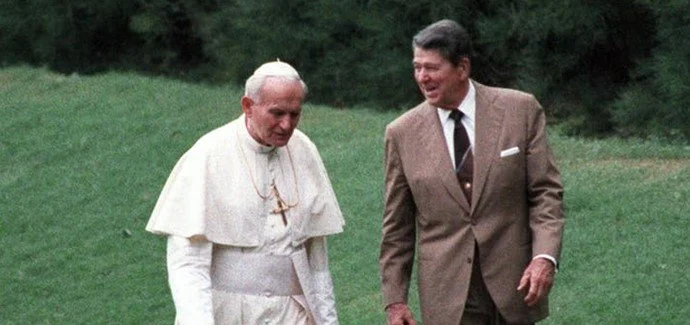
This week’s “Crossroads” podcast (click here to tune that in) was recorded before the lengthy, closed-door chat (with photo ops before and after) between Pope Francis and the “devout” Catholic President Joe Biden. Thus, host Todd Wilken and I took a kind of “tomorrow’s headlines” approach, surveying the advance coverage of the meeting and some fascinating features that looked at images and the realities of some previous pope-president meetings.

In this podcast I predicted that the headlines and public pronouncements would focus on their agreements about the environment, immigration, poverty and COVID-19 strategies.

Why? Well, the mainstream press believes that these meetings are, first and foremost, political events and these are political topics, even though they clearly have doctrinal content for those with the eyes to see that.

Biden and the pope agree on these subjects and, at this point, the progressive Pope Francis has little or no motivation to hurt a Catholic progressive in the White House. They have many of the same goals and they, to be blunt, have all the same enemies — especially among American Catholics who wear the red hats that mark them as cardinals (and those who have not received red hats).

Would anything significant happen in the private discussions?

That’s the kind of question that Catholic publications will probe and, here at GetReligion, I’ll leave commentary on that topic to Clemente Lisi (it helps that he is fluent in Italian).

If you are looking for a perfect summary of the elite press template for coverage of this meeting, and the ties that bind these two modern Catholics, this block of Washington Post material — from a political-desk story, of course — is pitch perfect:

… The resonance is also personal, given the similarities between the 84-year-old pope and the 78-year-old president, who have in a sense become allies. Both attained ultimate leadership late in their lives and quickly moved in a liberal direction. They have faced internal resistance. Both are treated warily by conservative American bishops.


Please respect our Commenting Policy

New podcast: Did the mainstream press ever figure out why Pat Robertson was important?

New podcast: Did the mainstream press ever figure out why Pat Robertson was important?

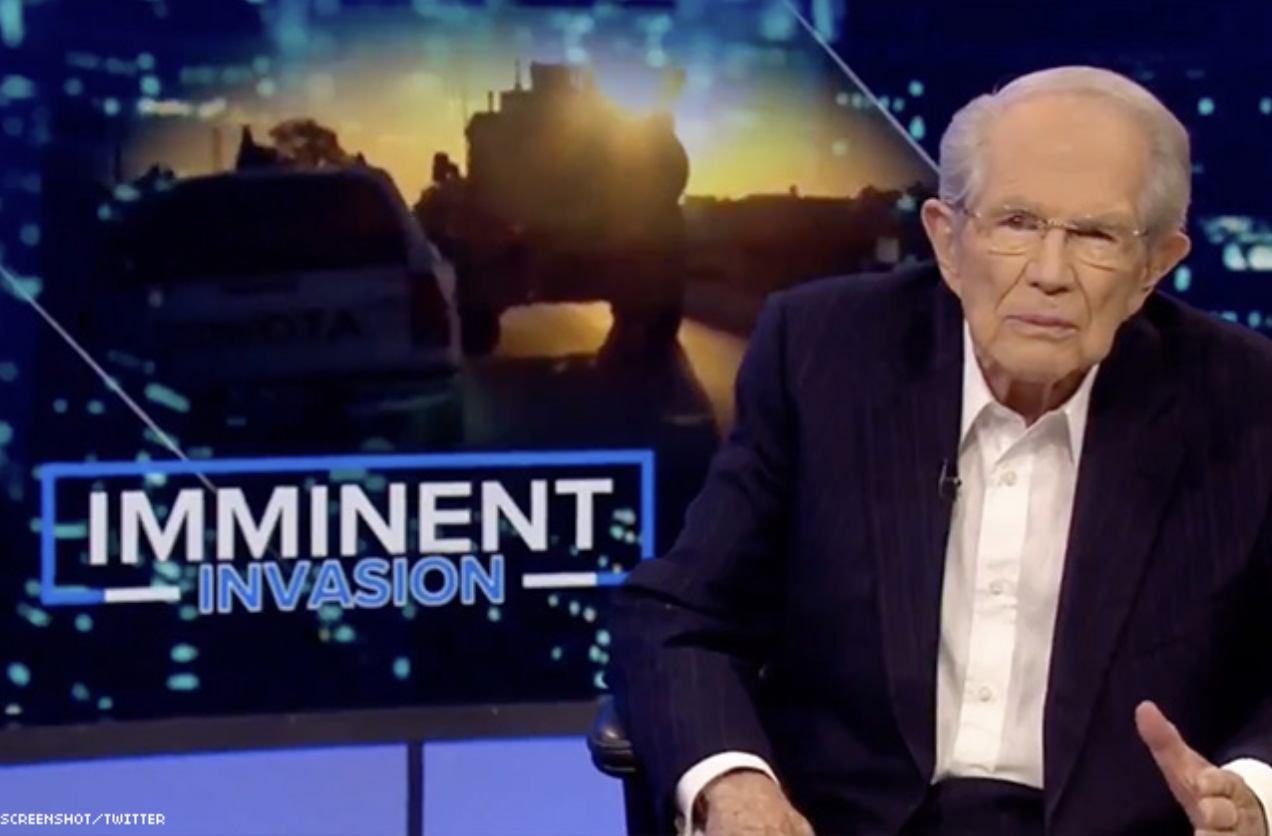
If you look at the headline and the art for this post, it’s obvious that this week’s “Crossroads” podcast (click here to tune that in) focused on media coverage of the Rev. Pat Robertson’s retirement as host of the “700 Club.”

Try to forget that. Work with me here, for a moment.

What if I told you that the man at the heart of this story grew up in Washington, D.C., as the son of a U.S. Senator. Then he did his undergraduate work at a quality school known for its academic rigor, graduating magna cum laude while studying history at Washington and Lee University.

Later, he earned a Yale Law School degree. After that — think low New York bar exam scores and a big religious conversion — he earned an MDiv degree from New York Theological Seminary.

Somewhere in that mix, he served in the U.S. Marines. Later, he founded a multi-million-dollar broadcasting empire and started a graduate-school university and a law school.

Does it sound like someone with a pretty good shot at having an impact on American life and culture?

Well, that’s Pat Robertson — sort of. It's clear that, for most journalists, this resume doesn’t have much to do with the man’s life and work. This is, after all, the religious broadcaster (as opposed to televangelist) who, for decades, served up “spew your coffee” soundbites that launched waves of embarrassing headlines and late-night TV jokes. He was important because this was the kind of wild man who helped lead the Religious Right further into the heart of Republican Party politics.

The minute anything crazy or scary happened in the world — from politics and pop culture to hurricanes and earthquakes — the press turned to Robertson for what was billed as semi-official “evangelical” reactions, even as his words frequently left mainstream evangelical leaders sad, puzzled or furious.

Robertson was one of the official alpha-male media voices of evangelicalism, even after he women and men had emerged who had more clout and connections in the movement.

I was never a Robertson fan. However, it was always clear to me — thinking in terms of church history — that he wasn’t really an “evangelical,” strictly defined, even though he was an ordained Southern Baptist minister. The key is that he was a leader in the rising tide of charismatic and Pentecostal Christianity in America and the world at large (see this Pew Research Center resource page).

Does that matter? Well, Pentecostal Christianity very diverse, in terms of race and class, and is the fastest growing for of religious faith on the planet.


Please respect our Commenting Policy

New podcast: Those Southern Baptist sex-abuse battles are not just about Southern Baptists

New podcast: Those Southern Baptist sex-abuse battles are not just about Southern Baptists

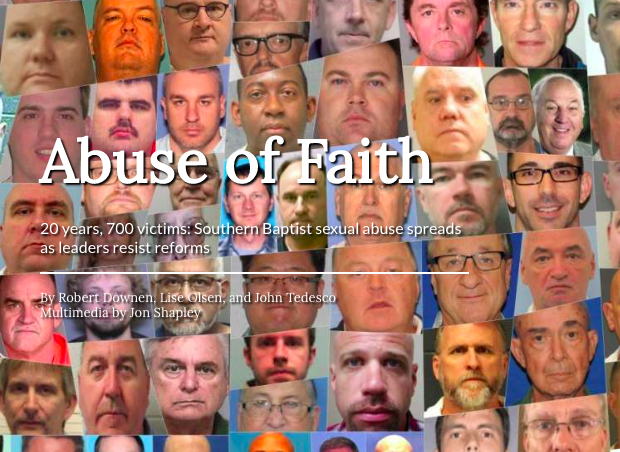
The Southern Baptist Convention’s ongoing fights about how to handle sexual-abuse claims against ministers and other church personnel and volunteers is a perfect example of the kind of story that drives newspaper editors crazy.

It’s big and complicated and it seems like something crazy or important (or both) happens every other day. But it also seems like it’s impossible to yank a big, dramatic headline out of this sprawling, complicated story.

The story never seems to end and the amount of background material needed — in story after story after story — makes it impossible to cover this stuff in tidy 500-word stories. But if a newsroom skips a few of the major developments, that makes it even harder to get back in the game and explain to readers what is happening. Oh, and did I mention that newsroom managers pretty much have to assign a reporter to this story full-time or near full-time? That’s expensive in this day and age. Obviously, this reporter has to have religion-beat experience and speak fluent Southern Baptist.

At the same time, in my experience, there will almost always be one or two editors who say (or think) something like this: “I know the SBC is huge and there are billions of dollars involved and we have lots of Southern Baptist churches (and maybe a college) in our news territory, but … I don’t ‘get’ why this story really matters to average readers. I mean, it’s not about sports or politics or something important (to me).”

As a Charlotte editor once told me, when I was poised to break a national-level SBC story in the early 1980s: Nobody reads this stuff but fanatics and every time you write about it we get too many letters to the editor.

This brings us to this week’s “Crossroads” podcast, which focuses on why the SBC’s struggles with sexual-abuse are important, and NOT just to Southern Baptists (click here to tune that in). The key is to identify major stories LINKED to sexual-abuse scandals that involve ethical, moral, legal and theological issues that can be seen in religious groups of all kinds (and many secular nonprofits and organizations as well). To illustrate this, let me tell you a story about an important evangelical counseling pioneer — the late Dr. Louis McBurney, founder of the Marble Retreat Center in Colorado.


Please respect our Commenting Policy

New podcast: Yes, New York's governor urged church folks to be her 'apostles' backing vaccines

New podcast: Yes, New York's governor urged church folks to be her 'apostles' backing vaccines

Hey news consumers, remember that time when President Donald Trump stood in front of a church (sort of in an urban war zone), held up a Bible and the world went nuts?

Chances are good that you heard about it. However, as a refresher, here are 66,100,1000 Google references to this incident, as well as as an imperfect collection of other Trumpian news involving the word “Bible.”

Or remember that time when Trump — long-time member of the liberal Presbyterian Church (U.S.A.) and probably, in terms of private life, one of the most secular presidents in American history — went to Liberty University to court evangelicals and said this (care of an NPR report):

"We're going to protect Christianity. I can say that. I don't have to be politically correct," he thundered at the beginning of his speech at the conservative evangelical university.

Then he moved on to cite "Two Corinthians 3:17, that's the whole ballgame. ... Is that the one you like?" Trump asked. "Now the Lord is that Spirit: and where the Spirit of the Lord is, there is liberty."

Over at Google, there appear to be a mere 2,380,000 references to this “Two Corinthians” incident.

Truth is, politicians often say and do strange things while courting support in religious settings that are way outside their own cultural comfort zone.

This brings us to this week’s “Crossroads” podcast, which focuses on the coverage — actually, the lack of coverage — of the recent visit that New York Gov. Kathy Hochul paid to the Christian Cultural Center, a massive and very influential predominantly African-American megachurch in Brooklyn. Click here to get that podcast, or head over to Apple Podcasts.

Now, there was more to this political-religious event than the hilarious typo in the rushed transcript of the governor’s remarks produced, apparently, by a staff member. Check out the opening words here: “The phrase be to God, this is the day the Lord has made. Amen, amen.”

Let’s assume that the governor actually said “praise be to God.”


Please respect our Commenting Policy