People

Podcast: Do readers need to know the 'why' factor in the Covenant School shootings?

Podcast: Do readers need to know the 'why' factor in the Covenant School shootings?

Before returning to mainstream news coverage of the attack on Covenant Presbyterian Church and its school, let’s look at a story that raises similar issues — in Colorado Springs, Colorado. Consider this new information linked to this week’s “Crossroads” podcast (click here to tune that in).

The headline on a KRDO report: “Manifesto details former student’s plans to carry out multiple Colorado Springs school shootings.” Yes, note the word “manifesto.”

In this case, police are dealing with threats, not actions. However, journalists covering this story face some familiar questions about content and emphasis. Let’s pick this up at the second paragraph.

According to the 18th Judicial District Attorney’s Office, 19-year-old William Whitworth - who identifies as “Lilly”- was charged after an investigation into "threats involving schools in Colorado Springs Academy District 20."

The context for this story is Colorado Springs. What do we know about that “conservative” city, in terms of its media profile? Here is an interesting headline from The Guardian: “Colorado Springs: a playground for pro-life, pro-gun evangelical Christians.

Back to the very low-key Colorado news report:

Once inside [the home], deputies noted in the affidavit two holes that appeared to be punch marks in the wall. The door to a bedroom was off its hinges and lying beside the opening. … The sister identified herself as Lilly, but further investigation determined her birth name is William Whitworth.

Once again, readers face that familiar, but suddenly controversial, question from the old-school journalism equation “who,” “what,” “when,” “where,” “why” and “how.”

A dozen or so paragraphs and news-you-can-use bullet lists into the story, readers finally learn:

When asked if she was going to shoot up a school, the affidavit states Whitworth "visibly shook her head and down indicating yes." When asked why she'd do that, Whitworth stated, "Why does anyone do it." …

While waiting for the fire department, Whitworth was asked how much she had been planning the school shooting. She stated she was "about a third of the way from doing it," verifying again that Timberview Middle School was one of the "main targets" currently and other targets were churches.

There’s some (#triggerwarning) anti-Donald Trump material in this troubled young person’s writings, as well. But it would be interesting — since Colorado Springs is internationally known as a haven for evangelical ministries — to know just a bit more (as in anything) about the targeted “churches.”
Please respect our Commenting Policy

LSU's always controversial Kim Mulkey offers a highly personal quote (#crickets)

LSU's always controversial Kim Mulkey offers a highly personal quote (#crickets)

I always watch the final March Madness games in the women’s tournament, because of the high quality of the playing and coaching and, yes, because as a Baylor University alum and legacy guy, it was hard not to watch coach Kim Mulkey’s teams in the dynasty years.

That said, I was one of the Baylor fans who were miffed when the administration either (a) smiled and let her hit the exit door for a few more dollars from her home-state school or (b) sort of pushed her toward that exit because she was too flashy, too conservative (however one wants to define that), too private or too willing to step on the toes of powerful men and women.

Mulkey is not a woman who knows her place.

So I paid attention to the stunningly improbable LSU run to the national title — at the end of Mulkey’s second year at that job, after arriving at a school in or near the SEC cellar.

I wondered, frankly, if she was going to say one of those things that she says that the press kind of has to look away and pretend that she didn’t say. I wasn’t expecting it to be a quote about religion.

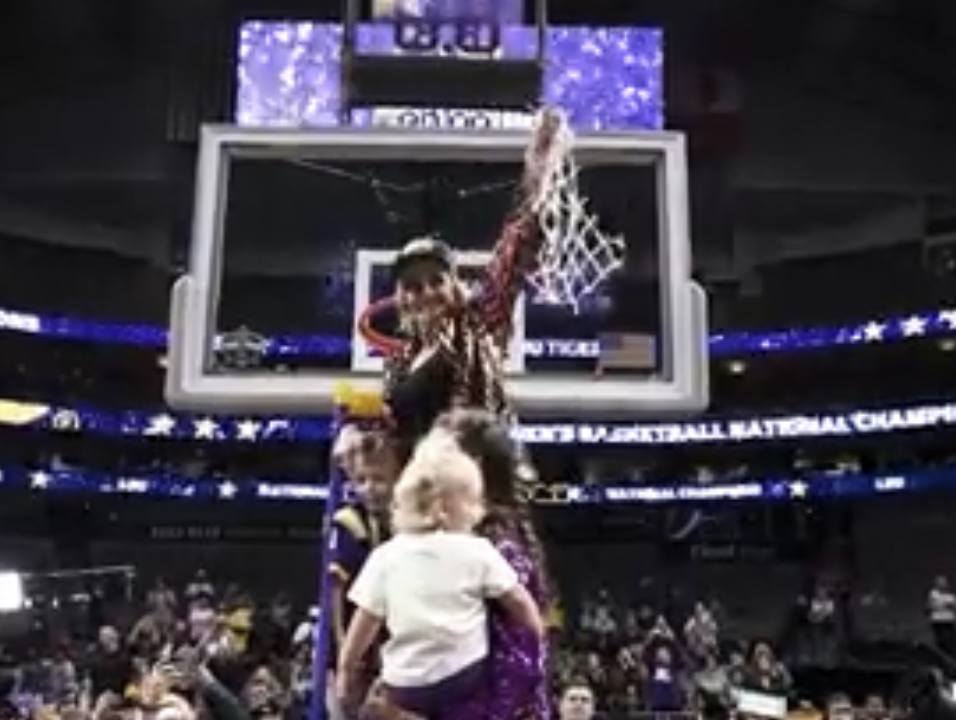
With a minute to go in the game, Mulkey was shown crying — almost weeping — on the sideline when the dagger three-pointer hit the net to defeat a great Iowa team. The Tiger queen was still fighting to control her emotions during her first post-game comments to ESPN. Struggling to speak, and wiping away tears, she finally managed to answer the inevitable “How do you feel?” question from reporter Holly Rowe.

“Coaches coach for a lifetime. This is the fourth time that I’ve been blessed,” Mulkey said to Holly Rowe postgame. “Never in the history of LSU basketball, men or women, have they ever played for a championship. And to win it? I think my tears are tears of joy. I’m so happy for everybody back home in Louisiana.”

“Blessed” is, of course, deep-Bible Belt talk.

That’s from a Sam Gillenwater post at the On3 website: “Kim Mulkey 'blessed' after leading LSU to program's first national championship.” It’s the quote that ended the interview that caught my attention.


Please respect our Commenting Policy

Podcast: Was the attack on a conservative Presbyterian school in Nashville a religion story?

Podcast: Was the attack on a conservative Presbyterian school in Nashville a religion story?

Was the attack on the elementary school at Nashville’s Covenant Presbyterian Church a religion-news story?

Of course it was, for at least four reasons that we discussed during this week’s “Crossroads” podcast (click here to tune that in).

(1) It was an attack on a conservative Christian school at a conservative Presbyterian church in a city that is often called the buckle fn the Bible Belt (although locals know that the Nashville establishment, especially in media, is left of center).

(2) Religious groups have played a major role in Tennessee debates about parental rights, education and LGBTQ issues. What does that have to do with the shooting? Hold that thought.

(3) Religious groups have played a major role in discussions of gun-control legislation in Tennessee and, in this case, it is important to avoid political labels such as “liberal” and “conservative” in that discussion.

(4) The young adult who attacked the Covenant School was a former student there. Audrey Hale had recently identified as Aiden Hale in social media, with male pronouns. Hale was still living in a conservative Christian home, with a mother who both was a strong advocate of gun control and on the staff of Village Chapel in Nashville.

What else do news readers know about the shooter? That depends — in this new age of partisan, advocacy media — on which news organizations a reader follows. In most mainstream coverage, even in Nashville, questions about the life and beliefs of the shooter have all but vanished.

Consider this short paragraph late, late in a Religion News Service follow-up report: “Grief, fear haunt Nashville as residents gather to mourn in wake of Covenant shooting.”

Very little is known about the shooter, a former student at Covenant who was killed by police. The shooter reportedly left a manifesto that has not been made public. 

Really? “Very” little?


Please respect our Commenting Policy

Heeding the Nashville shooter's own voice: Do journalists want the 'manifesto' released?

Heeding the Nashville shooter's own voice: Do journalists want the 'manifesto' released?

Once again, we return to that mantra from old-school journalism — “who,” “what,” “when,” “where,” “why” and “how.”

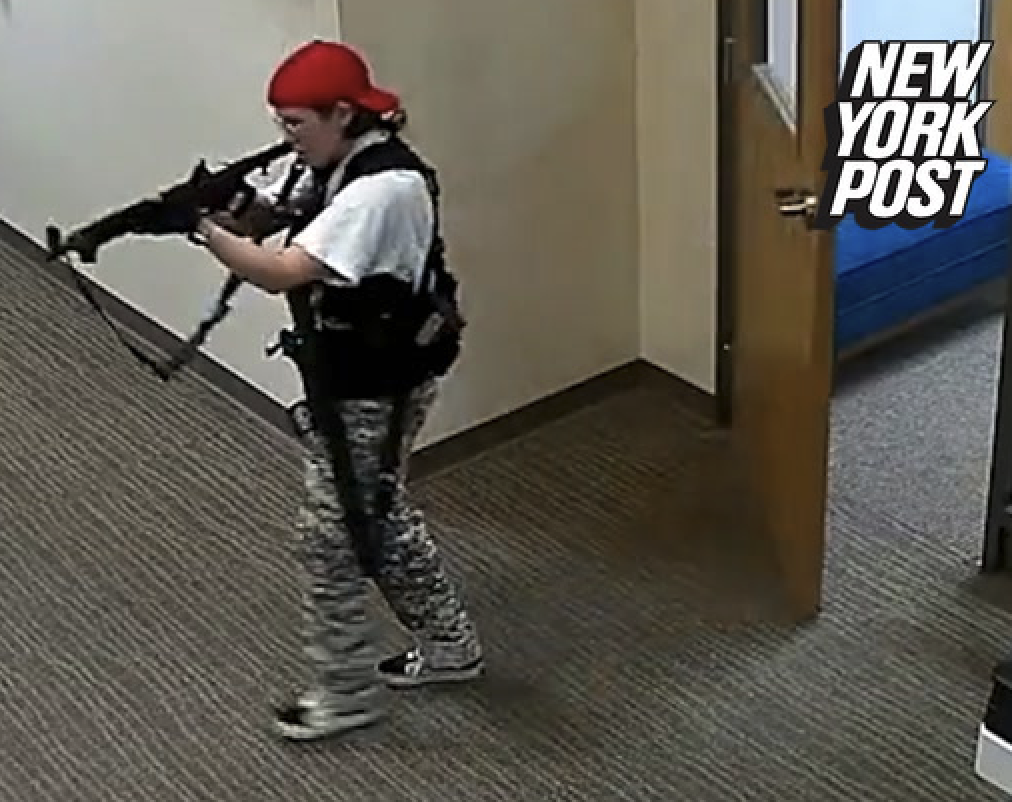
When covering the murders at Nashville’s Covenant Presbyterian Church private school, journalists already know that the shooter wanted the public to know the answer to the “why” question.

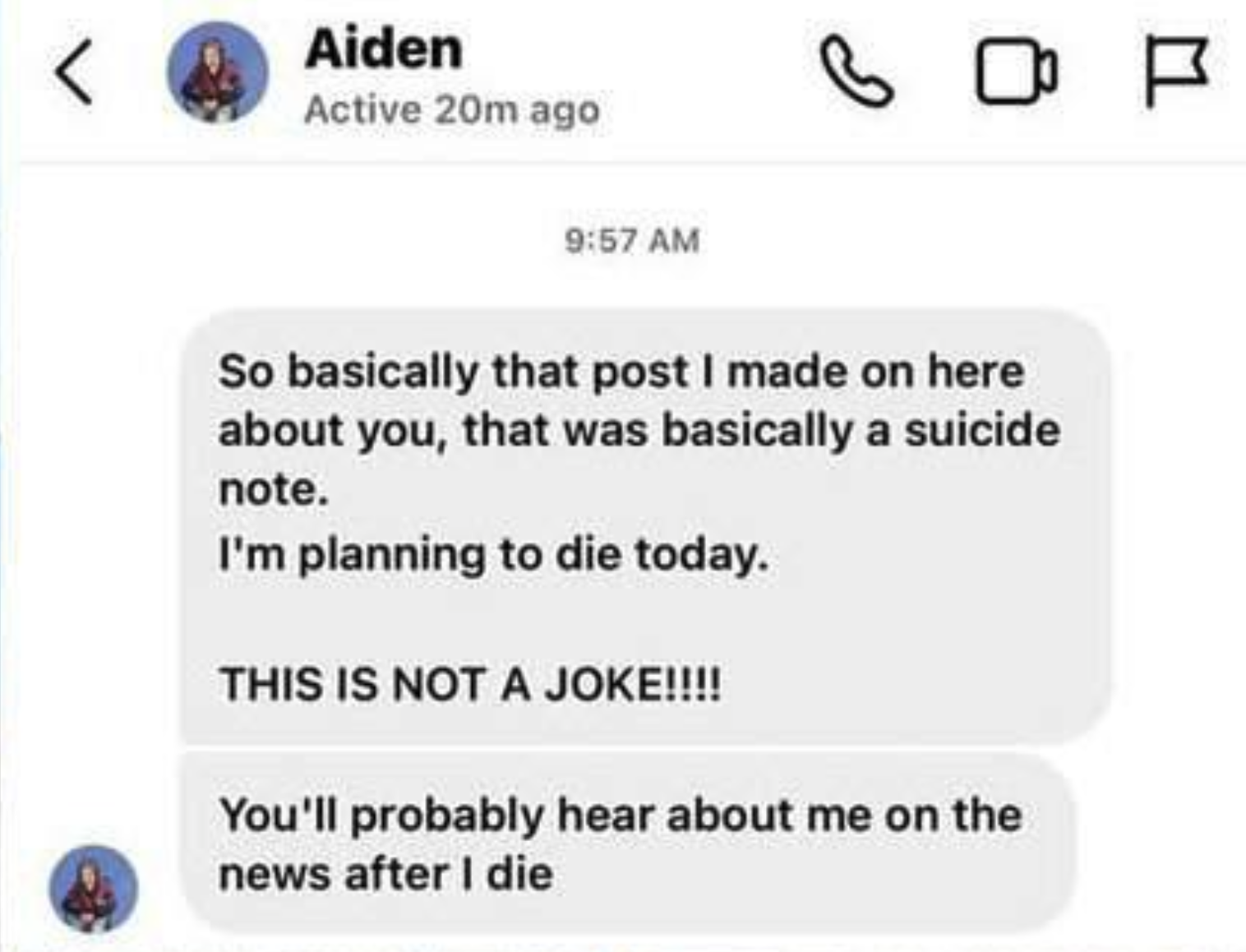
Moments before shooting open the school’s doors, the person previously known as Audrey Hale, who chose the name “Aiden” in social media, sent a haunting and strategic message to a friend. Some timelines suggest that the shooter sent this message while parked in the church’s parking lot.

The contents of the message are highly relevant to news coverage of the shootings. Readers: Have you seen these words quoted in your local, regional and national news sources? Hale wrote:

“This is my last goodbye.

“I love you (heart) See you again in another life Audrey (Aiden)”

Later, Hale added:

“My family doesn’t know what I’m about to do

“One day this will make more sense. I’ve left more than enough evidence behind

“But something bad is about to happen.”

Public officials have made it clear that the shooter left behind a “manifesto,” as well as highly detailed plans for the attack on the school (school leaders have said Hale attended 4th and 5th grade there). The manifesto text is almost certainly what Hale was describing with the words, “One day this will make more sense. I’ve left more than enough evidence behind.”

Under normal circumstances, journalists would be doing everything that they can to answer the “why” question in this case, including calling for the release of Hale’s manifesto text and other materials linked to the attack. But these are not normal circumstances.


Please respect our Commenting Policy

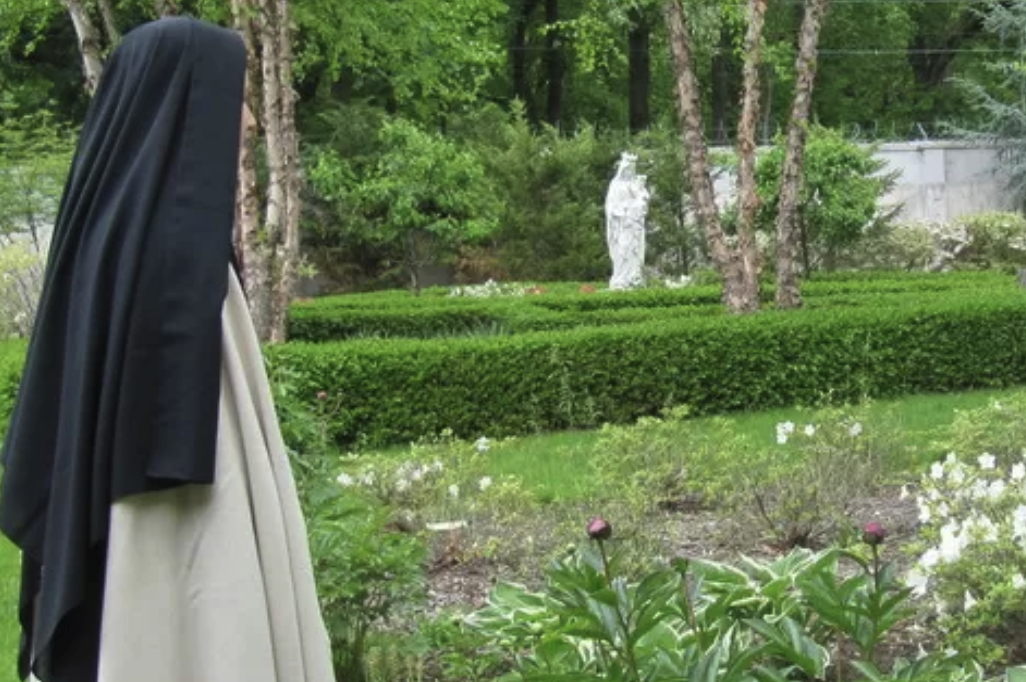
'The Nuns Who Left Brooklyn' -- How many religious details did this Times story need?

'The Nuns Who Left Brooklyn' -- How many religious details did this Times story need?

The headline of this New York Times story was totally “religion story” — “The Nuns Who Left Brooklyn.

Thus, I heard from people who wanted to know what your GetReligionistas thought of this religion story.

The content of this news feature was, quite frankly, totally “metro desk” (people who have worked in newsrooms will understand that term). This is, let me stress, not a complaint. The Times story is packed with relevant, even colorful local news details about a sad situation that developed in Brooklyn.

Also, religion-beat pros will not that it is hard to do a story about the details in the lives of cloistered Catholic women religious, since they are not going to sit down for interviews and talk about the details of their lives and beliefs. The story has some crucial details provided by others that tell readers some of what they need to know.

Would I have appreciated a few more details about this order and where it fits into the current drama of Catholic monastic life in America? Sure. Was that an essential part of this particular story? I’ll admit that the answer to that is: “Not really.” Hold that thought. Meanwhile, here is the overture:

The 10 Carmelite nuns of Cypress Hills, cloistered in Brooklyn for almost 20 years, decided to leave New York City after much contemplation.

As much as they tried, the sisters of the Monastery of Our Lady of Mount Carmel and St. Joseph, devotees of silence and prayer who rarely left the confines of the cloister, could no longer ignore what was going on outside. The loud celebrations in an adjacent park became a bit too much. And when a beloved lay volunteer was murdered, the sisters were shaken deeply.

The last straw came in 2020, that first pandemic summer, with the explosion of late-night partying on their street involving cars with powerful speakers, said Mother Ana Maria, who spoke on behalf of the monastery, which used to be on Highland Boulevard.

“Our walls shook and our windows shattered,” she said. The sisters wondered whether the blaring music well past midnight was aimed directly at them.

Shattered windows? That’s some loud partying. That leads to a poignant detail, care of the mother superior who spoke for the nuns.

Mother Ana Maria, who, along with her sisters, begins each day at 5 a.m. The nuns pushed their beds away from the walls of their cells — the small rooms where they slept — but still felt unsafe, she said.


Please respect our Commenting Policy

Debates in England about free speech and religion veer into 'thoughtcrimes' zone

Debates in England about free speech and religion veer into 'thoughtcrimes' zone

Wherever he goes, Father Sean Gough prays for the people he encounters -- sometimes out loud and often silently.

This isn't unusual, since he is a priest in the Catholic Archdiocese of Birmingham, England. Gough was praying silently when he was arrested near an abortion facility in a Public Spaces Protection Order protected zone, while holding a "Praying for free speech" sign. His car was parked nearby, with a small "unborn lives matter" bumper sticker.

The priest was charged with "intimidating service users," although the facility was closed at the time. The charges were later dropped.

Officers also raised questions about his clothing.

"When interrogated by police for silently praying in the censorship zone, they challenged me for wearing a cassock," said Gough, on Twitter. "When do I normally wear one? Don't I realize it'll be perceived as intimidating? These are not questions a person should be asked under caution in a democracy!"

Clause 11 of a recent Public Order Bill -- waiting to be signed into law -- would criminalize all forms of "influence" inside a 15-meter "buffer zone" around every abortion facility in England and Wales. An amendment to permit silent prayer and consensual conversations failed by a 116-299 vote in Parliament.

After years of debates about religious liberty and freedom of speech, recent events in England have veered into what activists and politicos have described as "thoughtcrimes," a term used in George Orwell's dystopian novel "1984" to describe thoughts that violate ruling-party dogmas.

In the U.S. House of Representatives, eight Republicans circulated a letter claiming it's "imperative that the U.S. speak boldly and clearly to its friend when the U.K. has failed to protect unalienable rights." The document condemned policies that "persecute Christians and other pro-life citizens for thoughtcrimes."


Please respect our Commenting Policy

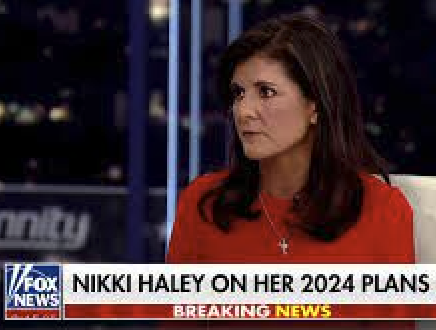
Religion in politics, again: What is Sikhism, candidate Nikki Haley’s one-time faith?

Religion in politics, again: What is Sikhism, candidate Nikki Haley’s one-time faith?

QUESTION:

What is Sikhism, candidate Nikki Haley’s one-time religion?

THE RELIGION GUY’S ANSWER:

Nikki Haley, who is challenging Donald Trump for the Republican presidential nomination, was raised in the religion of Sikhism  (“SEEK-ism”) by immigrant parents from India. But soon after both Sikh and Methodist weddings she converted to husband Michael’s Christianity.

During Haley’s first run for South Carolina governor in 2010, National Public Radio posted a notably nasty piece by a fellow Indian-American who said “I’m not buying” Haley’s “Christian bit,” noting that “serious churchgoers” and political opponents suspected a “conversion of convenience” in a heavily Protestant state. However, Haley adopted Christianity at age 24 and only entered politics eight years later.

Partners in mixed marriages do have to make religious choices. Haley has repeatedly professed that she is a Christian believer but respects her family and does not criticize its religious heritage. Though a Methodist churchgoer, she occasionally attends Sikh services and has visited the faith’s holiest sanctuary, the Temple of God in Amritsar, India (known as the Golden Temple because it’s covered in gold leaf).

As a journalist, The Guy has no business examining Haley’s soul, but sees her candidacy as a good opportunity for Americans to learn more about her former faith. Sikhism claims to be the fifth-largest world religion after Christianity, Islam, Hinduism and Buddhism, though it does not evangelize and counts only a modest 30 million adherents. Still, that’s double the global number for Judaism.

Sikhism is by far the youngest of the major world religions. Its homeland is the Punjab region of northern India and adjacent Pakistan. The founder, Guru Nanak (1469-1539), was a married accountant with two sons who had a dramatic encounter with God, whence he proclaimed “there is no Hindu; there is no Muslim” and gathered a following as a spiritual teacher.

Western scholars often depict Sikhism as a classic example of syncretism (blending of different religions) or a reforming “offshoot” of Hinduism.


Please respect our Commenting Policy

How a veteran Catholic congressman evolved into a political heretic

How a veteran Catholic congressman evolved into a political heretic

WASHINGTON — As a veteran Chicago-land Democrat, Rep. Daniel Lipinksi knew what to expect when facing newspaper editors during pre-election endorsement season -- hard questions about his support for centuries of Catholic teachings on abortion.

But the Chicago Sun-Times stressed a different question in 2020 -- same-sex marriage. Lipinski said the Supreme Court had settled that issue, so he didn't expect to face it in Congress. The follow-up was blunt and personal: But do YOU support legalized same-sex marriage?

Lipinski said he supported his church's teachings on marriage and sexuality.

"They didn't just see themselves as newspaper editors interviewing candidates in a political race. ... They saw themselves as inquisitors seeking an admission of heresy," said Lipinski, who lost that close primary race with a rival backed by liberal Democrats.

During his 16 years in Congress, Lipinski voted with his party 90% of the time and his convictions never changed, especially on economic and labor issues. Nevertheless, by 2018 New York magazine had floated this headline: "House Democratic Leaders Rally to Defend Their Illinois Heretic."

By 2020, he had reached "political leper" status, in part because of social-media attacks on his beliefs that bled into mainstream news, he said, addressing the recent "Journalism in a Post-Truth World" conference in Washington, D.C. The event was sponsored by Franciscan University in Steubenville, Ohio, and the Eternal Word Television Network.

The old days of tough questions and bipartisan debate were one thing, said Lipinski. At this point, American politics have stormed past tribalism into bitter sectarianism, with politicos, activists and journalists embracing "partisanship as a fundamentalist pseudo-religion" that strictly defines good and evil.

What is happening? In the past two decades, he noted, researchers have documented a stunning rise in "religiously unaffiliated" Americans. In 2020, Gallup reported that membership in houses of worship sank to 47% -- below the 50% mark for the first time. In 1999, that number was 70%.

It's possible, said Lipinski, that many citizens are now searching for "for meaning, or a mission, or truth, somewhere else," which only raises the stakes in public life.

"Partisanship has become not just a social identity, but a primary identity considered to be more important than any other," he said. "We all identify ourselves as belonging to different groups -- our families, our religions, our favorite sports teams, our professions. But more and more Americans are defining who they are by the political parties that they choose."


Please respect our Commenting Policy

Who are America's most influential women in religion? Why do they get so little ink?

Who are America's most influential women in religion? Why do they get so little ink?

International Women’s Day last week led to — naturally — a lot of news features about the female half of the human race.

The Washington Post did a piece on women in Afghanistan (as did the New York Times); Agence France Presse wrote on women who work for the Roman Curia; the Jewish Telegraph Agency covered Orthodox women who get around their religion’s prohibition against women chanting Hebrew scriptures to mixed audiences.

I would have liked to have something more diverse and wider-ranging, such as a list of top women who exert influence not only within their own religions, but who have spoken to needs or issues in the general culture. In effect, they have transcended their faith groups.

In short, who are the most influential women in American religion?

Time magazine asked a similar question about evangelicals and the magazine’s list of America’s 25 most influential evangelicals is still referred to 18 years later. Most of those named were men; if there were women, they were paired with their husbands. The only two women who made the list on their own merits were televangelist Joyce Meyer and the late Diane Knippers, president of the Institute on Religion and Democracy.

I have spent much of my professional career profiling women in religion. The first time I put together such a list was in 2014 when I was so frustrated at how so many gifted evangelical women didn’t get near the top billing in the media that men do. In a post titled “Great Women Who Will Never Be Famous,” I wrote about Miriam Adeney, Nancy Pearcey, Robin Mazyck, Susan Wise Bauer, Sarah Zacharias Davis and Dale Hanson Bourke.

I’ve now updated that list to include other religions. I avoided women who got where they are because of their husbands. I am not denigrating their accomplishments, but simply focusing elsewhere.

I do realize that women in many traditions aren’t allowed into formal religious positions, which is why my list includes activists, bloggers and others who work outside regular boundaries.

It’s a sticky wicket, this list. Should one stick with women who have the largest numbers of books written, most news coverage or most impressive social media standings? How about lesser-known women who represent important constituencies?

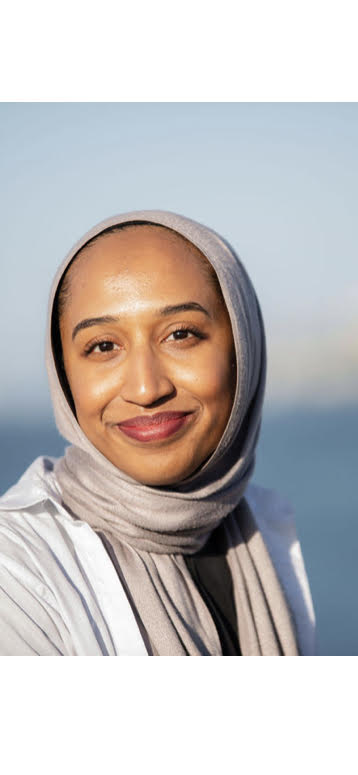
For instance, many of you may not know Nailah Dean, 30, a black/Latina California lawyer and Muslim feminist who speaks out on what she calls the “Muslim marriage crisis.”


Please respect our Commenting Policy