People

Before reaching Rome, Cardinal Ratzinger put modern Europe in the rear-view mirror

Before reaching Rome, Cardinal Ratzinger put modern Europe in the rear-view mirror

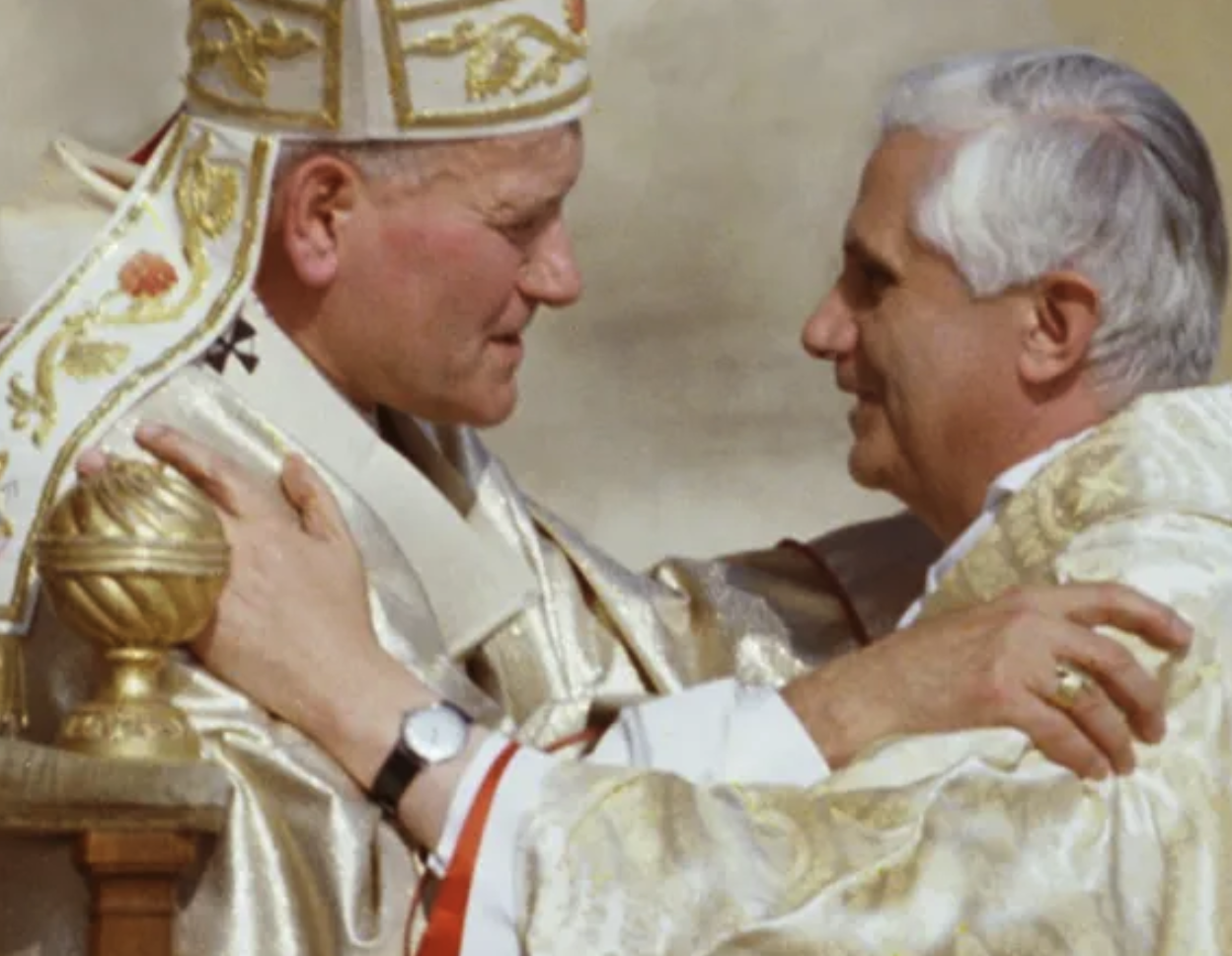
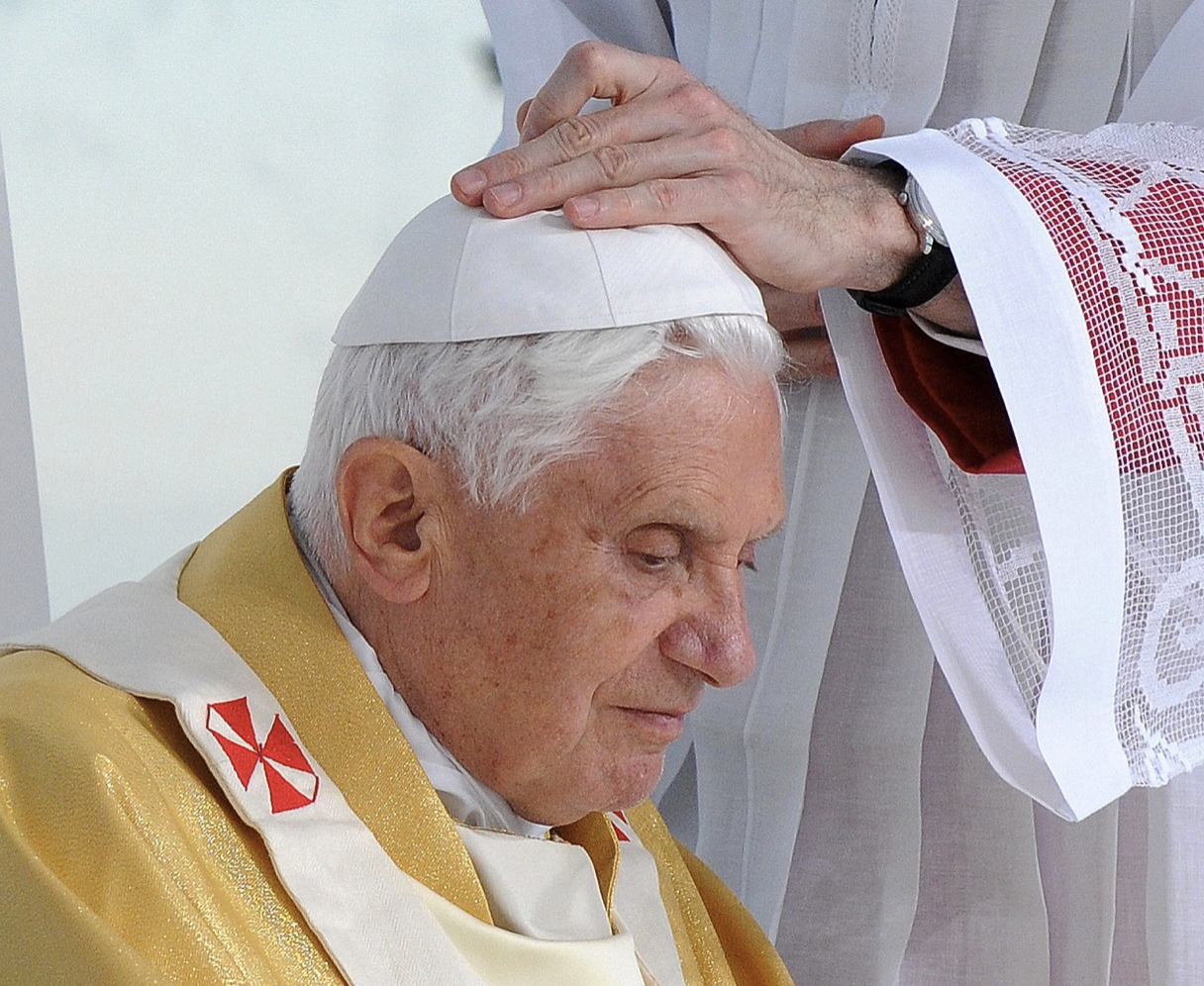
In a rite before the funeral of Pope Emeritus Benedict XVI, Vatican officials placed unique symbols of his pontificate inside his cypress casket, along with a scroll in Latin describing his ascent to the Chair of St. Peter.

"His faith and family upbringing prepared him for the harsh experience of the problems connected with the Nazi regime, aware of the climate of strong hostility towards the Catholic Church," said the English translation of this "rogito," or deed. "In this complex situation, he discovered the beauty and truth of faith in Christ."

After deserting the German army without firing a shot, Josef Ratzinger began his theology studies and, in 1951, was ordained a priest. He emerged as an intellectual voice preaching hope, as opposed to mere optimism. The future pope's sobering views on modern Europe would affect his entire career -- as well as debates about his legacy when he died.

"This so-called Christian Europe … has become the birthplace of a new paganism, which is growing steadily in the heart of the Church, and threatens to undermine her from within," said Ratzinger, in a 1958 lecture. This modern church "is no longer, as she once was, a Church composed of pagans who have become Christians, but a Church of pagans, who still call themselves Christians."

Four years later, the 35-year-old priest advised Cardinal Joseph Frings of Cologne during the historic Second Vatican Council, emerging as a "progressive" on reform issues, yet one who saw painful challenges ahead.

"From the crisis of today the church of tomorrow will emerge – a church that has lost much," he warned, on German radio in 1969. "As the number of her adherents diminishes, so it will lose many of her social privileges. In contrast to an earlier age, it will be seen much more as a voluntary society, entered only by free decision. As a small society, it will make much bigger demands on the initiative of her individual members."

Ratzinger envisioned a "more spiritual church" with no political mandate, "flirting as little with the left as with the right. … It will make her poor and cause her to become the church of the meek."

Please respect our Commenting Policy

Correction? Washington Post on the 'religious event' that marked passing of Benedict XVI

Correction? Washington Post on the 'religious event' that marked passing of Benedict XVI

Once upon a time, it was relatively clear when a news organization did or did not need to publish a correction about an error in one of its reports.

But then the World Wide Web came along and reporters at major organizations began writing what were, in effect, news reports that evolved during or just after an important event — rather like the “write-thru” story updates that wire services had for decades sent to newsrooms.

In the old days, however, there was a definitive moment when ink hit paper and readers and journalists could consider a news report “published.” If there was an error of fact in that published story, then everyone (within reason) knew that there needed to be an ink-on-paper correction.

What is supposed to happen when a news report is merely published online? Is a story in digital bytes as “real” as the old ink-on-paper version? That’s the kind of issue journalists have been debating ever since professionals began “breaking” stories online or producing early versions of news reports that, eventually, merged into final reports that were “published.”

This brings me to an interesting sentence that ran, sort of, in a Washington Post foreign-desk (as opposed to the religion desk) story about the funeral Mass for Pope Emeritus Benedict XVI. Here is that sentence, which has circulated in screen shots taken of the Post website:

At the religious event, sometimes called the Eucharist, the faithful receive the sacrament, normally consecrated bread like wafers and wine, symbolizing the body and blood of Jesus.

I have done quite a bit of searching for that material online — especially the “symbolizing the body and blood of Jesus” reference — and I can only find fragments of digital material that show that it once existed. Maybe I have missed it, somehow. If so, I would welcome a correction and a working URL.

Meanwhile, check out, this wispy reference found in this online search file.


Please respect our Commenting Policy

Plug-In: After the death of Benedict XVI -- questions about his legacy and his funeral

Plug-In: After the death of Benedict XVI -- questions about his legacy and his funeral

I’m your Weekend Plug-in columnist, and I’m excited to launch the fourth year of this newsletter.

Plug-in aims to highlight the best reads and top headlines in the world of faith. In 2023, we’re tweaking our format to make it even smarter and more concise.

Let’s jump right in!

What To Know: The Big Story

Pope Emeritus Benedict XVI died Saturday at age 95. Clementi Lisi recounts the life of the first pope in 600 years to resign.

Pope Francis presided over the funeral Mass for his predecessor, as Lisi reports. But some found fault with Francis’ brief homily for Benedict, according to The New York Times’ Jason Horowitz and Ruth Graham.

For more coverage from the Vatican, follow The Associated Press’ Nicole Winfield, the National Catholic Reporter’s Christopher White, Religion News Service’s Claire Giangravé and the Wall Street Journal’s Francis X. Rocca.

Looking ahead: Francis may have a freer hand after Benedict’s death, Rocca reports. But U.S. bishops’ rift with Francis is unlikely to ease, according to AP’s David Crary. At Crux, Elise Ann Allen explores whether Benedict’s death might open the door to new rules for retired popes.

More: Lisi presents “5 Catholic storylines you need to follow closely in 2023.”

Power Up: The Week’s Best Reads

1. Football and prayer: In America, the phrase “thoughts and prayers” is uttered frequently at painful times, as Poynter.org’s Al Tompkins notes.

But what happens when people actually pray?


Please respect our Commenting Policy

Flashback: The late, great Walter Cronkite did some thinking about religion news

Flashback: The late, great Walter Cronkite did some thinking about religion news

Did you know that the late, great CBS News anchor Walter Cronkite, one of the most important news icons of all kind, once worked as a “church editor” for a mainstream newspaper in Houston (apparently the old Houston Press)?

That was a detail from his life that I missed. I had read, long ago, that he was a “cub reporter” after his college years, yet before he broke into broadcasting. But time as a “church editor”? That’s a journalism title from the old, old days, one that is even more condescending than the more common and inaccurate label “religious editor (as opposed to “religion” editor.

Anyway, a religion-beat friend recently send me a photocopy of a 1994 interview with Cronkite that ran in The Christian Century, the influential mainline Protestant journal. I can’t find it online, although it was quoted by Religion News Service in an a short obit — “And that’s the way he was” — in 2009.

Encountering that “church editor” label reminded me of the old “Lou Grant” show episode that I used as the opening for my graduate project at the University of Illinois in Urbana-Champaign, which ran — in a much condensed form — on the cover of The Quill in 1983. The headline on that journal essay was: “The religion beat: Out of the ghetto, into the mainsheets.

The “ghetto”? That was the “church page.” The overture of that Quill piece is long, but it will provide some context for the Cronkite remarks that I will share here:

As was often the case, Lou Grant was working on two problems at once. At first the problems seemed unrelated.

The Los Angeles Tribune had lost its religion editor. City editor Grant had searched far and wide and, of course, no one was interested in the position. After all, what self-respecting journalist would want to be stuck with the religion beat?

Problem number two was how to get rid of lazy, often-drunk, no-good reporter Mal Cavanaugh. All through this episode of Lou Grant the management of the Trib had been trying to find a way to get Cavanaugh to resign.

Then, a spark of inspiration. The script is simple:

LOU: Congratulations, Mal. You're the Trib's new religion editor.


Please respect our Commenting Policy

Podcast: Benedict XVI protected ancient doctrines, while looking into an ominous future

Podcast: Benedict XVI protected ancient doctrines, while looking into an ominous future

The passing of any pope unleashes waves of news commentary, frequently with supporters clashing with critics in an attempt to help shape the narrative heading into the conclave to pick the next occupant of the Throne of St. Peter.

What about the passing of a pope emeritus? That would make things simpler, since there the current pope was still alive and in charge. Right?

Apparently not. The death of Pope Benedict XVI, if anything, seemed to raise the stakes in many lingering debates in Catholic life. My takeaway is that it represented the final, formal close of the era of St. Pope John Paul II, as well as that of Pope Benedict XVI, who, as Cardinal Ratzinger, had played a crucial theological role in support of John Paul.

Thus, this event — for many on the Catholic right and left — marked the end of the “Veritatis Splendor” era, with John Paul II’s emphasis on the defense of transcendent truths, and the open door into the Synod on Synodality era, with its modern Jesuit emphasis on dialogue and evolving doctrine.

The complex nature of this transition provided the hook for this week’s “Crossroads” podcast (CLICK HERE to tune that in).

How complex? For a glimpse of the sweeping nature of this story, check this post from the Catholic listserv Big Pulpit — which circulates daily lists of URLs to news reports, blog posts, podcasts and other commentary on Catholic affairs.

The January 2 offering include a list of “The Top-10 Most Visited Links” about the death of Pope Benedict XVI. That was followed with the “Next-10 Most Visited Links.” Then there was “Another-10 Most Visited Links” and “The-Next-Another-10 Most Visited Links.” This went on and on for another screen or two, with a total of 80 must-read links for that day.

That’s all. Good luck reading all of that — plus countless other offerings in both the mainstream press and countless Catholic commentary sources.

GetReligion readers will not be shocked to discover that, for many journalists, the death of this orthodox theologian was primarily a political story.


Please respect our Commenting Policy

The complex legacy of Benedict XVI: Defender of tradition who opened door to Pope Francis

The complex legacy of Benedict XVI: Defender of tradition who opened door to Pope Francis

Pope Emeritus Benedict XVI, who served as head of the Roman Catholic church from 2005 until his surprise resignation in 2013, has died and his passing has fueled renewed debates about several newsworthy trends in the modern Catholic Church.

The scholarly Benedict, a former theology professor, was known for his writings and defense of traditional values to counter the increased secularization of the West. Benedict’s death at age 95 was announced by the Vatican. Pope Francis will preside over the funeral Mass on Jan. 5 at St. Peter’s Square.

Benedict XVI broke several records during his papacy, including being the first pontiff to have a Twitter account. In recent years, however, press coverage stressed his resignation from the papacy.

On February 11, 2013, the Vatican confirmed that Benedict XVI would resign at the end of that month as he neared his 86th birthday, becoming the first pope to step down since Gregory XII in 1415. His resignation ushered in the papacy of Francis, leaving Catholics around the world to grapple with the idea of two living pontiffs. In September 2020, Benedict became the longest-living pontiff — at 93 years, four months and 16 days — surpassing Pope Leo XIII, who died in 1903.

As for Benedict’s legacy, it remains mixed and complex. In the press coverage, it is crucial to note how journalists handle his childhood in Nazi Germany, his move from German liberalism to conservative thinking on doctrine and his public and private actions when handling church scandals.

Vatican observer John L. Allen, in a piece for the National Catholic Reporter in 2013, wrote:

“A legacy, of course, is partially in the eye of the beholder. For many feminists, gays, dissident theologians, liberal Catholics of various stripes, and victims of clerical abuse, Benedict simply wasn’t the pope they wanted. Others will be inclined to celebrate Benedict not so much for what he did, but what he represented. …

“For his part, Benedict probably won't be terribly interested in the discussion. He is, after all, a man who once joked to a French friend after the Paris papers had been hard on one of his speeches, ‘I’m like the cellist Rostropovich — I never read the critics.’”

A voracious writer and theologian, Benedict penned 66 books during his lifetime. Among the most notable are “Introduction to Christianity” (1968), “Called to Communion: Understanding the Church Today” (1996) and “Last Testament: In His Own Words” (2016). He also wrote a trilogy of popular books — written for the laity — on the life of Jesus. The Vatican has reported that his final words were: “Jesus, I love you.”


Please respect our Commenting Policy

Plug-In: Religion-beat pros share links to their best features from throughout 2022

Plug-In: Religion-beat pros share links to their best features from throughout 2022

Earlier this week, veteran religion journalist Kimberly Winston invited me to talk about the year’s top religion stories for an upcoming feature on Interfaith Voices’ “Inspired” radio show.

Our discussion turned to the Religion News Association’s ballot for the top 10 national and international religion stories of 2022.

I boldly predicted that the overturning of Roe v. Wade would be the No. 1 national story and that Russian’s war on Ukraine would be the No. 1 international story.

Actually, those stories were obvious — not daring — choices. Sure enough, they topped RNA’s list of top stories announced after my recording session with Winston.

As I type this, I’m devouring my mom’s homemade fudge and watching Christmas movies. So rather than pick the week’s best reads and top headlines in the world of faith, as I normally do, I asked some of the nation’s top religion writers to share their favorite or most important story they wrote during 2022.

It’s a holiday week, so I didn’t catch up with everybody. But I sure appreciate my Godbeat colleagues who responded.

Power Up: Journalists share their best reads of 2022

Liam Adams and Cole Villena, The Tennessean: Williamson County, the suburban “new frontier” for American evangelical Christianity, published Aug. 31.

Cheryl Mann Bacon, Christian Chronicle: A final song, a familiar end, part of a year-long special project, published March 30.

Adelle M. Banks, Religion News Service: Amy Grant, ‘queen of Christian pop,’ feted at Kennedy Center Honors with sidebar Faith in the spotlight on Kennedy Center red carpet and stage at annual Honors gala, published Dec. 5.

Deepa Bharath, Associated Press: Asian faiths try to save swastika symbol corrupted by Hitler, published Nov. 27.


Please respect our Commenting Policy

Lots of bad news about Dave Ramsey has been published. Now's the time for fresher stuff

Lots of bad news about Dave Ramsey has been published. Now's the time for fresher stuff

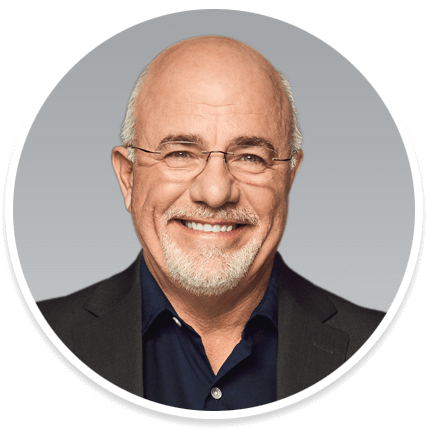
A lot has been written about Dave Ramsey, the Franklin, Tennessee-based Christian finance guru whose multi-million-dollar company, Ramsey Solutions, attempts to keep track of the private sexual activities of its employees — as a matter of religious doctrine.

For the longest time, Bob Smietana, former religion editor for The Tennessean and now a national writer for Religion News Service, has been pumping out stories about Ramsey’s antics.

As one of Smietana’s stories stated earlier this year, “Ramsey Solutions, former employees and their spouses say, is run more like a church than a business.” And, he wrote, it’s not only the sex stuff that can get you in trouble. It’s whether you have consumer debt, if your spouse makes a withering comment about the company on social media or whether you gossiped about life inside the company.

There was blowback, of course. When Smietana covered these stories, he got personally attacked.

Now it looks like Liam Adams, who came onto the Tennessean’s staff in mid-2021, is picking up the mantle with more ink about Ramsey’s “righteous living” rules. It takes time to get the sources to put together such an article and I’m guessing it took more than a year for Adams to find an cultivate his own whistleblowers.

 The piece, which ran in USA Today as well, began:

After rededicating his life to Christ following a yearlong struggle with addiction, the man saw Ramsey Solutions as a company where he could grow and live out his faith-inspired values.

When he started working there, “We were seeing the faithfulness of God … begin to restore our son’s life back to our family, back to Him and the values he was raised with,” the employee’s mother said in a letter to Dave Ramsey, Ramsey Solutions CEO and the driving force behind the Franklin-based personal finance company.

Everything changed for the employee when his bosses learned his wife was pregnant.

“The issue is that they just got married,” said one executive in an email to colleagues.

After some math, the executives concluded the employee and his wife conceived their child before getting married. Sexual intercourse outside of marriage violates the company’s “righteous living” policy and warrants termination.

This poor employee must have quickly realized this and regretted saying anything about his personal life to his bosses.

They fired him.


Please respect our Commenting Policy

Soccer and God-talk: Lionel Messi's Catholic faith was part of epic World Cup drama

Soccer and God-talk: Lionel Messi's Catholic faith was part of epic World Cup drama

LUSAIL, Qatar — Soccer superstar Lionel Messi went out of his way to avoid a gaggle of French defenders throughout the World Cup final.

But Messi didn’t dodge the role that his Catholic faith played in Argentina’s epic win over France, praising God for his personal career success after the penalty-kick shootout in a World Cup final that will be remembered as the best in the tournament’s 92-year history.

“It’s just crazy that it became a reality this way,” Messi said. “I craved this for so long. I knew God would bring this gift to me. I had the feeling that this time was the one.”

Messi, a practicing Catholic, answered questions from reporters after Argentina’s victory at the 89,000-seat Lusail Stadium in the suburbs of the capital Doha. It was a game of ups and downs. Argentina twice squandered a lead (2-0 at halftime and 3-2 in extra time), but triumphed in the end on penalties after the game ended 3-3.

In leading Argentina to a third World Cup — after wins in 1978 and 1986 — Messi also replaced countryman Diego Maradona’s and even Brazilian legend Pele as the greatest player to have ever kicked a soccer ball.

Maradona, who died two years ago, is a global icon. In Argentina, he has enjoyed a status reserved for a deity. There’s even a church in which the faithful gather in his name. It’s impossible to avoid faith when talking about football in Argentina.

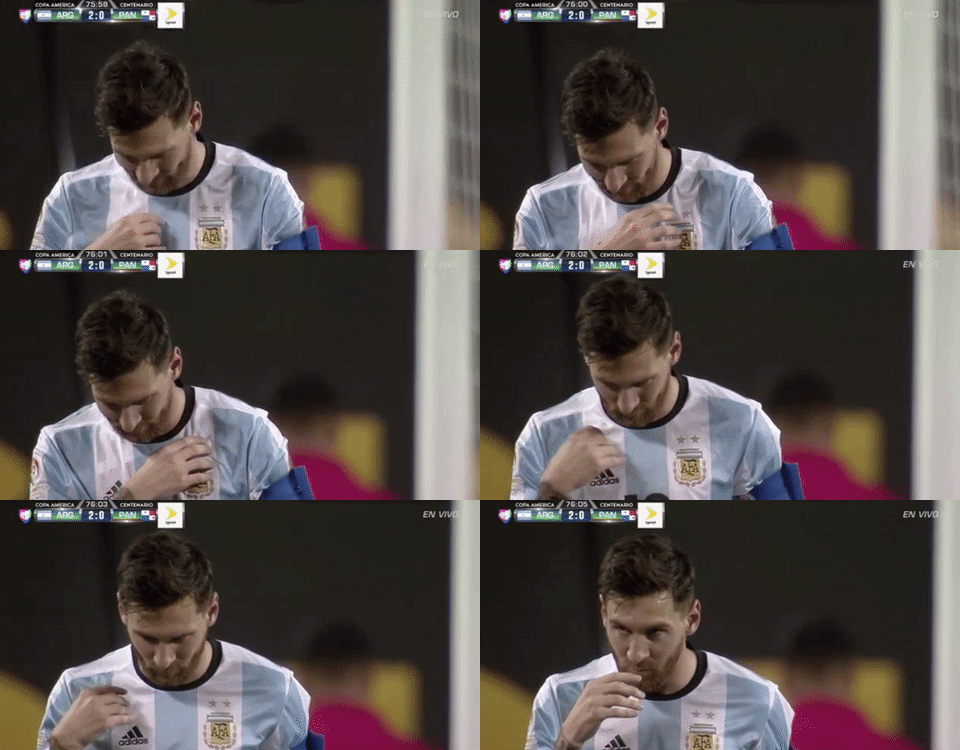
In an interview following the win against France, Messi, who typically makes the sign of the cross and points towards the sky after scoring goals, again mentioned God as the reason for the victory.

“I just said that God was going to give it to me,” Messi told TyC Sports, an Argentine sports TV channel, referring to the World Cup trophy. “I was sure I had a feeling that this was the moment. We suffered a lot — but now it’s time to enjoy it.”


Please respect our Commenting Policy