People

Red hat for San Diego Bishop Robert McElroy: Vatican message to U.S. Catholic bishops?

Red hat for San Diego Bishop Robert McElroy: Vatican message to U.S. Catholic bishops?

Two years before long-standing rumors about Cardinal Theodore McCarrick leapt into headlines worldwide, America's most outspoken activist on clergy sexual abuse met with his local bishop -- San Diego Bishop Robert McElroy.

"It was clear to me during our last meeting in your office, although cordial, that you had no interest in any further personal contact," wrote the late Richard Sipe, a former Benedictine priest who then worked for the Seton Psychiatric Institute in Baltimore. While church officials asked him to report to McElroy, "your office made it clear that you have no time in your schedule either now or 'in the foreseeable future' to have the meeting that they suggested."

Sipe's 2016 letter to the San Diego bishop was later posted online and is frequently cited as an example of a bishop ignoring warnings about the now defrocked McCarrick, who often boasted about his clout as a Vatican kingmaker. Now it will receive more attention because Pope Francis has named McElroy to the Sacred College of Cardinals. This promotes the San Diego bishop over several prominent archbishops -- including Los Angeles Archbishop Jose Gomez, who leads America's largest Catholic archdiocese and is president of the U.S. Conference of Catholic Bishops.

In his hand-delivered report, Sipe told McElroy that his ongoing research indicated that 6% of American priests were guilty of sex with minors. Meanwhile, a "systemic" trend was clear: "At any one time no more than 50% of priests are practicing celibacy."

As for the powerful McCarrick, Sipe noted: "I have interviewed twelve seminarians and priests who attest to propositions, harassment, or sex with McCarrick, who has stated, 'I do not like to sleep alone.' "

Debates about McElroy's elevation have focused on other divisive issues in Catholic life, although decades of sexual-abuse crimes loom in the background. He has, for example, supported the ordination of women to the diaconate, allowing them to preach, perform weddings and serve -- one step from the priesthood -- at Catholic altars.

McElroy has openly clashed with American bishops anxious to address "Eucharistic coherence" as prominent Catholics, especially President Joe Biden and House Speaker Nancy Pelosi, support -- with words and deeds -- abortion and LGBTQ rights.
Please respect our Commenting Policy

U.S. bishops, recent popes, Ted McCarrick and the soul of House Speaker Nancy Pelosi

U.S. bishops, recent popes, Ted McCarrick and the soul of House Speaker Nancy Pelosi

After fierce closed-door debates about President Joe Biden and Holy Communion, the U.S. Conference of Catholic Bishops managed to release a muted document last fall that did little to please activists on either side of the church's wars about abortion and politicians in pews.

But one passage in "The Mystery of the Eucharist in the Life of the Church" turned into a ticking clock in the Archdiocese of San Francisco, setting the stage for the current clash between Archbishop Salvatore J. Cordileone and a member of his flock -- House Speaker Nancy Pelosi.

"It is the special responsibility of the diocesan bishop to work to remedy situations that involve public actions at variance with the visible communion of the Church and the moral law," noted the bishops. "Indeed, he must guard the integrity of the sacrament, the visible communion of the Church, and the salvation of souls."

Cordileone's diocese includes the 12th Congressional District of California. After six private attempts to reach Pelosi, he released a May 20 statement telling her that "you are not to present yourself for Holy Communion and, should you do so, you are not to be admitted to Holy Communion, until such time as you publicly repudiate your advocacy for the legitimacy of abortion and confess and receive absolution of this grave sin in the sacrament of Penance."

The archbishop built his case with quotes from Pope Francis, Pope St. John Paul II and the now-retired Pope Benedict XVI, as well as Canon law stating that Catholics who "obstinately persist in manifest grave sin" are "not to be admitted to Holy Communion."

The speaker's words and actions, he added, suggest she isn't worrying about papal authority. Pelosi, the mother of five children, recently told the Seattle Times that the "personal nature of this is so appalling, and I say that as a devout Catholic. They say to me, 'Nancy Pelosi thinks she knows more about having babies than the pope.' Yes, I do. Are you stupid?"


Please respect our Commenting Policy

Pizza, beer and guys talking books: Lessons from the Hall of Men on the Kansas plains

Pizza, beer and guys talking books: Lessons from the Hall of Men on the Kansas plains

WICHITA, Kan. — The Hall of Men fits the name, with meetings offering beer, cigars, an open bar, some kind of guy food (think pizza) and lots of chatter around a giant wooden table.

But then there are the evening prayers, icons, Bible readings and lectures about authors whose portraits hang in this “Christian speakeasy.” The names include C.S. Lewis, Flannery O’Connor, W.H. Auden, Dorothy Sayers, Fyodor Dostoevsky, J.R.R. Tolkien and many others. Johnny Cash and Bob Dylan are there, as well.

This group has met twice a month for a dozen years and most of the faithful are Orthodox, Catholic and Lutheran, with plenty of evangelicals at special events. The authors honored are selected after an informal process that usually starts during fellowship before and after lectures, with men talking about books that have touched their lives.”

The whole thing is affected by having that bookstore right next door,” said Pastor Geoff Boyle, a Missouri-Synod Lutheran long active in the project. “The man behind the front counter is used to having these conversations and obviously knows all about the books the guys are talking about. The books are right there and, if they’re not, they will be soon.”

“That bookstore” is Eighth Day Books, which draws customers from across the nation to an old three-story house with 46,000 new and used books — 27,000 titles — shelved and stacked anywhere that will hold them, including the basement “Hobbit Hole” packed with children’s literature. The white-haired man behind the counter is owner Warren Farha, an Orthodox believer with family ties to Lebanon.

This isn’t a “Christian bookstore” complete with knick-knacks, inspirational posters and religious self-help books — but “Eighth Day” is a reference to the Resurrection of Jesus.

Farha created the store in 1988 and selects all the books, with the help of an ecumenical network woven into the Eighth Day Institute and its conferences, newsletters, podcasts and groups such as the Hall of Men and the Sisters of Sophia.

“My goal has always been to be fair to the great traditions,” said Farha, in his office in the bookstore’s attic. “We have classics in history, literature, poetry, church history, theology and philosophy – Christian writings through the ages. … I’m always listening to people who GET the template for what we’re doing here.

“Great books from different traditions are on the shelves right next to each other, even if they clash in ways that we need to discuss.”


Please respect our Commenting Policy

Did the Washington Post profile of Karen Swallow Prior help critics understand her or not?

Did the Washington Post profile of Karen Swallow Prior help critics understand her or not?

It’s hard to do a critique of an elite-media feature about someone who is a real online friend.

But, in this case, there’s an issue that — at least to me — cannot be avoided in the glowing Washington Post religion-desk feature that ran the other day with this headline: “Karen Prior has worked for Roe's overturn for decades. This isn't what she'd hoped to feel.

Most fans of the “Notorious KSP,” I would imagine, loved this piece.

At the same time, I’m sure her worst critics loved it as well — for reasons linked to the journalism issue that I would like to spotlight in this post. It helps to understand that Prior has critics (and friends) who disagree with some things that she says and does and then she has critics that basically don’t want her to exist.

Meanwhile, anyone — worthy critics and supporters — who has followed KSP’s work through the years with any kind of an open mind knows the strength of her logic and (dare I say it) art when defending centuries of Christian doctrines about life issues, as well as marriage and sexuality. But to grasp that side of her life, and how it fits into the total package of her apologetics, people need to actually read or hear her address those topics.

This Post piece focuses, for the most part, on her actions and beliefs that have fueled controversy about her among some evangelicals (like me, she was #NeverTrump #Never Hillary in 2016). A more balanced profile of her would have included quoted material that would have — with good cause — offended, well, most Post readers and editors. Hold that thought, because I will come back to it.

The piece starts with Prior’s feelings of elation at the news that the U.S. Supreme Court appears to be poised to overturn Roe v. Wade.

Prior was shocked and thrilled. But within minutes the deep divisions and differences in priorities among antiabortion advocates came into view. After being put aside for decades as they worked together to overturn Roe, they had become impossible to ignore. While Chief Justice John G. Roberts Jr. took pains to say the leaked opinion may not be the final one, experts on abortion in America say even the potential of Roe’s demise is a turning point for the movement. If Roe falls, what does it mean to be for life now?

For Prior, it means much more than overturning Roe. It means more support for child care and pregnant women as well as supporting sex abuse victims, vaccinating as many people as possible against the coronavirus, and helping start and run an inner-city high school in Buffalo. But not all antiabortion activists agree and lately have begun splintering over next steps, such as whether to classify abortion as homicide and restrict contraception, as well as whether issues outside of reproduction even qualify as part of the “pro-life” cause.

Once again, this is an old, old story that is presented as something essentially new and, thus, linked to COVID-19, the Trump era and all kinds of “now” things. In reality, debates among evangelicals, and especially Catholics, about what it means to be “consistently pro-life” go back to the 1980s or earlier.


Please respect our Commenting Policy

Concerning the new converts to Eastern Orthodoxy: Are they MAGA clones or worse?

Concerning the new converts to Eastern Orthodoxy: Are they MAGA clones or worse?

Yes, to all of those who have written — I have seen the National Public Radio feature that ran with this headline: “Orthodox Christian churches are drawing in far-right American converts.”

It would be hard to imagine a more vicious, one-sided propaganda piece than this one and, if you want to see a blow-by-blow breakdown, read this post by Orthodox convert Rod Dreher: “The Cathedral Vs. The Orthodox Church.”

Rod is using the term “cathedral” as a reference to a particular set of elite media and cultural institutions on what used to be called the “left.” Needless to say, NPR — like the editorial pages of The New York Times — plays a crucial doctrinal role in this cathedral. Dreher (a close friend for nearly 30 years) notes, right up top, concerning this NPR sermon:

… I concede that it is based on a kernel of truth: some outsiders are finding their way to Orthodoxy, thinking that it will be the far right at prayer. A friend who attends a large parish told me last year that they are seeing some young men showing up with that in mind, only to find out otherwise. Let me be clear at the start of this essay that I concede that this phenomenon is not invented out of whole cloth.

In my own small parish, we have seen a surge of young inquirers, but they are coming not with far-right politics in mind, but because they are looking for something more stable and deeper than the churches they had been attending. And yes, it is true that some come because they correctly sense that Orthodoxy is much less likely to surrender to the wokeness that is infesting many Protestant and Catholic congregations. Note well, though, that to NPR, all of this is “far-right.”

Veteran GetReligion readers will know that I am a convert to Eastern Orthodoxy, as well — coming from a Texas Baptist family with several members in the center of Southern Baptist life. If you want to know more about my own journey, see this lecture/essay from 2006: “What do the converts want?”

When people ask why I converted, my short response is that I was seeking a beautiful, conservative, ancient form of Christian tradition that didn’t include ties to American fundamentalism. Since my conversion 23 years ago, I have talked to — conservative estimate — several hundred converts in various settings, including my own parishes.

I would like to focus on the most obvious errors of omission and commission in the NPR piece — an important detail or two about the actual history of the “convert era” in “American” Orthodoxy, which began in the 1980s (click here for link to a crucial book). But first, here is the overture:


Please respect our Commenting Policy

Political reporter says journalism has made him a better Christian. He's not alone

Political reporter says journalism has made him a better Christian. He's not alone

Say what?

Jon Ward, chief national correspondent for Yahoo! News, writes in an essay for Christianity Today that his profession has made him a better Christian.

Ward knows many of his fellow Christians may find that hard to believe:

Conservative Christians are far more hostile toward the media now than they were when I was growing up. Some of my own family members have told me I should be ashamed of myself for doing my job. In fact, most people don’t like the media — and that’s bad for society. The media shares some of the blame for that, as I’ve written recently for Yahoo! News.

But he explains the profession’s role in his own life:

Journalism has empowered many of the most noble, the most Christian elements of my character. I have been discipled for two decades in how to discern what is true and false, and — probably more importantly — how to discern when there are no easy answers or solutions. I have been trained in pursuing truth without regard to whom it offends.

I have also been given a sense of humility about what we can know for sure and how often we need to acknowledge that our point of view is limited and incomplete. This is sometimes called “epistemological modesty,” and it is a quality that we badly need more of in our discourse.

Hey dude, you’re preaching to the choir.

Seriously, I authored a recent Christian Chronicle editorial that focused on the faith of one of my journalistic heroes: Jerry Mitchell, a Mississippi investigative reporter whose stories helped put four Klansmen and a serial killer behind bars.

From that editorial:

Mitchell recalled that a radio show host asked him once, “How can you be a Christian and a journalist?”


Please respect our Commenting Policy

Naomi Judd: 'It's scary to show that part of you that is the not so smart, not so together side'

Naomi Judd: 'It's scary to show that part of you that is the not so smart, not so together side'

Naomi Judd thought she understood the ties that bind country-music stars and their audience -- then one aggressive fan went and joined the Pentecostal church the Judd family called home.

"It really burdened me," said Judd, after signing hundreds of her "Love Can Build a Bridge" memoir back in 1993. "I just don't sign autographs at church. The best way I can explain it to children … is to say, 'Honey, Jesus is the star.' "

After a year of this tense standoff, Judd became concerned and wrote the fan. "I said, 'I want you to really get away by yourself and read this letter and answer this question honestly: Do you come to church to see The Judds or do you come to church to see God?' She never came back to church. But she was in the autograph line today."

Through it all, Judd and her brash daughter Wynonna have talked openly about their triumphs and their struggles. Many fans identified with their failures just as much as the messages about faith and family.

At the time of that 1993 interview, Naomi Judd had battled through waves of anxiety attacks to address some dark realities -- such as rape, crisis pregnancy and her deadly battle with hepatitis C that retired the The Judds.

What she hadn't discussed at that time was the sexual abuse in her childhood that led to treatment-resistant depression. Judd's April 30th death, at age 76, focused new attention on blunt passages in her 2016 book "River of Time," in which she said had been tempted by suicide. "I wanted to be completely honest that if someone took out a gun and killed me on stage, they would be doing me a favor," she wrote.

The Judds were inducted into the Country Music Hall of Fame the day after Naomi's death and her shaken daughter Ashley Judd told the crowd, "I'm sorry that she couldn't hang on until today." Writing in USA Today, the actress expressed gratitude for her mother's legacy, but added: "Perhaps it's indecorous to say, but my heart is filled with something else, too. Incandescent rage. Because my mother was stolen from me by the disease of mental illness, by the wounds she carried from a lifetime of injustices that started when she was a girl."


Please respect our Commenting Policy

When assisted suicide becomes 'a crossing over' church rite and a mere 'procedure'

When assisted suicide becomes 'a crossing over' church rite and a mere 'procedure'

Writer Emily Standfield drew a challenging assignment recently for Broadview magazine: write about Betty Sanguin, who chose to hasten her death as part of a religious rite performed inside the church she loved for many years, amid a diagnosis of amyotrophic lateral sclerosis.

Here’s the full headline: “Manitoba’s first medically assisted death in a church was an ‘intimate’ ceremony — Betty Sanguin spent her last day with family and friends at Churchill Park United.” And this is the overture:

At around noon on March 9, Betty Sanguin arrived at her church, Churchill Park United in Winnipeg, on a stretcher.

“The moment we rolled her in … and sat her up in her recliner, she lit up like a Christmas tree,” Lynda Sanguin-Colpitts, one of Sanguin’s daughters, recalls. “I hadn’t seen that much life in her eyes, so much joy [in a long time]. And honestly I think part of it was just being in the church.”

But this was no ordinary church service. Sanguin chose to die in the sanctuary that day.

Let’s stipulate some points up front:

First of all, Standfield is an editorial intern. Also, it’s crucial that Broadview, a publication affiliated with the United Church of Canada, has many ideological commitments and states them explicitly on its website. Here are some quotes:

— “Broadview’s values include LGBTQ2 inclusion, environmental sustainability and ethical investing, as well as increasing the presence of diverse contributors.”

— “In October 2020, we pledged to have one-third BIPOC (Black, Indigenous, People of Colour) staff and freelance contributors by 2025, and we’ll check in on our progress annually. Our governing board has also committed to achieving a similar target among its 11 members.”

— “In our writing, we refer to diverse communities with their preferred cases and spellings. For example, we capitalize ‘B’ in ‘Black’ and ‘I’ in ‘Indigenous,’ and use our Indigenous writers’ and subjects’ preferred spellings for Indigenous nations.”


Please respect our Commenting Policy

Alongside abortion, don't neglect the Supreme Court's big school prayer ruling

Alongside abortion, don't neglect the Supreme Court's big school prayer ruling

Vastly overshadowed by the uproar over Politico's bombshell report that the Supreme Court may be poised to overturn past abortion rulings, the court actually released religious-liberty ruling written by retiring Justice Stephen Breyer. His Shurtleff v. City of Boston opinion (.pdf here) reasoned that since Boston had permitted 284 city hall flag displays by varied groups, it violated freedom of speech to forbid a Christian flag for fear of violating church-state separation.

Harvard Divinity student Hannah Santos, writing for Americans United, said Christian flag displays would be "disturbing and demoralizing" and evoke the Puritan founders' "cruel" intolerance. But Breyer and the other two liberal justices joined six conservatives in this unanimous — repeat unanimous — decision.

There's likely to be less Court concord on another First Amendment ruling reporters need to prepare for in coming weeks. This dispute crisply demonstrates the culture-war split among American religious groups and between most Democrats and Republicans.

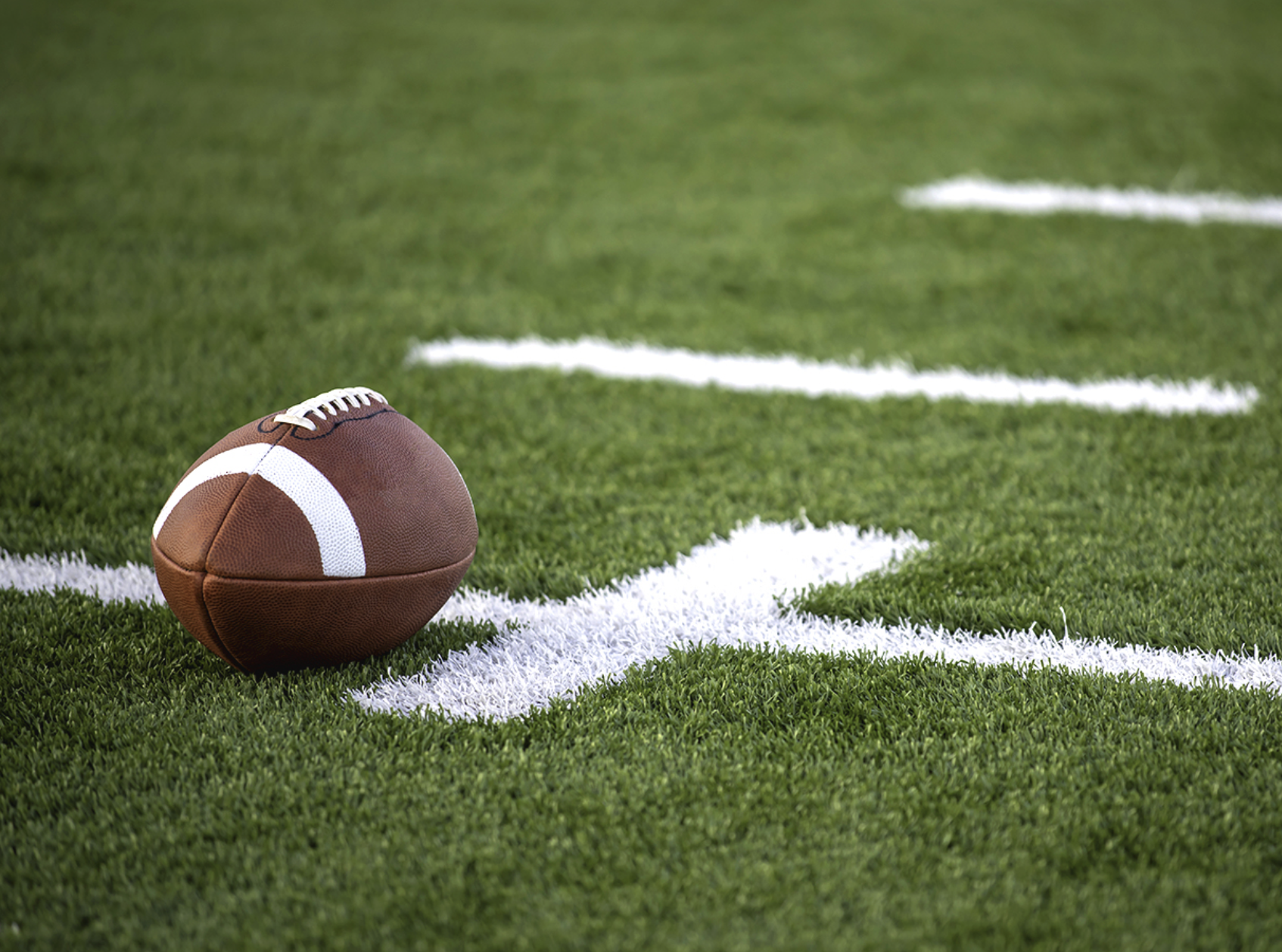
Kennedy v, Bremerton School District [Docket #21-418] involves the firing of Joseph Kennedy, an assistant high school football coach in Washington state. He violated the school's order against his kneeling to utter brief prayers on the 50-yard line after games, with students who wished joining him.

Here, too, Kennedy's freedoms of speech and religion ran up against school fears about violating the Constitution's clause barring government "establishment of religion." Click here for a recent Julia Duin post looking at some of the media coverage of this debate.

In preparing coverage to interpret the forthcoming ruling, keep in mind possible ramifications beyond the gridiron. As Christianity Today reported, hypothetical situations the justices discussed during the two-hour oral argument included teachers or coaches praying silently or aloud or reading the Bible before class, coaches praying on the sidelines perhaps with specific notice that students weren't required to pray or that they cannot pray or a player simply making the sign of the cross.

Also this. A court filing from the Jewish Coalition for Religious Liberty and the Islam team at the Religious Freedom Institute informed the justices that observant Jewish teachers and coaches need to speak brief public blessings before eating or drinking, and that Muslims must join daily prayer times during public school hours or while chaperoning a field trip.


Please respect our Commenting Policy