People

'Total Woman' redux: Obscure white evangelical says stupid things and it's national news

'Total Woman' redux: Obscure white evangelical says stupid things and it's national news

About the time that I started teaching journalism in Washington, D.C., I saw a movie in which Beltway professionals (including speechwriters) played a rather cynical bar game. I think the movie was “Speechless,” with Michael Keaton and Geena Davis.

If my memory is correct, the game was called “Spot the soundbite.” The goal was to watch a long, complicated political speech and then to accurately predict the tiny, often sensational 5-10 second “bite” that would make it into television news reports.

The message, of course, was that substance and nuance didn’t mean much in public life. Emotions and feelings linked to a fleeting soundbite — which could be funny or emotional or whatever — were what mattered. All together now: “Where’s the beef!” It was also clear that it was easy for journalists to pick good, sharp soundbites from “good” candidates and bad, stupid soundbites from “bad” candidates.

This brings us to this week’s “Crossroads” podcast (click here to tune that in), in which host Todd Wilken and I discussed the latest example of a preacher getting caught, in the age of YouTube and social media, failing to understand the rules of “Spot the soundbite.”

I heard about this epic news story when a former student — who has national print and television experience — sent me a wry email that said: “It’s weird that this random preacher’s sermon merits an NBC News story, no?” Indeed. In the world of short attention spans and tiny online news reports, this sermon by an unknown preacher, in a tiny church, in the middle of nowhere, in an obscure denomination, deserved a 900-word report.

My witty former student knew, of course, why this sermon received lots of national news coverage — including staff (not wire service) coverage in The New York Times (we will get to that shortly).

Yes, this preacher said some genuinely bizarre and disturbing stuff about women and marriage, especially when viewed through a #ChurchToo lens. However, was it national news that an unknown pastor said these things? Well, it is if the sermon contains the word “Trump” and this pastor can be turned into an archetypal symbol of white evangelicals in flyover country, the rubes many journalists blame for electing Orange Man Bad in the first place.

This preacher did not understand how to play “Spot the soundbite.”

Please respect our Commenting Policy

NFL leap of faith? Indy Colts coach is an ordained minister; his QB is a strong believer

NFL leap of faith? Indy Colts coach is an ordained minister; his QB is a strong believer

Here is a trivia question for (the few) GetReligion readers who follow sports, and professional football in particular.

Name the only head coach in the National Football League who is a (a) former pro quarterback, (b) an ordained minister and (c) the former head of a seminary?

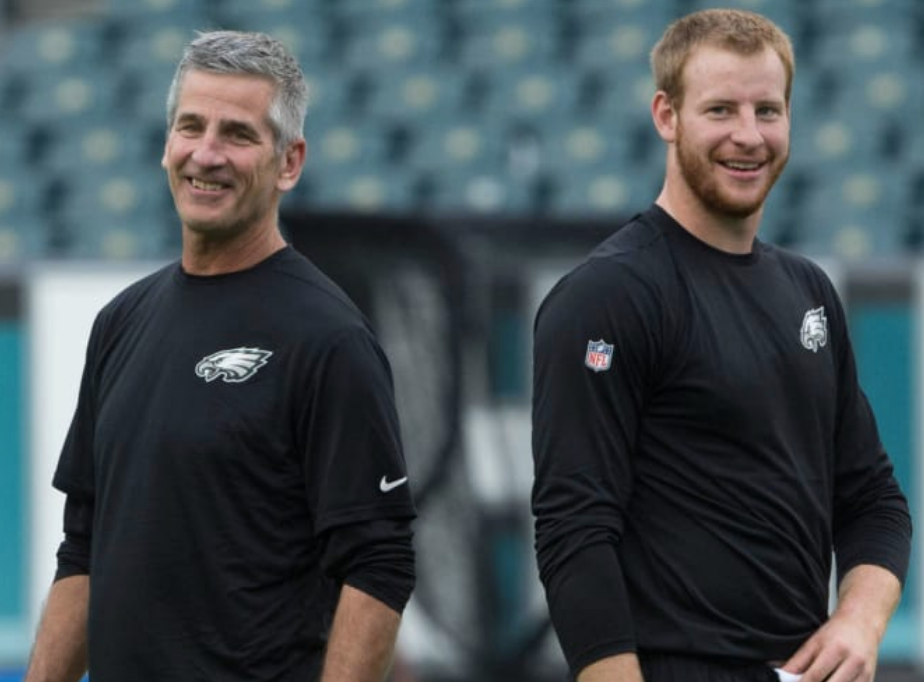
Yes, I am not making up that last detail. The answer? That would be (the Rev.) Frank Reich of the Indianapolis Colts.

Now, there is another reason that I brought up Reich and his unique resume (see this Baptist Press piece by Tim Ellsworth, one of my former students in Washington, D.C.), including his service as president of Reformed Theological Seminary in Charlotte, N.C.

The big NFL story, these days, is the unusually high number of big name quarterbacks who are either on the move or asking (or hinting) that they would like to move to other teams. The first big domino to fall in this story was Carson Wentz moving from the Philadelphia Eagles to the Colts.

Wentz should be in the prime of his career, but had an epic slump in 2020, a collapse that was clearly mental and emotional, as well as physical. As many pundits and journalists noted, Wentz hadn’t really been at the top of his game since he lost the quarterback coach — that would be Reich — who helped him become a potential superstar.

ESPN noted that the Colts are:

… banking on their present -- and future -- with Wentz to solve what has unfortunately been a revolving door at quarterback in Indianapolis over the past few years. …

The person responsible for ensuring Wentz is the answer for the Colts?

Reich.

The coach is putting his reputation on the line by believing he can get Wentz, who was his quarterback when he was the offensive coordinator in Philadelphia, back to the level when he was considered an MVP contender before a season-ending knee injury in 2017. …


Please respect our Commenting Policy

Behind the headlines: As winter storm cripples Texas power grid, people of faith rally to help

Behind the headlines: As winter storm cripples Texas power grid, people of faith rally to help

Texans like to brag that they live in “a whole other country.”

I don’t suppose, though, that whoever came up with that slogan had Siberia in mind.

As a severe winter storm crippled the state’s energy grid this week, my parents were among 4 million residents who lost electricity. Mom and Dad endured a really chilly night before going to stay at my sister’s house for a few days.

Heroes (think “Mattress Mack”) and villains (#FlyingTed) have emerged, while people of faith — as they tend to do during disasters — rally to help.

Here at Religion Unplugged, Jillian Cheney tells the inspiring story of a church that partnered with a Jeep club to rescue snowed-in families.

Houses of worship losing power themselves hampered some efforts to provide reliable sanctuary, but “leaders are doing all they can to connect and comfort their communities,” Christianity Today’s Kate Shellnutt reports.

Churches and other faith groups teamed up to help open an emergency warming center for the homeless at a Dallas convention center, Religion News Service’s Bob Smietana notes.

Catholic churches in San Antonio and Fort Worth opened their doors, according to the Catholic News Agency’s Jonah McKeown.

Among others mobilizing to help: Southern Baptists, Churches of Christ and Episcopalians.

Power Up: The Week’s Best Reads

1. A congregation of avatars: A few pastors minister “to the wild universe of virtual reality, or VR for short,” this fascinating feature by World magazine’s Juliana Chan Erikson explains.


Please respect our Commenting Policy

Want to trigger Episcopalians? Ask an evangelical superstar to preach at National Cathedral

Want to trigger Episcopalians? Ask an evangelical superstar to preach at National Cathedral

Halfway between Norway and the North Pole, scientists have buried a million seeds and crop samples under a mountain in the Svalbard archipelago -- in case an environmental doomsday comes to pass.

That strategy rings true during "this crazy, chaotic season" when so many are anxious about the coronavirus pandemic, global warming, lost jobs, surging debts and the bitter state of public life, said evangelical megachurch leader Max Lucado, in a recent sermon streamed online by the National Cathedral in Washington, D.C.

“Most of us can't hide out in a bunker, yet threats of calamity may make us try to do so," he said. "If the wrong person pushes the wrong red button -- it's enough to make a person purchase a plane ticket to Svalbard."

But there was a problem. While pre-service publicity stressed that Lucado's books have sold more than 120 million copies and Christianity Today has called him "America's pastor," this invitation alarmed legions of Episcopalians opposed to his history of orthodoxy on sex and marriage. His sermon about God offering comfort in the midst of chaos avoided hot-button topics, but his cathedral appearance triggered an online storm.

Before the event, the Very Rev. Randolph Marshall Hollerith linked the Lucado invitation to the cathedral's history of hosting a variety of religious leaders. This has included evangelicals such the late Billy Graham, Archbishop of Canterbury Justin Welby and megachurch leader Rick Warren of Saddleback Church in Southern California.

"When we only engage with those with whom we agree on every issue, we find ourselves in a dangerous (and lonely) place," wrote the cathedral's dean. "That means this cathedral, and this pulpit, are big enough and strong enough to welcome pastors, rabbis, imams, clergy of every faith. … It does not mean we agree with everything they might believe, but it does mean that we exhibit and inhabit a sense of open handed welcome."

However, Hollerith issued a formal apology in response to the online backlash, noting: "In my straight privilege I failed to see and fully understand the pain he has caused. I failed to appreciate the depth of injury his words have had on many in the LGBTQ community. I failed to see the pain I was continuing. I was wrong."

While Lucado is known as an evangelical moderate, Episcopalians were outraged by a 2004 sermon, and online commentary, stating that he "categorically opposes" gay marriage, as well as his conviction that "homosexual activity" is sin.


Please respect our Commenting Policy

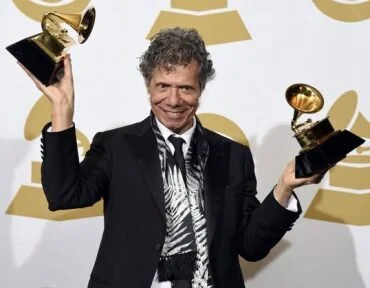
Chick Corea's life and music: If Scientology 'informed' his art, why not offer a few examples?

Chick Corea's life and music: If Scientology 'informed' his art, why not offer a few examples?

When it comes to modern forms of jazz, I was never a fan of the late Chick Corea’s work in the fusion megaband Return to Forever. I was a Weather Report guy.

However, I was totally into Corea’s classic duets with Gary Burton on vibes (see the epic 1979 live version of “Crystal Silence” at the top of this post) and his lovely “Children’s Songs” collection, for solo piano.

I can also remember debates long ago among my friends — secular and religious — about the impact that Corea’s embrace of the Church of Scientology would have on his life and music. After all, he was an instrumental musician. Were the teachings of L. Ron Hubbard supposed to have soaked into his unique chord voicings and the sparkling rhythms of his compositions?

This leads me to the solid New York Times obituary for Corea, who died recently after a short battle with a rare form of cancer. The double-decker headline on this feature covered a lot of ground:

Chick Corea, Jazz Keyboardist and Innovator, Dies at 79

When jazz and rock fused in the 1970s, he was at the forefront of the movement. But he never abandoned his love of the acoustic piano.

I’ve been thinking about this piece for a week now, wondering if it was worthy of a short post. I finally decided that it was. After all, the obit’s brief treatment of the religion angle demonstrated a classic puzzle that GetReligion has discussed many times in the past, linked to coverage of athletes, actors, writers, etc. Here is that section of the Times piece:

In the early 1970s, Mr. Corea converted to Scientology, and the religion’s teachings informed much of his music from then on, including his work with Return to Forever.

Armando Anthony Corea was born on June 12, 1941, in Chelsea, Mass., near Boston. His father, also named Armando Corea, was a trumpeter and bandleader in Boston, and his mother, Anna (Zaccone) Corea, was a homemaker. He began studying piano when he was 4.

And that was that.


Please respect our Commenting Policy

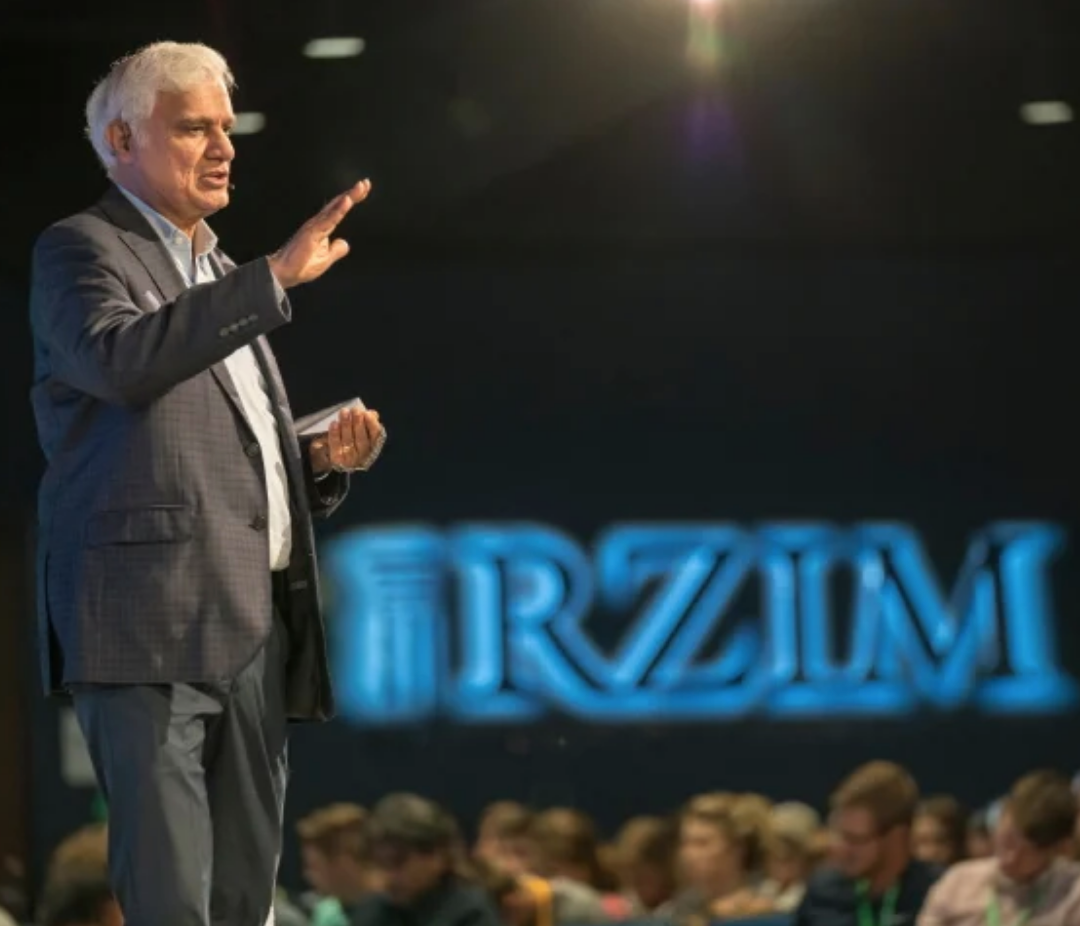
Ravi Zacharias scandal shows why independent ministries are so difficult to investigate

Ravi Zacharias scandal shows why independent ministries are so difficult to investigate

If you have followed the Ravi Zacharias story in recent years, you know that it’s a tragedy on multiple levels and a reminder of why repentance is a crucial element of orthodox Christianity.

I followed this story at a distance, because — unlike many religion-beat pros — I had next to zero contact with Zacharias. I interviewed him only once, by telephone, several decades ago. I thought that he was clever, especially when addressing Hollywood’s trendy take on Eastern religions (“Only in America would anyone argue that reincarnation is Good News).”

The stunning, sordid details of his abuse of women make it clear that he suffered from some kind of sexual addiction. And while his mind was razor-sharp when dissecting many questions about moral theology and ethics, he also used his intellectual gifts to justify his own behavior — to the point of saying that God was blessing his actions.

What can we learn from the news coverage of this scandal?

First of all, it’s a good example of what happens when editors allow religion-beat professionals to cover important stories on their beat. Second, the reporting — in Christianity Today and also in the mainstream press — is devastating because it is based on mountains of documentation and on-the-record sources, as well as the testimonies of victims who deserve privacy.

However, there is a third point that must be emphasized, echoing a point frequently made at GetReligion for nearly two decades. I repeat this as a way of stressing one of the biggest challenges facing journalists — even veteran religion-beat pros — covering stories of this kind.

The fall of Zacharias is a perfect example of why it is so difficult to cover independent, non-denominational parachurch ministries (and independent congregations, as well). Nine times out of 10, radically independent religious organizations are only as honest as their charismatic, gifted, rainmaker founders allow them to be. This is true whether we are talking yoga or the prosperity anti-gospel. It was true long ago when I worked with skilled investigative reporters trying to probe the hidden scandals of PTL’s Jim Bakker. Alas, this remains true today.

Hold that thought, because we will come back to it.

Readers who want to know the horrifying details of this case can start with Christianity Today or with The New York Times. Here is the summary material from CT:


Please respect our Commenting Policy

President Joe Biden's a Pope Francis fan, but does that mean the pope's a fan of Biden?

President Joe Biden's a Pope Francis fan, but does that mean the pope's a fan of Biden?

Pope Francis appears to be a big supporter of President Joe Biden.

A majority of the U.S. Catholic bishops are not.

At least that’s a prominent narrative concerning America’s second Catholic president (after John F. Kennedy).

To wit: The headline on a Los Angeles Times news story this week declared: “Pope Francis is a Biden fan, but some U.S. Catholic leaders give president a frosty reception.”

My sincere question: Is it accurate to characterize Francis as a Biden fan?

“While Pope Francis has enjoyed a warm relationship with Biden from time spent together in both the U.S. and at the Vatican, it would be wrong to classify him as a partisan player in U.S. politics,” Christopher White, national correspondent for the National Catholic Reporter, told me. “His approach to any world leader is to try to find common ground and see where there’s work to be done together.”

Clemente Lisi analyzes Catholic news for Religion Unplugged.

“I’d say the pope seems cordial to Biden, and the two have met a few times,” Lisi said in response to my question. “There seems to be a fascination in the media to lump these two men together.”

The Los Angeles Times is, of course, just the latest major news outlet to contrast the difference in tone between how the Vatican and top U.S. bishops — notably Los Angeles Archbishop José H. Gomez — have greeted Biden’s inauguration.

The prominent West Coast paper suggests:

The rift stems from opposition by many in the church to abortion and same-sex marriage, while others see a broader interpretation of the sanctity of life, promoted by Francis, to include climate change, immigration and fighting poverty.

Biden “keeps a picture in the Oval Office of himself with Pope Francis,” the story notes. But does that picture mean as much to Francis? The paper doesn’t say.


Please respect our Commenting Policy

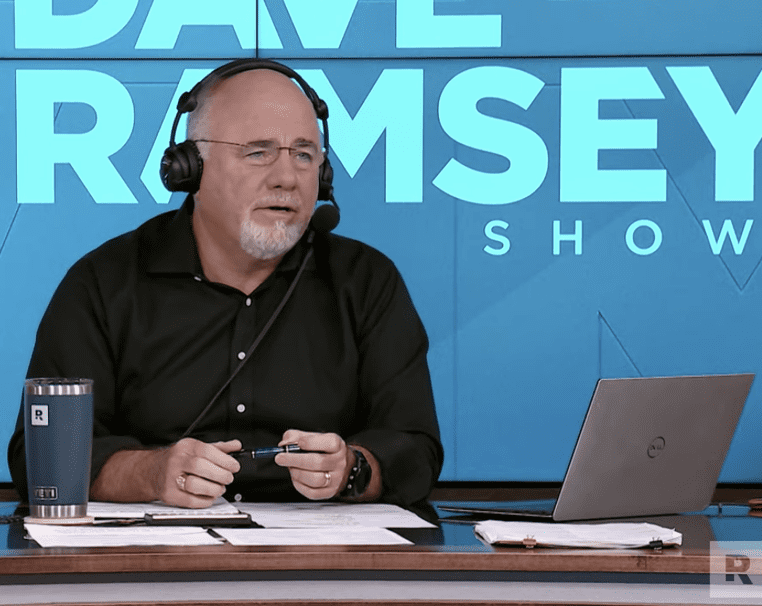
Now for something completely different: RNS scribe doxxed after investigating Ramsey Solutions

Now for something completely different: RNS scribe doxxed after investigating Ramsey Solutions

Religion reporters don’t usually have to fear for their lives, nor wonder if someone’s going to show up at their homes to exact some kind of revenge for an unfavorable story.

But there’s always a first time.

Several weeks ago, Bob Smietana, the veteran national reporter for Religion News Service, got to experience some very weird doxxing — not at the hands of some anti-religious conspiracy, but from devout Christians.

On Jan. 15, RNS published Smietana’s 4,150-word investigative piece on the workplace at evangelical financial guru Dave Ramsey’s $42 million headquarters in Franklin, Tenn., just south of Nashville. (The Tennessean, Nashville’s hometown newspaper, finally got around to running the piece on Jan. 28.)

That piece followed a Dec. 11 story by Smietana on Ramsey’s for-profit enterprise defying COVID-19 precautions such as wearing masks.

Put all that together and you had a non-flattering description of a workplace shaped by strict controls and perhaps even a personality cult. Here is what ran Jan. 15

NASHVILLE, Tenn. (RNS) — Dave Ramsey has spent the past three decades trying to build what he calls the best place to work in America.

From his headquarters south of Nashville, the evangelical Christian personal finance guru runs a media and live events empire that includes a popular national talk radio show. Tickets to workshops on topics such as “EntreLeadership” run from $3,000 to $10,000.

Thousands of churches around the country, meanwhile, host Ramsey’s “Financial Peace University,” a 9-week program built around his principles for handling money “God’s way.”

Several churches I’ve attended have indeed offered this program. Finances is something most pastors know nothing about, so they kick the task over to Ramsey, who’s making millions off these referrals.

But inside Ramsey Solution’s $42 million headquarters, there appear to be some problems, according to the kind of source one normally encounters in pieces of these kinds — former employees..

Ramsey’s intolerance for dissent has created what former employees call a cult-like environment, where leaders proclaim their love for staff and then fire people at a moment’s notice.


Please respect our Commenting Policy