Mainline

Bishop is transgender, but where's the reporting on Megan Rohrer as a 'Lutheran'?

Bishop is transgender, but where's the reporting on Megan Rohrer as a  'Lutheran'?

The news of the recent installation of the Evangelical Lutheran Church in America’s first transgender bishop has been leading me to wonder what makes a culture Lutheran and what impact Lutherans have on the cultures of the countries they live in.

Here’s the context. For the past week, I’ve been traveling about Iceland and Greenland, two countries where the Lutheran Church put down roots centuries ago as the national church. In fact, 2021 marks the 300th year of Christianity being introduced to Greenland via the Danish missionary Hans Egede.

Oddly, Greenland chose not to celebrate the anniversary in July, which is when Egede came in 1721.

Iceland has notorious rates of church non-attendance — in one of the world’s seven officially Lutheran countries, Iceland’s adherence rate may be the lowest at 10 percent. (One of the fastest-growing groups in that Nordic country are the pagans, a phenomenon about which I’ll be reporting on next week for my new gig at Newsweek).

I am no expert on religion in Greenland, but I do know this inaccurate piece put out in 2019 by the World Council of Churches is quite wrong in saying there’s only two churches in Nuuk, the country’s capital. Maybe there are only two Lutheran churches, but I stumbled upon a very lively Pentecostal assembly in the center of town during the Sunday morning I was there.

Which brings me to there being a Lutheran culture in these two countries, church attendance rates notwithstanding. There is a prominent church in the center of each Greenlandic town of any size. Confirmation day remains a big deal for teen-agers there. The Icelanders have made their futuristic looking churches a matter of national pride, whether or not people go inside them and even though some media call the church “irrelevant.”

And being that Greenland has some of the world’s highest suicide rates, does that make the church there is “irrelevant” as well? Hard to say. But these are countries where Lutheranism is part of the air they breathe.

Here in the USA, the ELCA is slated for statistical oblivion by the 2040s. No joke, read about it here. In view of how many of the world’s growing denominations are the ones that trend conservative, the denomination’s 2009 vote to allow same-sex marriages among its clergy and, now, non-gender-specific bishops is rather symbolic. Lutheran conservatives would call it a death wish.

Please respect our Commenting Policy

Possible clues for reporters seeking religion angles in 2022 and 2024 elections

Possible clues for reporters seeking religion angles in 2022 and 2024 elections

A year from now the Supreme Court will have ruled on its lollapalooza Dobbs abortion case, we'll know how much permanent damage Afghanistan dealt to the Biden-Harris Administration and -- we can hope -- COVID-19 and Delta may finally be under control.

Also, journalists will be in the thick of covering a red-hot election for the U.S. House and Senate and the state legislatures.

How will religion play into the outcome? Though church numbers are sliding, reporters shouldn't forget that more than with many other factors, religious participants by the millions provide readily organized activists and voting blocs.

There could be clues in Pew Research Center's report last week offering the last word on religious voters in 2020, with some comparative information from its 2016 post-election report. Rather than exit polling, Pew analyzed responses from 9,668 members of its ongoing, randomly selected American Trends Panel who were verified as having actually voted by checking commercially available lists.

White evangelical Protestants went 84% for Donald Trump's re-election, which is not surprising but remains significant for Republican strategists (and for this movement's own societal and outreach prospects). Pew says they gave Trump "only" 77% in 2016, slightly less than was shown in exit polls and a bit below Mitt Romney's 2012 support.

But evangelicals always go Republican. That’s no surprise.


Please respect our Commenting Policy

New podcast: Harvard head chaplain is an atheist and Gray Lady covers half of that story

New podcast: Harvard head chaplain is an atheist and Gray Lady covers half of that story

Perhaps you saw that New York Times headline the other day that proclaimed: “The New Chief Chaplain at Harvard? An Atheist.”

That led, during this week’s “Crossroads” podcast (click here to tune that in) to a logical question: Is it really surprising, and newsworthy, that the office for chaplains at today’s Harvard is led by an atheist/humanist rabbi?

For me, this was a totally valid story. However, I do wish that the Times had followed through and fleshed out the two big themes mentioned in this feature.

You can see one of those themes in the sub-headline: “The elevation of Greg Epstein, author of ‘Good Without God,’ reflects a broader trend of young people who increasingly identify as spiritual but religiously nonaffiliated.”

Ah, another story about the young “religiously unaffiliated” folks who have received so much ink in recent years, following in the footsteps of the “spiritual, but not religious” and “Sheilaism” trendsetters of previous decades. But how many of the “nones” are actually atheists or agnostics? Hold that thought.

The other big idea here is that Epstein was a popular choice among the Harvard chaplains, in part because of his abilities to build bridges between a wide variety of religious brands — including evangelical Protestants and Christian liberals. Hold that thought, as well.

I found myself, while reading the Times piece, wondering: What is the dominant religious worldview at postmodern Harvard? I am sure that there are more than a few atheists and agnostics there. But people I know with ties to the campus tell me that a kind of “woke” liberal faith is the norm, which actually fits with the school’s roots in mainline Protestant New England. Also, there are more than a few evangelicals in the mix (look up “The Veritas Forum”).

I was reminded of the debates almost a decade ago at Vanderbilt University, as campus leaders tried to push evangelical Protestant student ministries off campus because of tensions over You Know What.


Please respect our Commenting Policy

Once again, journalists need to ponder this question: What is an 'evangelical'?

Once again, journalists need to ponder this question: What is an 'evangelical'?

THE QUESTION:

One more time: What is an "evangelical"?

THE RELIGION GUY'S ANSWER:

Last month the Public Religion Research Institute reported that its latest polling shows white U.S. Protestants who identify as "evangelical" are now outnumbered by whites who do not do so. That upended the usual thinking on numbers, and analysts raised doubts. The discussion led Terry Shoemaker of Arizona State University, writing for theconversaation.com, to again mull the perennial question of what "evangelical" means.

In the American context, this term essentially covers the conservative wing of Protestantism, a variegated constellation of denominations, independent congregations, "parachurch" ministries, media outlets, and individual personalities that is organizationally scattered but religiously coherent.

There are three ways of defining and counting U.S. evangelicals -- by belief, by church affiliation and by self-identification. Shoemaker's analysis (which is open to some nitpicking) started from the belief aspect and a four-point definition by historian David Bebbington in his 1989 work "Evangelicalism in Modern Britain." In summary, these points are:

(1) a high view of the Bible as Christians' ultimate authority,

(2) emphasis on Jesus Christ's work of salvation on the cross,

(3) the necessity of conscious personal faith commitments and changed lives (often called the "born again" experience) and

(4) activism in person-to-person evangelism, missions and moral reform.

Problem is, those four points overlap with the definition of "Protestant" or even "Christian."


Please respect our Commenting Policy

New podcast: Gray Lady prints some complex Ryan Burge insights on Democrats and religion

New podcast: Gray Lady prints some complex Ryan Burge insights on Democrats and religion

Something old, something new.

Something red, something blue.

We started with something new and something blue during this week’s “Crossroads” podcast (click here to tune that in). But, as you will see, the “something old” turned out to be blue, as well.

“Blue,” of course, refers to the liberal/progressive half of the starkly divided American political scene, which also reflects, of course, divisions on moral, social, cultural and religious issues.

Oceans of mass-media ink have been poured out in recent decades by journalists covering the Religious Right and its scary impact on the Republican Party. What about the religious left — no capital letters, of course — and its impact on the Democrats?

That isn’t an important story, of course. At the start of the podcast I quoted some numbers retrieved at mid-week from some Google searches. A basic search for “Religious Right” yielded 6.5 million hits and a Google News search found 77,500 items. Do the same thing for “religious left” and you get 196,000 in the first search and 3,680 in the news search. Amazing, that.

This brings us to a New York Times op-ed essay by the increasingly omnipresent (and that’s a good thing) political scientist Ryan Burge, who contributes charts and info here at GetReligion. The headline: “A More Secular America Is Not Just a Problem for Republicans.” Here’s an early thesis statement:

Today, scholars are finding that by almost any metric they use to measure religiosity, younger generations are much more secular than their parents or grandparents. In responses to survey questions, over 40 percent of the youngest Americans claim no religious affiliation, and just a quarter say they attend religious services weekly or more.

Americans have not come to terms with how this cultural shift will affect so many facets of society — and that’s no more apparent than when it comes to the future of the Republican and Democratic Parties.

The impact on the GOP is rather obvious. While conservative religious groups remain strong in America (evangelicals are not vanishing, for example), the number of religiously unaffiliated (“nones”) continues to rise and the vague middle of the religious spectrum continues to shrink. Meanwhile, conservatives face an increasingly “woke” corporate culture and fading support on the left for old-fashioned First Amendment liberalism (think “religious liberty” framed in scare quotes).

Things get interesting — especially in the context of the Times op-ed world — when Burge discusses complications now facing Democratic Party leaders.


Please respect our Commenting Policy

United Methodist prelude: Small denomination faces its own split over Bible and sex

United Methodist prelude: Small denomination faces its own split over Bible and sex

The Reformed Church in America, one of those small denominations that usually get little ink despite rich history and accomplishments, is set to celebrate its 400th anniversary in 2028. But what will the RCA consist of by then?

At an October 14-19 General Synod meeting in Tucson, Arizona, this venerable church will decide whether to split up.

Reporters can think of this as a prelude to the formal divorce that the huge United Methodist Church (UMC) is expected to approve next year. In both churches, the central problem is the dispute over proper Bible interpretation, especially on sexual morality.

The goal of this Memo is to sketch out a few basics for journalists who'll cover the RCA showdown, which was postponed from 2020 because of COVID-19. The United Methodists have faced similar legal delays, of course.

Like the UMC, the RCA (www.rca.org) has spent nearly half a century discussing its traditional teachings on marriage and sexuality, which shaped rules on same-sex marriages and ordinations. All sides have reached a consensus that the divide is unbridgeable and the status quo untenable.

In 2018 the RCA commissioned a study team to consider future options that included "grace-filled separation." In July, the team issued its final recommendations with a proposed process for splitting.

The report offers a different and unusual path that avoids formal schism by reorganizing RCA regional units ("classes," singular "classis") on the basis of "affinity" in belief rather than the usual geography, in effect creating two churches within a church. In yet another proposal. those staying within the RCA and those leaving would still cooperate in a new, non-denominational foreign mission agency.

In the schism plan, the RCA would change an existing policy and let any unhappy local congregation leave and keep ownership of its building and other assets. A request to depart would need three-fourths approval by the congregation's governing board and then three-fourths of voting members (two-thirds margins are the more common Protestant practice).

Then there are other hoops to jump through.


Please respect our Commenting Policy

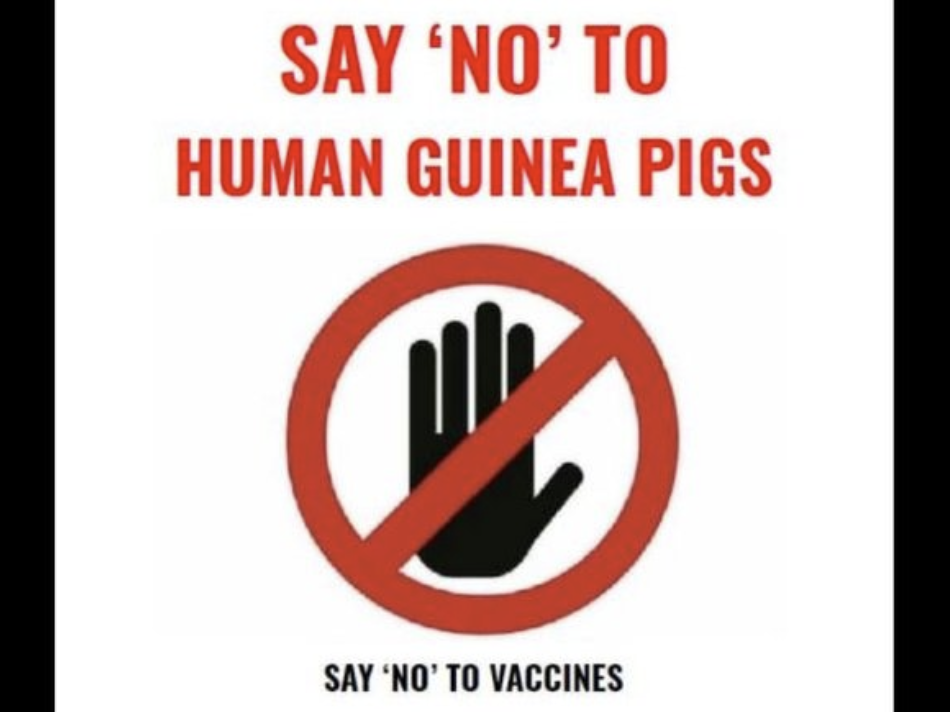
Thinking about white evangelicals, COVID-19 vaccines and VERY popular headlines

Thinking about white evangelicals, COVID-19 vaccines and VERY popular headlines

As the Delta Variant has caused COVID-19 to surge again in the United States, there’s been a flurry of attention paid to the share of Americans who have chosen to forgo the vaccine against the coronavirus. Trying to understand the causal factors that would lead to one not getting the inoculation seems to be the first task when it comes to finding ways to reduce vaccine hesitancy coast to coast.

One of the primary dimensions that news outlets seem to be focusing on is religion. One kind of headline is especially popular and examples are published nearly weekly — stating that evangelical Christians are the ones who are the most reluctant to receive the COVID-19 vaccine.

Yet, when I review the data from a survey that was conducted on May 11 that was administered by Data for Progress, I don’t find a lot of evidence that evangelicals are the ones lagging behind. In fact, I find that those without any religious affiliation were the least likely to have received at least one dose of any COVID-19 vaccine.

The Data for Progress poll has been in the field for a total of 57 weeks. Dating back to the earliest days of the pandemic and beginning in January, respondents were asked if they had received a COVID vaccination. Obviously, in those early days when vaccine supply was an issue, small fractions of the population had gotten a shot. But that quickly ramped up as larger shares of the population became vaccine eligible.

By May, 70% of non-evangelical Protestants had gotten at least one dose. Sixty-two percent of both evangelical Protestants and Catholics reported the same. However, it was the “nones” (no religious affiliation) who were lagging farther behind.

By May 11, only 47% of nones had reported receiving at least one dose. However, what complicates data surrounding vaccination is that not everyone was eligible to get the shot at the same time. In all states, the oldest residents were eligible first and then the criteria widened as demand waned. However, by May 1, every American who was at least 16 years old was eligible to receive the vaccine.


Please respect our Commenting Policy

Ticking United Methodist clock: Will the church's establishment Zoom to the left?

Ticking United Methodist clock: Will the church's establishment Zoom to the left?

As one of the founders of the United Methodist Centrist Movement, the Rev. Doug Damron spend years hiding his rejection of his church's rule that the "practice of homosexuality is incompatible with Christian teaching."

Centrists used a "perfectly delicious" theological platform defined by words such as "unity," "peace" and "moderate," he said, during a recent guest sermon at the historic Broad Church United Methodist Church in Columbus, Ohio. After decades of fighting about sex, many hoped "traditionalists" and "progressives" could keep "United" attached to "Methodist."

The goal was "compromise," he said, a "sweet word" that hid a "status quo of oppression." But there was "an institution to protect" and many clergy feared being honest. Thus, they didn't openly attack the denomination's Book of Discipline.

"By nature, I am a rule follower," he said. "I knew that such defiance may have cost me my clergy credentials."

Now it's time for candor and courage, said Damron. When United Methodists finally split, conservatives will build a church defined "by who they will exclude today and who they will exclude tomorrow." The question is whether progressives will act on their convictions.

"It is time to speak into existence, following the Spirit's leading, a church which fully welcomes, includes, affirms not only God's beloved gay and lesbian ones, but a host of other folks who have found the door of the church closed," he said. This would include embracing and ordaining "trans folks, bi folks, kink folks, poly folk, gender-fluid folk and others."

The United Methodist clock kept ticking this summer, even as COVID-19 realities delayed -- again -- votes on the "Protocol of Reconciliation and Grace Through Separation" negotiated by activists on the left and right. The General Conference will not meet until August 2022, since the UMC establishment has declined to take actions in virtual forums.


Please respect our Commenting Policy

For media exploration: Does church decline underlie what's depressing many Americans? 

For media exploration: Does church decline underlie what's depressing many Americans? 

Here's an off-the headlines theme for media to explore: To what extent does the slide toward a Great Depression for churches since 2000 underlie America's ills?

Think about it. Surveys and pundits underscore the rampant pessimism and dissatisfaction among many citizens, the toxic political divide and the way anything from calls for COVID vaccinations to Simone Biles's Olympics withdrawal will now stir partisan furies.

Consider ills that occurred simultaneously with weakened churches, bemoaned last week by New York Times columnist David Brooks. Major depression among teens jumped 63% from 2013 to 2016. Suicides increased 33% in the two decades ending in 2019. Estrangement from a family member is reported by 27% of Americans. Since 1990, those saying they lack even one close friend have quadrupled.

Such concerns evoke the classic book "Bowling Alone" by Harvard Professor Robert Putnam, a much-mulled 2000 tome now available in an updated 2020 edition. Not just bowling leagues but hyper-individualism, minus personal fellowship, is shrinking local lodges, civic groups and charities as well as churches. This seems to be an old problem (see the video with this post) that is only growing more intense.

The 2012 National Council of Churches yearbook (the 80th and last edition before publication ceased) reported that groups representing 330,222 local congregations claiming 159.8 million members filed data (a big undercount that omitted scads of independent churches). That was well over 20 times the current U.S. outlets for McDonald's or Starbucks. Big numbers, high stakes.

Local churches' centrality in community decline and prospects for recovery was asserted by Matt Lewis, a Daily Beast conservative, in an Eastertime piece (“America’s Losing Faith, and That Makes the Next Trump All But Inevitable“) and a follow-up last week (“How Trumpists Prey on Loneliness, and Loneliness Preys on Trumpists: Frankly, We Did Join a Cult“).

Lewis describes himself as a churchgoer (no specifics revealed) and "a (very flawed) Christian" who constantly needs God's forgiveness.


Please respect our Commenting Policy