Lawsuits

New podcast: Rising tensions between religious liberty, pronoun wars, academic freedom, etc.

New podcast: Rising tensions between religious liberty, pronoun wars, academic freedom, etc.

My name is Terry Lee Mattingly. However, when I converted to Eastern Orthodoxy, I took the name of a patron saint — St. Brendan the Navigator.

Let’s pretend that I am young and attending a state university right now and that I have decided to require professors to address me as “Holy St. Brendan the Navigator.” It is, after all, my name. While we are at it, let’s say that all of the Catholic and Orthodox students take the same tack, if their saint names are different then the names they were given at birth.

Some professors would wince, but go along with this. But let’s say that one professor is very secular, a Marxist perhaps, and he refuses — stating that my request violates his personal convictions. I threaten to sue, along with other students in the same situation. Game on.

How would the leaders of this taxpayer-funded public university respond? Would this be treated as a natural request on my part, with the understanding that any refusal would attack my sense of identity? What if I requested that my university ID card state my name as “St. Brendan the Navigator”?

It’s a crazy question, of course. But it would — at a state university — raise issues about the First Amendment (free speech and religious liberty) and academic freedom. These questions were at the heart of this week’s “Crossroads” podcast discussion. Click here to tune that in. [This episode also includes a bizarre gaffe when — I’m wrestling with a painful medical condition right now — I messed up my own saint’s name, mixing St. Brendan’s title with that of St. Nicholas of Myra. Listen for it.]

At the heart of the podcast discussion is a timely question: Can the state force the professor to recognize and even affirm — with public speech — beliefs that violate his conscience?

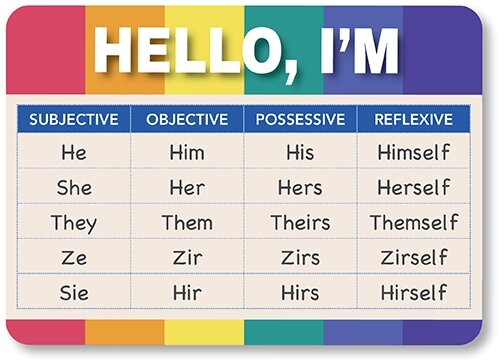
Now, as readers probably guessed right from the get go, this podcast focuses on another matter of personal identity — the degree to which professors can be forced to cooperate with students who chose to use any of the myriad and evolving gender pronouns linked to the LGBTQ+ movement. We looked at a Washington Post story with this headline: “A professor was reprimanded for refusing to use a transgender student’s pronouns. A court says he can sue.

Now, when these clashes take part in PRIVATE schools — left or right, religious or secular — it’s clear (pending passage of the Equality Act) that these doctrinally defined institutions have a right to create belief and lifestyle covenants that settle issues of this kind. Students can chose to affirm these beliefs, freely signing on the dotted line, or go to school somewhere else.

But what about state schools built and operated with tax dollars?


Please respect our Commenting Policy

Vague doctrine at for-profit company? Tennessean nails key issue in new Ramsey lawsuit

Vague doctrine at for-profit company? Tennessean nails key issue in new Ramsey lawsuit

Get ready for more stories in which religious believers clash with the increasingly woke doctrines proclaimed, and enforced, by the Human Resource personnel in modern corporations.

Can your company fire you for declining to use a colleague’s preferred pronouns? What happens if (a) someone declines to remove a study Bible from his or her desk or (b) some believers refuse to hang LGBTQ+ rainbow solidarity posters in their offices? What if an employee marches in a right-to-life parade? Battles continue, in some workplaces, over crosses, beards, headwear and other religious symbols.

That’s one side of the HR culture wars. Meanwhile, it’s clear — pending the outcome of the Equality Bill debates — that faith-defined nonprofits have the right to create lifestyle and doctrinal covenants for the people who chose to sign them and, thus, work in these ministries.

But what about for-profit companies led by executives who want to maintain faith-friendly images? What are the limits on their policies?

For example, Hobby Lobby won its U.S. Supreme Court case after rejecting the Obamacare requirement that contraceptives be included in employee benefits packages. But what if for-profit company leaders said that, for faith-based reasons, they could investigate and fire employees who USED contraceptives?

This brings us to another fascinating dispute inside the Ramsey Solutions empire. The Tennessean headline asks: “Can you be fired over your sex life? Dave Ramsey thinks so.” Here is the overture:

While a former employee has accused Ramsey Solutions of terminating her because of her pregnancy, the company disputes the claim. Company lawyers said in court filings the employee was fired for premarital sex and so were a dozen other employees.

Former administrative assistant Caitlin O'Connor, who was employed by Ramsey Solutions for over four years and never disciplined, said when she announced she was pregnant in June and requested paperwork for maternity leave, she was terminated for her pregnancy since she isn't legally married to her longtime partner, the baby's father.

Lawyers for Ramsey Solutions, owned by Dave Ramsey — a conservative financial titan who made headlines when he hosted a giant Christmas party during the pandemic and refused to let his employees work from home — said O'Connor wasn't fired because she was pregnant. She was terminated for having premarital sex.


Please respect our Commenting Policy

Returning to Kamp Kanakuk: Is this new expose a work of journalism, theology or both?

Returning to Kamp Kanakuk: Is this new expose a work of journalism, theology or both?

Readers with long memories will recall that, when the Internet arrived it had an immediate impact on important subjects that rarely received adequate coverage in mainstream media.

Take religion, for example. The lower cost of publishing online led to an explosion of forums, listservs, newsletters, online “radio” channels, podcasts and weblogs. Some failed or evolved into new forms — consider the long and complicated histories of Beliefnet and Patheos — and others became, well, normal.

Now, in the “cancel culture” era, it’s clear that another example of online evolution is affecting serious coverage of religion, as well as other complicated topics.

I am referring to the controversies surrounding Substack and the myriad newsletters and alternative publications thriving there. For a sample of the fea paranoia surrounding Substack, click into this thread from a professor at the UCLA Center for Critical Internet Inquiry or read between the lines of this Washington Post column: “The Substack controversy’s bigger story.” Here is a sample of that:

Substack is a start-up for self-publishing email newsletters: Writers decide how often to write and whether and how much to charge; Substack sends the newsletters and collects any fees. The ease of use has made it popular with journalists. …

Some of the most prolific users are heterodox political writers who had found mainstream publications an increasingly poor fit. A number quickly rose to the top of the Substack leader boards. This attracted the gimlet eye of the cancelers: Other online writers — some of whom had their own Substack newsletters — have leveled accusations of transphobia and other offenses. A nascent boycott aims to pressure Substack into deplatforming the alleged offenders. Reportedly, their campaign is having some effect.

“Heterodox” is an interesting word. It appears, in this context, to define the work of various kinds of conservatives or, even worse, free thinkers (Andrew Sullivan and Bari Weiss, for example) who accuse many “liberals” or “progressives” of turning dangerously illiberal.

This brings me to this weekend’s must-read missive from Nancy and David French, care of The Dispatch, an alternative conservative online publication that is thriving in this new online environment. Here is the dramatic double-decker headline atop this long feature:

‘They Aren’t Who You Think They Are’

The inside story of how Kanakuk — one of America’s largest Christian camps — enabled horrific abuse.


Please respect our Commenting Policy

New podcast: Tensions with NCAA and Christian schools? That issue will not go away

New podcast: Tensions with NCAA and Christian schools? That issue will not go away

A decade or so ago, I had a chance to speak to journalism students at Oral Roberts University. My strongest memories — other than visions of the shiny modernist architecture — center on an unusual moment during a campus chapel service.

There’s nothing unusual about a Christian university having a full-house chapel service. There’s nothing unusual about a student-led praise-rock band blasting out Contemporary Christian Music songs that inspired lots of people to do their share of swaying and dancing.

But here’s the memory. My visit to the campus took place during a meeting of ORU’s board of trustees, who sat together near the front of the auditorium during chapel. Looking down from the balcony, I was surprised to see that (a) many of the trustees were rather young, (b) a much higher than normal number of them were Black or Latino and (c) several were enthusiastically dancing with the students, including at least one in an aisle (the current board doesn’t look quite as young).

All of this was a reminder that much of the racial and cultural diversity at ORU — a major factor in campus life — was and is linked to the school’s roots in charismatic and Pentecostal Christianity, a movement that as been highly multiracial since its birth. Founder Oral Roberts was a famous, and often controversial, leader among charismatic Christians, even though, as an adult, he aligned with the United Methodist Church (which is more conservative in Oklahoma than, let’s say, parts of Illinois and other blue zip codes).

I bring this up because of a recent USA TodayFor the Win” column that served as the hook for this week’s “Crossroads” podcast (click here to tune that in). Here’s the headline for that piece, which was written by the “race and inclusion editor” at USA Today sports: “Oral Roberts University isn't the feel good March Madness story we need.” Here is a crucial passage:

… As the spotlight grows on Oral Roberts and it reaps the good will, publicity and revenue of a national title run, the university’s deeply bigoted anti-LGBTQ+ polices can’t and shouldn’t be ignored.

Founded by televangelist Oral Roberts in 1963, the Christian school upholds the values and beliefs of its fundamentalist namesake, making it not just a relic of the past, but wholly incompatible with the NCAA’s own stated values of equality and inclusion.


Please respect our Commenting Policy

Christians, Jews, Muslims and lobbyists left and right fret over SCOTUS 'donor privacy' case  

Christians, Jews, Muslims and lobbyists left and right fret over SCOTUS 'donor privacy' case   

What cause could ever possibly unite Christian Right activists, the Council on American-Islamic Relations, the Zionist Organization, "pro-family," "pro-life," "pro-choice" and gun-rights lobbies, Mitch McConnell, the American Civil Liberties Union, Chamber of Commerce, Judicial Watch, NAACP, People for the Ethical Treatment of Animals, Planned Parenthood, Southern Poverty Law Center, Columbia University's First Amendment institute and religious-liberty advocates?

Answer: These and many more are allied in the Americans for Prosperity Foundation v. Becerra case (#19-251), which the U.S. Supreme Court put on its upcoming docket January 8.

Yes, that Becerra is Xavier, as in President Biden's controversial pick for secretary of Health and Human Services, acting in his previous role as California's attorney general. Moreover, this situation implicates the track record of his predecessor as A.G., Kamala Harris — now U.S. vice president and a major 2024 presidential prospect.

At issue is "donor privacy." Non-profit groups cannot operate or raise money in the state of California unless they give its attorney general the names and addresses of their major donors, the same list that's required as an appendix to their federal IRS returns. The non-profits argue that this violates their right to freedom of association under the Constitution's First Amendment.

Obviously this is something for alert media eyes, including pros on the religion beat.

Adding to news interest, this case displays contrasting beliefs of the U.S. Department of Justice in its Trump Administration brief filed last November (.pdf here) versus its revised stance under the new Biden Administration (.pdf here). The Trump brief strongly backs non-profit interest groups. The Biden brief dodges the question and asks the court to bounce the case for further investigation.

Religion specialists note: The Supreme Court consolidated the Americans for Prosperity case, raised by the libertarian political foundation established by the Koch brothers, with a second appeal from the Thomas More Law Center. This second agency provides free legal representation for "people of faith" to uphold "the religious freedom of Christians, time-honored family values and the sanctity of human life."


Please respect our Commenting Policy

Thinking about disunited Methodist future: Questions, terms and fault lines to ponder

Thinking about disunited Methodist future: Questions, terms and fault lines to ponder

So the “United” Methodists are back on the clock, in terms of waiting for their amicable divorce?

It would appear so, as COVID-19 continues to delay all kinds of large-scale meetings for pretty much everyone. Maybe they could have a socially distanced meeting in something like the University of Michigan’s “Big House” stadium (which seats about 110,000 under normal conditions)?

This is a huge story, of course, any way you cut it — with major implications for the shrinking world of the Seven Sisters of oldline liberal Protestantism, as well as putting the spotlight on the thriving evangelicalism of the Global South. As GetReligion patriarch Richard Ostling noted the other day:

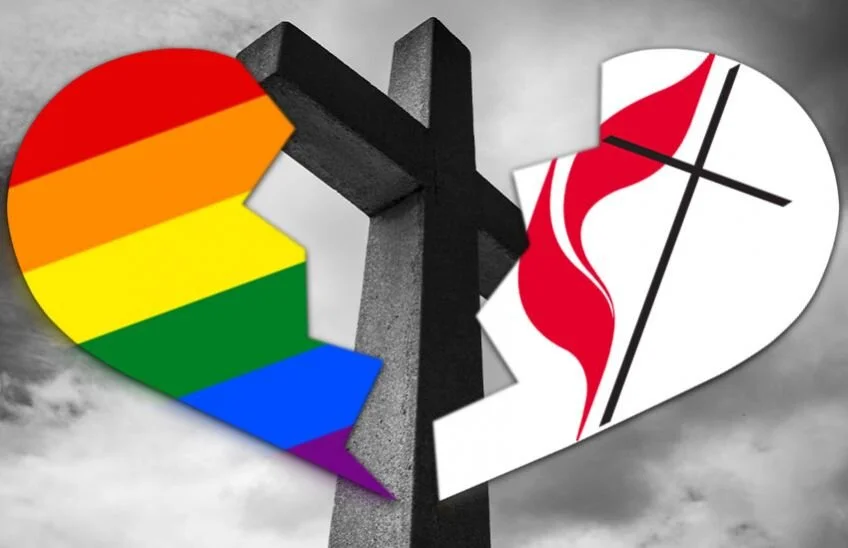
The United Methodist Church is on the brink of America's biggest religious schism since the Civil War, with the conflict centering on sexual morality, biblical authority and theological liberalism.

At stake is an empire with 6.7 million U.S. members and 31,000 congregations located across most American counties, 6.5 million members overseas and $6.3 billion in annual donations (though there's now a severe money crunch). Many of those churches sit on prime urban and suburban real estate.

You know that COVID-19 has to be affecting the economics of all of this, especially for the center-left UMC establishment. Will they try to run out the clock somehow, assuming that the doctrinal conservatives will simply leave on their own (thus avoiding the need for some kind of severance check)? But that kind of split would lead to legal warfare (think of it as the United Methodist lawyers Employment Act) over church sanctuaries, clergy benefits, etc. Ask the the Episcopalians about that.

This leads me to two think pieces for reporters and news consumers to file. The first comes from the Mark Tooley, the must-follow analyst on the Methodist right: “Global Methodism’s New Church.” He covers essential background, with logical attention to Methodist growth in Africa, then offers this helpful summary:

Why are conservatives leaving when they won at the General Conference?

Liberals, although outnumbered globally, dominate the U.S. church and its bureaucracy. Few American conservatives want to inherit liberal church agencies, seminaries, and local conference structures, whose financial viability is already dubious.


Please respect our Commenting Policy

New podcast: Yes, cover RFRA; but Equality Act coverage has also been quiet on local stories

New podcast: Yes, cover RFRA; but Equality Act coverage has also been quiet on local stories

What we have here is a logical question that journalists (and news consumers) should be asking at this point in coverage of debates about the Equality Act. It’s also one of the questions that “Crossroads” host Todd Wilken and dissected during this week’s podcast (click here to tune that in).

That question: How many religious health organizations, schools, recreation centers, homeless shelters, campgrounds, day-care centers and other forms of faith-driven ministries and nonprofit groups are located in the zip codes covered by the newsrooms of your local media outlets?

Earlier this week, I wrote a post (“Puzzle: Many reporters ignoring Equality Act's impact on this crucial Schumer-Kennedy legislation”) noting that a few mainstream news organizations have covered the ways in which the Equality Act would edit or even crush the Religious Freedom Restoration Act (RFRA) of 1993, which passed in the U.S. Senate vote of 97-3. That vote symbolized both the bipartisan nature of that legislation and stunning left-right coalition of sacred and secular groups that supported it.

That remains a valid angle for coverage. However, the more I thought about this topic, and the more Equality Act reports that I read, the more I focused in on another “quiet zone” in the mainstream news coverage — including at the local and regional levels.

For starters, let’s look at two pieces of a major New York Times report on the Equality Act:

It was the second time the Democratic-led House had passed the measure, known as the Equality Act, which seeks to amend the Civil Rights Act of 1964 to add explicit bans on discrimination against lesbian, gay, bisexual and transgender people in both public and private spaces.

Now, that’s remarkably broad language. What kinds of groups and institutions, pray tell, are included under “both public and private places”? And remember this old journalism mantra: All news is local.

Later on, the story adds:

In a landmark decision in June, the Supreme Court ruled that the 1964 civil rights law protects gay and transgender people from workplace discrimination, and that the language of the law, which prohibits discrimination on the basis of sex, also applies to discrimination based on sexual orientation and gender identity. House Democrats sought to build on that ruling with the Equality Act, which would expand the scope of civil rights protections beyond workers to consumers at businesses including restaurants, taxi services, gas stations and shelters.


Please respect our Commenting Policy

Puzzle: Many reporters ignoring Equality Act's impact on this crucial Schumer-Kennedy legislation

Puzzle: Many reporters ignoring Equality Act's impact on this crucial Schumer-Kennedy legislation

I have been following the Equality Act coverage and, so far, a crucial piece in this puzzle has been missing.

Thus, here is a one-question pop test. That question: Name the piece of stunningly bipartisan legislation — vote was 97-3 in U.S. Senate — from the Bill Clinton era that will be gutted by passage of the Equality Act? Hint: It was introduced in the House by Rep. Chuck Schumer (D-NY) on March 11, 1993, and in the Senate on the same day by the late Sen. Ted Kennedy (D-MA).

We are, of course, talking about the Religious Freedom Restoration Act (RFRA). In today’s advocacy-media age that would, of course, be the “Religious Freedom” Restoration Act, complete with “scare quotes.”

The key is the impact the Equality Act would have on religious parachurch groups, social ministries, hospitals and educational institutions, from preschools to universities.

Now, does everyone agree on how the Equality Act would impact the First Amendment rights of religious believers and their doctrine-defined ministries?

Of course not. There are strong, credible voices on both sides of that debate that deserve serious, accurate, informed coverage by the mainstream press. However, this process — let’s call it “journalism” — would require newsroom managers to admit that this issue exists.

That’s why Andrew Sullivan — one of the world’s best-known gay public intellectuals — called the introductory Washington Post Equality Act story a “press release” (think PR) for the Human Rights Campaign. Here is that story’s description of the legislation’s impact:

The Equality Act would amend existing civil rights laws, such as the Civil Rights Act of 1964 and the Fair Housing Act, to explicitly ban LGBTQ discrimination in the workforce, housing, education, credit, jury service and other areas of American life.

If passed, the legislation would provide the most comprehensive LGBTQ civil rights protections in U.S. history, advocates say, significantly altering the legal landscape in a country where more than half of states lack explicit legal protections on the basis of sexuality or gender identity. …


Please respect our Commenting Policy

Farewell to 'reindeer rules'? Indiana nativity scene case could have been turning point

Farewell to 'reindeer rules'? Indiana nativity scene case could have been turning point

Year after year, the Lion's Club sets up wire-frame Christmas decorations on the lawn of the historic Jackson County courthouse, facing Main Street in Brownstown, Ind.

The display, which belongs to the local ministerial alliance, glows from dusk to dawn from Thanksgiving until New Year's Day, with the county providing the electricity.

This led to yet another "Christmas Wars" dispute, with the recent Woodring v. Jackson County court decision offering a precise description of this tableau.

There is a "waving Santa Claus with his sleigh, a reindeer, seven large candy-striped poles, the nativity scene … and four carolers standing in front of a lamp post," noted Seventh Circuit Judge Amy Joan St. Eve. "Santa Claus and the reindeer are on the left. …To their right are three gift-bearing kings (Magi) and a camel, who look upon the nativity. On the right side of the sidewalk, Mary, Joseph, and infant Jesus in the stable are flanked on each side by trumpet-playing angels. To their right are several animals facing the nativity. The carolers stand in front of the animals, closer to Main Street."

Before the 2018 lawsuit, the Freedom From Religion Foundation warned that the nativity scene needed to come down. County officials responded by moving Santa and other secular symbols closer to the telltale manger.

That move was clearly linked to what activists call the "reindeer rules," in which secular and sacred symbols are mixed to honor guidelines from the Supreme Court's Lemon v. Kurtzman in 1971. The "Lemon test" asks if a government action's primary effect advanced religion, as opposed to a secular purpose, thus entangling church and state.

But the majority in the new 2-1 decision in Indiana argued that the "nativity scene is constitutional because it fits within a long national tradition of using the nativity scene in broader holiday displays to celebrate the origins of Christmas."

This post-Christmas decision in the heartland may have been a turning point.

"To the degree that the reindeer rules were based on Lemon, this decision said that we now have a new Supreme Court precedent. The reindeer rules appear to be gone," said Diana Verm, senior counsel for the Becket Fund for Religious Liberty, which filed a brief in the case.


Please respect our Commenting Policy