LGBTQ

Catholic bishops, politicos and Holy Communion: Little has changed in this old debate

Catholic bishops, politicos and Holy Communion: Little has changed in this old debate

The questions that haunted the Pontifical Academy for Life conference were familiar, controversial and exhausting, since Catholics and their bishops had been arguing about them for years.

The year was 2006, but little has changed in 2021.

What should bishops do when prominent Catholics -- even presidential candidates -- defended and promoted abortion rights? What if they said they accepted churched teachings on the sanctity of human life, while their actions suggested otherwise?

Would it violate the "separation of church and state" if bishops denied them access to Holy Communion? What if bishops asked these politicos to go to Confession?

"This is silly," said scholar Robert P. George, addressing that Vatican gathering. A Catholic shepherd "acting on his authority as a bishop to discipline members of his flock, who commit what the Church teaches are grave injustices against innocent human beings" would be "exercising his own constitutional right to the free exercise of religion. …

"Freedom is a two-way street. No one is compelled by law to accept ecclesiastical authority," stressed George, an outspoken Catholic layman and professor of jurisprudence at Princeton University. Thus, a bishop has "every right to exercise spiritual authority over anyone who chooses to accept it. There is a name for people who do accept the authority of Catholic bishops. They are called 'Catholics.' "

At that time, most debates centered on Sen. John Kerry, the Democratic Party's presidential nominee in 2004.

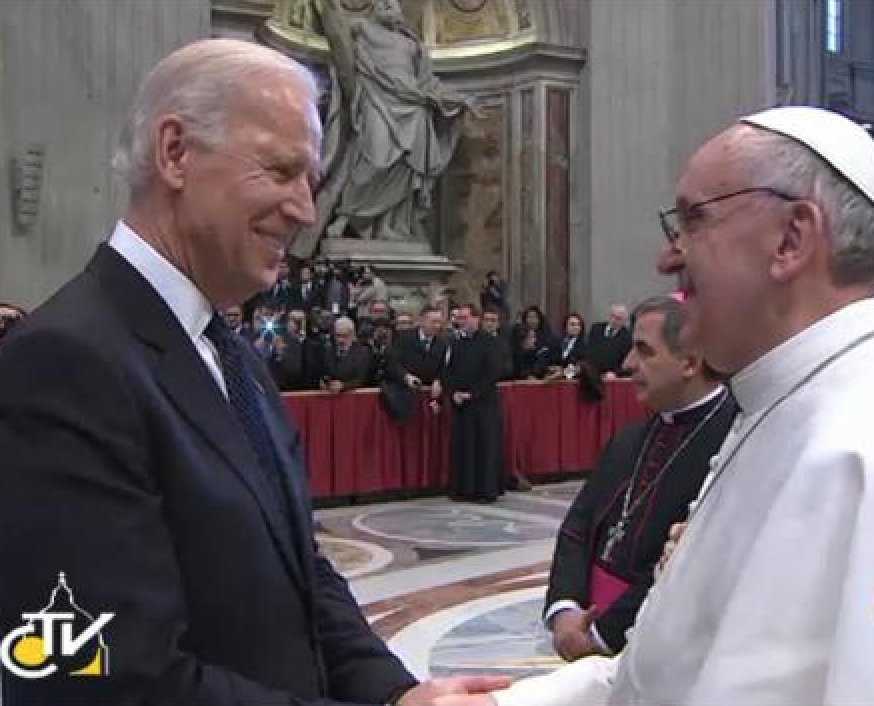
Cracks inside the U.S. Conference of Catholic Bishops widened with the election of President Joe Biden, a rosary-carrying Catholic who -- in word and deed -- has evolved into a fierce defender of abortion and LGBTQ rights. Biden quickly dropped his longstanding opposition to the federal funding of abortion, after criticism from the left in the 2019 primaries.

Please respect our Commenting Policy

How will this Supreme Court decide, or sidestep, pivotal religious liberty questions?

How will this Supreme Court decide, or sidestep, pivotal religious liberty questions?

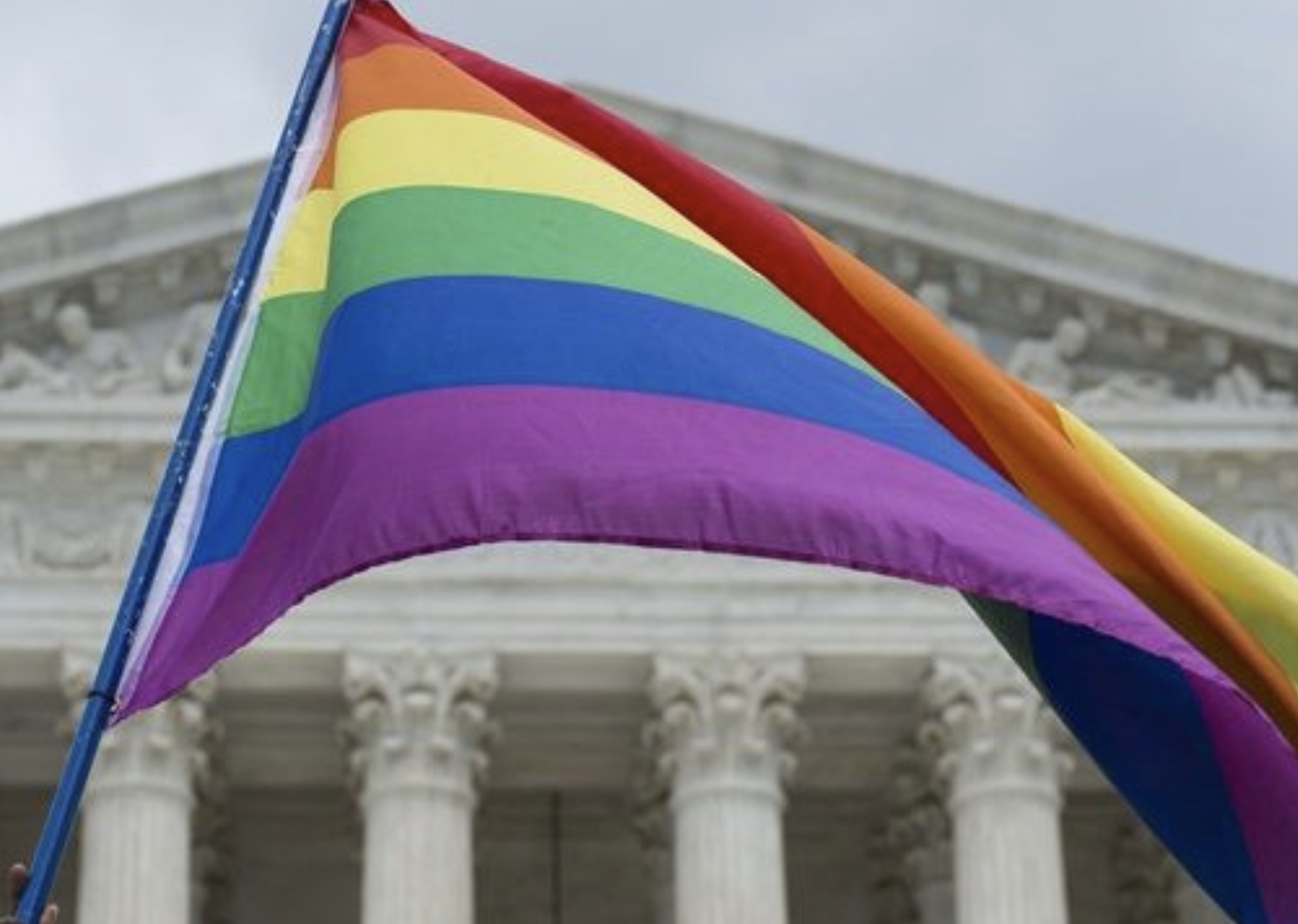
The major U.S. Supreme Court ruling in Fulton v. Philadelphia (.pdf here) allows a Catholic agency to avoid placing foster-care children with same-sex couples. Importantly, the Catholics will place gay children and will place children with gay singles since there's no conscience crisis over defying the church's doctrines on marriage.

For decades there's been confusion and acrimony over the court's applications of the Constitution's ban on government "establishment of religion," but now disputes over the religious "free exercise" clause grab the spotlight. The Fulton ruling sidestepped the heart of this generation's conflagration between religious rights and LGBTQ+ rights and, thus, may even have added logs to the fire.

The justices backed the Catholic claim with what The Economist's headline correctly labeled "The 3-3-3 Court." The narrow technical grounds for the decision enabled the three liberals (Stephen Breyer, Elena Kagan, Sonia Maria Sotomayor) to make the ruling unanimous. The conservatives were split between three demanding a thorough overhaul of "free exercise" law (Justice Samuel Alito, in a vigorous 77 pages, joined by Neil Gorsuch and Clarence Thomas) and three unwilling to take the plunge at this time (Chief Justice John Roberts and the two newest members, Brett Kavanaugh and Amy Coney Barrett).

Similar caution apparently underlies the court's majority decision this week not to review transgender student Gavin Grimm's victory against his Virginia school over bathroom access.

Journalists should prepare for more years of extensive -- and expensive -- politicking and litigation before the Supreme Court defines -- or decides not to define -- how First Amendment guarantees apply in 21st Century culture.

For those on the religion beat, it is easy to see that this case has hardened the related conflict among major denominations.


Please respect our Commenting Policy

ESPN's paean to Layshia Clarendon offers few details about basketball star's faith claims

ESPN's paean to Layshia Clarendon offers few details about basketball star's faith claims

Several years ago, I was hiking in the woods on a mountain just outside of Seattle when I ran into two women hiking with an infant. The child was dressed in such a way that you couldn't tell whether it was a boy or girl and when I commented on the cuteness of the child, the women addressed the child as “they.”

Apparently, they’ll let their kid decide on its own which gender it is, an idea that struck me as harmful to the child. A kid needs to know who they are. That’s where I stand on that issue.

But this is, of course, one of the hottest topics in American journalism, and, thus, American life, today. Is gender simply a matter of choice, not DNA or destiny? Could you decide to be male or female simply by lopping off a few body parts or adding them?

Such thoughts came up when I read ESPN’s profile of transgender activist Layshia Clarendon, written by an ESPN staff writer who has posted “they/them” pronouns. As the writer enthused on Twitter: “I've never had the opportunity to write a story about an athlete with whom I share so many identities.” Um, OK. I’m trying to imagine a similar statement from an ESPN reporter covering a traditional religious believer.

I usually don’t go after the motivations of the reporter, but this story went beyond respect and dignity to pure advocacy and the non-subtle hint that those who question this woman’s journey are transphobic haters.

Here is the key for GetReligion readers. This feature also made a real effort to work Clarendon’s faith into the mix, including captions that referred to the basketball player’s belief in God, which is not something you find in most ESPN cover stories.

What exactly is that faith? The story tries to shed some light on that, while skipping over many details.

Getting through this feature is quite convoluted part because the writer’s determination to mix gender pronouns so thoroughly that the reader often could not determine to whom the reporter was referring. I know the article was trying to be sensitive to how Clarendon talks about herself, but what resulted was a jumble. The confusion was, we can assume, part of the message in this sermon.


Please respect our Commenting Policy

Nashville 2021 revisited: For Southern Baptists, sermons are part of how their work gets done

Nashville 2021 revisited: For Southern Baptists, sermons are part of how their work gets done

Whenever the Southern Baptist Convention gathers in times of trials and turmoil, one thing is certain -- someone will preach a sermon that makes a difference.

That's how Southern Baptists do what they do. These sermons may not produce as many headlines as SBC elections or fiery debates about hot-button social issues. But the sermons matter.

The big sermon during the 2021 convention in Nashville came at a logical moment -- when SBC President J.D. Greear gave his farewell address, just before tense voting to elect his successor.

In this "defining moment" address, the leader of the Summit Church in Raleigh-Durham, N.C., offered a stinging quote about an elephant that has camped in the SBC fellowship hall.

"We have to decide," Greear said, "if we want our convention primarily to be a political voting bloc or if we want it to be a Great Commission people. … Whenever the church gets in bed with politics, the church gets pregnant, and the offspring does not look like our Father in heaven."

America is important, he stressed. But America is not the whole picture for believers striving to build churches around the world. "God has not called us primarily to save America politically. He has called us to make the Gospel known to all," said Greear.

Southern Baptists can agree that "no compromise should be tolerated" on crucial social issues, he said. And no one wants to stop defending the inerrant truth of the Bible.


Please respect our Commenting Policy

Newsy thinking about SCOTUS, sports images, religious liberty and the Sexual Revolution

Newsy thinking about SCOTUS, sports images, religious liberty and the Sexual Revolution

Wait, you mean there was another important religion story during the traffic jam of stories about the right vs. further right showdown at the Southern Baptist Convention and America’s Catholic bishops arguing about Holy Communion, the Catechism and liberal Catholic politicos?

Obviously, I noticed headlines such as this one in the Washington Post: “Supreme Court unanimously rules for Catholic group in Philadelphia foster-care dispute.”

The word “unanimous” is certainly important, in the fractured age in which we live. But look for the other crucial word in the overture on that story:

The Supreme Court ruled unanimously … that Philadelphia was wrong to end a Catholic group’s contract to provide foster-care services because the organization refused to work with same-sex couples.

It was the latest victory for religious organizations at the increasingly conservative court, and the second time it has ruled against governments trying to enforce an anti-discrimination law protecting LGBTQ rights against those claiming religious liberty.

But the opinion, written by Chief Justice John G. Roberts Jr., was narrow enough to draw the support of the court’s three liberals — and the consternation of its three most conservative members for not going further.

Obviously, the crucial word is “but.” This ruling encouraged some church-state conservatives, but also provided some hope for those who believe that the Sexual Revolution will, more often than not, trump the free exercise of religion.

So, it’s time for two think pieces that explore the degree to which this ruling was a win for religious liberty.

No surprise here: Religious liberty pro David French, of The Dispatch, was encouraged: “Four Things You Need to Know After a Huge Day at SCOTUS — ‘Good night, Employment Division v. Smith. Good work. Sleep well. I’ll most likely kill you in the morning​.’ “ Here is his reaction, at the level of SCOTUS personalities:


Please respect our Commenting Policy

New podcast: What are the future news hooks as U.S. bishops wrestle with Holy Communion?

New podcast: What are the future news hooks as U.S. bishops wrestle with Holy Communion?

Let’s say that, at some point in the future, multimedia crews manage to discover where President Joe Biden was attending Mass on a given Sunday.

As the president attempts to leave, journalists shout an obvious question, something like: "Mr. President! The U.S. bishops are almost done with the final draft of their document on abortion, politics and Holy Communion. Are you concerned about this?”

Recently, Biden responded to a similar question by saying: "That's a private matter and I don't think that's going to happen."

This kind of language, that specific doctrinal issues are “personal” or “private,” has been part of American Catholic code ever since the famous 1984 address at the University of Notre Dame by the late New York Gov. Mario Cuomo. But let’s say — as I suggested in this week’s “Crossroads” podcast (CLICK HERE to tune that in) — that Biden decides to tweek this reply at some point in the future.

What would happen if he said this: “That’s between me and my father confessor, so I will have no response at this time.”

This response would have several implications. First of all, it would mean that Biden is saying that he (a) has a father confessor, (b) that he has gone to confession, (c) that he has confessed his sins, (d) that his confessor has assigned him some for of penance and (e) absolved him of his sins. That last part, of course, could be assumed if Biden is receiving Holy Communion.

Oh, and there’s one implication here: That this is happening with a blessing, to one degree or another, from the bishop in authority over Biden’s father confessor. Ah, there is the main news hook.

The bishop and the priest would not, of course, discuss the contents of the president’s confessions. The bishop, however, could say that Biden’s ongoing actions clashing with church doctrines — linked to abortion, same-sex marriage, trans advocacy or some other issue — require the denial of Holy Communion since these actions are, under Catholic doctrines, a threat to the president’s eternal soul.

After all, as the journalists (and canon lawyers) at The Pillar recently noted:


Please respect our Commenting Policy

U.S. Catholic bishops OK drafting Communion guidelines: Press asks about politics -- period

U.S. Catholic bishops OK drafting Communion guidelines: Press asks about politics -- period

Any short list of classic Pope Francis remarks about abortion would have to include the 2018 speech in which he asked, using a Mafia image: “Is it just to resort to a contract killer to solve a problem?”

There was more: “Interrupting a pregnancy is like eliminating someone. Getting rid of a human being is like resorting to a contract killer to solve a problem.” While some people support abortion rights, Francis added: “How can an act that suppresses innocent and defenseless life as it blossoms be therapeutic, civil or simply human?”

Or how about this quote, drawn from a 2020 address to the United Nations?

“Unfortunately, some countries and international institutions are also promoting abortion as one of the so-called ‘essential services’ provided in the humanitarian response to the pandemic. … It is troubling to see how simple and convenient it has become for some to deny the existence of a human life as a solution to problems that can and must be solved for both the mother and her unborn child.”

While there is no question that Pope Francis is a progressive on many issues linked to economics, immigration and other political topics, he has continued — sometimes in blunt language involving evil and the demonic — to defend the basics of Catholic moral theology.

So what are readers supposed to make of the Sunday New York Times story that opens with this summary statement:

WASHINGTON — Pope Francis and President Biden, both liberals, are the two most high-profile Roman Catholics in the world.

But in the United States, neither of these men is determining the direction of the Catholic Church. It is now a conservative movement that decides how the Catholic Church asserts its power in America.

Perhaps that is a bit simplistic?

The context, of course, was the decision by U.S. Catholic bishops — after three days of contentious debate — to approve a measure on to draft a statement that could deny Holy Communion to pro-abortion-rights politicians like President Joe Biden.


Please respect our Commenting Policy

Chicago Tribune's take on Moody Bible student lacks some tough, logical questions

Chicago Tribune's take on Moody Bible student lacks some tough, logical questions

One of the rules of journalism is to make clear why a reader should care what you’re writing about.

One way to make that happen is to choose a sympathetic figure. Personal stories are always easier to grasp than abstract concepts such as teachings, doctrines and beliefs. This principle has been used brilliantly by movements seeking to push modernist ideas, such as gay marriage. It’s one thing to oppose the idea; it’s another to oppose two human beings right in front of you.

Those of us who covered the Episcopal Church’s slide from an influential denomination of 3.6 million members into a fast-declining church of 1.8 million saw this principle used repeatedly in the 1990s and 2000s. Whenever the denomination wanted to push some novel sexual idea, it put forth stories of the courageous individuals who indulged in such practices. Such folks were easier to like than the seemingly stodgy types who were bent on keeping to the old ways.

All of which is why the Chicago Tribune chose a 24-year-old lesbian who was hounded by Moody Bible Institute administrators to be the face of a new lawsuit. An engaging dissident with a compelling story was far more interesting than the traditional institution she was fighting. The story begins:

Megan Steffen had completed all her college coursework at Moody Bible Institute and was at home with her parents in Michigan, waiting to graduate, when she got an email from the school, telling her an administrator needed to talk with her.

She agreed to a meeting via Zoom, where she learned that faculty members at the conservative Christian college had raised objections to her graduation.

Which was in 2020, by the way.

Then the two administrators on the Zoom call began asking questions, among them: Had Steffen ever had romantic or sexual relations with a woman? Had she ever dated men? Did she envision dating women in the future?


Please respect our Commenting Policy

What to read, and why, as Catholic bishops mull plan to deny Biden Holy Communion

What to read, and why, as Catholic bishops mull plan to deny Biden Holy Communion

This is a week that could change Catholic life in this country. That is not an exaggeration when you consider what the bishops will be debating.

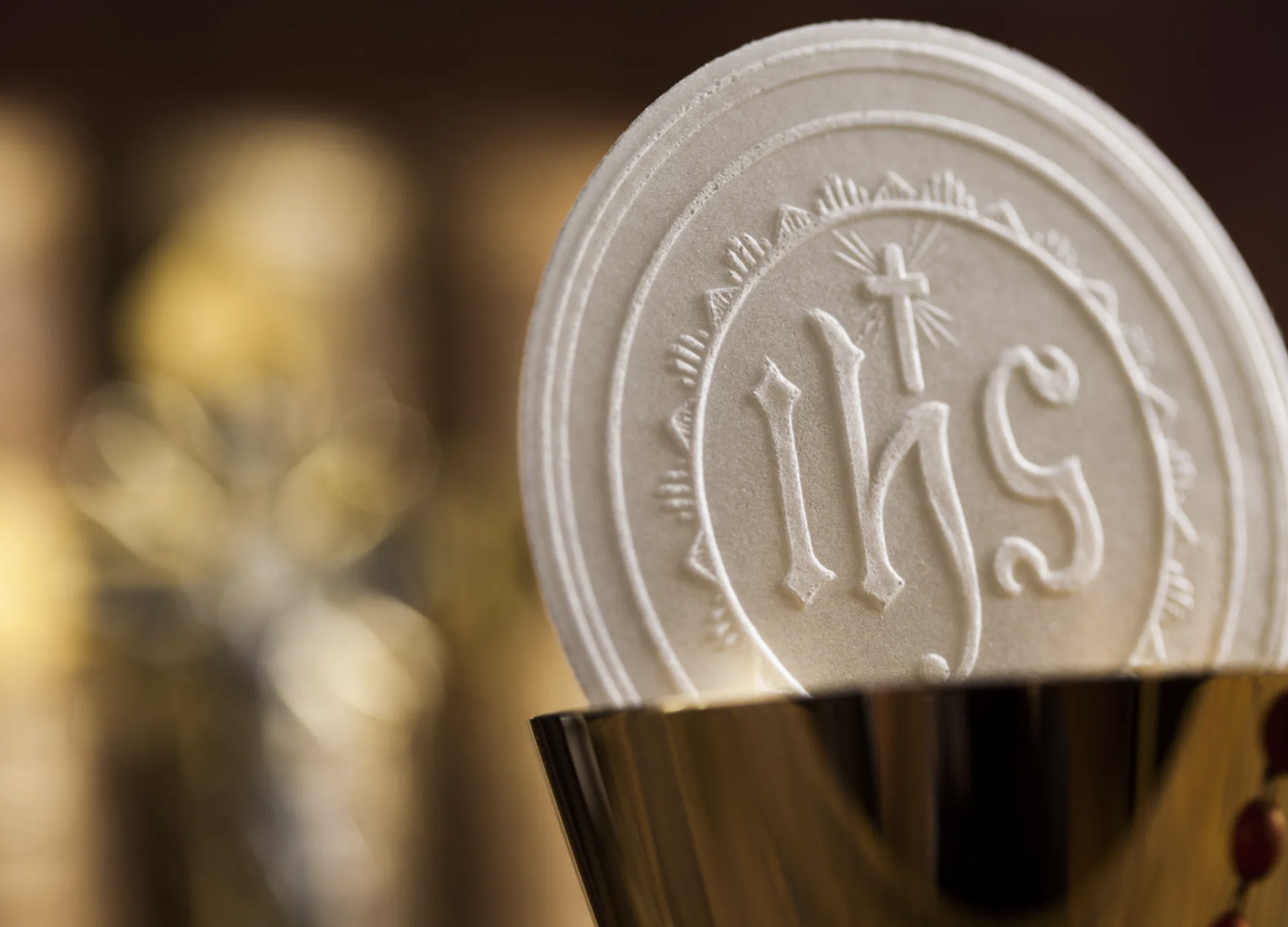
Barring an intervention from Pope Francis himself, the U.S. bishops will consider, and vote on Thursday, a plan for a document about Holy Communion that includes denying the sacrament to politicians who repeatedly support policies advocating abortion rights. That includes President Joe Biden, only the country’s second Catholic commander in chief ever.

The United States Conference of Catholic Bishops will gather virtually for their three-day Spring General Assembly starting tomorrow. The public sessions are available on the USCCB website for all to watch. While the bishops will have a busy agenda ahead of them, the biggest issue — in terms of news coverage — is this question of whether the sacrament of Communion can be denied to Catholic politicians with a history of backing abortion rights.

What can we expect from the news coverage?

This has been an issue that was pushed to the forefront by many bishops following Biden’s election last November. This is an issue that has been covered by both the mainstream press as well as Catholic media. The arguments and decisions made this week will have a lasting impact on Catholicism and those who practice it. The opinions many will form this week will come directly from the coverage they read.

Here is the debate in a nutshell: Some bishops want politicians who identify as Catholic to hold public policy positions that are not at odds with church teaching on abortion, marriage, LGBTQ rights and other issues in moral theology. Others argue that these politicians can hold political positions that clash with the church — while expressing private support for church teachings — and continue to attend Mass and receive Holy Communion.

That this division also happen to match with how these Catholics vote will dominate the coverage. it also comes at a time when the Supreme Court will take up a major abortion rights challenge.


Please respect our Commenting Policy