LGBTQ

The New York Times (#WHOA) probes ACLU's move away from First Amendment liberalism

The New York Times (#WHOA) probes ACLU's move away from First Amendment liberalism

I don’t know about you, but The New York Times was the last place that I expected to see a long news feature about disturbing trends at the American Civil Liberties Union away from its proud history of First Amendment liberalism.

I am sure that some ACLU insiders must have felt the same way, especially in light of recent headlines about the rising power of a generation of woke journalists at the Times. The pot calling the kettle black?

But there was no way around the contents of that dramatic double-decker headline the other day:

Once a Bastion of Free Speech, the A.C.L.U. Faces an Identity Crisis

An organization that has defended the First Amendment rights of Nazis and the Ku Klux Klan is split by an internal debate over whether supporting progressive causes is more important.

As the headline states, the emphasis in this report is about free speech. Maybe it was too much to ask Times editors to see the same illiberal trend developing in ACLU work defending the First Amendment clause protecting religious freedom, without “scare quotes.”

But we will take what we get because of the influence that the Times has in other newsrooms and even in some influential corners of elite academia.

The story opens with an event celebrating the career of lawyer David Goldberger, who played a key role in the famous 1978 case when the ACLU defended the free speech rights of Nazis to march in Skokie, Ill., the home of many Holocaust survivors. Read this long passage carefully:

Please respect our Commenting Policy

Boris Johnson's Catholic wedding: Why didn't the New York Times consult a Canon lawyer?

Boris Johnson's Catholic wedding: Why didn't the New York Times consult a Canon lawyer?

When preparing news reports about a chess match, it really helps if reporters quote one or more experts on the rules of chess.

The same thing is true when covering the FIFA World Cup. At some point, it would help to have an expert define “offsides” and some of soccer’s other more complicated rules.

When covering the U.S. Supreme Court, it helps to have a reporter on the team with a law degree and some serious experience covering debates in elite courtrooms.

This brings me that New York Times article the other day about that eyebrow-raising wedding at Westminster Cathedral between the current prime minister of England and his latest of many lady friends. The double-decker question covered many essential facts:

Why Could Boris Johnson Marry in a Catholic Church?

The British prime minister was married twice before, but the church didn’t recognize those unions because they were not Catholic.

Now, this article did some things very well, including offering a crisp, clear summary of Johnson’s complicated history as a husband and lover. Read that, if you wish.

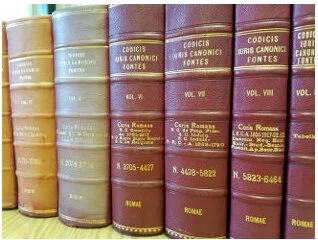
However, I was struck by two words that were missing in this article — that would be, “Canonical” and “form” — even though discussions of this legal term was all over Catholic Twitter once the secret wedding was made public.

What, pray tell, is “Canonical form”? We will get to that in a moment.

In terms of journalism basics, the crucial point is that it really would have helped if the Times team had interviewed one or two Catholic Canon lawyers who understand this term and the history behind the church’s teachings on this subject. As things turned out, readers ended up knowing more about how this rite offended the sensibilities of Catholic LGBTQ activists than the specifics of the church laws that allowed the wedding to take place.


Please respect our Commenting Policy

'On Religion' flashback to 1998: Ten years of reporting on a church-state fault line

'On Religion' flashback to 1998: Ten years of reporting on a church-state fault line

Back in the 1980s, I began to experience deja vu while covering event after event on the religion beat in Charlotte, Denver and then at the national level.

I kept seeing a fascinating cast of characters at events centering on faith, politics and morality. A pro-life rally, for example, would feature a Baptist, a Catholic priest, an Orthodox rabbi and a cluster of conservative Methodists, Presbyterians, Episcopalians and Lutherans. Then, the pro-choice counter-rally would feature a "moderate" Baptist, a Catholic activist or two, a Reform rabbi and mainline Methodists, Presbyterians, Episcopalians and Lutherans.

Similar line-ups would appear at many rallies linked to gay rights, sex-education programs and controversies in media, the arts and even science. Along with other journalists, I kept reporting that today's social issues were creating bizarre coalitions that defied historic and doctrinal boundaries. After several years of writing about "strange bedfellows," it became obvious that what was once unique was now commonplace.

Then, in 1986, a sociologist of religion had an epiphany while serving as a witness in a church-state case in Mobile, Ala. The question was whether "secular humanism" had evolved into a state-mandated religion, leading to discrimination against traditional "Judeo-Christian" believers. Once more, two seemingly bizarre coalitions faced off in the public square.

"I realized something there in that courtroom. We were witnessing a fundamental realignment in American religious pluralism," said James Davison Hunter of the University of Virginia. "Divisions that were deeply rooted in our civilization were disappearing, divisions that had for generations caused religious animosity, prejudice and even warfare. It was mind- blowing. The ground was moving."

The old dividing lines centered on issues such as the person of Jesus Christ, church tradition and the Protestant Reformation. But these new interfaith coalitions were fighting about something even more basic – the nature of truth and moral authority.


Please respect our Commenting Policy

Mainstream press shrugs at Biden's Notre Dame snub for upcoming graduation rite

Mainstream press shrugs at Biden's Notre Dame snub for upcoming graduation rite

This is the time of year where college graduations dominate the lives of many Americans. A year after these ceremonies were relegated to Zoom because of the pandemic, graduations are back this spring, with masks and social distancing in place, to again signal the sending off to undergraduates into the workplace.

For journalists, graduations have long served as an easy news stories. Above all, the graduation speaker is what makes these ceremonies news. At that vast majority of rites at elite and state schools the speaker is — to one degree or another — a cultural or political liberal.

Thus, is it any surprise that the ongoing tug-of-war between the U.S. bishops and President Joe Biden has spilled over into the graduation season? Well, it has in the form of the president not addressing graduates at the University of Notre Dame this year.

This news story was broken by Catholic News Agency. Here’s how the May 11 news story opened:

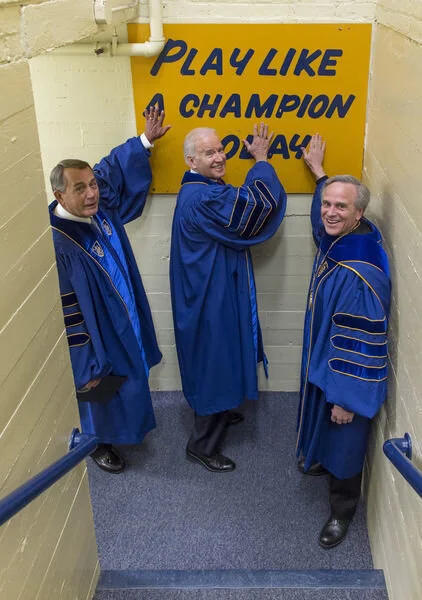
In a break with recent tradition, President Joe Biden will not be delivering the commencement address at the University of Notre Dame this year – although he was invited by the university to do so.

On Tuesday, the university announced that its May 23 commencement speaker will be Jimmy Dunne, a finance executive and trustee of the university. During the last three presidential administrations, U.S. presidents or vice presidents have addressed the university's commencement in their first year in office, but that trend will not continue in 2021.

Although a university spokesman told CNA that, as a policy, “we do not discuss who may or may not have been approached to address our graduates,” sources from the White House confirmed to CNA that Biden had indeed been invited by the university but could not attend due to scheduling.

Biden, just the second Catholic president since John F. Kennedy in 1960, has not been shy about mentioning his faith in public.

While he’s attended Mass regularly on Sundays, Biden supports taxpayer-funded abortion in defiance of the U.S. bishops’ conference and, as vice president, he performed two same-sex marriage rites. The Biden administration has also started to roll back restrictions on public funding of abortion providers, has supported the expansion of LGBTQ rights and continues to wage a legal battle to keep a mandate in place for doctors to provide gender-transition surgeries.


Please respect our Commenting Policy

When covering Moore's exit from SBC power, scribes should ponder what made him 'liberal'

When covering Moore's exit from SBC power, scribes should ponder what made him 'liberal'

This may be a strange place to start when discussing early news coverage of the Rev. Russell Moore moving from the Ethics & Religious Liberty Commission — the crucial Southern Baptist camp in Beltway land — to what looks like a Christianity Today think tank on theology and public life.

So be it. This is where we will start — with the whole Moore is “too liberal” thing.

What does “liberal” mean in that curse that has been tossed about in Baptist social media?

Remember that one of Moore’s primary duties in Washington, D.C., has been to help Southern Baptists defend against attacks on religious liberty and the First Amendment in general. With that in mind, let me return to a question that I have been asking here at GetReligion — while focusing on the role that labels play in American journalism — for a decade or so. This is from a 2015 post:

What do you call people who are weak in their defense of free speech, weak in their defense of freedom of association and weak in their defense of religious liberty (in other words, basic First Amendment rights)?

The answer: I don't know, but it would be totally inaccurate — considering the history of American political thought — to call these people "liberals."

So what do you call someone, like Moore, who has been defending free speech, defending the freedom of association and defending religious liberty?

Wait. For. It. You can accurately call him a “liberal” in that context. In this framework, the New York Times editorial pages and, in many cases, the American Civil Liberties Union, are now — what? What is the accurate term, these days?

Note that this struggle to define “liberal” was at the heart of the celebrated clash between Bari Weiss and the Times. I would argue that it was part of the newsroom warfare that led to the ousting of Liz Spayd as the Times public editor (when she dared to ask if the newspaper was committed to fair, accurate coverage of half of America). It’s at the heart of the growing tensions between gay-rights icon Andrew Sullivan and the LGBTQ establishment. I could go on and on.

But back to another cluster of issues linked to Moore.


Please respect our Commenting Policy

Bishops debate 'Eucharistic coherence,' a matter of doctrine, politics and eternal judgement

Bishops debate 'Eucharistic coherence,' a matter of doctrine, politics and eternal judgement

Archbishop Joseph Cordileone leads the Archdiocese of San Francisco, a symbolic city in debates about modern American culture.

But what matters the most, as tensions rise among Catholic leaders, is that Cordileone is House Speaker Nancy Pelosi's hometown bishop. Thus, it's hard for politicos to avoid blunt passages in his new pastoral letter, "Before I Formed You in the Womb I Knew You."

Citing centuries of church doctrine, the archbishop argued that Catholics who "reject the teaching of the Church on the sanctity of human life and those who do not seek to live in accordance with that teaching should not receive the Eucharist. It is fundamentally a question of integrity: to receive the Blessed Sacrament in the Catholic liturgy is to espouse publicly the faith and moral teachings of the Catholic Church, and to desire to live accordingly."

There is, he added, "a great difference between struggling to live according to the teachings of the Church and rejecting those teachings. … In the case of public figures who profess to be Catholic and promote abortion, we are not dealing with a sin committed in human weakness or a moral lapse: this is a matter of persistent, obdurate and public rejection of Catholic teaching. This adds an even greater responsibility to the role of the Church's pastors in caring for the salvation of souls."

Citing a famous example, Cordileone recalled when former New York Mayor Rudolph Giuliani received Holy Communion during a 2008 Mass led by Pope Benedict XVI. This caused scandal and, according to the late Cardinal Edward Egan, violated an agreement that Giuliani would not receive the Sacrament because of his public support for abortion rights and other clashes with doctrine.

The big issue, as U.S. bishops prepare for June discussions of "Eucharistic coherence," is not how to handle a former New York City mayor. The question is whether bishops can address their own divisions about the status of pro-abortion-rights Catholics such as Pelosi and President Joe Biden. While vice president, Biden also performed two same-sex marriage rites.

San Diego Bishop Robert McElroy, firing back at Cordileone in America magazine, stressed that the "Eucharist must never be instrumentalized for a political end. … But that is precisely what is being done in the effort to exclude Catholic political leaders who oppose the church's teaching on abortion and civil law. The Eucharist is being weaponized and deployed as a tool in political warfare. This must not happen."


Please respect our Commenting Policy

New podcast: Yes, election of first trans/queer/gender fluid ELCA bishop was a big story

New podcast: Yes, election of first trans/queer/gender fluid ELCA bishop was a big story

Imagine that you are a pastor or a layperson in the Lutheran Church-Missouri Synod, the Wisconsin Evangelical Lutheran Synod or one of the other conservative Lutheran bodies in the United States.

So you sit down with your morning coffee and pop open your email and you see that friends and family have sent you emails enquiring about a headline that they saw on Twitter or somewhere else in today’s complicated news marketplace.

In this case, the headline is from the New York Times and it states: “U.S. Lutheran Church Elects Its First Openly Transgender Bishop.

The problem, of course, is that the “U.S. Lutheran Church” doesn’t exist There is no one denomination that fits that description. Or perhaps the person sending you the email saw, somewhere, the Religion News Service headline that ran with this headline: “Lutherans elect Megan Rohrer first transgender bishop.” Second verse, same as the first.

When it comes to Lutheranism, many journalists continue to struggle when describing who is who and what is what. This brand-name problem was the first layer of the complex issues — in terms of church doctrine and journalism style — that we explored in this week’s “Crossroads” podcast. Click here to tune that in.

The denomination that elected Bishop-elect Rohrer was, of course, the Evangelical Lutheran Church in America, one of the “Seven Sisters” — we may need to make that “Seven Siblings” — of liberal Protestantism.

But what happens if you put that denominational brand name in a headline (besides the fact that it’s way too long for most newspaper layouts)? If you do that, you have to explain the presence of “evangelical,” which has become a near curse word in a news context. And, hey, “Lutheran” by itself sounds more important. Damn the accuracy, full speed ahead.

This brings us to the key hook for this podcast: There was little or nothing surprising about the progressive ELCA electing a trans (if that is the best term, in this case) bishop.


Please respect our Commenting Policy

Same-sex Catholic blessing rites in Germany: Why talk to experts on both sides of this story?

Same-sex Catholic blessing rites in Germany: Why talk to experts on both sides of this story?

And this just in: Germany’s Catholic left proceeded with its planned same-sex blessing rites and, as you would expect (see previous GetReligion podcast and post on this topic), mainstream journalists were there to capture the details.

Sort of.

Actually, not so much.

The most important content — the precise wording of the blessing prayers, in doctrinal terms — appear to be Missing In Action. It’s possible that, as usual, journalists were not interested in the liturgical and doctrinal details. However, I could imagine a scenario in which journalists were asked by organizers to avoid that doctrinal content, with good cause. That material that will matter to canon lawyers.

Also, there was no need to look for content drawn from interviews with pro-Catechism Catholics who opposed the winds of change blowing in Germany. Clearly, this was a story with only one side that needed to be covered. Here is a key part of the Associated Press report written just before the main wave of events on May 10 (“German Catholics to bless gay unions despite Vatican ban”):

Germany is no stranger to schism: 500 years ago, Martin Luther launched the Reformation here. …

In Berlin, the Rev. Jan Korditschke, a Jesuit who works for the diocese preparing adults for baptism and helps out at the St. Canisius congregation, will lead blessings for queer couples at a worship service May 16.

“I am convinced that homosexual orientation is not bad, nor is homosexual love a sin,” Korditschke told The Associated Press in an interview Friday. “I want to celebrate the love of homosexuals with these blessings because the love of homosexuals is something good.”

The 44-year-old said it is important that homosexuals can show themselves within the Catholic Church and gain more visibility long-term. He said he was not afraid of possible repercussions by high-ranking church officials or the Vatican.


Please respect our Commenting Policy

New podcast: Should religious leaders and the cultural right applaud lousy Oscar ratings?

New podcast: Should religious leaders and the cultural right applaud lousy Oscar ratings?

Pick a headline, just about any Oscar headline.

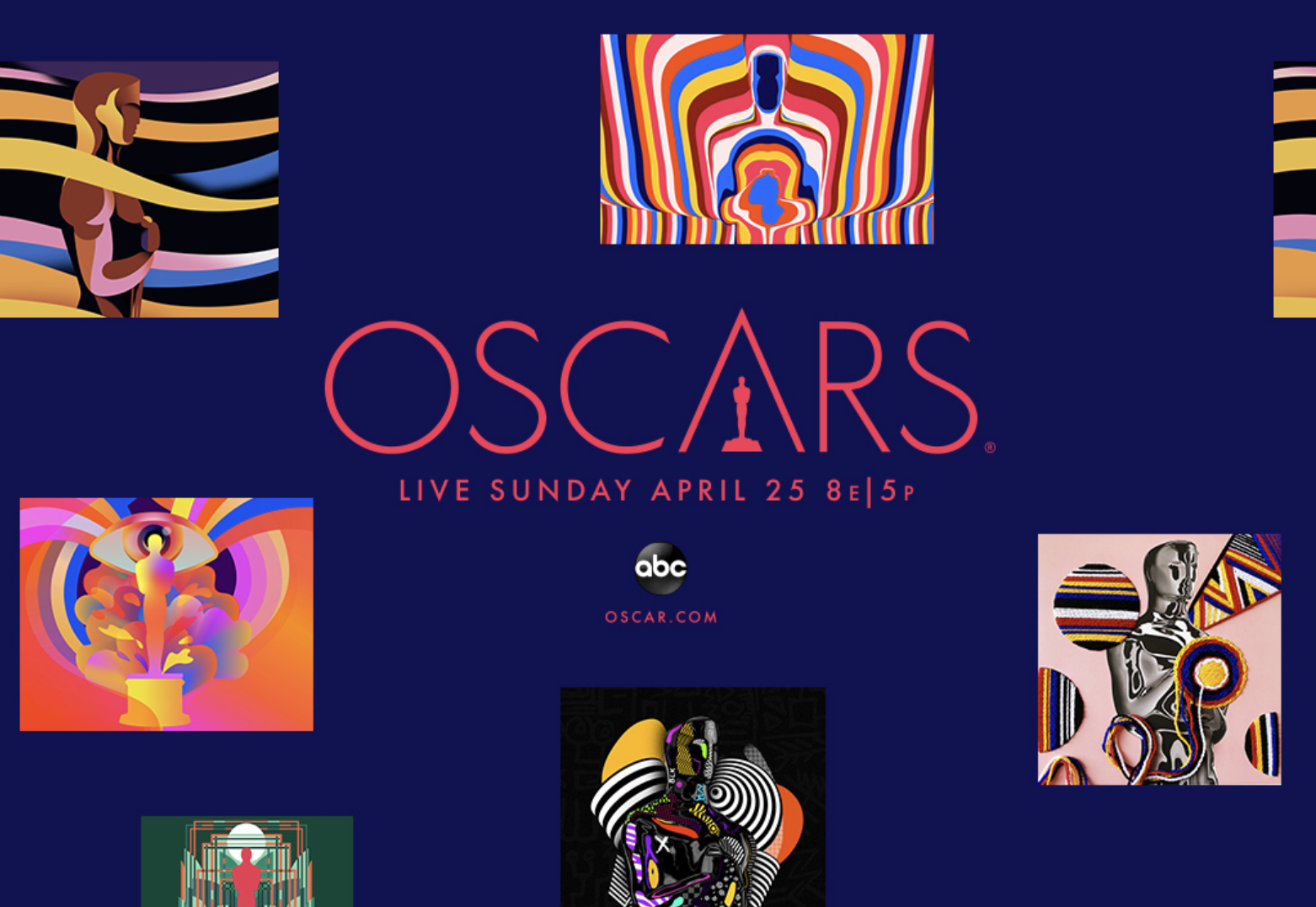
The ratings for the 2021 Academy Awards were bad. How bad? Here’s the take from the world-weary folks at Entertainment Weekly: “Oscars hit another historic low in ratings.”

The New York Post has been known to produce blunt headlines. Thus: “Oscar ratings drop to an all-time low with unwatchable show.”

But what matters, of course, is what runs in prestige settings such as The New York Times. The big business-desk headline there provided some extra, rather acidic, context:

Oscars Ratings Plummet, With Fewer Than 10 Million Tuning In

Sunday night’s pandemic-restricted telecast drew 58 percent fewer viewers than last year’s record low.

Wait, there’s more bad news:

Among adults 18 to 49, the demographic that many advertisers pay a premium to reach, the Oscars suffered an even steeper 64 percent decline, according to preliminary data from Nielsen. …

[The] Oscars have been on a slide since 1998, when 57.2 million people tuned in to see “Titanic” sweep to best-picture victory.

What’s the religion-news hook in this story, other than the semi-religious role that the Oscar rites play in the cult of Hollywood? That was the subject of this week’s “Crossroads” podcast. Click here to tune that in or head over to Apple Podcasts to sign up for a weekly feed.

Let’s walk through this.


Please respect our Commenting Policy